The Party Wall Act: Your Complete Guide to Rights, Responsibilities, and Procedures in 2025
Imagine receiving a letter from your neighbour announcing plans to build a loft conversion that will affect the shared wall between your properties. Your heart sinks as questions flood your mind: What are your rights? Can you stop the work? Who pays for any damage? The Party Wall Act exists precisely to answer these questions and protect both property owners when building work affects shared structures. Understanding this legislation could save you thousands of pounds and prevent years of neighbour disputes.
The Party Wall Act etc. Act 1996 is one of the most important pieces of property legislation in England and Wales, yet it remains widely misunderstood by homeowners. This comprehensive guide will demystify the Act, explain when it applies, outline your rights and obligations, and provide practical steps for navigating party wall matters successfully.
Key Takeaways
- The Party Wall Act provides a legal framework for preventing and resolving disputes when building work affects shared walls, boundaries, or nearby structures
- Property owners must serve formal party wall notices 2 months before starting work on party walls or 1 month for excavations within 3-6 metres of neighbouring properties
- Appointing a qualified party wall surveyor ensures impartial assessment and protects both parties’ interests throughout the construction process
- The building owner typically bears all costs associated with party wall procedures, including surveyor fees for both parties
- Non-compliance with the Party Wall Act can result in injunctions, costly legal disputes, and forced removal of completed work
What Is the Party Wall Act? 📋
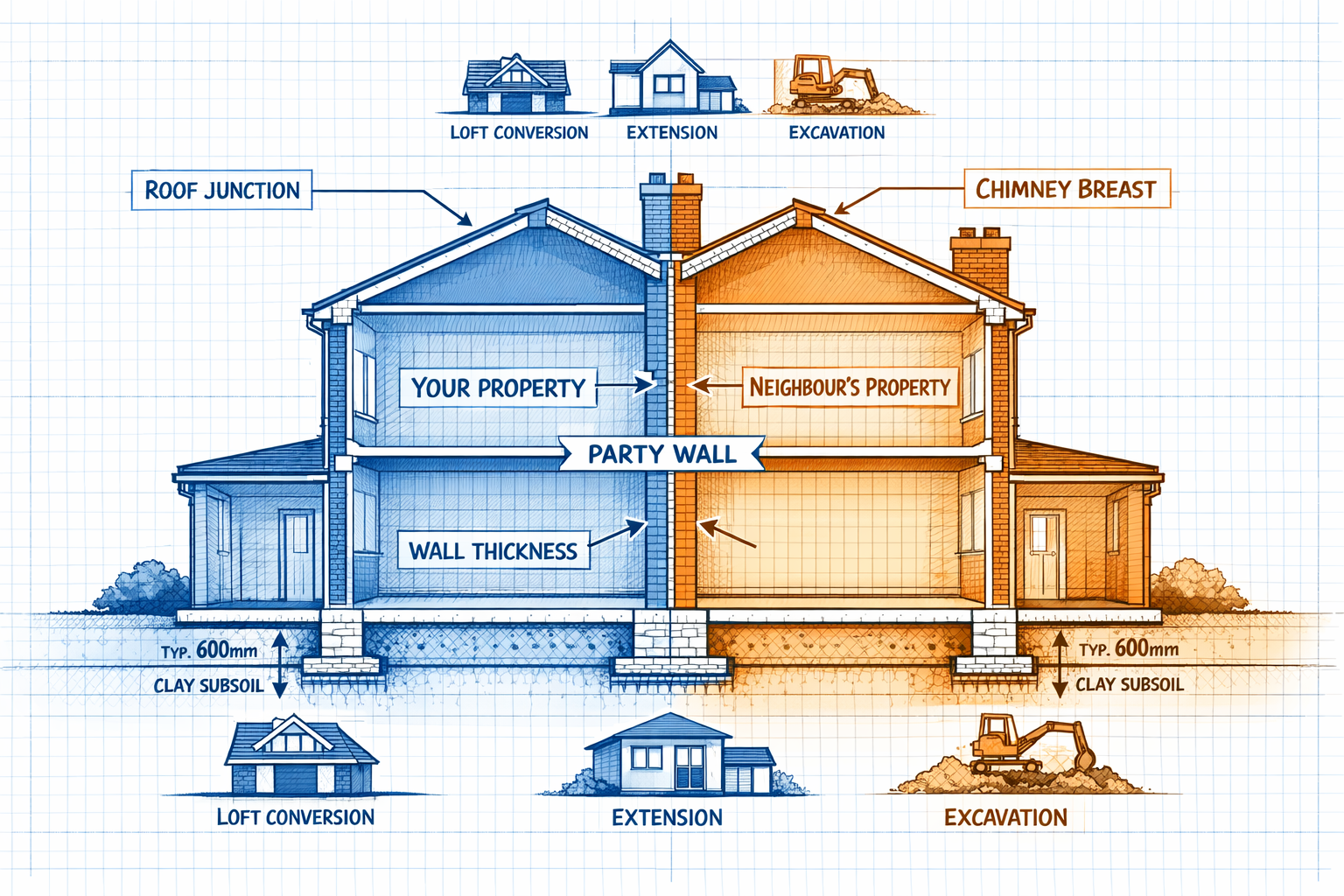
The Party Wall Act (formally titled the Party Wall etc. Act 1996) is legislation that came into force on 1 July 1997 throughout England and Wales. This Act provides a framework for preventing and resolving disputes in relation to party walls, boundary walls, and excavations near neighbouring buildings.
The primary purpose of this legislation is to balance the rights of property owners who wish to carry out building work with the rights of their neighbours who might be affected by that work. It establishes clear procedures that must be followed, ensuring transparency and fairness for all parties involved.
The Historical Context
Before 1997, party wall legislation existed only in London under the London Building Acts. The 1996 Act extended these protections nationwide, recognising that property disputes over shared structures were a common source of conflict throughout the country. The legislation drew heavily on the London Building Acts (Amendment) Act 1939, which had successfully governed party wall matters in the capital for decades.
Core Principles
The Act operates on several fundamental principles:
- Preventative measures: It requires advance notice of planned work, giving neighbours time to prepare and protect their interests
- Mutual respect: Both building owners and adjoining owners have clearly defined rights and responsibilities
- Professional oversight: The involvement of qualified surveyors ensures technical expertise guides decisions
- Cost allocation: The building owner bears the costs of the party wall process, preventing financial barriers to neighbours protecting their rights
When Does the Party Wall Act Apply? 🏗️
Understanding when the Party Wall Act applies is crucial for anyone planning building work. The Act covers three main scenarios, each with specific requirements and timelines.
1. Work Directly to an Existing Party Wall or Structure
A party wall is a wall that stands on the boundary between two properties and is shared by both owners. This includes:
- Walls of buildings standing astride the boundary line
- Walls standing wholly on one owner’s land but used by two or more owners (such as a garden wall)
- Floors and other structures separating buildings or parts of buildings with different owners (common in flats)
Work covered under this section includes:
| Type of Work | Description | Notice Period |
|---|---|---|
| Repairs or maintenance | Cutting into the wall, underpinning, or rebuilding | 2 months |
| Alterations | Inserting damp-proof courses, raising walls, or removing chimney breasts | 2 months |
| Demolition and rebuilding | Taking down and reconstructing party walls | 2 months |
| New building on boundary | Constructing a new wall astride the boundary line | 1 month (Line of Junction Notice) |
2. New Walls at the Boundary Line
When building a new wall directly on the boundary line between properties (not astride it), you must serve a Line of Junction Notice at least one month before starting work. This applies even if the new wall will be entirely on your property but positioned right at the boundary.
3. Excavation Near Neighbouring Buildings
The Party Wall Act also covers excavation work within certain distances of neighbouring structures:
- Within 3 metres: If you’re digging within 3 metres of a neighbour’s building and going deeper than their foundations, you must serve notice
- Within 6 metres: If excavating within 6 metres and cutting a line at 45 degrees down from the bottom of their foundations, notice is required
This provision protects neighbouring properties from potential subsidence or structural damage caused by nearby excavation work. The notice period for excavation work is one month.
What Work Is NOT Covered?
It’s equally important to understand what the Party Wall Act doesn’t cover:
- ❌ Purely cosmetic work (painting, plastering, or decorating party walls)
- ❌ Drilling small holes for shelves or pictures
- ❌ Minor repairs that don’t affect the wall’s structure
- ❌ Work entirely within your property that doesn’t affect shared structures
- ❌ Disputes about noise, access, or general nuisance (these fall under different legislation)
The Party Wall Notice Process: Step-by-Step Guide
Navigating the Party Wall Act requires following a specific process. Here’s a comprehensive breakdown of each stage:
Step 1: Determine If the Act Applies ✅
Before proceeding, carefully assess whether your planned work falls under the Act’s scope. Consider consulting with professional surveyors who can provide expert guidance on whether formal notices are required.
Step 2: Prepare and Serve the Appropriate Notice
The building owner (the person carrying out the work) must serve written notice to all adjoining owners (neighbours who share the party wall or whose properties might be affected).
Key requirements for party wall notices:
- Must be in writing (templates are available, but specific wording is important)
- Should include detailed descriptions of the proposed work
- Must specify the date when work will commence
- Should be served within the correct timeframe (1 or 2 months depending on work type)
- Must be delivered to all adjoining owners
💡 Pro Tip: Send notices via recorded delivery or hand-deliver with a witness to ensure proof of service.
Step 3: Await the Adjoining Owner’s Response
After receiving notice, the adjoining owner has 14 days to respond in one of two ways:
- Consent: Written agreement to the proposed work
- Dissent: Disagreement or failure to respond (silence is treated as dissent)
If the adjoining owner consents, work can proceed as planned after the notice period expires. However, even with consent, it’s wise to prepare a schedule of condition documenting the current state of the neighbour’s property.
Step 4: Appoint Party Wall Surveyors (If There’s a Dispute)
When an adjoining owner dissents or doesn’t respond, a party wall dispute exists, and surveyors must be appointed. There are three options:
Option A: Agreed Surveyor
Both parties jointly appoint a single surveyor to act impartially for both sides.
Option B: Two Surveyors
Each party appoints their own surveyor, and these two surveyors then select a third surveyor to act as an arbitrator if needed.
Option C: Deemed Appointment
If the adjoining owner doesn’t appoint a surveyor within 10 days of being asked, the building owner’s surveyor can make the appointment on their behalf.
Step 5: The Party Wall Award
The appointed surveyor(s) will:
- Inspect both properties and prepare a schedule of condition
- Assess the proposed work and its potential impact
- Determine necessary precautions to protect the adjoining owner’s property
- Produce a Party Wall Award – a legally binding document that sets out:
- What work is permitted
- When and how it should be carried out
- What protective measures must be taken
- How costs will be allocated
- Access arrangements for inspections
The Award must be served on both parties within a specified timeframe and can be appealed within 14 days.
Step 6: Carry Out the Work
Once the Award is in place and the notice period has expired, work can commence. The building owner must:
- Follow all conditions specified in the Award
- Allow access for inspections as required
- Take all necessary precautions to prevent damage
- Keep the adjoining owner informed of progress
Step 7: Post-Work Inspection and Resolution
After completion, the surveyor should conduct a final inspection to ensure:
- Work was completed in accordance with the Award
- No unexpected damage occurred
- Any damage that did occur is properly remedied
- All conditions have been met
Rights and Responsibilities Under the Party Wall Act
The Party Wall Act creates a balanced framework of rights and obligations for both building owners and adjoining owners.
Building Owner’s Rights 🔨
- Right to carry out necessary work: Once proper procedures are followed, you can proceed with work affecting party structures
- Right to enter neighbouring property: For executing work specified in the Award (with reasonable notice)
- Right to appoint surveyors: To represent your interests in preparing the Award
Building Owner’s Responsibilities
- ✓ Serve proper notice within required timeframes
- ✓ Bear all costs associated with the party wall process, including:
- Your own surveyor’s fees
- The adjoining owner’s surveyor’s fees (if appointed)
- The agreed surveyor’s fees
- Costs of preparing schedules of condition
- ✓ Compensate for damage: Pay for any damage caused by the work
- ✓ Provide temporary protection: Such as weatherproofing or structural support during work
- ✓ Minimize inconvenience: Work reasonable hours and complete work efficiently
Adjoining Owner’s Rights 🏠
- Right to be notified: Receive proper advance notice of planned work
- Right to consent or dissent: Agree to the work or trigger the dispute resolution process
- Right to appoint a surveyor: Have professional representation at the building owner’s expense
- Right to protection: Ensure your property is protected from damage
- Right to compensation: For any loss or damage resulting from the work
- Right to refuse unnecessary work: Object to work that goes beyond what’s reasonably necessary
Adjoining Owner’s Responsibilities
- ✓ Respond to notices within 14 days
- ✓ Allow reasonable access for inspections and work execution (as specified in the Award)
- ✓ Act reasonably: Not obstruct legitimate work unnecessarily
- ✓ Appoint a surveyor promptly if dissenting (within 10 days of being requested)
The Role of Party Wall Surveyors
Qualified party wall surveyors play a crucial role in ensuring the Party Wall Act operates fairly and effectively. Understanding their function helps both building and adjoining owners navigate the process confidently.
What Does a Party Wall Surveyor Do?
A party wall surveyor is a property professional with expertise in building construction, structural matters, and party wall legislation. Their responsibilities include:
- Initial assessment: Reviewing proposed work to determine if it falls under the Act
- Preparing schedules of condition: Detailed photographic and written records of properties before work begins
- Drafting the Party Wall Award: Creating the legally binding document that governs the work
- Monitoring compliance: Ensuring work proceeds according to the Award
- Resolving disputes: Mediating disagreements and making impartial decisions
- Final inspections: Verifying work completion and assessing any damage
Choosing the Right Surveyor
When selecting a party wall surveyor, consider:
- Qualifications: Look for members of professional bodies like RICS (Royal Institution of Chartered Surveyors) or the Faculty of Party Wall Surveyors
- Experience: Choose surveyors with proven track records in party wall matters
- Local knowledge: Chartered surveyors familiar with your area understand local building practices and property types
- Independence: Ensure the surveyor can act impartially, especially when acting as an agreed surveyor
- Communication skills: A good surveyor explains complex matters clearly to non-technical clients
The Agreed Surveyor vs. Two Surveyors Approach
Agreed Surveyor Advantages:
- ✅ More cost-effective (one set of fees instead of two)
- ✅ Faster process with fewer administrative steps
- ✅ Simpler communication with one point of contact
- ✅ Works well when relationships are amicable
Two Surveyors Advantages:
- ✅ Each party has dedicated representation
- ✅ More appropriate for complex or contentious projects
- ✅ Built-in checks and balances
- ✅ Specialist expertise from each surveyor
The choice often depends on the complexity of the work, the relationship between neighbours, and the level of concern about potential issues.
Common Party Wall Scenarios and Solutions
Understanding how the Party Wall Act applies in real-world situations helps property owners prepare effectively. Here are the most common scenarios:
Scenario 1: Loft Conversion Affecting Party Wall 🏠
Situation: You’re converting your loft in a semi-detached or terraced house, requiring work to the party wall where it meets the roof.
Party Wall Act Requirements:
- Serve a Party Structure Notice 2 months before starting work
- Work typically involves cutting into or raising the party wall
- May require steel beams to be inserted through the party wall
Typical Award Conditions:
- Schedule of condition for neighbour’s loft space and rooms below
- Specifications for soundproofing and fire protection
- Limits on working hours to minimize disruption
- Requirements for making good any damage to decorations
Scenario 2: Rear or Side Extension 🔨
Situation: Building an extension that requires excavation near your neighbour’s foundations or work to a party wall.
Party Wall Act Requirements:
- Party Structure Notice if the extension joins or affects the party wall
- Adjacent Excavation Notice if digging within 3-6 metres of neighbour’s building
- Both notices may be required for the same project
Typical Award Conditions:
- Detailed foundation design to prevent undermining neighbour’s property
- Temporary propping or support for existing structures
- Protection measures during excavation
- Monitoring for settlement or movement
Scenario 3: Removing Chimney Breast 🧱
Situation: Removing a chimney breast that forms part of the party wall structure.
Party Wall Act Requirements:
- Party Structure Notice required 2 months in advance
- Must consider impact on neighbour’s side of the chimney
- Structural implications for the entire chimney stack
Typical Award Conditions:
- Structural engineer’s calculations for supporting remaining chimney
- Installation of gallows brackets or other support systems
- Making good the party wall after removal
- Ensuring neighbour’s chimney breast remains stable
Scenario 4: Basement Excavation or Underpinning 🏗️
Situation: Digging out a basement or underpinning existing foundations, potentially affecting neighbouring properties.
Party Wall Act Requirements:
- Adjacent Excavation Notice if within 3-6 metres of neighbour’s building
- Party Structure Notice if underpinning affects the party wall foundations
- Potentially the most complex party wall scenario
Typical Award Conditions:
- Comprehensive structural design by qualified engineer
- Detailed sequence of works to minimize risk
- Continuous monitoring of neighbouring properties for movement
- Contingency plans for unexpected issues
- Possible requirement for insurance or bonds
Scenario 5: New Boundary Wall 🧱
Situation: Building a new wall directly on the boundary line between properties (such as a garden wall).
Party Wall Act Requirements:
- Line of Junction Notice 1 month before starting work
- Wall must be entirely on your land (astride the boundary requires different notice)
Typical Award Conditions:
- Specifications for wall height, thickness, and materials
- Foundation depth and design
- Provisions for weatherproofing on neighbour’s side
- Access arrangements for construction
Costs Associated with the Party Wall Act 💰
Understanding the financial implications of the Party Wall Act helps building owners budget appropriately for their projects.
Who Pays What?
The fundamental principle is that the building owner pays all party wall costs, including:
| Cost Item | Typical Range | Who Pays |
|---|---|---|
| Building owner’s surveyor fees | £700-£1,500+ | Building owner |
| Adjoining owner’s surveyor fees | £700-£1,500+ | Building owner |
| Agreed surveyor fees (if applicable) | £1,000-£2,000+ | Building owner |
| Schedule of condition | £300-£600 per property | Building owner |
| Third surveyor fees (if needed) | £1,000-£3,000+ | Building owner |
Factors Affecting Party Wall Costs
Several variables influence the total cost:
- Project complexity: Simple loft conversions cost less than complex basement excavations
- Number of adjoining owners: More neighbours mean more surveyors and higher costs
- Geographic location: Fees in London and major cities typically exceed those in other areas
- Surveyor experience and reputation: More experienced surveyors often charge premium rates
- Dispute complexity: Contentious situations requiring extensive negotiation increase costs
- Property type: Work on listed buildings or unusual structures may require specialist expertise
Hidden Costs to Consider
Beyond surveyor fees, budget for:
- Remedial work: Repairing any damage caused during construction
- Enhanced precautions: Additional protective measures required by the Award
- Delays: Potential project delays if disputes arise or Awards take longer than expected
- Legal fees: If disputes escalate beyond the surveyor process (rare but possible)
Cost-Saving Strategies
While you cannot avoid party wall costs when the Act applies, you can minimize expenses:
✅ Communicate early: Discuss plans with neighbours before serving formal notices
✅ Use an agreed surveyor: When relationships are good, this halves surveyor costs
✅ Choose experienced professionals: They often resolve matters more efficiently
✅ Provide complete information: Detailed plans and specifications prevent delays
✅ Plan carefully: Well-designed projects with minimal impact reduce complexity
For guidance on professional fees and valuation costs, consulting experienced surveyors early in your planning process proves invaluable.
Consequences of Non-Compliance with the Party Wall Act ⚠️
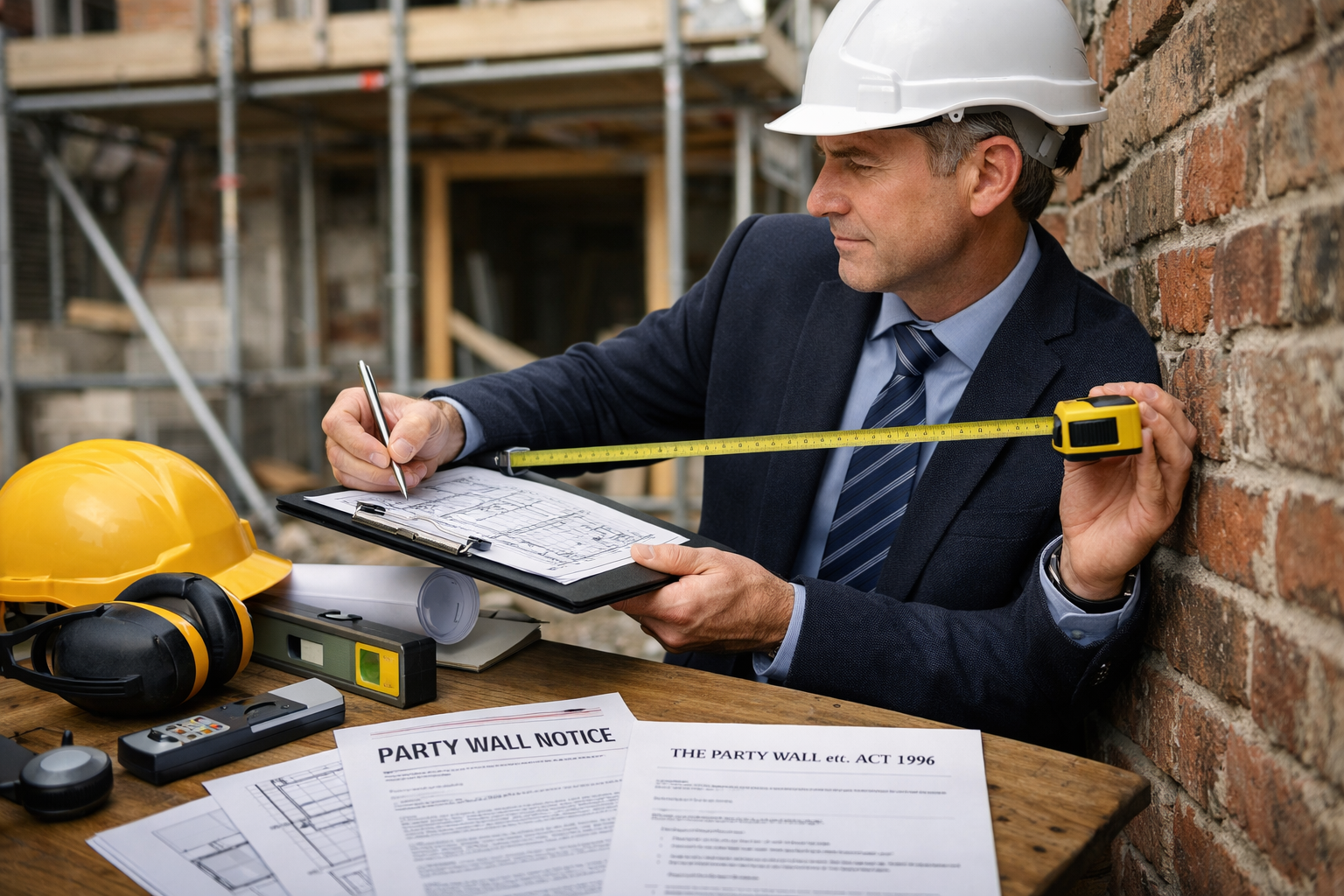
Ignoring the Party Wall Act can have serious legal and financial consequences. Understanding these risks underscores the importance of compliance.
Legal Consequences
Injunctions: Adjoining owners can apply to the courts for an injunction to stop work that proceeds without proper party wall procedures. Courts regularly grant these injunctions, bringing construction projects to an immediate halt.
Forced removal of work: In serious cases, courts may order removal of work completed in breach of the Act, even if the construction is otherwise compliant with building regulations.
Damages: Building owners may be liable for damages beyond the actual cost of repairs, particularly if they’ve acted in bad faith or caused significant disruption.
Financial Consequences 💸
The financial impact of non-compliance can be severe:
- Legal costs: Both your own and potentially the adjoining owner’s legal fees
- Project delays: Weeks or months of stopped work while resolving disputes
- Remedial costs: Potentially having to undo and redo work
- Increased surveyor fees: Resolving disputes after the fact is more expensive than proper initial procedures
- Damage claims: Paying for damage that could have been prevented with proper procedures
- Reduced property value: Unresolved party wall disputes can affect saleability
Relationship Consequences
Beyond legal and financial impacts, non-compliance damages neighbour relations:
- 😟 Long-term animosity with people living next door
- 🚫 Potential obstruction of future projects
- 📢 Stress and conflict affecting quality of life
- ⚖️ Possible escalation to other legal disputes
Case Study: The Cost of Ignoring the Act
Consider this real-world example: A homeowner in London began a loft conversion without serving party wall notices. The neighbour, upon discovering the work, immediately sought legal advice and obtained an injunction stopping all work. The homeowner then faced:
- £8,000 in legal fees (both sides)
- £12,000 in lost contractor costs (delays and remobilization)
- £3,500 in party wall surveyor fees (higher than if done properly initially)
- 4 months of project delay
- Permanent damage to the neighbour relationship
Had proper procedures been followed from the start, the party wall costs would have been approximately £2,500, with no delays or legal complications.
Frequently Asked Questions About the Party Wall Act ❓
Can my neighbour refuse consent and stop my project?
No. While neighbours can dissent to your party wall notice, they cannot prevent reasonable and necessary work. Dissent simply triggers the surveyor appointment process. The surveyors will then determine appropriate conditions under which the work can proceed. However, if your proposed work goes beyond what’s reasonably necessary or would cause unjustifiable harm, surveyors may recommend modifications.
Do I need planning permission AND party wall consent?
These are separate processes. Planning permission is granted by your local council and determines whether you can carry out the work in principle. The Party Wall Act governs how you execute work affecting shared structures, regardless of whether planning permission is required. You need to comply with both systems when applicable.
What if I can’t find or contact my neighbour?
You must still serve notice. If a neighbour cannot be located after reasonable efforts, you may need to serve notice by:
- Posting it at the property
- Advertising in local newspapers
- Applying to the court for an order allowing work to proceed
Consult a party wall surveyor for guidance on proper procedures when neighbours are absent or unresponsive.
How long does the party wall process take?
Minimum timelines:
- 2 months from serving Party Structure Notice to starting work
- 1 month from serving Line of Junction or Adjacent Excavation Notice
Realistic timelines:
- If neighbours consent: 2-3 months total
- If surveyors are appointed: 3-4 months total
- If disputes are complex: 4-6 months or longer
Always factor party wall procedures into your project timeline and start the process early.
Does the Party Wall Act apply in Scotland or Northern Ireland?
No. The Party Wall Act applies only in England and Wales. Scotland and Northern Ireland have different legal frameworks governing building work affecting neighbouring properties. If you’re planning work in these jurisdictions, consult local legal experts about applicable requirements.
Can I do any work to a party wall without triggering the Act?
Yes. Minor, non-structural work doesn’t require party wall procedures:
- Painting or decorating the party wall surface
- Drilling small holes for pictures or shelves
- Plastering or re-plastering
- Attaching lightweight fixtures
However, any work that cuts into the wall structure, affects its load-bearing capacity, or involves significant alteration requires compliance with the Act.
What happens if damage occurs despite following the Act?
The Party Wall Award should specify procedures for addressing damage. Typically:
- The building owner’s surveyor inspects the damage
- Comparison with the schedule of condition determines if damage is work-related
- The building owner pays for repairs to restore the property to its previous condition
- If disputes arise about damage or repairs, the appointed surveyors resolve them
This is why comprehensive schedules of condition are so important—they provide clear evidence of the property’s state before work began.
The Party Wall Act and Property Transactions
Understanding the Party Wall Act becomes particularly important during property transactions, whether you’re buying, selling, or dealing with property valuations.
Buying a Property with Ongoing Party Wall Matters
If you’re purchasing a property where party wall work is underway or planned:
🔍 Due diligence steps:
- Request copies of all party wall notices and Awards
- Verify that proper procedures were followed
- Check for any outstanding disputes or unresolved damage claims
- Ensure schedules of condition exist and are comprehensive
- Confirm insurance coverage for party wall risks
Your solicitor should investigate these matters during conveyancing, but being proactive protects your interests.
Selling a Property After Party Wall Work
When selling after completing work under the Party Wall Act:
✅ Prepare documentation:
- Copies of all party wall notices served
- The Party Wall Award
- Completion certificates from surveyors
- Evidence that all Award conditions were met
- Records of any damage claims and their resolution
This documentation reassures buyers that work was completed legally and properly, preventing delays or complications during the sale process.
Impact on Property Valuations
Party wall matters can affect property values in several ways:
Positive impacts:
- Well-executed extensions or conversions increase value
- Proper documentation demonstrates professional project management
- Resolved party wall matters remove uncertainty
Negative impacts:
- Ongoing disputes can deter buyers or reduce offers
- Unresolved damage claims create liability concerns
- Non-compliance with the Act may require remediation
When obtaining professional valuations, ensure valuers are aware of any party wall work, as this context affects their assessment.
Leasehold Properties and the Party Wall Act
The Party Wall Act applies to leasehold properties, but with additional complexity:
- The leaseholder is typically the building owner for party wall purposes
- However, the freeholder’s consent may also be required under lease terms
- Service charges may be affected if party wall work impacts common areas
- Lease extensions and enfranchisement may involve party wall considerations
Always review your lease and consult with both your freeholder and a party wall surveyor before proceeding with work on leasehold properties.
Best Practices for Smooth Party Wall Procedures
Following these best practices ensures the Party Wall Act process proceeds as smoothly as possible:
For Building Owners 🏗️
1. Start early: Begin the party wall process before finalizing construction contracts. This prevents costly delays if issues arise.
2. Communicate proactively: Speak with neighbours before serving formal notices. Explain your plans, address concerns, and build goodwill.
3. Provide detailed information: The more comprehensive your initial notice and plans, the fewer questions and delays you’ll encounter.
4. Choose qualified professionals: Work with experienced chartered surveyors who understand both the technical and interpersonal aspects of party wall matters.
5. Budget realistically: Include party wall costs in your project budget from the outset, with contingency for unexpected complications.
6. Be flexible: If surveyors recommend modifications to protect neighbours’ interests, consider these seriously rather than fighting every point.
7. Document everything: Keep records of all communications, notices, and agreements. This protects you if disputes arise later.
8. Respect the Award conditions: Follow all requirements precisely. Cutting corners risks legal consequences and damages neighbour relations.
For Adjoining Owners 🏠
1. Respond promptly: Don’t ignore party wall notices. Even if you consent, respond in writing within 14 days.
2. Appoint a surveyor if uncertain: If you have any concerns about the proposed work, appoint a surveyor to represent your interests—at the building owner’s expense.
3. Document your property: Take your own photographs and notes about your property’s condition, supplementing the official schedule.
4. Ask questions: Don’t hesitate to ask the surveyor to explain aspects of the Award or work you don’t understand.
5. Be reasonable: While protecting your rights, recognize that neighbours have legitimate reasons for their work.
6. Maintain access: Allow reasonable access for inspections and work execution as specified in the Award.
7. Report concerns promptly: If you notice work deviating from the Award or potential damage, contact the surveyor immediately.
8. Keep communication channels open: Maintain civil relations with your neighbour throughout the process.
For Both Parties 🤝
1. Prioritize the relationship: You’ll be neighbours long after the work is complete. Approach the process with respect and goodwill.
2. Trust the process: The Party Wall Act has successfully resolved thousands of disputes. Follow the procedures and trust qualified surveyors to mediate fairly.
3. Focus on facts, not emotions: Keep discussions professional and evidence-based rather than emotional.
4. Consider mediation: If relationships become strained, consider formal mediation before disputes escalate.
5. Learn from the experience: Whether building owner or adjoining owner, understanding the process now helps with future projects.
Recent Developments and Future Changes to the Party Wall Act
While the Party Wall Act has remained largely unchanged since 1996, several developments affect its application in 2025:
Increased Awareness and Compliance
Property owners are increasingly aware of party wall requirements, thanks to:
- Greater information availability online
- More proactive conveyancing solicitors
- Increased enforcement by adjoining owners
- Professional bodies’ educational efforts
This awareness has led to higher compliance rates and fewer disputes arising from ignorance of the Act.
Technology and Party Wall Procedures
Modern technology is transforming how party wall matters are managed:
Digital documentation: Schedules of condition now often include detailed photographic and video evidence, 3D scans, and drone surveys for roof work.
Electronic service: Party wall notices can be served electronically, though best practice still involves formal written confirmation.
Remote inspections: Video calls and remote monitoring systems supplement traditional site visits, particularly useful during initial assessments.
Project management platforms: Specialized software helps surveyors manage multiple party wall cases, improving efficiency and communication.
Case Law Developments
Recent court cases continue to refine interpretation of the Party Wall Act:
- Clarification of what constitutes “special foundations” requiring additional notice
- Guidance on reasonable timeframes for completing work
- Interpretation of surveyors’ duties and liability
- Refinement of damage assessment methodologies
Staying informed about case law developments helps ensure compliance with current interpretations of the Act.
Proposed Reforms
While no major legislative changes are currently planned, industry discussions focus on potential improvements:
- Standardizing surveyor fee structures
- Creating clearer templates for notices and Awards
- Establishing mandatory qualifications for party wall surveyors
- Extending the Act to cover additional types of work
- Streamlining procedures for minor works
Any significant reforms would require Parliamentary action, making major changes unlikely in the immediate future.
Professional Support for Party Wall Matters
Successfully navigating the Party Wall Act often requires professional expertise. Understanding the types of support available helps you access appropriate assistance.
When to Consult a Party Wall Surveyor
Consider consulting a surveyor if:
- ✅ You’re unsure whether your planned work triggers the Act
- ✅ You need to serve party wall notices
- ✅ You’ve received a party wall notice and want professional advice
- ✅ You’re appointing a surveyor to represent your interests
- ✅ Disputes have arisen about party wall work
- ✅ You need schedules of condition prepared
- ✅ You’re buying or selling property with party wall complications
Early consultation often prevents problems and saves money in the long run.
Other Professional Support
Beyond party wall surveyors, other professionals play important roles:
Solicitors: Provide legal advice on complex disputes, review Awards for legal compliance, and represent clients if matters proceed to court.
Structural engineers: Design work affecting party structures, ensure compliance with Building Regulations, and provide technical expertise for complex projects.
Architects: Incorporate party wall requirements into project designs, prepare detailed plans for party wall notices, and coordinate with surveyors.
Building contractors: Execute work in compliance with Party Wall Awards, coordinate access and timing, and report issues to surveyors.
Insurance specialists: Advise on insurance coverage for party wall risks and handle claims if damage occurs.
Finding Qualified Professionals
When seeking party wall expertise:
🔍 Check qualifications: Look for RICS members or Faculty of Party Wall Surveyors members
🔍 Verify experience: Ask about similar projects they’ve handled
🔍 Request references: Speak with previous clients about their experiences
🔍 Compare fees: Obtain quotes from multiple professionals, but don’t choose solely on price
🔍 Assess communication: Choose professionals who explain matters clearly and respond promptly
For comprehensive support with party wall matters and other surveying needs, experienced professionals provide invaluable guidance throughout the process.
Conclusion: Protecting Your Interests Under the Party Wall Act
The Party Wall Act exists to protect both property owners and their neighbours when building work affects shared structures. While the procedures may seem complex initially, they provide a fair, proven framework for preventing disputes and ensuring work proceeds safely and legally.
Key Principles to Remember
✨ Compliance is mandatory: If your work falls under the Act, you must follow the procedures—there are no shortcuts.
✨ Early action prevents problems: Start the party wall process before finalizing construction contracts or setting firm project timelines.
✨ Professional expertise protects you: Qualified surveyors ensure technical accuracy and fair treatment for all parties.
✨ Communication builds goodwill: Proactive, respectful communication with neighbours prevents many disputes before they arise.
✨ Documentation is essential: Comprehensive records protect your interests if questions arise later.
✨ The process works: Thousands of party wall matters are resolved successfully each year through these procedures.
Your Next Steps 🎯
If you’re planning building work that may affect party walls or boundaries:
1. Assess applicability: Review your plans against the Act’s requirements to determine if it applies.
2. Consult professionals: Speak with qualified party wall surveyors early in your planning process.
3. Budget appropriately: Include party wall costs in your project budget from the outset.
4. Communicate with neighbours: Discuss your plans informally before serving formal notices.
5. Serve notices correctly: Ensure notices contain all required information and are served within proper timeframes.
6. Follow the process: Trust the procedures and work cooperatively with surveyors and neighbours.
7. Document everything: Keep comprehensive records of all party wall matters.
If you’ve received a party wall notice:
1. Don’t ignore it: Respond within 14 days, even if only to acknowledge receipt.
2. Seek advice: Consult a party wall surveyor to understand your rights and options.
3. Appoint representation: If you have any concerns, appoint a surveyor at the building owner’s expense.
4. Protect your property: Ensure comprehensive schedules of condition are prepared.
5. Stay informed: Maintain communication with your surveyor throughout the process.
6. Be reasonable: While protecting your interests, recognize your neighbour’s legitimate rights.
Understanding and properly following the Party Wall Act procedures protects your property, preserves neighbour relations, and ensures building projects proceed smoothly and legally. Whether you’re the building owner embarking on an exciting renovation or the adjoining owner wanting to protect your home, the Act provides the framework for fair, professional resolution of party wall matters.
For expert guidance on party wall procedures, property valuations, and all aspects of surveying, professional surveyors offer the expertise and experience to navigate these matters successfully. Don’t leave party wall compliance to chance—invest in proper procedures and professional support to protect your most valuable asset: your property.