The surveying profession stands at a critical crossroads. As property market volumes surge and regulatory reforms reshape the landscape, the sector faces an unprecedented challenge: attracting and retaining the next generation of talent to meet escalating demand. The Surveyor Talent Pipeline and CPD in 2026: Attracting the Next Generation to Meet Market Demand has become more than an industry concern—it represents a fundamental imperative for sustainable growth and professional excellence.
With an aging workforce, evolving client expectations, and technological transformation accelerating across the built environment, professional bodies like the Royal Institution of Chartered Surveyors (RICS) have launched ambitious initiatives to strengthen graduate pathways, modernize continuing professional development (CPD) platforms, and make surveying careers more appealing to digital-native professionals. This comprehensive exploration examines how the surveying sector is addressing these talent challenges and positioning itself for future success.
Key Takeaways
- 📊 Market demand for surveyors is outpacing supply, with demographic shifts creating significant talent gaps as experienced professionals retire
- 🎓 RICS and industry partners are revolutionizing graduate pathways through enhanced apprenticeships, university partnerships, and streamlined Assessment of Professional Competence (APC) routes
- 💻 Digital CPD platforms and flexible learning are transforming how surveyors maintain and develop their professional competencies in 2026
- 🌟 Attracting Gen Z requires fundamental shifts in workplace culture, technology adoption, sustainability focus, and career progression transparency
- 🤝 Collaborative industry initiatives combining employers, educational institutions, and professional bodies are proving most effective in building sustainable talent pipelines
Understanding the Current Talent Crisis in Surveying
The Demographic Challenge Facing the Profession
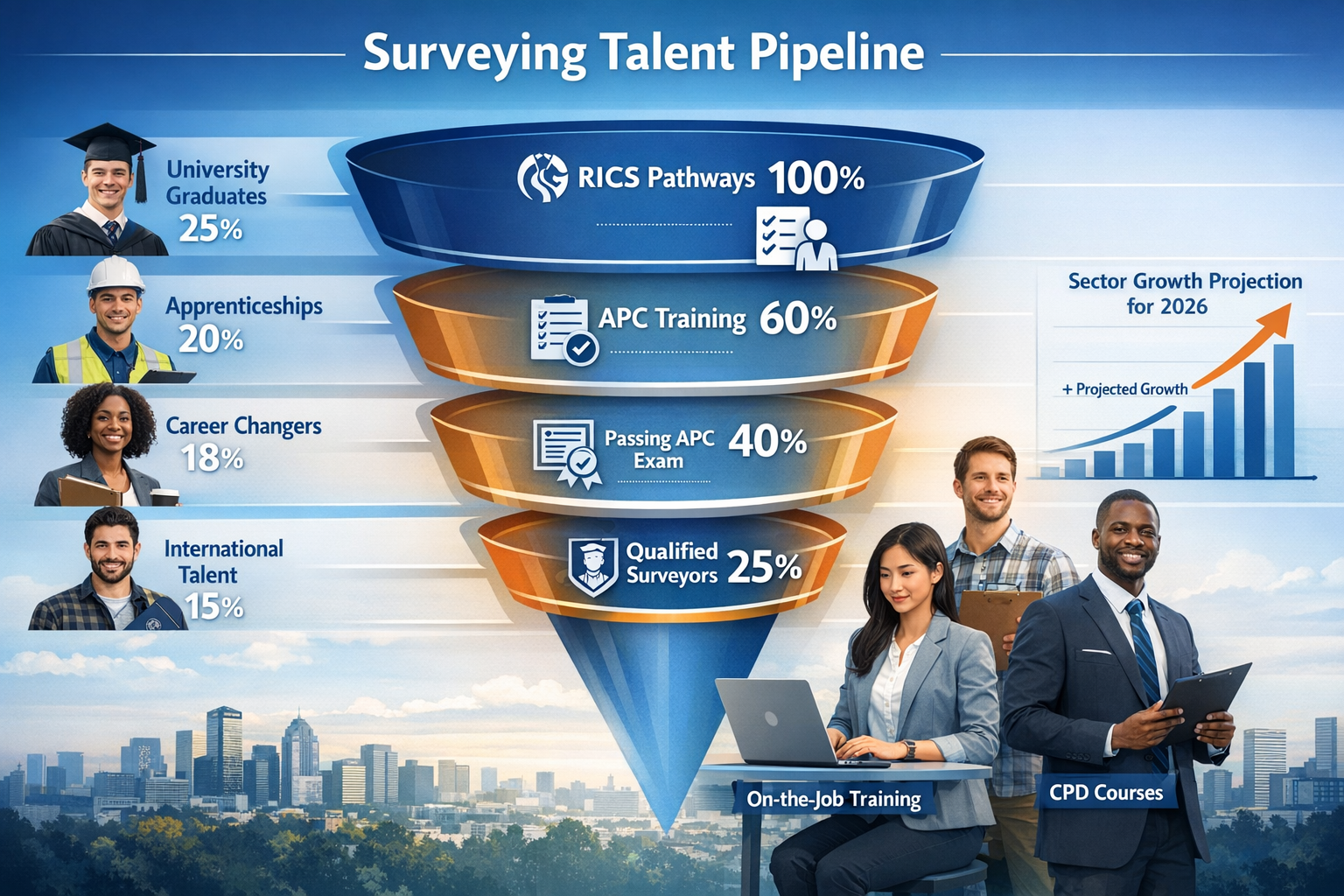
The surveying profession faces a perfect storm of demographic pressures that threaten its capacity to meet market demand. Industry analysis reveals that approximately 40% of chartered surveyors are over the age of 50, with significant retirement waves anticipated over the next decade. This exodus of experienced professionals creates not only a numerical shortage but also a critical knowledge gap that threatens service quality and professional standards.
According to recent talent acquisition research, hiring across professional services sectors has shown mixed patterns, with specialized technical roles like surveying experiencing particular recruitment challenges [2]. The competition for qualified candidates has intensified, with employers reporting difficulty filling positions that require both technical expertise and professional accreditation.
The situation is further complicated by changing career preferences among younger generations. Research indicates that Gen Z professionals prioritize purpose-driven work, technological innovation, work-life balance, and rapid career progression—factors that traditional surveying firms have historically struggled to emphasize effectively [3].
Market Demand Drivers in 2026
Several converging factors are driving unprecedented demand for surveying services:
- Property market activity: Increased transaction volumes following post-pandemic market adjustments
- Infrastructure investment: Government commitments to major infrastructure projects requiring extensive surveying expertise
- Regulatory reforms: New building safety regulations and environmental standards creating additional compliance requirements
- Sustainability initiatives: Growing demand for energy performance assessments and sustainable building certifications
- Technology adoption: Digital transformation requiring surveyors with specialized technical skills
The construction and engineering sectors, which rely heavily on surveying professionals, are experiencing significant growth trajectories [1]. This expansion creates opportunities but also intensifies the pressure on talent pipelines to deliver qualified professionals at scale.
The Skills Gap: Technical Competence Meets Digital Fluency
Modern surveying requires a unique combination of traditional technical expertise and digital proficiency. Today's chartered surveyors must master:
| Traditional Skills | Digital Competencies |
|---|---|
| Building pathology and construction knowledge | Building Information Modeling (BIM) |
| Valuation methodologies | Data analytics and visualization |
| Legal and regulatory frameworks | Drone operation and photogrammetry |
| Client relationship management | Virtual reality and 3D scanning |
| Professional ethics and standards | Cloud-based collaboration platforms |
This dual requirement creates recruitment challenges, as educational institutions work to update curricula while employers seek candidates who can immediately contribute value. The gap between academic preparation and professional practice expectations remains a persistent concern across the sector.
RICS Initiatives: Strengthening Graduate Pathways and Professional Development
Modernizing the Assessment of Professional Competence (APC)
The RICS Assessment of Professional Competence represents the gateway to chartered status, and recent reforms have focused on making this pathway more accessible, transparent, and aligned with contemporary practice. In 2026, the APC process has undergone significant enhancements designed to support candidates while maintaining rigorous professional standards.
Key improvements include:
- Structured mentorship programs connecting candidates with experienced chartered surveyors
- Digital portfolio systems allowing candidates to track competency development in real-time
- Flexible assessment formats accommodating diverse learning styles and work arrangements
- Enhanced support resources including online learning modules, practice interviews, and peer networks
- Clearer competency frameworks providing transparency about requirements and expectations
These reforms address longstanding concerns about the APC process being intimidating or opaque, particularly for candidates without family connections to the profession or those working in smaller firms with limited mentorship resources.
University Partnerships and Accredited Degree Programs
RICS has expanded its network of accredited degree programs across universities, ensuring that graduates receive education aligned with professional competency requirements. These partnerships provide several advantages:
✅ Streamlined pathways: Graduates from accredited programs receive reduced APC requirements
✅ Industry-relevant curricula: Programs developed in consultation with practicing surveyors and employers
✅ Placement opportunities: Integrated work experience connecting students with potential employers
✅ Professional awareness: Early exposure to RICS standards and professional expectations
✅ Networking foundations: Access to RICS student membership and professional events
In 2026, these partnerships have evolved to include hybrid learning models, combining traditional classroom instruction with virtual reality simulations, live project participation, and remote mentorship from practicing professionals. This approach addresses both accessibility concerns and the need for practical, hands-on experience.
Apprenticeship Routes: Alternative Pathways to Qualification
Recognizing that university isn't the only route to professional excellence, RICS has championed degree apprenticeship programs that combine paid employment with academic study. These programs offer compelling advantages for both candidates and employers:
For candidates:
- Earn while learning, avoiding student debt
- Gain practical experience from day one
- Build professional networks early in career
- Receive structured support toward chartered status
For employers:
- Develop talent aligned with specific organizational needs
- Improve retention through early career investment
- Access government funding support for training
- Build diverse teams with varied educational backgrounds
The apprenticeship model has proven particularly effective in attracting career changers and individuals from non-traditional backgrounds, broadening the profession's talent pool and enhancing diversity.
Surveyor Talent Pipeline and CPD in 2026: Digital Transformation of Continuing Professional Development
The Evolution of CPD Requirements and Delivery
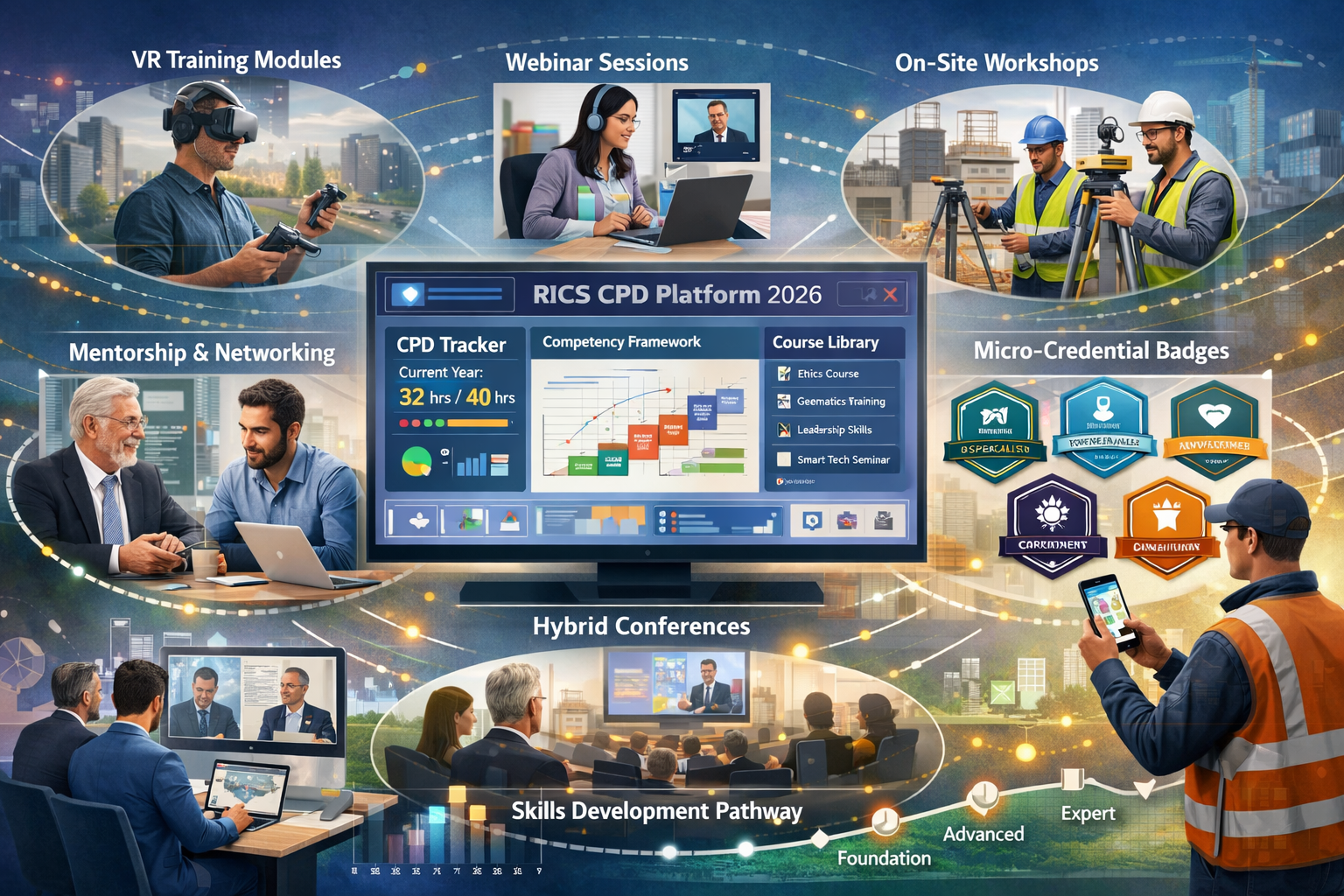
Continuing Professional Development has transformed from a compliance exercise into a strategic career development tool for chartered surveyors. The RICS CPD framework in 2026 emphasizes outcomes over inputs, focusing on demonstrable competency enhancement rather than simply logging hours.
The modern CPD ecosystem includes:
🎯 Personalized learning pathways based on practice area, career stage, and professional goals
🎯 Micro-credentials and digital badges recognizing specialized skills and emerging competencies
🎯 Peer learning communities facilitating knowledge exchange among practitioners
🎯 Reflective practice requirements encouraging critical thinking about professional development
🎯 Technology-enabled tracking through mobile apps and integrated professional platforms
This shift acknowledges that effective professional development must be relevant, accessible, and demonstrably valuable to busy practitioners managing demanding workloads.
Digital Platforms Revolutionizing Professional Learning
Technology has fundamentally changed how surveyors access and engage with CPD. Leading platforms in 2026 offer:
- On-demand webinars and courses accessible anytime, anywhere
- Virtual reality simulations for practicing complex scenarios safely
- Augmented reality tools for on-site learning and problem-solving
- AI-powered recommendations suggesting relevant content based on practice areas and career goals
- Social learning features enabling discussion, collaboration, and peer support
These platforms address a critical challenge identified in talent acquisition research: professionals increasingly expect flexible, technology-enabled learning that fits their schedules and learning preferences [4]. Organizations that provide robust digital CPD options demonstrate commitment to professional development, enhancing both recruitment and retention.
Specialized CPD for Emerging Practice Areas
As the surveying profession expands into new domains, specialized CPD programs have emerged to support practitioners developing expertise in:
- Sustainability and environmental assessment: Energy performance, carbon accounting, and green building certification
- Digital surveying technologies: Laser scanning, photogrammetry, and drone operation
- Building safety and compliance: Post-Grenfell regulatory frameworks and fire safety assessment
- Data analytics and PropTech: Leveraging big data, AI, and predictive modeling in property services
- Heritage and conservation: Specialized techniques for historic building assessment and preservation
These specialized programs enable chartered surveyors to differentiate their services and meet evolving client demands, while also making the profession more attractive to candidates seeking dynamic, forward-looking careers.
Attracting the Next Generation: Strategies for Talent Pipeline Development
Understanding Gen Z Career Expectations
Successfully attracting younger professionals requires understanding what drives their career decisions. Research on talent trends reveals several consistent priorities among Gen Z professionals entering the workforce in 2026 [5]:
Purpose and Impact: Desire to work on meaningful projects that contribute to societal challenges like housing affordability, sustainability, and community development
Technology Integration: Expectation that employers will provide cutting-edge tools and embrace digital innovation
Learning and Development: Prioritization of continuous skill development and clear career progression pathways
Flexibility and Balance: Preference for hybrid working models and autonomy in managing work schedules
Diversity and Inclusion: Commitment to working for organizations that demonstrably value diverse perspectives and equitable practices
Transparency and Communication: Appreciation for open dialogue about expectations, performance, and career opportunities
Surveying firms that align their recruitment messaging and workplace practices with these values report significantly stronger candidate interest and improved retention rates.
Rebranding Surveying: From Traditional to Cutting-Edge
One persistent challenge in attracting young talent is the perception of surveying as traditional or outdated. Progressive firms and professional bodies are actively working to rebrand the profession by highlighting:
🚀 Technology leadership: Showcasing how surveyors use drones, 3D scanning, AI, and other advanced technologies
🚀 Sustainability impact: Emphasizing the profession's role in creating environmentally responsible built environments
🚀 Problem-solving variety: Demonstrating the diverse challenges surveyors tackle across different property types and situations
🚀 Entrepreneurial opportunities: Highlighting pathways to practice ownership and business development
🚀 Social contribution: Connecting surveying work to housing quality, community safety, and infrastructure development
Social media campaigns, university outreach programs, and industry events increasingly feature young chartered surveyors sharing their experiences and demonstrating that the profession offers dynamic, technology-enabled careers with genuine societal impact.
School and University Engagement Programs
Building awareness of surveying careers requires engagement well before university graduation. Leading initiatives in 2026 include:
- School outreach programs: Presentations, career fairs, and hands-on workshops introducing surveying to secondary school students
- Work experience placements: Short-term opportunities for students to shadow practicing surveyors
- University societies and student chapters: RICS-supported groups providing networking and professional development
- Competition and challenge programs: Events where students solve real-world surveying problems
- Mentorship schemes: Connecting students with practicing professionals for guidance and advice
These programs prove particularly effective when they showcase diversity within the profession and feature relatable role models from various backgrounds. Research indicates that early exposure to career possibilities significantly influences eventual professional choices [6].
Employer Value Propositions That Resonate
Forward-thinking surveying firms are developing compelling employer value propositions specifically designed to attract younger professionals. Successful approaches include:
Clear Career Frameworks: Transparent progression pathways from graduate to associate to partner, with defined competency requirements and timelines
Investment in Learning: Generous CPD allowances, support for professional qualifications, and access to cutting-edge training
Technology Enablement: Provision of modern tools, digital platforms, and innovation budgets for exploring new approaches
Flexible Working: Hybrid models balancing office collaboration with remote work flexibility
Wellbeing Support: Mental health resources, reasonable workload expectations, and genuine work-life balance
Inclusive Culture: Demonstrable commitment to diversity, equity, and creating environments where all professionals can thrive
Competitive Compensation: Salaries and benefits packages that recognize the value of professional expertise
Organizations that authentically deliver on these commitments—rather than simply marketing them—report stronger recruitment outcomes and significantly improved retention rates among early-career professionals.
Building Sustainable Talent Pipelines: Collaborative Industry Approaches
Multi-Stakeholder Partnerships
The most effective talent pipeline initiatives in 2026 involve collaboration across multiple stakeholders, recognizing that no single organization can solve the talent challenge alone. Successful partnership models include:
Employer consortia: Groups of surveying firms pooling resources to fund apprenticeships, sponsor university programs, or develop shared training initiatives
Professional body coordination: RICS working with employers and educators to align standards, share best practices, and advocate for the profession
Educational institution networks: Universities and colleges collaborating to develop consistent curricula and share teaching resources
Government engagement: Working with policymakers to secure funding for apprenticeships, recognize surveying qualifications, and support workforce development
Industry association alignment: Coordination between surveying, construction, and property organizations to present unified career messaging
These partnerships leverage collective resources and expertise while presenting a more coherent and compelling proposition to potential entrants to the profession.
Diversity and Inclusion as Pipeline Strengtheners
Expanding the talent pipeline requires actively broadening who considers surveying careers. Progressive initiatives focus on:
- Gender diversity: Targeted outreach to women through mentorship programs, female role model showcasing, and addressing workplace culture concerns
- Ethnic diversity: Partnerships with organizations serving underrepresented communities and scholarship programs reducing financial barriers
- Socioeconomic diversity: Apprenticeship routes and financial support enabling access regardless of family background
- Neurodiversity: Recognition that diverse cognitive approaches enhance problem-solving and innovation
- Geographic diversity: Ensuring opportunities exist across regions, not just in major metropolitan centers
Research consistently demonstrates that diverse teams deliver better outcomes, and organizations committed to inclusion access significantly larger talent pools. For surveyors working across diverse locations—from chartered surveyors in Hertfordshire to chartered surveyors in Essex—understanding diverse communities and perspectives enhances service delivery.
Technology as a Pipeline Enabler
Technology serves dual purposes in talent pipeline development: attracting tech-savvy candidates and enabling more efficient talent development processes.
Attraction through innovation: Showcasing advanced tools like laser scanning for building surveys, drone technology for roof surveys, and digital platforms for RICS valuations demonstrates that surveying offers cutting-edge career opportunities
Development efficiency: Digital learning platforms, virtual mentorship, and AI-powered competency tracking make professional development more accessible and effective
Remote collaboration: Cloud-based tools enable distributed teams to work effectively, expanding geographic talent access
Data-driven insights: Analytics identifying bottlenecks in talent pipelines and measuring intervention effectiveness
Organizations that strategically leverage technology throughout the talent lifecycle—from initial attraction through ongoing development—report stronger outcomes across recruitment, retention, and professional development metrics.
Surveyor Talent Pipeline and CPD in 2026: Measuring Success and Future Outlook
Key Performance Indicators for Talent Pipeline Health
Effectively managing talent pipelines requires robust measurement frameworks that track both leading and lagging indicators. Progressive organizations in 2026 monitor:
📈 Recruitment metrics: Application volumes, candidate quality, offer acceptance rates, and time-to-hire
📈 Diversity indicators: Demographic composition of applicants, hires, and progression through career stages
📈 Retention rates: Early-career turnover, reasons for departure, and tenure patterns
📈 Qualification progression: APC pass rates, time to chartered status, and support effectiveness
📈 CPD engagement: Participation rates, completion metrics, and competency development outcomes
📈 Employee satisfaction: Engagement scores, career development satisfaction, and employer Net Promoter Scores
These metrics enable organizations to identify challenges early, test interventions, and continuously improve their talent strategies. Industry benchmarking allows firms to assess their performance relative to peers and identify areas requiring attention.
The Role of Employer Branding and Reputation
In an increasingly competitive talent market, employer brand has become a critical differentiator. Surveying firms recognized as excellent places to develop careers enjoy significant advantages in attracting top candidates.
Building strong employer brands requires:
- Authentic storytelling: Sharing genuine employee experiences through testimonials, social media, and career content
- Professional recognition: Awards, accreditations, and industry acknowledgment of workplace excellence
- Thought leadership: Contributing to professional discourse through publications, speaking engagements, and innovation
- Community engagement: Demonstrating commitment to societal contribution beyond commercial objectives
- Consistent delivery: Ensuring the actual employee experience matches the marketed proposition
Organizations providing specialized services—whether homebuyer surveys, commercial property surveying, or expert witness services—can differentiate through excellence in specific domains, attracting candidates interested in those specializations.
Future Trends Shaping Talent Requirements
Looking beyond 2026, several trends will continue reshaping surveying talent requirements:
Artificial Intelligence Integration: Surveyors will increasingly work alongside AI tools for data analysis, pattern recognition, and predictive modeling, requiring new competencies in technology management and interpretation
Climate Adaptation Expertise: Growing demand for professionals who understand climate risks, adaptation strategies, and resilient building design
Regulatory Complexity: Continued evolution of building safety, environmental, and planning regulations requiring ongoing learning and specialization
Globalization of Services: Digital tools enabling remote service delivery across geographic boundaries, creating opportunities and competition
Interdisciplinary Collaboration: Increasing need to work effectively with architects, engineers, planners, and other built environment professionals
Client Sophistication: More knowledgeable clients expecting higher levels of service, communication, and technological capability
These trends suggest that the Surveyor Talent Pipeline and CPD in 2026: Attracting the Next Generation to Meet Market Demand represents not a one-time challenge but an ongoing strategic imperative requiring continuous adaptation and investment.
Regional Considerations: Talent Distribution and Local Market Dynamics

Geographic Talent Imbalances
Talent pipeline challenges vary significantly across regions. Metropolitan areas like London typically attract larger candidate pools due to concentration of employers, educational institutions, and career opportunities. However, this creates challenges for firms operating in other regions where talent may be scarcer.
Surveyors practicing in areas from Buckinghamshire to Berkshire face different recruitment dynamics than those in central London. Regional firms often emphasize:
- Quality of life: Lower cost of living, reduced commute times, and community connections
- Varied experience: Exposure to diverse property types and challenges
- Faster progression: Opportunities to take on responsibility earlier in careers
- Local impact: Visible contribution to community development and improvement
Urban vs. Suburban Practice Opportunities
The talent pipeline extends across diverse practice environments. While some professionals prefer the pace and variety of urban practice in areas like South West London or Hammersmith, others seek opportunities in suburban locations such as Watford, Epsom, or Weybridge.
Understanding these preferences and effectively marketing the advantages of different practice environments helps organizations access broader talent pools and improve geographic matching between candidates and opportunities.
Practical Recommendations for Stakeholders
For Surveying Firms and Employers
Organizations seeking to strengthen their talent pipelines should:
- Invest in employer branding: Develop authentic, compelling narratives about career opportunities and workplace culture
- Enhance onboarding and mentorship: Provide structured support helping new professionals succeed and progress
- Embrace flexibility: Offer hybrid working and adaptable arrangements that appeal to modern professionals
- Support professional development: Provide generous CPD resources and clear pathways to qualification
- Foster inclusive cultures: Create environments where diverse professionals can thrive and contribute
- Leverage technology: Adopt modern tools that enhance both service delivery and workplace appeal
- Engage with education: Partner with universities and schools to build awareness and relationships
- Measure and improve: Track talent metrics and continuously refine approaches based on evidence
For Educational Institutions
Universities and colleges can strengthen surveying talent pipelines by:
- Updating curricula: Ensure programs reflect contemporary practice and emerging technologies
- Strengthening industry connections: Develop robust placement programs and employer partnerships
- Promoting the profession: Actively market surveying careers to prospective students
- Supporting diverse access: Provide pathways for students from varied backgrounds
- Emphasizing practical skills: Balance theoretical knowledge with hands-on competency development
- Facilitating networking: Create opportunities for students to connect with practicing professionals
- Tracking graduate outcomes: Monitor career progression and use insights to improve programs
For Professional Bodies
Organizations like RICS can continue supporting talent development through:
- Streamlining qualification pathways: Reduce unnecessary barriers while maintaining professional standards
- Enhancing CPD platforms: Invest in accessible, relevant, technology-enabled learning resources
- Promoting the profession: Lead public awareness campaigns highlighting surveying career opportunities
- Supporting diversity: Champion inclusion initiatives and remove systemic barriers
- Facilitating collaboration: Convene stakeholders to share best practices and coordinate efforts
- Providing data and insights: Research talent trends and share evidence to inform strategy
- Advocating for the profession: Engage with policymakers on workforce development and professional recognition
For Aspiring Surveyors
Individuals considering surveying careers should:
- Research the profession: Understand the diverse specializations and career pathways available
- Seek work experience: Gain firsthand exposure through placements or shadowing opportunities
- Connect with professionals: Network with practicing surveyors to learn about their experiences
- Consider different routes: Evaluate university degrees, apprenticeships, and alternative pathways
- Develop technical skills: Build competency in both traditional surveying and digital technologies
- Engage with professional bodies: Join student membership programs and attend industry events
- Plan for qualification: Understand APC requirements and prepare for the journey to chartered status
Conclusion: Building a Sustainable Future for the Surveying Profession
The Surveyor Talent Pipeline and CPD in 2026: Attracting the Next Generation to Meet Market Demand represents one of the most critical strategic challenges facing the surveying profession. As market demand intensifies, regulatory requirements evolve, and technological transformation accelerates, the need for qualified, competent professionals has never been greater.
The initiatives explored throughout this article—from modernized APC pathways and enhanced university partnerships to digital CPD platforms and targeted attraction strategies—demonstrate that the profession recognizes these challenges and is actively working to address them. However, success requires sustained commitment, collaborative effort, and willingness to adapt traditional approaches to meet contemporary expectations.
The surveying profession offers genuinely compelling career opportunities for the next generation: the chance to work with cutting-edge technology, contribute to sustainable built environments, solve complex problems, and make tangible differences in communities. The challenge lies not in the inherent appeal of the work but in effectively communicating these opportunities and creating workplace environments where talented professionals choose to build careers.
Actionable Next Steps
For employers: Audit your current talent strategies against the best practices outlined in this article. Identify gaps, prioritize improvements, and commit resources to building sustainable pipelines.
For educators: Strengthen industry connections, update curricula to reflect emerging practice areas, and actively promote surveying careers to diverse student populations.
For professional bodies: Continue investing in accessible qualification pathways, robust CPD platforms, and profession-wide initiatives that raise awareness and reduce barriers to entry.
For aspiring professionals: Explore the diverse opportunities within surveying, connect with practicing professionals, and take advantage of the enhanced support structures now available.
The future of the surveying profession depends on collective action to attract, develop, and retain the talent needed to meet market demand. By embracing innovation, championing diversity, investing in development, and demonstrating the genuine value and impact of surveying careers, the profession can build sustainable talent pipelines that support excellence for decades to come.
The work begins now, in 2026, as stakeholders across the surveying ecosystem commit to making the profession the destination of choice for talented, ambitious professionals seeking meaningful, technology-enabled careers in the built environment.
References
[1] Engineering And Construction Industry Outlook – https://www.deloitte.com/us/en/insights/industry/engineering-and-construction/engineering-and-construction-industry-outlook.html
[2] Hiring Statistics – https://goodtime.io/blog/talent-operations/hiring-statistics/
[3] Talent Acquisition Trends 2026 – https://www.symphonytalent.com/resources/reports/talent-acquisition-trends-2026/
[4] hrdive – https://www.hrdive.com/news/hiring-2026-trends-recruiting-acquisition-skills/810551/
[5] Global Talent Trends – https://www.mercer.com/insights/people-strategy/future-of-work/global-talent-trends/
[6] Talent Acquisition Trends – https://www.kornferry.com/insights/featured-topics/talent-recruitment/talent-acquisition-trends