The buildings and construction sector accounts for 40% of global carbon emissions and consumes an identical proportion of the world's raw materials—yet nearly half of construction professionals still fail to measure embodied carbon on their projects[4]. This alarming statistic from the RICS Sustainability Report 2025: Actionable Insights for Building Surveyors in 2026 Net Zero Audits reveals a critical skills and implementation gap that building surveyors must urgently address as net zero targets intensify across the UK residential property market.
For building surveyors conducting Level 3 surveys in 2026, the RICS Sustainability Report 2025 provides essential benchmarking data, identifies systemic barriers to carbon reduction, and outlines practical pathways for integrating whole-life carbon assessments into standard surveying practice. As demand for RICS building surveys continues to evolve, understanding these sustainability insights has become fundamental to professional competence and client value delivery.
Key Takeaways
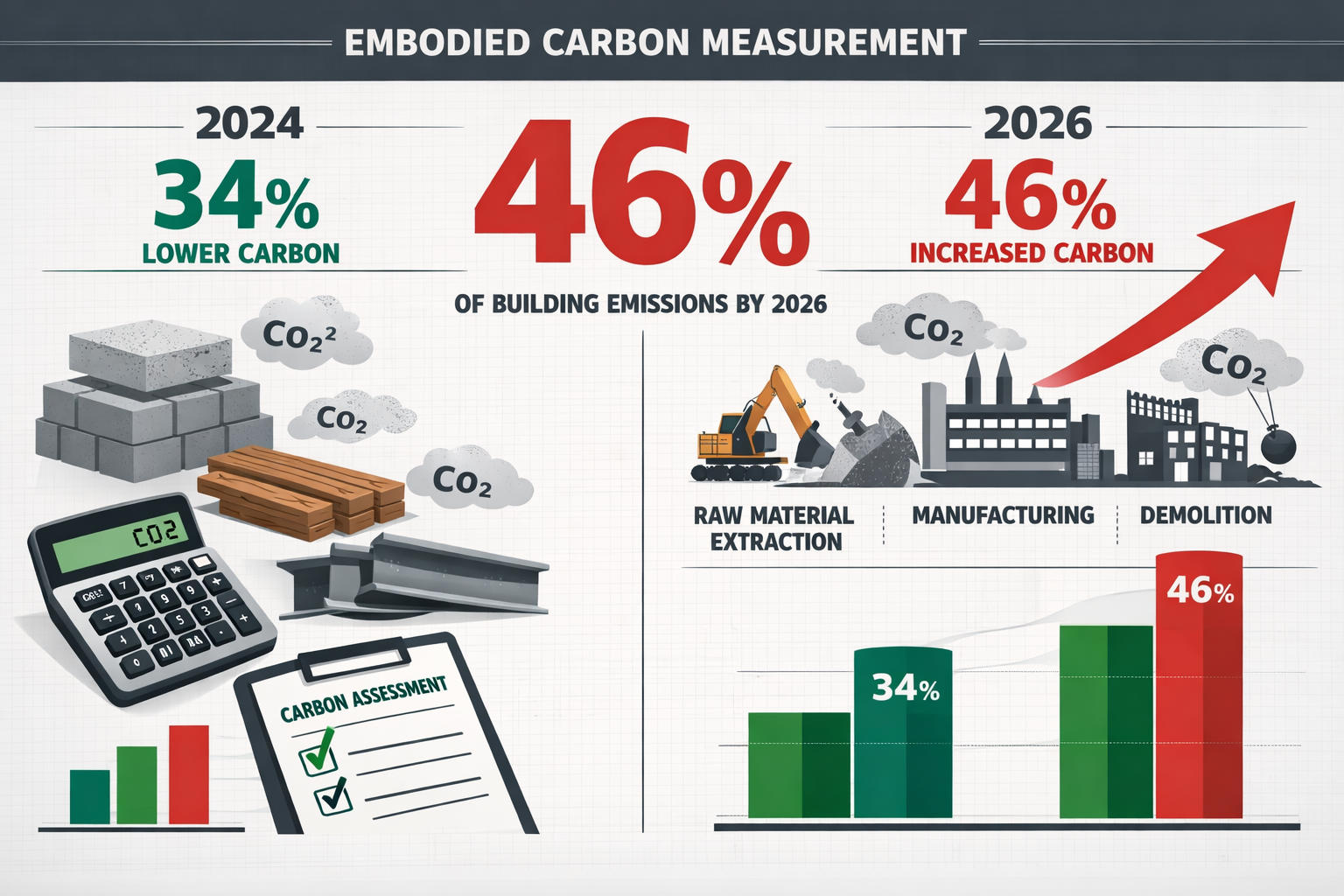
- 46% of construction professionals do not measure embodied carbon—a concerning increase from 34% in 2024, creating urgent need for surveyor upskilling in carbon assessment methodologies[4]
- 88% of occupiers prioritise high energy efficiency, making operational carbon evaluation a critical component of residential property audits and retrofit recommendations[6]
- The RICS Sustainable Building Index declined to +30 in 2025 from +41 in 2024, signaling slowing green building demand that requires surveyors to educate clients on long-term value[7]
- Only 16% of professionals report that carbon measurement significantly affects material selection, highlighting the need for surveyors to bridge the gap between assessment and actionable retrofit specifications[1]
- High initial costs and insufficient skills remain primary barriers to sustainable practices, positioning knowledgeable building surveyors as essential advisors for cost-effective net zero pathways[2]
Understanding the RICS Sustainability Report 2025 Context for Building Surveyors
The RICS Sustainability Report 2025 represents the most comprehensive annual assessment of green building market trends, professional practices, and implementation barriers across the global property sector. For building surveyors operating in the UK residential market in 2026, this report provides critical context for understanding client expectations, regulatory trajectories, and professional competency requirements.
The Carbon Measurement Crisis in Construction
Perhaps the most concerning finding from the RICS Sustainability Report 2025: Actionable Insights for Building Surveyors in 2026 Net Zero Audits is the deterioration in embodied carbon measurement practices. The proportion of construction professionals who do not measure embodied carbon increased from 34% in 2024 to 46% in 2025[4]. This backward trend occurs precisely when regulatory frameworks and client expectations demand greater carbon accountability.
For building surveyors conducting Level 3 building surveys, this measurement gap presents both a challenge and an opportunity. Clients increasingly expect carbon assessments as part of comprehensive property evaluations, yet many surveyors lack the training and tools to deliver accurate whole-life carbon calculations.
Regional Variations in Sustainable Building Demand
The RICS Sustainable Building Index reveals significant regional variations that affect surveyor practice:
| Region | Sustainable Building Index 2025 | Key Characteristics |
|---|---|---|
| Middle East & Africa | +52 | Highest growth, driven by new construction standards |
| United Kingdom | +43 | Strong regulatory drivers, retrofit focus |
| Europe | +39 | Mature market with established frameworks |
| Asia-Pacific | +27 | Emerging awareness, variable implementation |
| Americas | +11 | Slowest growth, regional policy variations |
The UK's index of +43 positions the market as a regional leader in sustainable building demand[6], creating favorable conditions for surveyors who develop net zero audit capabilities. However, the overall decline in the global index from +41 to +30 suggests that cost pressures and implementation challenges are tempering enthusiasm for green building investments[7].
The Skills Gap Affecting Net Zero Audits
30% of professionals cite insufficient knowledge and skills to reduce embodied carbon emissions[5], directly impacting the quality and consistency of net zero audits. For building surveyors, this skills deficit manifests in several critical areas:
- Whole-life carbon calculation methodologies including embodied and operational carbon assessment
- Retrofit specification expertise for cost-effective carbon reduction interventions
- Building performance evaluation using thermal imaging, airtightness testing, and energy modeling
- Carbon benchmarking knowledge to contextualize property performance against sector standards
- Climate resilience assessment for future-proofing recommendations
Chartered building surveyors who invest in these competencies position themselves as essential advisors in the transition to net zero residential property portfolios.
RICS Sustainability Report 2025: Actionable Insights for Building Surveyors in 2026 Net Zero Audits—Operational Carbon Assessment
Operational carbon—emissions generated during building occupation through energy consumption—remains the most visible and immediately addressable component of property carbon footprints. The RICS Sustainability Report 2025 provides clear evidence that 88% of occupiers prioritise high energy efficiency in buildings[6], making operational carbon assessment a non-negotiable element of contemporary building surveys.
Energy Performance Evaluation in Level 3 Surveys
For building surveyors conducting comprehensive property assessments, operational carbon evaluation extends far beyond reviewing existing Energy Performance Certificates (EPCs). A thorough 2026 net zero audit should include:
🔍 Thermal Performance Assessment
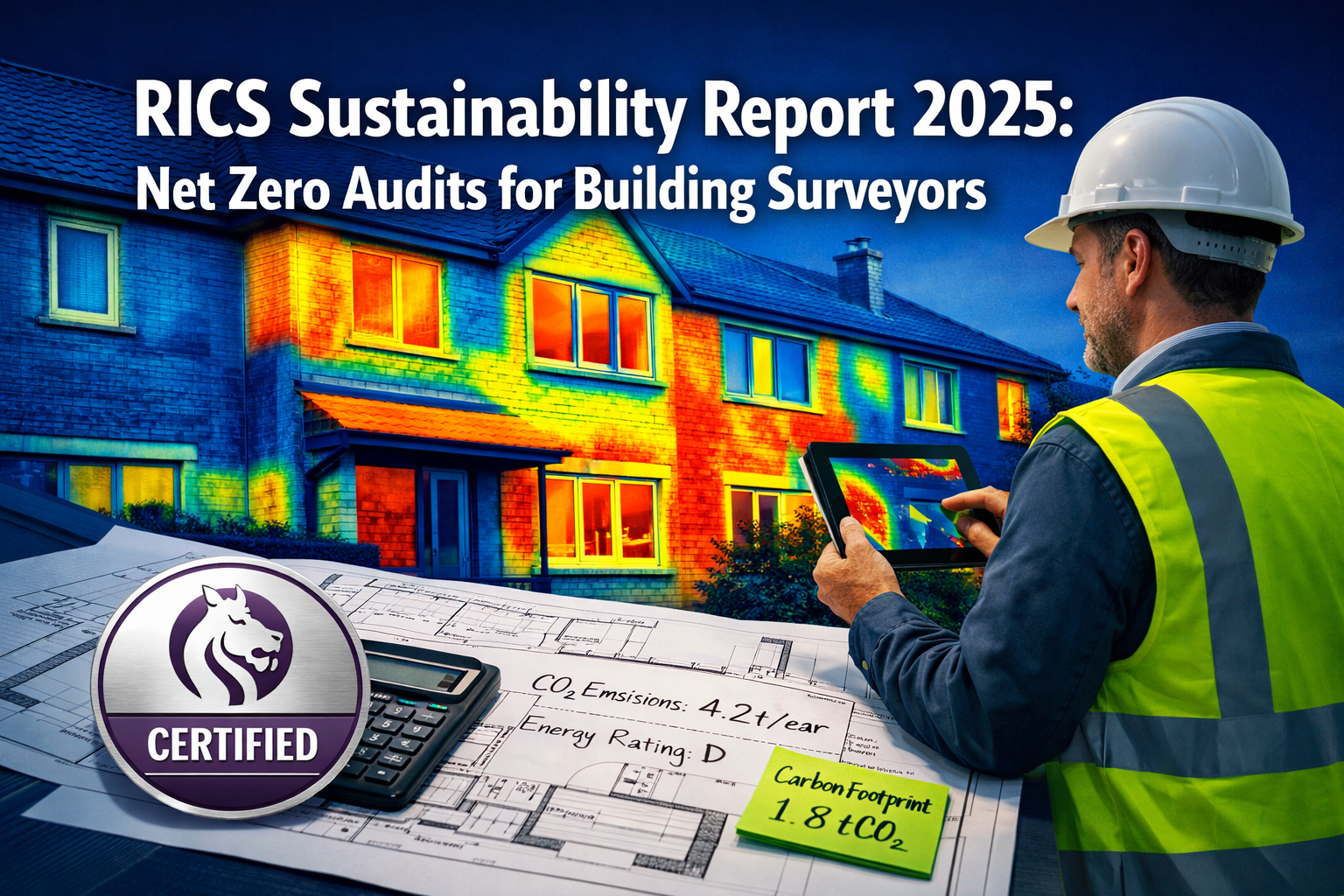
- Thermal imaging surveys to identify heat loss through building fabric
- U-value calculations for walls, roofs, floors, and glazing
- Air permeability testing to quantify uncontrolled ventilation losses
- Thermal bridging identification at junctions and penetrations
⚡ Heating and Hot Water Systems
- Boiler efficiency ratings and age-related performance degradation
- Distribution system losses through pipework and storage
- Control system effectiveness for zoning and scheduling
- Heat pump suitability assessment for electrification pathways
💡 Electrical Systems and Appliances
- Lighting efficiency and control systems
- Electrical appliance energy consumption patterns
- Renewable energy generation potential (solar PV, solar thermal)
- Smart home technology integration opportunities
🌬️ Ventilation and Indoor Air Quality
- Natural ventilation effectiveness and heat recovery opportunities
- Mechanical ventilation system efficiency
- Indoor environmental quality monitoring
- Moisture management and condensation risk
Carbon Benchmarking for Residential Properties
The RICS Sustainability Report 2025 emphasizes that only 16% of professionals state that carbon measurement significantly affects their choice of materials and components[1], revealing a disconnect between assessment and action. Building surveyors can bridge this gap by providing clear carbon benchmarking that contextualizes property performance.
Effective carbon benchmarking in 2026 net zero audits should compare:
- Current operational carbon intensity (kgCO₂e/m²/year) against UK residential averages
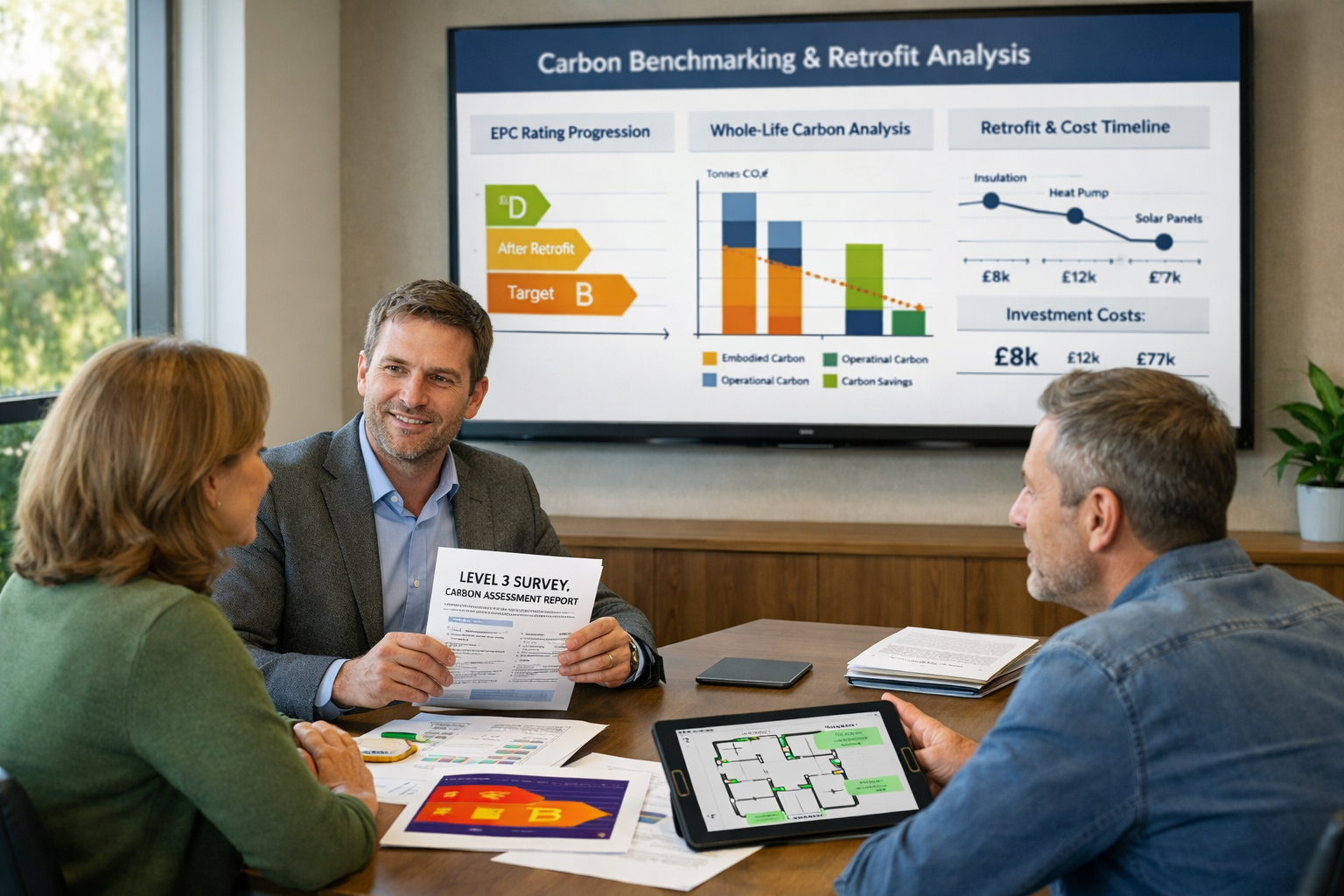
- EPC rating progression potential with specific intervention scenarios
- Fuel poverty risk assessment balancing carbon reduction with affordability
- Grid decarbonization trajectory showing how emissions reduce as electricity generation becomes cleaner
For clients considering property purchases or renovations, this benchmarking transforms abstract carbon data into actionable decision-making frameworks. RICS home surveys that incorporate carbon benchmarking provide significantly greater value than traditional assessments focused solely on structural condition.
Addressing the Cost Barrier
The RICS Sustainability Report 2025 identifies high initial costs as the primary barrier to adoption of sustainable practices[2]. Building surveyors conducting net zero audits must therefore prioritize cost-effective interventions that deliver measurable carbon reduction without prohibitive capital expenditure.
A staged retrofit approach typically delivers optimal cost-benefit outcomes:
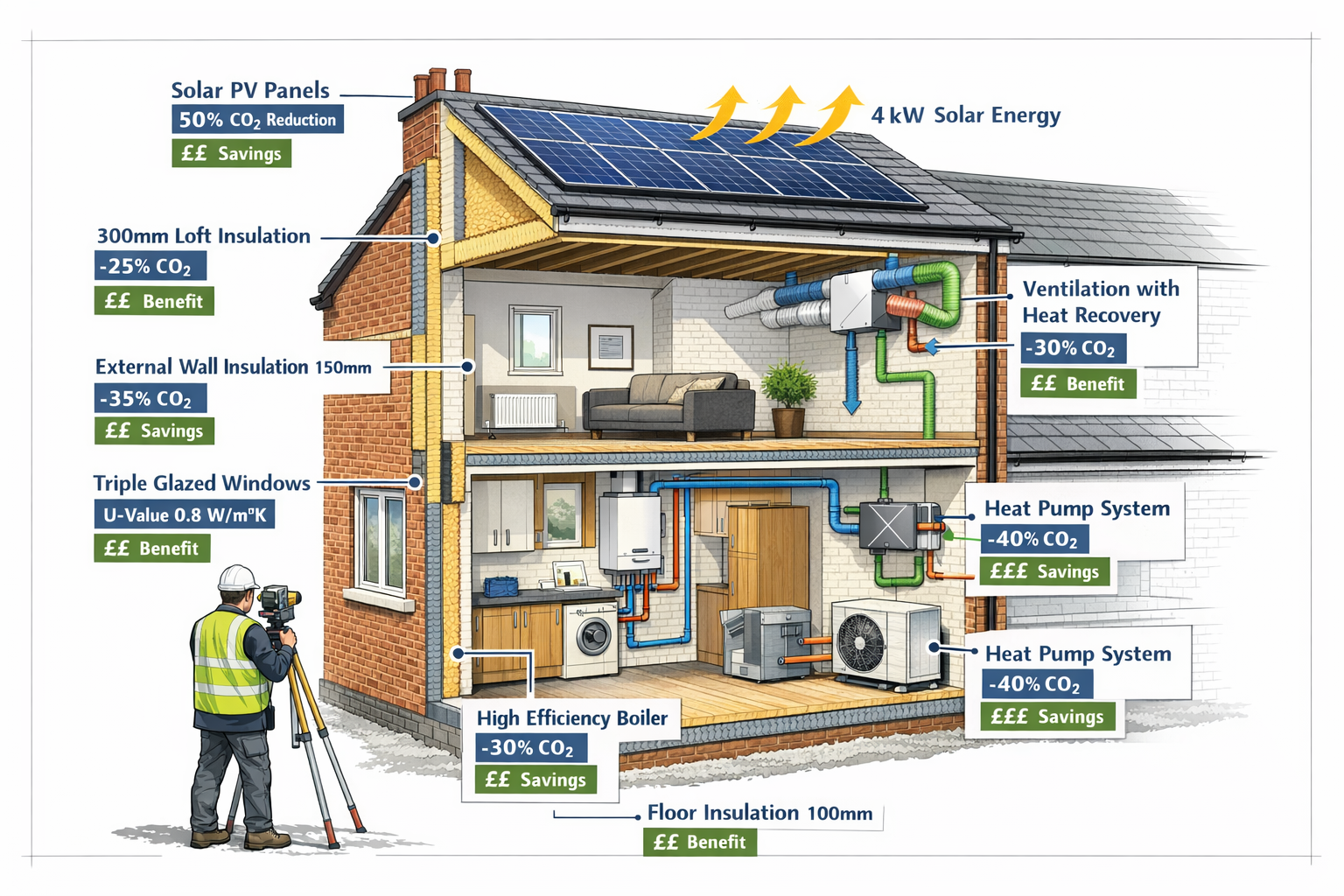
Phase 1: Low-Cost, High-Impact Interventions (£2,000-£5,000)
- Loft insulation upgrades to 300mm
- Draught-proofing and air sealing
- Heating controls and thermostatic radiator valves
- LED lighting replacement
- Smart meter installation and energy monitoring
Phase 2: Medium-Cost Fabric Improvements (£10,000-£25,000)
- External or internal wall insulation
- Window and door replacement with high-performance glazing
- Floor insulation (suspended timber or solid floors)
- Ventilation system upgrades with heat recovery
Phase 3: System Replacement and Generation (£15,000-£35,000)
- Heat pump installation (air source or ground source)
- Solar PV system with battery storage
- Hot water system optimization
- Whole-house ventilation with heat recovery
This phased approach, clearly articulated in building survey reports, enables clients to plan investments over time while achieving progressive carbon reduction aligned with budget constraints.
Embodied Carbon Assessment in Residential Building Surveys
While operational carbon dominates current surveying practice, the RICS Sustainability Report 2025 reveals that embodied carbon—emissions associated with material extraction, manufacturing, transportation, construction, and end-of-life disposal—represents an increasingly critical assessment area. For existing residential properties, embodied carbon considerations primarily affect retrofit material selection and extension specifications.
The Embodied Carbon Measurement Gap
The report's finding that 46% of construction professionals do not measure embodied carbon[4] creates significant challenges for building surveyors attempting to provide whole-life carbon assessments. This measurement gap stems from several factors:
- Complexity of lifecycle assessment requiring specialized software and databases
- Lack of standardized methodologies across different property types and interventions
- Limited manufacturer data on product-specific carbon footprints
- Time and cost constraints in standard survey fee structures
Despite these challenges, building surveyors conducting comprehensive net zero audits in 2026 must develop practical approaches to embodied carbon assessment, particularly for properties where significant retrofit or extension work is contemplated.
Practical Embodied Carbon Assessment for Surveyors
For building surveyors without access to sophisticated lifecycle assessment software, a simplified embodied carbon evaluation can still provide valuable client guidance:
Material Carbon Intensity Hierarchy (kgCO₂e per kg of material)
- Low embodied carbon (< 1.0): Timber, recycled materials, natural insulation (sheep's wool, cellulose)
- Medium embodied carbon (1.0-3.0): Bricks, blocks, mineral wool insulation, standard glazing
- High embodied carbon (> 3.0): Concrete, steel, aluminum, plastic-based materials, foam insulation
When specifying retrofit interventions or evaluating proposed extensions, surveyors can apply this hierarchy to guide material selection toward lower embodied carbon options without requiring detailed calculations.
Retrofit Material Selection Guidance
The RICS Sustainability Report 2025 notes that more than 60% of respondents report carbon calculations in fewer than half of their projects—or not at all[5]. Building surveyors can address this gap by incorporating embodied carbon considerations into standard retrofit recommendations:
Insulation Material Comparison
| Material | Thermal Performance (W/mK) | Embodied Carbon (kgCO₂e/kg) | Typical Application |
|---|---|---|---|
| Sheep's wool | 0.038 | 0.5-1.0 | Breathable wall insulation |
| Wood fiber | 0.038-0.040 | 0.5-1.2 | External wall insulation |
| Cellulose | 0.035-0.040 | 0.4-0.8 | Loft and cavity insulation |
| Mineral wool | 0.032-0.044 | 1.2-1.5 | General purpose insulation |
| EPS foam | 0.030-0.038 | 2.5-3.5 | Below-ground insulation |
| PIR/PUR foam | 0.022-0.028 | 3.0-4.0 | Space-constrained applications |
For typical residential retrofit scenarios, natural insulation materials deliver comparable thermal performance with 50-75% lower embodied carbon than synthetic alternatives. However, surveyors must balance embodied carbon considerations with practical factors including moisture management, fire performance, space constraints, and cost.
Balancing Embodied and Operational Carbon
A critical insight from the RICS Sustainability Report 2025: Actionable Insights for Building Surveyors in 2026 Net Zero Audits is the need to optimize the balance between embodied carbon from retrofit interventions and operational carbon savings achieved through improved building performance.
For most UK residential properties, operational carbon savings from effective retrofit interventions will exceed the embodied carbon of the materials within 2-5 years. Building surveyors should calculate this "carbon payback period" to demonstrate the net carbon benefit of recommended interventions:
Carbon Payback Period = Embodied Carbon of Intervention (kgCO₂e) ÷ Annual Operational Carbon Saving (kgCO₂e/year)
This calculation provides clients with clear evidence that retrofit investments deliver genuine carbon reduction despite the embodied carbon associated with materials and installation.
Integrating Climate Resilience into Net Zero Audits
The RICS Sustainability Report 2025 emphasizes that net zero audits must extend beyond carbon reduction to address climate resilience—the capacity of buildings to withstand and adapt to changing climate conditions. For UK residential properties, this means assessing vulnerability to increased temperatures, flooding, water scarcity, and extreme weather events.
Climate Risk Assessment for Residential Properties
Building surveyors conducting comprehensive 2026 net zero audits should evaluate:
🌡️ Overheating Risk
- Solar gain through glazing and building orientation
- Thermal mass and night-time cooling potential
- Ventilation strategies for summer comfort
- Shading provision and external landscaping
- Future temperature projections for property location
💧 Flood and Water Management
- Fluvial, pluvial, and groundwater flood risk
- Surface water drainage capacity and sustainable drainage systems (SuDS)
- Flood resilience measures for at-risk properties
- Water efficiency and drought resilience
- Rainwater harvesting potential
🌪️ Extreme Weather Resilience
- Wind exposure and structural adequacy
- Roof covering security and storm damage risk
- Facade durability under increased weather extremes
- Landscape and boundary stability
Indoor Environmental Quality Assessment
The RICS Sustainability Report 2025 reveals that 94% of occupiers prioritise indoor environmental quality[6], making this assessment area critical for net zero audits that address occupant wellbeing alongside carbon reduction.
Building surveyors should evaluate:
- Air quality: Ventilation effectiveness, pollutant sources, filtration systems
- Thermal comfort: Temperature stability, radiant asymmetry, humidity control
- Acoustic performance: External noise intrusion, internal sound transmission
- Daylighting: Natural light distribution, glare control, view quality
- Moisture management: Condensation risk, mold prevention, breathability
Importantly, some carbon reduction measures—particularly airtightness improvements and mechanical ventilation systems—can adversely affect indoor environmental quality if poorly designed or installed. Building surveyors must identify these potential conflicts and recommend integrated solutions that optimize both carbon performance and occupant comfort.
Practical Implementation: RICS Sustainability Report 2025 Insights for Level 3 Survey Practice
Translating the findings of the RICS Sustainability Report 2025: Actionable Insights for Building Surveyors in 2026 Net Zero Audits into practical surveying workflows requires systematic integration of carbon assessment methodologies into existing Level 3 building survey protocols.
Enhanced Survey Scope for Net Zero Audits
Building surveyors should consider offering tiered service levels that accommodate varying client requirements and budgets:
Standard Level 3 Survey + Carbon Overview (additional 2-3 hours)
- EPC review and operational carbon benchmarking
- High-level retrofit opportunity identification
- Embodied carbon considerations for major repairs
- Climate resilience screening
Comprehensive Net Zero Audit (additional 1-2 days)
- Thermal imaging survey and building physics assessment
- Detailed retrofit specification with carbon and cost modeling
- Whole-life carbon assessment for proposed interventions
- Climate resilience detailed evaluation
- Renewable energy feasibility study
- Staged implementation roadmap
Monitoring and Verification Services (ongoing)
- Post-retrofit performance verification
- Energy consumption monitoring and optimization
- Carbon accounting and reporting
- Continuous improvement recommendations
This tiered approach enables clients to select appropriate assessment depth while positioning surveyors to capture additional fee value through specialized sustainability expertise.
Essential Tools and Resources for Net Zero Audits
Building surveyors developing net zero audit capabilities should invest in:
📱 Assessment Equipment
- Thermal imaging camera (FLIR or similar, minimum 320×240 resolution)
- Air permeability testing equipment or subcontractor relationships
- Moisture meters and environmental data loggers
- Laser distance measurers for accurate area calculations
💻 Software and Databases
- Energy modeling software (SAP, PHPP, or simplified tools)
- Carbon calculation tools (RICS Whole Life Carbon Assessment guidance)
- Embodied carbon databases (ICE database, EPD library)
- Retrofit scenario modeling platforms
📚 Knowledge Resources
- RICS professional standards and guidance notes
- Building Regulations Approved Documents (particularly Part L)
- PAS 2035 retrofit standards and coordination requirements
- Climate resilience guidance (Climate Change Committee reports)
Addressing the Skills Gap Identified in the RICS Report
The RICS Sustainability Report 2025 finding that 30% of professionals cite insufficient knowledge and skills[5] to reduce embodied carbon emissions highlights the urgent need for professional development. Building surveyors should pursue:
Formal Qualifications
- Retrofit Coordinator training and certification (PAS 2035)
- Energy assessment qualifications (Level 3 Domestic Energy Assessor)
- Building physics and thermal performance courses
- Whole-life carbon assessment training
Continuing Professional Development
- RICS sustainability CPD modules
- Industry conferences and technical seminars
- Peer learning networks and case study sharing
- Manufacturer technical training on low-carbon materials
Practical Experience Building
- Collaborative projects with energy consultants and retrofit specialists
- Case study documentation of net zero audit projects
- Client feedback integration for service refinement
- Pilot projects at reduced fees to develop expertise
Chartered surveyors who proactively address this skills gap will differentiate themselves in an increasingly sustainability-focused market.
Certification Pathways and Client Value Proposition
The RICS Sustainability Report 2025 reveals that 86% of investors identify green building certification as important[6], creating clear market demand for surveyors who understand certification pathways and can guide clients through the process.
UK Residential Certification Schemes
Building surveyors conducting net zero audits should be familiar with:
Energy Performance Certificates (EPCs)
- Mandatory for property sales and lettings
- Ratings from A (most efficient) to G (least efficient)
- Improvement recommendations with indicative costs
- Minimum EPC C target for rental properties by 2025-2028
Passivhaus Certification
- Ultra-low energy standard (< 15 kWh/m²/year heating demand)
- Rigorous design and quality assurance requirements
- Particularly relevant for new extensions and deep retrofits
- Premium market positioning and value
BREEAM Domestic Refurbishment
- Comprehensive sustainability assessment beyond energy
- Ratings from Pass to Outstanding
- Addresses health, wellbeing, materials, waste, ecology
- Increasingly required for social housing and institutional portfolios
Retrofit Standards (PAS 2035/2030)
- Quality assurance framework for domestic retrofit projects
- Mandatory for ECO4 and other government-funded schemes
- Requires Retrofit Coordinator and Retrofit Assessor roles
- Ensures whole-house approach and performance verification
Articulating Value to Clients
The RICS Sustainability Report 2025 finding that demand for green buildings is slowing (index decline from +41 to +30)[7] suggests that surveyors must more effectively communicate the value proposition of net zero audits and retrofit investments.
Financial Value Arguments
- Energy cost savings: Typical deep retrofit can reduce heating costs by 50-70%
- Property value premium: EPC A-rated properties command 5-10% price premiums
- Future-proofing: Avoiding obsolescence as regulations tighten
- Grant and incentive access: Eligibility for government and utility schemes
- Mortgage advantages: Green mortgage products offering preferential rates
Non-Financial Value Arguments
- Comfort improvement: Warmer in winter, cooler in summer, draft-free
- Health benefits: Better air quality, reduced condensation and mold risk
- Climate responsibility: Tangible contribution to carbon reduction targets
- Resilience: Better performance during extreme weather and energy crises
- Market positioning: Increased appeal to sustainability-conscious buyers
Building surveyors who effectively articulate these value propositions can counter the cost barrier identified in the RICS Sustainability Report 2025 and maintain client engagement with net zero objectives despite economic headwinds.
Regional Considerations for UK Building Surveyors
While the RICS Sustainability Report 2025 provides global perspectives, UK building surveyors must adapt insights to regional variations in building stock, climate conditions, and regulatory frameworks.
Building Stock Characteristics
The UK's diverse residential property portfolio requires tailored assessment approaches:
Victorian and Edwardian Properties (pre-1919)
- Solid wall construction requiring internal or external insulation
- Single-glazed sash windows with heritage considerations
- Suspended timber floors with underfloor ventilation
- Breathability requirements for traditional construction
- Conservation area and listed building constraints
Inter-War and Post-War Properties (1919-1980)
- Cavity wall construction suitable for insulation injection
- Original windows often requiring replacement
- Solid concrete floors with limited insulation options
- Asbestos considerations in 1950s-1970s properties
- Structural issues affecting retrofit feasibility
Modern Properties (post-1980)
- Higher baseline insulation standards
- Incremental improvement opportunities
- System optimization focus (heating controls, ventilation)
- Renewable energy integration potential
- New-build defect considerations affecting performance
Regional Climate Variations
UK building surveyors should adjust retrofit priorities based on regional climate characteristics:
Scotland and Northern England
- Higher heating degree days requiring enhanced insulation
- Lower overheating risk enabling aggressive airtightness
- Wind exposure considerations for external insulation
- Ground source heat pump suitability in rural areas
Southern England
- Increasing overheating risk requiring ventilation and shading
- Lower heating demand enabling smaller heating systems
- Water scarcity considerations for drought resilience
- Higher solar gain potential for PV systems
Coastal Regions
- Salt exposure affecting material durability
- Wind-driven rain requiring enhanced weather protection
- Flood risk assessment priority
- Marine air corrosion considerations
Building surveyors across different UK regions must adapt the RICS Sustainability Report 2025: Actionable Insights for Building Surveyors in 2026 Net Zero Audits to local conditions while maintaining consistent carbon assessment methodologies.
Future Outlook: Evolving Standards and Surveyor Adaptation
The RICS Sustainability Report 2025 provides a snapshot of current practice, but building surveyors must anticipate regulatory and market evolution to remain competitive and compliant.
Anticipated Regulatory Developments
Minimum Energy Efficiency Standards (MEES)
- Current: EPC E minimum for rental properties
- Trajectory: EPC C by 2025-2028, potentially EPC B by 2030
- Implications: Increased retrofit urgency for landlord clients
Building Regulations Part L Evolution
- Progressive tightening of new build and extension standards
- Potential introduction of embodied carbon limits
- Enhanced airtightness and ventilation requirements
- Implications: Higher specification standards for extension assessments
Future Homes Standard
- 2025 implementation for new builds (75-80% carbon reduction)
- Implications: Benchmark for retrofit ambition levels
Whole-Life Carbon Assessment Requirements
- Potential mandatory assessment for major renovations
- Standardized calculation methodologies
- Implications: Essential competency for building surveyors
Professional Development Priorities
Based on the RICS Sustainability Report 2025 findings, building surveyors should prioritize development in:
- Carbon literacy: Understanding carbon measurement, benchmarking, and reduction strategies
- Building physics: Thermal performance, moisture management, airtightness principles
- Retrofit coordination: Whole-house assessment and staged implementation planning
- Technology integration: Smart home systems, renewable energy, monitoring platforms
- Climate resilience: Adaptation strategies for changing climate conditions
- Client communication: Translating technical carbon data into actionable recommendations
The report's finding that high initial costs and lack of skills remain primary barriers[2] positions well-trained building surveyors as essential facilitators of the net zero transition, capable of designing cost-effective pathways and building client confidence in retrofit investments.
Conclusion
The RICS Sustainability Report 2025: Actionable Insights for Building Surveyors in 2026 Net Zero Audits reveals both the urgency and the opportunity facing building surveyors in the net zero transition. With 46% of construction professionals failing to measure embodied carbon, 88% of occupiers prioritizing energy efficiency, and 86% of investors valuing green certification, the market clearly demands comprehensive sustainability assessment integrated into standard surveying practice.
For building surveyors conducting Level 3 surveys and comprehensive property assessments, the report's findings translate into clear action priorities:
Immediate Actions ✅
- Integrate operational carbon benchmarking into all building surveys
- Develop thermal imaging and building performance assessment capabilities
- Establish retrofit specification frameworks with staged implementation pathways
- Articulate clear value propositions for net zero audits to counter cost barriers
Medium-Term Development 📈
- Pursue formal qualifications in retrofit coordination and energy assessment
- Build embodied carbon assessment methodologies into material specifications
- Develop climate resilience evaluation protocols for property-specific risks
- Establish collaborative relationships with energy consultants and retrofit specialists
Strategic Positioning 🎯
- Differentiate services through comprehensive net zero audit offerings
- Build case study portfolios demonstrating carbon reduction outcomes
- Engage with certification schemes to guide clients through green building pathways
- Contribute to professional knowledge sharing to address sector-wide skills gaps
The slowing demand for green buildings (index decline from +41 to +30) identified in the RICS Sustainability Report 2025 makes effective communication of sustainability value more critical than ever. Building surveyors who can translate carbon data into compelling financial, comfort, and resilience arguments will maintain client engagement despite economic headwinds.
As regulatory frameworks continue to tighten and climate impacts intensify, the integration of net zero assessment into building surveying practice transitions from competitive advantage to professional necessity. The RICS Sustainability Report 2025: Actionable Insights for Building Surveyors in 2026 Net Zero Audits provides the evidence base, benchmarking data, and implementation roadmap that building surveyors need to lead the UK residential property sector toward genuine carbon reduction.
Ready to integrate net zero assessment into your building surveys? Start by reviewing your current survey protocols against the RICS Sustainability Report 2025 findings, identifying skills gaps, and developing a professional development plan that positions you as a sustainability-competent surveyor. The transition to net zero is not a future challenge—it is the defining professional requirement of 2026 surveying practice.
For comprehensive property assessments that integrate carbon evaluation, contact our chartered surveyors to discuss how net zero audits can enhance your property decision-making.
References
[1] Sustainability Report 2025 Royal Institution Chartered Surveyors – https://build-up.ec.europa.eu/en/resources-and-tools/publications/sustainability-report-2025-royal-institution-chartered-surveyors
[2] Update Justin Young Rics Ceo November 2025 – https://www.rics.org/news-insights/update-justin-young-rics-ceo-november-2025
[4] Sustainability Report 2025 – https://www.rics.org/news-insights/current-topics-campaigns/sustainability/sustainability-report-2025
[5] Demand For Green Buildings Slowing Rics Study Finds – https://sustainabilityonline.net/news/demand-for-green-buildings-slowing-rics-study-finds/
[6] Sustainability Report 2025 Infographic – https://www.rics.org/content/dam/ricsglobal/documents/reports/Sustainability-Report-2025-Infographic.pdf
[7] Rics Publishes Sustainability Report 2025 On Green Building Market Trends – https://www.lexisnexis.co.uk/legal/news/rics-publishes-sustainability-report-2025-on-green-building-market-trends