When a property dispute reaches court, the expert witness report becomes the pivotal document that can determine whether a surveyor faces negligence claims or emerges vindicated. In 2026, with RICS finalizing the Home Survey Standard 2nd Edition after an intensive 11-month Expert Working Group review process, the intersection between survey standards and expert witness testimony has never been more critical. Understanding how the RICS Home Survey Standard in Expert Witness Reports: 2026 Updates for Defect and Valuation Litigation shapes courtroom evidence is essential for surveyors navigating the increasingly complex landscape of professional liability.
The February 2026 progress update from RICS confirms that substantial changes are advancing through multiple approval stages, with implications that extend far beyond routine property inspections into the realm of litigation and expert testimony[3]. These updates directly impact how surveyors prepare defensible reports, document defects, and present evidence in negligence proceedings.
Key Takeaways
- 🔍 Enhanced Documentation Standards: The 2nd Edition introduces stricter requirements for defect recording and valuation methodology that directly strengthen expert witness credibility in court
- ⚖️ Technology Integration Guidance: New provisions on AI and digital tools establish clear protocols for evidence admissibility in litigation contexts
- 📋 Expanded Valuation Framework: Optional valuation across all survey levels creates new opportunities and responsibilities for expert witnesses in valuation disputes
- 🏗️ Additional Risk Dwelling Protocols: Specific guidance for high-risk properties provides defensible frameworks for complex defect litigation
- ✅ Compliance Template Requirements: Updated form templates align with legal evidence standards, reducing vulnerability in negligence claims
Understanding the RICS Home Survey Standard Framework in Litigation Context
The RICS Home Survey Standard serves as the foundational benchmark against which surveyor conduct is measured in professional negligence claims. When a homeowner alleges that a surveyor failed to identify significant defects or provided inaccurate valuations, courts examine whether the surveyor's work met the standards expected of a reasonably competent professional.
The Three-Tier Survey Structure and Expert Witness Implications
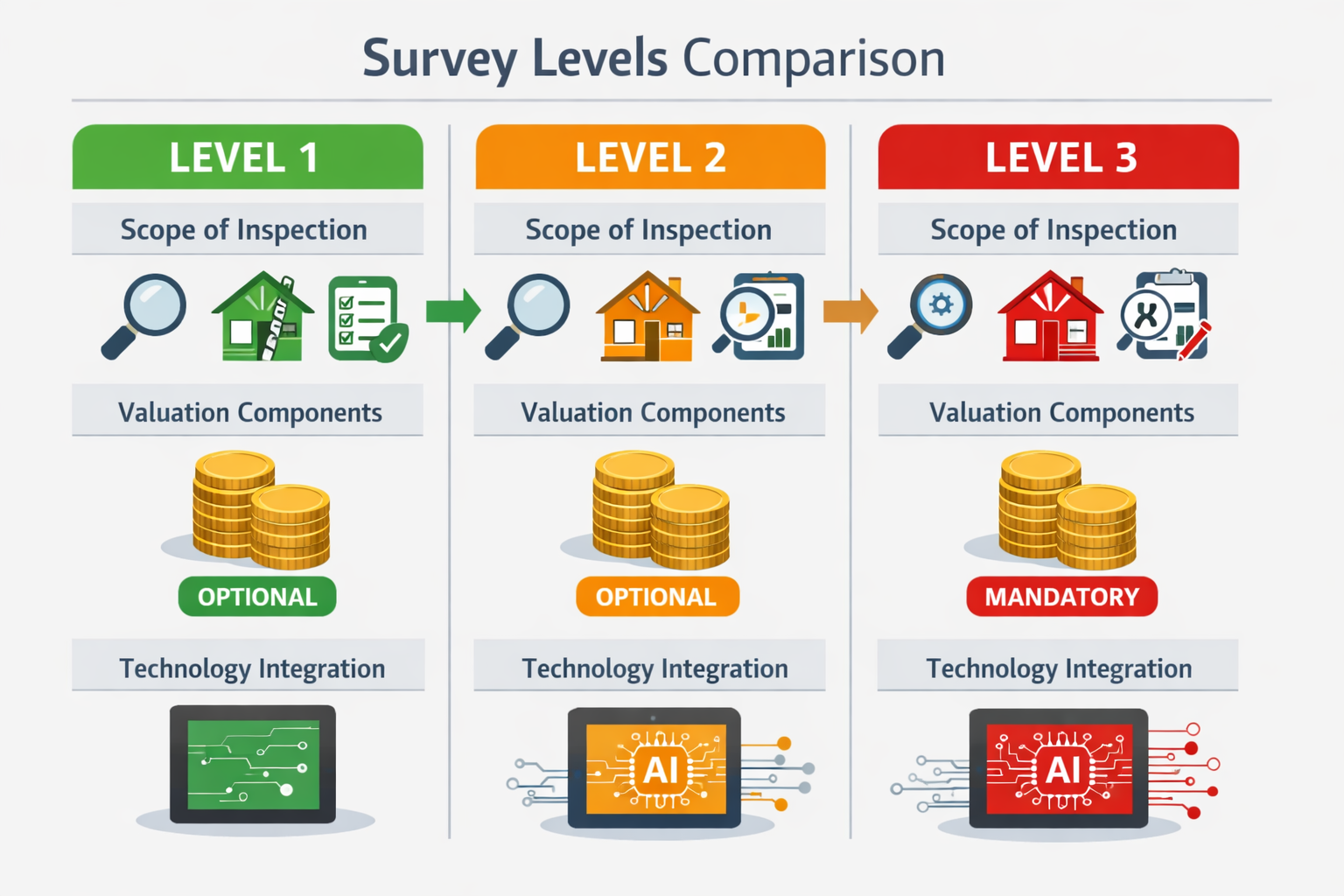
The RICS framework establishes three distinct levels of residential survey, each carrying different obligations:
| Survey Level | Primary Purpose | Litigation Exposure | Expert Witness Role |
|---|---|---|---|
| Level 1 (Condition Report) | Basic condition assessment | Lower risk; limited scope defense | Rarely contested; clear limitations |
| Level 2 (HomeBuyer Report) | Moderate inspection depth | Moderate risk; most common disputes | Frequently requires expert testimony |
| Level 3 (Building Survey) | Comprehensive investigation | Highest risk; extensive obligations | Primary focus of defect litigation |
For expert witnesses, understanding these distinctions proves crucial when evaluating whether a surveyor breached their duty of care. A RICS Building Survey carries significantly greater investigative obligations than a RICS HomeBuyer Survey Level 2, and expert reports must clearly articulate these differences to the court.
How Courts Apply RICS Standards in Negligence Cases
Judges rely on expert witness testimony to establish the appropriate standard of care. The expert's role involves:
✅ Defining the Standard: Explaining what a competent surveyor should have done given the specific survey level commissioned
✅ Identifying Breaches: Demonstrating where the defendant's conduct fell below acceptable practice
✅ Establishing Causation: Linking the breach to the claimant's losses
✅ Quantifying Damages: Providing valuation evidence for repair costs or diminution in value
The RICS standard on Surveyors Acting as Expert Witnesses emphasizes that experts must maintain objectivity and impartiality, distinguishing their role from that of an advocate[1]. This principle becomes particularly important when the expert witness is also a practicing surveyor who must evaluate a colleague's work.
RICS Home Survey Standard in Expert Witness Reports: 2026 Updates for Defect Documentation
The 2026 updates introduce several critical changes that directly impact how defects must be documented and presented in expert witness reports. These modifications strengthen the evidentiary value of survey reports while creating new compliance obligations.
Enhanced Defect Classification and Reporting Requirements
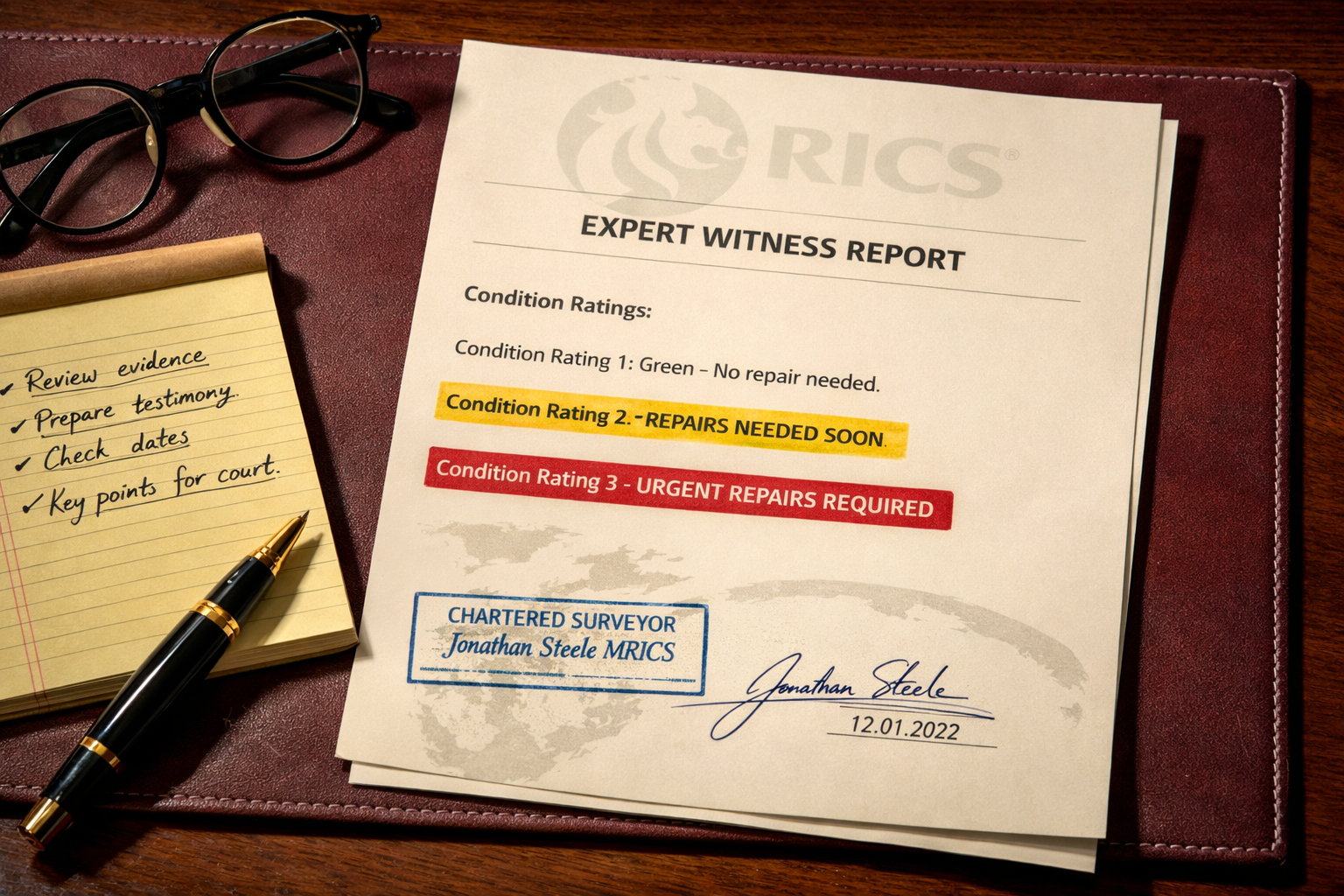
The 2nd Edition refines the condition rating system that forms the backbone of defect reporting. Expert witnesses must understand these classifications when evaluating whether a surveyor properly identified and categorized defects:
Condition Rating 1 (No repair currently needed): Minor defects with no immediate action required
Condition Rating 2 (Defects requiring future repair): Issues that need attention but are not urgent
Condition Rating 3 (Defects requiring urgent repair): Serious problems demanding immediate action
In litigation, disputes frequently arise when a surveyor assigns a defect to Rating 2 when it should have been Rating 3, or fails to identify a significant defect entirely. The updated standard provides more detailed guidance on classification criteria, which expert witnesses can reference when preparing reports for court.
Technology and AI Integration: New Evidentiary Standards
One of the most significant 2026 updates addresses the use of technology and artificial intelligence in survey practice[3]. This guidance has profound implications for expert witness work:
🤖 AI-Assisted Defect Detection: When surveyors use AI tools to identify structural issues, expert witnesses must evaluate whether the technology was appropriately applied and its limitations understood
📸 Digital Documentation Standards: Enhanced requirements for photographic evidence, thermal imaging, and drone inspections establish clearer protocols for evidence admissibility
💾 Data Retention Requirements: Specifications for maintaining digital records ensure that evidence remains available for future litigation
For expert witnesses preparing reports in 2026, understanding these technological standards is essential. A specific defect survey that incorporates drone imagery or thermal scanning must meet the new RICS protocols to be considered reliable evidence in court.
Additional Risk Dwelling Guidance and Litigation Exposure
The 2nd Edition introduces specific provisions for properties classified as having 'additional risk'[3]. These include:
- Properties with non-standard construction materials
- Buildings with known structural movement
- Dwellings affected by subsidence or flooding history
- Properties with significant alterations or extensions
When expert witnesses evaluate surveys of these properties, the new guidance provides clear benchmarks for expected practice. A surveyor who fails to recognize a dwelling as high-risk and adjust their inspection methodology accordingly may face increased liability exposure.
This guidance complements existing resources on why choosing an RICS Chartered Building Surveyor matters, particularly for complex properties where specialized expertise is essential.
RICS Home Survey Standard in Expert Witness Reports: 2026 Updates for Valuation Litigation
Valuation disputes represent a substantial portion of surveyor negligence claims. The 2026 updates significantly expand the valuation framework, creating both opportunities and risks for practitioners.
Expanded Optional Valuation Across All Survey Levels
Previously, valuation was typically associated with specific survey types. The 2nd Edition introduces optional valuation for all levels of surveying[3], fundamentally changing the landscape:
Impact on Expert Witness Work:
- Increased Valuation Disputes: As more surveyors offer valuations across all survey levels, the volume of valuation-related negligence claims will likely increase
- Methodology Scrutiny: Expert witnesses must evaluate whether the surveyor's valuation methodology was appropriate for the specific context and purpose
- Basis of Value Clarity: Reports must clearly state whether valuation is for market value, insurance purposes, or other specific bases
When preparing expert witness reports for valuation litigation, practitioners should reference comprehensive RICS valuation standards alongside the Home Survey Standard to establish the appropriate benchmark.
Valuation Report Format Requirements in Court Proceedings
The RICS standard on expert witnesses specifies written report format requirements[1] that apply to valuation evidence. Expert witness reports must include:
✏️ Clear Statement of Instructions: What the expert was asked to do
✏️ Methodology Explanation: How the valuation was conducted
✏️ Comparable Evidence: Market data supporting the valuation conclusion
✏️ Assumptions and Limitations: Any factors that constrained the valuation
✏️ Declaration of Truth: Confirmation that the expert understands their duty to the court
For complex valuation matters, such as Manchester valuation reports or specialized assessments, the expert must demonstrate familiarity with local market conditions and property characteristics.
Case Example: Valuation Negligence in Defect Context
Scenario: A surveyor conducted a Level 2 HomeBuyer Report and provided an optional market valuation of £450,000. The report identified minor roof repairs needed (Rating 2). Six months after purchase, the buyer discovered extensive roof truss failure requiring £85,000 in repairs. The buyer claimed the surveyor was negligent in both defect identification and valuation.
Expert Witness Analysis Required:
- Defect Identification Standard: Would a competent surveyor have identified the truss failure during a Level 2 inspection?
- Valuation Impact: If the defect should have been identified, what would the market value have been with full disclosure?
- Causation: Did the surveyor's failure cause the buyer's loss, or would they have proceeded regardless?
The expert witness report must address each element, referencing the RICS Home Survey Standard 2nd Edition provisions on inspection scope, defect classification, and valuation methodology. The report should also consider whether the property qualified as an 'additional risk' dwelling requiring enhanced scrutiny.
Compliance Pitfalls: Common Failures in Expert Witness Reports Under 2026 Standards
Understanding where surveyors commonly fail to meet RICS standards helps expert witnesses identify negligence and helps practicing surveyors avoid liability. The 2026 updates highlight several critical compliance areas.
Inadequate Documentation and Evidence Retention
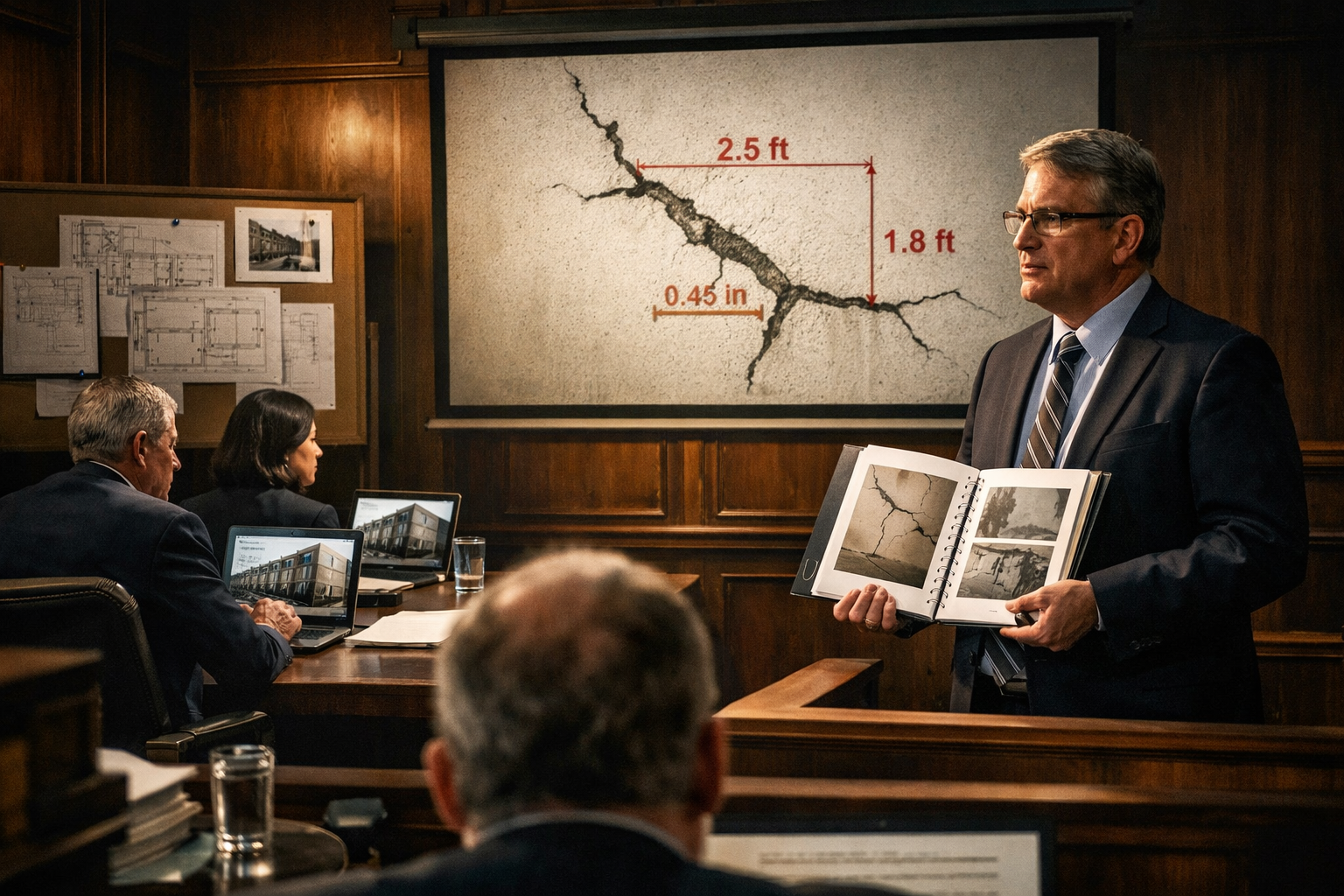
Common Pitfall: Surveyors fail to maintain comprehensive records of their inspection, including photographs, notes, and measurement data.
2026 Standard Requirements: The updated guidance on technology integration establishes clearer expectations for digital documentation and data retention[3].
Expert Witness Considerations: When evaluating a negligence claim, the absence of adequate documentation severely undermines the defendant surveyor's position. Expert witnesses should assess:
- Were sufficient photographs taken to document conditions?
- Did the surveyor maintain contemporaneous notes?
- Was measurement data recorded and retained?
- Were limitations clearly documented?
Conflict of Interest Management Failures
The RICS standard on expert witnesses provides explicit guidance on managing conflicts of interest[1]. Common failures include:
⚠️ Accepting expert witness appointments when the expert has a prior relationship with one party
⚠️ Failing to disclose financial interests in the outcome
⚠️ Allowing advocacy to override objectivity
Expert witnesses must maintain strict independence. When preparing reports, practitioners should disclose any potential conflicts immediately and, if necessary, decline the appointment.
Insufficient Analysis of Causation and Quantum
Many expert witness reports fail in litigation because they identify a breach of duty but inadequately address causation or quantum of damages.
Template for Robust Expert Analysis:
1. Standard of Care Section
- Define the applicable RICS Home Survey Standard requirements
- Explain what a competent surveyor should have done
- Reference specific provisions from the 2nd Edition
2. Breach Identification Section
- Detail where the defendant's conduct fell short
- Provide specific examples and comparisons
- Distinguish between minor and material breaches
3. Causation Analysis Section
- Establish the link between breach and loss
- Consider alternative scenarios
- Address counterfactual questions ("what if the defect had been identified?")
4. Quantum Assessment Section
- Provide repair cost estimates or valuation adjustments
- Reference market evidence and comparable data
- Distinguish between different heads of loss
For valuation-specific disputes, incorporating valuation report methodologies ensures the quantum analysis meets professional standards.
Failure to Address Retrofit and Emerging Service Areas
The 2026 updates explicitly reference emerging service areas including retrofit building surveys[3]. As properties undergo energy efficiency improvements and sustainability upgrades, new categories of defects and valuation considerations emerge.
Expert witnesses must stay current with these developments. A surveyor who fails to identify defects in recently installed insulation, solar panels, or heat pump systems may face negligence claims. The updated standard provides guidance that expert witnesses can reference when evaluating such claims.
Template Framework for Level 3 Expert Witness Reports in Negligence Claims
Preparing a comprehensive expert witness report for defect or valuation litigation requires systematic methodology. The following framework aligns with both RICS expert witness standards[1] and the Home Survey Standard 2nd Edition requirements[3].
Section 1: Expert Qualifications and Independence
Begin with a clear statement of qualifications, experience, and independence:
EXPERT QUALIFICATIONS
I am [Name], MRICS/FRICS, a Chartered Building Surveyor with [X] years of experience in residential property surveying. My qualifications include [relevant credentials]. I have prepared this report in accordance with RICS standards on Surveyors Acting as Expert Witnesses.
DECLARATION OF INDEPENDENCE
I confirm that I understand my duty to the court overrides any obligation to the party instructing me. I have no financial or other interest in the outcome of this matter. I am aware of no conflict of interest.
Section 2: Instructions and Scope
Clearly define what you were asked to do:
INSTRUCTIONS RECEIVED
I was instructed by [party] on [date] to provide an expert opinion on whether [defendant surveyor] conducted their [survey level] in accordance with RICS Home Survey Standard requirements, specifically addressing:
- Whether defects at the property should have been identified
- Whether the valuation provided was appropriate
- The quantum of loss suffered by the claimant
SCOPE OF INVESTIGATION
I have inspected the property on [date], reviewed the original survey report, examined [list documents], and considered [relevant evidence].
Section 3: Factual Background and Property Description
Provide objective facts without opinion:
- Property address and description
- Date of original survey
- Survey level commissioned
- Key facts about the property's condition
- Timeline of events leading to the dispute
Section 4: Applicable Standards and Methodology
Reference the specific RICS standards applicable:
APPLICABLE STANDARDS
The defendant surveyor's work must be evaluated against the RICS Home Survey Standard (2nd Edition, 2026), which establishes requirements for [survey level] inspections. Specifically relevant are provisions addressing:
- Scope of inspection for [survey level]
- Defect identification and classification requirements
- Condition rating criteria
- Valuation methodology (if applicable)
- Documentation and reporting standards
The surveyor's role as an expert witness (if applicable) is governed by RICS guidance on Surveyors Acting as Expert Witnesses[1].
Section 5: Analysis of Breach
Provide detailed analysis of where the defendant's conduct fell short:
Issue 1: Failure to Identify [Specific Defect]
A competent surveyor conducting a [survey level] inspection should have identified [defect] because:
- The defect was visible/accessible during a standard inspection
- The signs and symptoms were apparent to a reasonably competent surveyor
- The RICS Home Survey Standard requires inspection of [relevant element]
The defendant's failure to identify this defect constitutes a breach of duty because [explanation].
Section 6: Causation and Quantum
Link the breach to the claimant's losses and quantify damages:
CAUSATION
Had the defendant properly identified [defect] and classified it as Condition Rating [X], the claimant would have:
- Negotiated a price reduction of approximately £[amount]
- Commissioned specialist reports before purchase
- [Other consequences]
QUANTUM OF LOSS
The claimant's recoverable losses comprise:
- Repair costs: £[amount] (based on [evidence])
- Consequential losses: £[amount]
- Survey fee: £[amount]
Total: £[amount]
For valuation disputes, reference RICS valuation methodologies to support quantum calculations.
Section 7: Conclusion and Declaration
Conclude with a clear summary and the required declaration:
CONCLUSION
In my opinion, [defendant surveyor] failed to meet the standard of a reasonably competent surveyor conducting a [survey level] inspection by [summary of breaches]. These failures caused the claimant to suffer losses totaling approximately £[amount].
DECLARATION
I confirm that I have made clear which facts and matters referred to in this report are within my own knowledge and which are not. Those that are within my own knowledge I confirm to be true. The opinions I have expressed represent my true and complete professional opinions on the matters to which they refer.
Multi-Stage Approval Process and Future Developments
The RICS Home Survey Standard 2nd Edition is currently progressing through a multi-stage approval process[3] that includes:
- Editorial Review: Technical refinement of language and structure
- Residential Professional Group Panel Review: Practitioner feedback and validation
- Knowledge and Practice Committee Approval: Strategic alignment assessment
- Standards and Regulation Board Approval: Final authorization
This rigorous process ensures that the standard reflects current best practice and addresses emerging challenges in surveying and litigation contexts. Expert witnesses should monitor RICS communications for the final publication date and implementation timeline.
Form Template Revisions and Practical Implications
The RICS has confirmed that form templates will be reviewed and updated based on the final 2nd Edition[3]. This has significant implications for expert witness work:
📋 Surveyors using outdated templates after the new standard takes effect may face increased liability exposure
📋 Expert witnesses must verify which version of the standard and templates applied at the time of the original survey
📋 Courts will expect compliance with the current standard once the transition period expires
Practitioners should ensure they understand the comparison between different types of survey under both the current and updated standards.
Practical Recommendations for Surveyors and Expert Witnesses
To minimize liability exposure and prepare effective expert witness reports under the 2026 updates, consider these actionable strategies:
For Practicing Surveyors
✅ Update Training Immediately: Familiarize yourself with all 2026 changes, particularly technology integration and additional risk dwelling guidance
✅ Enhance Documentation Protocols: Implement robust systems for recording, storing, and retrieving inspection data
✅ Review Professional Indemnity Insurance: Ensure coverage adequately reflects expanded valuation services and technology use
✅ Adopt New Templates Promptly: Transition to updated RICS form templates as soon as they're released
✅ Seek Specialist Input: For additional risk dwellings, consider commissioning specialist reports rather than extending beyond your competence
For Expert Witnesses
✅ Maintain Current Knowledge: Stay updated on RICS standard revisions and case law developments
✅ Develop Template Frameworks: Create systematic report structures that ensure comprehensive analysis
✅ Document Independence Rigorously: Maintain clear records of conflict checks and independence declarations
✅ Invest in Continuing Education: Attend training on expert witness skills and litigation procedures
✅ Build Technical Expertise: Develop deep knowledge in specific areas (e.g., structural defects, valuation methodology, building pathology)
For Legal Practitioners Instructing Experts
✅ Select Appropriately Qualified Experts: Ensure the expert has specific experience relevant to the dispute
✅ Provide Comprehensive Instructions: Clearly define the issues requiring expert opinion
✅ Allow Adequate Time: Expert witness reports require thorough investigation and analysis
✅ Facilitate Site Access: Arrange property inspections and document access promptly
✅ Understand RICS Standards: Familiarize yourself with the Home Survey Standard to ask informed questions
Conclusion
The RICS Home Survey Standard in Expert Witness Reports: 2026 Updates for Defect and Valuation Litigation represents a significant evolution in how surveyors document property conditions and how courts evaluate professional conduct. The 2nd Edition's enhanced guidance on technology integration, expanded valuation frameworks, and additional risk dwelling protocols creates both opportunities and obligations for practitioners.
For expert witnesses, these updates provide clearer benchmarks against which to evaluate surveyor conduct in negligence claims. The emphasis on robust documentation, systematic defect classification, and transparent valuation methodology strengthens the evidentiary foundation for expert testimony.
Surveyors who proactively adapt their practice to the 2026 standards will reduce liability exposure and enhance the defensibility of their work. Those who fail to comply face increased risk of negligence claims and unfavorable expert witness testimony.
Next Steps
If you're a practicing surveyor: Review your current survey templates and procedures against the 2026 updates. Consider scheduling training on the new standard and updating your professional indemnity insurance to reflect expanded services.
If you're facing a potential negligence claim: Seek legal advice immediately and consider commissioning an independent expert review of the disputed survey. Early expert input can help assess the strength of your position.
If you're instructing an expert witness: Ensure your expert has current knowledge of the 2026 RICS Home Survey Standard and experience in similar litigation. Provide comprehensive instructions and all relevant documentation.
The intersection of professional standards and litigation will continue to evolve. Staying informed, maintaining rigorous practice standards, and understanding expert witness obligations remain essential for all surveyors navigating the complex landscape of property disputes in 2026 and beyond.
For comprehensive surveying services that meet the latest RICS standards, explore our full range of surveys and valuation services, delivered by experienced Chartered Surveyors committed to excellence in professional practice.
References
[1] Surveyors Acting As Expert Witnesses – https://www.rics.org/profession-standards/rics-standards-and-guidance/sector-standards/dispute-resolution-standards/surveyors-acting-as-expert-witnesses
[2] Home Survey Standard 2nd Edition A Progress Update – https://www.rics.org/news-insights/home-survey-standard-2nd-edition-a-progress-update
[3] Home Survey Standards – https://www.rics.org/profession-standards/rics-standards-and-guidance/sector-standards/building-surveying-standards/home-surveys/home-survey-standards
[4] Five Key Updates 2026 Altansps Land Title Survey Standards – https://westwoodps.com/recent-blog-posts/five-key-updates-2026-altansps-land-title-survey-standards
[5] Building Survey Standards Evolution How Rics Quality Strengthening Initiatives Impact Surveyor Practice In 2026 – https://nottinghillsurveyors.com/blog/building-survey-standards-evolution-how-rics-quality-strengthening-initiatives-impact-surveyor-practice-in-2026
[6] Expert Witness Roles In 2026 Building Safety Act Disputes Evidence Standards For Mid Rise Residential Blocks – https://nottinghillsurveyors.com/blog/expert-witness-roles-in-2026-building-safety-act-disputes-evidence-standards-for-mid-rise-residential-blocks