The Renters' Rights Act, coming into force on May 1, 2026, fundamentally reshapes how landlords must respond to tenant pet requests—and with it comes an unexpected surge in party wall survey requirements. As blanket pet bans become illegal[1], thousands of tenants will seek modifications to shared walls for pet doors, secure fencing attachments, and structural adaptations. Without proper Party Wall Surveys for Tenant Pet Modifications Under Renters' Rights Act: 2026 Dispute Avoidance protocols, landlords face costly disputes, delayed approvals, and potential legal challenges that could escalate to formal awards or expert witness proceedings.
This comprehensive guide provides actionable checklists and procedures to navigate pet-related structural changes through the Party Wall etc. Act 1996 framework, ensuring compliance with both new tenancy rights and existing property law obligations.
Key Takeaways
- 🏠 The Renters' Rights Act 2026 prohibits blanket pet bans, requiring landlords to consider requests with valid structural or legal reasons only[1]
- 📋 Pet modifications affecting party walls trigger Party Wall Act procedures, including formal notices, neighbor consultations, and professional surveys
- ⚖️ Proper party wall surveys prevent disputes from escalating to costly awards, expert witnesses, or tribunal proceedings
- ✅ Pre-modification checklists and documentation protect both landlord and tenant interests while maintaining neighbor relations
- 🔍 Professional surveyors play a pivotal role in assessing structural impacts and ensuring compliance with both Acts simultaneously
Understanding the Renters' Rights Act 2026 and Pet Modification Rights
What Changes on May 1, 2026?
The Renters' Rights Act represents the most significant overhaul of private rental legislation in decades. From May 1, 2026, landlords can no longer issue blanket refusals for tenant pet requests[1]. Instead, they must provide valid, documented reasons for any denial—and structural concerns must be substantiated through professional assessment.
This legislative shift creates a new intersection between tenancy law and property modification procedures. When a tenant requests permission to keep a pet that requires structural alterations—such as installing a cat flap through an external wall, mounting heavy-duty scratching posts that penetrate shared structures, or creating pet-safe barriers attached to party walls—landlords must navigate both the new tenancy requirements and the existing Party Wall Act protocols.
Types of Pet Modifications Requiring Party Wall Consideration
Not all pet accommodations trigger party wall procedures, but several common modifications do:
Structural penetrations:
- Cat flaps or pet doors through external walls adjoining neighboring properties
- Ventilation systems for indoor pet enclosures
- Drainage modifications for pet washing stations
Load-bearing attachments:
- Heavy-duty pet gates secured to shared walls
- Wall-mounted cat climbing systems with structural fixings
- Reinforced fencing attached to boundary walls
Acoustic modifications:
- Soundproofing installations on party walls to minimize pet noise
- Vibration-dampening systems for large dog households
Preventative structural work:
- Protective wall cladding to prevent scratch damage
- Moisture barriers in areas prone to pet-related humidity
Each of these scenarios requires careful assessment to determine whether they fall within the scope of the Party Wall etc. Act 1996 and whether they constitute reasonable modifications under the Renters' Rights Act 2026.
Party Wall Surveys for Tenant Pet Modifications: Essential Protocols
When Does the Party Wall Act Apply to Pet Modifications?
The Party Wall etc. Act 1996 applies when proposed work affects:
- Party walls (shared walls between properties)
- Party structures (shared floors, ceilings, or other structural elements)
- Boundary walls (walls standing on the boundary line)
- Excavations within specified distances of neighboring structures
For tenant pet modifications, the most common trigger occurs when installing fixtures or making penetrations through party walls. Even seemingly minor work—like drilling to install a pet gate bracket—can technically require notification if it affects the structural integrity of a shared wall.
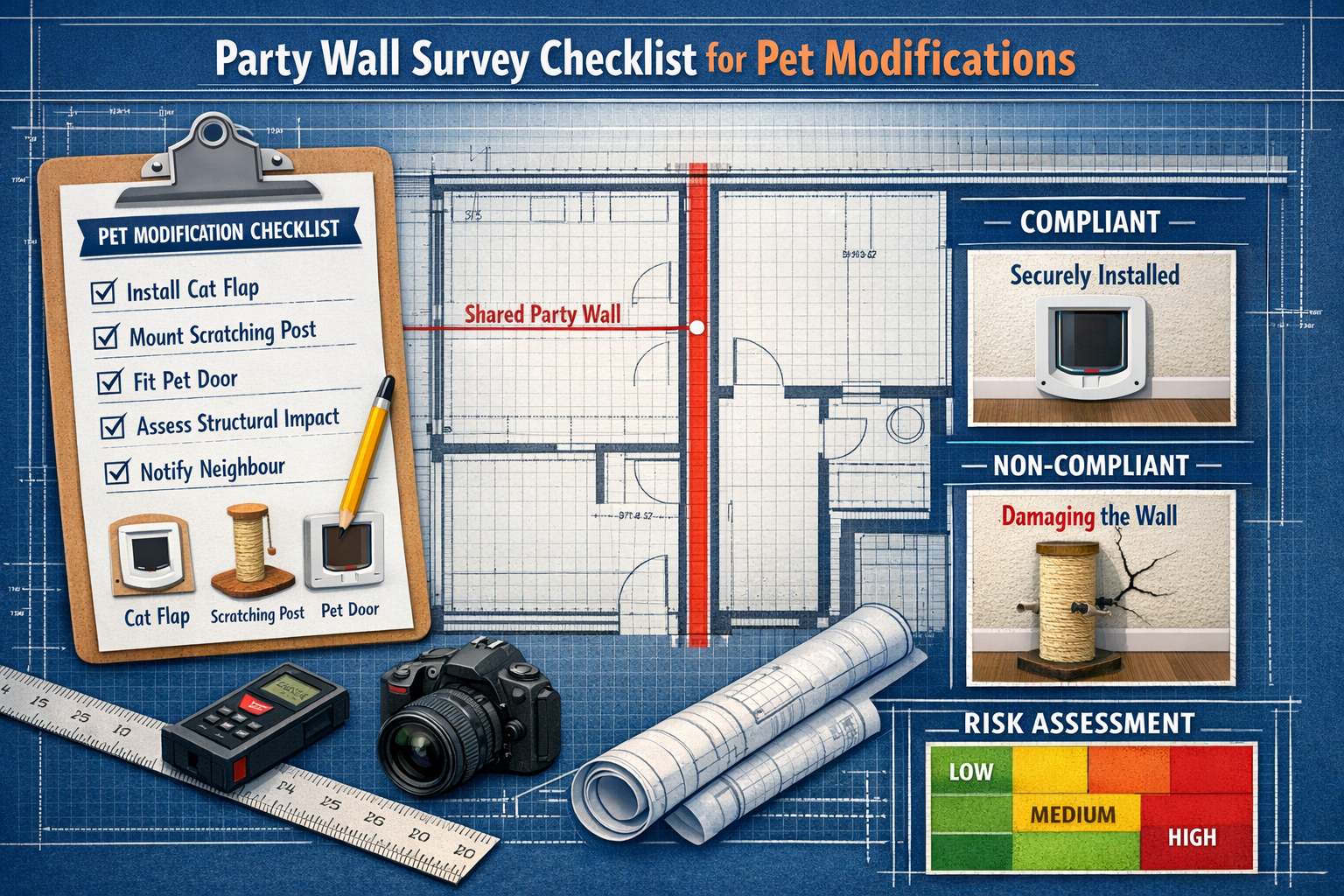
The Pre-Modification Assessment Checklist
Before any pet-related structural work proceeds, landlords should complete this comprehensive assessment:
✅ Property Structure Review:
- Identify all party walls and shared structures
- Determine property construction type and age
- Review existing structural surveys or reports
- Check for previous modifications or weaknesses
✅ Modification Scope Analysis:
- Document exact nature of proposed pet modification
- Assess whether work affects party walls or structures
- Determine depth and extent of any penetrations
- Evaluate load-bearing implications
✅ Regulatory Compliance Check:
- Confirm whether Party Wall Act notice is required
- Verify compliance with building regulations
- Review lease terms for modification restrictions
- Ensure alignment with Renters' Rights Act requirements[2]
✅ Neighbor Consultation Planning:
- Identify all adjoining owners requiring notification
- Prepare clear descriptions of proposed work
- Gather supporting documentation and diagrams
- Plan timeline for statutory notice periods
✅ Professional Survey Requirement:
- Determine if professional party wall surveyor needed
- Assess complexity of structural assessment required
- Budget for survey costs and potential awards
- Identify qualified RICS surveyors in your area
This checklist prevents the most common pitfall: proceeding with modifications without proper party wall agreements, which can result in injunctions, mandatory removal of installations, and substantial legal costs.
The Party Wall Survey Process for Pet Modifications
When a party wall survey becomes necessary, the process follows these structured stages:
Stage 1: Initial Consultation (Week 1-2)
The landlord or their appointed surveyor conducts an initial property assessment, documenting:
- Current condition of all party walls and structures
- Photographic evidence of existing state
- Any pre-existing damage or concerns
- Structural characteristics relevant to proposed work
Stage 2: Formal Notice Service (Week 3-4)
The building owner (landlord) serves formal Party Wall Notice to adjoining owners, including:
- Detailed description of proposed pet modification work
- Technical drawings or specifications
- Anticipated start date (minimum 2 months ahead)
- Contact details for appointed surveyor
Adjoining owners have 14 days to respond with consent or dissent.
Stage 3: Surveyor Appointment (Week 5-6)
If neighbors dissent or don't respond, a party wall surveyor must be appointed. Options include:
- Agreed Surveyor: One surveyor acting impartially for both parties (most cost-effective)
- Two Surveyors: Each party appoints their own surveyor, who jointly appoint a third surveyor if needed
- Third Surveyor: Acts as arbitrator if the two appointed surveyors disagree
Stage 4: Condition Survey (Week 7-8)
The appointed surveyor(s) conduct comprehensive condition surveys of:
- All affected party walls and structures
- Adjacent rooms and spaces in both properties
- External walls and boundaries
- Relevant structural elements
This creates an evidential baseline protecting both parties against future disputes about damage causation.
Stage 5: Award Preparation (Week 9-12)
The surveyor prepares a Party Wall Award—a legally binding document that:
- Authorizes specific work to proceed
- Sets conditions and working methods
- Establishes access rights and timing
- Determines cost responsibilities
- Provides dispute resolution mechanisms
Awards typically include clauses specific to pet modifications, such as requirements for noise monitoring during installation or restrictions on working hours to minimize pet stress in neighboring properties.
Stage 6: Work Execution and Monitoring
Once the award is in place, modification work can proceed with:
- Compliance monitoring by the appointed surveyor
- Regular progress updates to all parties
- Immediate reporting of any unexpected issues
- Documentation of completed work
Stage 7: Post-Completion Inspection
After work completion, the surveyor conducts a final inspection to:
- Verify work matches approved specifications
- Assess any impacts on party structures
- Compare against baseline condition survey
- Address any damage claims or concerns
This structured process, while seemingly complex, provides essential protection. According to industry experts, "This legislative shift demands a complete recalibration of party wall survey protocols, placing tenant rights at the center of every notice"[3], emphasizing the need for professional guidance in this evolving landscape.
Dispute Avoidance Strategies and Documentation Requirements

Common Dispute Triggers and Prevention Methods
Party Wall Surveys for Tenant Pet Modifications Under Renters' Rights Act: 2026 Dispute Avoidance requires proactive identification of potential conflict points:
Dispute Trigger #1: Inadequate Notification
Prevention: Serve comprehensive, detailed Party Wall Notices that include:
- Clear technical descriptions accessible to non-professionals
- Visual aids showing exact modification locations
- Expected duration and working hours
- Contact information for questions
Dispute Trigger #2: Unclear Cost Allocation
Prevention: Establish upfront agreements about:
- Who pays for party wall surveys (typically the building owner/landlord)
- Responsibility for any remedial work
- Insurance coverage for accidental damage
- Cost caps and approval thresholds
Dispute Trigger #3: Access Disputes
Prevention: Include specific access provisions in awards:
- Reasonable notice periods (typically 14 days)
- Defined access times and duration
- Provisions for emergency access
- Compensation for significant inconvenience
Dispute Trigger #4: Scope Creep
Prevention: Maintain strict adherence to approved specifications:
- No modifications without amended awards
- Clear change control procedures
- Documentation of any variations
- Additional neighbor consultation for scope changes
Dispute Trigger #5: Damage Claims
Prevention: Comprehensive condition surveys before and after work:
- Professional photographic evidence
- Detailed written descriptions
- Independent third-party documentation
- Clear causation evidence
Essential Documentation for Dispute Avoidance
Maintaining meticulous records prevents disputes from escalating to formal proceedings or requiring expert witness testimony:
Pre-Work Documentation:
| Document Type | Purpose | Retention Period |
|---|---|---|
| Condition Survey Report | Baseline evidence | Permanent |
| Party Wall Notices | Legal compliance proof | 6 years minimum |
| Neighbor Correspondence | Consultation evidence | 6 years minimum |
| Technical Specifications | Work scope definition | Permanent |
| Insurance Certificates | Liability coverage proof | Duration + 6 years |
During-Work Documentation:
| Document Type | Purpose | Retention Period |
|---|---|---|
| Progress Photographs | Work verification | Permanent |
| Site Visit Reports | Compliance monitoring | 6 years minimum |
| Variation Records | Scope change tracking | Permanent |
| Incident Reports | Problem documentation | Permanent |
Post-Work Documentation:
| Document Type | Purpose | Retention Period |
|---|---|---|
| Completion Certificates | Work authorization | Permanent |
| Final Condition Survey | Damage assessment baseline | Permanent |
| Warranty Documents | Workmanship guarantees | Warranty period + 6 years |
| Neighbor Sign-Off | Acceptance confirmation | Permanent |
Integrating Renters' Rights Act Compliance
The intersection of party wall procedures and tenant pet rights requires additional documentation specific to the Renters' Rights Act 2026:
Tenant Pet Request Documentation:
- Formal written pet request from tenant
- Pet details (species, size, behavior history)
- Proposed accommodation modifications
- Tenant's acknowledgment of responsibilities
Landlord Assessment Documentation:
- Structural feasibility assessment
- Party wall implications analysis
- Insurance policy review and amendments
- Decision rationale (approval or valid refusal grounds)
Ongoing Compliance Records:
- Regular property inspections showing pet impact
- Maintenance records for pet-related modifications
- Neighbor feedback or complaints log
- Remediation work documentation
This comprehensive documentation approach ensures that if disputes arise, landlords can demonstrate they've acted reasonably under both the Renters' Rights Act and Party Wall Act frameworks, significantly reducing the likelihood of adverse tribunal findings or court judgments.
When to Engage Professional Surveyors
While some straightforward pet modifications may not require professional surveyor involvement, certain situations demand expert assessment:
Mandatory Professional Survey Situations:
- ⚠️ Modifications affecting structural integrity
- ⚠️ Work on listed buildings or conservation areas
- ⚠️ Complex party wall arrangements (multiple adjoining owners)
- ⚠️ Previous dispute history with neighbors
- ⚠️ High-value properties where damage risks are significant
Recommended Professional Survey Situations:
- Properties with known structural issues or previous subsidence
- Older properties (pre-1900) with uncertain construction methods
- Modifications involving external walls in terraced properties
- Situations where neighbors have expressed concerns
- Landlords unfamiliar with Party Wall Act procedures
Professional surveyors bring invaluable expertise in navigating the technical and legal complexities of Party Wall Surveys for Tenant Pet Modifications Under Renters' Rights Act: 2026 Dispute Avoidance, often preventing problems before they escalate to formal disputes.
Step-by-Step Implementation Guide for Landlords
Phase 1: Receiving and Evaluating Tenant Pet Requests
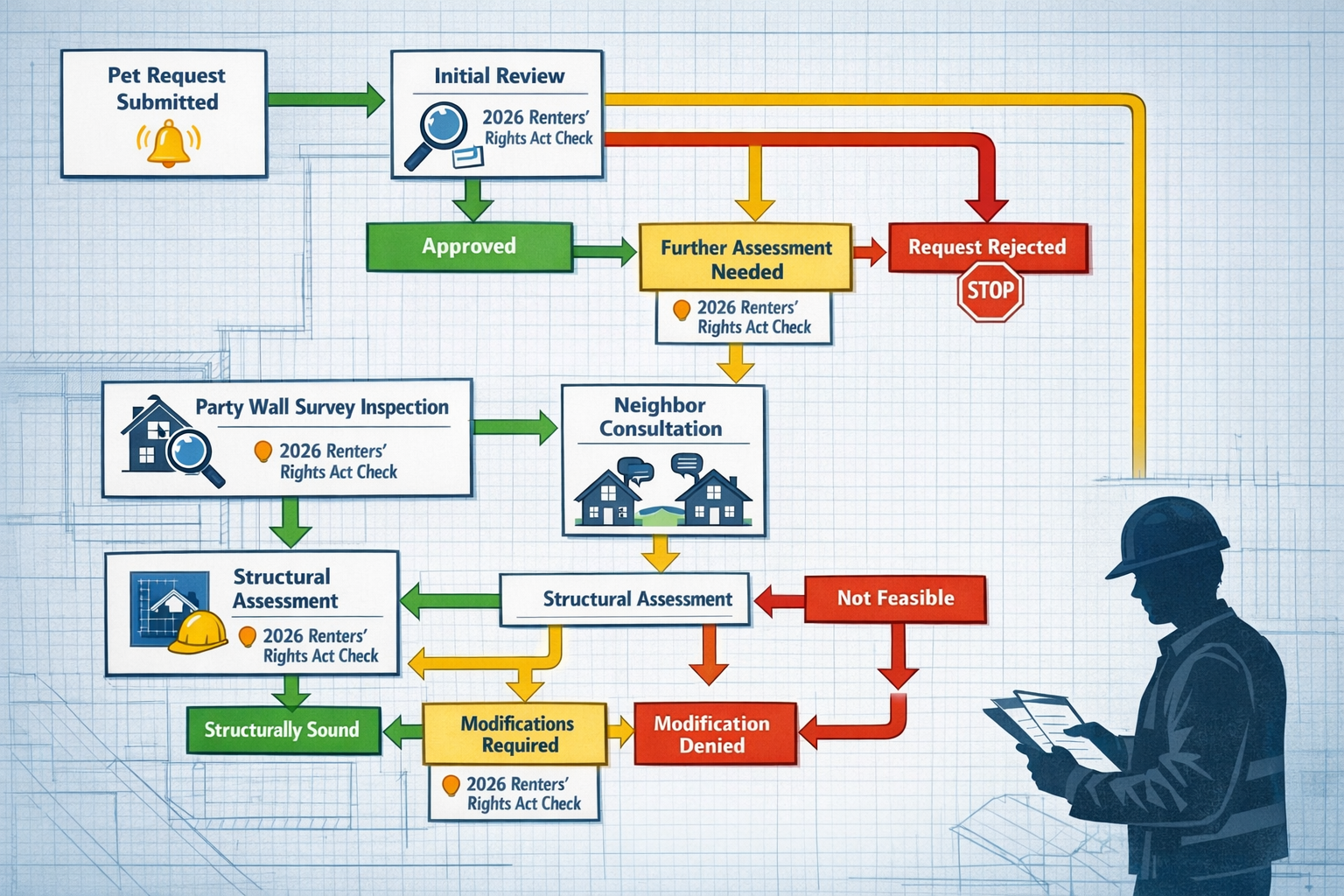
When a tenant submits a pet request under the Renters' Rights Act 2026, landlords should follow this systematic evaluation process:
Step 1: Acknowledge Receipt (Within 48 Hours)
- Send written acknowledgment to tenant
- Request any additional information needed
- Provide estimated timeline for decision
Step 2: Initial Feasibility Assessment (Week 1)
- Review property lease terms and restrictions
- Check insurance policy pet provisions
- Assess property type and construction
- Identify potential structural modification needs
Step 3: Structural Implications Review (Week 1-2)
- Determine if proposed pet requires modifications
- Identify which modifications affect party walls
- Consult with professional surveyor if uncertain
- Assess whether specific defect reports are needed
Step 4: Neighbor Consultation (Week 2-3)
- Informally notify adjoining owners of potential modifications
- Gauge neighbor receptiveness
- Address preliminary concerns
- Build collaborative approach
Step 5: Decision and Communication (Week 3-4)
- Make informed decision based on structural and legal factors
- Provide written decision to tenant with clear rationale
- If approved, outline required party wall procedures
- If denied, provide valid reasons compliant with Renters' Rights Act[1]
Phase 2: Initiating Party Wall Procedures
Once pet approval is granted and modifications are identified:
Step 6: Appoint Party Wall Surveyor (Week 4-5)
- Research qualified RICS-accredited surveyors
- Verify experience with residential party walls
- Confirm availability and fee structure
- Formally appoint surveyor in writing
Step 7: Commission Baseline Condition Survey (Week 5-6)
- Schedule access to all affected properties
- Ensure comprehensive photographic documentation
- Obtain detailed written condition reports
- Secure neighbor cooperation
Step 8: Prepare and Serve Party Wall Notices (Week 6-7)
- Work with surveyor to draft compliant notices
- Include all required technical information
- Serve notices to all adjoining owners
- Document service dates and methods
Step 9: Manage Notice Response Period (Week 7-9)
- Monitor for neighbor responses
- Address questions or concerns promptly
- If consent received, proceed to work planning
- If dissent or no response, proceed to award process
Phase 3: Award Preparation and Work Authorization
Step 10: Facilitate Award Preparation (Week 9-12)
- Provide surveyor with complete modification specifications
- Review draft award terms
- Negotiate reasonable conditions
- Ensure tenant understands obligations
Step 11: Finalize Contractor Selection (Week 10-12)
- Obtain multiple quotes for modification work
- Verify contractor insurance and qualifications
- Confirm contractor understands party wall requirements
- Establish clear work schedule
Step 12: Obtain Final Award (Week 12)
- Review and approve final party wall award
- Ensure all parties receive copies
- Confirm understanding of terms and conditions
- Establish work commencement date
Phase 4: Work Execution and Monitoring
Step 13: Pre-Work Preparations (Week 13)
- Notify all parties of confirmed start date
- Arrange surveyor monitoring schedule
- Brief contractors on party wall obligations
- Establish communication protocols
Step 14: Oversee Modification Work (Week 13-15)
- Ensure compliance with approved specifications
- Facilitate surveyor site visits
- Address any issues immediately
- Maintain detailed progress records
Step 15: Post-Completion Procedures (Week 16)
- Commission final condition survey
- Compare against baseline documentation
- Address any damage claims promptly
- Obtain neighbor sign-off where possible
Phase 5: Ongoing Compliance and Maintenance
Step 16: Update Property Records
- Document all modifications in property file
- Update insurance policies with modification details
- Amend tenancy agreements if necessary
- Create maintenance schedule for pet modifications
Step 17: Establish Monitoring Protocols
- Schedule regular property inspections
- Monitor pet impact on modifications
- Maintain open communication with neighbors
- Address concerns proactively
Step 18: Prepare for Tenancy Transitions
- Document modification condition at tenancy end
- Assess whether modifications remain for future tenants
- Update marketing materials if property becomes pet-friendly
- Maintain party wall documentation for future reference
This comprehensive implementation guide ensures landlords navigate the complex intersection of tenant rights, party wall obligations, and neighbor relations effectively, minimizing dispute risks while complying with the Renters' Rights Act 2026.
Cost Considerations and Financial Planning
Typical Cost Breakdown for Pet Modification Party Wall Surveys
Understanding the financial implications helps landlords budget appropriately:
Party Wall Survey Costs:
- Initial consultation: £150-£300
- Baseline condition survey: £400-£800
- Party wall award preparation: £800-£1,500
- Monitoring and final inspection: £300-£600
- Total surveyor costs: £1,650-£3,200
Modification Work Costs (Examples):
- Cat flap installation (external wall): £200-£500
- Pet door with proper sealing: £400-£1,200
- Wall-mounted pet fixtures: £150-£600
- Soundproofing installation: £800-£2,500
Additional Costs:
- Legal advice (if disputes arise): £200-£500 per hour
- Insurance premium adjustments: £50-£200 annually
- Remediation work (if damage occurs): Variable
- Neighbor compensation (if required): Variable
Who Pays for Party Wall Surveys?
Under standard Party Wall Act procedures, the building owner (landlord) typically bears the cost of:
- Their own surveyor fees
- Agreed surveyor fees (if using single surveyor)
- Neighbor's reasonable surveyor fees (if they appoint their own)
However, landlords may negotiate with tenants to share costs, particularly if:
- The modification primarily benefits the tenant
- The lease permits cost recovery for alterations
- The tenant specifically requested the pet accommodation
Any cost-sharing arrangements should be documented in writing before work commences to prevent disputes.
Insurance Considerations
Pet modifications and party wall work create specific insurance implications:
Landlord Insurance Adjustments:
- Notify insurer of pet permission and modifications
- Confirm coverage for pet-related damage
- Verify party wall work is covered during construction
- Ensure adequate public liability coverage
Contractor Insurance Requirements:
- Minimum £5 million public liability insurance
- Professional indemnity insurance for specialist work
- Employer's liability insurance if using employees
- Evidence of insurance before work commences
Party Wall-Specific Coverage:
- Consider party wall insurance (£100-£300 annually)
- Covers legal costs if disputes arise
- Provides expert surveyor access
- Protects against neighbor damage claims
Regional Variations and Special Circumstances
Party Wall Act Application in England and Wales
The Party Wall etc. Act 1996 applies throughout England and Wales, but the Renters' Rights Act 2026 creates region-specific considerations:
England:
- Full Renters' Rights Act implementation from May 1, 2026[1]
- Standard party wall procedures apply
- Local authority building control may have additional requirements
- Conservation areas require additional approvals
Wales:
- Separate Welsh rental legislation may apply
- Party Wall Act procedures remain consistent
- Welsh language notice requirements in some areas
- Additional environmental considerations in designated areas
Scotland and Northern Ireland
Scotland:
- Different legal framework (no Party Wall Act)
- Common law and building standards apply
- Separate rental legislation governs pet rights
- Professional surveyor advice essential
Northern Ireland:
- Party Wall Act does not apply
- Common law principles govern shared walls
- Different tenancy legislation
- Local building regulations vary
Listed Buildings and Conservation Areas
Pet modifications in protected properties require additional considerations:
Listed Building Consent:
- Required for any alterations affecting character
- Pet modifications may be refused if they impact heritage value
- Specialist conservation surveyors recommended
- Extended approval timelines (3-6 months typical)
Conservation Area Requirements:
- External modifications may require planning permission
- Stricter aesthetic standards apply
- Materials and methods must match existing construction
- Community consultation may be required
Leasehold Properties and Management Companies
When the landlord is a leaseholder rather than freeholder:
Additional Approval Layers:
- Freeholder consent required
- Management company approval needed
- Service charge implications
- Building insurance policy compliance
Extended Timelines:
- Allow 4-8 additional weeks for freeholder approvals
- Management company board meetings may delay decisions
- Multiple party wall notices may be required
- Complex cost allocation among multiple parties
Conclusion: Implementing Effective Party Wall Surveys for Tenant Pet Modifications Under Renters' Rights Act: 2026 Dispute Avoidance
The convergence of the Renters' Rights Act 2026 and established party wall procedures creates both challenges and opportunities for landlords, tenants, and property professionals. By implementing the comprehensive checklists and protocols outlined in this guide, stakeholders can navigate pet modification requests while maintaining legal compliance, protecting property values, and preserving neighbor relationships.
Key Success Factors
Proactive Planning: Address potential party wall implications at the earliest stage of pet request evaluation, before making commitments to tenants that may prove structurally or legally problematic.
Professional Expertise: Engage qualified RICS surveyors with specific experience in residential party walls and tenant modification scenarios, particularly for complex or high-value properties.
Comprehensive Documentation: Maintain detailed records at every stage, from initial tenant requests through final completion inspections, creating an evidential trail that protects all parties.
Transparent Communication: Keep all stakeholders—tenants, neighbors, surveyors, and contractors—informed throughout the process, addressing concerns promptly and collaboratively.
Regulatory Compliance: Ensure simultaneous compliance with both the Renters' Rights Act tenant protections and Party Wall Act neighbor safeguards, recognizing that both frameworks carry legal force.
Actionable Next Steps for Landlords
-
Audit Your Portfolio (This Month): Review all rental properties to identify those with party walls or shared structures where tenant pet requests could trigger party wall procedures.
-
Establish Professional Relationships (This Month): Connect with qualified party wall surveyors in your area before you need them urgently, building relationships that facilitate smooth processes when requests arise.
-
Update Tenant Communication Materials (Before May 2026): Revise pet policy documentation to reflect Renters' Rights Act requirements while clearly explaining party wall obligations and timelines.
-
Review Insurance Coverage (Before May 2026): Consult with your insurance provider about pet-related modifications, party wall work coverage, and any necessary policy adjustments.
-
Create Standardized Procedures (Before May 2026): Develop internal checklists and workflows based on this guide, ensuring consistent, compliant responses to all pet modification requests.
-
Budget for Survey Costs (Ongoing): Incorporate party wall survey expenses into property management budgets, recognizing these as necessary compliance costs in the post-May 2026 rental landscape.
-
Monitor Legislative Developments (Ongoing): Stay informed about Renters' Rights Act implementation guidance and any clarifications affecting party wall procedures for tenant modifications.
The integration of Party Wall Surveys for Tenant Pet Modifications Under Renters' Rights Act: 2026 Dispute Avoidance protocols represents a new standard of professional practice in residential property management. Landlords who embrace these procedures proactively will not only avoid costly disputes but also position themselves as responsible, tenant-friendly property providers in an increasingly regulated market.
By treating party wall surveys not as bureaucratic obstacles but as valuable risk management tools, the rental sector can successfully navigate this legislative transition while protecting the interests of all stakeholders—landlords, tenants, and neighbors alike.
References
[1] Shw Renters Rights Act Begins Implementation Journey On 1st May 2026 – https://www.shw.co.uk/news/2025/shw—renters-rights-act-begins-implementation-journey-on-1st-may-2026.html
[2] Renters Rights Act – https://lewisham.gov.uk/myservices/housing/private-tenants-and-landlords/landlords/renters-rights-act
[3] Party Wall Surveys Under Renters Rights Act 2026 Protocols For Landlord Improvements Without Section 21 Evictions – https://nottinghillsurveyors.com/blog/party-wall-surveys-under-renters-rights-act-2026-protocols-for-landlord-improvements-without-section-21-evictions
[4] Landlords Now To Fulfil New Legal Duty For Renters Rights Act – https://www.gov.uk/government/news/landlords-now-to-fulfil-new-legal-duty-for-renters-rights-act
[5] Renters Rights Act 2026 Building Survey Implications For Pet Friendly Rentals And New Decent Homes Standards – https://nottinghillsurveyors.com/blog/renters-rights-act-2026-building-survey-implications-for-pet-friendly-rentals-and-new-decent-homes-standards