The Renters' Rights Act 2026 will trigger a surge in institutional landlord property improvements starting May 2026, with party wall surveyors positioned at the intersection of enhanced tenant protections and essential building works. As landlords rush to upgrade rental portfolios before new restrictions take effect, understanding Party Wall Surveying for Rental Property Improvements: Navigating 2026 Renters' Rights Act Implications for Landlord Works becomes critical for avoiding costly disputes and legal complications.
The convergence of strengthened tenant rights and necessary structural improvements creates a complex landscape where traditional party wall procedures must adapt to accommodate occupied rental properties. Landlords can no longer simply serve notices and commence works—they must now balance Party Wall Act 1996 requirements with the enhanced rights tenants gain under the 2026 legislation.
Key Takeaways
- 🏗️ May 2026 deadline drives urgency: Landlords are accelerating improvement works before Renters' Rights Act provisions fully activate, increasing party wall surveying demand
- ⚖️ Dual compliance framework: Party wall procedures must now accommodate both Party Wall Act 1996 requirements and enhanced tenant notification rights under 2026 legislation
- 🛡️ Liability exposure increases: Landlords face heightened risk from tenant complaints about disruption during party wall works, requiring comprehensive documentation
- 📋 Enhanced notice protocols: Standard party wall notices require supplementary tenant-focused communications explaining works, timelines, and tenant rights
- 💼 Professional surveyor value: Independent party wall surveyors provide essential protection by ensuring procedural compliance across both regulatory frameworks
Understanding the 2026 Renters' Rights Act Impact on Party Wall Works
The Renters' Rights Act 2026 fundamentally reshapes the landlord-tenant relationship by abolishing Section 21 "no-fault" evictions and strengthening tenant security of tenure. For party wall surveying, this creates immediate practical implications.
Why Landlords Are Accelerating Improvement Projects
Institutional landlords and portfolio owners recognize that post-May 2026, removing tenants to facilitate major works becomes significantly more complex. The elimination of Section 21 notices means landlords cannot easily regain possession for substantial renovations without proving specific grounds.
This reality drives three key behaviors:
- Pre-emptive upgrades: Landlords are scheduling loft conversions, extensions, and structural improvements before the Act takes full effect
- Occupied property works: More party wall procedures now involve tenanted properties where disruption management becomes critical
- Enhanced documentation: Surveyors must create more comprehensive records to protect against potential tenant claims under expanded rights
The party wall consent process becomes more nuanced when tenants—rather than owner-occupiers—are the affected parties receiving notices.
Tenant Rights During Party Wall Works
Under the 2026 framework, tenants gain enhanced protections that intersect with party wall procedures:
| Tenant Right | Party Wall Implication | Surveyor Action Required |
|---|---|---|
| Right to quiet enjoyment | Works must minimize disruption to occupied rental units | Schedule works during reasonable hours; provide advance disruption notices |
| Protection from retaliatory eviction | Landlords cannot use Section 21 after tenant complaints about works | Document all communications; ensure works comply with all regulations |
| Right to information | Tenants entitled to details about works affecting their home | Provide plain-language explanations alongside technical party wall notices |
| Rent reduction claims | Tenants may seek rent abatement for significant disruption | Complete works efficiently; maintain detailed progress records |
Surveyors must now consider that the "adjoining owner" in party wall procedures may be a tenant with limited authority but enhanced protections. This creates situations where the party wall award guidance must account for both the property owner's legal position and the tenant's occupancy rights.
Party Wall Surveying Protocols for Rental Property Improvements Under 2026 Legislation
Navigating Party Wall Surveying for Rental Property Improvements: Navigating 2026 Renters' Rights Act Implications for Landlord Works requires updated protocols that address the unique challenges of occupied rental properties.
Enhanced Notice Procedures for Tenanted Properties
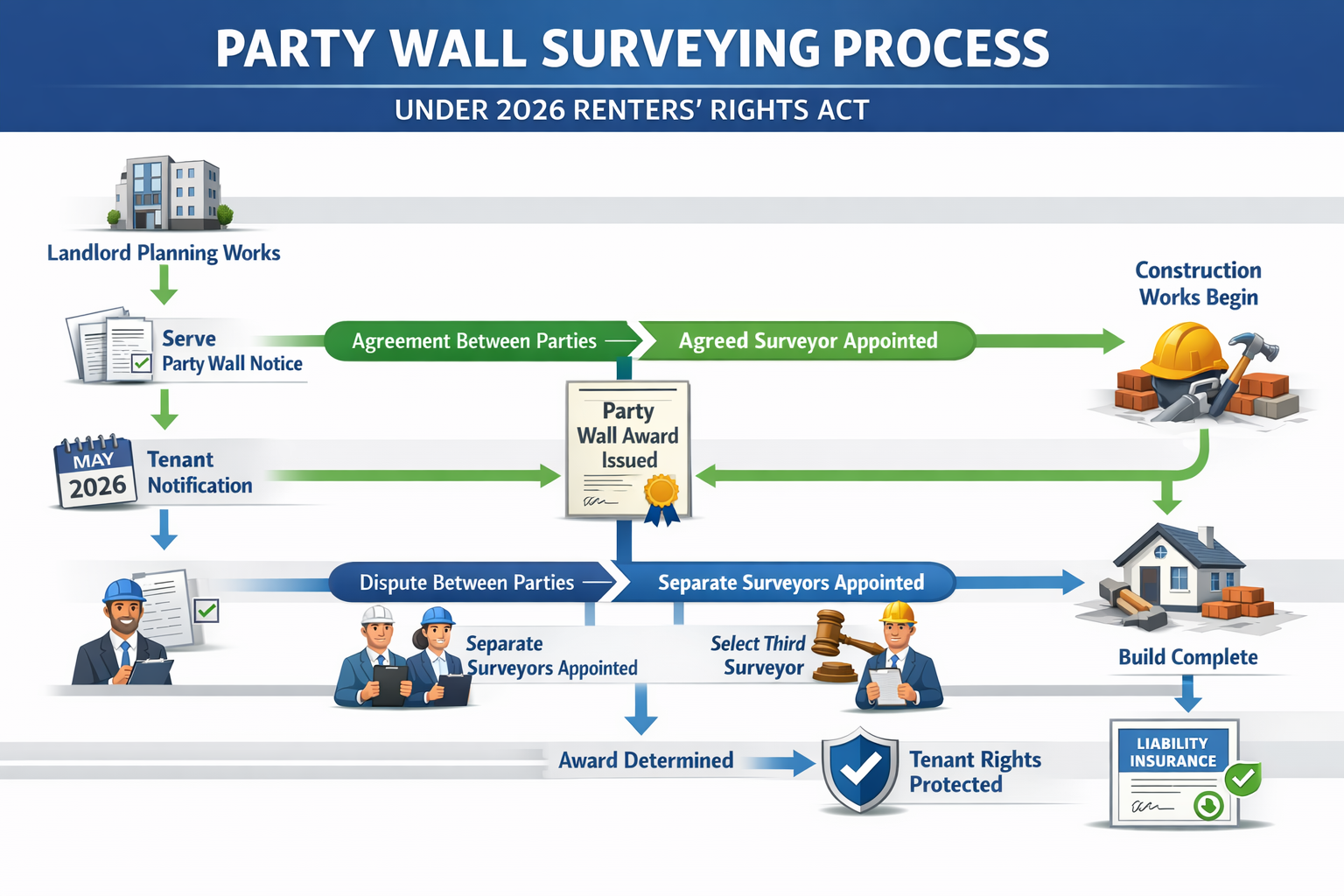
The standard party wall notice procedure under the Party Wall Act 1996 remains legally binding, but practical implementation requires additional layers when rental properties are involved.
Standard Party Wall Notice Requirements:
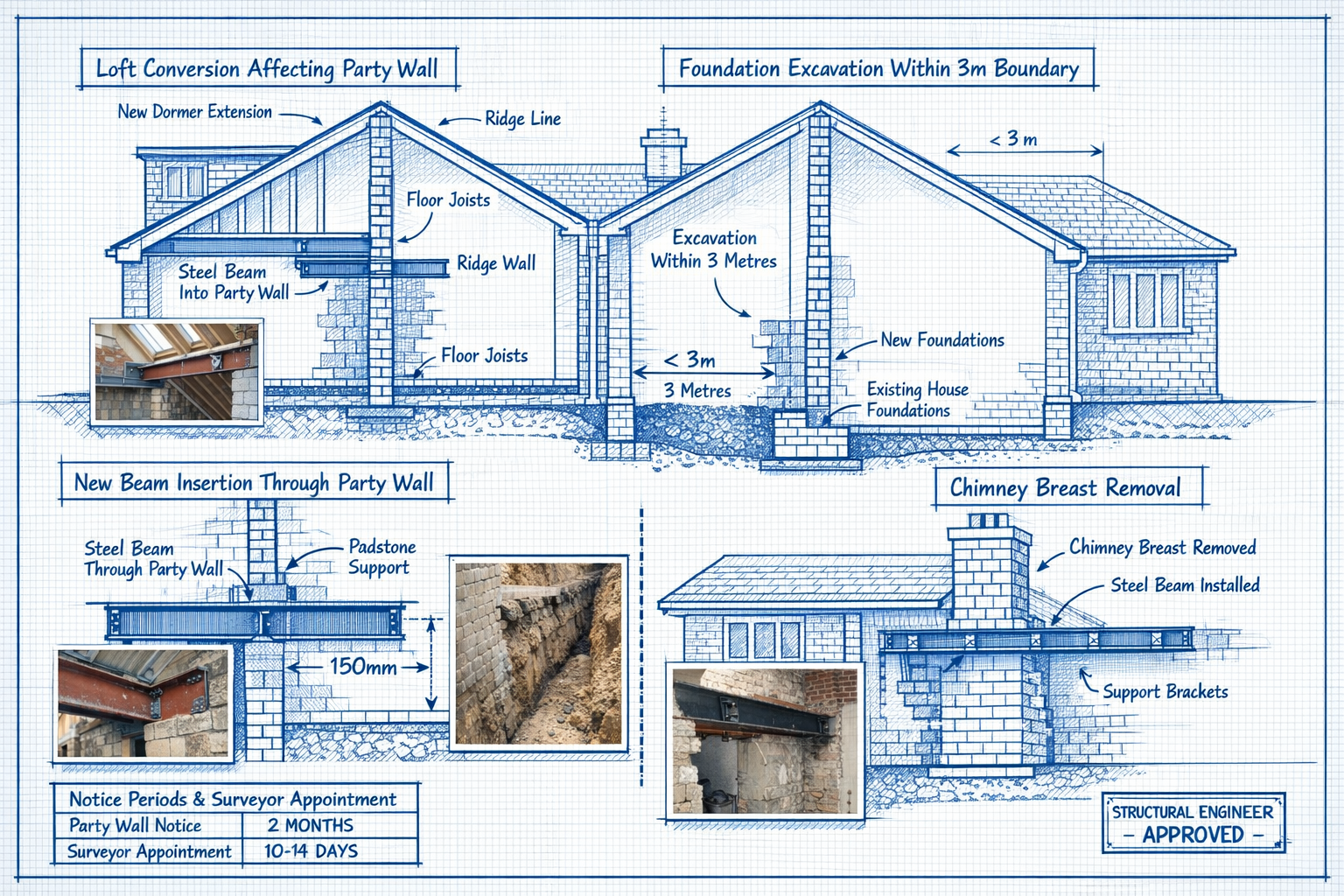
- Minimum 2 months' notice for building works on party walls
- Minimum 1 month notice for excavations within 3-6 meters
- Written notice served to "adjoining owner"
Additional 2026 Considerations for Rental Properties:
- ✅ Serve notice to both property owner AND occupying tenant
- ✅ Provide tenant-friendly explanations of technical works
- ✅ Include contact information for tenant queries
- ✅ Specify expected duration and disruption levels
- ✅ Outline tenant rights during works period
- ✅ Confirm landlord's obligations under tenancy agreement
Many landlords mistakenly believe serving notice only to the adjoining property owner suffices. However, when that property is tenanted, failing to communicate directly with occupiers creates risks under the enhanced tenant protection framework.
Appointing Surveyors in Rental Property Scenarios
The surveyor appointment process becomes more complex when rental properties are involved. The Party Wall Act allows the adjoining owner to either consent to works, appoint their own surveyor, or agree to a single "agreed surveyor" acting for both parties.
When the adjoining property is rented:
🏠 Scenario 1: Landlord-Owned Adjoining Property
- Adjoining landlord has legal authority to appoint surveyor
- Tenant must be informed but cannot override landlord's decision
- Surveyor should still communicate directly with tenant about access and disruption
🏠 Scenario 2: Tenant as Leaseholder
- Long-term leaseholders may have authority to appoint surveyors
- Review lease terms to determine party wall responsibilities
- Coordinate with freeholder if lease is unclear
🏠 Scenario 3: Short-Term Assured Tenancy
- Tenant lacks legal standing to appoint surveyor
- Landlord retains all party wall decision-making authority
- Enhanced communication still required under 2026 Act
For landlords undertaking works, understanding what happens if you do not have a party wall agreement becomes even more critical when tenants are involved, as disputes can escalate quickly under the new regulatory environment.
Schedule of Condition: Essential Protection for All Parties
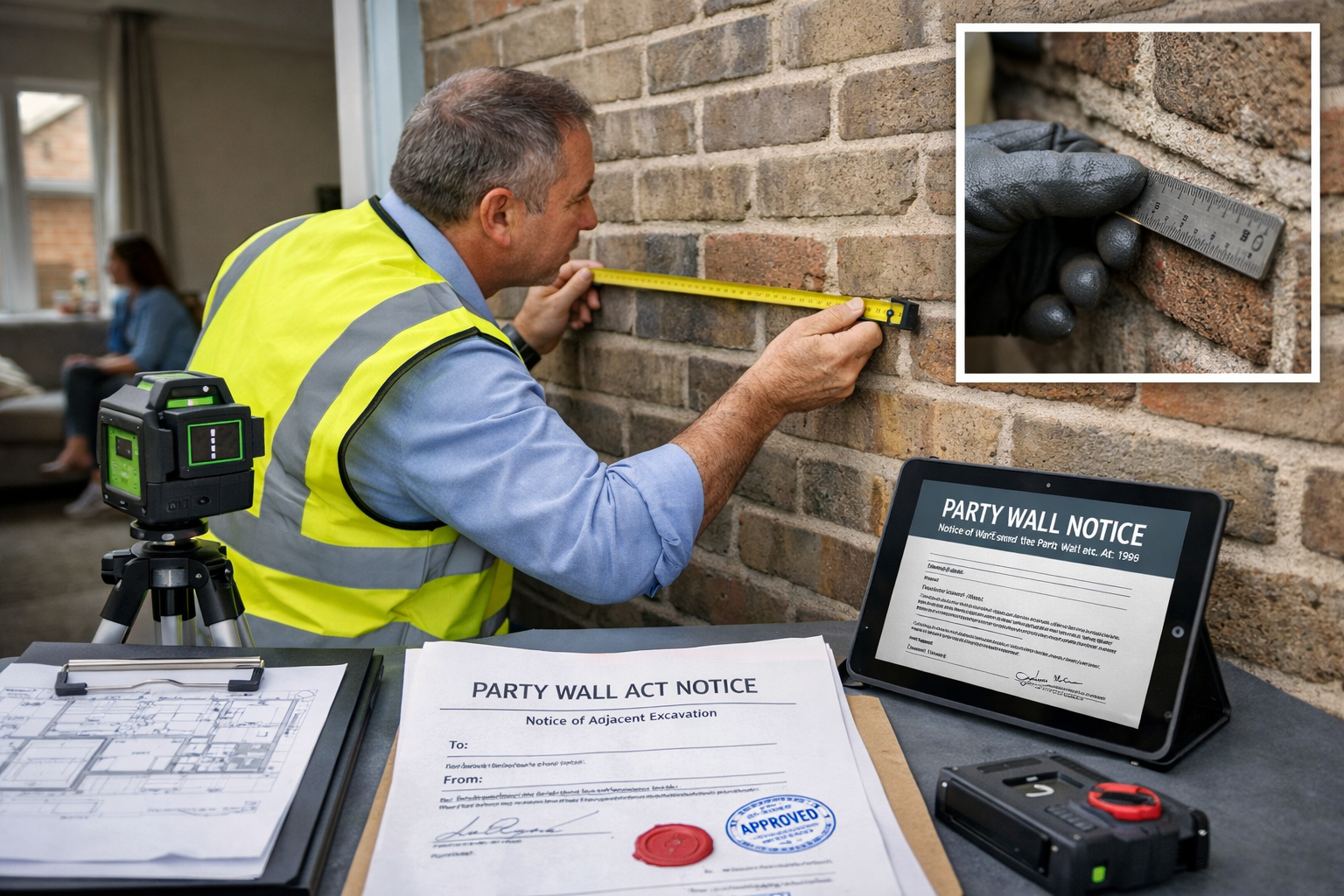
A comprehensive schedule of condition serves as crucial protection in rental property party wall scenarios. This detailed photographic and written record documents the pre-works state of the adjoining property.
Why schedules of condition are more critical in 2026:
- Tenant claims protection: Tenants may attribute pre-existing defects to party wall works; schedules provide definitive evidence
- Landlord liability management: Clear records protect landlords from unfounded damage claims
- Insurance requirements: Many insurers now mandate schedules of condition for works affecting rental properties
- Dispute resolution: Independent evidence reduces costly litigation
Professional surveyors should prepare schedules covering:
- Internal walls, ceilings, and floors adjacent to party wall
- External façades and rooflines
- Existing cracks, settlement, or defects
- Decorative condition and finishes
- Mechanical and electrical installations
- Photographic evidence with timestamps
The schedule of condition guidance provides detailed protocols for creating defensible documentation that withstands scrutiny under both party wall and tenancy law.
Managing Access Rights and Tenant Cooperation
The Party Wall Act grants building owners specific access rights to adjoining properties for surveying and executing works. However, exercising these rights in occupied rental properties requires careful management.
Access considerations under 2026 framework:
📋 Legal Access Rights
- Party Wall Act provides statutory right to enter adjoining property
- 14 days' written notice typically required for access
- Access must be at reasonable times
📋 Practical Tenant Relations
- Coordinate access times that minimize tenant disruption
- Provide multiple advance notifications
- Offer flexibility in scheduling
- Document all access requests and responses
📋 When Tenants Refuse Access
- Explain legal obligations under Party Wall Act
- Involve adjoining landlord to instruct tenant
- Document refusal comprehensively
- Consider injunction only as last resort
Surveyors should maintain detailed access logs showing all attempts to coordinate with tenants. This documentation proves invaluable if disputes arise about whether reasonable efforts were made to minimize disruption.
Liability Considerations and Risk Management for Landlord Works
The intersection of party wall procedures and enhanced tenant rights creates new liability exposures that landlords and surveyors must actively manage.
Protecting Against Damage Claims
Party wall works inevitably create some risk of damage to adjoining properties. When those properties are occupied by tenants with enhanced rights under the 2026 Act, managing this risk becomes paramount.
Multi-layered protection strategy:
🛡️ Pre-Works Documentation
- Comprehensive schedule of condition
- Video walkthroughs of adjoining property
- Written acknowledgment from adjoining landlord and tenant
- Professional photographs with metadata
🛡️ During Works Monitoring
- Regular inspections by independent surveyor
- Crack monitoring where appropriate
- Immediate documentation of any incidents
- Ongoing communication with affected parties
🛡️ Post-Works Verification
- Final inspection comparing to schedule of condition
- Written sign-off from adjoining owner
- Remediation of any damage identified
- Final photographic record
Understanding the protocols for damage to property in party wall scenarios helps landlords respond appropriately when issues arise.
Insurance and Indemnity Requirements
Adequate insurance coverage becomes non-negotiable when undertaking party wall works affecting rental properties under the 2026 regulatory framework.
Essential insurance coverages:
| Coverage Type | Minimum Recommended | Purpose |
|---|---|---|
| Public Liability | £5-10 million | Covers injury to tenants or damage to property |
| Professional Indemnity (Surveyor) | £2-5 million | Protects against surveyor negligence claims |
| Contractors All Risks | Project value + 20% | Covers damage during construction |
| Employer's Liability | £5 million (statutory) | Protects workers on site |
Landlords should verify that all contractors carry current insurance certificates before works commence. The party wall surveyor should review and document insurance adequacy as part of the pre-works process.
Handling Tenant Complaints and Disputes
The 2026 Renters' Rights Act enhances tenants' ability to raise complaints about property conditions and works. Landlords must establish clear protocols for managing tenant concerns during party wall works.
Effective complaint management framework:
1️⃣ Establish Clear Communication Channels
- Designate a specific contact person for tenant queries
- Provide multiple contact methods (phone, email, written)
- Commit to response timeframes (e.g., 48 hours)
- Document all communications
2️⃣ Respond Proactively to Concerns
- Acknowledge complaints promptly
- Investigate thoroughly with surveyor input
- Provide written responses explaining findings
- Implement reasonable accommodations where possible
3️⃣ Escalation Procedures
- Define clear escalation path for unresolved issues
- Involve party wall surveyor in technical disputes
- Consider mediation before formal legal proceedings
- Maintain comprehensive records throughout
4️⃣ Rent Abatement Considerations
- Assess whether disruption warrants temporary rent reduction
- Document disruption levels objectively
- Negotiate reasonable compensation proactively
- Formalize any agreements in writing
When disputes escalate, having followed proper procedures becomes essential. Landlords who fail to serve proper notices face significant risks, as explained in guidance about what happens when no party wall notice is served.
Party Wall Awards and Enforcement in Rental Contexts
The party wall award represents the formal determination by surveyors of how works will proceed, what protections apply, and how costs are allocated. In rental property contexts, awards require additional considerations.
Key award provisions for rental properties:
📄 Working Hours and Methods
- Specify permitted working hours considering tenant occupancy
- Restrict particularly disruptive activities to limited timeframes
- Require advance notice of especially noisy operations
- Include provisions for emergency works if needed
📄 Access and Facilities
- Detail access arrangements to minimize tenant disruption
- Specify storage locations for materials
- Address parking and delivery logistics
- Include tenant notification protocols
📄 Protection and Reinstatement
- Mandate specific protective measures for occupied properties
- Define standards for making good any damage
- Establish inspection and sign-off procedures
- Allocate responsibility for cleaning and decoration
📄 Cost Allocation
- Confirm which party bears costs (typically building owner)
- Address surveyor fees allocation
- Clarify responsibility for damage remediation costs
- Include dispute resolution mechanisms
The award should explicitly acknowledge that the adjoining property is tenanted and include provisions that respect tenant rights under the 2026 Act while enabling necessary works to proceed.
Specific Work Types and Their Party Wall Implications for Rental Properties
Different types of improvement works present unique challenges when undertaken on rental properties under the 2026 framework.
Loft Conversions in Rental Properties
Loft conversions remain among the most popular rental property improvements, often requiring party wall procedures when the roof structure is shared or works affect party walls.
2026 considerations for rental loft conversions:
- Structural alterations: Cutting into party wall for staircase access requires party wall notice and award
- Roof structure modifications: Shared roof timbers or party wall support systems need careful surveying
- Tenant disruption: Overhead construction creates significant noise and vibration for occupants below
- Access requirements: Contractors may need to access adjoining property for external scaffolding
Comprehensive guidance on loft conversions and party wall procedures helps landlords navigate these complex projects.
Foundation Works and Excavations
Excavations within three or six meters of an adjoining building trigger party wall notice requirements, with rental property complications adding layers of complexity.
Critical excavation considerations:
🔨 Notice Requirements
- One month minimum notice for excavations
- Detailed plans showing depth and proximity to adjoining building
- Structural engineer input on foundation protection measures
🔨 Monitoring Protocols
- Crack monitoring on adjoining rental property
- Regular inspections during excavation
- Immediate response protocols if movement detected
- Clear communication with affected tenants
🔨 Temporary Works
- Underpinning or foundation support as needed
- Vibration monitoring in occupied properties
- Dust and noise control measures
- Emergency contact procedures
The excavation notice for party wall process requires meticulous attention to detail when adjoining properties house tenants.
Extensions and Structural Alterations
Building extensions that involve party walls or excavations near boundaries create substantial party wall implications for rental properties.
Extension-specific protocols:
- Serve appropriate notices for both building on party wall and excavation elements
- Coordinate construction schedule to minimize tenant disruption
- Establish clear boundaries for construction site and material storage
- Implement robust dust, noise, and vibration control
- Maintain emergency contact availability throughout project
Emergency Works and Urgent Repairs
The 2026 Act's emphasis on landlord maintenance obligations may increase urgent repair scenarios requiring party wall procedures.
Managing emergency party wall works:
⚡ When immediate action is required:
- Serve party wall notice as soon as possible, even if works must commence immediately
- Document the emergency nature of works comprehensively
- Notify adjoining owner and tenants by fastest means available
- Engage surveyor retrospectively if necessary
- Prepare detailed justification for emergency action
⚡ Balancing urgency with compliance:
- Genuine emergencies (structural collapse, water ingress) may justify immediate action
- Non-emergency "urgent" works should still follow standard notice periods
- Document decision-making process thoroughly
- Seek legal advice if uncertainty exists about emergency status
Best Practices for Party Wall Surveying in the 2026 Rental Landscape
Successfully navigating Party Wall Surveying for Rental Property Improvements: Navigating 2026 Renters' Rights Act Implications for Landlord Works requires adopting comprehensive best practices.
Early Engagement and Planning
The enhanced complexity of party wall procedures in rental contexts demands earlier engagement than traditional owner-occupied scenarios.
Recommended timeline:
- 6 months before planned works: Initial surveyor consultation to assess party wall requirements
- 4 months before: Serve initial notifications to adjoining owners and tenants
- 3 months before: Complete surveyor appointments and initial inspections
- 2 months before: Finalize party wall award with all protections specified
- 1 month before: Confirm insurance, contractor credentials, and communication protocols
- Works commencement: All documentation complete and accessible
Professional Surveyor Selection
Choosing the right party wall surveyor becomes even more critical when rental properties and the 2026 Act are involved.
Essential surveyor qualifications:
✅ Technical Competence
- RICS qualified or equivalent professional credentials
- Specific party wall expertise and experience
- Understanding of structural engineering principles
- Knowledge of construction methods and sequencing
✅ Regulatory Knowledge
- Thorough understanding of Party Wall Act 1996
- Familiarity with Renters' Rights Act 2026 implications
- Awareness of landlord-tenant law intersections
- Current with building regulations and planning requirements
✅ Communication Skills
- Ability to explain technical matters to lay parties
- Experience managing multi-party negotiations
- Diplomatic approach to dispute resolution
- Clear, comprehensive documentation practices
✅ Local Experience
- Knowledge of local building practices and conditions
- Established relationships with local authorities
- Understanding of regional property market dynamics
- Familiarity with local construction industry
Documentation and Record-Keeping
Comprehensive documentation provides essential protection for all parties in rental property party wall scenarios.
Essential documentation checklist:
📋 Pre-Works Phase
- Party wall notices with proof of service
- Surveyor appointment letters
- Schedule of condition with photographs and video
- Insurance certificates for all parties
- Contractor credentials and qualifications
- Risk assessments and method statements
📋 During Works Phase
- Daily or weekly progress logs
- Incident reports for any issues arising
- Inspection records by party wall surveyor
- Communications log with all parties
- Photographic evidence of works progression
- Any variations or changes to planned works
📋 Post-Works Phase
- Final inspection report comparing to schedule of condition
- Sign-off documentation from adjoining owner
- Remediation records for any damage
- Final photographs and completion evidence
- As-built drawings if relevant
- Warranty and guarantee documentation
Communication Strategies
Effective communication prevents many disputes and facilitates smooth project completion when party wall works affect rental properties.
Multi-stakeholder communication framework:
🗣️ Adjoining Property Owner
- Formal written communications for all legal notices
- Regular updates on project progress
- Immediate notification of any issues
- Collaborative approach to problem-solving
🗣️ Occupying Tenants
- Plain-language explanations of technical works
- Advance notice of particularly disruptive activities
- Accessible contact person for queries
- Respect for tenant rights and concerns
🗣️ Building Owner/Landlord
- Regular project updates and milestone reports
- Immediate escalation of significant issues
- Cost tracking and budget management
- Compliance verification and documentation
🗣️ Contractors and Specialists
- Clear briefing on party wall requirements
- Emphasis on tenant consideration and disruption minimization
- Reporting protocols for incidents or concerns
- Quality and compliance expectations
Conclusion: Successfully Managing Party Wall Surveying for Rental Property Improvements in 2026
The convergence of the Renters' Rights Act 2026 and traditional party wall procedures creates a complex but navigable landscape for landlords undertaking rental property improvements. Success requires understanding that Party Wall Surveying for Rental Property Improvements: Navigating 2026 Renters' Rights Act Implications for Landlord Works is not simply about legal compliance—it's about balancing multiple stakeholder interests while protecting all parties' rights and interests.
Key success factors include:
- Early planning: Begin party wall procedures well in advance of planned works to accommodate extended timelines
- Professional expertise: Engage qualified surveyors with specific experience in rental property contexts
- Comprehensive documentation: Maintain detailed records throughout all phases to protect against disputes
- Enhanced communication: Implement multi-channel communication strategies that respect tenant rights while enabling necessary works
- Proactive risk management: Address potential issues before they escalate through thorough preparation and responsive problem-solving
The May 2026 implementation of enhanced tenant protections will not diminish the need for rental property improvements—it will simply require more sophisticated approaches to party wall procedures. Landlords who invest in proper surveying, documentation, and communication will find they can successfully complete necessary works while maintaining positive tenant relationships and full regulatory compliance.
Actionable Next Steps
For landlords planning rental property improvements involving party walls:
- Conduct immediate assessment: Review planned works to identify party wall requirements and 2026 Act implications
- Engage professional surveyor: Consult with qualified party wall surveyor experienced in rental property contexts
- Review tenant communications: Develop comprehensive communication strategy addressing both legal and practical considerations
- Verify insurance coverage: Confirm adequate insurance protection for all potential liabilities
- Establish documentation systems: Implement robust record-keeping protocols from project inception
- Plan realistic timelines: Allow additional time for enhanced notice periods and tenant accommodation
- Prepare contingency plans: Develop response protocols for potential disputes or complications
The 2026 regulatory landscape demands higher standards of professionalism and preparation, but landlords who embrace these requirements will find they can successfully enhance their rental portfolios while respecting tenant rights and maintaining full compliance with both party wall and tenancy law.
For additional guidance on specific party wall scenarios, consult our comprehensive party wall FAQ resource or engage directly with qualified party wall surveyors who understand the unique challenges of rental property improvements in the 2026 regulatory environment.