
The buy-to-let market in 2026 is experiencing unprecedented growth, with institutional landlords driving a surge in property extensions and conversions. As professional portfolios expand through strategic property improvements, understanding Party Wall Surveying Essentials for 2026 Buy-to-Let Boom: Protocols for Institutional Landlord Extensions has become critical for surveyors and property professionals managing high-volume projects. With party wall disputes expected to increase significantly during this construction uptick, implementing robust RICS-compliant protocols is no longer optional—it's essential for protecting investments and maintaining professional standards.

Key Takeaways
✅ Institutional landlords must implement systematic party wall protocols across their portfolios to manage the 2026 extension boom efficiently and avoid costly disputes
✅ Party wall awards cost approximately £1,000 per property, with surveyors charging £150-£200 per hour, making budget planning essential for large-scale projects
✅ The mandatory 2-month notice period requires strategic scheduling for portfolio-wide extension programs to maintain project timelines
✅ RICS compliance frameworks provide standardized approaches for managing multiple simultaneous party wall agreements across institutional buy-to-let portfolios
✅ Professional surveyor engagement early in the planning phase reduces dispute risks and ensures smooth execution of extension projects
Understanding the 2026 Buy-to-Let Extension Landscape
The institutional buy-to-let sector has transformed dramatically in 2026. Professional landlords with portfolios spanning dozens or hundreds of properties are increasingly turning to property extensions and loft conversions to maximize rental yields and property values. This strategic approach to portfolio enhancement has created unprecedented demand for party wall surveying services.
Why Institutional Landlords Are Investing in Extensions
Large-scale landlords recognize that extending existing properties offers superior returns compared to acquiring new stock in today's competitive market. Extensions can increase property values by 15-20% while commanding premium rental rates. However, this opportunity comes with significant party wall compliance obligations that require professional management.
The 2026 construction uptick has intensified the need for party wall services across the UK. Institutional portfolios often include terraced houses, semi-detached properties, and converted flats—all property types where extensions trigger mandatory party wall procedures.[1]
The Scale Challenge for Professional Portfolios
Unlike individual homeowners managing a single extension project, institutional landlords face the complexity of coordinating multiple simultaneous party wall agreements across their portfolios. A mid-sized landlord with 50 properties might initiate 10-15 extension projects annually, each requiring separate party wall procedures with different adjoining owners.
This scale demands systematic protocols rather than ad-hoc approaches. Professional surveyors working with institutional clients must develop streamlined processes that maintain legal compliance while managing costs and timelines efficiently.
Party Wall Surveying Essentials for 2026 Buy-to-Let Boom: Core Legal Requirements
Understanding the foundational legal requirements is crucial for implementing effective protocols. The Party Wall etc. Act 1996 governs all work affecting shared walls, boundaries, and excavations near neighboring properties in England and Wales.
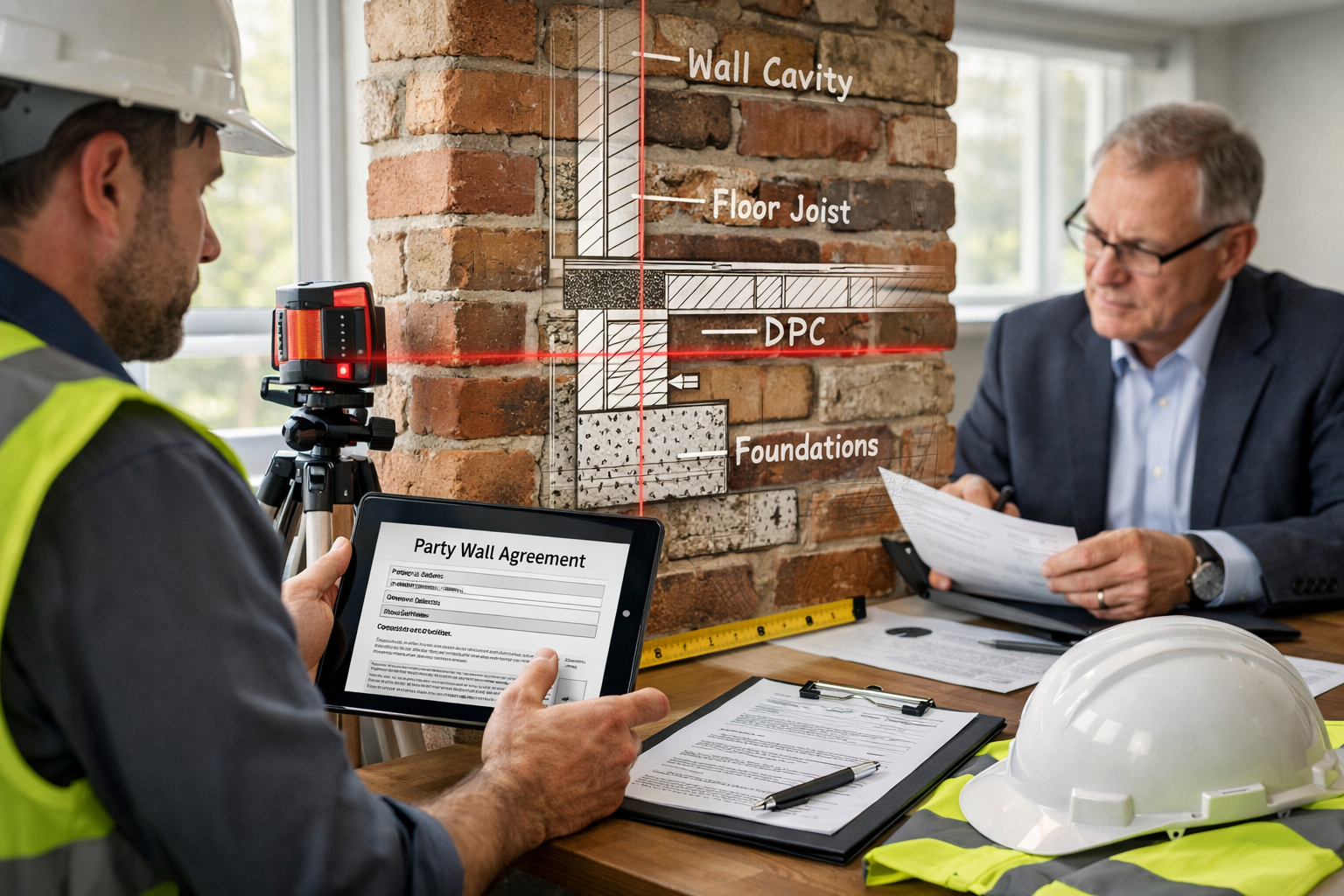
Mandatory Notice Periods and Response Timelines
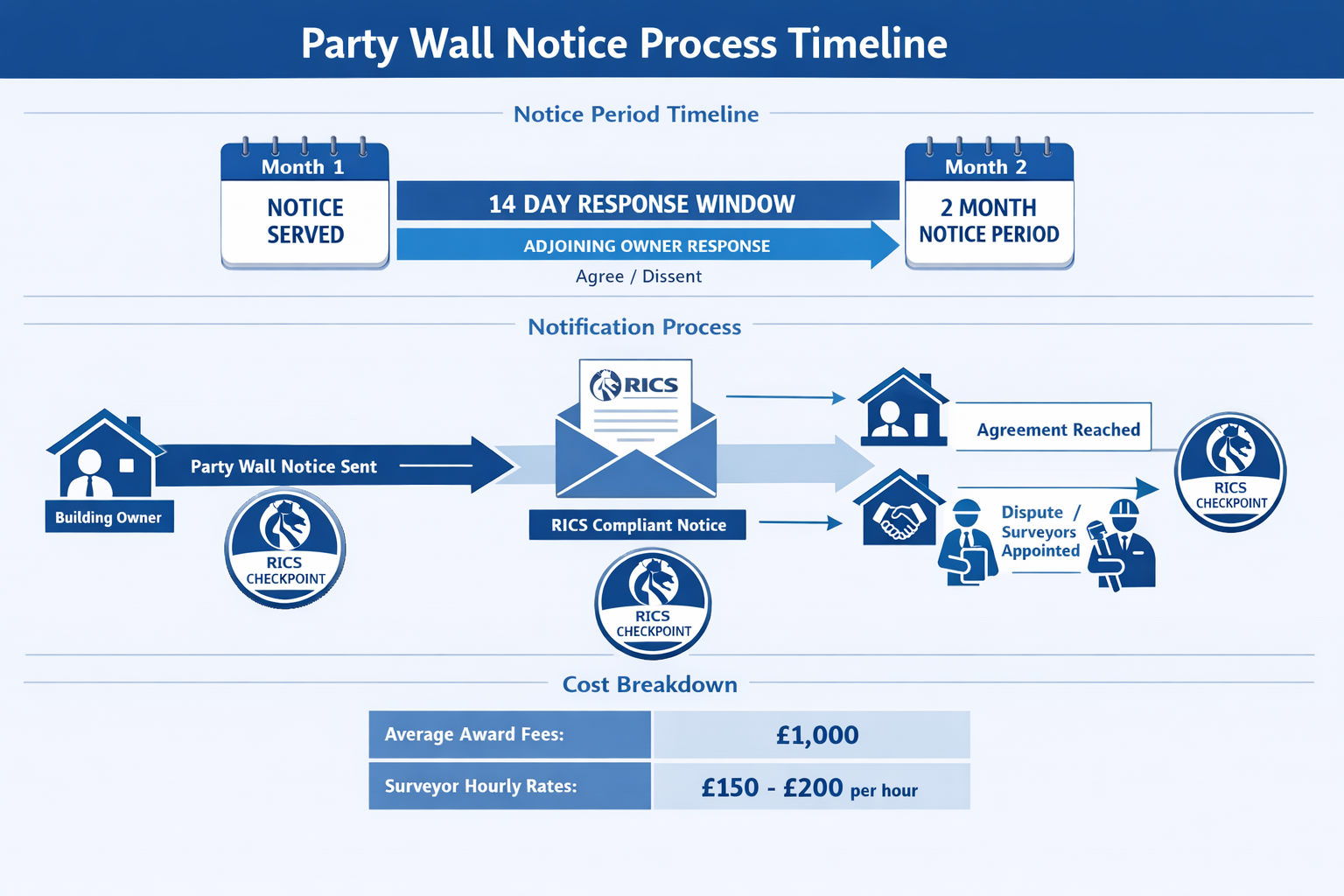
The law requires building owners to serve notice at least 2 months before starting work on party walls or structures. For excavation work near boundaries, the notice period is 1 month. Adjoining owners then have 14 days to respond to the initial notification.[2]
For institutional landlords planning portfolio-wide extension programs, these timelines require careful coordination. A landlord planning 12 extensions across their portfolio must stagger notice periods to ensure surveyors can manage the workload effectively while maintaining compliance.
When Party Wall Procedures Are Triggered
Loft conversions in 2026 require mandatory party wall compliance when work affects shared walls or structures between adjoining properties.[1] Specific triggers include:
- Building on or astride the boundary line between properties
- Cutting into a party wall to install beams or joists
- Underpinning or excavating within 3-6 meters of neighboring structures
- Raising party walls or adding new floors that affect shared structures
- Removing chimney breasts that form part of the party wall
Institutional landlords must assess each extension project against these criteria. Professional surveyors should conduct preliminary assessments to identify which properties in a portfolio will require party wall consent before detailed planning begins.
Consequences of Non-Compliance
Proceeding without proper party wall procedures exposes landlords to significant risks. Adjoining owners can obtain court injunctions to halt construction, resulting in costly delays and potential damage claims. For institutional portfolios, even a single non-compliant project can damage relationships with multiple neighbors and create reputational risks.
When no party wall notice has been served, remediation becomes complex and expensive. Surveyors must implement robust tracking systems to ensure no project proceeds without proper documentation.
Implementing Systematic Protocols for Institutional Portfolios
Professional landlords require standardized procedures that can be replicated across multiple properties while accommodating individual project variations. The following protocols represent best practices for managing party wall surveying at scale.
Phase 1: Portfolio Assessment and Planning
Before initiating any extension work, institutional landlords should conduct a comprehensive portfolio-wide party wall audit. This assessment identifies:
- Properties where extensions are planned or under consideration
- Neighboring property ownership and contact information
- Previous party wall agreements or disputes
- Potential complications (vacant properties, absent owners, previous conflicts)
This systematic approach allows landlords to budget accurately for party wall costs across the portfolio. With typical party wall costs around £1,000 per award and surveyor rates of £150-£200 per hour[2], a 10-property extension program could incur £10,000-£15,000 in party wall expenses alone.
Phase 2: Standardized Notice Procedures
Developing template documentation streamlines the notice process while ensuring legal compliance. Institutional landlords should work with their surveyors to create:
- Standard party wall notice letters adapted for different work types
- Information packs explaining the process to adjoining owners
- Response tracking systems to monitor the 14-day response periods
- Escalation protocols for non-responses or disputes
Professional party wall awards guidance helps ensure documentation meets legal requirements while remaining accessible to lay recipients.
Phase 3: Surveyor Appointment Strategies
Institutional landlords face strategic decisions about surveyor engagement:
Option 1: Single Agreed Surveyor
When adjoining owners consent, appointing a single agreed surveyor simplifies the process and reduces costs. This approach works well when landlords have established positive relationships with neighbors.
Option 2: Separate Surveyors
For larger portfolios or where disputes are anticipated, appointing separate surveyors for building owner and adjoining owner provides clearer advocacy and reduces conflict-of-interest concerns.
Option 3: Retained Surveyor Panel
Large institutional landlords often retain a panel of qualified surveyors who understand their portfolio, standards, and procedures. This approach ensures consistency and efficiency across multiple projects.
Phase 4: Award Preparation and Execution
The party wall award document is the legally binding agreement governing the work. Professional protocols ensure awards are:
- Comprehensive – covering all relevant work, access requirements, and protection measures
- Specific – detailing exact work scope, timelines, and methodologies
- Protective – including condition schedules documenting pre-work property states
- Clear – written in accessible language that all parties understand
For institutional portfolios, maintaining a centralized award repository ensures project managers and contractors can access relevant documentation quickly.
Party Wall Surveying Essentials for 2026 Buy-to-Let Boom: Managing Disputes Professionally
Despite best efforts, disputes arise during party wall procedures. Party wall surveys and neighbor disputes are expected to increase during 2026's construction uptick, requiring compliance with professional protocols.[3]
Common Dispute Triggers in Extension Projects
Understanding typical conflict sources helps institutional landlords implement preventive measures:
Noise and Disruption Concerns
Extension work creates inevitable disturbance. Adjoining owners may object to early starts, weekend work, or prolonged construction periods. Clear communication about schedules and reasonable accommodations prevents many conflicts.
Access Requirements
Extensions often require temporary access to neighboring properties for scaffolding or equipment. Disputes arise when access arrangements aren't clearly defined or when contractors exceed agreed parameters.
Structural Concerns
Adjoining owners may worry about damage to their properties from excavation, underpinning, or structural alterations. Comprehensive condition surveys and regular monitoring address these concerns proactively.
Cost Disputes
Questions about who pays for various aspects of party wall procedures can escalate quickly. Clear agreements about cost responsibility prevent misunderstandings.
RICS Compliance Framework for Dispute Resolution
The Royal Institution of Chartered Surveyors (RICS) provides professional standards for managing party wall disputes. Surveyors working with institutional landlords should implement:
Early Intervention Protocols
Addressing concerns immediately when they arise prevents escalation. Institutional landlords should empower their surveyors to resolve minor issues without requiring senior management approval.
Documentation Standards
Maintaining detailed records of all communications, site visits, and decisions protects all parties if disputes escalate. Digital documentation systems allow easy retrieval and sharing.
Third Surveyor Procedures
When building owner and adjoining owner surveyors cannot agree, the third surveyor mechanism provides resolution. Institutional landlords should understand this process and budget for potential third surveyor fees.
Professional Indemnity Insurance
Ensuring all surveyors carry adequate professional indemnity insurance protects institutional landlords from liability if surveyor errors contribute to disputes.
Proactive Neighbor Relations Strategies
Institutional landlords with large portfolios benefit from investing in ongoing neighbor relationship management:
- Pre-work consultation meetings explaining projects before formal notices
- Regular progress updates during construction
- Responsive complaint handling with designated contact persons
- Post-completion follow-up ensuring satisfaction and addressing any residual concerns
These strategies reduce dispute frequency and severity, protecting the landlord's reputation and operational efficiency.
Specialized Considerations for Different Extension Types
Different extension projects present unique party wall challenges requiring tailored protocols.
Loft Conversions and Roof Extensions
Loft conversions represent a significant portion of the 2026 extension boom. Party wall implications include:
- Party wall height increases when raising shared walls to accommodate new floor levels
- Structural alterations cutting into party walls for stairs or dormers
- Load distribution changes affecting shared structures
Surveyors must carefully assess whether existing party walls can support additional loads or require strengthening. For institutional portfolios with similar property types, developing standardized loft conversion protocols streamlines the process.
Rear and Side Extensions
Ground-floor extensions commonly require excavation notice for party wall procedures when digging foundations near boundaries. Key considerations include:
- Foundation depth relative to neighboring structures
- Drainage and water management preventing damage to adjoining properties
- Boundary wall modifications or removal
Basement Conversions and Underpinning
Basement projects present the most complex party wall scenarios, particularly in terraced housing common in institutional portfolios. Risks include:
- Subsidence affecting neighboring properties
- Water ingress from altered drainage patterns
- Structural movement during excavation
These high-risk projects require experienced surveyors and comprehensive condition surveys before, during, and after construction.
Cost Management and Budgeting Protocols
Effective financial planning is essential for institutional landlords managing multiple party wall agreements simultaneously.
Typical Cost Components
Understanding the full cost structure enables accurate budgeting:
| Cost Element | Typical Range | Notes |
|---|---|---|
| Party Wall Award | £800-£1,200 | Per property, agreed surveyor scenario |
| Surveyor Hourly Rate | £150-£200 | For consultations and site visits |
| Condition Survey | £300-£600 | Pre-work documentation |
| Third Surveyor Fees | £500-£1,500 | If required for dispute resolution |
| Legal Costs | Variable | If disputes escalate to litigation |
For a 10-property extension program, total party wall costs typically range from £10,000 to £20,000, depending on complexity and whether disputes arise.[2]
Cost Allocation Strategies
The Party Wall Act generally requires building owners to pay all reasonable costs associated with party wall procedures, including the adjoining owner's surveyor fees. Institutional landlords should:
- Budget conservatively assuming separate surveyors for each project
- Negotiate fixed-fee arrangements with retained surveyors for portfolio work
- Track costs systematically to identify efficiency opportunities
- Include contingency reserves for unexpected disputes or complications
Value Engineering Opportunities
Professional landlords can reduce party wall costs through:
Batch Processing
Grouping multiple projects in similar areas allows surveyors to conduct multiple condition surveys efficiently, potentially reducing per-property costs.
Standardized Procedures
Developing template awards and documentation reduces surveyor time spent on administrative tasks.
Relationship Investment
Maintaining positive relationships with frequent adjoining owners (such as neighboring landlords with their own portfolios) facilitates agreed surveyor appointments and smoother processes.
Technology and Innovation in Party Wall Management
Forward-thinking institutional landlords are leveraging technology to manage party wall procedures more efficiently in 2026.
Digital Documentation Systems
Cloud-based platforms enable:
- Centralized storage of all party wall notices, awards, and correspondence
- Automated tracking of response deadlines and milestone dates
- Mobile access for surveyors conducting site visits
- Audit trails demonstrating compliance for regulatory purposes
Condition Survey Technology
Modern surveying tools enhance accuracy and efficiency:
Photographic Documentation
High-resolution photography and 360-degree cameras create comprehensive pre-work records, reducing disputes about alleged damage.
Laser Scanning
3D laser scanning provides precise measurements of existing structures, identifying pre-existing defects and establishing baseline conditions.
Crack Monitoring Systems
Digital crack monitors track structural movement during construction, providing objective evidence of whether work has caused damage.
Portfolio Management Dashboards
Institutional landlords benefit from visual dashboards displaying:
- Active party wall procedures across the portfolio
- Upcoming deadline alerts
- Cost tracking against budgets
- Dispute status and resolution progress
These tools enable senior management to oversee party wall compliance without micromanaging individual projects.
Building Long-Term Compliance Frameworks
Sustainable party wall management requires embedded organizational capabilities rather than project-by-project reactions.
Staff Training and Development
Institutional landlords should ensure property managers and project coordinators understand:
- Basic party wall legal requirements and when procedures are triggered
- Notice period calculations and timeline planning
- Surveyor role and selection criteria
- Escalation protocols for disputes or complications
Regular training updates keep teams informed about regulatory changes and best practices.
Vendor Management Systems
Maintaining qualified surveyor panels requires:
- Performance evaluation criteria assessing responsiveness, cost-effectiveness, and dispute resolution success
- Regular review meetings discussing portfolio trends and improvement opportunities
- Contractual frameworks defining service standards and fee structures
- Succession planning ensuring surveyor availability as portfolios grow
Continuous Improvement Processes
Professional landlords should implement systematic learning mechanisms:
- Post-project reviews identifying what worked well and improvement opportunities
- Dispute analysis understanding root causes and prevention strategies
- Benchmarking comparing performance against industry standards
- Protocol updates incorporating lessons learned into standardized procedures
Regulatory Compliance and Professional Standards
Beyond the Party Wall Act itself, institutional landlords must consider broader regulatory context.
RICS Professional Standards
Surveyors must adhere to RICS guidance on party wall matters, including:
- Conflicts of interest management when acting for multiple parties
- Professional indemnity insurance requirements
- Continuing professional development maintaining current knowledge
- Complaints handling procedures
Institutional landlords should verify that retained surveyors maintain current RICS membership and comply with professional standards.[3]
Building Regulations Coordination
Party wall procedures run parallel to but separate from building regulations approval. Effective protocols ensure:
- Coordinated timelines preventing party wall delays from affecting building control schedules
- Consistent documentation avoiding contradictions between party wall awards and approved plans
- Integrated inspections where possible, reducing disruption
Health and Safety Integration
Party wall awards should address health and safety responsibilities during construction:
- Site access safety for surveyors conducting monitoring visits
- Dust and noise control protecting adjoining occupants
- Emergency procedures if unexpected structural issues arise
- Contractor competence requirements
Future-Proofing Party Wall Strategies for Continued Growth
As the buy-to-let market evolves beyond 2026, institutional landlords should anticipate emerging trends.
Sustainability and Energy Efficiency Extensions
The push toward net-zero carbon will drive retrofit extensions adding insulation, solar panels, and heat pumps. These projects may have different party wall implications than traditional extensions, requiring protocol adaptations.
Modular and Off-Site Construction
Prefabricated extension modules offer faster installation with less disruption. Party wall procedures may need adjustment to accommodate these innovative construction methods while maintaining neighbor protection.
Increased Regulatory Scrutiny
Expect enhanced enforcement of party wall compliance as construction activity remains high. Institutional landlords with documented, systematic protocols will be better positioned to demonstrate compliance if challenged.
Market Consolidation Effects
As institutional ownership increases, more party wall procedures will involve landlord-to-landlord negotiations rather than landlord-to-homeowner scenarios. This professionalization may streamline processes but requires different relationship management approaches.
Conclusion
The Party Wall Surveying Essentials for 2026 Buy-to-Let Boom: Protocols for Institutional Landlord Extensions represent a critical competency for professional property investors navigating today's extension-driven market. As institutional portfolios expand through strategic property improvements, implementing systematic, RICS-compliant party wall procedures protects investments, maintains neighbor relationships, and ensures legal compliance across multiple simultaneous projects.
Successful institutional landlords recognize that party wall management is not merely a legal obligation but a strategic capability that enables portfolio growth. By developing standardized protocols, investing in professional surveyor relationships, leveraging technology, and maintaining proactive neighbor relations, professional landlords can manage the 2026 construction uptick efficiently while minimizing disputes and controlling costs.
Actionable Next Steps
For institutional landlords and surveyors working in the buy-to-let sector:
🔹 Conduct a comprehensive portfolio audit identifying all properties where extensions are planned or under consideration
🔹 Establish relationships with qualified party wall surveyors who understand institutional portfolio requirements
🔹 Develop standardized documentation templates and procedures that can be replicated across multiple projects
🔹 Implement digital tracking systems to monitor notice periods, response deadlines, and award execution across the portfolio
🔹 Budget conservatively for party wall costs, assuming £1,000-£1,500 per property for standard extensions
🔹 Invest in staff training ensuring property managers understand party wall triggers and procedures
🔹 Build proactive neighbor relations through early consultation and responsive communication
The 2026 buy-to-let boom presents significant opportunities for institutional landlords willing to navigate party wall requirements professionally. By implementing robust protocols now, professional investors position themselves for sustainable growth while protecting their portfolios from costly disputes and compliance failures.
For expert guidance on party wall procedures tailored to your institutional portfolio, consult with qualified chartered surveyors who specialize in professional landlord services and understand the unique demands of managing multiple simultaneous party wall agreements.
References
[1] Party Wall Surveying Surge In 2026 Loft Conversions Navigating High Demand Compliance During Housing Uptick – https://nottinghillsurveyors.com/blog/party-wall-surveying-surge-in-2026-loft-conversions-navigating-high-demand-compliance-during-housing-uptick
[2] Party Wall Agreement – https://hoa.org.uk/advice/guides-for-homeowners/i-am-improving/party-wall-agreement/
[3] Party Wall Surveys And Neighbour Disputes During 2026s Construction Uptick Rics Compliance Framework – https://nottinghillsurveyors.com/blog/party-wall-surveys-and-neighbour-disputes-during-2026s-construction-uptick-rics-compliance-framework