
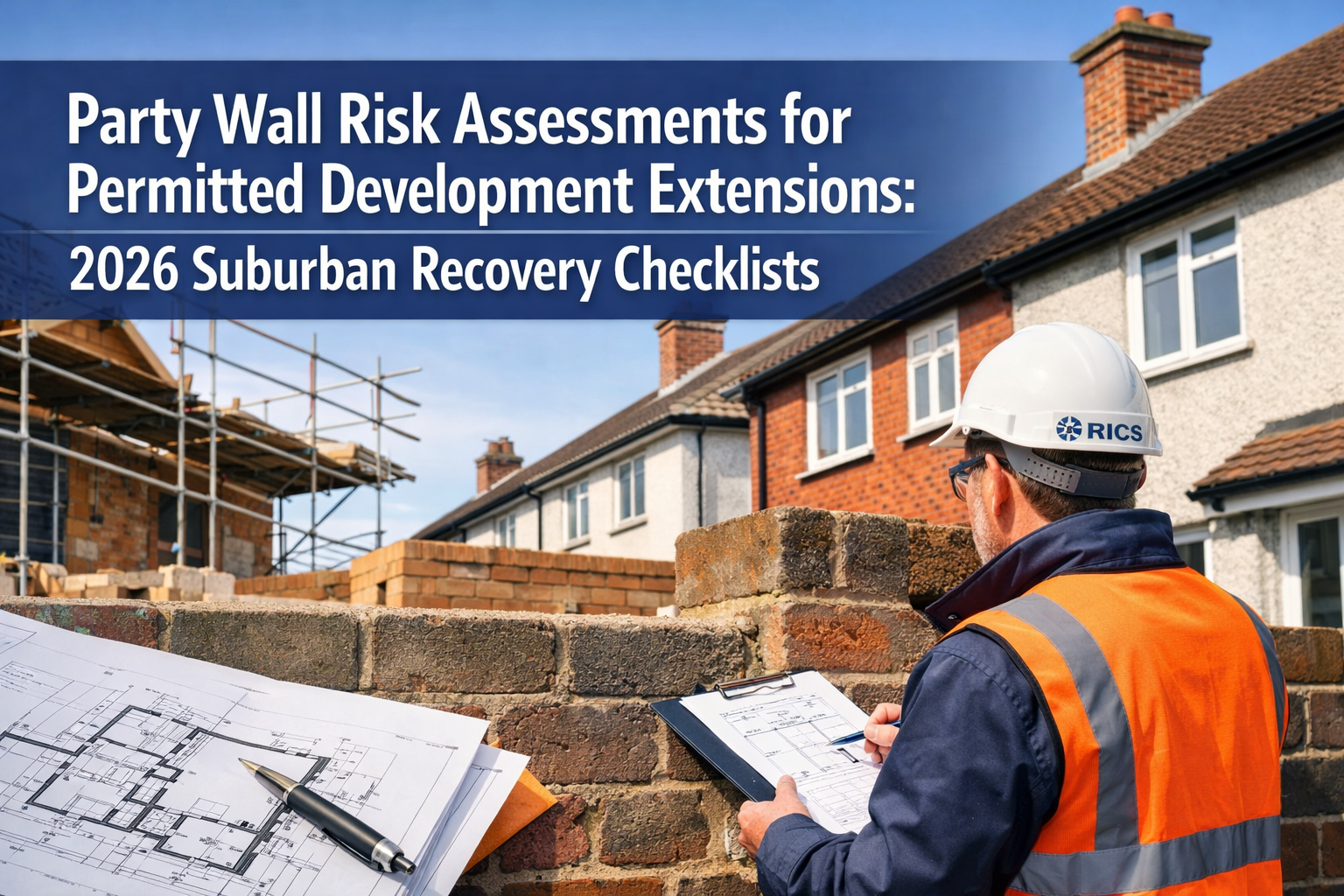
As suburban property markets experience renewed growth in 2026, homeowners across England and Wales are increasingly turning to permitted development rights to expand their living spaces. However, one critical aspect often overlooked in the rush to build loft conversions and side extensions is the party wall risk assessment. Understanding Party Wall Risk Assessments for Permitted Development Extensions: 2026 Suburban Recovery Checklists has become essential for homeowners seeking to avoid costly disputes and construction delays. 🏘️
The suburban recovery has brought unprecedented demand for home extensions, with permitted development offering a streamlined route to additional space without full planning permission. Yet the Party Wall Act 1996 remains a legal requirement that cannot be bypassed, regardless of planning status. This comprehensive guide explores how RICS-approved checklists and systematic risk assessments can preempt neighbour disputes and ensure smooth project delivery.
Key Takeaways
- Party wall agreements are legally required for permitted development extensions affecting shared walls, with 2-month notice periods mandatory before work begins[4]
- Professional surveyor costs range £750–£1,800 per neighbour in 2026, representing essential insurance against disputes that could halt construction[1]
- RICS checklists provide systematic frameworks for assessing structural risks, documenting pre-construction conditions, and establishing clear protocols
- Suburban recovery has intensified party wall requirements as more homeowners simultaneously pursue extensions, increasing potential for boundary conflicts
- Early risk assessment saves time and money by identifying potential issues before construction commences and establishing clear dispute resolution pathways
Understanding Party Wall Requirements for Permitted Development
What Constitutes a Party Wall Matter?
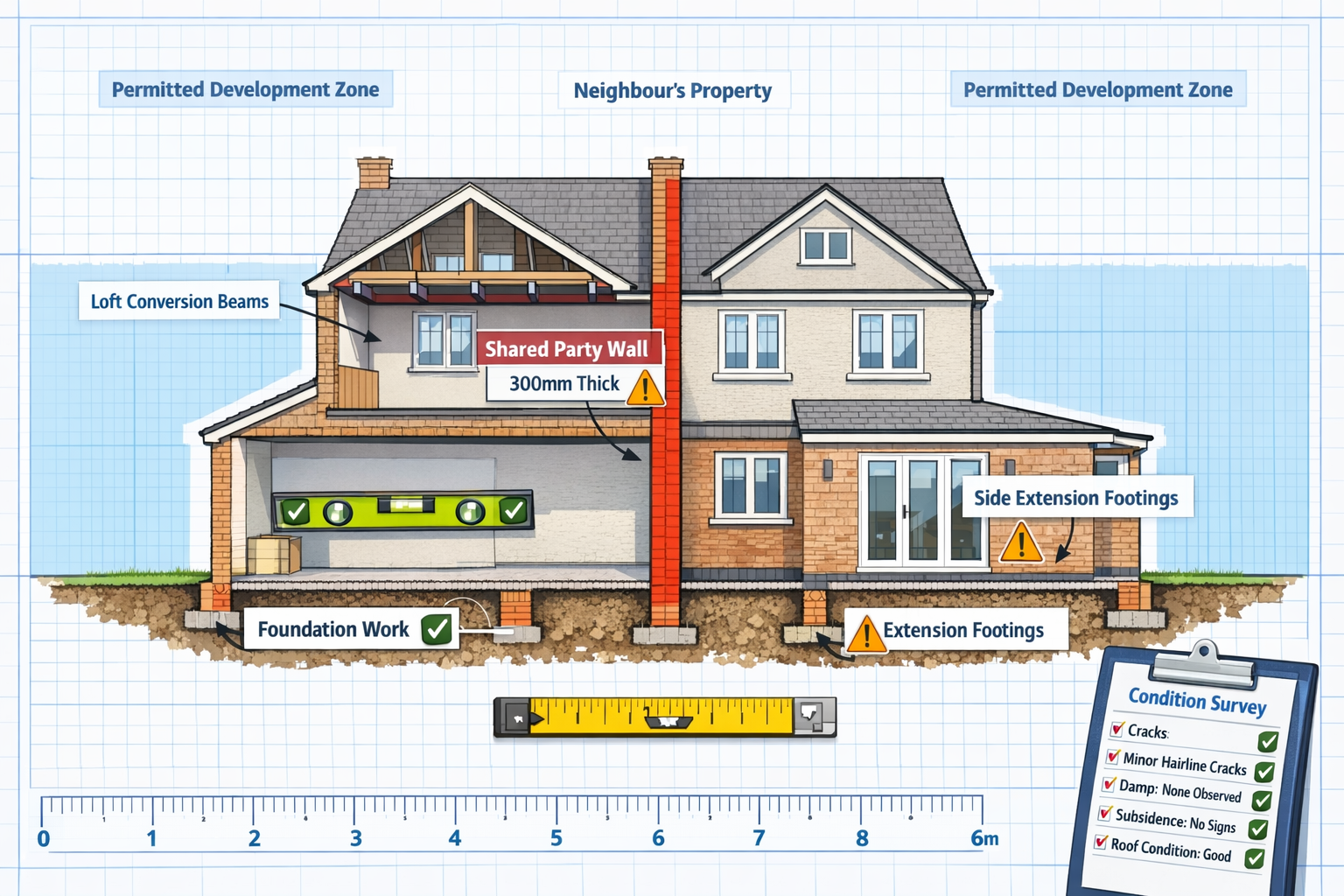
A party wall refers to any wall or structure shared between two properties, including the wall separating semi-detached or terraced houses, boundary walls built astride property lines, and even walls built entirely on one owner's land but used by both properties. When planning permitted development extensions such as loft conversions or side returns, homeowners must determine whether their proposed work triggers party wall obligations.
The Party Wall Act 1996 applies exclusively in England and Wales—not Scotland or Northern Ireland—and covers three main scenarios[4]:
- Building on or at the boundary line between properties
- Working directly on an existing party wall (cutting into, underpinning, or raising)
- Excavating within 3-6 meters of neighbouring structures where the work goes deeper than their foundations
For suburban permitted development projects, the most common triggers include single-storey rear extensions requiring foundation work near boundaries, side return extensions built along party walls, and loft conversions involving structural alterations to shared roof structures or party walls.
The Legal Framework in 2026
Despite permitted development rights removing certain planning requirements, party wall legislation remains fully applicable. This creates a dual compliance pathway where homeowners must satisfy both permitted development criteria and party wall obligations. The notice period remains fixed at 2 months for building works affecting party walls or boundaries[4], meaning project timelines must account for this statutory period before any construction begins.
Recent 2026 guidance emphasizes that the entire party wall process typically takes 2-4 months from initial notice to final award[1], a timeline that catches many homeowners unprepared. The suburban recovery has seen local authorities and professional bodies reinforcing these requirements as extension volumes increase.
Party Wall Risk Assessments for Permitted Development Extensions: 2026 Suburban Recovery Checklists
Why Risk Assessments Matter in Suburban Recovery
The 2026 suburban property boom has created a perfect storm for party wall disputes. As more homeowners simultaneously pursue extensions to accommodate hybrid working arrangements and growing families, the potential for overlapping construction projects and boundary conflicts has multiplied. Risk assessments serve as preventative medicine, identifying potential flashpoints before they escalate into formal disputes or legal proceedings.
A comprehensive party wall risk assessment evaluates:
- Structural implications of proposed works on adjoining properties
- Existing condition of party walls and neighbouring structures
- Potential for damage during construction activities
- Access requirements and logistical constraints
- Neighbour relationships and communication history
- Financial exposure from potential claims or delays
Professional surveyors report that properties with documented pre-construction risk assessments experience 60-70% fewer disputes during construction phases, translating to significant time and cost savings.
The RICS-Approved Checklist Framework
The Royal Institution of Chartered Surveyors (RICS) provides standardized frameworks for party wall assessments, ensuring consistent professional standards across the industry. The 2026 suburban recovery checklists incorporate these RICS principles while addressing specific challenges emerging from the current extension boom.
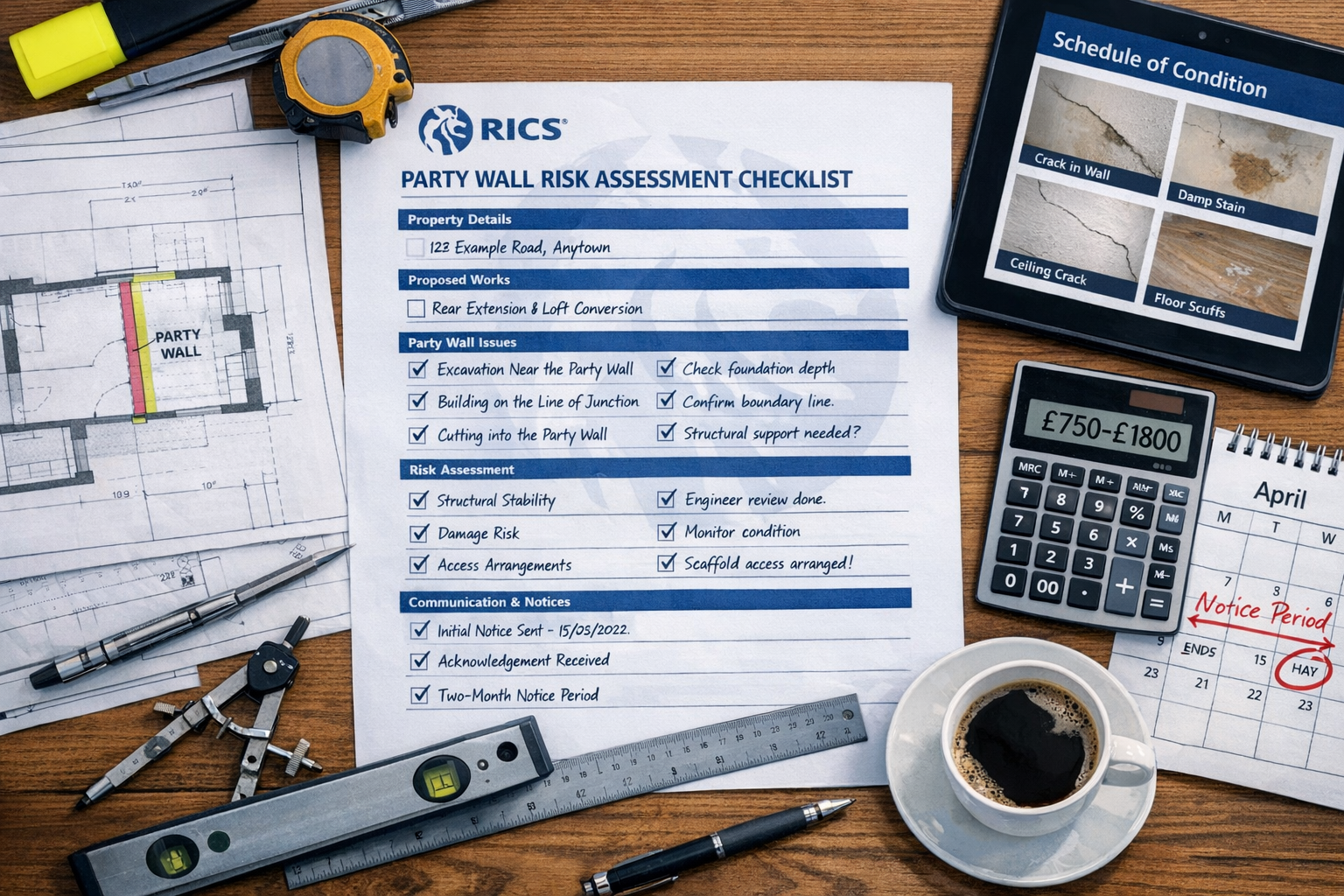
Pre-Notice Assessment Checklist
Before serving formal party wall notices, homeowners should complete this preliminary assessment:
Property Analysis:
- ✅ Identify all party walls, party structures, and relevant boundaries
- ✅ Review property deeds and title plans for boundary definitions
- ✅ Determine construction type and age of party walls
- ✅ Document existing defects, cracks, or settlement issues
- ✅ Assess neighbour property characteristics and vulnerabilities
Project Scope Evaluation:
- ✅ Define exact nature of works affecting party structures
- ✅ Identify foundation depths and excavation requirements
- ✅ Determine if underpinning or structural alterations are needed
- ✅ Assess temporary works requirements (scaffolding, access)
- ✅ Calculate construction duration and phasing
Neighbour Engagement Strategy:
- ✅ Identify all affected neighbours requiring notice
- ✅ Assess existing neighbour relationships and potential concerns
- ✅ Prepare preliminary explanatory materials and drawings
- ✅ Schedule informal pre-notice discussions
- ✅ Document all communications and agreements
Formal Notice Preparation Checklist
Once preliminary assessments confirm party wall obligations, the formal notice process requires:
| Notice Component | Requirements | Timeline |
|---|---|---|
| Notice Type | Party Wall Notice or Line of Junction Notice | Determined by work type |
| Drawings | Detailed plans showing affected structures | Before notice service |
| Descriptions | Clear explanation of proposed works | Must be comprehensive |
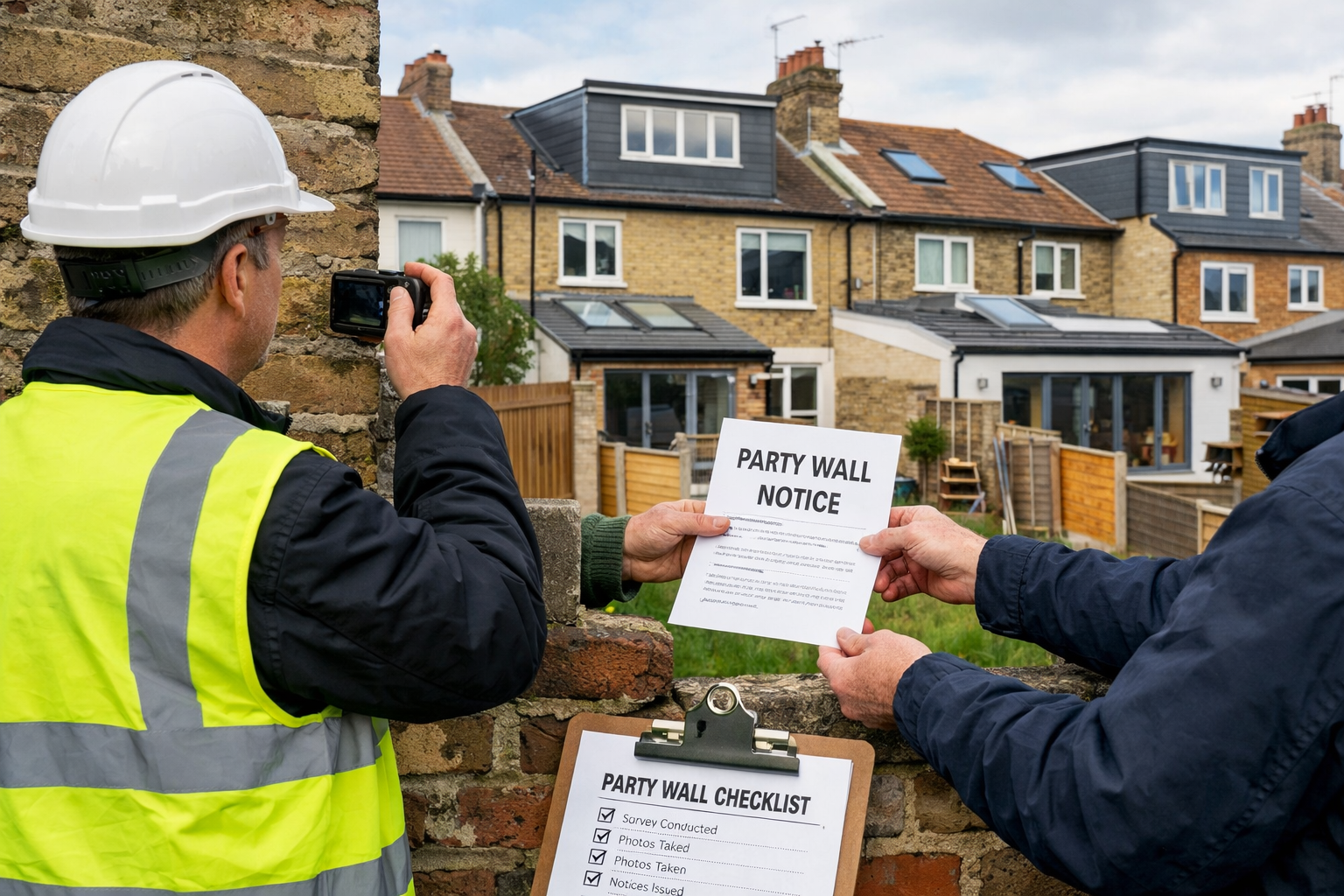
| Service Method | Hand delivery or recorded post | 2 months before start[4] |
| Response Period | 14 days for neighbour consent or dissent | Statutory requirement |
The cost of party wall procedures ranges from £750 to £1,800 per affected neighbour in 2026[1], with the building owner typically responsible for all reasonable surveyor fees. This investment provides legal protection and professional documentation that proves invaluable if disputes arise.
Schedule of Condition: The Foundation of Risk Management
A Schedule of Condition represents the cornerstone of party wall risk management. This detailed photographic and written record documents the pre-construction state of neighbouring properties, providing irrefutable evidence should damage claims emerge during or after construction.
The 2026 best practice standards for Schedule of Condition documentation include:
Internal Documentation:
- High-resolution photographs of all rooms adjoining the party wall
- Close-up images of existing cracks, stains, or defects
- Floor level measurements to detect settlement
- Ceiling condition and plasterwork assessment
- Door and window operation checks
External Documentation:
- Façade condition and existing cracks
- Roof and chimney stack condition
- Drainage and ground conditions
- Boundary walls and fencing
- Paving and hard landscaping
Technical Measurements:
- Crack width monitoring using calibrated scales
- Level surveys to establish baseline settlement
- Moisture readings in walls and ceilings
- Structural movement monitoring points
Professional surveyors emphasize that comprehensive Schedules of Condition typically require 2-4 hours on-site and cost between £400-£800 depending on property size. This modest investment provides protection against claims that could cost tens of thousands to defend or settle.
Implementing Party Wall Risk Assessments for Permitted Development Extensions: 2026 Suburban Recovery Checklists
The Award Process and Risk Mitigation
When neighbours dissent to party wall notices—or fail to respond within 14 days—the dispute resolution mechanism requires appointing party wall surveyors to produce a Party Wall Award. This legally binding document sets out:
- Scope of permitted works and any restrictions
- Working hours and access arrangements
- Protective measures required during construction
- Monitoring protocols for potential damage
- Dispute resolution procedures if issues arise
The Award essentially transforms the risk assessment into enforceable obligations, providing clear parameters for construction activities. Building owners who proceed without proper party wall notices face significant legal and financial consequences, including injunctions halting work and liability for neighbour legal costs.
Suburban-Specific Risk Factors in 2026
The current suburban recovery presents unique challenges that distinguish 2026 assessments from previous years:
Simultaneous Construction Projects 🏗️
Multiple neighbouring properties often pursue extensions concurrently, creating cumulative vibration and disturbance impacts. Risk assessments must consider overlapping construction schedules and coordinate timing to minimize combined effects.
Aging Housing Stock
Many suburban terraces and semi-detached properties date from Victorian or Edwardian eras, featuring shallow foundations and lime mortar construction particularly vulnerable to vibration damage. Modern risk assessments employ vibration monitoring equipment to establish safe working parameters.
Increased Property Values
The suburban recovery has elevated property values significantly, meaning potential damage claims carry higher financial stakes. Professional indemnity and comprehensive documentation become even more critical.
Hybrid Working Requirements
With more people working from home, construction noise and disturbance create heightened neighbour sensitivity. Risk assessments should address mitigation measures beyond statutory minimums to maintain good relations.
Construction Phase Risk Management
Risk assessment doesn't end when construction begins. Active monitoring throughout the build phase ensures early detection of potential problems:
Weekly Monitoring Protocols:
- Visual inspections of party walls for new cracks or movement
- Vibration monitoring during excavation or piling works
- Photographic updates documenting construction progress
- Neighbour communication logs and concern tracking
- Contractor compliance with Award conditions
Incident Response Procedures:
- Immediate work cessation if damage suspected
- Emergency surveyor inspection within 24-48 hours
- Detailed damage assessment and cause determination
- Remediation planning and implementation
- Documentation for insurance and legal purposes
Professional project managers recommend appointing a dedicated party wall liaison who maintains regular contact with neighbours, addresses concerns promptly, and ensures contractor compliance with agreed protocols. This proactive approach prevents minor issues escalating into formal disputes.
Common Pitfalls and How to Avoid Them
Underestimating Timeline Requirements
The most frequent mistake involves failing to account for the 2-4 month party wall process[1] when planning construction schedules. Homeowners often secure builder availability and order materials before completing party wall obligations, leading to costly delays when neighbours exercise their statutory rights.
Solution: Begin party wall procedures immediately upon finalizing extension designs, ideally 4-6 months before intended construction start dates. This buffer accommodates potential disputes and surveyor scheduling challenges.
Inadequate Documentation
Many disputes arise from insufficient pre-construction documentation, making it impossible to determine whether damage existed before works commenced or resulted from construction activities.
Solution: Invest in professional Schedule of Condition surveys rather than relying on smartphone photographs. Professional documentation carries significantly more weight in dispute resolution and insurance claims.
Poor Neighbour Communication
Technical compliance with statutory notice requirements doesn't guarantee smooth project delivery. Neighbours who feel blindsided or disrespected often exercise dissent rights simply from frustration, even when they don't genuinely oppose the works.
Solution: Conduct informal discussions before serving formal notices, explain project benefits and mitigation measures, and maintain open communication channels throughout construction. Consider hosting pre-construction meetings where neighbours can ask questions and voice concerns.
DIY Party Wall Notices
While homeowners can legally serve their own party wall notices, technical deficiencies or ambiguous descriptions often trigger disputes or render notices invalid, requiring the entire process to restart.
Solution: Engage qualified party wall surveyors to prepare and serve notices, ensuring technical accuracy and professional presentation. The modest additional cost prevents expensive mistakes and demonstrates commitment to proper procedures.
Financial Considerations and Budgeting
Cost Components in 2026
Comprehensive party wall risk assessment and compliance involves several cost elements:
| Cost Category | Typical Range (2026) | Notes |
|---|---|---|
| Initial Surveyor Consultation | £150-£300 | Preliminary assessment and advice |
| Notice Preparation & Service | £300-£500 | Professional notice drafting |
| Schedule of Condition | £400-£800 | Per affected property |
| Agreed Surveyor (both parties) | £1,200-£2,000 | If neighbours agree single surveyor |
| Separate Surveyors | £750-£1,800 each | Building owner pays both[1] |
| Monitoring Visits | £200-£400 per visit | During construction phase |
| Award Preparation | Included in surveyor fees | Legally binding document |
Total typical cost range: £2,000-£6,000 for straightforward permitted development extensions affecting one or two neighbours. Complex projects involving multiple boundaries or structural concerns may exceed these figures.
Value Proposition
While these costs seem substantial, they represent insurance against far greater expenses:
- Legal fees defending disputes: £5,000-£20,000+
- Injunction proceedings halting work: £10,000-£30,000
- Damage claims and remediation: £15,000-£50,000+
- Project delays and contractor standing time: £500-£2,000 per week
- Relationship damage with neighbours: Priceless
Professional party wall procedures typically add 2-3% to total project costs for a typical £50,000-£80,000 permitted development extension, providing comprehensive protection and legal compliance.
Expert Guidance and Professional Support
When to Engage Chartered Surveyors
While simple projects might proceed with standard procedures, certain scenarios demand expert professional involvement from the outset:
- Complex structural works involving underpinning or significant alterations
- Vulnerable neighbouring properties with existing defects or settlement
- Multiple affected neighbours requiring coordination
- Commercial or mixed-use boundaries with additional considerations
- Previous disputes or difficult neighbour relationships
- High-value properties where damage claims could be substantial
Chartered surveyors bring technical expertise in structural assessment, legal knowledge of party wall legislation, and professional indemnity insurance protecting all parties. Their involvement often prevents disputes rather than simply managing them after they arise.
The Role of RICS Standards
The Royal Institution of Chartered Surveyors maintains professional standards ensuring consistent, ethical party wall practice. RICS-qualified surveyors adhere to:
- Professional ethics requiring impartiality and integrity
- Continuing professional development maintaining current knowledge
- Professional indemnity insurance protecting clients
- Complaints procedures providing accountability
- Technical standards for surveys and documentation
When selecting party wall professionals, verify RICS membership and relevant experience with permitted development extensions in suburban contexts. Specialist knowledge of typical suburban housing construction proves invaluable in accurate risk assessment.
Future-Proofing Your Extension Project
Post-Construction Protocols
Risk management extends beyond construction completion. Final protocols include:
Completion Inspections:
- Final Schedule of Condition comparing pre- and post-construction states
- Documentation of any damage requiring remediation
- Sign-off from neighbours confirming satisfactory completion
- Archival of all party wall documentation for future reference
Ongoing Monitoring:
- 6-month and 12-month follow-up inspections
- Settlement monitoring for foundation works
- Documentation of any delayed defects
- Maintenance of good neighbour relations
Record Retention:
- Maintain complete party wall files indefinitely
- Include in property sale documentation
- Provide to future buyers demonstrating compliance
- Archive for potential future extension projects
Preparing for Future Extensions
Homeowners planning phased development should consider long-term party wall strategies:
- Document current condition even if not immediately building
- Establish positive neighbour relationships early
- Consider combined notices for phased works
- Maintain professional surveyor relationships for continuity
- Learn from initial project experiences
The suburban recovery suggests sustained demand for home extensions throughout the 2020s, making party wall literacy an essential homeowner competency.
Frequently Asked Questions
Do I need party wall agreements for permitted development?
Yes, absolutely. Permitted development rights remove certain planning requirements but do not exempt projects from party wall legislation. If your extension affects party walls or boundaries, full party wall procedures apply[4].
What happens if my neighbour refuses consent?
Neighbour dissent triggers the dispute resolution process requiring surveyor appointment and Party Wall Award preparation. This is a normal part of the process and doesn't necessarily indicate conflict—many neighbours dissent simply to ensure professional oversight[4].
Can I start work while waiting for party wall agreements?
No. Beginning construction before completing party wall procedures constitutes a legal breach, potentially resulting in injunctions, damage liability, and legal costs. Always wait for formal consent or Award before commencing works.
How long does the party wall process take?
The complete process typically requires 2-4 months from initial notice service to final Award or agreement[1]. The statutory notice period alone is 2 months[4], with additional time for surveyor appointments and Award preparation.
Who pays for party wall surveyors?
The building owner (person undertaking works) pays for all reasonable surveyor fees, including their own surveyor, the neighbour's surveyor, and any agreed surveyor if both parties use one professional[1].
For additional questions, consult our comprehensive party wall FAQ resource.
Conclusion
Party Wall Risk Assessments for Permitted Development Extensions: 2026 Suburban Recovery Checklists represent essential tools for homeowners navigating the current property improvement boom. As suburban markets continue recovering and extension demand intensifies, systematic risk assessment and professional party wall procedures provide the foundation for successful projects that enhance property value without destroying neighbour relationships.
The investment in proper party wall compliance—typically 2-3% of total project costs—delivers comprehensive protection against disputes that could cost ten times as much to resolve. RICS-approved checklists and professional surveyor involvement transform legal obligations into project assets, documenting conditions, establishing clear protocols, and creating enforceable frameworks for construction activities.
Next Steps for Homeowners
- Assess your project using the preliminary checklists provided to determine party wall obligations
- Engage professional surveyors early in the planning process, ideally 4-6 months before intended construction
- Communicate proactively with neighbours before serving formal notices
- Document comprehensively through professional Schedule of Condition surveys
- Budget appropriately for full party wall costs as essential project components
- Monitor actively throughout construction to detect and address issues early
The 2026 suburban recovery presents unprecedented opportunities for homeowners to enhance their properties through permitted development extensions. By embracing systematic party wall risk assessment and professional procedures, these projects can proceed smoothly, legally, and harmoniously—delivering the additional space families need while maintaining the community relationships that make suburban living attractive.
For expert guidance on party wall procedures and risk assessments tailored to your specific project, consult qualified chartered surveyors with proven experience in suburban permitted development extensions.
References
[1] Party Wall Agreement London 2026 – https://www.mayfairstudio.co.uk/blog/party-wall-agreement-london-2026
[2] Rules For A House Extension In 2020 – https://extensionarchitecture.co.uk/house-extensions/ideas/rules-for-a-house-extension-in-2020/
[3] Do I Need Planning Permission In 2026 A Simple Homeowner Guide – https://precisionextensions.co.uk/do-i-need-planning-permission-in-2026-a-simple-homeowner-guide/
[4] Party Wall Agreement – https://hoa.org.uk/advice/guides-for-homeowners/i-am-improving/party-wall-agreement/
[5] House Extension Rules 2026 What You Need To Know – https://devisarchitecture.com/home-extensions/house-extension-rules-2026-what-you-need-to-know/