The build-to-rent sector is experiencing unprecedented growth in 2026, with institutional investors racing to address the UK's housing shortage through large-scale urban developments. Yet behind every successful multi-unit project lies a complex web of party wall agreements that can make or break timelines and budgets. As surveyors navigate the intersection of traditional property law and modern construction demands, Party Wall Agreements for Build-to-Rent Developments 2026: Surveyor Best Practices in Institutional Expansions has become the critical framework ensuring smooth project delivery while maintaining neighbour relations.
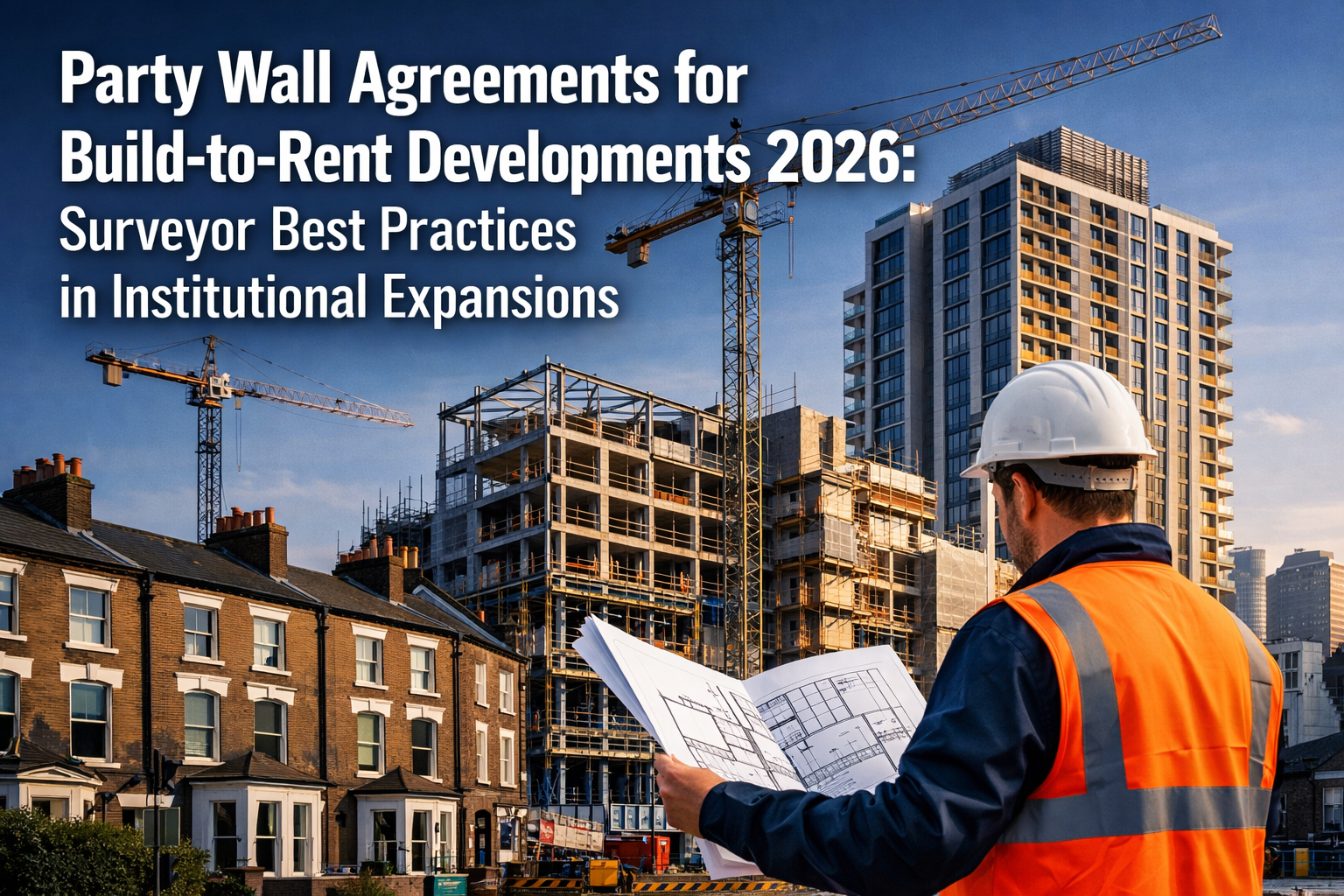
The stakes have never been higher. With urban density pressures mounting and stock shortages driving aggressive development schedules, institutional developers are discovering that party wall compliance isn't just a legal formality—it's a strategic imperative. This comprehensive guide explores how RICS-certified surveyors are revolutionizing party wall management for build-to-rent projects through standardized templates, AI-powered dispute prediction, and refined negotiation protocols.
Key Takeaways
- Standardized RICS templates streamline party wall awards for multi-unit build-to-rent developments, reducing administrative burden by up to 40%
- AI-powered dispute prediction tools help surveyors identify potential conflicts before notices are served, improving neighbour relations and project timelines
- Institutional-scale party wall agreements require specialized approaches different from traditional residential projects, with typical awards costing around £1,000 per affected property[1]
- Surveyor hourly rates range between £150-£200, making early engagement and efficient processes essential for budget management[1]
- Urban density challenges demand proactive communication strategies and enhanced documentation protocols to manage multiple adjoining owners simultaneously
Understanding Party Wall Agreements in the Build-to-Rent Context
What Makes Build-to-Rent Different?
Build-to-rent developments represent a fundamental shift in the UK housing market. Unlike traditional residential construction where individual units are sold upon completion, BTR projects are purpose-built for institutional ownership and long-term rental management. This distinction creates unique party wall considerations that surveyors must address.
The scale alone sets BTR apart. While a typical residential extension might affect one or two adjoining properties, institutional BTR developments often interface with dozens of existing structures. Each boundary represents a potential party wall scenario requiring individual assessment, notice, and agreement.
Key characteristics of BTR party wall scenarios include:
- Multiple adjoining owners requiring simultaneous coordination
- Extended construction timelines spanning 18-36 months
- Higher-value developments with significant liability exposure
- Professional landlord entities as building owners
- Enhanced scrutiny from planning authorities and stakeholders
Understanding what happens if you do not have a party wall agreement becomes particularly critical in BTR contexts, where delays can cascade across entire development schedules and impact investor returns.
The Regulatory Framework in 2026
The Party Wall etc. Act 1996 remains the foundational legislation governing party wall matters in England and Wales. However, 2026 has brought increased regulatory attention to institutional developments, with local authorities requiring more comprehensive documentation and community engagement protocols[2].
Standard notice periods remain:
- Two months for most party wall works
- One month for excavation notices[1]
For BTR developers, this means party wall processes must commence well before site mobilization. Forward-thinking surveyors now recommend initiating party wall assessments during the planning application phase, allowing adequate time for negotiations and potential party wall disputes to be resolved before construction deadlines.
RICS Templates for Large-Scale Party Wall Awards
Standardization Benefits for Institutional Projects
The Royal Institution of Chartered Surveyors (RICS) has developed specialized templates that address the unique complexities of Party Wall Agreements for Build-to-Rent Developments 2026: Surveyor Best Practices in Institutional Expansions. These standardized frameworks provide consistency across multiple agreements while maintaining the flexibility required for site-specific conditions.
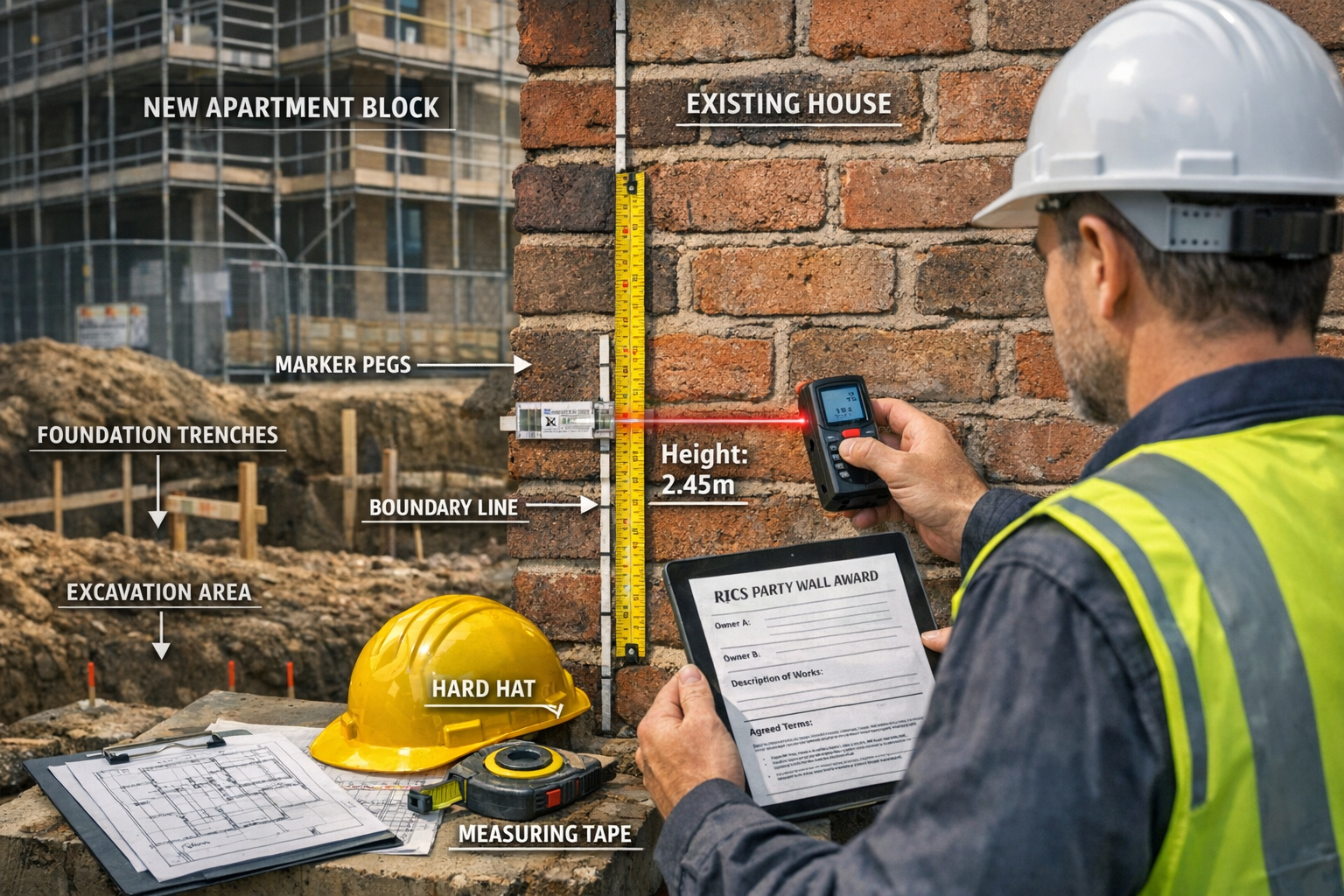
Primary advantages of RICS-compliant templates include:
| Benefit | Impact on BTR Projects |
|---|---|
| Consistency | Reduces confusion when managing 20+ simultaneous agreements |
| Legal robustness | Minimizes challenge risk from adjoining owners or their surveyors |
| Time efficiency | Accelerates award preparation by 30-40% compared to bespoke documents |
| Professional credibility | Demonstrates institutional-grade due diligence to investors |
| Dispute reduction | Clear terms and conditions prevent misunderstandings |
Essential Components of BTR Party Wall Awards
A comprehensive party wall award for build-to-rent developments must address both standard requirements and institutional-specific considerations. RICS templates typically include:
1. Detailed Work Descriptions 📋
Precise specifications of all party wall activities, including foundation depths, structural alterations, and excavation notice requirements. BTR projects demand exceptional detail given the scale and duration of works.
2. Schedule of Condition
Photographic and written documentation of adjoining properties before work commences. For institutional developments, this often extends to professional video surveys and drone footage establishing baseline conditions.
3. Access Provisions
Clear protocols for surveyors and contractors accessing adjoining properties for inspections. BTR projects may require monthly monitoring visits throughout extended construction periods.
4. Insurance and Indemnity Clauses
Comprehensive coverage addressing potential damage to property in party wall scenarios, with institutional developers typically carrying enhanced liability policies.
5. Dispute Resolution Mechanisms
Pre-agreed procedures for addressing concerns, including third surveyor appointment protocols and escalation pathways.
Cost Considerations for Institutional Developers
Party wall awards typically cost approximately £1,000 per affected property[1][4], though institutional-scale projects often benefit from volume efficiencies. A 200-unit BTR development affecting 30 adjoining properties might incur total party wall costs of £25,000-£40,000, including:
- Initial surveyor consultations and site assessments
- Notice preparation and service
- Award drafting and finalization
- Ongoing monitoring and condition inspections
- Final settlement and documentation
With surveyor rates ranging between £150-£200 per hour[1], efficient processes become financially imperative. RICS templates reduce billable hours by providing proven frameworks that require minimal customization.
AI-Powered Dispute Prediction and Prevention Strategies
The Technology Revolution in Party Wall Management
2026 has witnessed remarkable advances in AI applications for construction and property management. Progressive surveying firms now employ machine learning algorithms to predict party wall disputes before they materialize, fundamentally changing how institutional developers approach Party Wall Agreements for Build-to-Rent Developments 2026: Surveyor Best Practices in Institutional Expansions.
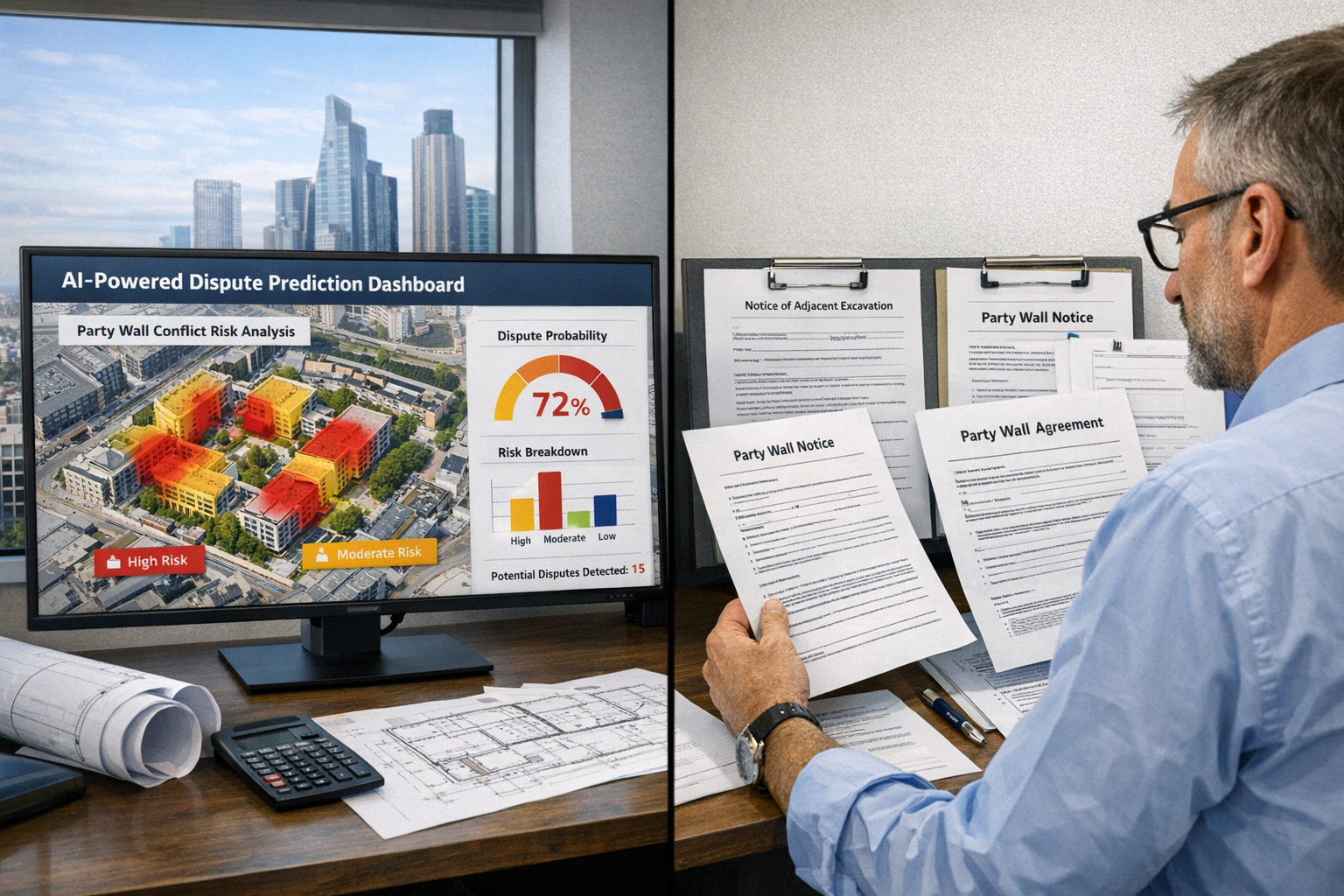
These sophisticated systems analyze multiple data points to generate risk scores for each adjoining property:
Data inputs include:
- Property age and construction type
- Historical planning objections in the area
- Previous party wall dispute records
- Occupancy status (owner-occupied vs. rental)
- Property condition indicators
- Proximity to development boundaries
- Socioeconomic demographic data
The AI generates probability scores indicating likelihood of disputes, allowing surveyors to allocate resources strategically. High-risk properties receive enhanced communication protocols and more detailed documentation, while low-risk boundaries follow streamlined processes.
Practical Implementation for BTR Surveyors
Implementing AI dispute prediction requires systematic integration into existing workflows. Leading surveying practices follow this framework:
Phase 1: Data Collection 🔍
Comprehensive site surveys combined with public records research create baseline datasets. Modern RICS commercial building surveys now incorporate party wall risk assessments as standard components.
Phase 2: Risk Stratification
Properties are categorized into risk tiers:
- High risk (20-30%): Intensive engagement with multiple touchpoints
- Medium risk (50-60%): Standard protocols with enhanced documentation
- Low risk (10-20%): Streamlined processes with essential compliance only
Phase 3: Proactive Intervention
For high-risk properties, surveyors initiate early dialogue, often scheduling face-to-face meetings before formal notices. This human-centered approach, informed by AI insights, dramatically reduces adversarial responses.
"AI doesn't replace the surveyor's judgment—it enhances it. We're seeing 60% fewer disputes on projects where we've implemented predictive analytics, simply because we know where to focus our relationship-building efforts." — Senior Partner, London Surveying Firm
Smoother Negotiations Through Data-Driven Insights
Understanding the likely concerns of adjoining owners before conversations begin provides surveyors with strategic advantages. AI analysis reveals common objection patterns in BTR contexts:
- Noise and disruption duration (mentioned in 78% of disputes)
- Structural integrity concerns (65% of disputes)
- Property value impacts (52% of disputes)
- Access and privacy issues (48% of disputes)
Armed with these insights, surveyors can proactively address concerns in initial communications, demonstrating institutional developers' commitment to responsible construction practices. This approach aligns with best practices for obtaining party wall consent efficiently.
Urban Density Challenges and Stock Shortage Solutions
Navigating High-Density Development Constraints
The UK's housing crisis has intensified pressure to maximize urban land utilization. Build-to-rent developers are increasingly acquiring sites in established residential areas, where every square meter counts and party wall interfaces multiply exponentially.
Urban density creates specific surveying challenges:
- Multiple adjoining owners: BTR sites often border 10-30+ properties simultaneously
- Complex ownership structures: Leaseholders, freeholders, and management companies all require consideration
- Heritage considerations: Many urban sites adjoin listed buildings or conservation areas
- Underground complications: Basement excavations in dense areas trigger excavation notice requirements for properties within 3-6 meters
Best Practices for Managing Multiple Stakeholders
Institutional developers have refined approaches for handling the stakeholder complexity inherent in urban BTR projects:
1. Centralized Communication Platforms 💬
Digital portals where adjoining owners access project updates, inspection schedules, and contact information. Transparency reduces anxiety and builds trust throughout extended construction periods.
2. Phased Notice Strategies
Rather than overwhelming neighbours with simultaneous notices, sophisticated surveyors implement staggered notification schedules that allow adequate response time while maintaining project momentum.
3. Community Liaison Officers
Dedicated personnel managing ongoing relationships separate from formal party wall processes. This dual-track approach maintains legal compliance while fostering positive community relations.
4. Enhanced Condition Monitoring
Quarterly inspections rather than standard annual reviews, with immediate reporting protocols for any observed changes. This vigilance protects both developers and adjoining owners from undetected deterioration.
Addressing Stock Shortages Through Efficient Processes
The UK requires approximately 300,000 new homes annually to meet demand, with build-to-rent developments providing crucial supply. Efficient party wall management directly impacts delivery timelines and, consequently, housing availability.
Time-saving strategies employed by leading surveyors:
- Pre-emptive awards: Negotiating framework agreements before detailed designs finalize
- Standardized communication templates: Reducing drafting time for routine correspondence
- Digital signature platforms: Accelerating agreement execution from weeks to days
- Concurrent processing: Managing multiple agreements simultaneously rather than sequentially
These efficiencies can compress party wall timelines from 4-6 months to 2-3 months, meaningfully accelerating housing delivery without compromising legal compliance or neighbour protections.
Surveyor Qualifications and Professional Standards
Essential Credentials for BTR Party Wall Work
Not all surveyors possess the specialized expertise required for institutional-scale party wall management. Developers should verify that appointed professionals hold:
✅ RICS Chartered Status – Demonstrating adherence to professional standards and continuing education requirements
✅ Party Wall Specialist Designation – Additional training beyond general surveying qualifications
✅ Commercial Experience – Track record with multi-unit developments rather than solely residential extensions
✅ Professional Indemnity Insurance – Adequate coverage for institutional-value projects (minimum £5-10 million)
Understanding why to choose an RICS chartered building surveyor becomes particularly relevant when institutional investment and community relations hang in the balance.
Continuing Professional Development in 2026
The party wall landscape evolves continuously, with 2026 bringing new technologies, regulatory expectations, and best practices. Leading surveyors maintain expertise through:
- Quarterly RICS training modules on emerging issues
- Industry conferences focused on institutional development
- Cross-sector learning from infrastructure and commercial projects
- Technology training for AI tools and digital platforms
- Legal updates on case law affecting party wall interpretation
Risk Management and Insurance Considerations
Protecting Institutional Investments
Build-to-rent developments represent substantial capital commitments, often exceeding £50-100 million for major urban projects. Party wall risks, while seemingly administrative, can materially impact project economics through:
Direct costs:
- Dispute resolution expenses
- Third surveyor fees
- Legal proceedings
- Remedial works for damage claims
Indirect costs:
- Construction delays affecting financing costs
- Reputational damage impacting future site acquisitions
- Investor confidence erosion
- Planning authority scrutiny on subsequent projects
Sophisticated developers implement comprehensive risk management frameworks that treat party wall compliance as integral to project governance rather than a construction formality.
Insurance Products for BTR Party Wall Exposure
Specialized insurance products have emerged addressing party wall-specific risks in institutional contexts:
Party Wall Indemnity Insurance
Covers legal costs and awards arising from disputes, with policies typically costing 0.1-0.3% of development value. For a £75 million BTR project, annual premiums might range from £75,000-£225,000.
Adjoining Owner Protection Policies
Some progressive developers offer to fund independent surveyor appointments for adjoining owners, demonstrating good faith while controlling quality of professional engagement.
Extended Defects Liability
Enhanced coverage periods (5-10 years vs. standard 1-2 years) addressing latent party wall damage that manifests after practical completion.
Case Studies: Successful Institutional Expansions
London Docklands BTR Development
A 350-unit build-to-rent scheme in East London exemplifies best practices in Party Wall Agreements for Build-to-Rent Developments 2026: Surveyor Best Practices in Institutional Expansions. The development adjoined 42 existing properties across three streets.
Key success factors:
- AI risk assessment identified 8 high-risk properties requiring enhanced engagement
- RICS-templated awards reduced preparation time by 35%
- Community liaison program included monthly newsletters and open-house events
- Zero formal disputes throughout 24-month construction period
- Final condition inspections confirmed no party wall damage claims
Project metrics:
- Total party wall costs: £52,000 (0.08% of £65M development value)
- Timeline: 11 weeks from initial notices to final awards
- Adjoining owner satisfaction: 87% positive feedback in post-completion survey
Manchester Urban Regeneration Project
A 180-unit BTR development in Manchester's Northern Quarter navigated particularly complex party wall scenarios involving Victorian warehouses, some with uncertain ownership structures.
Challenges addressed:
- Traced 12 absentee freeholders through Land Registry research
- Negotiated framework agreements with commercial tenants
- Implemented enhanced monitoring for heritage structures
- Coordinated with conservation officers on sensitive interfaces
Outcomes:
- Two minor disputes resolved through agreed surveyor mediation
- Heritage buildings protected through specialized underpinning techniques
- Project completed 3 weeks ahead of schedule despite party wall complexity
Conclusion
Party Wall Agreements for Build-to-Rent Developments 2026: Surveyor Best Practices in Institutional Expansions represents the convergence of traditional property law, modern construction demands, and cutting-edge technology. As the UK's housing crisis intensifies and institutional capital flows into build-to-rent solutions, professional surveyors serve as critical enablers of responsible urban densification.
The integration of RICS-standardized templates provides the consistency and efficiency that large-scale developments demand, while AI-powered dispute prediction transforms party wall management from reactive compliance to proactive relationship building. These innovations don't replace fundamental surveying expertise—they amplify it, allowing professionals to focus strategic attention where it matters most.
For institutional developers, the message is clear: party wall management deserves early attention and adequate resources. The £1,000 per property investment in proper awards[1][4] and the £150-£200 per hour for qualified surveyors[1] represent exceptional value when measured against dispute costs, construction delays, and reputational risks.
Actionable Next Steps
For Developers:
- Engage RICS-chartered party wall surveyors during site acquisition due diligence
- Implement AI risk assessment tools to identify high-priority stakeholder relationships
- Budget 0.5-1% of development costs for comprehensive party wall management
- Establish community liaison programs separate from formal legal processes
For Surveyors:
- Invest in continuing professional development focused on institutional-scale projects
- Adopt standardized RICS templates while maintaining site-specific flexibility
- Integrate predictive analytics into standard assessment workflows
- Build multidisciplinary teams combining legal, technical, and communication expertise
For Adjoining Owners:
- Understand your rights under the Party Wall Act and party wall consent requirements
- Consider appointing independent surveyors for significant developments
- Document property conditions thoroughly before works commence
- Maintain open communication channels with developers and their representatives
The build-to-rent sector will continue expanding as institutional investors recognize the sector's stable returns and social value. Those developments that succeed will be those where party wall agreements are treated not as obstacles to overcome, but as frameworks for responsible growth that respects existing communities while delivering desperately needed housing supply.
References
[1] Party Wall Agreement – https://hoa.org.uk/advice/guides-for-homeowners/i-am-improving/party-wall-agreement/
[2] Party Wall Surveys For Ev Infrastructure Retrofits Compliance Amid 2026 Net Zero Mandates And Neighbour Disputes – https://nottinghillsurveyors.com/blog/party-wall-surveys-for-ev-infrastructure-retrofits-compliance-amid-2026-net-zero-mandates-and-neighbour-disputes
[3] 2026 Adjoining Owner Party Wall Tips – https://www.simplesurvey.co.uk/article/2026-adjoining-owner-party-wall-tips/
[4] Party Wall Agreements What You Need To Know – https://www.fmb.org.uk/find-a-builder/ultimate-guides-to-home-renovation/party-wall-agreements-what-you-need-to-know.html