Northern England's property market is experiencing an unprecedented surge in 2026, with cities like Manchester, Leeds, Liverpool, and Sheffield witnessing price increases that outpace much of the UK. As housing supply struggles to meet demand, homeowners are turning to loft conversions as a cost-effective solution to gain additional living space. However, the region's characteristic terraced housing stock presents a unique challenge: party wall agreements. Understanding Party Wall Agreements for 2026 Loft Conversions in Northern Housing Hotspots: RICS Templates and Surveys has become essential for homeowners, developers, and construction professionals navigating this complex legal landscape.
The Party Wall Act 1996 governs structural work affecting shared walls, and loft conversions frequently trigger its requirements. With Northern housing hotspots experiencing record conversion activity in 2026, chartered surveyors are managing an increasing volume of party wall notifications, surveys, and awards. This comprehensive guide explores the critical aspects of party wall agreements specific to loft conversions in Northern England's booming property markets.
Key Takeaways
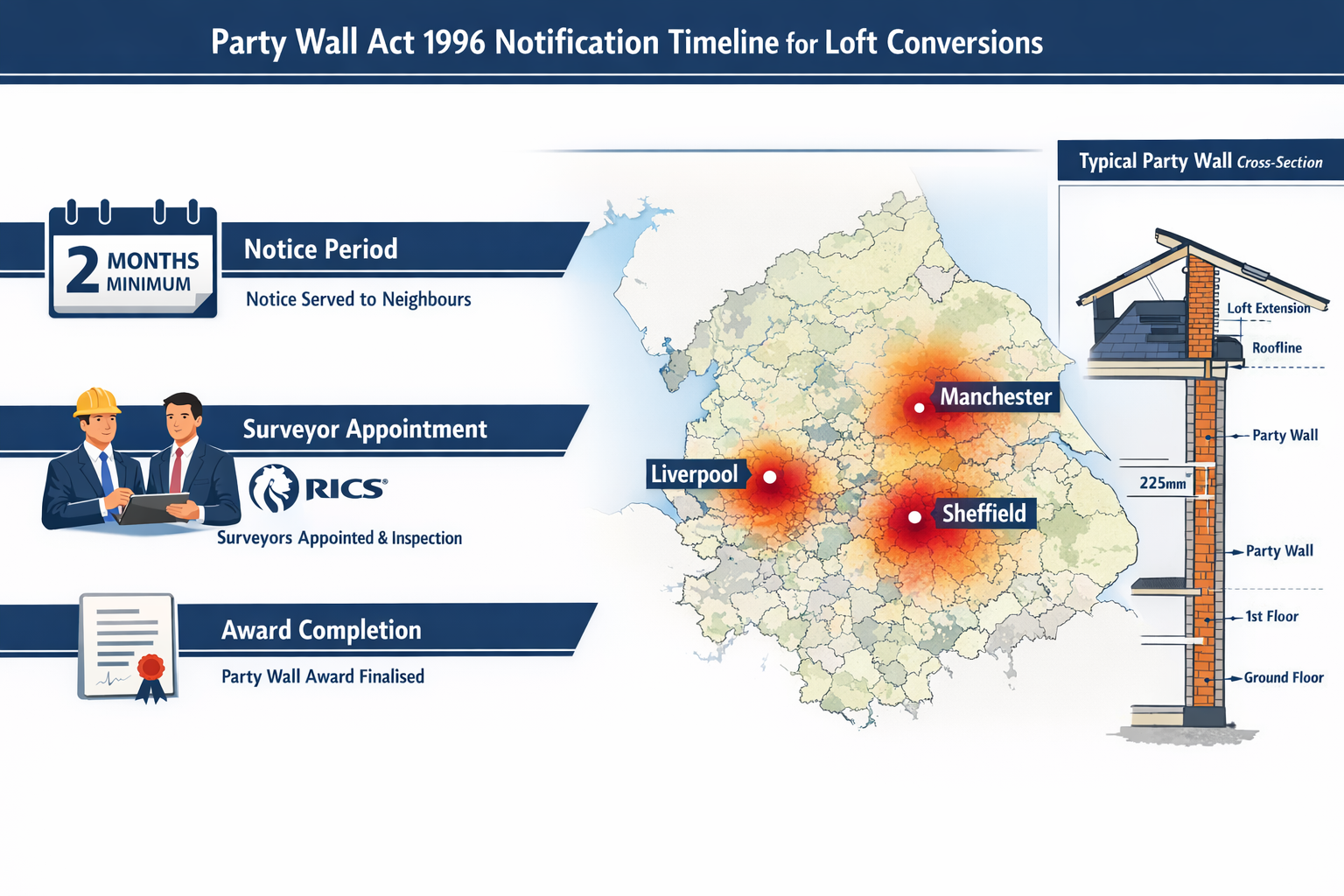
- Legal compliance is mandatory: Loft conversions affecting party walls require formal notices under the Party Wall Act 1996, with a minimum two-month notification period before work begins
- RICS templates streamline processes: Using standardized RICS documentation ensures professional compliance and reduces disputes in Northern housing hotspots experiencing high conversion volumes
- Schedule of condition surveys protect all parties: Pre-work documentation of neighboring properties safeguards homeowners and prevents costly disputes in terraced housing common across Manchester, Leeds, and Liverpool
- Northern market conditions impact timelines: 2026's housing boom in Northern England means longer surveyor appointment times and increased fees, requiring early planning
- Shared access rights require careful negotiation: Terraced loft conversions often need temporary scaffolding access across neighboring properties, necessitating clear agreements
Understanding Party Wall Agreements for 2026 Loft Conversions in Northern Housing Hotspots 🏘️
The Party Wall Act 1996 applies throughout England and Wales, but its practical application varies significantly based on regional housing characteristics. Northern England's housing stock—predominantly Victorian and Edwardian terraced properties—creates specific challenges for loft conversions that differ from detached properties common in other regions.
What Triggers Party Wall Requirements in Loft Conversions?
Loft conversions typically trigger party wall notices in three scenarios:
- Structural alterations to party walls: Installing steel beams that bear on or pass through shared walls
- Work on party structures: Modifications to shared roof structures or chimney stacks
- Excavation near boundaries: Foundation work within three meters of neighboring properties (less common in lofts but relevant for some conversion types)
In Northern housing hotspots, terraced properties account for approximately 40-50% of housing stock in cities like Manchester and Leeds. These properties share walls on both sides, meaning a single loft conversion may require agreements with multiple neighbors.
The 2026 Northern Housing Market Context
Northern England's property market has transformed dramatically in 2026. Several factors contribute to the surge in loft conversion activity:
| City | Average House Price Increase (2025-2026) | Typical Loft Conversion Cost | ROI on Loft Conversion |
|---|---|---|---|
| Manchester | 8.2% | £35,000-£55,000 | 15-20% property value increase |
| Leeds | 7.8% | £32,000-£50,000 | 14-18% property value increase |
| Liverpool | 9.1% | £30,000-£48,000 | 16-22% property value increase |
| Sheffield | 6.9% | £28,000-£45,000 | 13-17% property value increase |
With housing supply constrained and prices rising, loft conversions offer homeowners a more affordable alternative to moving. The average cost of moving in Northern England now exceeds £15,000 when factoring in stamp duty, estate agent fees, and conveyancing costs—making loft conversions increasingly attractive.
RICS Standards and Professional Guidance
The Royal Institution of Chartered Surveyors (RICS) provides standardized templates and guidance for party wall surveyors. In 2026, RICS has emphasized the importance of clear communication and documentation, particularly in high-volume markets like Northern England's housing hotspots.
RICS-accredited surveyors follow strict professional standards that include:
- Impartial assessment of proposed works
- Fair fee structures based on work complexity
- Transparent communication with all parties
- Detailed documentation using standardized templates
For homeowners planning loft conversions, engaging RICS-accredited professionals ensures compliance with both legal requirements and industry best practices. When selecting a surveyor, verify their RICS membership and experience with loft conversions in terraced properties.
The Party Wall Notice Process for Loft Conversions in Northern England 📋
Navigating the party wall notice process requires careful attention to timing, documentation, and legal requirements. The Party Wall Act 1996 establishes specific procedures that building owners must follow when planning loft conversions affecting shared structures.
Step 1: Determine Notice Requirements
Before serving notices, building owners must identify which type of notice applies to their loft conversion:
Party Structure Notice: Required when work directly affects the party wall, such as:
- Cutting into the wall to insert steel beams
- Raising the party wall height
- Demolishing and rebuilding party structures
- Underpinning party walls
Notice of Adjacent Excavation: Required when digging within specified distances of neighboring properties (rarely applicable to standard loft conversions)
Most loft conversions in Northern terraced housing require a Party Structure Notice due to structural beam installations that bear on shared walls.
Step 2: Serve Formal Notices
The Party Wall Act mandates specific notice periods:
- Two months for Party Structure Notices
- One month for Line of Junction Notices
Notices must be served to all affected neighbors and include:
✅ Detailed description of proposed works
✅ Planned start date
✅ Building owner's contact information
✅ Clear drawings showing wall modifications
✅ Specification of structural elements affecting party walls
In 2026's competitive Northern housing market, early notice service is crucial. Construction firms report booking schedules 3-4 months in advance, making timely party wall resolution essential to securing preferred contractors.
Step 3: Neighbor Response and Surveyor Appointment
Neighbors have 14 days to respond to party wall notices. Three outcomes are possible:
- Consent: Neighbor agrees to the works (rare without conditions)
- Dissent: Neighbor formally disputes, triggering surveyor appointment
- No response: Treated as dissent after 14 days
When dissent occurs (the most common scenario), the Party Wall Act requires surveyor appointment. Building owners and neighbors can either:
- Appoint separate surveyors who then select a third "agreed surveyor"
- Jointly appoint a single "agreed surveyor" to act impartially for both parties
In Northern housing hotspots, the agreed surveyor approach has gained popularity in 2026 due to cost efficiency. Single surveyor appointments typically cost £800-£1,200, while dual surveyor arrangements may reach £2,000-£3,000 for standard loft conversions.
Step 4: Schedule of Condition Survey
A critical component of Party Wall Agreements for 2026 Loft Conversions in Northern Housing Hotspots involves comprehensive schedule of condition surveys. These surveys document the neighboring property's condition before construction begins.
Schedule of condition surveys typically include:
- Detailed photographic records of all rooms
- Documentation of existing cracks, defects, or damage
- Measurements of significant structural features
- Written descriptions of finishes and conditions
- Video walkthroughs for comprehensive records
This documentation proves invaluable if disputes arise regarding construction damage. In terraced properties common across Manchester and Leeds, vibration from construction work can exacerbate existing minor cracks, making pre-work documentation essential for establishing causation.
Professional surveyors conducting schedule of condition reporting use standardized RICS templates that ensure consistency and legal defensibility. These reports form part of the formal party wall award.
Step 5: Party Wall Award Preparation
The surveyor(s) prepare a party wall award that legally documents:
- Scope of permitted works
- Working hours and access arrangements
- Protective measures required
- Schedule of condition findings
- Dispute resolution procedures
- Fee allocation between parties
Party wall awards are legally binding documents enforceable through county courts. They provide certainty for all parties and establish clear parameters for construction work.
In 2026, RICS templates for party wall awards have been updated to address common loft conversion scenarios, including standardized clauses for:
- Steel beam installations in party walls
- Temporary scaffolding access across neighboring properties
- Noise and vibration limitations in residential areas
- Insurance requirements for building owners
- Notification procedures for work variations
RICS Templates and Survey Documentation for Northern Loft Conversions 📊
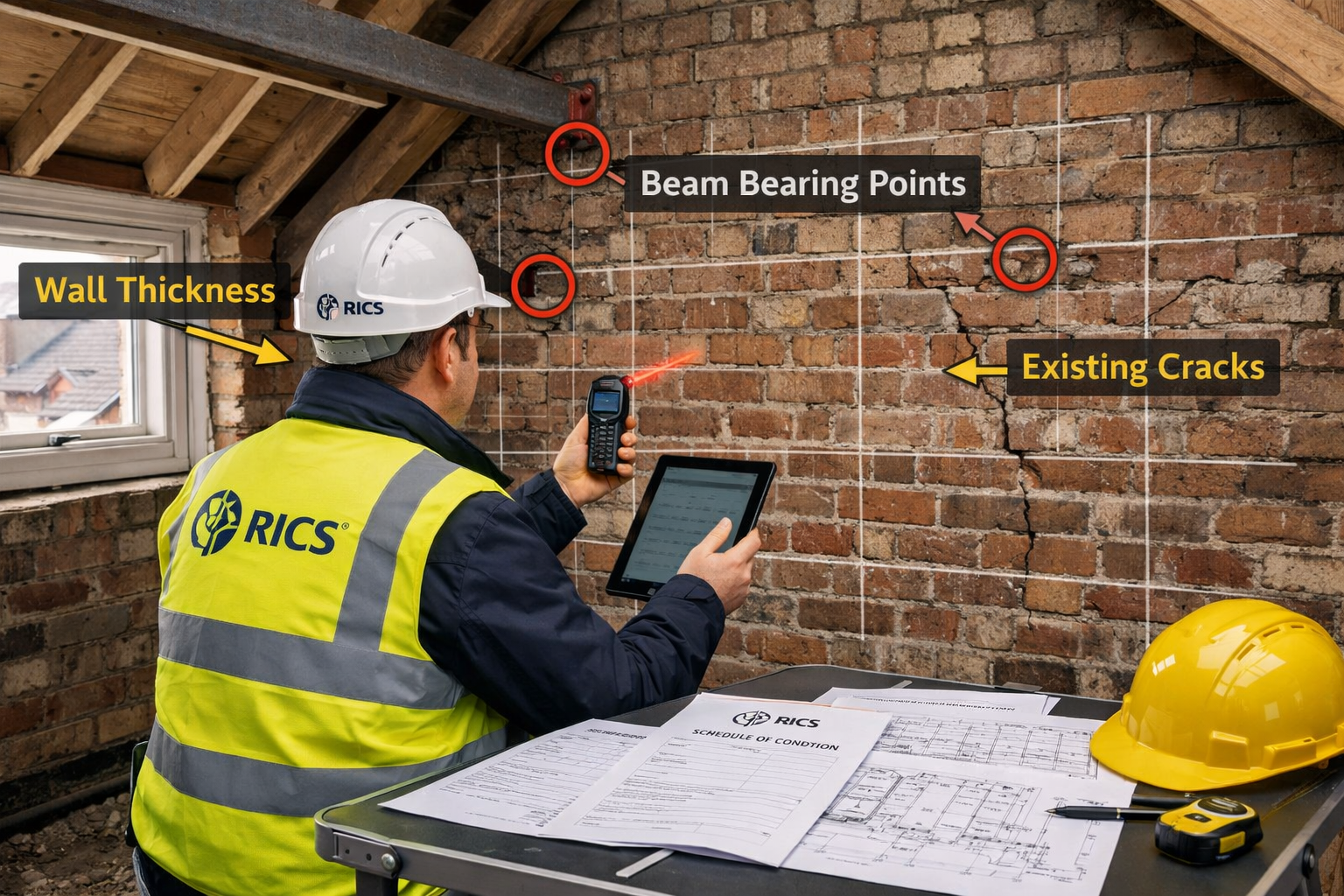
The Royal Institution of Chartered Surveyors provides standardized templates that bring consistency and professionalism to party wall procedures. Understanding these templates helps homeowners and professionals navigate Party Wall Agreements for 2026 Loft Conversions in Northern Housing Hotspots effectively.
Essential RICS Templates for Loft Conversion Party Walls
1. Party Wall Notice Templates
RICS provides standardized notice templates that comply with Party Wall Act requirements:
- Form 1: Line of Junction Notice (rarely used for loft conversions)
- Form 2: Party Structure Notice (most common for loft work)
- Form 3: Notice of Adjacent Excavation (applicable if foundation work required)
These templates ensure notices contain all legally required information, reducing the risk of invalid service that could delay projects.
2. Party Wall Award Templates
The party wall award represents the culmination of the surveyor's work. RICS templates structure awards to include:
- Preamble: Parties involved, property addresses, notice dates
- Recitals: Summary of proposed works and notice service
- Award clauses: Specific permissions, restrictions, and conditions
- Schedule of condition: Attached photographic and written records
- Appendices: Drawings, specifications, insurance certificates
Awards must be served on all parties within specified timeframes, typically within one month of surveyor appointment for straightforward loft conversions.
3. Schedule of Condition Templates
Professional schedule of condition guidance emphasizes systematic documentation using RICS templates that organize findings by:
- Room-by-room photographic records
- Elevation-specific exterior documentation
- Defect categorization (cosmetic, structural, urgent)
- Measurement protocols for crack widths
- Standardized description terminology
In Northern housing hotspots where Victorian terraced properties predominate, schedule of condition surveys frequently document:
- Existing settlement cracks in plaster
- Historic movement in party walls
- Roof structure condition
- Chimney stack stability
- Damp or water ingress issues
This comprehensive documentation protects building owners from spurious damage claims while ensuring legitimate construction-related damage receives appropriate remedy.
Survey Methodologies for Loft Conversion Party Walls
RICS-accredited surveyors employ specific methodologies when assessing loft conversion proposals:
Structural Assessment
Surveyors evaluate:
- Party wall load-bearing capacity for new steel beams
- Existing wall condition and stability
- Foundation adequacy for additional loads
- Roof structure integration with party walls
For older Northern terraced properties, this may require structural engineering input to verify wall capacity for beam bearing points.
Access and Logistics Planning
Loft conversions in terraced housing often require:
- Scaffolding erected across neighboring properties
- Material delivery through adjacent gardens
- Temporary removal of boundary fencing
- Shared access to rear elevations
Party wall awards must clearly define these access rights, including:
✅ Permitted access times
✅ Restoration requirements
✅ Liability for access-related damage
✅ Notice periods for access commencement
Protective Measures Specification
Surveyors specify protective measures appropriate to the work, such as:
- Dust sheeting for neighboring properties
- Vibration monitoring for sensitive structures
- Temporary weatherproofing during roof work
- Protection of shared chimney stacks
- Debris management procedures
In 2026, RICS guidance emphasizes proportionate protective measures that balance risk management with cost efficiency—particularly important in Northern housing markets where affordability remains a key consideration.
Regional Variations in Northern Housing Hotspots
While RICS templates provide standardization, surveyors must adapt approaches to regional characteristics:
Manchester: High-density terraced housing in areas like Chorlton, Didsbury, and Levenshulme requires careful coordination when multiple properties undergo simultaneous conversions. Surveyors increasingly encounter "serial conversion" scenarios where entire terraced rows convert lofts sequentially.
Leeds: Victorian terraced properties in Headingley, Chapel Allerton, and Roundhay often feature shared chimney stacks requiring specialist assessment. Party wall awards must address chimney modification or removal carefully.
Liverpool: Terraced housing stock varies significantly by area, with some districts featuring narrower properties where loft conversions create more significant structural challenges. Surveyors report higher rates of structural reinforcement requirements.
Sheffield: Topographical variations mean some terraced properties sit on sloping sites, creating complex foundation and drainage considerations that party wall awards must address.
Cost Considerations for RICS Surveys and Awards
Party wall surveyor fees in Northern housing hotspots have increased moderately in 2026 due to high demand:
| Service Component | Typical Fee Range (2026) |
|---|---|
| Agreed surveyor appointment | £800-£1,200 |
| Dual surveyor arrangement | £1,500-£3,000 |
| Schedule of condition survey | £250-£500 |
| Party wall award preparation | Included in surveyor fee |
| Dispute resolution services | £150-£300 per hour |
| Post-construction inspection | £200-£400 |
Building owners typically bear all party wall costs, including neighbors' surveyor fees if separate surveyors are appointed. This cost allocation is established in the Party Wall Act and cannot be avoided.
However, engaging experienced RICS surveyors often reduces total project costs by:
- Preventing construction delays from procedural errors
- Minimizing dispute risks through clear documentation
- Facilitating neighbor cooperation through professional mediation
- Ensuring compliance that avoids potential legal challenges
For homeowners planning loft conversions in Northern England's competitive 2026 market, budgeting £1,500-£2,000 for party wall procedures represents prudent financial planning.
Integration with Broader Survey Requirements
Loft conversions often require additional survey work beyond party wall procedures:
- Building surveys to assess overall property condition
- Structural surveys for load-bearing capacity verification
- Asbestos surveys for pre-1999 properties
- Damp surveys if moisture issues exist
Coordinating these surveys with party wall procedures streamlines the pre-construction process and ensures comprehensive risk assessment. Many chartered surveyors offer bundled services that provide cost efficiencies for homeowners undertaking major projects.
Common Challenges and Dispute Resolution in Northern Loft Conversions ⚖️
Despite careful planning and professional surveyor involvement, party wall disputes occasionally arise during loft conversions. Understanding common challenges helps homeowners and professionals navigate Party Wall Agreements for 2026 Loft Conversions in Northern Housing Hotspots more effectively.
Typical Dispute Triggers
1. Construction Damage Claims
The most frequent disputes involve allegations of construction-related damage:
- Cracks appearing in neighboring properties
- Plaster damage from vibration
- Roof tile displacement
- Chimney stack movement
- Boundary fence damage
This is where comprehensive schedule of condition surveys prove invaluable. Pre-work documentation establishes baseline conditions, enabling surveyors to determine whether damage resulted from construction or pre-existed.
In Northern terraced housing, many properties already exhibit settlement cracks and minor structural movement. Without proper documentation, distinguishing new damage from existing defects becomes nearly impossible.
2. Access Disputes
Loft conversions in terraced properties frequently require access across neighboring land for:
- Scaffolding erection extending beyond property boundaries
- Material delivery through shared alleyways
- Crane access for steel beam installation
- Waste removal through adjacent gardens
Party wall awards should clearly define access rights, but disputes arise when:
❌ Access exceeds agreed scope or duration
❌ Restoration doesn't meet neighbor expectations
❌ Construction activities cause unreasonable disruption
❌ Contractors damage neighboring property during access
3. Work Scope Variations
Construction projects sometimes deviate from original plans, potentially affecting party wall agreements:
- Additional steel beams not specified in original notice
- Deeper excavations than initially planned
- Extended working hours beyond award provisions
- Changes to structural methodology
The Party Wall Act requires fresh notices for material variations to approved works. Proceeding without updated notices can invalidate party wall protection and expose building owners to legal liability.
4. Noise and Disruption Complaints
While not strictly party wall matters, excessive noise and disruption often escalate into formal disputes:
- Working outside permitted hours
- Excessive dust migration to neighboring properties
- Vibration beyond reasonable levels
- Prolonged construction timelines
Party wall awards typically specify working hours (commonly 8:00 AM to 6:00 PM weekdays, limited Saturday work, no Sundays) and protective measures. Enforcement becomes challenging when neighbors feel surveyors aren't adequately addressing their concerns.
RICS Dispute Resolution Procedures
When disputes arise, RICS provides structured resolution pathways:
Stage 1: Informal Resolution
Surveyors first attempt informal resolution through:
- Site meetings with all parties
- Mediated discussions between neighbors
- Contractor education on compliance requirements
- Adjustment of working methods or schedules
Many disputes resolve at this stage when parties understand each other's concerns and constraints.
Stage 2: Formal Award Amendment
If informal resolution fails, surveyors may issue amended awards that:
- Impose additional protective measures
- Restrict working hours further
- Require enhanced monitoring procedures
- Specify remedial work for any damage
Amended awards carry the same legal weight as original awards and are enforceable through courts if necessary.
Stage 3: Third Surveyor Determination
When appointed surveyors disagree (in dual surveyor arrangements), the third "agreed surveyor" provides binding determination on disputed matters. This mechanism prevents deadlock and ensures project progression.
Stage 4: Legal Proceedings
As a last resort, parties may pursue:
- County court injunctions to prevent non-compliant work
- Damages claims for party wall breaches
- Appeals against party wall awards (within 14 days of service)
Legal proceedings are costly and time-consuming, making professional surveyor engagement and clear documentation essential for avoiding this outcome.
Best Practices for Dispute Prevention
Experienced professionals recommend several strategies for minimizing party wall disputes in Northern loft conversions:
1. Early Neighbor Engagement
Before serving formal notices, building owners should:
- Discuss plans informally with neighbors
- Share preliminary drawings and timelines
- Address concerns proactively
- Build goodwill through transparent communication
In tight-knit Northern communities, maintaining positive neighbor relationships often prevents formal disputes from arising.
2. Contractor Selection and Management
Choosing experienced contractors familiar with party wall requirements reduces dispute risks:
- Select contractors with terraced property experience
- Verify insurance coverage adequacy
- Ensure understanding of party wall award conditions
- Implement robust site management procedures
Regular site supervision and quality control prevent many issues that could otherwise escalate into disputes.
3. Comprehensive Documentation
Beyond statutory schedule of condition surveys, maintaining detailed records throughout construction helps:
- Daily site diaries documenting work progress
- Photographic records of critical construction stages
- Correspondence logs with neighbors and surveyors
- Incident reports for any concerns raised
This documentation proves invaluable if disputes arise months or years after completion.
4. Professional Survey Oversight
Engaging surveyors for post-construction inspections provides independent verification that:
- Work complied with party wall awards
- No damage occurred to neighboring properties
- Restoration meets agreed standards
- All award conditions were satisfied
This final inspection, though not legally required, provides closure and peace of mind for all parties.
Regional Dispute Patterns in 2026
Northern housing hotspots exhibit some distinctive dispute patterns in 2026:
Manchester: High conversion volumes in popular neighborhoods like Chorlton create "conversion fatigue" among residents who've experienced multiple neighboring projects. Surveyors report increased sensitivity to noise and disruption.
Leeds: Student rental areas see higher dispute rates, partly due to transient populations and landlord-tenant complications in party wall procedures.
Liverpool: Economic disparities between neighborhoods create tensions when expensive loft conversions occur in mixed-income areas, sometimes manifesting as party wall disputes.
Sheffield: Topographical challenges occasionally lead to unexpected foundation issues that trigger disputes over excavation and structural support.
Understanding these regional patterns helps surveyors anticipate challenges and implement preventive measures tailored to local conditions.
Insurance Considerations
Adequate insurance coverage is essential for managing party wall risks:
Building Owner Insurance Requirements:
- Public liability coverage (minimum £2-5 million)
- Contractors' all risks insurance
- Professional indemnity for appointed surveyors
- Structural warranty for completed work
Neighbor Protection:
- Building owners' insurance should cover damage to neighboring properties
- Party wall awards typically require proof of insurance before work commences
- Neighbors may wish to notify their own insurers of adjacent construction
In 2026's litigious environment, comprehensive insurance provides crucial financial protection for all parties involved in loft conversions.
Conclusion: Navigating Party Wall Success in Northern England's 2026 Housing Boom
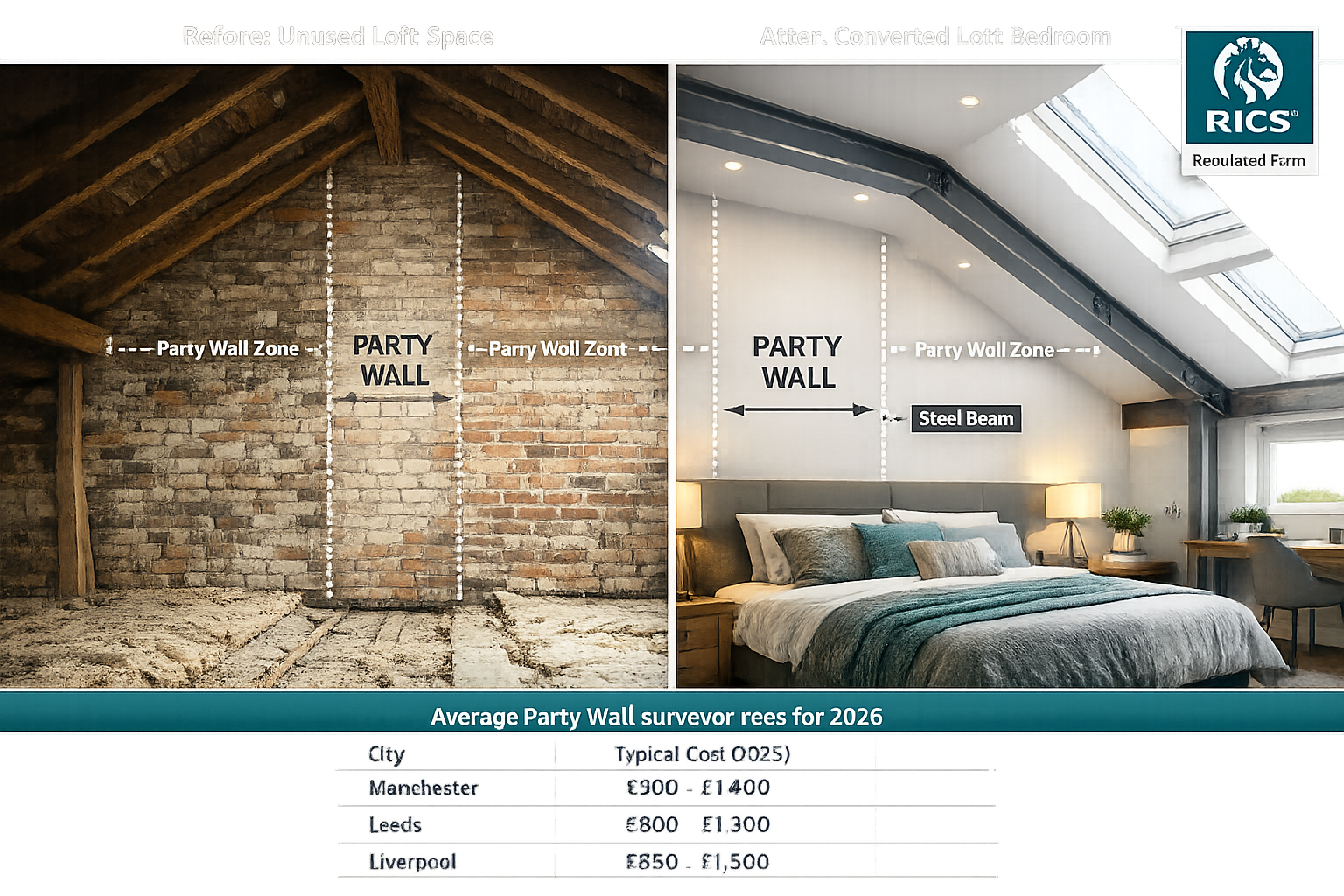
Party Wall Agreements for 2026 Loft Conversions in Northern Housing Hotspots: RICS Templates and Surveys represent a critical intersection of legal compliance, professional practice, and neighborly cooperation. As Northern England's housing markets continue their remarkable growth trajectory in 2026, loft conversions offer homeowners a practical solution to space constraints and rising property values.
The Party Wall Act 1996 provides a clear legal framework, but successful navigation requires professional expertise, careful planning, and transparent communication. RICS-accredited surveyors bring standardized templates, proven methodologies, and impartial assessment that protect all parties' interests while facilitating construction progress.
Key Success Factors
✅ Early planning: Begin party wall procedures 3-4 months before intended construction start
✅ Professional engagement: Appoint experienced RICS surveyors familiar with Northern terraced housing
✅ Comprehensive documentation: Invest in thorough schedule of condition surveys
✅ Neighbor communication: Build goodwill through transparent, respectful dialogue
✅ Contractor selection: Choose experienced professionals who understand party wall requirements
✅ Insurance verification: Ensure adequate coverage for all potential risks
Actionable Next Steps
For homeowners planning loft conversions in Manchester, Leeds, Liverpool, Sheffield, or other Northern housing hotspots:
-
Assess your property: Determine whether your loft conversion will affect party walls (most terraced conversions will)
-
Engage professionals early: Contact RICS-accredited surveyors to discuss timelines and requirements—consider getting a quote from experienced local firms
-
Budget appropriately: Allocate £1,500-£2,500 for party wall procedures in addition to construction costs
-
Communicate with neighbors: Discuss plans informally before serving formal notices
-
Review RICS templates: Familiarize yourself with standard party wall documentation to understand the process
-
Coordinate surveys: Integrate party wall procedures with other required surveys like building surveys or structural assessments
-
Select experienced contractors: Choose builders with proven terraced property and party wall experience
-
Document everything: Maintain comprehensive records throughout the process
Looking Ahead
Northern England's housing market shows no signs of slowing in 2026, with continued price appreciation and supply constraints driving conversion activity. Party wall procedures will remain an essential component of loft conversion projects, requiring homeowners to balance legal compliance, cost management, and neighbor relations.
The standardization brought by RICS templates and professional surveyor involvement provides certainty in an otherwise complex process. By understanding the requirements, engaging qualified professionals, and approaching party wall agreements with transparency and good faith, homeowners can successfully navigate loft conversions while maintaining positive community relationships.
The investment in proper party wall procedures—both financial and temporal—pays dividends through smoother construction processes, reduced dispute risks, and legal protection that safeguards property values for years to come. In Northern England's competitive 2026 housing market, this professional approach to party wall agreements represents not just legal compliance, but sound property investment strategy.