The property market in England and Wales is undergoing its most significant transformation in decades. As 2026 unfolds, mandatory seller surveys are reshaping the entire homebuying landscape, fundamentally altering when, how, and why property inspections occur. For building surveyors, these reforms represent both an unprecedented opportunity and a critical operational challenge that demands immediate adaptation.
Navigating 2026 Homebuying Reforms: How Mandatory Surveys Will Transform Building Surveyor Workflows has become essential knowledge for every professional in the sector. Government reforms now propose making property condition assessments standard upfront requirements, driving early demand for Level 2 and Level 3 surveys. Surveyors must adapt with retraining and digital tools to handle increased volumes in a recovering market. 🏠
The shift from post-offer inspections to pre-listing surveys marks a complete departure from traditional practices. Where buyers once commissioned surveys only after making offers, sellers must now provide comprehensive property information before marketing even begins. This fundamental change creates ripple effects throughout the entire surveying profession.
Key Takeaways
- Mandatory upfront surveys are now required before property listing in England and Wales, shifting survey timing from post-offer to pre-marketing phases
- Survey demand is surging as the sector experiences positive growth momentum with lenders forecasting increased volumes throughout 2026
- Surveyor retraining is critical to handle new operational workflows, digital systems, and the fundamental timing change of when inspections occur
- Buyer surveys remain essential despite seller-provided information—independent RICS surveys are still recommended and often required by lenders
- Digital transformation is mandatory as reforms move toward standardized information frameworks and away from fragmented, document-heavy processes
Understanding the 2026 Housing Reform Framework
The Housing Reform 2026 represents the most comprehensive overhaul of property transactions since the introduction of modern conveyancing practices. Drawing inspiration from Scotland's established Home Report system, which has operated successfully since 2008, these reforms specifically target England and Wales with adapted requirements suited to their unique market conditions.[1]
What the Reforms Require
Upfront seller surveys are now mandatory before properties can be listed for sale. This requirement fundamentally changes the transaction timeline, moving property condition assessments from a buyer's due diligence activity to a seller's pre-marketing obligation.[1]
The mandatory disclosure package must include:
- Structural condition reports documenting the property's physical state
- Known defects with detailed descriptions and supporting evidence
- Financial information covering leasehold charges, ground rent, and service fees
- Legal matters including restrictions, easements, and covenant details
- Standardized property information following government-approved frameworks
These requirements create an immediate and substantial increase in survey demand. Unlike the traditional model where only serious buyers commissioned surveys, every seller must now obtain professional property assessments before marketing begins.
Phased Implementation Throughout 2026
The reforms won't arrive as a single "big bang" implementation. Instead, the government has adopted a gradual rollout strategy throughout 2026, allowing the sector to adapt progressively.[1]
| Phase | Timeline | Key Changes |
|---|---|---|
| Phase 1 | Q1 2026 | Pilot programs in select regions |
| Phase 2 | Q2 2026 | Expanded mandatory survey requirements |
| Phase 3 | Q3 2026 | Digital infrastructure deployment |
| Phase 4 | Q4 2026 | Full nationwide implementation |
This phased approach provides surveyors with critical time to retrain staff, implement new systems, and scale operations to meet the anticipated demand surge.
Why These Reforms Matter
The primary objectives behind Navigating 2026 Homebuying Reforms: How Mandatory Surveys Will Transform Building Surveyor Workflows center on addressing long-standing market inefficiencies:
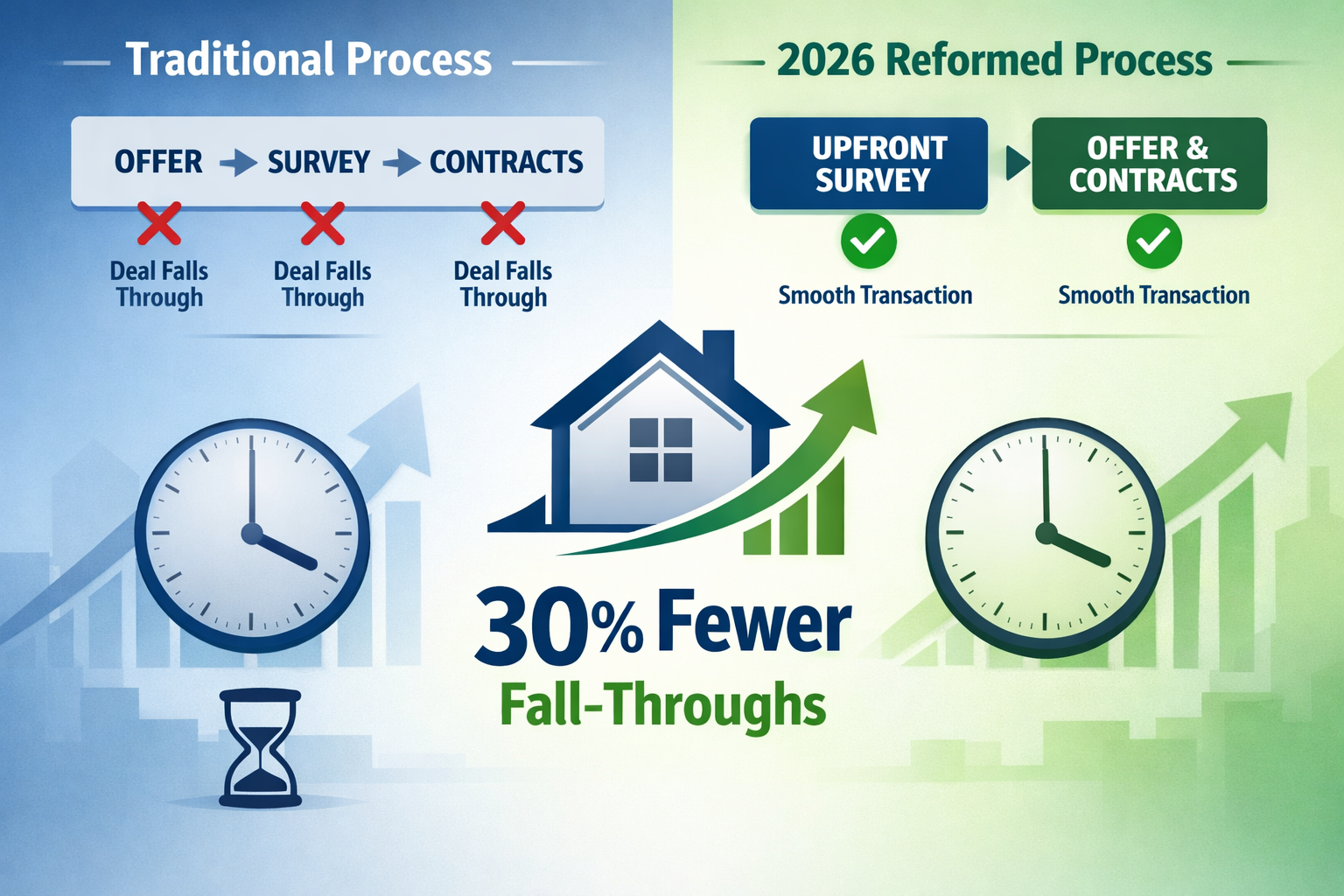
Reducing fall-through rates: By requiring upfront transparency, the reforms aim to eliminate late-stage surprises that cause deals to collapse. When buyers discover significant defects only after making offers, renegotiations often fail, wasting time and money for all parties.[1]
Accelerating transaction times: The traditional process involves multiple sequential steps that extend timelines unnecessarily. Upfront surveys enable parallel processing of due diligence activities, potentially cutting weeks from completion schedules.
Increasing market transparency: Standardized property information creates a level playing field where all potential buyers access the same foundational data, reducing information asymmetry and supporting more informed decision-making.
For building surveyors, understanding which survey do you need becomes even more critical as clients navigate these new requirements.
How Mandatory Surveys Will Transform Building Surveyor Workflows
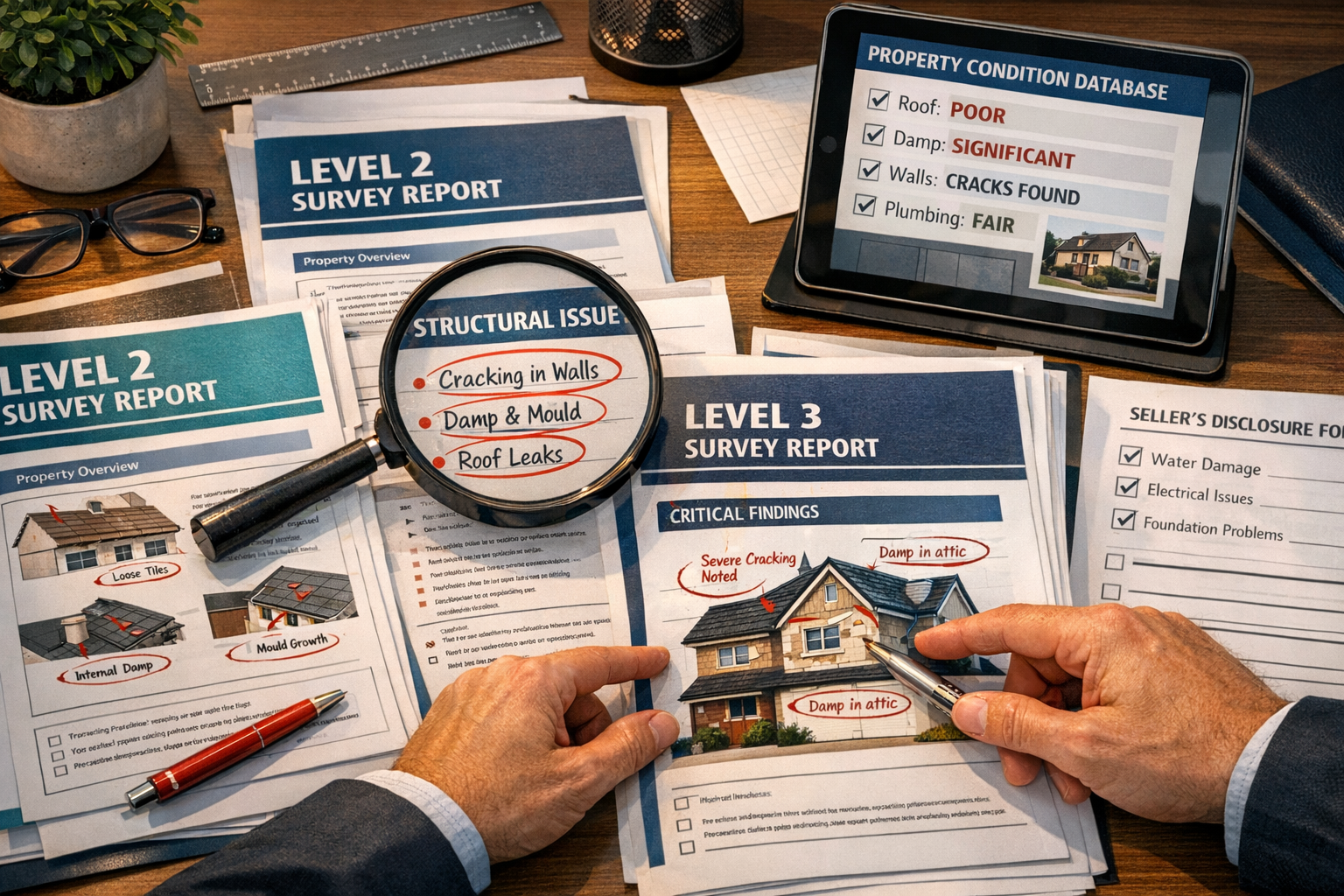
The operational impact of Navigating 2026 Homebuying Reforms: How Mandatory Surveys Will Transform Building Surveyor Workflows extends far beyond simply conducting more inspections. The entire business model, workflow timing, and service delivery approach must evolve to meet the new market reality.
The Shift from Reactive to Proactive Survey Demand
Traditionally, building surveyors operated in a reactive business model. Buyers would identify properties, make offers, and then—sometimes weeks later—commission surveys. This created unpredictable workflow patterns with demand clustering around market activity peaks.
The 2026 reforms flip this model entirely. Surveyors now face proactive demand from sellers who must obtain surveys before listing. This creates:
- Earlier engagement in the transaction lifecycle
- More predictable workflow tied to listing intentions rather than offer acceptance
- Different client relationships with sellers rather than buyers as primary clients
- Increased volume as every listed property requires assessment
The surveying sector is already experiencing positive growth momentum, with many lenders forecasting increased volumes and a strong start to 2026.[2] This demand uplift creates significant opportunities for firms prepared to scale operations effectively.
New Service Delivery Models
Building surveyors must adapt their service offerings to align with seller needs rather than buyer concerns. While structural surveys remain foundational, the context and emphasis shift significantly.
Seller-focused surveys prioritize:
✅ Marketability assessment – Identifying issues that might deter buyers
✅ Pricing support – Providing evidence for realistic valuation
✅ Risk disclosure – Documenting known defects to prevent future disputes
✅ Compliance verification – Confirming regulatory requirements are met
Buyer surveys continue to emphasize:
✅ Investment protection – Independent verification of property condition
✅ Negotiation leverage – Identifying defects for price adjustments
✅ Lender requirements – Meeting mortgage valuation standards
✅ Future planning – Understanding maintenance and repair needs
Understanding the difference between mortgage valuations and surveys becomes crucial as buyers navigate dual requirements for seller-provided information and independent assessments.
Technology Integration Requirements
Digital transformation isn't optional under the new framework. The reforms explicitly move toward standardized digital information frameworks and away from fragmented, document-heavy processes.[1]
Surveyors must invest in:
- Digital survey platforms that produce standardized, machine-readable reports
- Cloud-based data management for secure storage and instant sharing
- Mobile inspection tools enabling real-time data capture and photo documentation
- Integration capabilities connecting survey outputs to conveyancing systems
- Client portals providing transparent access to survey progress and results
The RICS is supporting this transition with enhanced CPD platforms featuring improved digital tools and a new RICS member app designed to help professionals handle increased activity.[2] Chartered surveyors who embrace these technologies will gain significant competitive advantages.
Workflow Timing and Capacity Planning
Perhaps the most challenging operational adjustment involves capacity planning for the new demand patterns. Surveyor retraining is critical to meet new operational demands, as the shift to earlier inspections requires professionals to be retrained and ready to handle the fundamental change in workflow timing.[2]
Pre-reform workflow:
- Property listed → 2. Buyer makes offer → 3. Survey commissioned → 4. Inspection conducted → 5. Report delivered
Post-reform workflow:
- Seller decides to sell → 2. Survey commissioned → 3. Inspection conducted → 4. Report delivered → 5. Property listed
This timing shift compresses the survey activity into the pre-marketing phase, creating potential bottlenecks if capacity isn't properly scaled. Firms must:
- Hire and train additional surveyors to meet volume increases
- Optimize scheduling systems for efficient inspection routing
- Establish service level agreements with realistic turnaround times
- Create surge capacity plans for market activity peaks
- Develop partnerships with other firms for overflow management
For specialized assessments like subsidence surveys or specific defect reports, coordinating timing with the pre-listing requirement adds complexity that requires careful planning.

Preparing Your Surveying Practice for the 2026 Reforms
Success in navigating 2026 homebuying reforms requires strategic preparation across multiple dimensions. Building surveying practices must address training, technology, business development, and quality assurance simultaneously to capitalize on the opportunities while managing the operational challenges.
Essential Training and Skills Development
The sector requires significant talent pipeline development to handle the increased workload and new operational requirements.[2] RICS is working on clearer qualification pathways for graduates, but established professionals need immediate upskilling.
Priority training areas include:
📚 Digital tool proficiency – Mastering new survey software, mobile apps, and data management platforms
📚 Seller communication skills – Adapting client interaction approaches for seller-focused engagements
📚 Standardized reporting formats – Understanding and implementing government-approved documentation frameworks
📚 Risk assessment methodologies – Evaluating properties through both marketability and condition lenses
📚 Regulatory compliance – Staying current with evolving requirements and legal obligations
Many firms are establishing internal training academies that combine online learning modules with practical mentorship programs. This approach allows experienced surveyors to share institutional knowledge while bringing newer team members up to speed on reform-specific requirements.
Partnering with chartered surveyors across different regions can provide valuable insights into how various markets are adapting to the changes.
Technology Investment Priorities
Navigating 2026 Homebuying Reforms: How Mandatory Surveys Will Transform Building Surveyor Workflows demands strategic technology investments that balance immediate needs with long-term scalability.
High-priority technology investments:
| Technology Category | Business Impact | Implementation Priority |
|---|---|---|
| Mobile inspection apps | Faster data capture, reduced admin time | Critical |
| Cloud document management | Secure storage, instant sharing | Critical |
| Standardized reporting software | Compliance, consistency | Critical |
| CRM systems | Client management, workflow tracking | High |
| Digital marketing platforms | Lead generation, brand visibility | High |
| AI-assisted defect detection | Quality assurance, efficiency | Medium |
| Drone inspection capabilities | Roof surveys, large properties | Medium |
The key is selecting interoperable systems that communicate effectively rather than creating new data silos. Look for platforms with open APIs and proven integration capabilities with conveyancing software and property portals.
Business Development Strategies
The reforms create new market opportunities that require proactive business development approaches. Institutional and professional landlords remain bullish on buy-to-let investments, continuing to invest with property professionals and demonstrating strong understanding of the value of proper surveys.[2]
Effective strategies include:
🎯 Seller-focused marketing campaigns – Educating property owners about mandatory survey requirements
🎯 Estate agent partnerships – Becoming preferred survey providers for listing agents
🎯 Volume pricing models – Offering competitive rates for property portfolio assessments
🎯 Fast-track services – Providing premium expedited surveys for urgent listings
🎯 Comprehensive packages – Bundling surveys with complementary services like drainage surveys or asbestos surveys
Building relationships with estate agents becomes particularly valuable, as they directly influence which surveyors sellers engage. Positioning your practice as the reliable, fast, and thorough option creates competitive advantages in this relationship-driven market.
Quality Assurance and Risk Management
With increased volume comes increased risk exposure. Maintaining high quality standards while scaling operations requires robust quality assurance frameworks.
Essential quality measures:
✔️ Peer review processes – Senior surveyors reviewing reports before delivery
✔️ Standardized inspection checklists – Ensuring consistent coverage across all surveys
✔️ Photo documentation requirements – Visual evidence supporting all findings
✔️ Client feedback systems – Regular satisfaction surveys and complaint resolution
✔️ Professional indemnity insurance – Adequate coverage for increased exposure
✔️ Continuing professional development – Mandatory training hours for all team members
Remember that buyer surveys remain essential and won't be replaced by seller-provided condition information. Independent RICS surveys commissioned by buyers are still recommended for due diligence and are often required by lenders for their own valuation inspections.[1] This means surveyors must maintain high standards for both seller-commissioned pre-listing surveys and buyer-commissioned due diligence surveys.
For specialized work like comparing different types of survey, clear communication about scope and limitations becomes even more critical in the dual-survey environment.
Financial Planning and Pricing Strategies
The volume increase creates revenue opportunities, but also requires careful financial planning to manage cash flow during the transition period.
Financial considerations:
💰 Upfront technology investments – Budget for software, hardware, and training costs
💰 Working capital requirements – Increased volume means more outstanding invoices
💰 Pricing strategy adjustments – Balancing competitiveness with profitability
💰 Payment terms optimization – Faster payment collection to support cash flow
💰 Capacity expansion costs – Hiring, training, and equipment for new surveyors
Many successful practices are adopting tiered pricing models that offer basic mandatory compliance surveys at competitive rates while upselling comprehensive assessments with additional value. This approach captures market share while maintaining healthy margins on premium services.
The Broader Market Impact and Future Outlook
Beyond individual practice operations, Navigating 2026 Homebuying Reforms: How Mandatory Surveys Will Transform Building Surveyor Workflows will reshape the entire property market ecosystem. Understanding these broader implications helps surveyors anticipate future developments and position their businesses strategically.
Market Transparency and Consumer Protection
The reforms fundamentally increase market transparency, benefiting buyers, sellers, and the broader economy. When property condition information becomes standardized and universally available, several positive outcomes emerge:
- More informed buyers make better decisions with complete information
- Realistic pricing reflects actual property condition rather than optimistic assumptions
- Reduced disputes as condition disclosure happens upfront rather than post-purchase
- Faster transactions with fewer surprises derailing deals late in the process
This transparency shift aligns the UK market more closely with international best practices, particularly Scotland's successful Home Report model that has operated effectively since 2008.[1]
Impact on Transaction Success Rates
One of the primary reform objectives is reducing fall-through rates that currently plague the property market. Traditional transaction processes see approximately 30% of agreed sales collapse before completion, often due to survey findings that emerge late in the process.[1]
Early indicators suggest upfront surveys could reduce fall-throughs by:
- Eliminating surprise defects that trigger renegotiations or withdrawals
- Setting realistic expectations before buyers commit emotionally and financially
- Accelerating due diligence by providing standardized baseline information
- Reducing gazumping as faster transactions leave less opportunity for competing offers
For surveyors, this means the surveys they conduct carry even greater weight in determining whether transactions proceed successfully. The quality and clarity of survey reports directly influence market efficiency.
Professional Development and Industry Standards
The RICS and other professional bodies are actively supporting the sector's adaptation through enhanced qualification pathways and continuing professional development resources.[2] This focus on professional standards ensures the increased survey volume doesn't compromise quality.
Industry initiatives include:
- Clearer qualification pathways for graduates entering the profession
- Enhanced CPD platforms with digital tools and mobile apps
- Standardized reporting templates ensuring consistency across the sector
- Quality assurance frameworks maintaining high professional standards
- Ethical guidelines for managing dual roles in seller and buyer surveys
These developments strengthen the profession's reputation and public trust, positioning building surveyors as essential gatekeepers in property transactions.
Regional Variations and Local Market Dynamics
While the reforms apply uniformly across England and Wales, implementation and impact will vary by region. Chartered surveyors in different areas may experience different demand patterns based on local market conditions.
Regional factors affecting implementation:
🏘️ Urban vs. rural markets – Different property types and inspection challenges
🏘️ Property price ranges – Premium markets may demand more comprehensive surveys
🏘️ Local surveyor capacity – Areas with surveyor shortages face greater pressure
🏘️ Regional property characteristics – Local building types and common defects vary
🏘️ Market activity levels – Hot markets experience more immediate demand surges
Surveyors operating across multiple regions should tailor their service offerings and capacity planning to reflect these local variations rather than adopting one-size-fits-all approaches.
Long-Term Evolution of Surveying Services
Looking beyond 2026, the reforms set the stage for continued evolution in how surveying services are delivered and valued. Several trends are likely to accelerate:
Emerging service models:
🔮 Subscription-based property monitoring – Ongoing condition assessments rather than one-time surveys
🔮 AI-enhanced defect detection – Technology augmenting human expertise
🔮 Integrated property data platforms – Surveys feeding into comprehensive property intelligence systems
🔮 Predictive maintenance planning – Surveys informing long-term property management strategies
🔮 Environmental performance assessments – Expanding beyond structural condition to sustainability metrics
Forward-thinking practices are already experimenting with these models, positioning themselves as property intelligence providers rather than simply inspection services. This value-add approach commands premium pricing and creates deeper client relationships.
For specialized services like stock condition surveys for property portfolios, the reforms create opportunities to develop long-term relationships with institutional clients who value consistent, high-quality assessments.
Conclusion
Navigating 2026 Homebuying Reforms: How Mandatory Surveys Will Transform Building Surveyor Workflows represents both a significant challenge and an unprecedented opportunity for the building surveying profession. The shift from post-offer inspections to mandatory pre-listing surveys fundamentally changes when, how, and why property assessments occur.
The key success factors are clear:
✅ Embrace digital transformation with modern survey platforms and standardized reporting systems
✅ Invest in training and development to equip teams with the skills needed for new workflows
✅ Scale operations strategically to meet increased demand without compromising quality
✅ Build strategic partnerships with estate agents, lenders, and other market participants
✅ Maintain professional standards through robust quality assurance and risk management
The reforms are already driving positive growth momentum across the sector, with lenders forecasting increased volumes and strong demand throughout 2026.[2] Surveyors who adapt quickly and effectively will capture market share and establish themselves as essential partners in the reformed property transaction process.
Remember that buyer surveys remain critical despite seller-provided information—independent assessments continue to protect buyers and satisfy lender requirements.[1] This dual-survey environment creates sustained demand for professional surveying services across both seller and buyer engagements.
Take Action Now
Don't wait for the reforms to fully implement before preparing your practice. Start today by:
- Assessing your current technology stack and identifying gaps that need addressing
- Developing comprehensive training programs for your surveying team
- Building relationships with estate agents who will refer seller clients
- Reviewing your pricing strategy to remain competitive while maintaining profitability
- Implementing quality assurance processes that scale with increased volume
For expert guidance on navigating these reforms and ensuring your property transactions proceed smoothly, get a quote from experienced professionals who understand the evolving requirements.
The 2026 reforms mark a turning point for the building surveying profession. Those who embrace the change, invest in adaptation, and maintain unwavering commitment to quality will thrive in this transformed market landscape. The future of property transactions is more transparent, efficient, and professional—and building surveyors stand at the center of this positive evolution.
References
[1] Housing Reform 2026 Key Changes – https://www.cjbloor.co.uk/news/housing-reform-2026-key-changes/
[2] Surveying In 2026 Reform Recovery And Renewed Demand – https://www.lrg.co.uk/news-and-insights/surveying-in-2026-reform-recovery-and-renewed-demand/