{"cover":"Professional landscape format (1536×1024) hero image featuring bold text overlay 'Mobile 3D Mapping Techniques: Creating Digital Twins for Property Surveys' in extra large 70pt white sans-serif font with dark gradient shadow, positioned in upper third center. Background shows surveyor holding tablet displaying colorful 3D point cloud model of urban property, with wireframe digital twin overlay on modern building facade, laser scanning equipment visible. Color scheme: electric blue, white, cyan accents with professional contrast. Magazine cover quality, editorial style, futuristic technology aesthetic, sharp focus on digital transformation theme.","content":["Landscape format (1536×1024) detailed illustration showing mobile 3D mapping workflow in urban property setting. Split-screen composition: left side displays surveyor using handheld LiDAR scanner in building interior capturing point cloud data shown as colorful dots, right side shows real-time digital twin model rendering on tablet screen with measurements and annotations. Include visual elements: laser beams, measurement points, GPS coordinates overlay, wireless connectivity icons. Modern tech aesthetic with blue and green color gradients, professional lighting, clean infographic style.","Landscape format (1536×1024) comprehensive comparison infographic showing mobile 3D mapping equipment and technologies. Visual grid layout featuring: drone with camera system in top left, handheld LiDAR scanner top right, smartphone-based mobile mapping system bottom left, RTK GPS receiver bottom right. Each device labeled with key specifications: accuracy levels (millimeter precision text), speed metrics (15-30 minutes), data density indicators. Include connecting lines showing integrated workflow, cloud upload icons, digital twin output visualization in center. Professional technical diagram style with white background, blue accents.","Landscape format (1536×1024) detailed visualization of digital twin applications in property surveying. Central 3D building model shown as transparent wireframe with colorful point cloud overlay, surrounded by floating interface panels displaying: floor plans with measurements, elevation changes heat map, structural analysis data, collaboration tools with user avatars. Include visual elements: measurement callouts, annotation markers, revision history timeline, cloud sync icons, real-time update indicators. Modern software interface aesthetic, dark background with bright accent colors, professional architectural visualization style."]

Imagine completing a comprehensive property survey in just 15 minutes instead of spending days on multiple site visits. That's the transformative power of Mobile 3D Mapping Techniques: Creating Digital Twins for Property Surveys in 2026. As urban environments become increasingly complex and property assessments demand greater precision, surveyors and real estate professionals are turning to flexible mobile systems that create detailed indoor and outdoor 3D models without bulky, expensive equipment. These cutting-edge technologies are revolutionizing how properties are documented, analyzed, and managed—delivering millimeter-level accuracy while dramatically reducing time and costs.
The integration of advanced mobile mapping systems has fundamentally changed property surveying. Traditional methods that once required extensive manual measurements and multiple site visits have been replaced by streamlined digital workflows that capture millions of data points in minutes. This shift represents more than just technological advancement; it's a complete reimagining of how surveyors approach their work in 2026.
Key Takeaways
- Speed Revolution: Mobile 3D mapping systems complete residential property surveys in 15-30 minutes, compared to traditional methods requiring multiple site visits[2]
- Precision Enhancement: Modern laser scanning provides millimeter-level accuracy with point cloud data capturing millions of measurement points instead of traditional spot measurements[2]
- Flexible Deployment: Advanced mobile systems operate without GPS requirements, creating detailed 3D models from both indoor and outdoor environments without bulky equipment[1]
- Permanent Digital Records: Point cloud data creates lasting digital representations allowing future measurements and drawings without returning to the site[2]
- Cloud Collaboration: Real-time platforms enable instant file sharing, browser-based 3D visualization, and integrated communication with stakeholders[3]
Understanding Mobile 3D Mapping Techniques: Creating Digital Twins for Property Surveys
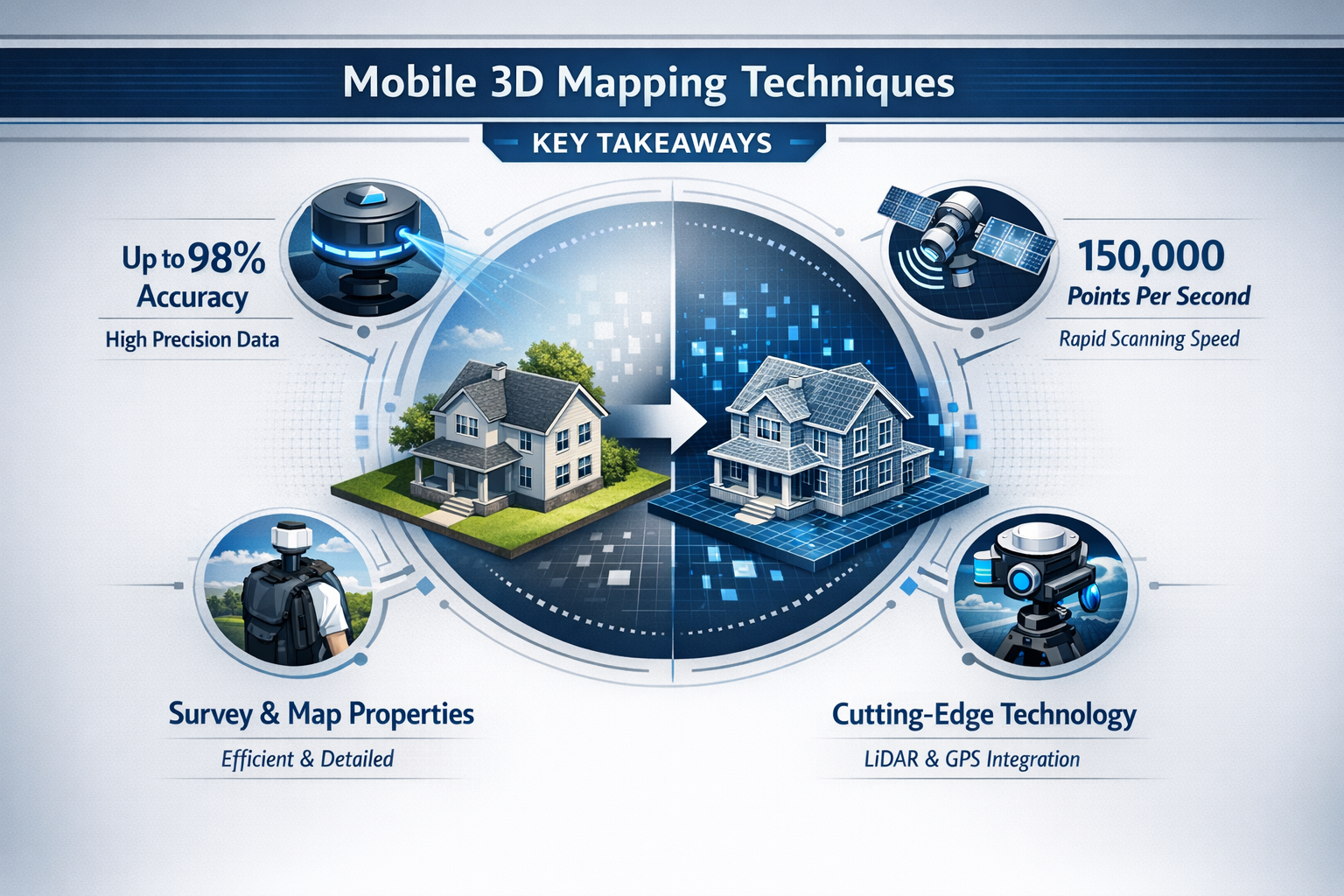
Digital twins represent virtual replicas of physical properties, created through sophisticated 3D mapping technologies. These high-fidelity, interactive models update continuously as new data is collected, allowing visualization of how properties behave under various conditions[3]. For property surveyors, this means having a complete digital representation that can be measured, analyzed, and shared without ever returning to the physical location.
What Makes Mobile Systems Different?
Mobile 3D mapping systems distinguish themselves through portability and flexibility. Unlike traditional surveying equipment that requires tripods, extensive setup time, and controlled environments, mobile systems can be:
- Carried by hand or mounted on vehicles 🚗
- Used in confined indoor spaces
- Deployed quickly without GPS signals
- Operated by single surveyors without large crews
- Integrated seamlessly with existing workflows
The technology combines multiple data capture methods into compact, user-friendly devices. This integration allows chartered surveyors to conduct comprehensive assessments with unprecedented efficiency.
Core Technologies Behind Digital Twin Creation
Modern mobile 3D mapping integrates several advanced technologies working in concert[1]:
| Technology | Function | Key Benefit |
|---|---|---|
| LiDAR Mapping | Laser-based distance measurement | Captures millions of points per second |
| 3D Laser Scanning | Surface detail recording | Millimeter-level precision[2] |
| GNSS RTK Systems | High-precision positioning | Centimeter-accurate location data[4] |
| UAV Photogrammetry | Aerial image capture | Complete roof and site coverage |
| Mobile Mapping Systems | Integrated data collection | Seamless indoor/outdoor scanning |
| AI Data Processing | Real-time analysis | Instant model generation |
These technologies work together to create comprehensive digital twins that serve multiple purposes throughout a property's lifecycle. Whether conducting RICS building surveys or specialized assessments, the integrated approach ensures complete data capture.
The Evolution to 2026
The surveying industry has witnessed remarkable transformation. What once required weeks of fieldwork and manual drafting now happens in hours through automated workflows. The affordability advancement has been particularly significant—3D mapping and visualization tools that were once exclusive to large firms are now accessible across the industry[3].
Remote surveying capabilities have expanded dramatically, especially following pandemic-driven innovations. Surveyors can now collect data remotely and conduct assessments without extensive on-site presence, maintaining both safety and efficiency[3].
Mobile Equipment and Systems for Property Digital Twins
Selecting the right equipment is crucial for successful digital twin creation. In 2026, surveyors have access to an impressive array of mobile systems designed specifically for property assessment applications.
Handheld LiDAR Scanners
Handheld LiDAR devices represent the most versatile option for property surveyors. These portable units combine laser scanning with inertial measurement units (IMUs) to create accurate 3D models while walking through properties. They excel at:
- Interior room scanning 🏠
- Stairwell documentation
- Complex architectural features
- Tight spaces where tripod systems fail
- Continuous scanning during movement
Modern handheld scanners operate without GPS requirements, making them ideal for urban environments where satellite signals are blocked by buildings. The systems create detailed 3D models from both indoor and outdoor environments without bulky equipment[1].
Smartphone-Based Mobile Mapping
The democratization of 3D mapping has reached new heights with smartphone-based systems. Advanced applications now transform standard smartphones into capable surveying tools by leveraging:
- Built-in LiDAR sensors (on compatible devices)
- Photogrammetry algorithms
- Augmented reality frameworks
- Cloud processing capabilities
- Real-time visualization
These systems are particularly valuable for preliminary assessments, roof surveys, and quick documentation tasks. While not matching dedicated scanner precision, they provide remarkable accuracy for many property surveying applications.
Drone-Based Aerial Systems
UAV photogrammetry has revolutionized how surveyors capture property exteriors and sites. Drone surveys now complete residential property surveys in 15-30 minutes, compared to traditional methods requiring multiple site visits[2]. The workflow typically involves:
- Flight Planning: Automated routes ensure complete coverage
- Image Capture: High-resolution photos from multiple angles
- Ground Control Points: RTK-measured GCPs for accuracy[4]
- Processing: Photogrammetry software creates 3D models
- Deliverables: Orthophotos, point clouds, and mesh models
Drone surveys are especially effective for large properties, construction sites, and areas difficult to access on foot. They provide comprehensive coverage that complements ground-based scanning.
Vehicle-Mounted Mobile Mapping
For large-scale property portfolios and commercial sites, vehicle-mounted systems offer unmatched efficiency. These platforms integrate multiple sensors—LiDAR, cameras, GPS, and IMUs—to capture street-level data while driving. Applications include:
- Commercial property assessments
- Boundary surveys for large estates
- Infrastructure documentation
- Site context capture
- Neighborhood analysis
The combination of speed and comprehensive data capture makes vehicle-mounted systems ideal for commercial property surveying projects requiring extensive site documentation.
Integration and Compatibility Considerations
Successful mobile 3D mapping requires careful consideration of system integration. Key factors include:
- Data format compatibility: Ensure outputs work with analysis software
- Cloud connectivity: Real-time upload and processing capabilities
- Battery life: Extended operation for large properties
- Weather resistance: Outdoor surveying in various conditions
- Training requirements: Ease of use for survey teams
- Support ecosystem: Software updates and technical assistance
Professional surveyors increasingly favor systems offering open data formats that integrate seamlessly with existing workflows and software platforms used for RICS valuations and detailed property analysis.
Workflow: From Data Capture to Digital Twin Delivery
Creating accurate digital twins through Mobile 3D Mapping Techniques: Creating Digital Twins for Property Surveys follows a systematic workflow that ensures quality, accuracy, and usability. Understanding each phase helps surveyors optimize their processes and deliver superior results to clients.
Phase 1: Pre-Survey Planning and Preparation
Thorough preparation sets the foundation for successful digital twin creation. This phase includes:
Site Assessment and Reconnaissance
- Review property documents and existing surveys
- Identify access points and potential obstacles
- Determine optimal scanning positions
- Plan equipment requirements
- Assess safety considerations
Technology Selection
- Match equipment to property characteristics
- Consider indoor/outdoor requirements
- Evaluate accuracy needs
- Plan for backup systems
- Coordinate with stakeholders
Ground Control Point Planning
For projects requiring high absolute accuracy, establishing Ground Control Points (GCPs) measured using RTK kits enables accurate 3D mapping for large areas including construction sites[4]. This is particularly important for boundary surveys and legal documentation.
Phase 2: On-Site Data Collection
The data collection phase leverages mobile systems' speed and flexibility to capture comprehensive property information rapidly.
Systematic Scanning Approach
- Exterior Capture: Begin with drone or vehicle-mounted systems for site context
- Building Envelope: Document facades, roofing, and structural elements
- Interior Scanning: Use handheld LiDAR for room-by-room documentation
- Detail Areas: Focus on complex features, defects, and critical elements
- Verification: Ensure complete coverage without gaps
Quality Control During Capture
- Real-time preview of scan data
- Overlap verification between scan positions
- Point density checks
- Registration accuracy monitoring
- Immediate re-scanning of problematic areas
Mobile 3D mapping systems capture millions of measurement points instead of traditional spot measurements, providing more complete spatial information[2]. This high-density data collection ensures nothing is missed during the survey.
Phase 3: Data Processing and Model Generation
Raw scan data transforms into usable digital twins through sophisticated processing workflows.
Point Cloud Processing
The millions of individual measurements combine into cohesive point clouds through:
- Registration: Aligning multiple scans into unified coordinate system
- Cleaning: Removing noise, outliers, and unwanted objects
- Classification: Identifying floors, walls, ceilings, and features
- Colorization: Applying RGB data from photos
- Optimization: Reducing file size while maintaining detail
3D Model Creation
Point clouds serve as the foundation for various deliverable formats:
| Model Type | Use Case | Key Features |
|---|---|---|
| Point Cloud | Detailed measurements | Raw accuracy, complete data |
| Mesh Model | Visualization | Textured surfaces, realistic appearance |
| BIM Model | Design integration | Parametric objects, intelligent elements |
| CAD Drawings | Traditional documentation | Floor plans, elevations, sections |
| Orthophotos | Site context | Geometrically corrected imagery |
Phase 4: Analysis and Information Extraction
Digital twins enable advanced analysis impossible with traditional survey methods.
Automated Measurements
- Floor areas and volumes
- Wall verticality and plumb
- Ceiling heights and variations
- Opening dimensions
- Structural deflections
Defect Detection and Documentation
Modern AI-powered analysis identifies potential issues:
- Moisture damage indicators
- Structural anomalies
- Settlement patterns
- Material deterioration
- Code compliance issues
This capability enhances traditional damp surveys and subsidence surveys by providing objective, measurable data.
Comparison Analysis
Digital twins enable powerful before-and-after comparisons:
- Construction progress monitoring
- Deformation analysis over time
- As-built versus design verification
- Dilapidation documentation
- Change detection
Phase 5: Cloud-Based Collaboration and Delivery
Modern platforms enable instant collaboration that transforms how survey data is shared and used.
Cloud Platform Benefits[3]
- ☁️ Instant file sharing with stakeholders
- 🌐 Browser-based 3D visualization (no special software required)
- 🔄 Real-time revision syncing
- 💬 Integrated communication with engineers and architects
- 📱 Mobile access from any device
This replaces static document deliverables with interactive experiences where clients can:
- Navigate through 3D models
- Take their own measurements
- Add annotations and comments
- Extract custom views
- Download specific data sets
Permanent Digital Records
Point cloud data creates lasting digital representations of property conditions that allow future measurements, cross-sections, and drawings without returning to the site[2]. This is invaluable for:
- Schedule of condition reporting
- Dilapidation surveys
- Historical documentation
- Legal disputes
- Future renovation planning
Phase 6: Deliverable Preparation and Quality Assurance
Final deliverables must meet professional standards and client requirements.
Standard Deliverable Package
- Executive summary report
- 3D model files (multiple formats)
- 2D CAD drawings
- Measurement schedules
- Photographic documentation
- Metadata and accuracy statements
Quality Assurance Checklist
✓ Accuracy verification against control points
✓ Completeness review (no missing areas)
✓ File format compatibility confirmation
✓ Metadata documentation
✓ Client requirement fulfillment
✓ Professional presentation standards
Professional chartered surveyors and valuers ensure all deliverables meet RICS standards and industry best practices.
Applications and Use Cases in Property Surveying
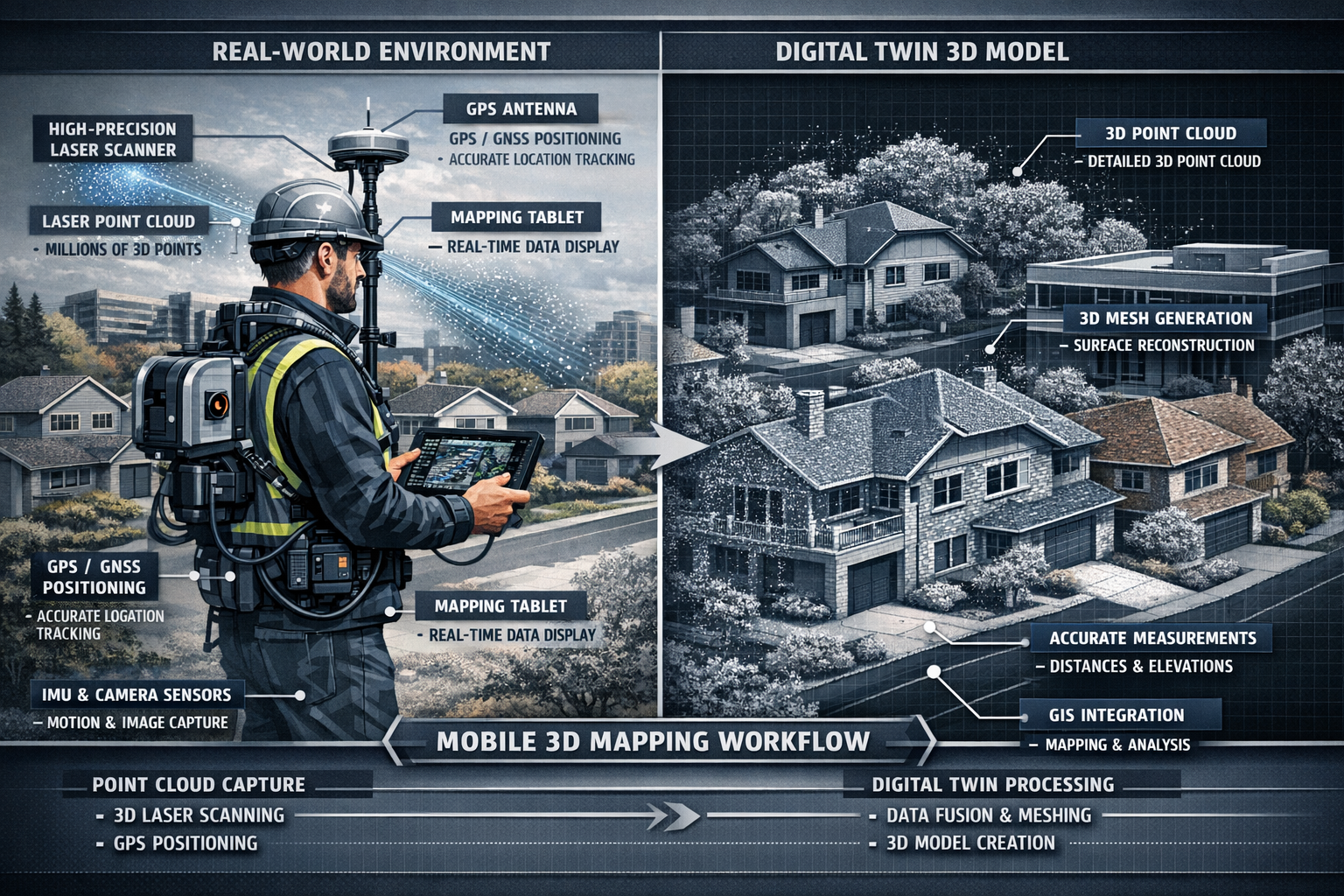
Mobile 3D Mapping Techniques: Creating Digital Twins for Property Surveys serve diverse applications across the property lifecycle, from initial assessment through ongoing management.
Residential Property Assessments
Homebuyer surveys benefit tremendously from digital twin technology. Prospective buyers receive:
- Complete 3D walkthrough capabilities
- Accurate room dimensions and layouts
- Visual documentation of property condition
- Measurable evidence of defects
- Permanent records for future reference
The speed advantage is remarkable—surveys that traditionally required multiple visits now complete in 15-30 minutes[2]. This efficiency benefits both surveyors and clients through reduced costs and faster turnaround times. Homebuyer survey clients particularly appreciate the comprehensive digital documentation.
Commercial Property Documentation
Commercial properties present unique challenges that mobile 3D mapping addresses effectively:
Large-Scale Facility Management
- Warehouse space optimization
- Retail layout planning
- Office space allocation
- Building systems documentation
- Lease area verification
Investment Due Diligence
Digital twins support valuation of commercial property by providing:
- Accurate gross internal area (GIA) measurements
- Net internal area (NIA) calculations
- Building condition assessment
- Compliance verification
- Comparable property analysis
Construction and Renovation Projects
Project management throughout construction benefits from regular digital twin updates:
Progress Monitoring
- As-built verification against design
- Quality control documentation
- Quantity surveying support
- Clash detection
- Milestone verification
Renovation Planning
Existing condition documentation enables:
- Accurate cost estimation
- Design coordination
- Heritage preservation
- Structural assessment
- Services planning
Commercial building surveys increasingly rely on digital twin technology for comprehensive documentation.
Legal and Dispute Resolution
Forensic documentation provides objective evidence for:
Party Wall Matters
- Pre-construction condition records
- Damage assessment and attribution
- Settlement analysis
- Structural movement tracking
- Neighbor dispute resolution
Expert Witness Support
Digital twins provide compelling evidence in legal proceedings through:
- Objective measurements
- Visual documentation
- Timeline comparisons
- Professional analysis
- Court-ready presentations
Heritage and Conservation
Historic buildings require special documentation approaches that mobile 3D mapping facilitates:
- Non-invasive data capture
- Complete architectural detail recording
- Conservation planning support
- Virtual preservation
- Educational and research applications
The millimeter-level precision of 3D laser scanning records every surface feature and elevation change[2], capturing intricate details essential for heritage work.
Environmental and Sustainability Assessment
As environmental regulations intensify, land surveyors increasingly use mobile 3D mapping data to support sustainability assessments and responsible land development[3]. Applications include:
Energy Efficiency Analysis
- Building envelope assessment
- Thermal bridging identification
- Solar potential calculation
- Natural lighting analysis
- Ventilation planning
Flood Risk Assessment
- Site topography modeling
- Drainage pattern analysis
- Water flow simulation
- Mitigation planning
- Compliance documentation
Portfolio Management
Property portfolios benefit from systematic digital twin creation:
Asset Management
- Condition monitoring across properties
- Maintenance planning and scheduling
- Space utilization optimization
- Standardized documentation
- Lifecycle cost analysis
Insurance and Risk Management
- Accurate replacement cost valuation
- Risk assessment documentation
- Claims evidence
- Preventive maintenance planning
- Disaster recovery planning
Accuracy, Quality Control, and Best Practices
Achieving reliable results with Mobile 3D Mapping Techniques: Creating Digital Twins for Property Surveys requires attention to accuracy standards, quality control procedures, and industry best practices.
Understanding Accuracy Specifications
Accuracy levels vary based on technology, methodology, and application requirements.
Relative vs. Absolute Accuracy
- Relative accuracy: Precision of measurements within the model itself (typically millimeter-level[2])
- Absolute accuracy: Positional accuracy in real-world coordinates (centimeter to meter level depending on GNSS quality)
Factors Affecting Accuracy
- Scanner specifications and calibration
- Environmental conditions (lighting, temperature)
- Surface reflectivity and material properties
- Scan density and overlap
- Registration methodology
- Ground control point quality[4]
Quality Control Procedures
Systematic quality checks ensure deliverable reliability:
Field Quality Control
During data capture:
- ✓ Verify adequate scan overlap (minimum 30%)
- ✓ Check point density meets requirements
- ✓ Monitor registration accuracy in real-time
- ✓ Document environmental conditions
- ✓ Photograph problematic areas
- ✓ Verify GCP measurements
Processing Quality Control
During model creation:
- ✓ Validate registration error statistics
- ✓ Check for data gaps or holes
- ✓ Verify measurement consistency
- ✓ Compare against known dimensions
- ✓ Review classification accuracy
- ✓ Assess visual quality
Best Practices for Different Property Types
Urban Properties
- Plan for GPS-denied environments
- Use handheld systems for interior access
- Document street context with mobile mapping
- Account for pedestrian and traffic interference
- Schedule scans during optimal lighting
Rural and Large Sites
- Leverage drone technology for coverage
- Establish robust control networks
- Plan for variable terrain
- Consider weather impact on scheduling
- Use vehicle-mounted systems for efficiency
Complex Structures
- Increase scan density for intricate details
- Multiple scan positions for complete coverage
- Specialized equipment for confined spaces
- Enhanced registration procedures
- Detailed documentation of methodology
Data Management and Archiving
Proper data management ensures long-term value:
File Organization
- Consistent naming conventions
- Logical folder structures
- Version control systems
- Metadata documentation
- Backup procedures
Long-Term Archiving
Point clouds create permanent digital records[2] that require:
- Format standardization (LAS, E57, etc.)
- Storage redundancy
- Migration planning for technology changes
- Access control and security
- Retention policy compliance
Professional Standards and Compliance
RICS standards govern professional surveying practice:
Survey Documentation Requirements
- Accuracy statements
- Methodology descriptions
- Equipment specifications
- Limitations and assumptions
- Professional indemnity coverage
Ethical Considerations
- Client confidentiality
- Data security and privacy
- Competency boundaries
- Professional development
- Quality assurance commitments
Professional chartered surveyors maintain these standards across all digital twin projects.
Common Pitfalls and How to Avoid Them
Insufficient Planning
❌ Problem: Incomplete coverage, missed details
✅ Solution: Thorough site reconnaissance and scan planning
Inadequate Overlap
❌ Problem: Registration failures, data gaps
✅ Solution: Minimum 30% overlap between scans, verification during capture
Poor Lighting Conditions
❌ Problem: Reduced accuracy, missing texture data
✅ Solution: Supplemental lighting, optimal time scheduling
Neglecting Ground Control
❌ Problem: Poor absolute accuracy
✅ Solution: Establish and measure GCPs with RTK systems[4]
Insufficient Quality Control
❌ Problem: Errors discovered after site access lost
✅ Solution: Real-time verification, systematic QC procedures
Future Trends and Innovations in 2026 and Beyond
The landscape of Mobile 3D Mapping Techniques: Creating Digital Twins for Property Surveys continues evolving rapidly, with several transformative trends shaping the industry's future.
Artificial Intelligence Integration
AI-powered analysis is revolutionizing how survey data is processed and interpreted:
Automated Feature Extraction
- Intelligent object recognition
- Automatic defect detection
- Material classification
- Damage assessment
- Code compliance checking
Predictive Analytics
Machine learning algorithms analyze digital twins to:
- Forecast maintenance requirements
- Predict structural performance
- Estimate remaining useful life
- Optimize renovation timing
- Assess risk factors
Real-time data processing powered by AI[1] enables instant model generation and analysis, dramatically reducing turnaround times.
Enhanced Mobile Hardware
Next-generation sensors deliver unprecedented capabilities:
Solid-State LiDAR
- Smaller, lighter form factors
- Lower power consumption
- Reduced costs
- Improved reliability
- Smartphone integration
Multi-Spectral Imaging
Beyond visible light, new sensors capture:
- Thermal imaging for energy assessment
- Near-infrared for moisture detection
- Hyperspectral data for material analysis
- Combined RGB and depth data
Augmented Reality Applications
AR visualization transforms how surveyors and clients interact with digital twins:
On-Site Overlay
- Real-time comparison of as-built vs. design
- Virtual measurement tools
- Annotation and markup capabilities
- Collaborative site reviews
- Training and education
Remote Assistance
AR enables experts to guide on-site personnel through:
- Live video with 3D overlay
- Remote measurement verification
- Real-time consultation
- Quality control support
- Training delivery
Blockchain and Data Integrity
Distributed ledger technology addresses data authenticity concerns:
- Immutable survey records
- Timestamp verification
- Chain of custody documentation
- Fraud prevention
- Regulatory compliance
This is particularly valuable for property certification and legal documentation.
5G and Edge Computing
Enhanced connectivity enables new workflows:
Real-Time Cloud Processing
- Instant model generation during capture
- Live collaboration with remote stakeholders
- Immediate quality feedback
- Reduced local processing requirements
- Seamless data synchronization
Edge AI Processing
Processing at the device level provides:
- Faster response times
- Reduced bandwidth requirements
- Enhanced privacy
- Offline capability
- Optimized workflows
Sustainability and Environmental Monitoring
Environmental assessment increasingly integrates with digital twin technology[3]:
Carbon Footprint Analysis
- Material quantity estimation
- Embodied carbon calculation
- Energy performance modeling
- Retrofit optimization
- Lifecycle assessment
Climate Resilience
Digital twins support:
- Flood risk modeling
- Heat island analysis
- Natural ventilation assessment
- Green infrastructure planning
- Adaptation strategy development
Democratization and Accessibility
The affordability advancement continues—3D mapping and visualization tools are becoming more accessible and affordable across the surveying industry[5]. This democratization means:
Broader Adoption
- Small firms accessing enterprise capabilities
- Reduced entry barriers
- Standardized workflows
- Increased competition
- Improved service quality
Client Empowerment
Property owners gain:
- Direct access to their digital twins
- Self-service measurement tools
- Enhanced understanding of properties
- Better decision-making capabilities
- Reduced dependency on specialists
Integration with Building Information Modeling (BIM)
Scan-to-BIM workflows bridge existing conditions and design:
- Automated BIM model generation
- Parametric object creation
- Intelligent element classification
- Design coordination
- Facility management integration
This integration is particularly valuable for commercial property surveying and renovation projects.
Regulatory Evolution
Standards and regulations continue adapting to digital surveying:
Digital-First Documentation
- Acceptance of 3D models as legal records
- Standardized deliverable formats
- Quality assurance frameworks
- Professional certification requirements
- Data retention standards
Privacy and Security
Emerging regulations address:
- Data protection requirements
- Cybersecurity standards
- Access control protocols
- Consent frameworks
- Cross-border data transfer
Conclusion
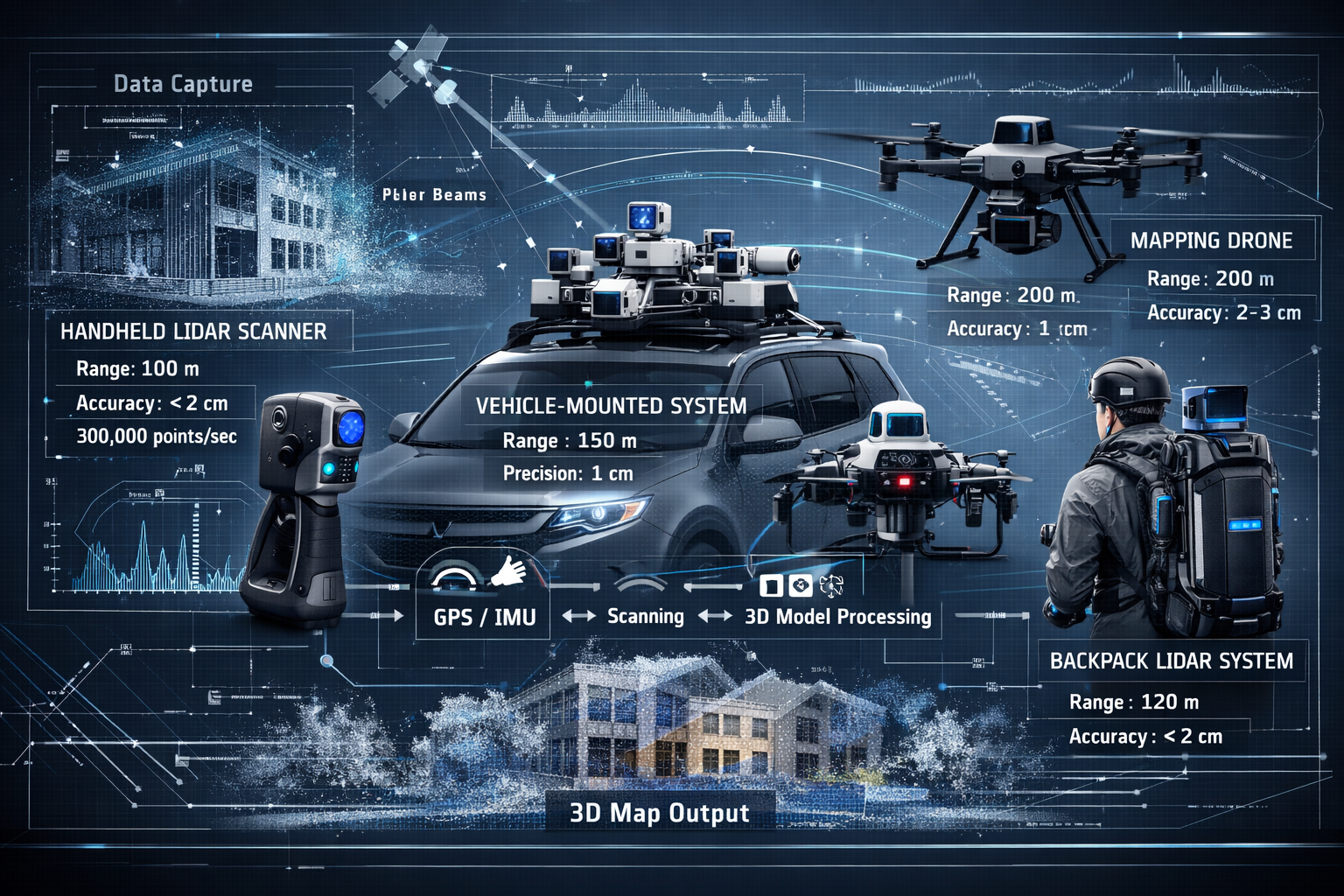
Mobile 3D Mapping Techniques: Creating Digital Twins for Property Surveys represent a fundamental transformation in how properties are documented, analyzed, and managed in 2026. The combination of speed, accuracy, and flexibility offered by modern mobile systems delivers compelling advantages over traditional surveying methods. From completing residential surveys in 15-30 minutes[2] to capturing millions of measurement points with millimeter-level precision[2], these technologies empower surveyors to deliver superior results while reducing costs and turnaround times.
The evolution from bulky, expensive equipment to portable, accessible systems has democratized advanced surveying capabilities. Whether using handheld LiDAR scanners for interior documentation, drones for comprehensive site coverage, or smartphone-based solutions for quick assessments, surveyors now have flexible tools matching every application and budget.
Cloud-based collaboration platforms[3] have transformed deliverables from static documents to interactive digital experiences. Clients can navigate 3D models, take measurements, and collaborate with stakeholders in real-time—creating permanent digital records that serve properties throughout their entire lifecycle.
Actionable Next Steps
For property professionals looking to leverage these technologies:
1. Assess Your Needs
- Identify primary applications (residential, commercial, specialized)
- Determine accuracy requirements
- Evaluate volume and frequency of surveys
- Consider client expectations and deliverable preferences
2. Research Equipment Options
- Compare handheld, drone, and mobile mapping systems
- Request demonstrations from vendors
- Review case studies in similar applications
- Calculate return on investment
3. Develop Competency
- Pursue training and certification programs
- Start with smaller projects to build experience
- Join professional communities and forums
- Stay current with emerging technologies
4. Establish Quality Procedures
- Develop standardized workflows
- Implement quality control checklists
- Document methodology and accuracy
- Maintain professional standards
5. Communicate Value to Clients
- Demonstrate digital twin capabilities
- Highlight speed and accuracy advantages
- Offer interactive deliverables
- Emphasize long-term record value
As environmental regulations intensify and sustainability becomes paramount, mobile 3D mapping data will increasingly support responsible land development and comprehensive environmental assessment[3]. The integration of AI, enhanced sensors, and cloud technologies will continue expanding capabilities while reducing costs.
The future of property surveying is digital, mobile, and collaborative. Professionals who embrace Mobile 3D Mapping Techniques: Creating Digital Twins for Property Surveys position themselves at the forefront of industry transformation, delivering superior value to clients while building competitive advantages in an evolving marketplace.
Whether you're conducting RICS home surveys, commercial building surveys, or specialized assessments, mobile 3D mapping technologies offer the tools to work smarter, faster, and more accurately than ever before. The question is no longer whether to adopt these technologies, but how quickly you can integrate them into your practice to meet the demands of modern property surveying.
References
[1] The Future Of Land Surveying Technology And Upcoming Trends In 2026 – https://metricop.com/blogs/land-surveying/the-future-of-land-surveying-technology-and-upcoming-trends-in-2026
[2] How Technology Drones 3d Mapping Is Revolutionizing Land Surveys – https://aerolandsurveyors.com/blog/how-technology-drones-3d-mapping-is-revolutionizing-land-surveys/
[3] Future Land Surveying 2026 – https://haller-blanchard.com/future-land-surveying-2026/
[4] Survey And Mapping – https://www.ardusimple.com/survey-and-mapping/
[5] 3d Mapping And Visualization Tools Making Advanced Surveying Technology Accessible And Affordable – https://nottinghillsurveyors.com/blog/3d-mapping-and-visualization-tools-making-advanced-surveying-technology-accessible-and-affordable