
The UK property market in 2026 presents a unique window of opportunity for first-time buyers. With improved affordability and stabilising house prices following years of volatility, more young purchasers are finally stepping onto the property ladder. However, this recovery brings a critical challenge: many affordable properties within first-time buyer budgets are older homes built before modern building standards—properties that may harbour hidden structural dangers like Reinforced Autoclaved Aerated Concrete (RAAC) and dangerous cladding systems.
Level 3 Building Surveys for First-Time Buyers in 2026: Prioritising RAAC, Cladding and Affordability Risks has become essential guidance for protecting what is often the largest investment of a lifetime. Unlike basic mortgage valuations or standard homebuyer reports, Level 3 surveys provide the comprehensive structural analysis needed to identify potentially catastrophic defects before contracts are exchanged.
Key Takeaways
- 🏠 Level 3 surveys are recommended for properties over 50 years old, making them crucial for first-time buyers purchasing affordable older housing stock [1]
- 💷 Survey costs range from £630 to £1,500+ in 2026—a worthwhile investment when considering potential six-figure remediation costs for RAAC or cladding issues [1]
- 🔍 Enhanced 2026 standards include comprehensive structural assessment of load-bearing components, foundations, and hidden defects not covered by basic surveys [2]
- ⚠️ RAAC and cladding defects can render properties unmortgageable and worthless, making thorough pre-purchase inspection non-negotiable
- 📊 Level 3 surveys identify repair timescales and cost implications, enabling informed negotiation and realistic budgeting for first-time buyers
Understanding Level 3 Building Surveys in 2026
What Makes Level 3 Surveys Different?
A Level 3 building survey represents the most comprehensive property inspection available to residential buyers. Unlike Level 2 homebuyer surveys that focus on visible defects and general condition, Level 3 surveys involve detailed examination of a property's structure, fabric, and concealed elements.
According to the HomeOwners Alliance, Level 3 surveys are specifically recommended for:
- Properties over 50 years old [1]
- Buildings of unusual design or construction
- Listed buildings or those in conservation areas
- Properties in poor or deteriorated condition
- Homes where significant alterations are planned [1]
For first-time buyers in 2026, these criteria describe much of the affordable housing stock available within typical budgets. Victorian terraces, post-war estates, and 1960s-70s apartment blocks—all common first-time buyer properties—fall squarely within the Level 3 recommendation zone.
Enhanced 2026 Level 3 Requirements
The Royal Institution of Chartered Surveyors (RICS) has updated Level 3 survey standards for 2026, reflecting emerging structural concerns and improved inspection methodologies. These enhanced requirements include:
Comprehensive structural assessment of load-bearing components, foundations (where accessible), and structural integrity indicators [2]. This expanded scope directly addresses the need to identify RAAC and other structural defects that have emerged as major concerns.
Detailed examination of concealed spaces including roof voids, underfloor areas, and wall cavities where accessible, specifically looking for signs of deterioration, damp penetration, and timber decay [3].
Identification of potential and concealed defects with explanations of likely causes, implications for the property's future, and recommended timescales for necessary repairs [1].
The 2026 updates make RICS building surveys more thorough than ever before, particularly in assessing the structural risks that pose the greatest financial threat to first-time buyers.
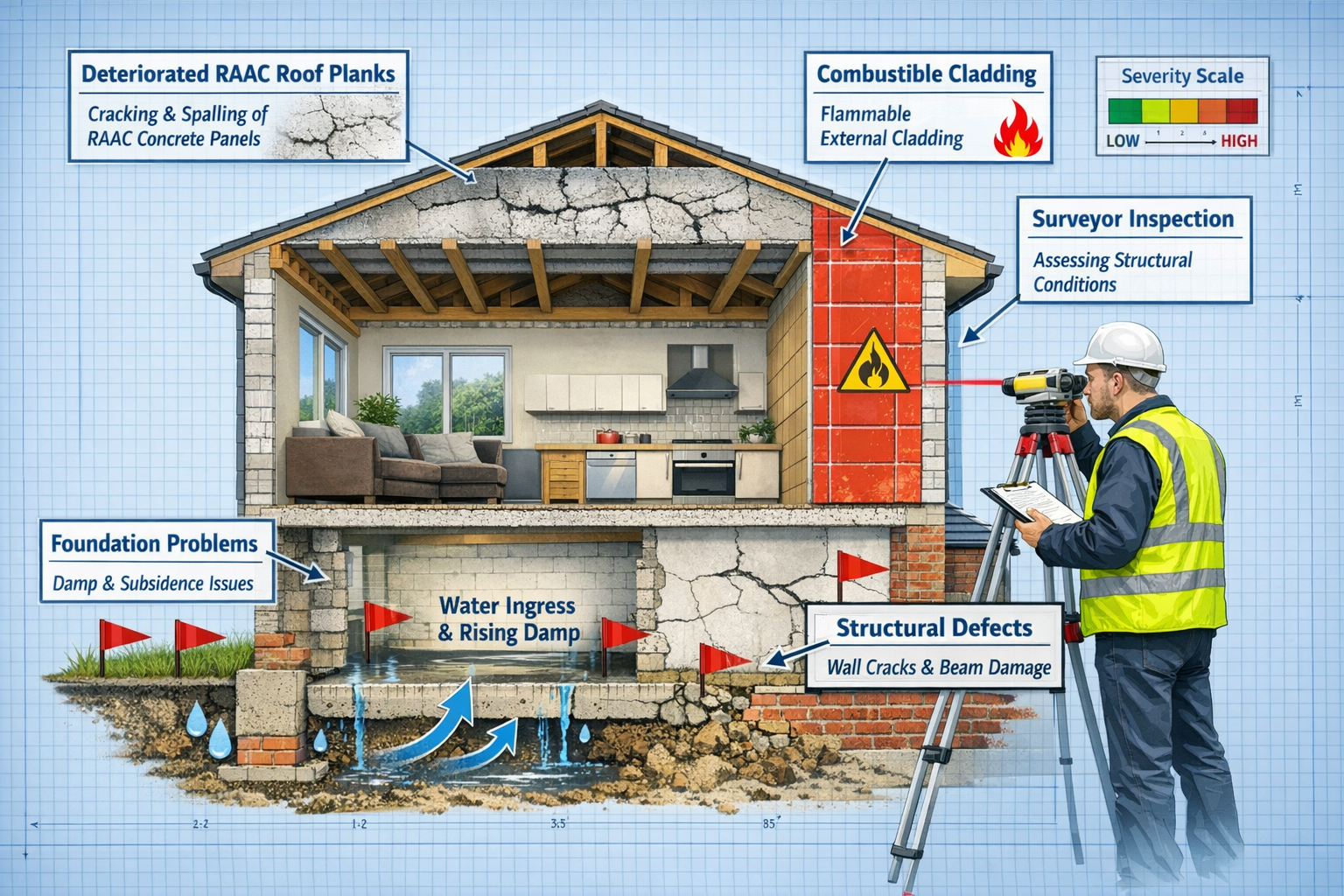
The RAAC Crisis: Why First-Time Buyers Must Prioritise Detection
Understanding RAAC and Its Dangers
Reinforced Autoclaved Aerated Concrete (RAAC) has emerged as one of the most serious structural defects affecting UK properties. This lightweight concrete material was widely used between the 1950s and mid-1990s, particularly in:
- Flat roof construction
- Floor and ceiling panels
- Wall panels in non-traditional construction
- Schools, hospitals, and public buildings
RAAC's fundamental problem is its limited lifespan—typically 30 years—after which the material deteriorates, losing structural integrity. By 2026, even RAAC installed in the 1990s is approaching or exceeding its design life.
Why RAAC Matters for First-Time Buyers
Properties containing RAAC present multiple catastrophic risks:
| Risk Factor | Impact on First-Time Buyers |
|---|---|
| Structural Failure | Potential roof or floor collapse without warning ⚠️ |
| Unmortgageability | Lenders refusing mortgages on RAAC-affected properties 🏦 |
| Remediation Costs | £50,000-£150,000+ for complete RAAC removal and replacement 💷 |
| Property Devaluation | Significant loss of market value, potentially to zero 📉 |
| Insurance Issues | Difficulty obtaining buildings insurance or prohibitive premiums 📋 |
For first-time buyers with limited savings and maximum mortgage leverage, purchasing a property with undetected RAAC can result in complete financial devastation. The property becomes unsellable, unmortgageable, and potentially uninhabitable—while the buyer remains legally and financially responsible.
How Level 3 Surveys Detect RAAC
A comprehensive Level 3 survey provides the best opportunity to identify RAAC before purchase. Qualified chartered surveyors examine:
Roof construction through accessible roof spaces, looking for characteristic RAAC planks with distinctive aerated texture and reinforcement bars [3]
Ceiling and floor structures where visible, identifying unusual lightweight concrete panels inconsistent with traditional construction
Construction documentation and building records that may indicate RAAC use during original construction or subsequent alterations
Visual indicators including characteristic cracking patterns, deflection, and deterioration signs specific to RAAC failure
When RAAC is suspected but not definitively confirmed through visual inspection, surveyors recommend specific defect reports or specialist structural engineering assessment to confirm material identification and assess remaining lifespan.
Cladding Risks: The Post-Grenfell Reality for First-Time Buyers
The Ongoing Cladding Crisis
The 2017 Grenfell Tower tragedy exposed widespread use of dangerous combustible cladding on residential buildings across the UK. In 2026, the cladding crisis continues to affect thousands of properties, particularly:
- Purpose-built flats in buildings over 11 metres (approximately 4 storeys)
- Converted apartment buildings with external wall systems
- Modern developments built between 1990-2020
For first-time buyers, flats represent the most affordable entry point to homeownership. However, cladding issues can render these properties completely worthless and unsellable.
Financial Implications of Cladding Defects
The financial consequences of purchasing a flat with cladding issues include:
Remediation costs ranging from £30,000 to £100,000+ per flat for complete cladding replacement and fire safety upgrades
Interim safety measures including 24-hour waking watches costing £500-£1,000+ per flat annually until remediation completes
Service charge increases of 300-500% to fund remediation works
Property value collapse with affected flats becoming unmortgageable and unsellable
Legal liability for fire safety defects under the Building Safety Act
"First-time buyers must understand that cladding issues don't just affect the purchase price—they can make a property completely unmortgageable and worthless overnight."
What Level 3 Surveys Reveal About Cladding
While building surveys cannot definitively determine cladding composition without invasive testing, Level 3 surveys provide crucial information:
External wall system identification noting the type and age of cladding materials present
Fire safety documentation review checking for EWS1 certificates, fire risk assessments, and building safety compliance
Building height and regulatory requirements determining whether the property falls within buildings requiring external wall certification
Visual assessment of cladding condition, fixing systems, and potential combustibility indicators
Recommendations for specialist testing where cladding composition cannot be determined through visual inspection alone
For first-time buyers considering flats, a Level 3 survey should explicitly address cladding and fire safety issues, with clear recommendations for obtaining specialist fire engineering assessments if needed.
Affordability Considerations: Balancing Survey Costs Against Risk
The True Cost of Level 3 Surveys in 2026
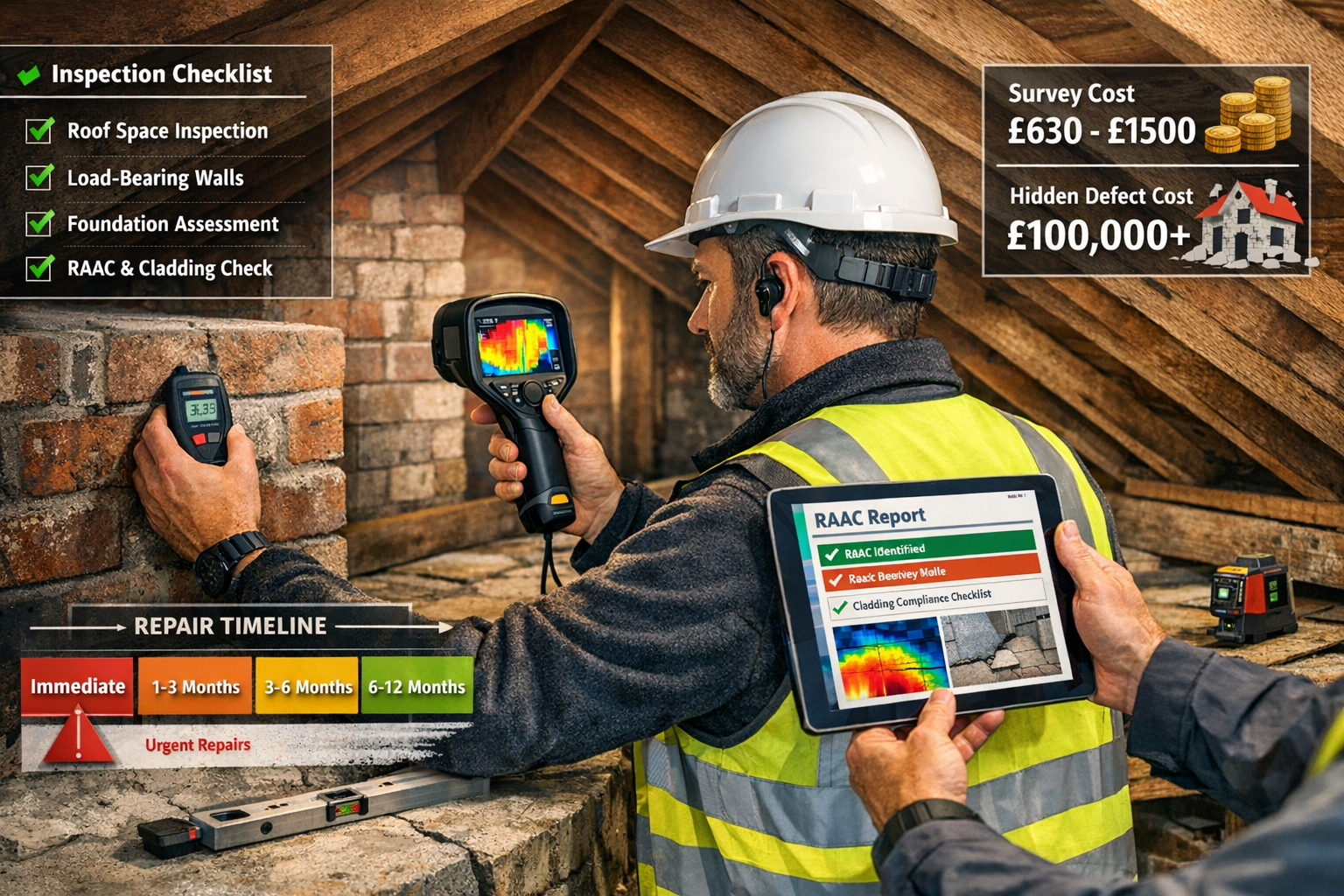
Level 3 building surveys represent a significant upfront cost for first-time buyers already stretching their finances. Current pricing in 2026 ranges from £630 to £1,500+ depending on:
- Property size and complexity
- Location and surveyor availability
- Additional testing requirements
- Report detail and presentation [1]
For buyers on tight budgets, this expense can seem prohibitive. However, comparing different types of survey reveals that the comprehensive nature of Level 3 reports provides unmatched value when considering potential hidden defects.
Cost-Benefit Analysis for First-Time Buyers
| Survey Option | Typical Cost | RAAC Detection | Cladding Assessment | Structural Analysis | Hidden Defect Identification |
|---|---|---|---|---|---|
| Mortgage Valuation | £0-£300 | ❌ No | ❌ No | ❌ No | ❌ No |
| Level 2 Homebuyer | £400-£900 | ⚠️ Limited | ⚠️ Limited | ⚠️ Basic | ⚠️ Visible only |
| Level 3 Building Survey | £630-£1,500+ | ✅ Yes | ✅ Yes | ✅ Comprehensive | ✅ Extensive |
The mathematics are compelling: spending £1,000 on a Level 3 survey that identifies £80,000 in RAAC remediation costs saves £79,000 and prevents potential financial ruin.
When First-Time Buyers Should Prioritise Level 3 Surveys
Not every first-time buyer needs a Level 3 survey. However, prioritisation should be based on risk factors:
Definitely commission a Level 3 survey for:
- Any property built before 1975 🏚️
- Properties with flat roofs or non-traditional construction
- Flats in buildings over 11 metres tall
- Properties with visible structural concerns
- Buildings with known alterations or extensions
- Properties where renovation is planned
Consider a Level 2 survey for:
- Modern properties (post-2000) in good condition
- Standard construction with no unusual features
- Properties under 30 years old with NHBC warranty
Understanding which survey you need depends on balancing risk factors against budget constraints, but for the majority of affordable first-time buyer properties in 2026, Level 3 surveys provide essential protection.

What Level 3 Building Surveys for First-Time Buyers in 2026 Should Include
Core Components of a Comprehensive Level 3 Survey
A properly executed Level 3 survey for first-time buyers in 2026 should provide detailed examination of:
1. Structural Elements and Load-Bearing Components
Foundations (where accessible) including inspection of visible foundation walls, settlement indicators, and structural movement evidence [2]
Load-bearing walls with assessment of structural integrity, cracking patterns, and adequacy for current and future loads
Floor structures including joist condition, deflection, and identification of non-traditional materials like RAAC
Roof structure with comprehensive examination of roof spaces, timber condition, and structural adequacy [3]
2. External Fabric and Weather Protection
Roof coverings including condition assessment, remaining lifespan estimates, and repair/replacement recommendations
Chimneys and flashings with particular attention to water ingress risks and structural stability
External walls including render, brickwork, cladding systems, and cavity wall construction
Windows and doors assessing condition, thermal performance, and security
Rainwater disposal systems including gutters, downpipes, and drainage adequacy
3. Internal Condition and Services
Damp and moisture issues using moisture meters and visual inspection to identify penetrating damp, rising damp, and condensation problems [3]
Timber condition in floors, roof structures, and joinery, looking for rot, beetle infestation, and structural adequacy
Internal finishes assessing plaster, decorations, and signs of underlying defects
Services overview providing general observations on heating, plumbing, and electrical installations (noting that specialist testing may be required)
4. Specific Risk Assessments for 2026
Modern Level 3 surveys should explicitly address contemporary concerns:
✅ RAAC identification with specific commentary on roof and floor construction materials
✅ Cladding and fire safety assessment for flats and buildings with external wall systems
✅ Energy efficiency considerations affecting future running costs and potential improvement requirements
✅ Building regulations compliance for alterations, extensions, and conversions
✅ Environmental risks including flood risk, ground stability, and contamination indicators
Understanding Survey Report Formats
Level 3 survey reports typically include:
Executive summary highlighting critical defects and urgent recommendations
Detailed room-by-room analysis with photographs documenting specific defects
Defect categorisation using standardised condition ratings (typically 1-3 scale)
Repair recommendations with indicative timescales and cost implications
Technical appendices including specialist terminology explanations and reference materials
First-time buyers should ensure their surveyor provides a report format that is accessible and understandable, not just technically comprehensive. Some surveyors offer follow-up consultations to explain findings—a valuable service for buyers unfamiliar with building terminology.
Acting on Survey Findings: Practical Steps for First-Time Buyers
When Surveys Identify Serious Defects
Discovering RAAC, cladding issues, or other serious structural defects through a Level 3 survey presents difficult decisions:
Option 1: Withdraw from Purchase
The safest option when catastrophic defects are identified. While losing survey costs and potentially legal fees is disappointing, it's infinitely preferable to purchasing an unmortgageable property with six-figure remediation costs.
When to withdraw:
- RAAC is confirmed in structural elements
- Cladding issues affect mortgageability with no remediation plan
- Structural defects exceed 20% of purchase price
- Lender refuses mortgage based on survey findings
Option 2: Renegotiate Purchase Price
When defects are significant but remediable, use survey findings to negotiate price reduction reflecting:
- Actual remediation costs (obtain specialist quotes)
- Disruption and inconvenience during repairs
- Risk premium for uncertainty about defect extent
- Impact on property value post-remediation
Negotiation leverage is strongest when surveys provide detailed cost estimates and repair specifications. Some buyers commission structural engineering reports to support price reduction negotiations.
Option 3: Require Seller Remediation
For defects that must be resolved before purchase (particularly those affecting mortgageability), require sellers to complete repairs before exchange, with:
- Detailed specifications for required works
- Professional contractor engagement with appropriate warranties
- Building control approval where required
- Re-inspection confirming satisfactory completion
This approach works best for moderate defects where sellers are motivated and capable of funding repairs.
Additional Investigations Following Level 3 Surveys
Level 3 surveys often recommend specialist follow-up investigations:
Specialist defect reports for detailed analysis of specific issues identified during survey
Roof surveys using drone technology and detailed inspection for complex roof defects
Damp surveys with moisture mapping and identification of damp causes and remediation requirements
Structural engineering assessments for foundation issues, structural movement, or load-bearing concerns
Electrical and plumbing inspections by qualified tradespeople for aged or defective services
Budget for these additional investigations—typically £200-£800 each—when serious concerns are identified.
Choosing the Right Surveyor for First-Time Buyer Level 3 Surveys
Essential Qualifications and Experience
Not all surveyors are equally qualified to conduct Level 3 surveys addressing 2026's specific risks. First-time buyers should verify:
RICS membership – Only chartered surveyors with RICS qualifications should conduct Level 3 surveys
Relevant experience – Specific experience with the property type and age being surveyed
RAAC awareness – Demonstrated knowledge of RAAC identification and assessment
Cladding expertise – Understanding of post-Grenfell fire safety requirements for flats
Professional indemnity insurance – Adequate coverage protecting buyers if negligent surveys miss critical defects
Local knowledge – Familiarity with regional construction types and common defects
Questions to Ask Prospective Surveyors
Before commissioning a Level 3 survey, first-time buyers should ask:
- How many Level 3 surveys have you conducted on properties of this age and type?
- What specific experience do you have identifying RAAC in residential properties?
- Will you personally conduct the inspection, or will it be delegated?
- What access will you require, and what areas might be inaccessible?
- How long will the inspection take, and when will I receive the report?
- Will the report explicitly address RAAC, cladding, and mortgageability risks?
- Do you offer follow-up consultations to explain findings?
- What is your professional indemnity insurance coverage?
Reputable surveyors welcome these questions and provide clear, confident answers.
Understanding Survey Limitations
Even comprehensive Level 3 surveys have inherent limitations:
Non-invasive inspection – Surveyors cannot remove fixtures, lift carpets, or damage property to access concealed areas
Inaccessible areas – Roof spaces, underfloor voids, and other areas may be inaccessible due to lack of access hatches or safety concerns
Services testing – Electrical, plumbing, and heating systems receive visual assessment only, not comprehensive testing
Specialist knowledge – Some defects require specialist expertise beyond general surveying (structural engineering, fire safety, etc.)
Understanding these limitations helps first-time buyers have realistic expectations and budget for additional investigations when recommended.
The 2026 Property Market Context for First-Time Buyers
Current Affordability and Market Conditions
The 2026 property market presents improved conditions for first-time buyers compared to recent years:
Stabilising house prices following the volatility of 2022-2024, with many regions showing modest price corrections
Improved mortgage availability as lenders regain confidence following interest rate stabilisation
Government support schemes continuing to assist first-time buyers with deposits and mortgage access
Increased housing supply in some regions, providing more choice within first-time buyer budgets
However, this improved affordability means many first-time buyers are accessing older housing stock that previously would have been beyond their reach—properties more likely to harbour structural defects like RAAC and cladding issues.
Why Comprehensive Surveys Matter More Than Ever
The convergence of improved affordability and aging housing stock makes Level 3 surveys more critical in 2026 than ever before:
Older properties within reach – First-time buyers can now afford properties built in the 1950s-1990s RAAC era
Lender scrutiny increasing – Mortgage providers are more cautious about structural defects following high-profile RAAC and cladding cases
Remediation costs rising – Building material and labour costs make defect remediation increasingly expensive
Legal protections strengthening – Building Safety Act provisions increase buyer awareness and lender requirements
First-time buyers in 2026 must recognise that affordability improvements don't eliminate risk—they may actually increase exposure to properties with serious structural defects.
Long-Term Value: Protecting Your Investment Through Comprehensive Surveys
Beyond Purchase: Ongoing Property Management
The benefits of comprehensive Level 3 surveys extend beyond the purchase decision:
Maintenance planning – Survey findings provide a roadmap for necessary repairs and maintenance over coming years
Budget forecasting – Understanding repair timescales helps buyers budget for future expenses
Insurance accuracy – Detailed property knowledge ensures appropriate insurance coverage
Future sale preparation – Addressing defects early prevents complications when selling
Renovation guidance – Survey findings inform sensible improvement priorities and structural considerations
The True Cost of Inadequate Surveys
Consider the financial implications of purchasing without adequate survey protection:
| Scenario | Without Level 3 Survey | With Level 3 Survey |
|---|---|---|
| RAAC Discovery Post-Purchase | £80,000 remediation + property devaluation + potential repossession | Survey identifies RAAC; buyer withdraws or negotiates significant price reduction |
| Cladding Issues Emerge | £50,000+ per flat + unmortgageable property + legal liability | Survey flags cladding concerns; buyer obtains EWS1 or withdraws before completion |
| Structural Movement | £30,000 underpinning + extensive repairs + stress | Survey identifies foundation issues; structural engineer commissioned before purchase |
| Hidden Damp and Timber Decay | £15,000 remediation + health risks + decoration costs | Survey detects moisture issues; price negotiated or seller completes repairs |
The pattern is clear: investing £630-£1,500 in a comprehensive Level 3 survey protects against potential losses of £30,000-£100,000+ while providing peace of mind and informed decision-making.
Conclusion
Level 3 Building Surveys for First-Time Buyers in 2026: Prioritising RAAC, Cladding and Affordability Risks represents essential protection in today's property market. While improved affordability has opened homeownership opportunities for more young buyers, the accessible properties within first-time buyer budgets often carry serious structural risks that can devastate finances and futures.
The comprehensive examination provided by Level 3 surveys—particularly with enhanced 2026 standards addressing structural assessment, RAAC identification, and cladding evaluation—offers the only reliable method for detecting catastrophic defects before legal commitment. Properties over 50 years old, flats in multi-storey buildings, and homes of non-traditional construction all warrant this level of scrutiny [1].
The investment of £630-£1,500 for a professional Level 3 survey pales in comparison to the potential six-figure costs of undetected RAAC, dangerous cladding, or serious structural defects. For first-time buyers making the largest financial commitment of their lives, comprehensive survey protection isn't optional—it's essential.
Next Steps for First-Time Buyers
- Assess your property's risk profile – Consider age, construction type, and specific concerns like flat roofs or cladding
- Budget for comprehensive surveys – Include £1,000-£1,500 in purchase costs for Level 3 survey and potential follow-up investigations
- Select qualified chartered surveyors – Verify RICS membership, relevant experience, and specific RAAC/cladding expertise
- Review reports thoroughly – Ensure you understand all findings and their financial implications
- Act decisively on serious defects – Don't proceed with purchases where catastrophic defects are identified without substantial price adjustments or remediation
- Obtain specialist follow-up – Commission recommended additional investigations before finalising purchase decisions
The 2026 property market offers genuine opportunities for first-time buyers, but only those who protect themselves through comprehensive Level 3 surveys will avoid the financial disasters that have befallen buyers who discovered RAAC, cladding, or structural defects too late. Make informed decisions, invest in professional survey protection, and secure your property investment for the long term.
For expert guidance on survey pricing and RICS home surveys tailored to your specific property, consult qualified chartered surveyors who understand the unique challenges facing first-time buyers in 2026.
References
[1] What Sort Of Survey Should I Have – https://hoa.org.uk/advice/guides-for-homeowners/i-am-buying/what-sort-of-survey-should-i-have/
[2] Building Survey Quality Standards 2026 Navigating Rics Updates And Enhanced Home Inspection Requirements – https://nottinghillsurveyors.com/blog/building-survey-quality-standards-2026-navigating-rics-updates-and-enhanced-home-inspection-requirements
[3] Difference Between Level 2 And Level 3 Survey Which One Do You Actually Need – https://westernbuildingconsultants.com/2026/02/27/difference-between-level-2-and-level-3-survey-which-one-do-you-actually-need/