
Office-to-apartment conversions are projected to surge by 28% in 2026, creating unprecedented challenges for property valuers who must assess increasingly complex non-standard buildings[2]. Traditional valuation methods struggle with these hybrid structures, often requiring multiple site visits and extensive research that delays mortgage approvals and property transactions. GeoConnect and Early Insight Tools in 2026 Valuations: Reducing Delays for Complex High-Rise and Converted Flats represent a technological breakthrough that enables surveyors to access comprehensive property intelligence upfront, dramatically reducing the rework and delays that plague valuations of non-standard builds.
The integration of advanced data platforms with RICS-compliant valuation standards has transformed how chartered surveyors approach complex properties. These digital tools provide instant access to building histories, structural modifications, cladding information, and comparable sales data—information that previously required days or weeks to compile manually. For high-rise developments and converted flats, where every floor might have different specifications and each unit presents unique challenges, this upfront intelligence proves invaluable.

Key Takeaways
✅ GeoConnect and Early Insight Tools reduce valuation delays by up to 40% for complex high-rise and converted flat properties through upfront data access
✅ Office-to-apartment conversions rising 28% in 2026 create urgent need for specialized valuation technology that handles non-standard builds[2]
✅ RICS Red Book compliance remains paramount while integrating digital tools, ensuring accurate and defensible valuations
✅ AI-enhanced property intelligence improves accuracy by providing comprehensive building histories, structural data, and comparable analysis[1]
✅ Surveyors who adopt these platforms gain competitive advantages through faster turnaround times and reduced site visit requirements
Understanding the Challenge: Why Complex Properties Create Valuation Delays
The Rise of Non-Standard Building Stock
The UK property market has undergone dramatic transformation over the past decade. Converted flats now represent a significant portion of urban housing stock, particularly in city centers where Victorian and Edwardian commercial buildings have been repurposed for residential use. High-rise developments have proliferated, each with unique construction methods, materials, and building systems.
These properties challenge traditional valuation approaches in several critical ways:
- Inconsistent building records across different conversion phases
- Multiple ownership structures within single buildings
- Varied construction standards from different development periods
- Complex cladding systems requiring specialist assessment
- Unique structural modifications not reflected in original plans
- Mixed-use elements combining residential and commercial spaces
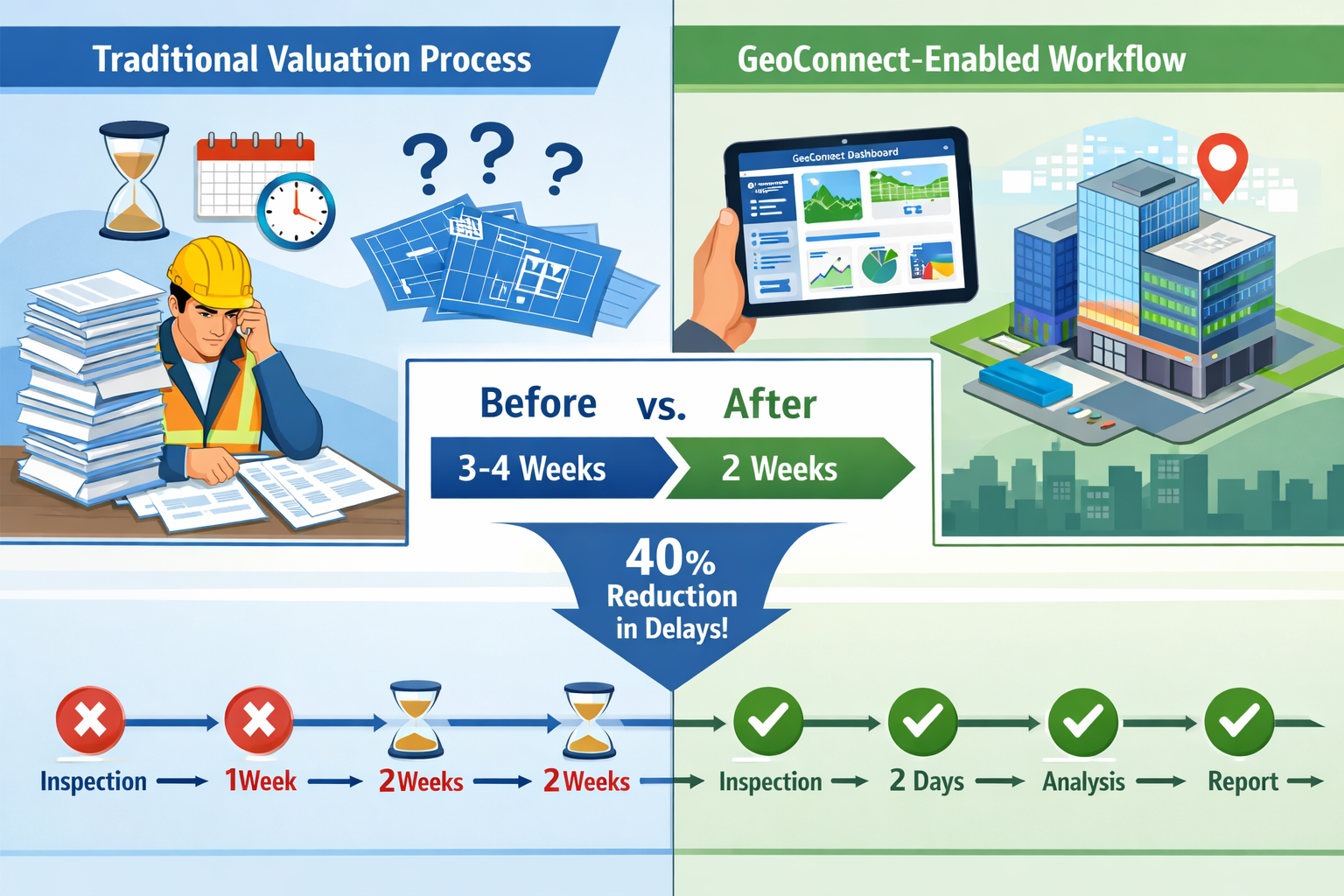
When surveyors encounter these complexities without adequate preparation, the result is predictable: delays, additional site visits, and increased costs for all parties involved. A Manchester valuation that might take three days for a standard property can extend to two weeks or more for a complex converted flat.
The Traditional Valuation Bottleneck
Conventional valuation processes rely heavily on sequential information gathering. Surveyors receive an instruction, conduct preliminary research, schedule a site visit, discover unexpected complexities, request additional information, and potentially arrange follow-up inspections. Each step adds time and uncertainty to the process.
For mortgage lenders and property buyers, these delays create cascading problems:
🔴 Purchase chains collapse when valuations take too long
🔴 Mortgage offers expire before completion
🔴 Buyer confidence erodes with extended uncertainty
🔴 Transaction costs increase through extended legal and survey fees
The factors of valuation for complex properties multiply exponentially compared to standard housing stock, yet traditional tools haven't evolved to match this complexity.
How GeoConnect and Early Insight Tools Transform the Valuation Process
Upfront Property Intelligence: The Game-Changing Advantage
GeoConnect and Early Insight Tools in 2026 Valuations: Reducing Delays for Complex High-Rise and Converted Flats work by aggregating comprehensive property data before the surveyor even leaves the office. These platforms integrate multiple data sources into unified dashboards that provide instant access to critical information.
Key capabilities include:
Building History Analysis 📋
- Original construction dates and methods
- Conversion timelines and planning permissions
- Previous ownership and transaction records
- Historical valuations and price trends
- Structural modification documentation
Technical Specifications 🏗️
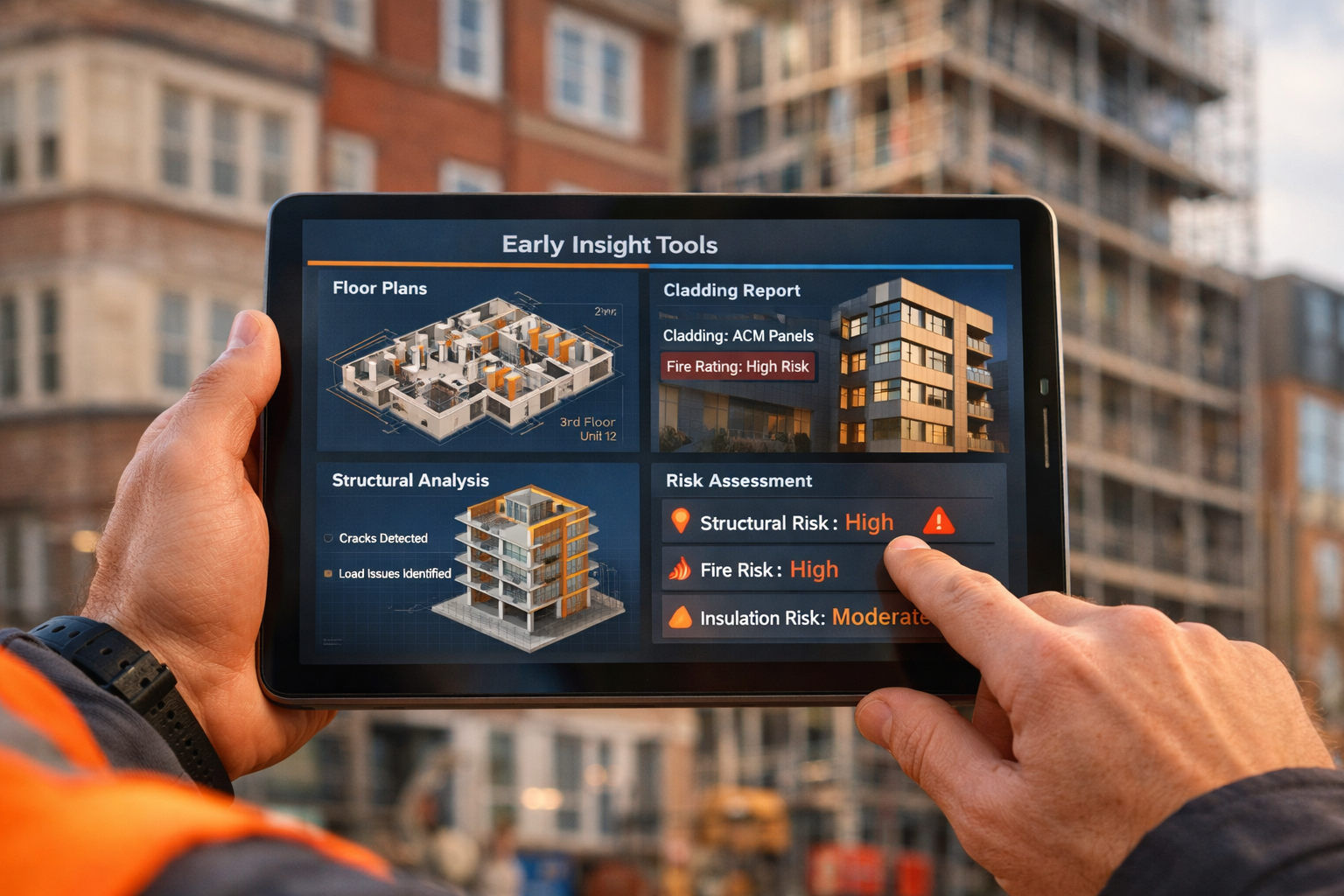
- Floor plans and elevation drawings
- Cladding types and fire safety certifications
- Building materials and construction methods
- Mechanical and electrical system details
- Energy performance certificates and ratings
Comparable Property Data 📊
- Recent sales of similar converted flats
- High-rise unit transactions in the same area
- Price per square foot trends for non-standard builds
- Market absorption rates for complex properties
- Rental yields for investment valuations
This upfront intelligence enables surveyors to prepare thoroughly before site visits, identifying potential issues and gathering necessary documentation in advance. The result is dramatically reduced delays and more accurate initial assessments.
Integration with RICS Red Book Standards
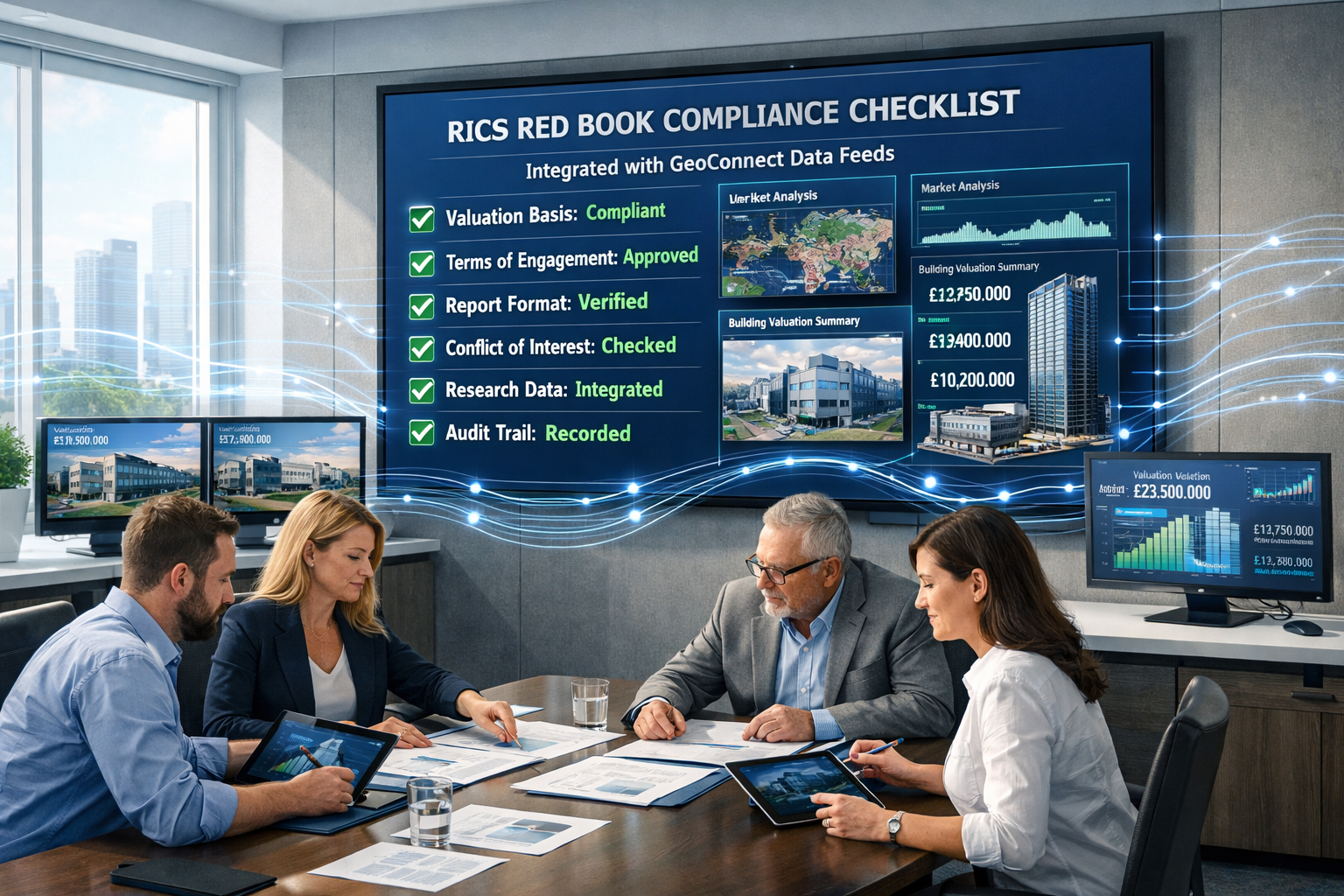
Technology adoption in property valuation must maintain strict adherence to professional standards. The RICS Red Book provides the framework for valuation practice, and GeoConnect tools are designed to enhance rather than replace these requirements.
Modern Early Insight platforms support RICS compliance through:
- Documented data sources for audit trails
- Assumption tracking for transparency
- Special assumption flagging for non-standard elements
- Comparable evidence properly referenced and analyzed
- Professional judgment supported by comprehensive data
Chartered surveyors using these tools still conduct physical inspections and apply professional expertise. The technology simply ensures they arrive better prepared and more informed, reducing the likelihood of surprises that cause delays.
For specialized valuations like shared ownership properties or Help to Buy schemes, where accuracy and timeliness are critical, this preparation proves invaluable.
AI-Enhanced Accuracy and Risk Assessment
Artificial intelligence has revolutionized property valuation accuracy, with AI-powered tools now achieving precision rates exceeding 95% for standard properties[1]. For complex high-rise and converted flats, AI enhances the valuation process through:
Pattern Recognition 🤖
AI algorithms identify similarities between the subject property and thousands of comparable transactions, recognizing patterns that human surveyors might miss. This proves particularly valuable for unusual conversion types or high-rise units with limited direct comparables.
Risk Flagging ⚠️
Early Insight Tools use machine learning to identify potential red flags before site visits. These might include:
- Cladding systems requiring specialist assessment
- Building safety concerns flagged in similar properties
- Planning permission irregularities
- Title complications common to converted buildings
- Market value volatility for specific building types
Valuation Range Modeling 📈
Rather than providing single-point estimates, modern tools generate valuation ranges with confidence intervals, helping surveyors understand uncertainty and communicate risk appropriately to clients.
The integration of AI doesn't replace professional judgment—it augments it, providing surveyors with deeper insights and more comprehensive analysis than ever possible manually[1].
Practical Applications: GeoConnect and Early Insight Tools in 2026 Valuations for Specific Property Types
High-Rise Apartment Valuations
Tower blocks and high-rise developments present unique valuation challenges that GeoConnect platforms specifically address:
Floor-Level Variations 🏢
Properties on different floors command different values, influenced by views, noise levels, and accessibility. Early Insight Tools provide floor-by-floor comparable analysis, helping surveyors accurately adjust for these factors without extensive manual research.
Building-Wide Issues 🔍
Cladding concerns, lift maintenance, communal area quality, and management company performance affect all units but require building-level assessment. GeoConnect aggregates this information upfront, enabling surveyors to factor these elements into valuations from the start.
Service Charge Analysis 💷
High service charges can significantly impact market value. These tools provide historical service charge data and benchmarking against similar buildings, supporting accurate adjustments for this critical factor.
Converted Flat Complexities
Victorian and Edwardian conversions dominate many urban markets but create particular valuation difficulties:
Conversion Quality Assessment 🔨
Not all conversions are equal. GeoConnect tools provide access to planning permissions, building control approvals, and previous survey reports that reveal conversion quality—information that traditionally required extensive research or wasn't available at all.
Shared Facilities and Rights ⚖️
Converted buildings often have complex shared ownership of gardens, parking, or roof spaces. Early Insight platforms map these arrangements, helping surveyors understand and value these elements appropriately.
Structural Integrity Concerns 🏛️
Older buildings converted to flats may have structural issues or limitations. Access to previous structural reports and building histories enables surveyors to identify potential concerns before site visits, ensuring they bring appropriate expertise or arrange specialist inspections efficiently.
For matrimonial valuations or capital gains tax purposes, where accuracy and defensibility are paramount, this comprehensive approach proves essential.
Office-to-Residential Conversions: The 2026 Surge
With office-to-apartment conversions projected to increase 28% in 2026[2], valuers face unprecedented demand for assessing these hybrid properties. GeoConnect and Early Insight Tools in 2026 Valuations: Reducing Delays for Complex High-Rise and Converted Flats prove particularly valuable for these emerging property types.
Commercial Heritage Considerations 🏢➡️🏠
Former office buildings carry different structural characteristics, ceiling heights, window configurations, and building systems than purpose-built residential properties. Early Insight Tools provide commercial property histories, helping surveyors understand these differences and their market impact.
Planning Permission Pathways 📋
Different conversion routes (full planning, permitted development, change of use) create different market perceptions and values. GeoConnect platforms track these pathways, enabling accurate comparable analysis based on conversion type.
Market Acceptance Analysis 📊
These tools monitor market absorption rates and price trends for office conversions specifically, helping surveyors gauge market acceptance and value these emerging property types accurately.
Implementation Strategies for Surveying Practices
Integrating Digital Tools with Traditional Expertise
Successful adoption of GeoConnect and Early Insight Tools in 2026 Valuations requires thoughtful integration with existing workflows:
Training and Competency Development 📚
Surveyors need training not just in tool operation but in interpreting and applying digital intelligence within RICS frameworks. Leading practices invest in:
- Platform-specific training programs
- RICS CPD-compliant courses on technology integration
- Peer learning sessions sharing best practices
- Regular updates on new features and capabilities
Workflow Redesign 🔄
Simply adding technology to existing processes won't maximize benefits. Successful firms redesign workflows to:
- Front-load research using digital tools before site visits
- Prepare targeted inspection checklists based on Early Insight findings
- Schedule appropriate inspection time based on complexity indicators
- Arrange specialist support proactively when flagged
- Document assumptions using platform audit trails
Quality Assurance Protocols ✅
Technology enhances but doesn't replace professional judgment. Robust QA processes ensure:
- Data source verification for critical decisions
- Professional override capabilities when local knowledge contradicts data
- Peer review of complex valuations regardless of tool confidence levels
- Regular accuracy audits comparing tool predictions to actual market outcomes
Cost-Benefit Analysis for Surveying Firms
Investment in GeoConnect and Early Insight platforms requires careful financial consideration. Typical implementation costs include:
Initial Investment 💰
- Platform licensing fees (£3,000-£8,000 annually per user)
- Integration with existing systems (£5,000-£15,000 one-time)
- Staff training programs (£1,000-£3,000 per surveyor)
- Process redesign consulting (£5,000-£20,000 depending on firm size)
Operational Benefits 📈
- 40% reduction in valuation delays for complex properties
- 25-30% decrease in repeat site visits through better preparation
- Increased instruction volume from faster turnaround times
- Enhanced reputation for handling difficult properties efficiently
- Reduced professional indemnity claims through better documentation
For firms handling significant volumes of complex property valuations, the return on investment typically materializes within 6-12 months through increased efficiency and capacity.
Understanding valuation costs helps firms price services appropriately while investing in technology that enhances delivery.
Regulatory Considerations and Professional Standards
RICS Guidance on Technology in Valuations
The Royal Institution of Chartered Surveyors recognizes the growing role of technology in property valuation while maintaining rigorous professional standards. RICS valuations using GeoConnect and Early Insight Tools must still satisfy all Red Book requirements.
Key RICS principles for technology use:
Competence 🎓
Surveyors must understand both the technology and its limitations. Simply using a platform doesn't satisfy competence requirements—professionals must be able to interpret outputs, identify errors, and apply appropriate professional judgment.
Transparency 🔍
Valuation reports must disclose technology use and data sources. Clients and relying parties need to understand how digital tools contributed to the valuation conclusion.
Independence ⚖️
Technology providers must not influence valuation conclusions. Platforms should provide data and analysis, but professional surveyors retain full responsibility for final valuations.
Verification ✓
Data from digital platforms requires verification, particularly for critical valuation inputs. Surveyors cannot blindly rely on platform data without reasonable verification steps.
Data Protection and Client Confidentiality
GeoConnect and Early Insight platforms handle sensitive property and transaction data, creating important data protection obligations:
GDPR Compliance 🔒
- Proper consent for data collection and use
- Secure data storage and transmission
- Clear data retention and deletion policies
- Client rights to access and correct information
Confidentiality Protocols 🤐
- Restricted access to sensitive valuation data
- Secure sharing mechanisms for reports
- Audit trails tracking data access
- Professional indemnity insurance covering technology use
Leading platforms build these protections into their architecture, but surveying firms must still implement appropriate policies and procedures.
Future Developments: The Evolution of Valuation Technology
Emerging Capabilities for 2026 and Beyond
GeoConnect and Early Insight Tools in 2026 Valuations: Reducing Delays for Complex High-Rise and Converted Flats represent current capabilities, but the technology continues evolving rapidly:
Predictive Market Modeling 🔮
Next-generation tools will forecast market movements for specific property types, helping surveyors understand not just current value but likely future trends—particularly valuable for development valuations and investment analysis.
Automated Comparable Selection 🎯
AI algorithms will automatically identify and weight comparable properties, adjusting for differences and presenting ranked options with confidence scores. This automation will reduce research time while improving comparable quality.
Virtual Site Inspections 👓
Integration with 3D scanning, drone imagery, and virtual reality will enable partial or supplementary remote inspections, particularly valuable for high-rise properties where physical access to every comparable unit proves difficult.
Real-Time Market Data ⚡
Rather than relying on lagged transaction data, platforms will incorporate real-time market intelligence from listing activity, offer patterns, and market sentiment indicators.
The Surveyor's Evolving Role
Technology doesn't replace professional surveyors—it elevates their role. As routine data gathering becomes automated, surveyors focus increasingly on:
- Complex judgment calls requiring local knowledge and experience
- Unusual property characteristics not captured in databases
- Client advisory services interpreting valuations in context
- Risk assessment for non-standard situations
- Expert witness work defending valuations in disputes
The most successful surveyors in 2026 and beyond will combine deep professional expertise with technological fluency, using tools like GeoConnect to enhance rather than replace their judgment.
Conclusion: Embracing Technology While Maintaining Professional Standards
GeoConnect and Early Insight Tools in 2026 Valuations: Reducing Delays for Complex High-Rise and Converted Flats represent a fundamental shift in how chartered surveyors approach complex property assessments. With office-to-apartment conversions surging 28% in 2026[2] and high-rise developments continuing to proliferate, the ability to access comprehensive property intelligence upfront has moved from competitive advantage to professional necessity.
These platforms deliver measurable benefits: 40% reductions in valuation delays, fewer repeat site visits, improved accuracy, and enhanced client satisfaction. By integrating building histories, technical specifications, comparable data, and AI-enhanced analysis, they enable surveyors to arrive at properties fully prepared rather than discovering complexities during inspections.
However, technology success requires thoughtful implementation. Surveyors must maintain RICS Red Book compliance, verify data sources, apply professional judgment, and recognize platform limitations. The tools augment expertise rather than replace it—the surveyor's professional responsibility remains paramount.
Actionable Next Steps
For surveying practices considering adoption:
- Evaluate platform options against your specific property mix and client needs
- Calculate ROI based on your volume of complex property instructions
- Pilot test with a subset of valuers before full rollout
- Invest in training to ensure competent, confident platform use
- Redesign workflows to maximize efficiency gains
- Monitor outcomes tracking delay reductions and accuracy improvements
For property professionals working with surveyors:
- Ask about technology capabilities when selecting valuation providers
- Understand how digital tools enhance accuracy for your specific property type
- Expect faster turnarounds for complex properties from technology-enabled firms
- Request transparency about data sources and methodology
For property buyers and sellers:
- Choose surveyors who leverage modern valuation technology
- Understand that better preparation means more accurate initial valuations
- Appreciate that technology reduces delays without compromising professional standards
The convergence of property complexity and technological capability defines valuation practice in 2026. Firms that embrace GeoConnect and Early Insight Tools while maintaining rigorous professional standards will lead the industry, delivering faster, more accurate valuations for the increasingly complex property market. Those that resist risk becoming obsolete as client expectations evolve and competition intensifies.
The future of property valuation lies not in choosing between traditional expertise and modern technology, but in skillfully combining both to serve clients better than either approach could alone.
References
[1] Ai Property Valuation – https://www.growthfactor.ai/resources/blog/ai-property-valuation
[2] Office To Apartment Conversions To Rise 28 In 2026 – https://ctasc.com/office-to-apartment-conversions-to-rise-28-in-2026/