The UK property market in 2026 presents a unique opportunity for first-time buyers. With forecasts showing improved affordability, increased property listings, and more favorable mortgage conditions, the balance of power is shifting. However, this advantage only materializes when buyers arm themselves with the right information—and that starts with a comprehensive building survey. First-Time Buyer Building Surveys in 2026: RICS Strategies for Navigating Improved Affordability and Negotiation Power have become essential tools for securing the best possible deals in an evolving market landscape.
According to Tim Green FRICS of Green & Co. (Oxford) Ltd, "The recovery is likely to be led from the first-time buyer range" as of February 2026[5]. With more properties coming to market and cautious optimism returning, first-time buyers who invest in professional RICS surveys gain critical leverage to negotiate prices, identify hidden defects, and make informed decisions that protect their financial futures.
Key Takeaways
✅ Survey costs range from £300-£1,500+ depending on property type, with Level 2 surveys (£450-£800) recommended for most first-time buyer properties[1]
✅ 2026 market conditions favor first-time buyers with increased property listings and improved affordability creating stronger negotiation positions[5]
✅ RICS surveys provide negotiation leverage through objective defect identification, enabling price reductions backed by professional evidence[1]
✅ Traffic light condition ratings make survey findings easily understandable, helping first-time buyers quickly assess property condition and repair priorities[4]
✅ Professional RICS accreditation offers legal weight, credibility with lenders and solicitors, plus professional indemnity insurance protection[1]
Understanding RICS Building Survey Options for First-Time Buyers in 2026
Navigating the property market requires understanding which survey type best suits your needs and budget. The Royal Institution of Chartered Surveyors (RICS) offers three standardized survey levels, each designed for different property types and buyer requirements.
The Three Levels of RICS Surveys
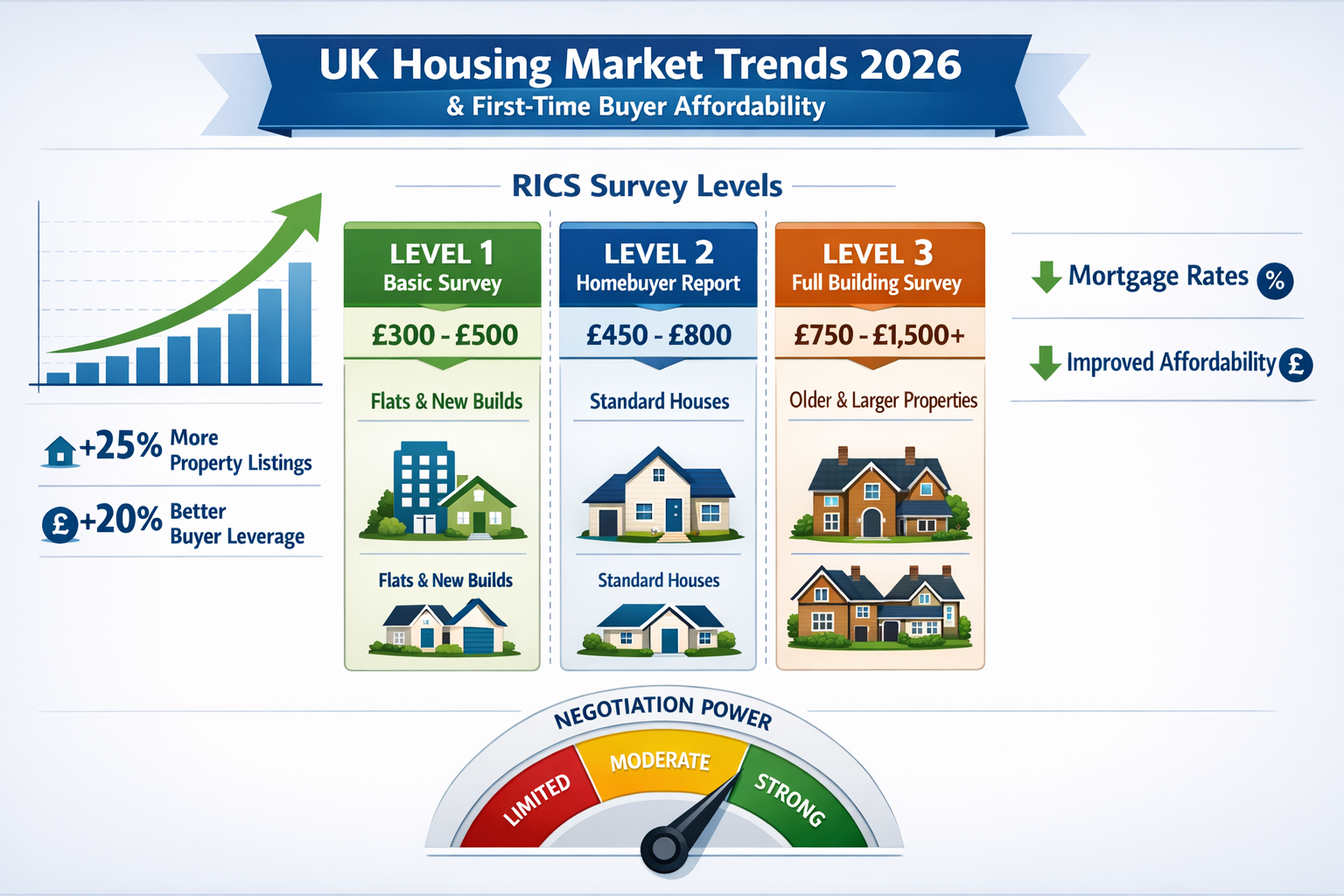
Level 1: RICS Condition Report (£300-£500)
This basic survey suits new-build properties or modern homes in excellent condition. Level 1 surveys provide a straightforward condition assessment using the traffic light rating system but don't include advice on repairs or ongoing maintenance[1]. For most first-time buyers purchasing older or conventional properties, this level offers insufficient detail.
Level 2: RICS HomeBuyer Report (£450-£800)
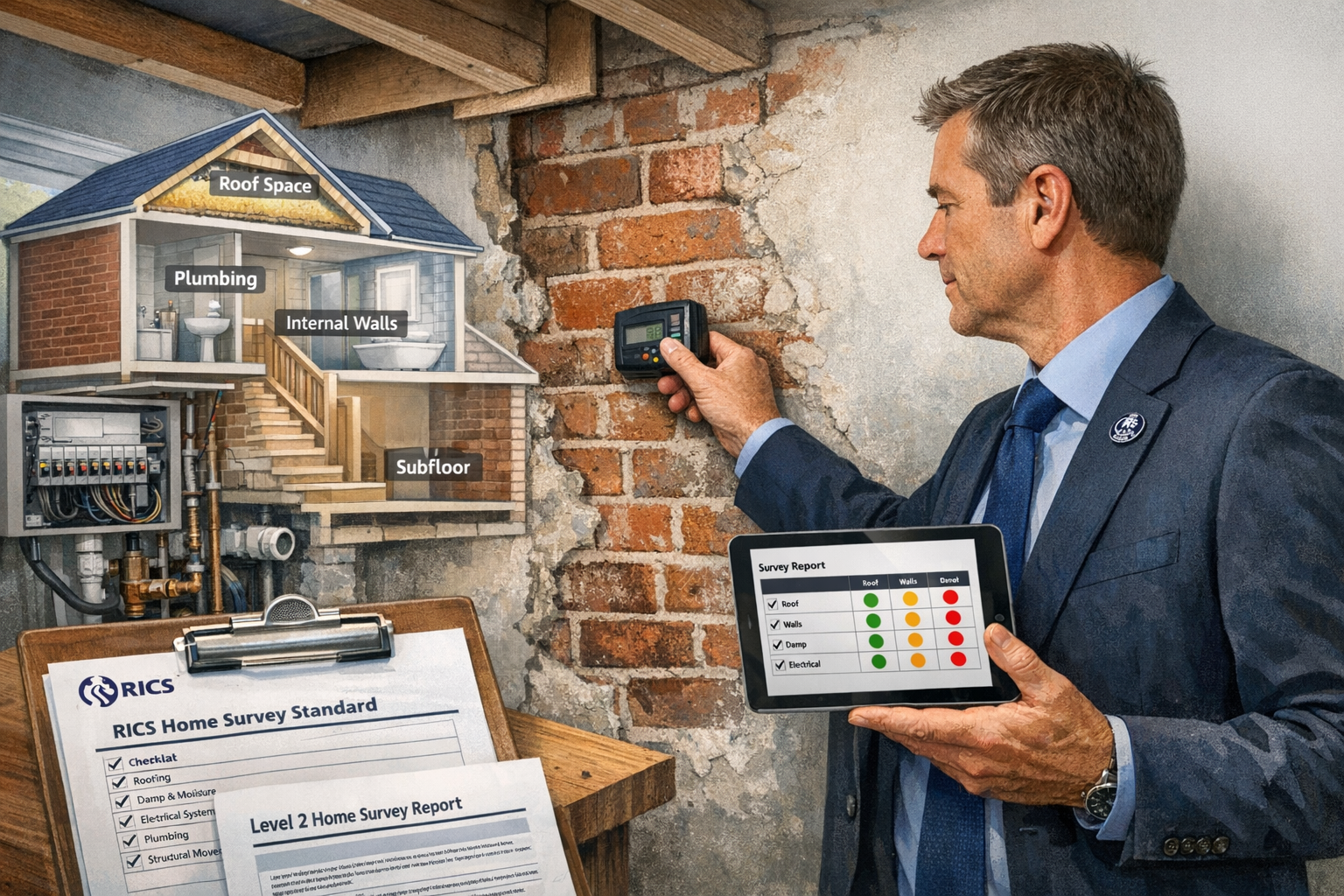
The RICS HomeBuyer Survey Level 2 represents the sweet spot for first-time buyers. This mid-tier option suits conventional properties in reasonable condition and provides detailed condition ratings, advice on defects, repair guidance, and maintenance recommendations[1]. Most first-time buyers purchasing standard residential properties benefit most from this comprehensive yet affordable option.
Level 3: RICS Building Survey (£750-£1,500+)
Previously known as a "full structural survey," the Level 3 Building Survey offers the most comprehensive inspection. This detailed survey suits older properties, listed buildings, properties with significant alterations, or homes in poor condition[2]. While more expensive, first-time buyers considering renovation projects or period properties should seriously consider this investment.
The Updated RICS Home Survey Standard in 2026
The RICS Home Survey Standard 2nd Edition influences how surveys are conducted in 2026, ensuring consistent quality and reporting across all RICS-accredited surveyors[3]. This standardization benefits first-time buyers by guaranteeing comparable reports regardless of which surveyor they choose.
The standardized traffic light system remains central to RICS surveys:
- 🟢 Green (Condition 1): No repair currently needed
- 🟠 Amber (Condition 2): Repairs or replacement requiring future attention
- 🔴 Red (Condition 3): Urgent defects requiring immediate attention or significant expense
This visual system helps first-time buyers quickly understand property condition without needing technical expertise[4].
Why Surveys Remain Non-Mandatory but Essential
In England and Wales, property surveys aren't legally required. However, RICS strongly advises that surveys provide critical information for purchase decisions with far-reaching financial implications[2]. For first-time buyers making likely their largest financial commitment, skipping a professional survey represents false economy.
Consider this: a £600 Level 2 survey might identify £15,000 of necessary repairs, providing immediate negotiation leverage to reduce the purchase price or request repairs before completion. The survey cost becomes insignificant compared to the potential savings and protection it offers.
First-Time Buyer Building Surveys in 2026: Market Conditions Creating Negotiation Opportunities
The 2026 property market presents a complex but ultimately favorable landscape for first-time buyers who approach purchases strategically. Understanding current market dynamics helps buyers maximize the negotiation power that comprehensive building surveys provide.
The 2026 Market Recovery Led by First-Time Buyers
February 2026 data reveals that while headline house prices remain broadly flat and buyer demand has dipped amid renewed concerns over interest rates, property listings are increasing[5]. This combination creates a buyer's market—particularly for first-time purchasers who can act decisively when armed with professional survey information.
Tim Green FRICS notes that market activity remains cautious, but the recovery trajectory favors first-time buyers[5]. More properties available with stable or slightly declining prices means buyers have more choice and stronger negotiation positions than in previous years.
How Building Surveys Enhance Negotiation Leverage
A comprehensive RICS home survey transforms the negotiation dynamic in several ways:
1. Objective Evidence of Defects
Survey reports provide professional, impartial documentation of property condition. When a RICS-accredited surveyor identifies structural issues, damp problems, or electrical defects, sellers can't easily dismiss these concerns as buyer nervousness or inexperience[1].
2. Quantifiable Repair Costs
Many RICS surveys include estimated repair costs for identified defects. This quantification gives first-time buyers concrete figures to support price reduction requests. For example, if a survey identifies £8,000 of necessary roof repairs, buyers can negotiate a corresponding price reduction or request the seller complete repairs before completion.
3. Risk Mitigation Leverage
Surveys revealing significant defects provide buyers with legitimate grounds to renegotiate or even withdraw from purchases without appearing unreasonable. This leverage proves particularly valuable in 2026's cautious market, where sellers increasingly prefer securing sales over holding firm on prices.
4. Mortgage Lender Requirements
When surveys identify serious structural issues, mortgage lenders may reduce their valuation or refuse lending altogether until repairs are completed. This third-party validation strengthens buyer negotiation positions considerably[2].
Strategic Timing: When to Commission Your Survey
First-time buyers should commission building surveys after making an offer but before exchanging contracts. This timing ensures:
- ✅ The seller takes your offer seriously (you've committed financially)
- ✅ You retain the right to renegotiate or withdraw based on findings
- ✅ You avoid wasting survey costs on properties where offers aren't accepted
- ✅ You maintain transaction momentum while protecting your interests
In 2026's improving market conditions, this strategic approach maximizes the negotiation power that professional surveys provide.
Understanding the Affordability Equation
While market conditions show improvement, first-time buyers must balance survey costs against overall affordability. Consider the complete cost picture:
| Expense Category | Typical Cost Range | Strategic Value |
|---|---|---|
| Level 2 RICS Survey | £450-£800 | High – enables negotiation |
| Level 3 Building Survey | £750-£1,500+ | Very High – for complex properties |
| Mortgage Arrangement | £0-£2,000 | Essential |
| Legal Fees | £850-£1,500 | Essential |
| Stamp Duty | £0+ (relief available) | Mandatory |
| Survey-Identified Repairs | Variable | Negotiable with seller |
The survey represents one of the most valuable investments in this equation, potentially saving thousands through informed negotiation[1].
RICS Strategies for Maximizing Survey Value and Negotiation Power
First-time buyers who understand how to leverage their RICS survey reports effectively gain significant advantages in 2026's evolving market. These strategic approaches help extract maximum value from your survey investment.
Choosing the Right RICS-Accredited Surveyor
Not all surveyors offer equal value. First-time buyers should prioritize:
RICS Accreditation and Professional Standards
Only use RICS-accredited surveyors. These professionals carry professional indemnity insurance and adhere to strict professional standards, giving their reports legal weight with solicitors and lenders[1]. Chartered surveyors provide the credibility necessary for effective negotiation.
Local Market Knowledge
Surveyors familiar with local property types, common issues, and regional construction methods provide more relevant insights. A surveyor experienced with Victorian terraces in Manchester offers different value than one specializing in modern apartments in London.
Clear Communication Style
First-time buyers benefit from surveyors who explain findings clearly and remain available for follow-up questions. The best surveyors translate technical jargon into understandable language, helping buyers make informed decisions.
Interpreting Survey Findings Strategically
Understanding how to read and act on survey reports separates successful negotiations from missed opportunities.
Prioritize Red and Amber Findings
Focus negotiation efforts on Condition 2 (amber) and Condition 3 (red) items. These represent genuine defects requiring attention or expense. Green items indicate satisfactory condition and don't support price reduction requests[4].
Distinguish Between Urgent and Future Issues
Red items requiring immediate attention provide strongest negotiation leverage. Amber items needing future attention still support price reductions but carry less urgency. Structure your negotiation strategy accordingly:
- Red items: Request immediate repairs or significant price reductions
- Amber items: Request moderate price reductions or maintenance contributions
- Green items: Accept as satisfactory condition
Obtain Specialist Reports When Necessary
If your RICS survey identifies potential issues requiring specialist investigation (structural movement, damp, electrical systems), commission additional specific defect reports. These detailed assessments provide the concrete evidence needed for major negotiations.
Negotiation Tactics Using Survey Evidence
Armed with your RICS survey report, employ these proven negotiation strategies:
1. Present Findings Professionally
Submit a formal written summary of survey findings to the seller's estate agent, highlighting:
- Specific defects identified by the RICS surveyor
- Condition ratings (emphasizing red and amber items)
- Estimated repair costs where provided
- Your revised offer based on this evidence
Professional presentation demonstrates seriousness and makes dismissing your concerns difficult.
2. Request Multiple Remedies
Don't limit yourself to price reductions. Consider requesting:
- Seller completes specific repairs before completion
- Retention of funds in escrow until repairs are completed
- Price reduction equivalent to repair costs
- Contribution toward future maintenance costs
- Extended completion timeline to allow repairs
Offering sellers options increases likelihood of reaching agreement.
3. Remain Prepared to Walk Away
Your strongest negotiation position comes from genuine willingness to withdraw if terms don't meet your needs. In 2026's market with increasing property listings, alternative opportunities exist[5]. Sellers recognize this reality, making reasonable negotiation requests more likely to succeed.
4. Use Professional Intermediaries
Work through your solicitor or mortgage broker when presenting survey findings. Professional intermediaries often negotiate more effectively than buyers directly, removing emotional elements from discussions.
Protecting Your Investment Beyond the Survey
RICS surveys provide snapshot assessments at the time of inspection. First-time buyers should also:
Understand Survey Limitations
Surveys don't include:
- Areas not accessible during inspection (behind furniture, under carpets)
- Invasive investigations (opening walls, lifting floorboards)
- Services testing beyond visual inspection
- Future maintenance predictions
Recognize these limitations when evaluating findings and negotiating[2].
Plan for Ongoing Maintenance
Use survey recommendations to create a maintenance schedule and budget for your new property. This forward planning prevents surprise expenses and protects your investment long-term.
Maintain Survey Documentation
Keep your RICS survey report permanently. This documentation proves valuable for:
- Future remortgaging applications
- Insurance claims
- Resale negotiations (demonstrating property history)
- Planning renovation priorities
Leveraging Additional RICS Services
Beyond standard building surveys, first-time buyers might benefit from:
- RICS Valuations: Independent property valuations supporting mortgage applications
- Specific Defect Reports: Detailed investigations of particular issues identified in surveys
- New Build Snagging Reports: For first-time buyers purchasing new construction
Understanding which survey you need ensures you invest in appropriate professional services for your specific circumstances.
Common First-Time Buyer Mistakes to Avoid
Even with improved 2026 market conditions, first-time buyers can undermine their negotiation power through avoidable mistakes.
Mistake #1: Choosing Survey Level Based Solely on Cost
Selecting the cheapest survey option often proves expensive long-term. A £300 Level 1 survey might miss significant defects that a £600 Level 2 survey would identify, costing thousands in unexpected repairs post-purchase[1].
Solution: Match survey level to property type and condition, not just your immediate budget. The modest additional cost of appropriate survey depth provides exponentially greater value.
Mistake #2: Accepting Seller-Provided Survey Reports
Some sellers offer to share surveys they've commissioned. While this seems economical, these reports:
- Represent the seller's interests, not yours
- May be outdated (property conditions change)
- Don't provide you with professional indemnity insurance protection
- Lack the legal standing of surveys you commission directly
Solution: Always commission your own independent RICS survey from a surveyor you select[2].
Mistake #3: Delaying Survey Until After Exchange
Some first-time buyers mistakenly believe surveys occur after exchanging contracts. This timing eliminates all negotiation leverage—you've legally committed to purchase at the agreed price regardless of survey findings.
Solution: Commission surveys immediately after offer acceptance but before exchange of contracts, maintaining your right to renegotiate or withdraw.
Mistake #4: Ignoring Amber (Condition 2) Findings
First-time buyers sometimes focus exclusively on red (urgent) items while dismissing amber findings as minor. However, Condition 2 items still require future attention and expense, impacting long-term property costs[4].
Solution: Factor all amber items into your negotiation strategy and long-term maintenance budget, even if they don't require immediate attention.
Mistake #5: Failing to Follow Up on Survey Recommendations
RICS surveys often recommend obtaining specialist reports for specific concerns. Ignoring these recommendations leaves you without complete information for negotiation or future planning.
Solution: Commission all recommended specialist investigations before proceeding to exchange, ensuring comprehensive understanding of property condition.
The Future of First-Time Buyer Building Surveys Beyond 2026
While 2026 presents favorable conditions for first-time buyers, understanding emerging trends helps position yourself for long-term success.
Technology Integration in RICS Surveys
Modern surveying increasingly incorporates:
- Thermal imaging for identifying insulation deficiencies and moisture issues
- Drone surveys for detailed roof and chimney inspections without scaffolding
- Digital reporting with interactive elements and embedded photographs
- 3D property modeling providing visual context for defect locations
These technological advances improve survey accuracy and presentation, helping first-time buyers better understand findings[2].
Sustainability and Energy Efficiency Focus
2026 surveys increasingly emphasize:
- Energy Performance Certificate (EPC) ratings and improvement potential
- Insulation quality and heat loss assessments
- Renewable energy system suitability
- Future-proofing against climate change impacts
First-time buyers should leverage survey findings to negotiate energy efficiency improvements, reducing long-term running costs while increasing property value.
Evolving RICS Standards
The RICS Home Survey Standard continues evolving to reflect modern property challenges and buyer needs. Staying informed about these changes ensures you benefit from the most current professional standards and protections[4].
Conclusion: Empowering First-Time Buyers Through Strategic Survey Investment
First-Time Buyer Building Surveys in 2026: RICS Strategies for Navigating Improved Affordability and Negotiation Power represent more than professional property inspections—they're essential tools for securing favorable purchase terms in an evolving market. With market conditions favoring first-time buyers through increased listings, improved affordability, and cautious seller attitudes, comprehensive RICS surveys transform potential advantages into concrete negotiation leverage.
The evidence is clear: investing £450-£800 in a Level 2 RICS HomeBuyer Survey or £750-£1,500+ in a Level 3 Building Survey provides exponential returns through:
✅ Objective defect identification supporting price reduction requests
✅ Professional credibility with sellers, agents, and lenders
✅ Risk mitigation preventing expensive post-purchase surprises
✅ Informed decision-making protecting your financial future
✅ Long-term maintenance planning based on expert recommendations
Your Next Steps
Ready to leverage 2026's favorable market conditions with professional survey support? Take these actions:
- Determine your survey needs: Review which survey you need based on your target property type
- Research RICS-accredited surveyors: Prioritize local expertise and professional accreditation
- Budget appropriately: Include survey costs in your overall purchase budget from the start
- Commission surveys strategically: Order surveys after offer acceptance but before exchange
- Prepare for negotiation: Work with your solicitor to present findings professionally
- Act decisively: Use survey leverage to secure the best possible terms
The 2026 market recovery led by first-time buyers creates unprecedented opportunities for those who approach purchases strategically. Don't let this advantage slip away by skipping the professional survey that transforms market conditions into negotiation power.
For comprehensive RICS survey services delivered by experienced chartered professionals, ensure you're equipped with the expert insights that turn property purchases into sound investments. Your first home represents more than a financial transaction—it's the foundation of your future. Protect it with the professional survey expertise it deserves.
References
[1] What Is A Rics Survey 2025 – https://surveymatch.co.uk/what-is-a-rics-survey-2025/
[2] House Surveys Uk The Costs Types And Benefits Of An Rics Home Survey – https://www.rics.org/consumer-guides/house-surveys-uk-the-costs-types-and-benefits-of-an-rics-home-survey
[3] Navigating Widening North South Valuation Divides In 2026 Rics Techniques For Accurate Property Appraisals – https://nottinghillsurveyors.com/blog/navigating-widening-north-south-valuation-divides-in-2026-rics-techniques-for-accurate-property-appraisals
[4] Home Survey Standards – https://www.rics.org/profession-standards/rics-standards-and-guidance/sector-standards/building-surveying-standards/home-surveys/home-survey-standards
[5] Uk Residential Survey February 2026 – https://www.rics.org/news-insights/uk-residential-survey-february-2026