The North West England property market is experiencing a remarkable surge in 2026, with buyer enquiries climbing at rates unseen in recent years. This uptick has created a parallel demand for expert witness valuations in housing improvement disputes—cases where homeowners, developers, and local authorities clash over property values following renovations, extensions, and modernization projects. Understanding Expert Witness Valuations in Regional Housing Improvements: RICS Protocols for North West England Enquiry Upticks has become essential for surveyors, legal professionals, and property stakeholders navigating this dynamic landscape.
Key Takeaways
- 📈 North West England shows strong price growth in January 2026 RICS data, driving increased demand for expert witness services in valuation disputes
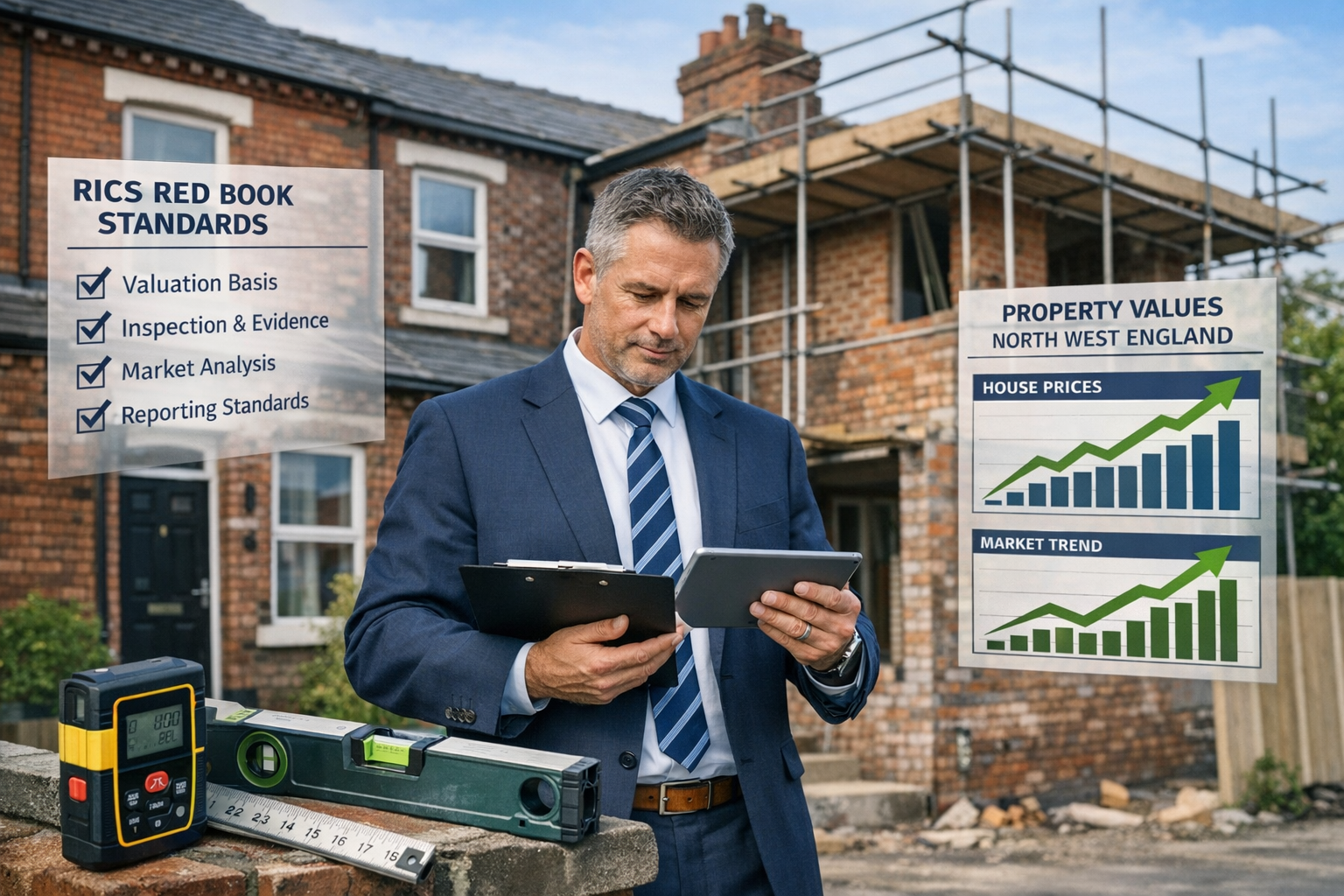
- ⚖️ RICS Red Book standards provide the foundation for credible expert witness testimony in housing improvement cases
- 🏘️ Regional market recovery creates complexity in valuing improvements, requiring specialized knowledge of North West property characteristics
- 📋 Evidence-building protocols are critical for expert witnesses to withstand legal scrutiny in price balance disputes
- 🔍 Anticipated government reforms may standardize property condition assessments, affecting future valuation methodologies
Understanding Expert Witness Valuations in Regional Housing Improvements
What Makes Expert Witness Valuations Different?
Expert witness valuations differ fundamentally from standard property appraisals. While a typical RICS valuation provides market value for lending or sale purposes, expert witness valuations serve legal proceedings. These assessments must withstand cross-examination, challenge from opposing experts, and judicial scrutiny.
The role requires chartered surveyors to:
- Provide impartial, objective opinions regardless of which party engages them
- Support conclusions with robust evidence including comparable sales data, construction cost analysis, and market research
- Comply with Civil Procedure Rules (CPR Part 35) and professional standards
- Communicate complex technical matters in accessible language for judges and juries
In housing improvement disputes, expert witnesses frequently address questions such as:
- What value did a loft conversion add to a Victorian terrace?
- How much did poor workmanship diminish property value?
- What is the appropriate compensation for delayed completion of renovations?
- How do regional market conditions affect improvement valuations?
The North West England Context in 2026
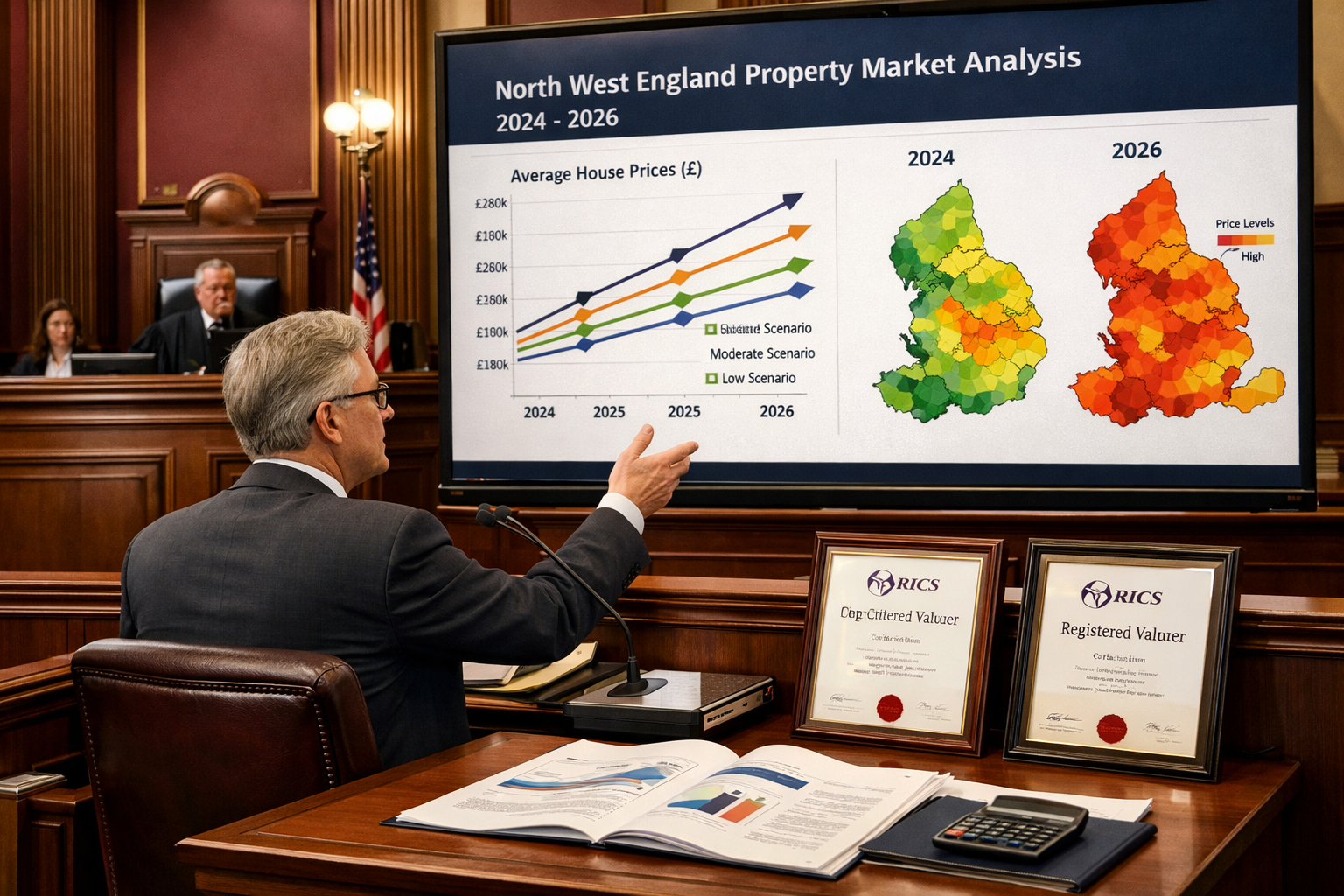
The North West England property market presents unique characteristics that expert witnesses must understand. According to recent RICS survey data, the region shows an upward price trajectory contrasting with other areas[1]. This recovery creates both opportunities and challenges for valuation professionals.
Key regional factors include:
🏠 Diverse housing stock: From Victorian terraces in Manchester and Liverpool to post-war semi-detached homes in suburban areas
📊 Varied improvement types: Extensions, loft conversions, basement conversions, and energy efficiency upgrades
💷 Price sensitivity: Regional values mean improvement costs represent larger percentages of total property value
🔨 Active renovation market: Significant surveying volume increases expected throughout 2026[2]
Understanding these dynamics is essential for expert witness work in the region.
RICS Protocols for Expert Witness Valuations in Regional Housing Improvements
The Red Book Foundation
The RICS Valuation – Global Standards (commonly called the Red Book) provides the mandatory framework for RICS members conducting valuations. For expert witness work, these standards ensure consistency, transparency, and credibility.
Critical Red Book requirements include:
| Requirement | Application to Expert Witness Work |
|---|---|
| Terms of Engagement | Clear written agreement outlining scope, purpose, and basis of valuation |
| Independence | Disclosure of conflicts of interest; duty to the court supersedes client relationship |
| Competence | Demonstrated expertise in property type, location, and valuation purpose |
| Inspection | Appropriate level of investigation given the valuation purpose |
| Basis of Value | Clear statement (typically Market Value for housing improvements) |
| Assumptions & Special Assumptions | Transparent disclosure of any departures from standard practice |
| Reporting | Comprehensive documentation supporting conclusions |
For housing improvement disputes, expert witnesses typically apply Market Value as defined in the Red Book: "The estimated amount for which an asset or liability should exchange on the valuation date between a willing buyer and a willing seller in an arm's length transaction, after proper marketing and where the parties had each acted knowledgeably, prudently and without compulsion."
Specialized Protocols for Housing Improvement Valuations
Beyond general Red Book standards, expert witnesses addressing housing improvements must follow additional protocols:
1. Before and After Methodology
The most common approach compares:
- Property value immediately before improvement works
- Property value immediately after completion (or hypothetical completion if works were defective)
- The difference represents the value added (or lost)
2. Cost vs. Value Analysis
Expert witnesses must distinguish between:
- Construction costs: What the improvement physically cost to build
- Added value: What buyers will actually pay for the improvement
These figures rarely match. A £40,000 extension might add only £25,000 in market value, or conversely, a £15,000 kitchen upgrade might add £22,000 in a competitive market.
3. Regional Comparables Research
Robust evidence requires identifying truly comparable properties. For North West England housing improvements, this means:
✅ Similar property types (Victorian terrace, Edwardian semi, etc.)
✅ Comparable locations (similar neighborhoods, not just same city)
✅ Recent transactions (ideally within 6 months, maximum 12 months)
✅ Similar improvement types (like-for-like extensions, conversions)
✅ Adjustments for differences (size variations, condition, market timing)
The Manchester valuation report process provides a template for thorough comparable analysis.
4. Evidence of Market Conditions
Expert witnesses must contextualize valuations within prevailing market conditions. For 2026 North West England cases, this includes:
- RICS residential market surveys showing regional trends[1]
- Land Registry price paid data for specific postcodes
- Local estate agent marketing data
- Days on market statistics
- Offer-to-asking price ratios
"The expert's duty is to help the court on matters within their expertise. This duty overrides any obligation to the person from whom they have received instructions or by whom they are paid." — Civil Procedure Rules, Part 35
Evidence-Building Tactics for Expert Witness Valuations in Regional Housing Improvements: RICS Protocols for North West England Enquiry Upticks
Developing Bulletproof Evidence
With North West England enquiry upticks creating more disputes, expert witnesses need systematic evidence-building approaches. The following tactics strengthen credibility and withstand challenge:
Tactic 1: Multi-Source Comparable Evidence
Never rely on a single data source. Cross-reference:
- Land Registry price paid data (factual but lacks property details)
- Estate agent particulars (detailed but asking prices, not achieved prices)
- Personal inspection records (if you've valued similar properties)
- Professional networks (other surveyors' experiences, maintaining confidentiality)
- Auction results (transparent pricing but may reflect distressed sales)
For housing improvements specifically, seek properties that sold both before and after similar works—these provide the strongest evidence of value impact.
Tactic 2: Photographic Documentation
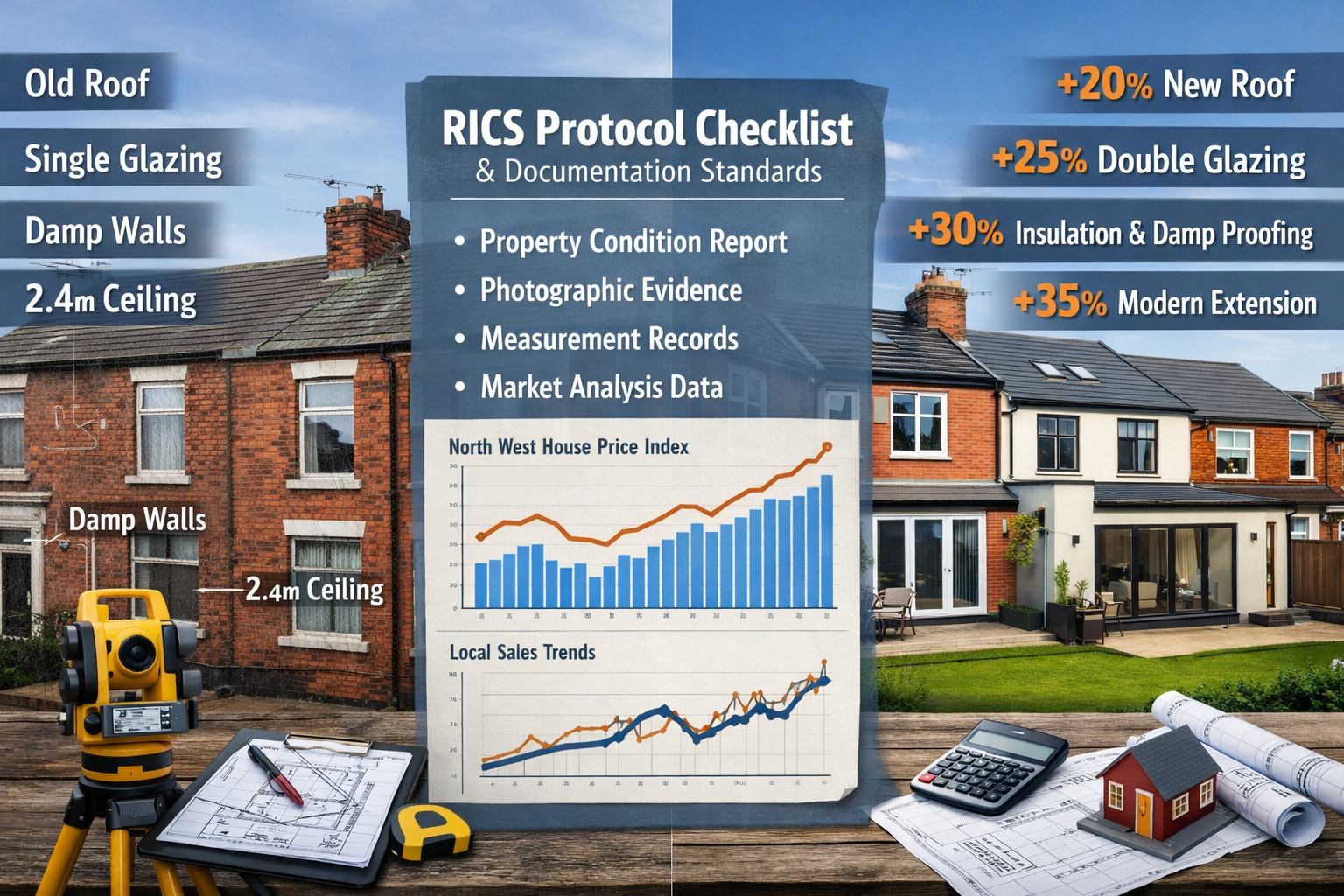
Visual evidence proves invaluable in court. Comprehensive photographic records should include:
📸 External elevations from multiple angles
📸 Improvement areas with detail shots of workmanship quality
📸 Comparable properties (from public vantage points)
📸 Defects or issues affecting value
📸 Context shots showing neighborhood character
Metadata timestamps and location data add credibility. Consider using professional equipment rather than smartphone cameras for important cases.
Tactic 3: Construction Cost Validation
When improvement value relates to construction costs, validate figures through:
- Quantity surveyor reports (if available)
- RICS Building Cost Information Service (BCIS) data
- Builder invoices and receipts (scrutinize for reasonableness)
- Specialist contractor quotes (for complex elements like structural work)
Remember: poor quality work may cost less but add even less value. High-quality work typically adds more value relative to cost.
Tactic 4: Adjustment Transparency
When using comparable evidence, explicitly document every adjustment:
| Comparable | Sale Price | Size Adjustment | Condition Adjustment | Location Adjustment | Time Adjustment | Adjusted Price |
|---|---|---|---|---|---|---|
| 123 Oak Road | £285,000 | -£8,000 | +£12,000 | -£5,000 | +£3,000 | £287,000 |
| 45 Elm Street | £295,000 | -£5,000 | +£8,000 | 0 | +£4,000 | £302,000 |
This transparency demonstrates rigorous methodology and helps courts understand your reasoning. The factors of valuation guide provides additional context for adjustment considerations.
Addressing North West England Market Specifics
The 2026 market recovery in North West England creates specific evidence challenges:
Challenge 1: Limited Recent Comparables
In rapidly changing markets, finding truly recent comparables becomes difficult. Solutions include:
- Extending geographic search radius (with appropriate location adjustments)
- Using time-series analysis to project older comparables forward
- Relying more heavily on current listings as market indicators
- Consulting local estate agents for unpublished transaction data
Challenge 2: Improvement Cost Inflation
Construction costs have fluctuated significantly post-pandemic. Expert witnesses must:
- Use current cost data, not historical figures
- Account for material price changes
- Consider labor availability in the North West region
- Adjust for any supply chain disruptions
Challenge 3: Energy Efficiency Premium
With increasing focus on sustainability, energy improvements (insulation, heat pumps, solar panels) may add more value than historically. Evidence should include:
- EPC (Energy Performance Certificate) ratings before and after
- Running cost calculations
- Market research on buyer preferences for efficient homes
- Government incentive schemes affecting value
Preparing for Cross-Examination
Strong evidence preparation enables confident testimony. Anticipate challenges by:
✔️ Testing your own conclusions: Play devil's advocate with your methodology
✔️ Preparing alternative scenarios: "Even if the court accepts the claimant's construction costs, my valuation would be…"
✔️ Knowing your comparables intimately: Be ready to discuss any comparable in detail
✔️ Understanding opposing expert's position: Review their report thoroughly and identify weaknesses
✔️ Practicing plain language explanations: Avoid jargon; use analogies
The expert witness report service demonstrates the level of detail required for credible testimony.
Regional Housing Improvement Trends Driving Valuation Demand
Types of Improvement Disputes in North West England
Understanding common dispute types helps expert witnesses anticipate evidence requirements:
1. Extension and Conversion Disputes
Most common in Victorian and Edwardian terraces across Manchester, Liverpool, and Preston. Issues include:
- Defective workmanship: Poor construction reducing value below expected
- Planning compliance: Unauthorized works affecting saleability
- Neighbor disputes: Party wall issues affecting property rights
- Cost overruns: Disputes over whether additional costs added proportional value
2. Renovation Quality Disputes
Particularly relevant for buy-to-let investors renovating properties. Questions include:
- Did the renovation achieve expected rental value increase?
- Was the specification appropriate for the target market?
- How do defects affect capital value vs. rental income?
3. Developer-Purchaser Disputes
New build developments with improvement packages (upgraded kitchens, landscaping, etc.). Issues arise when:
- Promised improvements weren't delivered
- Quality doesn't match marketing materials
- Delays affected market value at completion
4. Matrimonial Valuation Disputes
During divorce proceedings, parties may disagree on improvement value, especially when one spouse funded renovations. Matrimonial valuations require careful consideration of contribution vs. value added.
The 2026 Market Recovery Impact
The North West England enquiry upticks documented in January 2026 RICS data[1] create specific implications for expert witness work:
Increased Transaction Volume = More Disputes
More sales mean more opportunities for disputes to arise. The anticipated significant surveying volume increases throughout 2026[2] suggest proportional growth in expert witness demand.
Price Growth Complicates Valuation
When markets rise quickly, separating improvement value from general market appreciation becomes challenging. Expert witnesses must:
- Use time-series analysis to isolate improvement impact
- Consider whether improvements enabled sale in rising market
- Account for buyer competition effects on pricing
Regional Variation Matters
While North West England overall shows positive trends, micro-markets vary significantly. A loft conversion in central Manchester's Northern Quarter adds different value than the same work in suburban Rochdale. Expert witnesses need granular local knowledge.
Anticipated Regulatory Changes
Potential government reforms to standardize property condition assessment protocols[2] could significantly impact expert witness valuations. Anticipated changes include:
🔄 Standardized condition reporting: Mandatory formats for describing property condition
🔄 Energy efficiency requirements: Minimum EPC ratings for sales
🔄 Building safety certificates: Post-Grenfell regulations affecting valuations
🔄 Digital property logs: Comprehensive improvement histories
Expert witnesses should monitor these developments and consider how standardization might affect evidence gathering and valuation methodologies.
Best Practices for RICS-Compliant Expert Witness Valuations
Professional Standards and Ethics
RICS members providing expert witness services must navigate multiple professional obligations:
Duty to the Court First
The expert's primary duty is to the court, not the instructing party. This means:
- Providing honest opinions even when unfavorable to your client
- Disclosing weaknesses in your own evidence
- Not acting as an advocate for one side
- Amending opinions if new evidence emerges
Independence and Conflicts
Declare any conflicts of interest, including:
- Previous work for either party
- Financial interests in the outcome
- Personal relationships with parties or legal representatives
- Professional relationships that might affect objectivity
The RICS Red Book valuation standards provide detailed guidance on independence requirements.
Continuing Professional Development
Expert witness work requires specialized knowledge. Maintain expertise through:
- Legal training on CPR Part 35 requirements
- Market knowledge updates for North West England
- Technical training on construction methods and defects
- Valuation methodology courses
Report Writing Excellence
Expert witness reports must communicate complex information clearly. Essential elements include:
1. Executive Summary
Concise overview of key opinions, typically one page, enabling quick understanding of your position.
2. Instructions and Context
Clear statement of:
- Who instructed you and when
- What questions you were asked to address
- What information you were provided
- What investigations you conducted
3. Factual Background
Objective description of:
- The property and its characteristics
- The improvement works in question
- Timeline of events
- Relevant market conditions
4. Methodology
Detailed explanation of:
- Valuation approach selected and why
- Comparable evidence identified
- Adjustments made and justification
- Alternative approaches considered
5. Opinion and Conclusions
Clear statement of:
- Your valuation opinion with range if appropriate
- Confidence level in the opinion
- Key factors affecting the valuation
- Any limitations or caveats
6. Declaration
Standard CPR Part 35 declaration confirming:
- Understanding of duty to court
- Truth and accuracy of contents
- Inclusion of all relevant matters
- Awareness of no omissions
Working with Legal Teams
Effective expert witnesses collaborate productively with solicitors and barristers:
Communication Protocols
- Respond promptly to queries
- Explain technical matters in accessible language
- Flag potential weaknesses in the case early
- Suggest additional evidence that might strengthen the position
Pre-Trial Preparation
- Review all case documents thoroughly
- Prepare visual aids for complex explanations
- Anticipate opposing expert's arguments
- Practice testimony with legal team
Expert Meetings
CPR encourages experts to meet and narrow areas of disagreement. Approach these meetings with:
- Open-mindedness to alternative viewpoints
- Focus on technical matters, not legal strategy
- Willingness to agree where evidence supports consensus
- Clear documentation of remaining disagreements
Practical Scenarios: Expert Witness Valuations in North West England
Case Study 1: Victorian Terrace Extension Dispute
Scenario: A Manchester homeowner commissioned a single-story rear extension for £45,000. The builder abandoned the project with defective foundations requiring £18,000 remedial work. The homeowner claims £25,000 damages representing diminution in value.
Expert Witness Approach:
- Inspect property and document defects with photographs
- Obtain structural engineer's report on foundation issues
- Research comparables: Find Victorian terraces with and without extensions in the same postcode area
- Value three scenarios:
- Property before any works: £245,000
- Property with properly completed extension: £285,000 (£40,000 added value)
- Property with defective extension: £230,000 (£15,000 diminution)
Opinion: The defective works reduced value by £15,000 below the pre-works value. Additionally, the homeowner lost the opportunity to gain £40,000 in value. Total loss: £55,000 (£15,000 diminution + £40,000 lost opportunity) less the remediation cost of £18,000 = £37,000 net loss.
This approach, grounded in RICS building survey principles, provides clear evidence for the court.
Case Study 2: Loft Conversion Value Dispute
Scenario: A Liverpool couple disputes the value added by a loft conversion completed in late 2025. The husband claims it added £35,000; the wife's surveyor says only £20,000. The conversion cost £32,000.
Expert Witness Approach:
- Analyze the conversion: Two bedrooms, ensuite bathroom, Velux windows, good quality finishes
- Research market: Find properties with and without loft conversions in similar Liverpool neighborhoods
- Consider market timing: Account for the North West price uptick in early 2026[1]
- Calculate range: Evidence supports £25,000-£30,000 value addition
Opinion: The conversion added approximately £27,500 in market value (midpoint of range). While below the £32,000 cost, this represents reasonable value addition for the property type and location. The discrepancy between cost and value reflects market conditions where loft conversions in this price bracket don't achieve full cost recovery.
Case Study 3: Energy Efficiency Improvement Dispute
Scenario: A Preston landlord invested £22,000 in energy efficiency improvements (external wall insulation, new boiler, double glazing) to a 1960s semi-detached house. The tenant claims the works were disruptive and reduced amenity value.
Expert Witness Approach:
- Assess energy improvements: Review EPC ratings (improved from E to B)
- Calculate running cost savings: £1,200 annual reduction in heating costs
- Research rental market: Compare rental values for efficient vs. inefficient properties
- Consider capital value impact: Energy efficiency increasingly valued by buyers in 2026
Opinion: The improvements added £18,000 to capital value and increased annual rental value by £600. While temporary disruption occurred during works, the long-term value enhancement is clear. The property is now more marketable and commands a premium in the rental market.
Conclusion: Navigating Expert Witness Valuations in Regional Housing Improvements
The surge in North West England property market activity documented in 2026 RICS data creates unprecedented demand for expert witness valuations in housing improvement disputes. As buyer enquiries climb and transaction volumes increase, the potential for disagreements over improvement values rises proportionally.
Key Success Factors for Expert Witnesses:
✅ Master RICS protocols: Red Book standards provide the foundation for credible testimony
✅ Develop regional expertise: Deep knowledge of North West England property characteristics and market dynamics
✅ Build robust evidence: Multi-source comparable data, photographic documentation, and transparent methodology
✅ Maintain independence: Duty to the court supersedes client relationships
✅ Communicate clearly: Translate technical valuation concepts into accessible language for legal proceedings
The anticipated government reforms to standardize property condition assessments may reshape expert witness work in coming years. Staying ahead of these changes while maintaining rigorous current standards positions surveyors for continued success in this specialized field.
Actionable Next Steps
For surveyors seeking to develop or enhance expert witness capabilities:
- Obtain specialized training in CPR Part 35 requirements and expert witness procedures
- Build comprehensive databases of North West England comparable evidence for housing improvements
- Network with legal professionals who instruct experts in property disputes
- Develop report writing skills specific to legal proceedings
- Consider professional indemnity insurance with appropriate expert witness coverage
- Monitor market data closely, particularly RICS regional surveys showing North West trends
For property owners, developers, and legal professionals requiring expert witness services:
- Engage RICS-qualified experts with demonstrable regional experience
- Instruct early in disputes to allow thorough evidence gathering
- Provide complete documentation including construction records, invoices, and planning documents
- Understand the expert's duty to the court and expect independent opinions
- Request clear methodology explanations to assess the strength of evidence
The intersection of Expert Witness Valuations in Regional Housing Improvements: RICS Protocols for North West England Enquiry Upticks represents a growing professional opportunity. As the region's property market continues its recovery trajectory through 2026, the demand for credible, RICS-compliant expert testimony will only intensify.
Surveyors who combine technical valuation expertise with legal procedural knowledge, regional market understanding, and ethical independence will find themselves increasingly valuable to clients navigating complex housing improvement disputes. The foundation lies in rigorous adherence to RICS standards, comprehensive evidence gathering, and unwavering commitment to assisting the court in reaching just outcomes.
References
[1] Rics January 2026 Survey Insights Building Survey Protocols For Surging Buyer Enquiries In North West England – https://nottinghillsurveyors.com/blog/rics-january-2026-survey-insights-building-survey-protocols-for-surging-buyer-enquiries-in-north-west-england
[2] Building Survey Protocols For North West Englands Recovery Spotting Structural Risks In Rapid Growth Markets – https://nottinghillsurveyors.com/blog/building-survey-protocols-for-north-west-englands-recovery-spotting-structural-risks-in-rapid-growth-markets
[3] Navigating Widening North South Valuation Divides In 2026 Rics Techniques For Accurate Property Appraisals – https://nottinghillsurveyors.com/blog/navigating-widening-north-south-valuation-divides-in-2026-rics-techniques-for-accurate-property-appraisals