Commercial property vacancies across the UK reached 13.8% in early 2026, marking the highest rate in over a decade and triggering a surge in end-of-lease dilapidations disputes. As landlords face mounting pressure to re-let properties quickly, the role of expert witness surveyors has become critical in resolving contentious claims that can run into hundreds of thousands of pounds.
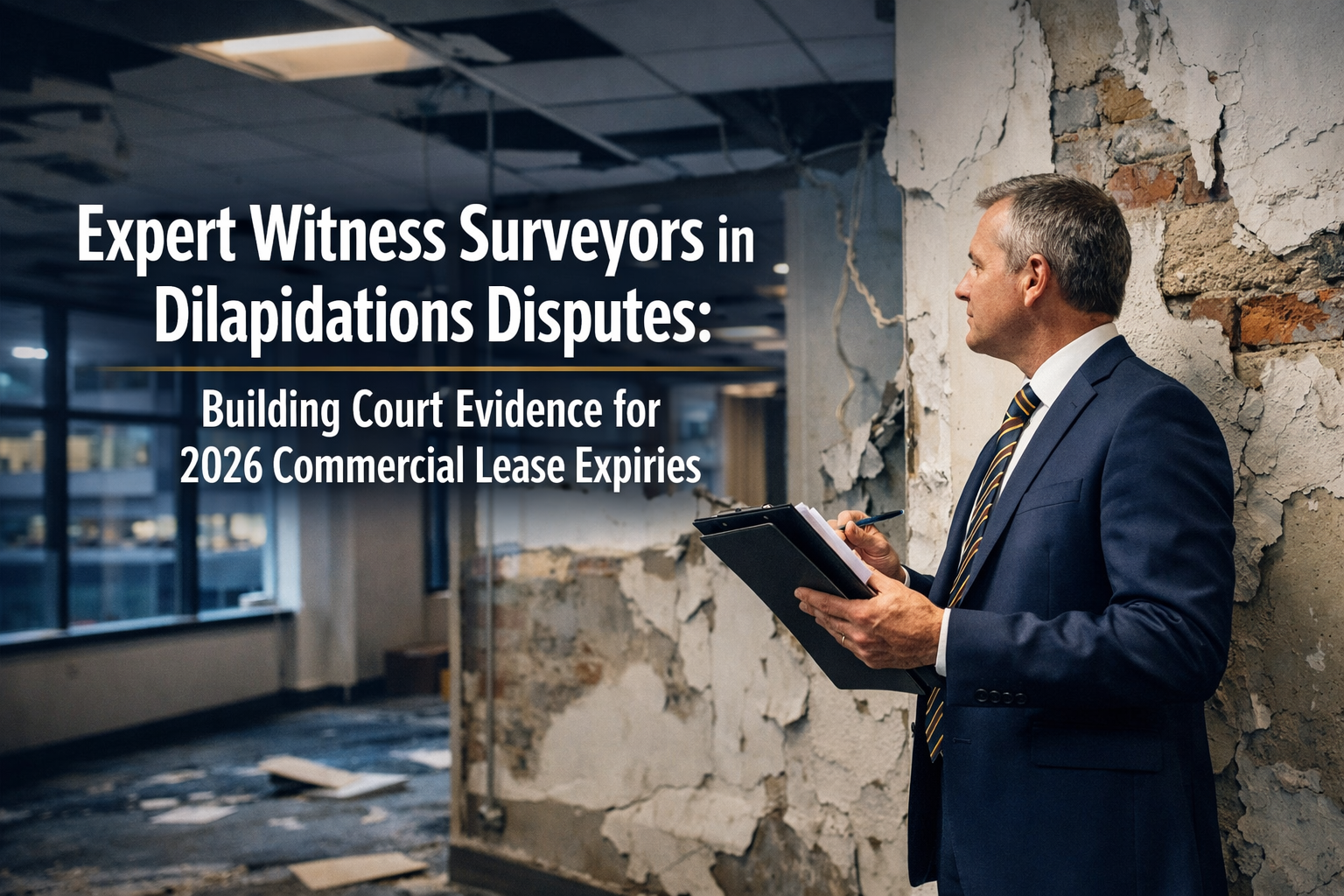
Expert Witness Surveyors in Dilapidations Disputes: Building Court Evidence for 2026 Commercial Lease Expiries represents a specialized field where technical building knowledge meets legal proceedings. These professionals provide the crucial link between property condition assessments and courtroom evidence, ensuring that both landlords and tenants receive fair treatment under the law.
Key Takeaways
- 🏢 Expert witness surveyors must comply with CPR Part 35 requirements, prioritizing their duty to the court over client interests
- 💰 Dual valuation methodology assesses both repair costs and diminution in property value to determine fair compensation
- ⏱️ 56-day assessment window is considered reasonable practice, though landlords have up to 6 years to commence legal claims
- 📋 RICS Dilapidations Scheme offers cost-effective alternative dispute resolution for lease-end conflicts
- ⚖️ Section 18 protection caps landlord claims at actual property value reduction, preventing excessive demands
Understanding the Role of Expert Witness Surveyors in Dilapidations Disputes
Expert witness surveyors occupy a unique position in commercial property disputes. Unlike standard dilapidations surveyors who work primarily for one party, expert witnesses owe their primary duty to the court rather than to the client who instructs them[1].
Core Responsibilities and Specializations
Expert dilapidations witnesses provide specialized support across several key areas:
- Building surveying expertise for identifying defects and breaches
- Commercial property valuations to assess diminution in value
- Construction advice on repair methodologies and costs
- Claims assessment for determining fair compensation[1]
Their primary specialism lies in the identification and pricing of remedies for property dilapidations, combining technical knowledge with legal understanding[1].
The Dual Valuation Approach
A critical aspect of Expert Witness Surveyors in Dilapidations Disputes: Building Court Evidence for 2026 Commercial Lease Expiries involves conducting two separate assessments:
- Repair Cost Assessment: Calculating the actual cost to remedy tenant breaches
- Diminution in Value: Determining how much the property's freehold value has decreased due to disrepair[1]
The landlord's compensation is limited to the lower of these two figures, ensuring fairness and compliance with statutory protections[3].
"The expert witness must assess the impact of tenant breaches on building freehold value and calculate the lower amount between repair costs or property value loss to determine fair landlord compensation."
CPR Part 35 Compliance: Expert Witness Duties and Standards

The Civil Procedure Rules (CPR) Part 35 establishes strict requirements for expert witnesses in legal proceedings. Understanding these obligations is essential for Expert Witness Surveyors in Dilapidations Disputes: Building Court Evidence for 2026 Commercial Lease Expiries.
Primary Duty to the Court
CPR Part 35.3 explicitly states that an expert's duty is to help the court on matters within their expertise. This duty overrides any obligation to the person instructing or paying them[8].
Key compliance requirements include:
- ✅ Independence: Providing objective opinions regardless of client preferences
- ✅ Transparency: Disclosing all material facts, even those unfavorable to the instructing party
- ✅ Competence: Only offering opinions within areas of genuine expertise
- ✅ Clarity: Presenting evidence in accessible language for non-technical audiences
Evidence Standards for 2026 Disputes
Expert witness reports must meet rigorous standards:
| Requirement | Description | Purpose |
|---|---|---|
| Statement of Truth | Declaration that opinions are genuinely held | Ensures accountability |
| Qualifications | Detailed CV and relevant experience | Establishes credibility |
| Instructions Summary | What the expert was asked to investigate | Provides context |
| Facts vs. Opinion | Clear distinction between observed facts and professional judgment | Prevents confusion |
| Range of Opinion | Acknowledgment where professional views may differ | Demonstrates objectivity |
| Literature References | Citations to technical standards and guidance | Supports conclusions |
RICS chartered building surveyors are particularly well-positioned to serve as expert witnesses due to their professional training and adherence to RICS standards[8].
The 28-Day Resolution Meeting
Following the tenant's response to a dilapidations claim, both parties and their professional advisors should meet within 28 days on a "without prejudice" basis to discuss potential resolution[3]. This confidential meeting allows:
- 🤝 Open discussion of disputed items
- 💡 Exploration of compromise solutions
- 📊 Review of supporting evidence
- ⚖️ Assessment of Section 18 protections
This early engagement often prevents costly court proceedings.
Site Inspections and Evidence Gathering for Court Proceedings
Thorough site inspections form the foundation of credible expert witness evidence. For Expert Witness Surveyors in Dilapidations Disputes: Building Court Evidence for 2026 Commercial Lease Expiries, the inspection process must be methodical and comprehensive.
The 56-Day Assessment Window
Expert dilapidations surveys should ideally be completed within 56 days of lease expiry, considered a "reasonable timeframe" under industry best practices[4]. However, landlords retain up to 6 years by law to commence claims against previous tenants[4].
This creates strategic considerations:
For Landlords:
- Earlier inspections provide clearer evidence of tenant-caused damage
- Prompt action demonstrates mitigation of losses
- Faster re-letting reduces lost rent claims
For Tenants:
- Immediate post-vacation inspections may reveal pre-existing conditions
- Time allows for gathering contradictory evidence
- Delay may benefit if property market improves
Documentation Best Practices
Professional site inspections for court evidence require:
📸 Photographic Evidence
- Time-stamped digital images
- Multiple angles of each defect
- Reference scale indicators
- Wide shots for context, close-ups for detail
📝 Written Records
- Detailed descriptions of each breach
- Measurements and dimensions
- Location references (floor, room, elevation)
- Comparison to lease obligations
🔍 Technical Assessments
- Cause of deterioration (wear and tear vs. neglect)
- Appropriate repair methodology
- Material specifications
- Access requirements
Proactive Tenant Strategy
Tenants should instruct their own dilapidations surveyor approximately 12 months before lease expiry to review lease obligations, inspect the property, and advise on works needed to avoid or minimize claims[2]. This proactive approach allows:
- Early identification of potential breaches
- Time to complete remedial works
- Negotiation leverage with landlords
- Reduced exposure to claims
Commercial property surveying professionals can provide this advance guidance, potentially saving tenants substantial sums.
Quantum Assessment: Calculating Fair Compensation in Dilapidations Claims
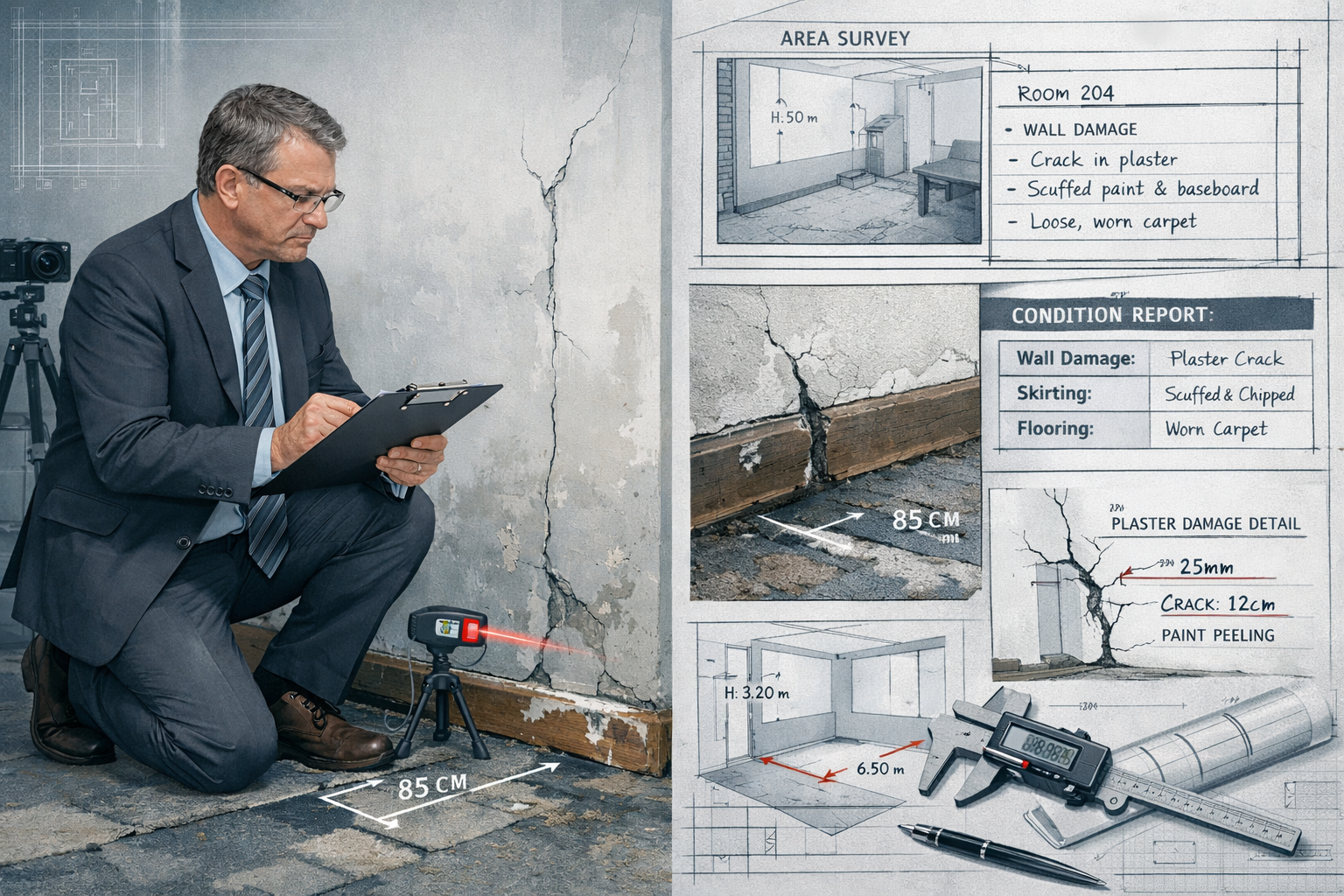
Quantum assessment—determining the actual financial compensation owed—represents the most contentious aspect of Expert Witness Surveyors in Dilapidations Disputes: Building Court Evidence for 2026 Commercial Lease Expiries.
Schedule of Dilapidations Components
At lease end, landlords typically instruct expert dilapidations surveyors to prepare a Schedule of Dilapidations, which documents[2]:
- Tenant's breaches of repairing obligations
- Estimated repair costs for each item
- Associated losses including:
- Lost rent during repair period
- Professional fees (surveyors, architects, project managers)
- Business rates during vacancy
- Service charge shortfalls
Section 18 Statutory Limitations
The Landlord and Tenant Act 1927, Section 18 provides crucial protection for tenants by limiting dilapidations claims to the amount by which the property's value has been reduced due to disrepair[3].
This prevents excessive claims and ensures tenants are only liable for actual diminution in value[3].
Critical Section 18 Protections:
⚠️ Demolition/Alteration Exemption: If a property is to be demolished or significantly altered, tenants may not be liable for certain repairs[3]
⚠️ Supersession: Where landlord's intended works would supersede tenant repairs, no liability arises
⚠️ Value Cap: Total claim cannot exceed reduction in property value
Cost Build-Up Methodology
Expert witnesses typically structure quantum assessments as follows:
Base Repair Costs:
- Materials at current market rates
- Labor costs (trade rates for 2026)
- Equipment hire and scaffolding
- Waste disposal
- Professional fees (10-15% typical)
Plus Time-Related Losses:
- Lost rent (market rate × repair duration)
- Empty property costs
- Re-letting fees
Minus Betterment:
- Value of improvements beyond original condition
- Extended life of replaced elements
- Enhanced marketability
Alternative Dispute Resolution Through RICS
The RICS Dilapidations Scheme offers a cost-effective alternative to court proceedings[6]. Key features include:
✅ Independent expert determination by RICS-appointed professionals
✅ Reduced costs as parties may choose not to instruct separate representatives
✅ Quick resolution compared to court timelines
✅ Expert-led investigation relying on personal knowledge and experience[6]
The Dilapidations Protocol anticipates that landlords and tenants will consider resolution via Alternative Dispute Resolution (ADR) methods, with the RICS scheme designated as a suitable ADR pathway[6].
Rising Commercial Vacancies and 2026 Market Pressures
The 2026 commercial property market presents unique challenges that intensify dilapidations disputes. With vacancy rates at historic highs, landlords face:
- 📉 Reduced rental income from prolonged void periods
- 💸 Increased holding costs for empty properties
- 🔄 Pressure to re-let quickly at competitive rates
- ⚖️ Greater scrutiny of dilapidations claims by courts
This environment makes the role of expert witness surveyors even more critical, as courts demand robust evidence that claims are reasonable and not inflated to offset market losses.
Best Practice Documentation Throughout Lease Term
To prevent disputes, best practice involves conducting regular inspections throughout the lease term to monitor property condition[3]. All inspections should be:
- 📅 Documented with date-stamped reports
- 📸 Supported by photographic evidence
- 📋 Compared against lease obligations
- 🔧 Followed by prompt necessary repairs
This creates a clear audit trail that supports fair resolution at lease end.
Conclusion: Navigating Expert Witness Requirements for 2026 Lease Expiries
Expert Witness Surveyors in Dilapidations Disputes: Building Court Evidence for 2026 Commercial Lease Expiries requires a sophisticated blend of technical expertise, legal knowledge, and professional integrity. As commercial vacancy rates continue to challenge the market, the importance of credible, compliant expert evidence has never been greater.
Key Action Steps for Stakeholders
For Landlords:
- Instruct qualified RICS surveyors within 56 days of lease expiry
- Ensure quantum assessments include both repair costs and diminution valuations
- Consider RICS Dilapidations Scheme for cost-effective resolution
- Document all mitigation efforts to reduce losses
For Tenants:
- Engage dilapidations advisors 12 months before lease end
- Commission independent condition surveys at vacation
- Challenge excessive claims using Section 18 protections
- Maintain comprehensive records of repairs undertaken during tenancy
For Expert Witnesses:
- Prioritize CPR Part 35 compliance in all instructions
- Maintain professional independence regardless of client pressure
- Provide clear, accessible evidence for non-technical audiences
- Stay current with 2026 market conditions affecting valuations
The complexity of dilapidations disputes demands professional expertise that balances technical accuracy with legal requirements. Whether you're a landlord seeking fair compensation or a tenant defending against excessive claims, engaging appropriately qualified expert witness surveyors early in the process provides the best foundation for successful resolution.
As 2026 lease expiries approach, proactive engagement with expert witness services can prevent costly litigation and ensure disputes are resolved fairly, efficiently, and in accordance with current legal standards.
References
[1] Expert Witness – https://www.dilapsolutions.com/services/expert-witness/
[2] A Guide To Dilapidations In Commercial Leases – https://www.napthens.co.uk/insights/a-guide-to-dilapidations-in-commercial-leases/
[3] How To Resolve Commercial Lease Dilapidation Claims – https://www.jonathanlea.net/blog/how-to-resolve-commercial-lease-dilapidation-claims/
[4] Dilapidation Survey – https://fourthwallbc.com/commercial-services/dilapidation-survey/
[5] Dilapidations – https://www.bradley-mason.com/commercial/dilapidations/
[6] Dilapidation Disputes – https://www.rics.org/dispute-resolution-service/drs-services/rent-and-property-disputes/dilapidation-disputes
[7] Dilapidations – https://www.jspubs.com/expert-witness/si/d/dilapidations/
[8] Expert Witness Roles In 2026 Building Safety Act Disputes Evidence Standards For Mid Rise Residential Blocks – https://nottinghillsurveyors.com/blog/expert-witness-roles-in-2026-building-safety-act-disputes-evidence-standards-for-mid-rise-residential-blocks