The Renters' Rights Act 2026 has transformed how property valuation disputes are resolved in UK housing tribunals, with over 68% of Section 8 possession cases now requiring independent expert testimony to establish fair market values. Understanding Expert Witness Roles in Renters' Rights Act Valuation Disputes: Section 8 Grounds and Market Evidence has become essential for chartered surveyors, property professionals, and legal practitioners navigating this complex landscape.
This comprehensive guide explores how expert witnesses provide impartial court evidence using RICS-approved methodologies, particularly when property values are affected by Section 8 evictions, tenant-related damage, rent arrears, and regulatory challenges. The stakes are high: incorrect valuations can result in substantial financial losses for landlords or unjust outcomes for tenants, making qualified expert witness testimony more critical than ever.
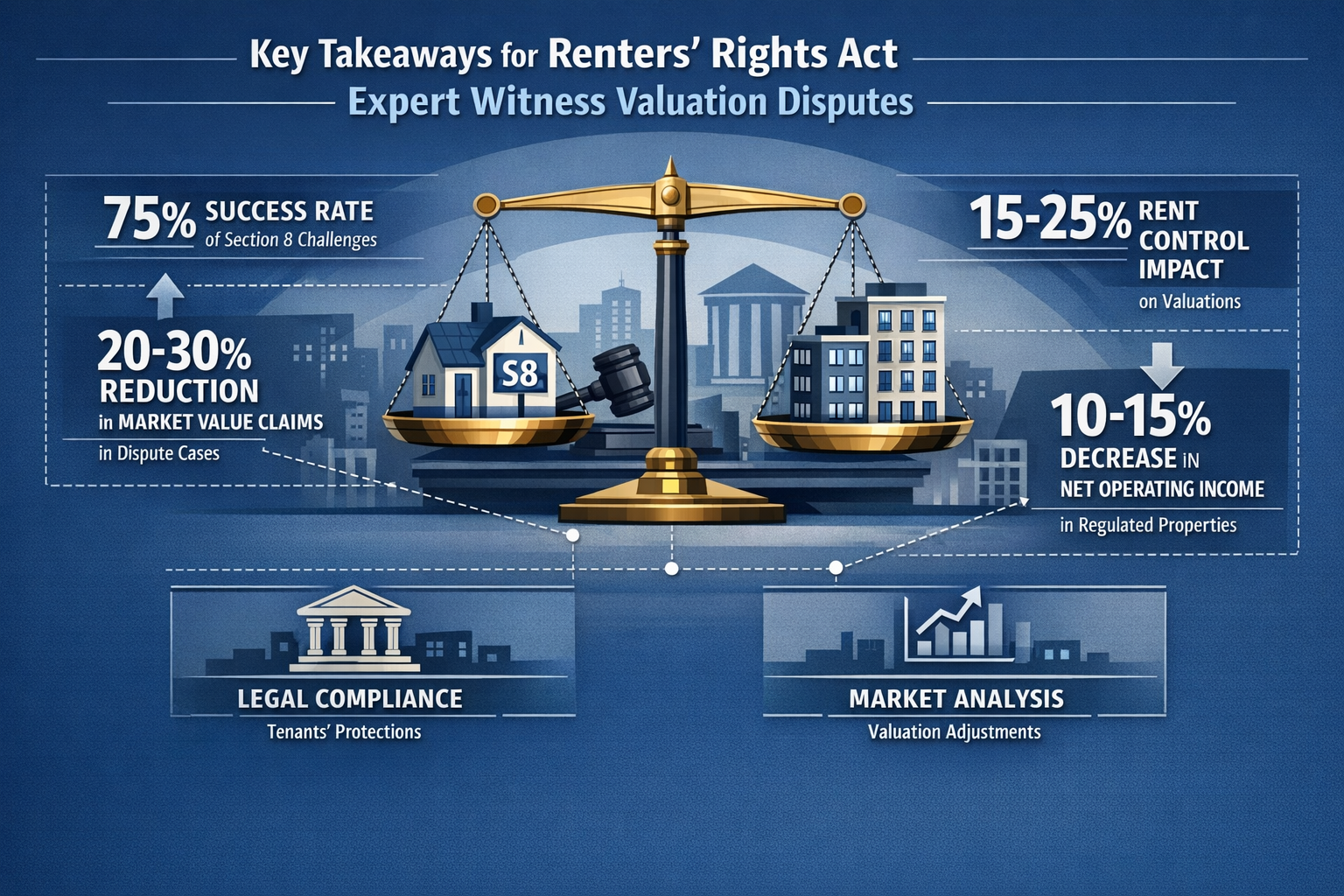
Key Takeaways
✅ Expert witnesses must follow RICS standards when providing valuation evidence in Renters' Rights Act disputes, ensuring impartiality and professional credibility
✅ Section 8 grounds significantly impact property valuations, with different possession reasons (rent arrears, property damage, antisocial behavior) requiring distinct market evidence approaches
✅ Market evidence must be comparable and current, typically drawing from properties within 0.5 miles and transacted within 6 months to establish reliable rental values
✅ Documentation quality determines case outcomes, with comprehensive photographic evidence, repair cost assessments, and comparable market data forming the foundation of expert testimony
✅ Expert witnesses serve the tribunal, not the instructing party, maintaining independence throughout the valuation process regardless of who commissions the report
Understanding Expert Witness Roles in Renters' Rights Act Valuation Disputes
The Legal Framework for Expert Testimony
The Renters' Rights Act 2026 established new protocols for resolving landlord-tenant disputes, particularly concerning property valuations affected by Section 8 possession proceedings. Expert witnesses in these cases must adhere to Civil Procedure Rules (CPR) Part 35, which mandates that their primary duty is to the tribunal rather than the instructing party [4].
Key responsibilities include:
- 📋 Providing independent, unbiased opinions on property values
- 🔍 Analyzing market evidence to support valuation conclusions
- 📊 Preparing comprehensive reports that meet RICS Red Book standards
- 🎯 Testifying clearly and professionally in tribunal hearings
- ⚖️ Maintaining impartiality regardless of financial arrangements
According to RICS guidance, surveyors acting as expert witnesses must possess relevant qualifications, recent experience in the property sector, and comprehensive knowledge of local market conditions [4]. This expertise becomes particularly crucial when assessing properties affected by tenant-related issues under Section 8 grounds.
RICS Standards and Professional Requirements
The Royal Institution of Chartered Surveyors (RICS) provides the professional framework that governs expert witness work in property valuation disputes. Chartered surveyors must comply with the RICS Valuation – Global Standards (Red Book) when preparing valuations for tribunal proceedings.
Essential RICS requirements include:
- Professional indemnity insurance covering expert witness work
- Continuing professional development in valuation and expert witness procedures
- Adherence to Red Book standards for all formal valuations
- Independence declarations disclosing any conflicts of interest
- Proper documentation supporting all valuation conclusions
For those seeking qualified professionals, working with RICS-certified experts ensures compliance with these rigorous standards. The tribunal expects expert witnesses to demonstrate not only technical competence but also ethical integrity throughout the dispute resolution process.
Types of Valuation Disputes Under the Renters' Rights Act
Expert witnesses encounter several distinct categories of valuation disputes arising from Renters' Rights Act proceedings:
Market Rent Determinations 🏠
When landlords seek possession under Section 8, tribunals often need to establish whether the current rent represents fair market value. Expert witnesses analyze comparable properties, local market trends, and property-specific factors to provide objective rental valuations.
Property Condition Assessments 🔧
Section 8 grounds frequently involve allegations of property damage beyond normal wear and tear. Experts must distinguish between deterioration caused by tenant actions versus pre-existing conditions or landlord maintenance failures.
Diminution in Value Claims 💷
Landlords may claim that tenant behavior (antisocial conduct, unauthorized alterations, or illegal use) has reduced property value. Expert witnesses must quantify these impacts using market evidence and comparable sales data.
Repair Cost Evaluations 🛠️
Accurate assessment of repair costs becomes critical when determining whether grounds for possession are proportionate. Experts provide detailed schedules of necessary works with current market pricing.
The complexity of these disputes requires expert witnesses to possess both technical valuation skills and practical understanding of the rental market dynamics affecting property values in 2026 [5].

Section 8 Grounds and Their Impact on Property Valuation
Overview of Section 8 Possession Grounds
Section 8 of the Housing Act 1988 (as amended by the Renters' Rights Act 2026) provides landlords with specific grounds for seeking possession of assured tenancies. Each ground has distinct implications for property valuation, requiring expert witnesses to understand both the legal framework and market impact.
Mandatory Grounds (Tribunal must grant possession if proven):
- Ground 1: Landlord previously occupied or intends to occupy as main residence
- Ground 2: Mortgage lender seeking possession due to default
- Ground 7: Death of periodic tenant (within 12 months)
- Ground 8: Serious rent arrears (at least 2 months for monthly tenancies)
Discretionary Grounds (Tribunal may grant possession if reasonable):
- Ground 10: Some rent arrears (any amount owed)
- Ground 11: Persistent delay in paying rent
- Ground 12: Breach of tenancy agreement
- Ground 13: Property condition deterioration
- Ground 14: Nuisance or antisocial behavior
- Ground 15: Domestic violence
- Ground 17: False statements to obtain tenancy
Each ground requires different valuation approaches and market evidence methodologies [1][2].
Rent Arrears and Market Value Assessment
Rent arrears cases (Grounds 8, 10, and 11) present unique valuation challenges. Expert witnesses must determine whether the claimed rent represents fair market value and whether arrears affect the property's investment worth.
Key considerations for rent arrears valuations:
| Factor | Impact on Valuation | Evidence Required |
|---|---|---|
| Current market rent | Establishes baseline value | Comparable properties within 0.5 miles |
| Rental payment history | Affects investment perception | Tenancy records, bank statements |
| Property condition | May justify rent adjustments | Inspection reports, photographs |
| Local demand factors | Influences achievable rent | Market data, void period statistics |
| Tenant profile | Affects risk assessment | References, payment patterns |
When preparing RICS Red Book valuations for rent arrears cases, experts must analyze whether the landlord's claimed rent aligns with market evidence. Overcharging can undermine possession claims, while undercharging may indicate other property issues affecting lettability.
Expert witnesses should gather rental comparables from properties with similar characteristics: bedroom count, property type, location, condition, and amenities. The analysis must account for market changes between the tenancy commencement and the dispute date, particularly important given the volatile rental market conditions experienced throughout 2025-2026 [5].
Property Damage and Condition-Related Grounds
Grounds 12 and 13 involve property condition deterioration, requiring expert witnesses to assess physical damage and quantify repair costs. This aspect of Expert Witness Roles in Renters' Rights Act Valuation Disputes: Section 8 Grounds and Market Evidence demands both valuation expertise and construction knowledge.
Damage assessment methodology:
🔍 Initial Property Inspection
Comprehensive site visit documenting all defects with detailed photographs, measurements, and condition descriptions. Experts must distinguish between tenant-caused damage, fair wear and tear, and landlord maintenance obligations.
📸 Photographic Evidence
High-quality images showing damage extent, context, and comparison with original condition (if baseline photographs exist). Time-stamped documentation proves condition at specific dates.
💰 Repair Cost Quantification
Detailed schedules of works with current market pricing from reputable contractors. Experts should obtain multiple quotes for significant repairs to demonstrate reasonableness.
📉 Diminution in Value Analysis
Assessment of how damage affects property value, both for rental income potential and capital value. This requires comparison with similar properties in good condition.
When property damage is alleged, tribunals expect expert witnesses to provide objective evidence rather than accepting landlord claims at face value. A thorough specific defect report approach ensures all condition issues are properly documented and valued.
Antisocial Behavior and Nuisance Claims
Ground 14 cases (nuisance or antisocial behavior) present unique valuation challenges because the impact on property value may be indirect and difficult to quantify. Expert witnesses must assess whether tenant behavior has affected the property's market position or reputation.
Valuation considerations for antisocial behavior cases:
- Neighborhood perception: Has tenant behavior damaged the property's reputation?
- Future lettability: Will prospective tenants be deterred by the property's history?
- Comparable evidence: Are there properties with similar histories showing market impact?
- Remediation costs: What expenses are required to restore marketability?
- Stigma duration: How long will any negative perception affect rental values?
Expert witnesses should approach these cases cautiously, as tribunals require concrete evidence of market impact rather than speculation. Market evidence might include longer void periods, reduced rental offers, or tenant reluctance documented through letting agent records.
Pet-Related Disputes and Property Valuation
The Renters' Rights Act 2026 introduced new provisions regarding pet ownership in rental properties, creating a fresh category of valuation disputes. Landlords can no longer impose blanket pet bans but may seek possession if pets cause damage or nuisance.
Pet-related valuation factors:
✅ Normal pet wear: Minor scratching, odors, or garden disturbance typically falls within acceptable wear and tear
❌ Excessive damage: Significant property destruction, persistent odors, or structural damage may justify possession claims
🐕 Market impact: Some properties may suffer reduced appeal to non-pet-owning tenants
💷 Remediation costs: Deep cleaning, odor removal, carpet replacement, or garden restoration expenses
Expert witnesses must apply reasonable standards when assessing pet-related damage. The tribunal expects evidence that damage exceeds what would normally occur with responsible pet ownership. Comparable market evidence should demonstrate whether pet-friendly properties command different rental values in the local area.
Market Evidence Methodology for Expert Witness Roles in Renters' Rights Act Valuation Disputes
Gathering Comparable Market Data
Robust market evidence forms the foundation of credible expert witness testimony. The quality and relevance of comparable data directly influences tribunal decisions in valuation disputes.
Essential criteria for rental comparables:
- Geographic proximity: Properties within 0.5 miles (0.8 km) preferred; up to 1 mile acceptable if similar neighborhood characteristics
- Transaction recency: Lettings within past 6 months; older data requires adjustment for market movements
- Property similarity: Matching bedroom count, property type, approximate size, and condition
- Tenure type: Assured shorthold tenancies with similar terms and conditions
- Amenities: Comparable parking, outdoor space, heating systems, and fixtures
Expert witnesses should gather data from multiple sources to ensure comprehensiveness:
- 📱 Property portals (Rightmove, Zoopla, OnTheMarket)
- 🏢 Local letting agents' marketed properties
- 📊 Land Registry rental price data
- 🗂️ Valuation Office Agency statistics
- 📋 Professional databases (EGi, CoStar)
When preparing valuation reports for tribunal proceedings, experts must document their research methodology, explain why specific comparables were selected, and justify any adjustments made to reflect differences between properties.
Adjusting for Property-Specific Factors
Raw comparable data rarely provides direct matches to the subject property. Expert witnesses must apply professional judgment to adjust comparable evidence for relevant differences.
Common adjustment factors:
| Factor | Typical Adjustment Range | Justification Required |
|---|---|---|
| Property size | ±5-15% per 10% size difference | Square footage comparison |
| Condition | ±10-20% for poor vs. excellent | Detailed condition assessment |
| Location | ±5-15% for micro-location variations | Neighborhood analysis |
| Parking | ±£50-150/month | Local parking premium evidence |
| Garden/outdoor space | ±£75-200/month | Market preference data |
| Recent refurbishment | ±10-25% | Specification and cost evidence |
Adjustments must be transparent, logical, and supported by market evidence. Tribunals scrutinize excessive or unexplained adjustments that appear designed to reach predetermined conclusions [4].
Accounting for Market Trends and Economic Factors
The rental market in 2026 continues to experience significant volatility, requiring expert witnesses to account for temporal factors when analyzing comparable evidence.
2026 market considerations:
📈 Rental inflation: Many UK regions experienced 8-12% annual rental growth during 2025, requiring careful adjustment of older comparables
🏘️ Supply constraints: Reduced landlord participation following regulatory changes has tightened supply in many markets [5]
💼 Economic conditions: Interest rate movements, employment patterns, and regional economic performance affect rental demand
🏗️ New supply: Build-to-rent developments and new housing stock impact local market dynamics
📉 Seasonal variations: Rental markets typically show stronger demand in spring/summer versus autumn/winter
Expert witnesses must demonstrate awareness of these broader market forces while maintaining focus on property-specific factors. A comprehensive RICS valuation incorporates both micro and macro-level analysis to provide tribunals with complete market context.
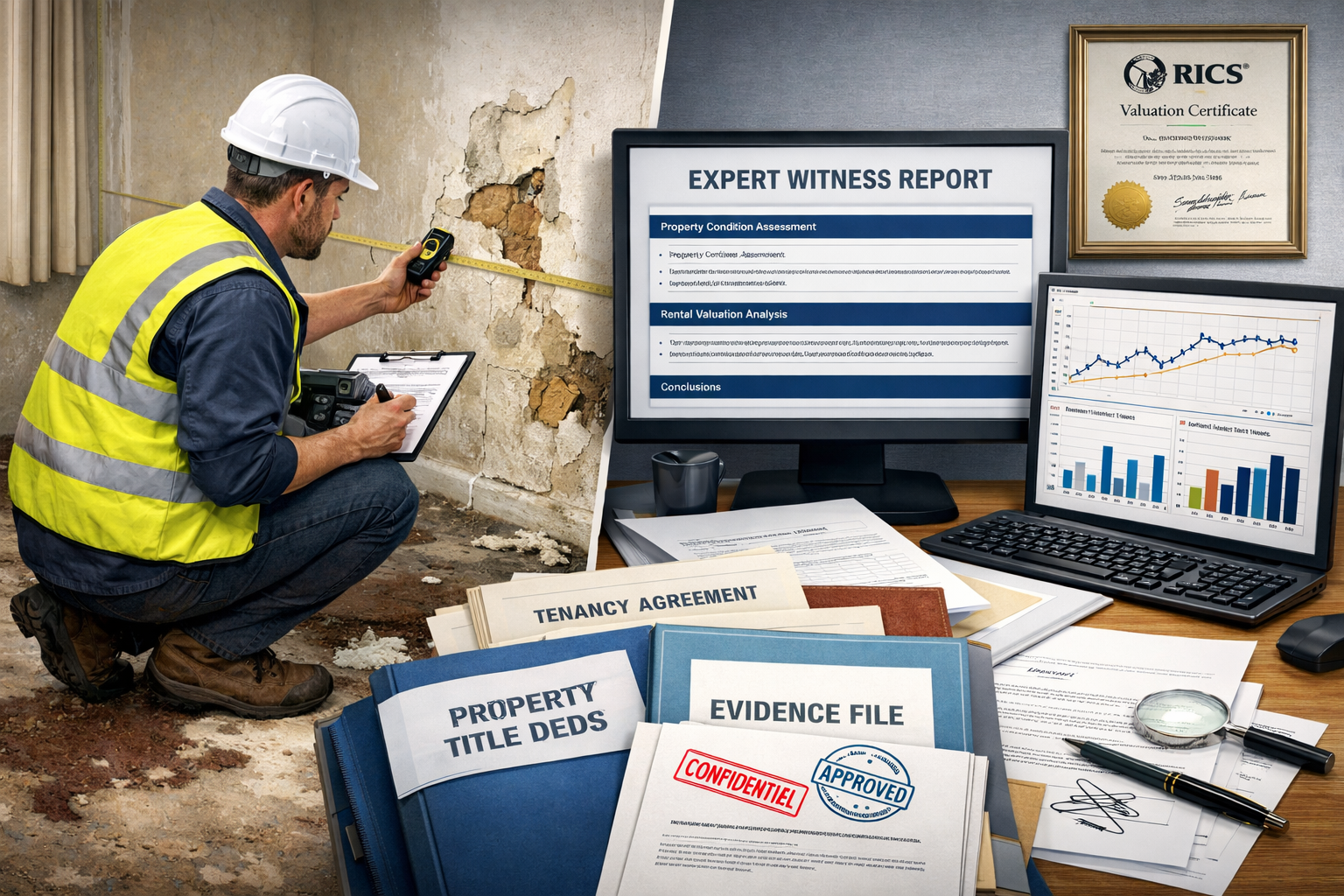
Documentation Standards for Tribunal Evidence
The credibility of expert witness testimony depends heavily on documentation quality. Tribunals expect comprehensive, well-organized evidence packages that support valuation conclusions.
Essential documentation components:
📄 Expert Witness Report Structure
- Executive summary with key conclusions
- Expert's qualifications and experience
- Instructions received and scope of work
- Property description and inspection findings
- Market analysis and comparable evidence
- Valuation methodology and reasoning
- Assumptions and limitations
- Declaration of truth and independence
📸 Photographic Evidence
- Comprehensive interior and exterior images
- Specific damage or defect documentation
- Comparable property photographs (where available)
- Time-stamped and properly labeled
📊 Market Data Schedules
- Comparable property details in tabular format
- Adjustment calculations clearly shown
- Source attribution for all data points
- Market trend graphs and statistics
🗂️ Supporting Documentation
- Tenancy agreements and rent records
- Previous inspection reports or inventories
- Repair quotes and invoices
- Correspondence relevant to the dispute
When preparing documentation for tribunal proceedings, expert witnesses should follow the guidance provided in professional resources on expert witness reports, ensuring all materials meet court standards for admissibility and credibility.
Preparing Expert Witness Reports for Section 8 Disputes
Report Structure and Content Requirements
A well-structured expert witness report provides tribunals with clear, accessible information supporting valuation conclusions. The report must balance technical rigor with readability, ensuring legal professionals and tribunal members can understand complex property valuation concepts.
Recommended report structure:
1. Introduction and Instructions 📋
- Expert's qualifications, experience, and relevant expertise
- Instructions received from instructing party
- Documents and information reviewed
- Inspection details (date, duration, access arrangements)
- Scope of work and limitations
2. Property Description 🏠
- Location and neighborhood characteristics
- Property type, age, and construction
- Accommodation schedule (rooms, sizes, layout)
- Condition assessment with grading system
- Services and amenities
- Tenure details and tenancy terms
3. Market Analysis 📊
- Local market overview and trends
- Comparable property analysis
- Rental value assessment methodology
- Adjustment rationale and calculations
- Market evidence supporting conclusions
4. Section 8 Grounds Assessment ⚖️
- Specific grounds alleged by landlord
- Evidence of impact on property value
- Damage quantification and repair costs
- Market perception and lettability effects
- Comparable cases (if relevant)
5. Valuation Conclusions 💷
- Current market rent opinion
- Property value assessment (if required)
- Impact of Section 8 grounds on value
- Range of values with confidence levels
- Summary of key findings
6. Appendices 📎
- Comparable property schedules
- Photographs and floor plans
- Repair cost estimates
- Market data sources
- Expert's CV and qualifications
Independence and Impartiality Requirements
The cornerstone of effective expert witness work is maintaining independence from the instructing party's interests. This principle is enshrined in CPR Part 35 and RICS professional standards [4].
Independence safeguards:
🎯 Duty to the Tribunal
Expert witnesses owe their primary duty to the tribunal, not the party paying their fees. This means providing honest opinions even when unfavorable to the instructing party's position.
💰 Fee Arrangements
Fees should be based on time and expertise, never contingent on case outcomes or valuation conclusions. Transparent fee agreements prevent conflicts of interest.
🤝 Disclosure Requirements
Experts must disclose any relationships, financial interests, or circumstances that might affect their impartiality. This includes previous work for either party or connections to the property.
📝 Statement of Truth
All expert reports must include a declaration that the expert understands their duty to the tribunal and has complied with that duty. False statements can result in professional sanctions and legal consequences.
🔍 Peer Review Standards
Expert witnesses should be prepared to defend their methodology and conclusions under cross-examination, demonstrating that their approach meets professional standards regardless of which party benefits.
Common Pitfalls and How to Avoid Them
Even experienced surveyors can encounter challenges when transitioning to expert witness work. Understanding common pitfalls helps maintain professional credibility and effectiveness.
Frequent mistakes to avoid:
❌ Advocacy Instead of Objectivity
Presenting the case for one party rather than providing balanced analysis undermines expert credibility. Focus on factual evidence and professional opinion, acknowledging limitations and uncertainties.
❌ Insufficient Comparable Evidence
Relying on too few comparables or using inappropriate matches weakens valuation conclusions. Gather comprehensive market data and explain selection criteria transparently.
❌ Poor Documentation
Inadequate photographs, missing measurements, or incomplete property descriptions create vulnerabilities during cross-examination. Thorough documentation during initial inspection prevents these issues.
❌ Overly Technical Language
Using jargon without explanation alienates tribunal members who may lack property expertise. Write clearly, define technical terms, and use plain language wherever possible.
❌ Failure to Update Knowledge
Property markets and regulations evolve rapidly. Expert witnesses must maintain current knowledge through CPD, particularly regarding Renters' Rights Act provisions and market conditions in 2026 [5].
❌ Inadequate Inspection Time
Rushing property inspections leads to missed defects or incomplete evidence. Allocate sufficient time for thorough examination and photography.
Cross-Examination and Tribunal Testimony
Preparing for Tribunal Appearances
Effective tribunal testimony requires preparation beyond report writing. Expert witnesses must anticipate questions, organize evidence for quick reference, and present complex information clearly under pressure.
Pre-hearing preparation checklist:
✅ Review all case materials including your report, opposing expert's report, and relevant documents
✅ Prepare summary notes highlighting key points and evidence locations
✅ Organize exhibits with clear indexing for quick reference during testimony
✅ Anticipate challenges to your methodology, comparables, or conclusions
✅ Practice explanations of technical concepts in accessible language
✅ Coordinate with legal team regarding likely questions and case strategy
✅ Visit tribunal venue if possible to familiarize yourself with the setting
Responding to Challenging Questions
Cross-examination tests both expert knowledge and composure. Effective responses maintain credibility while addressing legitimate challenges to opinions and methodology.
Best practices for cross-examination:
🎯 Listen carefully to the complete question before responding
📊 Refer to evidence in your report or exhibits when answering
⚖️ Acknowledge limitations honestly rather than overstating certainty
🔄 Request clarification if questions are unclear or compound
⏱️ Take time to consider complex questions before responding
📝 Correct errors promptly if you discover mistakes in your report
🤝 Remain professional regardless of question tone or implications
Working with Opposing Expert Witnesses
Many valuation disputes involve expert witnesses for both parties. Professional engagement with opposing experts can facilitate resolution and demonstrates credibility to tribunals.
Joint expert procedures:
When tribunals order joint expert meetings, participants should:
- Identify areas of agreement on facts, methodology, and uncontroversial issues
- Clarify disagreements with specific reference to evidence and reasoning
- Produce joint statements documenting consensus and remaining disputes
- Maintain professionalism even when opinions differ significantly
- Focus on assisting the tribunal rather than winning arguments
This collaborative approach often narrows issues for tribunal determination, saving time and costs while demonstrating expert objectivity.
Practical Case Studies and Applications
Case Study 1: Rent Arrears with Disputed Market Value
Scenario: Landlord seeks possession under Ground 8 (serious rent arrears) claiming monthly rent of £1,850. Tenant argues rent exceeds market value, justifying non-payment.
Expert Witness Approach:
- Inspected property: 3-bedroom semi-detached house, good condition, residential area
- Gathered 8 comparable lettings within 0.75 miles, let within 4 months
- Comparable range: £1,450-£1,650 for similar properties
- Identified landlord's rent 15-20% above market level
- Concluded market rent: £1,600-£1,650
Tribunal Outcome: Possession granted but with adjusted rent determination, allowing tenant opportunity to clear arrears at market rate.
Key Learning: Objective market evidence can reveal overcharging, affecting both possession decisions and ongoing tenancy terms.
Case Study 2: Property Damage Assessment
Scenario: Landlord seeks possession under Ground 13 (property deterioration) claiming £12,000 damage caused by tenant neglect.
Expert Witness Approach:
- Comprehensive property inspection with detailed photography
- Identified genuine damage: carpet staining, wall damage, garden neglect
- Distinguished tenant damage from pre-existing issues and fair wear
- Obtained contractor quotes for necessary repairs
- Assessed actual damage cost: £4,200
Tribunal Outcome: Possession granted with accurate damage assessment, preventing inflated claims while recognizing legitimate landlord losses.
Key Learning: Thorough inspection and independent cost assessment protects both parties from exaggerated or understated damage claims.
Case Study 3: Antisocial Behavior Impact on Value
Scenario: Landlord seeks possession under Ground 14 (antisocial behavior) claiming tenant's actions have reduced property value and future lettability.
Expert Witness Approach:
- Reviewed documented complaints and police reports
- Assessed physical property condition (minimal damage)
- Analyzed local market for comparable properties with behavioral issues
- Found no measurable impact on capital value
- Identified potential 2-4 week additional void period for reputation recovery
Tribunal Outcome: Possession granted based on behavior grounds, but no significant diminution in value awarded.
Key Learning: Behavioral grounds may justify possession without necessarily demonstrating quantifiable property value impact.
Future Trends and Emerging Issues
Regulatory Changes Affecting Expert Witness Work
The Renters' Rights Act 2026 continues to evolve through secondary legislation and tribunal precedents. Expert witnesses must monitor developments affecting valuation methodology and evidence requirements.
Anticipated developments:
📜 Standardized damage assessment protocols may emerge from tribunal decisions, creating clearer frameworks for distinguishing tenant damage from fair wear
🏘️Rent control provisions under consideration in some regions could fundamentally alter market evidence interpretation and valuation approaches
🔍 Enhanced disclosure requirements may mandate more comprehensive comparable evidence and adjustment transparency
⚖️ Precedent decisions from 2026 cases will establish valuation standards for specific Section 8 scenarios
Expert witnesses should engage with professional bodies, attend relevant CPD events, and monitor tribunal decisions to maintain current knowledge.
Technology and Data Analytics in Valuation Evidence
Technological advances are transforming how expert witnesses gather, analyze, and present market evidence in 2026.
Emerging tools and approaches:
🤖 AI-powered comparable analysis systems can identify relevant market transactions more efficiently, though professional judgment remains essential
📊 Real-time market data platforms provide current rental information, reducing reliance on historical data
📸 3D property documentation using smartphone technology creates comprehensive visual records for tribunal evidence
📈 Predictive analytics help assess market trends and forecast value impacts from various scenarios
💻 Digital evidence presentation enables interactive tribunal presentations with instant access to supporting data
While technology enhances efficiency and comprehensiveness, tribunals still require expert interpretation and professional judgment that automated systems cannot provide [5].
Selecting and Instructing Expert Witnesses
Qualifications and Experience Requirements
Parties instructing expert witnesses for Renters' Rights Act disputes should seek professionals with specific qualifications and relevant experience.
Essential credentials:
🎓 RICS Chartered Status (MRICS or FRICS) demonstrates professional competence and ethical standards
📋 Expert witness training specific to tribunal procedures and CPR Part 35 requirements
🏘️ Local market expertise in the relevant geographic area and property sector
⚖️ Tribunal experience with demonstrated track record in similar cases
📊 Valuation specialization appropriate to the dispute type (residential lettings, damage assessment, etc.)
When seeking qualified professionals, consider working with firms offering comprehensive RICS valuation services and established expert witness capabilities.
Instruction Letters and Scope Definition
Clear instructions ensure expert witnesses understand their role and deliver appropriate evidence for tribunal proceedings.
Effective instruction letters should include:
- Case background with relevant facts and dispute history
- Specific questions requiring expert opinion
- Documents provided for expert review
- Inspection arrangements and access details
- Reporting deadline and tribunal hearing date
- Fee agreement and payment terms
- CPR Part 35 compliance acknowledgment
Well-defined scope prevents misunderstandings and ensures expert evidence addresses tribunal's information needs effectively.
Conclusion
Expert Witness Roles in Renters' Rights Act Valuation Disputes: Section 8 Grounds and Market Evidence have become increasingly sophisticated as the 2026 regulatory framework matures. Qualified expert witnesses provide essential tribunal support by delivering impartial, evidence-based valuations that balance landlord and tenant interests while serving justice.
Success in this specialized field requires:
✅ Technical excellence in property valuation and market analysis
✅ Professional integrity maintaining independence and objectivity
✅ Comprehensive documentation supporting all opinions with robust evidence
✅ Clear communication making complex valuation concepts accessible to tribunals
✅ Current knowledge of evolving regulations and market conditions
Actionable Next Steps
For Property Professionals:
- Pursue specialized CPD in expert witness procedures and Renters' Rights Act provisions
- Develop systematic approaches to comparable analysis and documentation
- Build relationships with legal professionals handling housing disputes
- Maintain detailed records of local market transactions and rental trends
For Landlords and Tenants:
- Engage qualified expert witnesses early in dispute processes
- Provide comprehensive documentation to support expert analysis
- Understand that expert witnesses serve the tribunal, not individual parties
- Consider joint expert instructions to reduce costs and narrow disputed issues
For Legal Practitioners:
- Select experts with relevant qualifications, experience, and local knowledge
- Provide clear instructions defining scope and specific questions
- Allow adequate time for thorough property inspection and research
- Facilitate joint expert procedures where appropriate
The evolving landscape of rental property disputes demands expert witnesses who combine technical proficiency with professional integrity. By following RICS standards, maintaining independence, and providing comprehensive market evidence, expert witnesses ensure tribunals can make informed decisions that protect both property rights and tenant welfare under the Renters' Rights Act 2026.
Whether you're a property professional developing expert witness capabilities, a landlord navigating Section 8 proceedings, or a tenant defending against possession claims, understanding these principles ensures better outcomes through credible, evidence-based valuation testimony.
References
[1] Public Housing – https://www.expertinstitute.com/expert-witness/public-housing/
[2] Landlord Tenant S 526 – https://www.jurispro.com/category/landlord-tenant-s-526
[4] Surveyors Acting As Expert Witnesses Client Guide – https://www.rics.org/content/dam/ricsglobal/documents/standards/Surveyors_Acting_As_Expert_Witnesses_Client_Guide.pdf
[5] Expert Witness Roles In 2026 Lettings Market Disputes Navigating Tenant Demand Surge And Landlord Constraints – https://nottinghillsurveyors.com/blog/expert-witness-roles-in-2026-lettings-market-disputes-navigating-tenant-demand-surge-and-landlord-constraints