
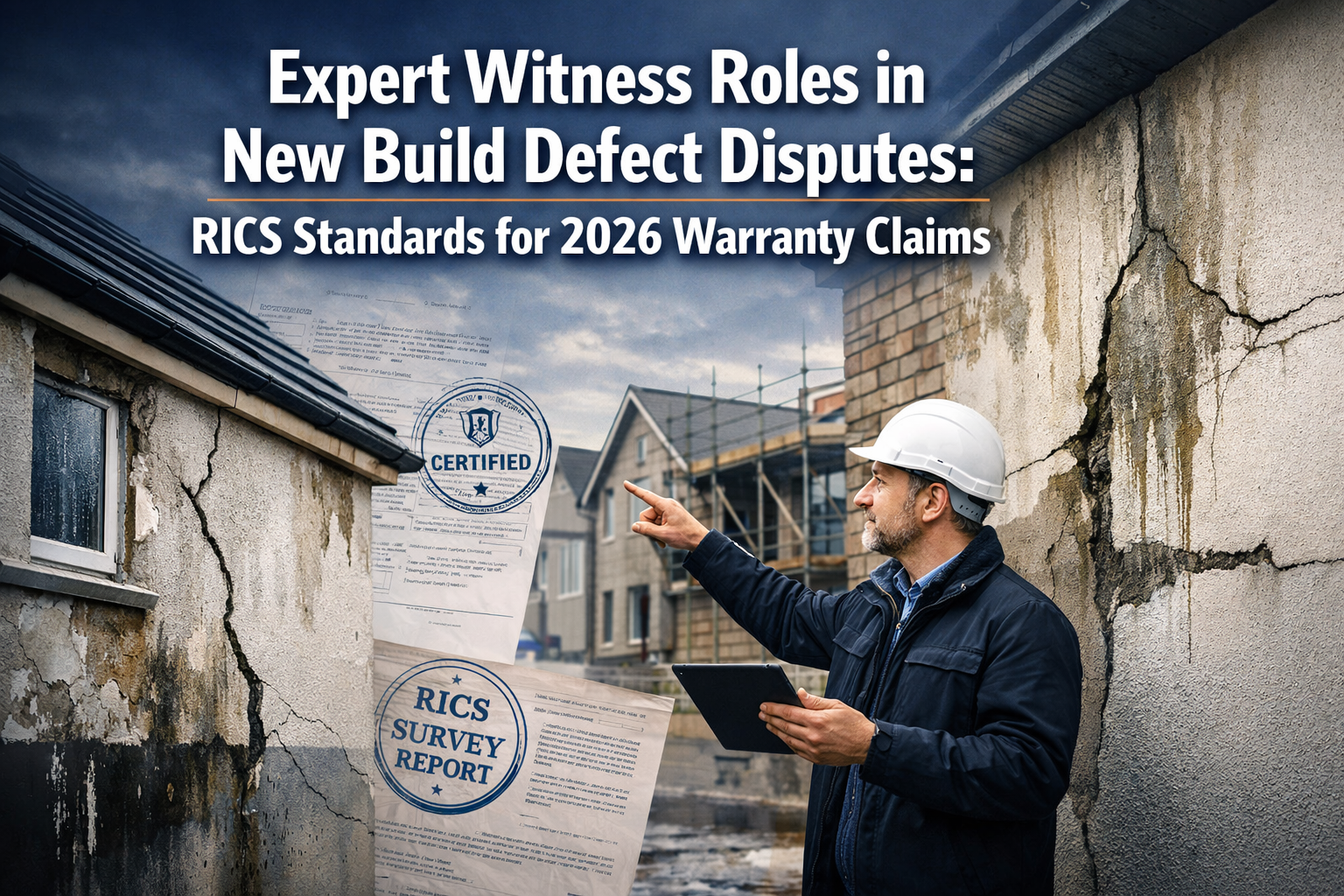
As the UK property market experiences a resurgence in new build sales throughout 2026, a troubling trend has emerged alongside the growth. Latent defects in newly constructed homes are increasingly leading to complex warranty claims and costly litigation. When construction quality falls short of expectations, homeowners find themselves navigating disputes that require specialized expertise. Enter the expert witness – a professional who bridges the gap between technical building knowledge and legal proceedings, providing crucial evidence on snagging issues and compliance failures that can make or break a warranty claim.
Understanding Expert Witness Roles in New Build Defect Disputes: RICS Standards for 2026 Warranty Claims has become essential for homeowners, developers, and legal professionals alike. With the Royal Institution of Chartered Surveyors (RICS) implementing strengthened quality initiatives and updated guidance, the landscape of expert testimony in construction disputes has evolved significantly.
Key Takeaways
- 🏗️ Expert witnesses provide independent, evidence-based testimony on construction defects, helping courts and arbitrators understand complex technical issues in new build warranty disputes
- 📋 RICS 2026 standards emphasize enhanced competence requirements, professional conduct obligations, and rigorous evidence quality protocols for expert witnesses
- ⚖️ Proper preparation is critical – expert witnesses must maintain independence, produce comprehensive reports, and follow strict procedural guidelines throughout the dispute resolution process
- 🔍 Early defect identification through professional surveys can prevent disputes from escalating to litigation, saving time and costs for all parties
- 💼 Warranty claims increasingly rely on expert evidence to establish causation, assess remediation costs, and determine liability in construction defect cases
Understanding Expert Witness Roles in New Build Defect Disputes
What Defines an Expert Witness in Construction Disputes?
An expert witness differs fundamentally from a standard witness in legal proceedings. While ordinary witnesses testify only about facts they've directly observed, expert witnesses provide specialized professional opinions based on their technical knowledge and experience. In new build defect disputes, these professionals – typically RICS-qualified chartered surveyors – analyze construction issues, assess compliance with building regulations, and offer informed conclusions about defect causation and remediation.
The expert witness serves a dual purpose: educating the court or tribunal about technical matters while providing an independent assessment of the evidence. This independence is paramount. Unlike advocates who represent one party's interests, expert witnesses owe their primary duty to the court or tribunal, not to the party instructing them.
Core Responsibilities in Warranty Claim Disputes
When new build properties develop defects covered under warranty schemes such as NHBC, Premier Guarantee, or LABC Warranty, expert witnesses fulfill several critical functions:
Technical Assessment and Investigation
- Conducting comprehensive specific defect surveys to identify and document construction failures
- Determining whether defects constitute breaches of building regulations or warranty terms
- Analyzing root causes of failures, distinguishing between design flaws, poor workmanship, and material defects
- Assessing the severity and progression of defects over time
Evidence Compilation and Documentation
- Producing detailed photographic and video evidence of defect conditions
- Creating technical drawings and diagrams illustrating defect locations and mechanisms
- Gathering supporting documentation including building plans, specifications, and compliance certificates
- Reviewing construction records, site inspection reports, and correspondence
Expert Opinion and Reporting
- Preparing comprehensive expert reports that meet court requirements and RICS standards
- Providing cost assessments for remedial works required to address defects
- Offering opinions on liability and causation based on technical analysis
- Responding to questions from legal representatives and the court
"The expert witness's role extends beyond simply identifying defects. They must provide the court with a clear understanding of why defects occurred, what standards were breached, and what remediation is necessary to restore the property to acceptable condition." – RICS Expert Witness Guidance
Types of Defects Requiring Expert Testimony
New build properties can suffer from a wide range of defects, each requiring specialized knowledge to assess properly:
| Defect Category | Common Issues | Expert Assessment Required |
|---|---|---|
| Structural | Foundation settlement, cracking, inadequate support | Structural engineer analysis, load calculations, stability assessment |
| Water Ingress | Roof leaks, penetrating damp, rising damp | Moisture surveys, drainage assessment, waterproofing evaluation |
| Building Envelope | Window installation failures, render defects, thermal bridging | Energy efficiency testing, installation compliance review |
| Services | Plumbing leaks, electrical faults, heating system failures | Specialist mechanical/electrical engineer assessment |
| Fire Safety | Inadequate compartmentation, missing fire barriers | Fire safety engineer evaluation, regulatory compliance review |
The complexity of modern construction means that disputes often require input from multiple expert disciplines, with a lead chartered surveyor coordinating the overall assessment.
RICS Standards for 2026 Warranty Claims: Enhanced Quality Requirements
Evolution of RICS Expert Witness Standards
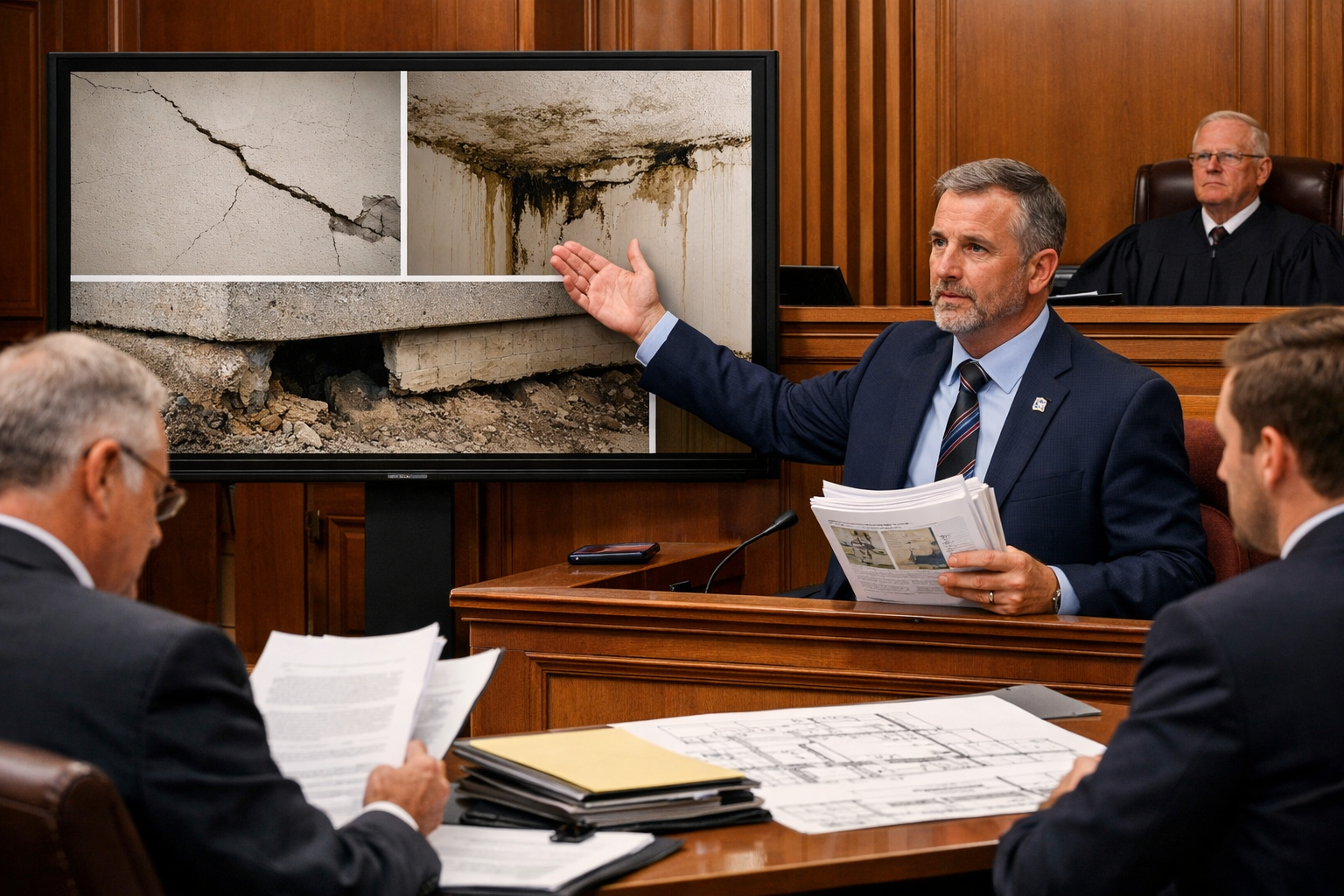
The Royal Institution of Chartered Surveyors has significantly strengthened its quality assurance framework for expert witnesses in 2026, responding to concerns about consistency and professionalism in construction dispute testimony. These enhanced standards reflect broader industry initiatives aimed at improving surveyor practice and maintaining public confidence in professional opinions [2].
Key Changes in 2026 RICS Guidance:
✅ Enhanced Competence Requirements – Expert witnesses must now demonstrate specific, documented experience in the relevant defect type and construction methodology
✅ Mandatory Continuing Professional Development (CPD) – Minimum 20 hours annually focused on expert witness skills, legal procedures, and technical updates
✅ Quality Assurance Protocols – Firms providing expert witness services must implement peer review processes for complex cases
✅ Transparency Obligations – Clearer disclosure requirements regarding potential conflicts of interest and previous relationships with instructing parties
✅ Report Standardization – Updated templates and minimum content requirements ensuring consistency across expert reports
Core RICS Standards for Expert Witnesses in 2026
The RICS Practice Statement on expert witness work establishes fundamental principles that govern all aspects of expert testimony:
1. Independence and Impartiality
Expert witnesses must maintain complete independence from the party instructing them. This means:
- Providing honest, objective opinions regardless of whether they favor the instructing party
- Resisting pressure to modify conclusions to support a particular legal position
- Disclosing any circumstances that might compromise perceived independence
- Refusing instructions where genuine conflicts of interest exist
2. Competence and Expertise
Experts must only accept instructions within their genuine area of competence:
- Holding relevant RICS qualifications (typically MRICS or FRICS)
- Demonstrating substantial experience in the specific construction type and defect category
- Maintaining current knowledge through regular CPD and professional development
- Recognizing the limits of their expertise and recommending additional specialists when necessary
3. Evidence-Based Opinions
All expert conclusions must be grounded in verifiable evidence:
- Conducting thorough site inspections and investigations
- Basing opinions on recognized technical standards and building regulations
- Clearly distinguishing between established facts and professional opinion
- Acknowledging uncertainty and alternative interpretations where appropriate
4. Professional Conduct and Ethics
Expert witnesses must adhere to the highest professional standards:
- Following RICS Rules of Conduct throughout the engagement
- Maintaining confidentiality of privileged information
- Providing clear, understandable explanations of technical matters
- Meeting deadlines and procedural requirements set by the court or tribunal
Specific Requirements for New Build Warranty Claims
When acting as expert witnesses in warranty claim disputes, RICS members must address specific considerations unique to new build properties:
Understanding Warranty Scheme Requirements
Different warranty providers have varying technical standards and claim procedures. Expert witnesses must be thoroughly familiar with:
- The specific warranty scheme covering the property (NHBC, Premier Guarantee, LABC, etc.)
- Technical requirements and performance standards set by the warranty provider
- Claim notification procedures and time limits
- The warranty provider's defect classification system
Compliance with Building Regulations
New builds must meet current Building Regulations at the time of construction. Expert witnesses must:
- Identify which version of Building Regulations applied during construction
- Assess compliance with Approved Documents covering structure, fire safety, energy efficiency, and other aspects
- Evaluate whether Building Control approval processes were properly followed
- Consider whether defects constitute regulatory breaches requiring enforcement action
Assessing Developer and Contractor Obligations
Expert opinions often address whether developers and contractors fulfilled their contractual and legal duties:
- Compliance with building contract specifications and drawings
- Adherence to manufacturer installation instructions for materials and components
- Meeting reasonable standards of workmanship for the trade
- Fulfilling duties under the Defective Premises Act 1972
The enhanced RICS standards for 2026 reflect a recognition that expert witness work in construction disputes requires not only technical competence but also a thorough understanding of legal frameworks, procedural requirements, and professional obligations that extend beyond typical surveying practice [2].
Expert Witness Preparation Strategies for Defect Disputes
Initial Assessment and Instruction Acceptance
The expert witness engagement begins long before any court appearance. Proper preparation starts with the initial instruction and continues throughout the dispute resolution process.
Evaluating the Instruction
Before accepting an expert witness appointment, RICS professionals must carefully assess:
- Competence Match – Does the case fall squarely within your area of expertise? New build defects span numerous specializations, and accepting instructions outside your competence violates RICS standards
- Conflict Check – Have you previously worked for any party involved? Do you have any financial or personal relationships that could compromise independence?
- Resource Availability – Can you dedicate sufficient time to conduct a thorough investigation and meet court deadlines?
- Scope Clarity – Are the terms of reference clear and appropriate? Does the instructing party understand your duty to the court?
Letter of Instruction Requirements
A proper letter of instruction should specify:
- The property address and description
- Nature of the defects alleged
- Specific questions the expert should address
- Relevant background documentation provided
- Deadlines for report submission
- Fee arrangements and payment terms
Conducting Comprehensive Site Investigations
The quality of expert evidence depends fundamentally on thorough site investigation. This goes far beyond a standard building survey and requires a forensic approach to defect analysis.
Pre-Inspection Preparation
Effective site investigations begin with desk-based research:
- Reviewing building plans, specifications, and technical drawings
- Studying building control approval documents and completion certificates
- Analyzing warranty documentation and claim correspondence
- Examining previous survey reports and inspection records
- Researching relevant technical standards and guidance documents
On-Site Investigation Techniques
Modern defect investigation employs various diagnostic tools and methods:
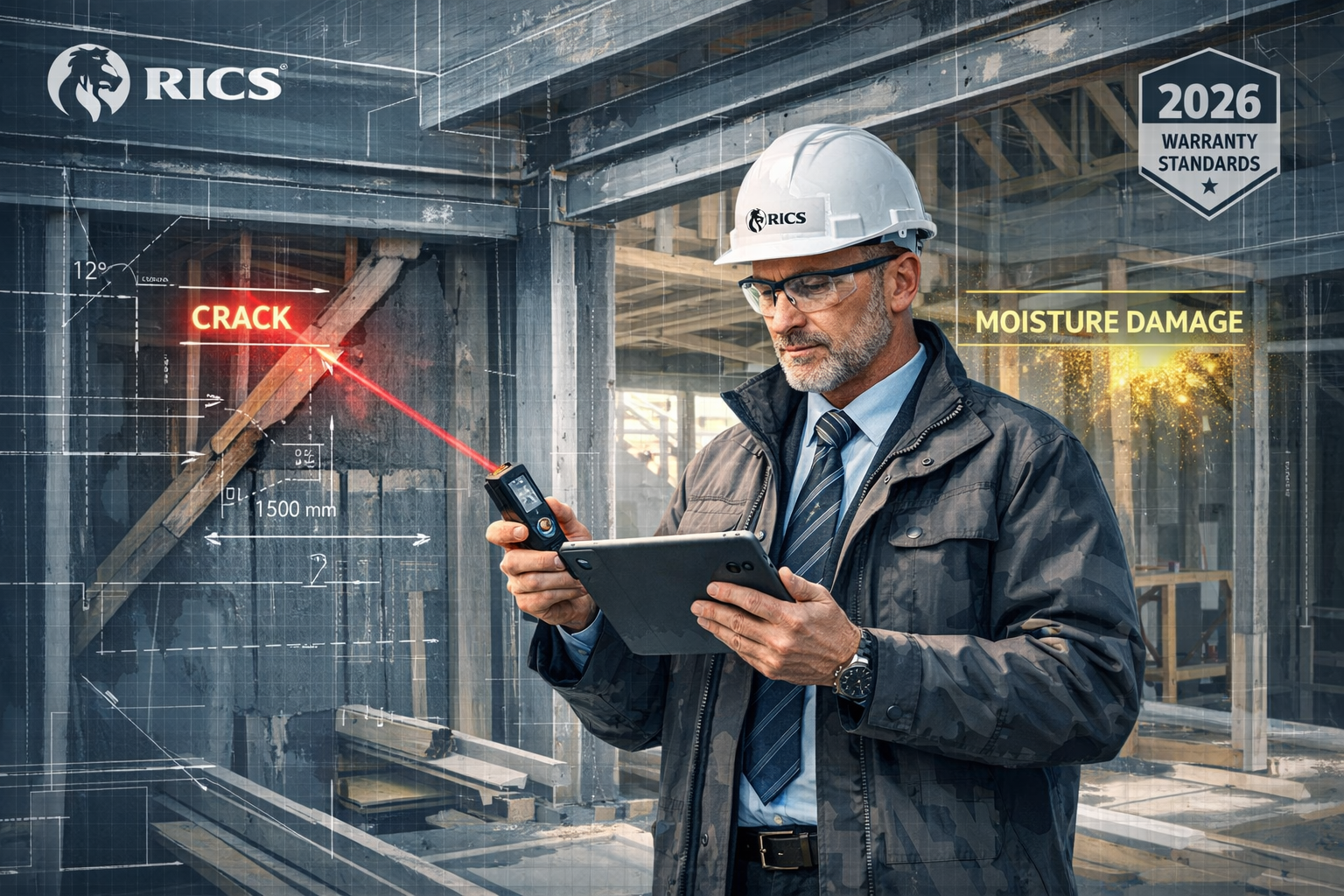
🔍 Visual Inspection – Systematic examination of all accessible areas, documenting defect locations, extent, and severity
📸 Photographic Documentation – Comprehensive photography with scale references, clearly labeled and organized
📏 Dimensional Surveys – Precise measurements of defect dimensions, deflections, and out-of-tolerance conditions
🌡️ Environmental Monitoring – Moisture meters, thermal imaging cameras, and humidity measurements for damp-related defects
🔬 Materials Testing – Sample collection for laboratory analysis when material failure is suspected
⚙️ Opening Up Works – Carefully exposing concealed construction elements to assess hidden defects (with appropriate permissions)
Documentation Standards
Every aspect of the site investigation must be meticulously documented:
- Detailed written notes with timestamps and weather conditions
- Annotated site plans showing defect locations
- Photographic logs with clear labeling and orientation information
- Measurement records with equipment calibration details
- Witness statements from site personnel when relevant
Producing Court-Compliant Expert Reports
The expert report is the cornerstone of expert witness testimony. RICS standards and court rules establish strict requirements for report content and format.
Essential Report Components
A compliant expert witness report must include:
1. Introduction and Qualifications
- Expert's name, professional qualifications, and relevant experience
- Statement of understanding of expert witness duties
- Confirmation of independence and absence of conflicts
2. Instructions and Scope
- Summary of instructions received
- Questions to be addressed
- Limitations on the scope of investigation
3. Background and Context
- Property description and construction details
- History of defect emergence and previous remedial attempts
- Warranty scheme coverage and relevant contractual arrangements
4. Methodology
- Site inspection dates and conditions
- Investigation techniques employed
- Reference standards and technical guidance consulted
5. Findings and Analysis
- Detailed description of defects identified
- Technical analysis of defect causation
- Assessment of compliance with building regulations and standards
- Evaluation of whether defects constitute warranty breaches
6. Opinions and Conclusions
- Clear statement of expert opinions on key issues
- Explanation of reasoning supporting conclusions
- Acknowledgment of any uncertainties or alternative interpretations
7. Remediation Recommendations
- Specification of works required to address defects
- Cost estimates for remedial works (with supporting quotations when available)
- Timeframes for completion of repairs
8. Declaration and Statement of Truth
- Formal declaration of compliance with expert witness duties
- Statement that opinions are genuinely held
- Confirmation that report includes all relevant matters
Responding to Questions and Challenges
Expert witnesses must be prepared to defend their opinions under scrutiny:
Written Questions
After report exchange, opposing parties may submit written questions seeking clarification or challenging conclusions. Responses must:
- Address each question directly and comprehensively
- Maintain professional tone even when questions are adversarial
- Acknowledge valid points raised while defending sound conclusions
- Identify questions that fall outside the expert's remit
Joint Expert Meetings
Courts often direct opposing experts to meet and identify areas of agreement and disagreement:
- Prepare thoroughly by reviewing the opposing expert's report in detail
- Approach discussions professionally and constructively
- Be willing to concede points where the opposing expert makes valid arguments
- Clearly articulate reasons for maintained disagreements
- Produce a joint statement documenting outcomes
Court Testimony Preparation
If the dispute proceeds to trial, expert witnesses must prepare for cross-examination:
- Review all reports, correspondence, and documentation thoroughly
- Anticipate challenging questions and prepare clear responses
- Practice explaining technical concepts in accessible language
- Understand courtroom procedures and etiquette
- Maintain composure and professionalism under pressure
The Role of Early Defect Identification
One of the most effective strategies for managing new build defect disputes is early identification through professional surveys. The 2026 homebuying landscape increasingly emphasizes earlier building inspections, allowing defects to be identified before disputes escalate [1].
Benefits of Early Professional Assessment
When homeowners commission specific defect reports shortly after moving into new builds:
✅ Defects are documented while still within warranty periods
✅ Evidence is preserved before conditions deteriorate
✅ Remediation costs remain lower with early intervention
✅ Negotiated settlements become more achievable
✅ Litigation can often be avoided entirely
Pre-Litigation Protocols
Before commencing formal legal proceedings, parties should:
- Exchange technical information and expert opinions
- Attempt negotiated resolution through alternative dispute resolution
- Consider mediation or adjudication as cost-effective alternatives to litigation
- Comply with relevant pre-action protocols to avoid court criticism
The enhanced RICS standards for 2026 recognize that expert witnesses serve not only to resolve disputes but also to prevent unnecessary litigation through early, accurate defect assessment and clear communication of technical issues [2].
Navigating the Warranty Claim Process with Expert Evidence
Major Warranty Schemes and Their Requirements
The UK new build market operates under several major warranty schemes, each with distinct technical standards and claim procedures:
NHBC (National House Building Council)
- Covers approximately 80% of new builds in the UK
- 10-year Buildmark warranty with varying coverage levels
- Years 1-2: Builder responsible for defects
- Years 3-10: NHBC covers major structural defects
- Specific technical requirements in NHBC Standards
Premier Guarantee
- Growing market share in new build warranty provision
- Similar 10-year structure with builder and insurer coverage periods
- Technical Manual sets construction standards
- Independent dispute resolution service available
LABC Warranty
- Provided by Local Authority Building Control
- Combines building control approval with warranty protection
- Strong focus on regulatory compliance verification
- 10-year structural warranty coverage
ZURICH Municipal
- Structural warranty backed by major insurer
- Flexible coverage options for different project types
- Technical standards aligned with building regulations
- Professional claims handling process
Common Defect Categories in Warranty Claims
Expert witnesses encounter recurring defect patterns in new build properties:
Structural Movement and Cracking
- Foundation settlement due to inadequate ground investigation
- Subsidence related to tree roots or soil conditions
- Thermal movement cracking from poor detailing
- Lintel failures and inadequate structural support
Water Penetration Issues
- Roof covering failures and flashing defects
- Window and door installation problems
- Cavity wall tie corrosion and cavity bridging
- Inadequate damp-proof course installation
Building Envelope Performance
- Thermal bridging and cold bridging issues
- Air leakage exceeding regulatory standards
- Condensation and mold growth from poor ventilation
- Render and external finish failures
Services and Systems
- Heating system design and installation defects
- Plumbing leaks and drainage problems
- Electrical installation non-compliance
- Ventilation system inadequacy
Cost Assessment and Remediation Planning
A critical aspect of expert witness work involves quantifying the financial implications of defects:
Remediation Cost Components
Expert witnesses must consider all elements of remediation costs:
💰 Direct Repair Costs
- Materials and labor for defect rectification
- Scaffolding and access equipment
- Specialist contractor fees
- Testing and certification post-repair
💰 Consequential Costs
- Alternative accommodation during major works
- Damage to fixtures, fittings, and decorations
- Professional fees for project management and supervision
- Temporary protection and security measures
💰 Diminution in Value
- Reduction in property value due to defects
- Impact on marketability and saleability
- Stigma effects from known defect history
Obtaining Supporting Evidence
Cost opinions must be substantiated:
- Obtaining quotations from qualified contractors
- Using industry-standard pricing resources (BCIS, Spon's)
- Consulting specialist subcontractors for complex elements
- Applying appropriate contingency allowances
Alternative Dispute Resolution in Warranty Claims
Not all defect disputes require full litigation. Expert witnesses often participate in alternative resolution processes:
Mediation
- Facilitated negotiation with neutral mediator
- Expert witnesses may attend to answer technical questions
- Focus on finding mutually acceptable solutions
- Significantly faster and less expensive than litigation
Adjudication
- Binding decision by appointed adjudicator
- Common in construction contracts under Housing Grants, Construction and Regeneration Act
- Expert evidence submitted in written form
- Decision typically within 28 days
Expert Determination
- Technical disputes resolved by agreed expert
- Expert acts as decision-maker rather than witness
- Particularly suitable for valuation and technical disagreements
- Contractually binding outcome
Arbitration
- Private court-like proceedings with appointed arbitrator
- Expert witnesses give evidence similar to court proceedings
- Final and binding award with limited appeal rights
- Confidential process unlike public court hearings
Conclusion
The landscape of Expert Witness Roles in New Build Defect Disputes: RICS Standards for 2026 Warranty Claims reflects an evolving construction industry where quality assurance, professional accountability, and technical expertise intersect with legal processes. As new build sales continue to grow in 2026, the importance of qualified, independent expert witnesses in resolving construction defect disputes has never been greater.
The enhanced RICS standards implemented in 2026 represent a significant step forward in ensuring that expert witness testimony meets the highest professional standards. These requirements – emphasizing competence, independence, evidence-based opinions, and rigorous documentation – protect all parties involved in warranty claim disputes while maintaining public confidence in the surveying profession.
For homeowners facing defect issues in new builds, understanding the expert witness process is crucial. Early identification of problems through professional building surveys and defect inspections can prevent minor issues from escalating into major disputes. When disputes do arise, engaging properly qualified RICS expert witnesses who understand both the technical and procedural requirements ensures that claims are supported by credible, defensible evidence.
Actionable Next Steps
For Homeowners:
- 📋 Commission a professional defect survey within the first two years of ownership to identify issues while builder liability applies
- 📸 Document all defects thoroughly with photographs, measurements, and written descriptions
- 🔍 Review your warranty documentation to understand coverage periods and claim procedures
- 👨💼 Engage a RICS-qualified surveyor with expert witness experience early in the dispute process
- ⚖️ Consider alternative dispute resolution before committing to expensive litigation
For Property Professionals:
- 📚 Ensure CPD includes expert witness training and updates on RICS standards
- 🎯 Develop specialized expertise in specific defect types and construction methodologies
- 📝 Implement quality assurance processes for expert report preparation
- 🤝 Build relationships with legal professionals who handle construction disputes
- 💼 Maintain comprehensive professional indemnity insurance appropriate for expert witness work
For Developers and Contractors:
- 🏗️ Implement robust quality control during construction to minimize defect occurrence
- 📋 Maintain comprehensive construction records and documentation
- 🔄 Respond promptly and professionally to defect notifications
- 👥 Engage expert witnesses early when disputes arise to assess liability accurately
- 💡 Consider early settlement when expert evidence indicates clear liability
The role of expert witnesses in new build defect disputes will continue to evolve as construction technology advances and regulatory frameworks develop. By adhering to RICS standards, maintaining technical competence, and approaching each case with independence and professionalism, expert witnesses serve a vital function in ensuring that warranty claims are resolved fairly, efficiently, and based on sound technical evidence.
Whether you're a homeowner navigating a defect claim, a professional providing expert services, or a developer managing warranty obligations, understanding the framework established by RICS for 2026 provides the foundation for effective dispute resolution and quality outcomes in the new build sector.
References
[1] Building Surveys Under New Homebuying Rules Earlier Inspections And Risk Mitigation In 2026 – https://nottinghillsurveyors.com/blog/building-surveys-under-new-homebuying-rules-earlier-inspections-and-risk-mitigation-in-2026
[2] Building Survey Standards Evolution How Rics Quality Strengthening Initiatives Impact Surveyor Practice In 2026 – https://nottinghillsurveyors.com/blog/building-survey-standards-evolution-how-rics-quality-strengthening-initiatives-impact-surveyor-practice-in-2026