
{"cover":"Professional landscape format (1536x1024) hero image featuring bold text overlay 'Expert Witness Roles in 2026 Council Tax Surcharge Disputes' in extra large 72pt white sans-serif font with dark gradient shadow, positioned in upper third. Background shows prestigious high-value UK property facade with Georgian architecture, RICS chartered surveyor in business attire reviewing valuation documents on tablet, Valuation Office Agency letterhead visible, legal tribunal setting elements. Color scheme: deep navy blue, gold accents, crisp white text. Magazine cover quality, editorial style with professional gravitas, split composition showing both property assessment and legal documentation aspects.","content":["Detailed landscape format (1536x1024) illustration showing RICS Red Book valuation process for high-value properties, featuring professional surveyor conducting property inspection with measuring equipment, clipboard with valuation checklist visible, luxury property interior with period features, comparative market analysis charts on digital tablet screen, £2 million threshold marker prominently displayed, architectural details being documented, professional certification badges, clean modern infographic style with blue and gold color scheme, documentary photography aesthetic","Comprehensive landscape format (1536x1024) courtroom tribunal scene showing expert witness testimony setup, professional valuation surveyor presenting evidence at Valuation Tribunal, large display screen showing property comparables and AVMs (Automated Valuation Models), judge's bench, legal representatives reviewing documentation, detailed valuation report with graphs and market data visible, formal hearing environment, professional lighting, documentary style photography with emphasis on evidence presentation, navy blue and burgundy color palette, authoritative legal setting","Detailed landscape format (1536x1024) technical diagram showing property valuation methodology for council tax surcharge disputes, split-screen composition featuring luxury property exterior worth over £2 million, detailed valuation breakdown with comparable properties analysis, VOA assessment criteria checklist, market evidence data points, RICS professional standards documentation, timeline showing five-year revaluation cycles, infographic elements with percentage calculations, clean professional design with charts and annotations, educational illustration style with teal and charcoal color scheme"]}

When the UK government introduced the High-Value Council Tax Surcharge targeting properties valued above £2 million, it created an entirely new battleground for property owners and valuation professionals. As 2026 unfolds, chartered surveyors and expert witnesses find themselves at the forefront of increasingly complex disputes where accurate valuation evidence can mean the difference between significant tax liabilities and successful appeals. Understanding Expert Witness Roles in 2026 Council Tax Surcharge Disputes: Valuation Evidence for High-Value Property Owners has become essential for professionals navigating this challenging landscape.
The stakes are substantial. Properties hovering near the £2 million threshold face particular scrutiny, as even minor valuation differences can trigger or eliminate surcharge obligations. For property owners facing potential additional tax burdens, and for the surveyors tasked with defending their assessments before tribunals, the need for defensible, methodologically sound valuation reports has never been greater.
Key Takeaways
- 📊 Properties valued close to the £2 million threshold require exceptionally rigorous valuation evidence to withstand Valuation Office Agency (VOA) challenges and tribunal scrutiny
- ⚖️ Expert witnesses must adhere strictly to RICS Red Book standards while preparing reports specifically designed for legal proceedings and tribunal challenges
- 🔄 Five-year revaluation cycles create timing mismatches in fast-moving markets, generating dispute opportunities where sudden price movements aren't reflected in tax liabilities[1]
- 🤖 Automated Valuation Models (AVMs) now serve as supplementary evidence in disputes, with more frequent updates supporting transparency and providing additional corroboration[1]
- 📋 Defensible expert reports combine multiple valuation methodologies, market evidence, and comprehensive comparable analysis to establish credible value ranges
Understanding the 2026 Council Tax Surcharge Landscape
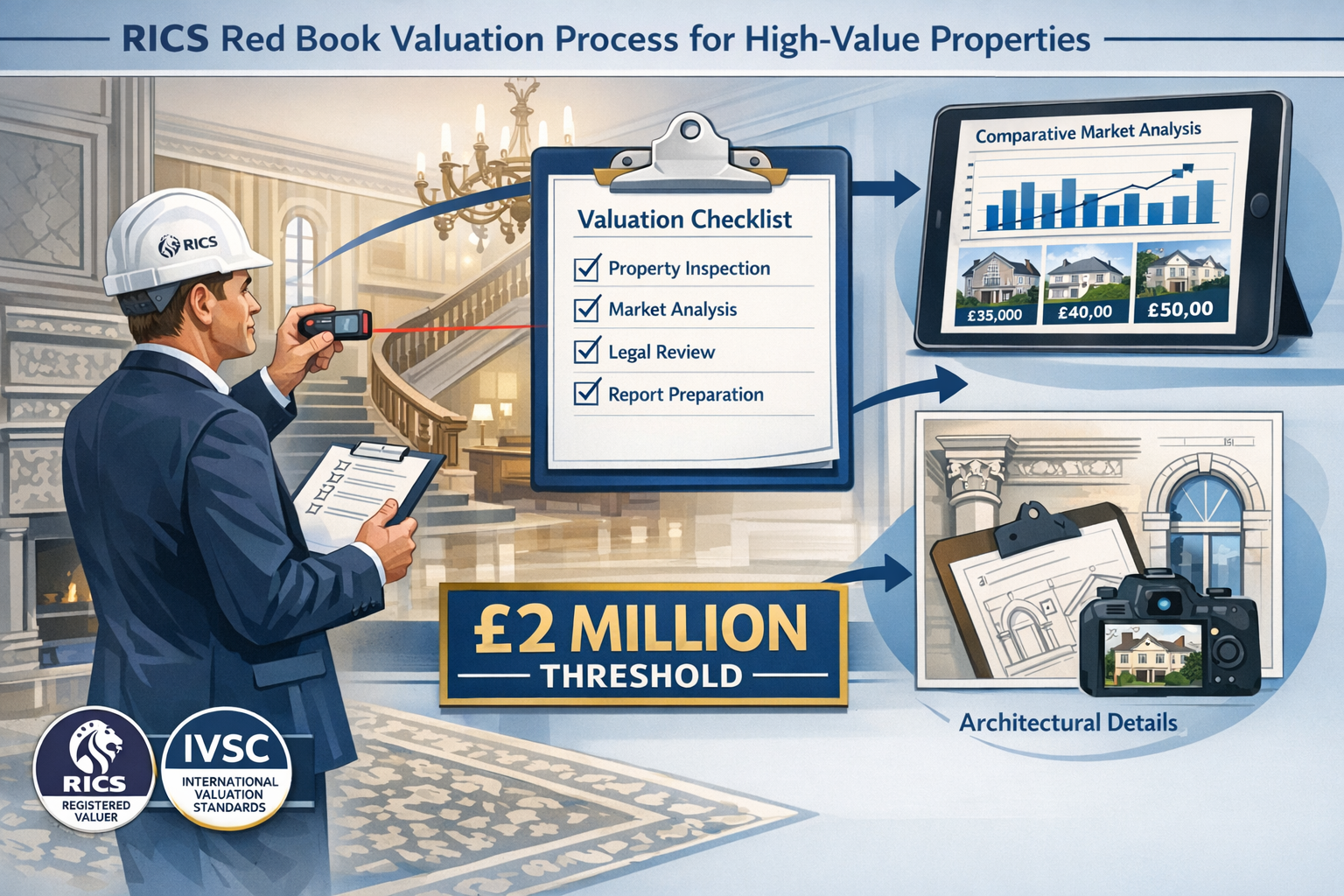
The High-Value Council Tax Surcharge represents a fundamental shift in how premium properties are taxed in the United Kingdom. Introduced as part of broader tax reforms, this surcharge applies to residential properties valued above £2 million, creating an additional tax burden beyond standard council tax rates.
The £2 Million Threshold Challenge
Properties valued near the crucial £2 million mark face the most contentious disputes. The difference between a property assessed at £1.95 million versus £2.05 million carries significant financial implications for owners. Professional advisors are now routinely preparing clients "for VOA assessments and potential challenges" as an integral part of the valuation process[1].
This threshold effect creates several complications:
- Valuation precision requirements increase dramatically near the boundary
- Market volatility can push properties across the threshold between valuation dates
- Property improvements may inadvertently trigger surcharge liability
- Heterogeneous property characteristics make direct comparisons challenging
For chartered surveyors and valuers, this means every assessment requires exceptional diligence and comprehensive documentation.
Five-Year Revaluation Cycles and Market Timing Issues
One of the most significant challenges in Expert Witness Roles in 2026 Council Tax Surcharge Disputes: Valuation Evidence for High-Value Property Owners stems from the five-year revaluation cycle. This timing creates inherent mismatches in rapidly shifting property markets.
As professional guidance notes, these cycles mean that "sudden price rises or falls won't be reflected in tax liabilities until the next revaluation," which frequently becomes a source of dispute[1]. In practice, this creates scenarios where:
| Market Condition | Dispute Scenario | Expert Witness Challenge |
|---|---|---|
| Rising Market | Property valued below £2M at last valuation, now exceeds threshold | Demonstrating when value crossed threshold |
| Falling Market | Property valued above £2M, now below threshold | Proving sustained value decrease |
| Volatile Market | Value fluctuates around threshold | Establishing appropriate valuation date methodology |
| Stagnant Market | Minimal change but disputed original assessment | Challenging historical VOA methodology |
Expert witnesses must navigate these timing complexities while maintaining adherence to professional standards and providing clear, defensible opinions.
The Critical Role of RICS-Certified Expert Witnesses
When disputes escalate to tribunal hearings, the quality and credibility of expert witness testimony becomes paramount. RICS-certified surveyors bring professional authority and methodological rigor that can significantly influence tribunal outcomes.
RICS Red Book Valuation Standards
The RICS Red Book valuation provides the foundational framework for defensible expert evidence. These standards ensure:
✅ Consistency in valuation methodology across different properties and markets
✅ Transparency in assumptions, limitations, and data sources
✅ Professional independence free from client pressure or bias
✅ Comprehensive documentation supporting every valuation conclusion
For tribunal purposes, Red Book compliance isn't merely recommended—it's essential. Tribunals expect expert witnesses to demonstrate that valuations follow recognized professional standards and can withstand cross-examination.
Preparing Defensible Valuation Reports for Tribunal Challenges
Creating reports suitable for Expert Witness Roles in 2026 Council Tax Surcharge Disputes: Valuation Evidence for High-Value Property Owners requires specific considerations beyond standard valuation assignments:
1. Multiple Valuation Approaches
Expert witnesses should employ several methodologies to establish credible value ranges:
- Comparable sales analysis using recent transactions of similar properties
- Depreciated replacement cost for unique or specialized properties
- Income capitalization where applicable for investment properties
- Automated Valuation Model (AVM) cross-reference as supporting evidence
Modern practice increasingly incorporates AVMs, as "automated valuation tools now update much more frequently, which could support transparency, dispute resolution or provide additional evidence where needed"[1].
2. Comprehensive Market Evidence
Professionals should leverage "AVM insights and market evidence to support valuation reviews, especially in heterogeneous or rapidly shifting markets"[1]. This includes:
- 📈 Transaction data from Land Registry and private databases
- 📊 Market trend analysis showing price movements over relevant periods
- 🏘️ Neighborhood-specific factors affecting value
- 📉 Economic indicators influencing high-value property markets
3. Detailed Property Analysis
Understanding factors of valuation specific to high-value properties ensures comprehensive assessments:
- Architectural significance and period features
- Location premiums and neighborhood desirability
- Condition, specification, and recent improvements
- Plot size, gardens, and ancillary buildings
- Planning permissions and development potential
4. Clear Documentation of Assumptions and Limitations
Tribunal-ready reports must explicitly state:
- Valuation date and market conditions at that time
- Inspection extent and limitations
- Data sources and their reliability
- Assumptions regarding property condition or legal status
- Departure from standard assumptions, if any
Expert Witness Duties and Professional Conduct
Beyond technical valuation competence, expert witnesses bear specific duties to the tribunal that supersede their obligations to instructing clients:
"The expert witness's primary duty is to the tribunal, not to the party instructing them. This fundamental principle ensures that evidence presented is objective, balanced, and serves the interests of justice."
This means expert witnesses must:
- 🎯 Provide objective opinions regardless of client preferences
- 📝 Disclose weaknesses in their own analysis or supporting evidence
- 🔍 Consider alternative interpretations of valuation data
- ⚖️ Acknowledge limitations in available evidence or methodology
- 🤝 Engage constructively with opposing expert witnesses
Professional conduct requirements also mandate that experts remain within their areas of genuine expertise and clearly distinguish between established facts, professional opinion, and speculation.
Automated Valuation Models as Supporting Evidence
The evolution of technology has transformed how Expert Witness Roles in 2026 Council Tax Surcharge Disputes: Valuation Evidence for High-Value Property Owners approach evidence gathering. AVMs have matured significantly and now play a supporting role in tribunal proceedings.
Strengths and Limitations of AVMs in Dispute Resolution
Strengths:
- ⏱️ Frequent updates providing near-real-time market intelligence
- 📊 Data consistency eliminating human selection bias
- 🔄 Reproducibility allowing verification of results
- 💰 Cost-effectiveness for preliminary assessments
Limitations:
- 🏛️ Difficulty with unique properties lacking comparable sales
- 📍 Location nuances not fully captured by algorithms
- 🔨 Condition variations inadequately reflected
- 📉 Market volatility periods reducing reliability
Expert witnesses should position AVMs as corroborative evidence rather than primary valuation tools. When AVM results align with traditional valuation conclusions, they strengthen the overall case. When discrepancies exist, expert reports should address and explain the differences.
Integrating Traditional and Automated Valuation Evidence
Best practice in 2026 involves a hybrid approach combining human expertise with technological tools:
- Conduct traditional RICS-compliant valuation as the primary methodology
- Run multiple AVMs from different providers to identify consensus ranges
- Analyze discrepancies between traditional and automated approaches
- Document the reconciliation process in the expert report
- Present integrated conclusions supported by both methodologies
This approach demonstrates thoroughness and addresses potential tribunal questions about why certain evidence was considered or excluded.
Case Studies: Post-Budget Appeals and Valuation Challenges
Examining real-world scenarios illuminates how Expert Witness Roles in 2026 Council Tax Surcharge Disputes: Valuation Evidence for High-Value Property Owners function in practice.
Case Study 1: Georgian Townhouse Near Threshold
Property Profile:
- Four-bedroom Georgian townhouse in conservation area
- VOA assessment: £2.15 million
- Owner's valuation: £1.92 million
- Dispute amount: £230,000 difference
Expert Witness Approach:
The appointed RICS chartered surveyor conducted comprehensive analysis:
- Identified six comparable properties sold within 12 months in the same conservation area
- Adjusted comparables for differences in size, condition, and specific features
- Commissioned structural assessment revealing significant deferred maintenance
- Obtained three independent AVM valuations averaging £1.96 million
- Prepared detailed valuation report with photographic evidence
Tribunal Outcome:
The tribunal accepted the expert's valuation of £1.95 million, placing the property below the surcharge threshold. Key factors in the decision:
✅ Comprehensive comparable analysis with transparent adjustments
✅ Physical evidence of condition issues affecting value
✅ AVM corroboration of traditional valuation conclusions
✅ Expert's clear explanation of methodology under cross-examination
Case Study 2: Modern Luxury Apartment with Rapid Market Movement
Property Profile:
- Three-bedroom penthouse apartment
- Purchased for £2.3 million in 2023
- Market downturn in 2024-2025
- VOA maintained £2.25 million assessment for 2026
Expert Witness Approach:
The challenge centered on demonstrating market value decline:
- Analyzed transaction data showing 12% average price reduction in luxury apartment segment
- Documented increased supply of similar properties reducing scarcity premium
- Provided economic analysis of factors affecting high-value urban property markets
- Commissioned independent commercial property valuation expert for mixed-use building context
- Presented timeline showing when value fell below threshold
Tribunal Outcome:
The tribunal accepted a revised valuation of £1.98 million, acknowledging market timing issues inherent in five-year revaluation cycles. The expert's market analysis proved particularly persuasive in demonstrating genuine value decline rather than opportunistic dispute.
Case Study 3: Period Property with Extensive Renovations
Property Profile:
- Victorian villa with recent £400,000 renovation
- Pre-renovation value: £1.75 million
- VOA post-renovation assessment: £2.35 million
- Owner disputed methodology and timing
Expert Witness Approach:
This dispute required sophisticated analysis of improvement value:
- Separated inherent property value from improvement value
- Analyzed whether improvements represented over-capitalization for the area
- Examined comparable improved properties to establish improvement value contribution
- Considered depreciation factors for renovation quality and specification
- Addressed timing of when improvements should be reflected in assessments
Tribunal Outcome:
The tribunal accepted a valuation of £2.05 million, finding that the VOA had overestimated the value contribution of certain improvements. The expert's detailed breakdown of improvement costs versus value added proved decisive.
Best Practices for Surveyors Preparing Expert Evidence
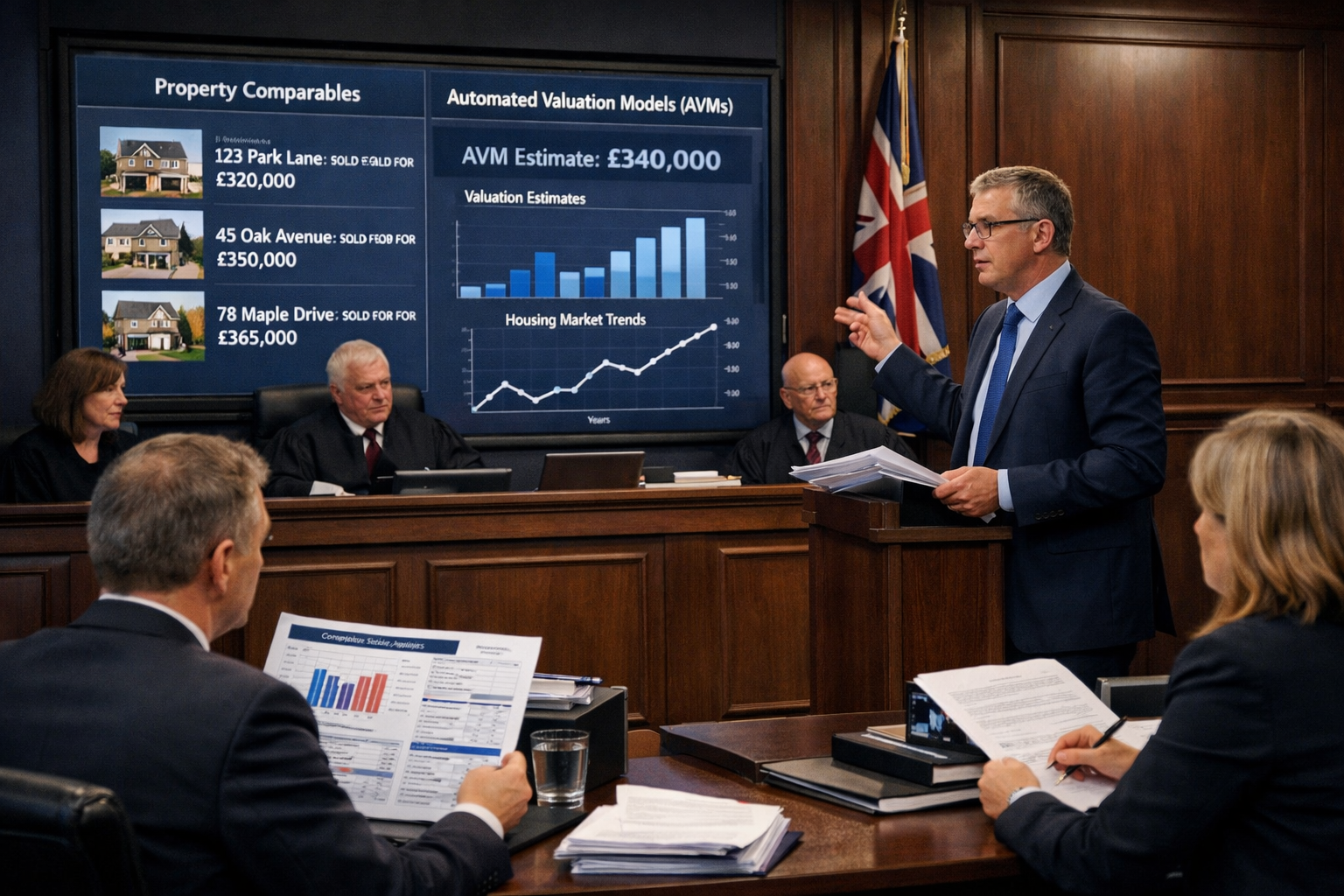
Drawing from successful tribunal outcomes and professional guidance, surveyors can adopt several best practices when preparing for Expert Witness Roles in 2026 Council Tax Surcharge Disputes: Valuation Evidence for High-Value Property Owners.
Pre-Instruction Considerations
Before accepting an expert witness appointment:
🔍 Verify competence in the specific property type and market segment
📋 Assess potential conflicts of interest that could compromise independence
⏰ Ensure adequate time for thorough investigation and report preparation
💼 Clarify scope of instruction and tribunal expectations
💰 Agree fee arrangements that don't create outcome-dependent incentives
Investigation and Evidence Gathering
Comprehensive evidence gathering distinguishes successful expert testimony:
Physical Inspection:
- Conduct detailed property inspection documenting all value-affecting features
- Photograph key characteristics, defects, and distinguishing elements
- Measure and verify property dimensions and layouts
- Assess condition using standardized rating systems
Market Research:
- Compile comprehensive comparable sales database
- Verify transaction details through multiple sources
- Interview local agents for market intelligence
- Review planning applications and development activity
Documentary Evidence:
- Obtain Land Registry title information
- Review planning permissions and building regulation approvals
- Collect energy performance certificates and other compliance documentation
- Gather historical valuation reports if available
Report Structure and Content
Expert reports for tribunal proceedings should follow a clear, logical structure:
1. Executive Summary
- Concise statement of opinion and value conclusion
- Key factors supporting the valuation
2. Instructions and Scope
- Details of who instructed the expert and when
- Specific questions or issues to be addressed
- Scope and limitations of the assignment
3. Expert Qualifications and Experience
- Professional credentials and certifications
- Relevant experience in similar properties and disputes
- Statement of expert witness training and understanding of duties
4. Property Description
- Comprehensive description of the subject property
- Location analysis and neighborhood characteristics
- Photographs and plans
5. Valuation Methodology
- Explanation of approaches employed
- Rationale for methodology selection
- Standards and guidelines followed
6. Market Analysis
- Overview of relevant market conditions
- Transaction evidence and trends
- Economic factors affecting values
7. Comparable Analysis
- Detailed presentation of comparable properties
- Adjustment methodology and calculations
- Reconciliation of comparable indications
8. Valuation Conclusion
- Clear statement of opinion of value
- Value range if appropriate
- Confidence level in conclusion
9. Supporting Evidence
- AVM results and analysis
- Additional expert opinions if obtained
- Relevant market reports and data
10. Declaration
- Statement of expert duties and compliance
- Confirmation of independence and objectivity
Cross-Examination Preparation
Expert witnesses must prepare for rigorous questioning:
- 📚 Master the report content to answer questions without hesitation
- 🎯 Anticipate challenges to methodology and assumptions
- 📊 Prepare supplementary data to address potential questions
- 🤝 Practice clear explanations of technical concepts for non-specialists
- ⚖️ Maintain composure and objectivity under pressure
Effective cross-examination responses are:
- Concise – answering the question asked without unnecessary elaboration
- Clear – avoiding jargon and explaining technical terms
- Honest – acknowledging limitations or uncertainties
- Consistent – aligning with written report content
Valuation Office Agency Assessment Challenges
Understanding VOA processes and potential challenge points helps expert witnesses prepare more effective evidence for Expert Witness Roles in 2026 Council Tax Surcharge Disputes: Valuation Evidence for High-Value Property Owners.
VOA Methodology and Common Issues
The VOA employs standardized approaches to property valuation, but several areas frequently generate disputes:
Comparable Selection:
- VOA may use older transactions not reflecting current market conditions
- Geographic boundaries for comparables may be too broad
- Insufficient adjustment for property differences
Property Characteristics:
- Standardized assumptions may not reflect actual condition
- Unique features inadequately valued
- Improvements incorrectly attributed or valued
Market Timing:
- Five-year revaluation cycles creating valuation date issues
- Failure to recognize significant market shifts
- Inappropriate reliance on valuation date versus assessment date
Effective Challenge Strategies
Expert witnesses can effectively challenge VOA assessments by:
- Demonstrating superior comparable analysis with more recent, relevant transactions
- Providing physical evidence of condition or features not captured in VOA assessment
- Presenting market data showing trends not reflected in VOA methodology
- Highlighting methodological inconsistencies in VOA approach
- Offering alternative valuations using multiple approaches reaching consistent conclusions
The key is presenting evidence that is more comprehensive, current, and methodologically sound than the VOA assessment, while maintaining professional respect for the VOA's role and constraints.
Future Trends in High-Value Property Valuation Disputes
As 2026 progresses, several trends are shaping Expert Witness Roles in 2026 Council Tax Surcharge Disputes: Valuation Evidence for High-Value Property Owners:
Technology Integration
🤖 Enhanced AVMs incorporating artificial intelligence and machine learning
📱 Digital evidence platforms streamlining document management and presentation
🌐 Virtual inspections supplementing or occasionally replacing physical site visits
📊 Real-time market data improving valuation currency and accuracy
Regulatory Developments
The government continues to refine the surcharge framework, with HMRC reportedly hiring additional valuation agents to support implementation and enforcement[6]. This suggests:
- Increased scrutiny of high-value property assessments
- More sophisticated VOA challenge capabilities
- Potential threshold adjustments or additional tiers
- Greater emphasis on compliance and accurate reporting
Professional Standards Evolution
RICS and other professional bodies are developing specific guidance for surcharge-related valuations, including:
- Specialized training for expert witnesses in tax-related disputes
- Enhanced standards for comparable selection and adjustment
- Clearer protocols for AVM integration in professional valuations
- Improved guidance on market evidence in heterogeneous property segments
Market Dynamics
The high-value property market itself continues evolving:
- 🏘️ Geographic shifts in premium property locations
- 🌱 Sustainability premiums for energy-efficient properties
- 🏢 Changing use patterns post-pandemic affecting value drivers
- 💼 International investment patterns influencing certain market segments
Expert witnesses must stay current with these trends to provide relevant, credible testimony.
Selecting the Right Expert Witness for Your Dispute
Property owners and their legal representatives face critical decisions when selecting expert witnesses for surcharge disputes.
Essential Qualifications
Look for experts with:
✅ RICS chartered status demonstrating professional competence
✅ Relevant geographic experience in the property's market area
✅ Property type expertise matching the subject property
✅ Tribunal experience with demonstrated success in similar disputes
✅ Expert witness training and understanding of legal duties
✅ Professional indemnity insurance providing appropriate coverage
Red Flags to Avoid
⚠️ Guaranteed outcomes – ethical experts cannot promise specific results
⚠️ Contingency fees – payment should not depend on tribunal outcome
⚠️ Limited experience – first-time expert witnesses carry higher risk
⚠️ Advocacy stance – experts should be objective, not advocates
⚠️ Poor communication – inability to explain complex concepts clearly
Questions to Ask Prospective Experts
Before appointing an expert witness, consider asking:
- How many similar disputes have you handled?
- What is your success rate in tribunal proceedings?
- How do you approach comparable selection and adjustment?
- What role do AVMs play in your valuation methodology?
- How do you handle disagreements with opposing experts?
- What is your typical timeline for report preparation?
- Are you available for the anticipated hearing dates?
Working with Legal Teams and Other Professionals
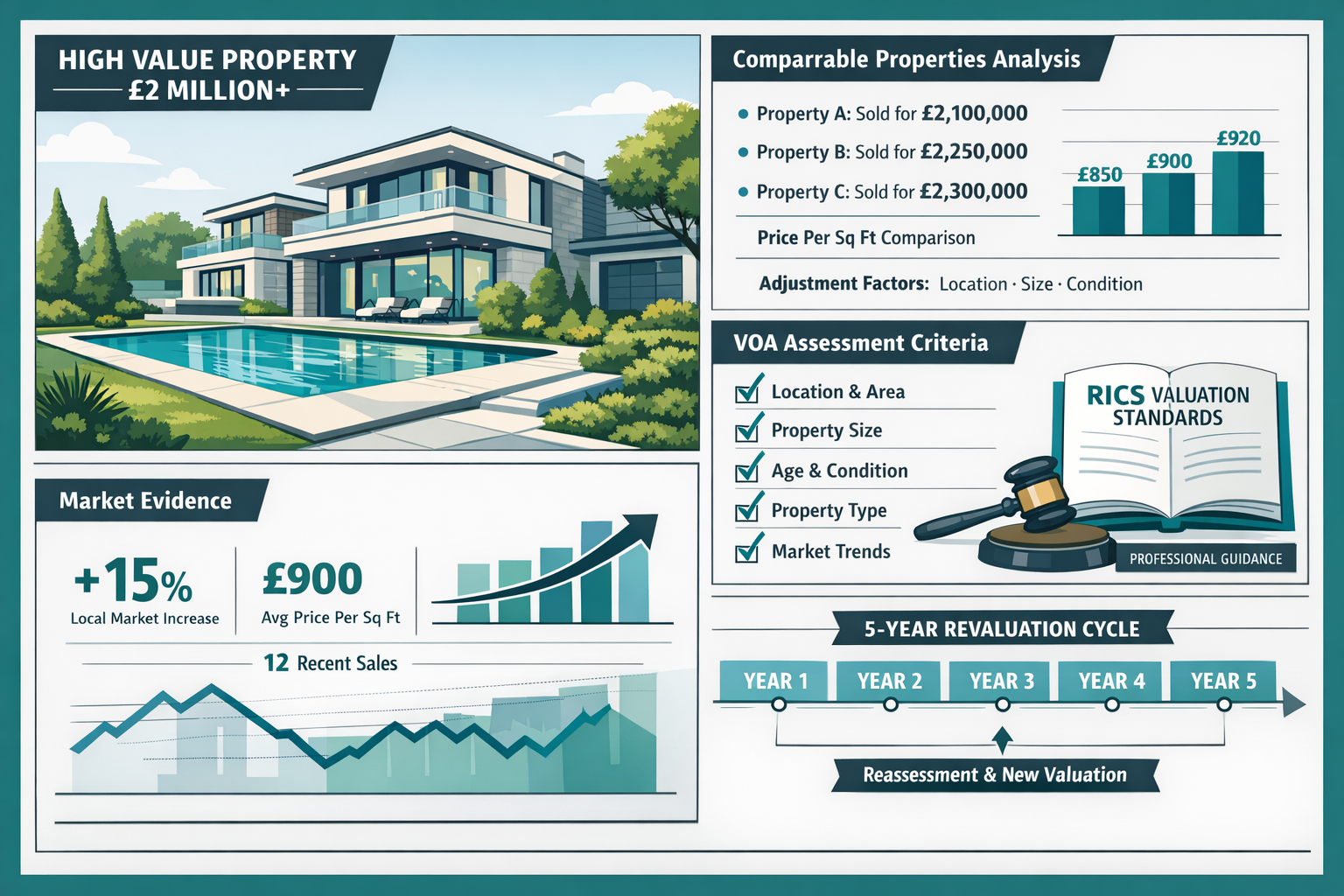
Successful dispute resolution requires effective collaboration between expert witnesses, solicitors, barristers, and other professionals.
Communication Protocols
Expert witnesses should:
- 📞 Maintain regular contact with instructing solicitors throughout the process
- 📧 Document all communications to create clear audit trail
- 🤝 Coordinate with counsel on hearing preparation and strategy
- 📋 Clarify instructions promptly when ambiguities arise
- ⏰ Provide realistic timelines and alert to potential delays early
Joint Expert Meetings
In many disputes, tribunals order joint meetings between opposing experts to:
- Identify areas of agreement and disagreement
- Narrow issues requiring tribunal determination
- Clarify technical matters for the tribunal
- Potentially reach settlement on valuation
These meetings require:
✅ Professional courtesy while maintaining independent opinions
✅ Clear articulation of reasoning and methodology
✅ Willingness to concede points where opposing expert's evidence is superior
✅ Focus on technical issues rather than legal or tactical considerations
Coordinating Multiple Expert Disciplines
Complex disputes may involve several expert disciplines:
- Valuation surveyors for property value opinions
- Building surveyors for condition and defect assessment
- Structural engineers for technical building issues
- Planning consultants for development potential analysis
- Market analysts for economic and trend evidence
Effective coordination ensures consistent, complementary evidence supporting the overall case.
Cost Considerations and Fee Structures
Understanding the financial aspects of expert witness engagement helps property owners make informed decisions about pursuing disputes.
Typical Fee Structures
Expert witnesses typically charge:
Hourly Rates:
- Senior RICS chartered surveyors: £200-400 per hour
- Highly specialized or London-based experts: £400-600 per hour
- Report preparation: 15-40 hours depending on complexity
- Tribunal attendance: Daily rates £2,000-5,000
Fixed Fees:
- Some experts offer fixed fees for standard dispute types
- Typically £5,000-15,000 for complete service including tribunal attendance
- Provides cost certainty but may not suit complex cases
Cost-Benefit Analysis
Property owners should consider:
| Surcharge Liability | Annual Cost | Expert Costs | Break-Even Period |
|---|---|---|---|
| £50,000+ threshold difference | £10,000-25,000/year | £8,000-12,000 | Less than 1 year |
| £100,000+ threshold difference | £20,000-50,000/year | £10,000-15,000 | Less than 1 year |
| £250,000+ threshold difference | £50,000-125,000/year | £12,000-20,000 | Less than 1 year |
For properties significantly over the threshold, professional expert evidence typically represents excellent value given the potential ongoing tax savings.
Managing Expert Costs
To control expenses while maintaining quality:
- 💡 Obtain preliminary opinion before commissioning full report
- 📋 Define scope clearly to avoid unnecessary work
- 🤝 Consider joint expert appointments where appropriate
- ⏰ Provide information promptly to minimize expert time
- 📊 Use internal resources for basic document gathering
Conclusion
Expert Witness Roles in 2026 Council Tax Surcharge Disputes: Valuation Evidence for High-Value Property Owners have become increasingly sophisticated and critical as the surcharge framework matures. For property owners facing assessments near or above the £2 million threshold, the quality of expert valuation evidence can determine whether they face substantial additional tax liabilities or successfully demonstrate values below the surcharge boundary.
The convergence of traditional RICS valuation methodologies with modern automated valuation tools creates new opportunities for comprehensive, defensible evidence. Expert witnesses who master both approaches—combining rigorous comparable analysis with AVM corroboration—provide tribunals with the most persuasive cases.
Key Success Factors
Successful navigation of surcharge disputes requires:
🎯 Early engagement of qualified RICS-certified expert witnesses
📊 Comprehensive evidence gathering including market data, comparables, and AVMs
📋 Methodologically rigorous valuation approaches following Red Book standards
⚖️ Clear understanding of expert duties to tribunal versus client
🤝 Effective collaboration between experts, legal teams, and property owners
Actionable Next Steps
For property owners potentially affected by the surcharge:
- Obtain independent valuation from qualified RICS surveyor to assess potential liability
- Review VOA assessment methodology and comparable evidence
- Gather supporting documentation including improvement costs, market data, and transaction evidence
- Consult specialist solicitors experienced in valuation tribunal proceedings
- Consider timing of challenges relative to revaluation cycles and market conditions
For surveyors preparing to serve as expert witnesses:
- Invest in specialist training on expert witness duties and tribunal procedures
- Develop systematic approaches to comparable selection and adjustment
- Build proficiency with AVM tools and integration methodologies
- Create template frameworks for tribunal-ready reports
- Establish relationships with legal professionals handling surcharge disputes
The landscape of high-value property taxation continues evolving, but the fundamental principles of professional valuation practice remain constant. Expert witnesses who combine technical excellence, methodological rigor, and clear communication will continue to provide invaluable service to property owners navigating these complex disputes.
As market conditions shift and the surcharge framework matures through 2026 and beyond, the demand for skilled expert witnesses will only increase. Those professionals who invest in developing specialized expertise in this area position themselves to serve both their clients and the interests of justice effectively.
For property owners, the message is clear: when facing council tax surcharge disputes involving properties valued near critical thresholds, professional expert evidence from qualified RICS valuers isn't an optional expense—it's an essential investment in protecting substantial financial interests.
References
[1] The High Value Council Tax Surcharge What It Is And Why It Matters – https://www.icaew.com/technical/construction-and-real-estate-community/news/the-high-value-council-tax-surcharge-what-it-is-and-why-it-matters
[2] Hvcts Guide – https://www.crownluxuryhomes.com/hvcts-guide/
[6] Hmrc Is Hiring Valuation Agents Ahead Of New Mansion Tax Plans – https://apexaccountants.tax/hmrc-is-hiring-valuation-agents-ahead-of-new-mansion-tax-plans/