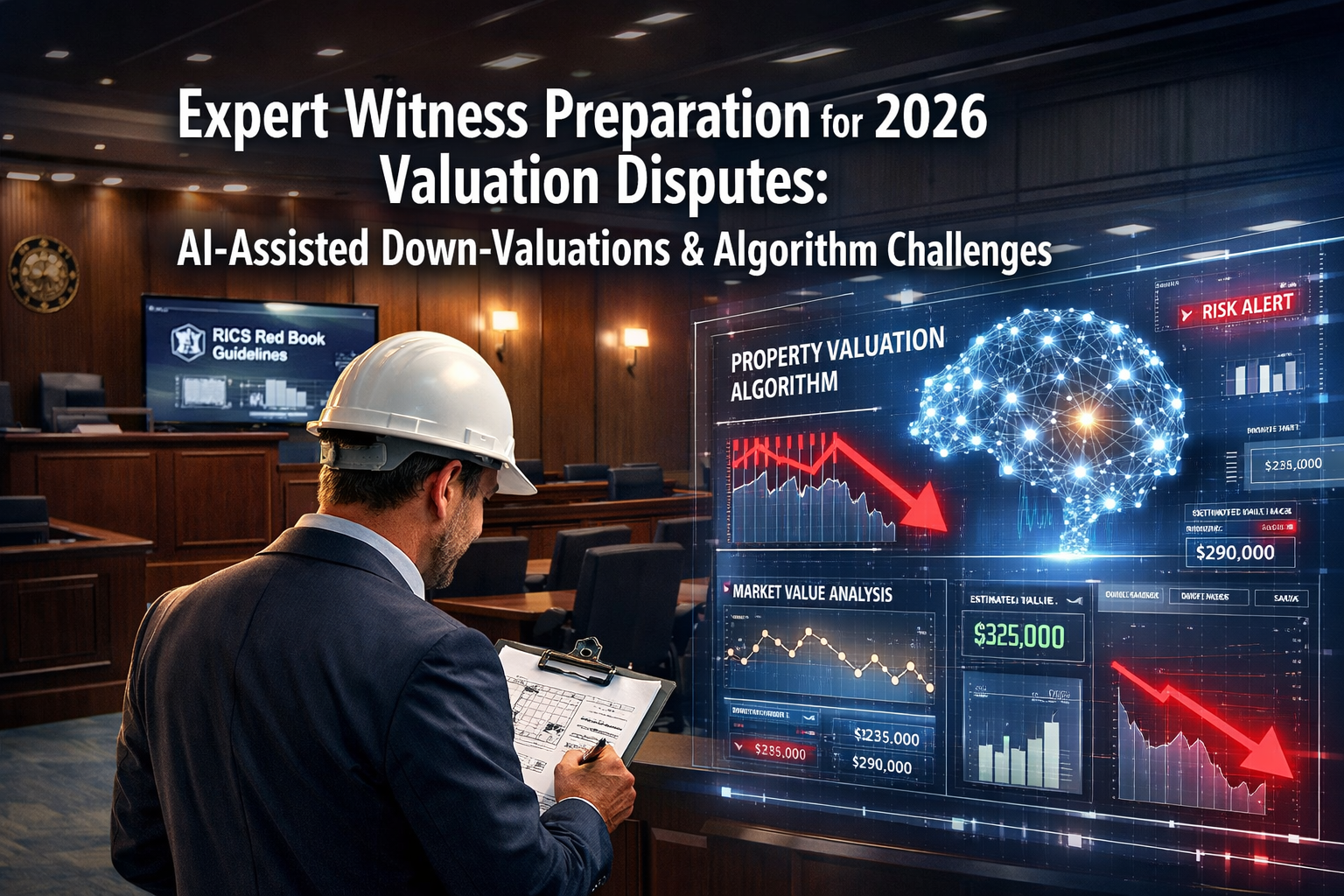
The courtroom landscape is changing rapidly. As artificial intelligence systems increasingly influence property valuations in 2026, expert witnesses face unprecedented challenges defending traditional methodologies against algorithm-driven down-valuations. With the UK property market showing signs of recovery, disputes over AI-assisted valuations are emerging as a critical battleground where transparency, accuracy, and professional standards collide with automated decision-making systems.
Expert witness preparation for 2026 valuation disputes requires mastering both RICS best practices and the technical knowledge needed to challenge algorithmic outputs. The stakes have never been higher as courts grapple with questions about AI transparency, data quality, and the role of human expertise in property assessment.
Key Takeaways
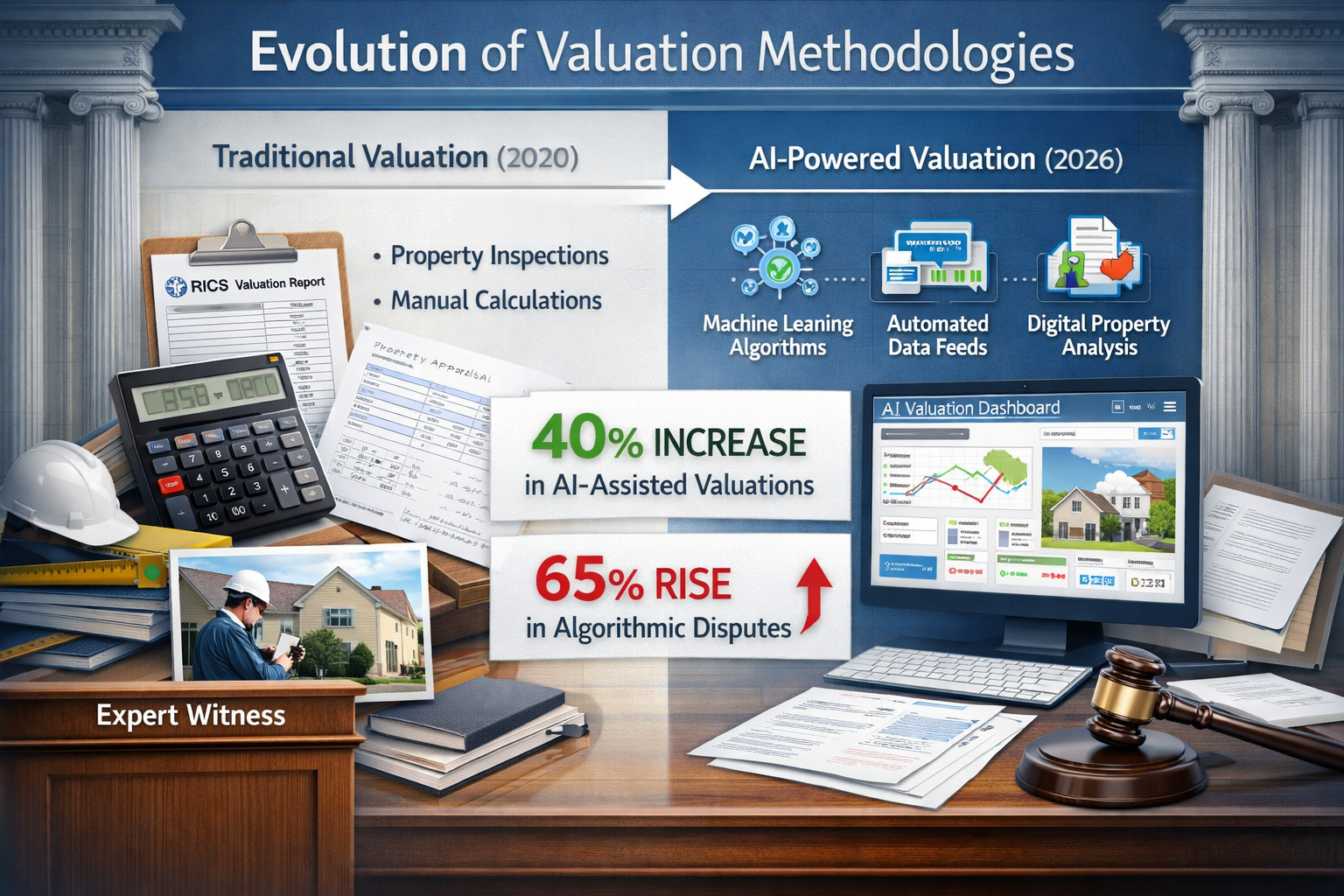
- AI-assisted valuations are projected to account for over 40% of property assessments by late 2026, creating new dispute categories centered on algorithmic transparency and data accuracy
- Expert witnesses must develop dual competencies: maintaining traditional RICS valuation expertise while acquiring technical knowledge to audit and challenge AI-driven methodologies
- Algorithm challenges require comprehensive documentation strategies, including detailed audit trails, comparable analysis, and systematic identification of AI model limitations and biases
- Court acceptance of AI-assisted valuations depends heavily on expert witnesses' ability to demonstrate transparency, validate data sources, and explain algorithmic decision-making processes
- Preparation protocols now include algorithm testing, cross-examination rehearsal on technical matters, and collaboration with data scientists to strengthen testimony credibility
Understanding the Rise of AI-Assisted Valuations in 2026 📊
The integration of artificial intelligence into property valuation has accelerated dramatically throughout 2025 and into 2026. Automated Valuation Models (AVMs) now process millions of data points instantaneously, analyzing market trends, comparable properties, and economic indicators with unprecedented speed. However, this efficiency comes with significant challenges that expert witnesses must understand thoroughly.
The Technology Behind AI Valuations
Modern AI valuation systems employ machine learning algorithms that analyze historical transaction data, property characteristics, location factors, and market conditions. These systems use:
- Neural networks that identify complex patterns in property pricing
- Natural language processing to extract insights from property descriptions and market reports
- Predictive analytics that forecast value trends based on economic indicators
- Computer vision technology analyzing property images and condition assessments
The problem emerges when these sophisticated systems produce valuations that differ significantly from traditional RICS valuation methodologies, particularly in cases involving down-valuations that impact financing, transactions, or legal settlements.
Why Down-Valuations Are Increasing
Several factors contribute to the rise in AI-assisted down-valuations throughout 2026:
- Data recency bias – Algorithms heavily weight recent market corrections
- Limited contextual understanding – AI systems struggle with unique property features
- Geographic data gaps – Insufficient comparable data in certain markets
- Economic uncertainty modeling – Conservative algorithms in volatile conditions
- Training data limitations – Historical biases embedded in machine learning models
Understanding these technical limitations is essential for expert witnesses preparing to challenge algorithmic outputs in court. The factors affecting valuation extend far beyond what current AI systems can adequately assess.
Core Elements of Expert Witness Preparation for 2026 Valuation Disputes 🎯
Preparing to serve as an expert witness in AI-related valuation disputes requires a systematic approach that combines traditional surveying expertise with technical competency in algorithmic systems. The preparation process has evolved significantly to address the unique challenges posed by automated valuation technologies.
Establishing Your Credentials and Independence
Professional qualifications remain the foundation of expert witness credibility. In 2026, courts expect expert witnesses to demonstrate:
- Current RICS membership and adherence to Red Book standards
- Specialized training in AI valuation methodologies and limitations
- Documented experience reviewing and challenging algorithmic outputs
- Independence from parties involved in the dispute
- Continuing professional development in emerging valuation technologies
When preparing your expert witness report, emphasize both traditional qualifications and technical competencies that enable you to evaluate AI-assisted valuations critically.
Comprehensive Case Documentation
Thorough documentation separates compelling expert testimony from easily dismissed opinions. Your preparation should include:
| Documentation Category | Essential Elements | Purpose |
|---|---|---|
| Traditional Valuation | Site inspections, comparable analysis, market research | Establish baseline using proven methodologies |
| AI Output Analysis | Algorithm specifications, input data review, confidence intervals | Identify technical weaknesses in automated valuation |
| Variance Investigation | Point-by-point comparison, factor-by-factor analysis | Explain discrepancies between methods |
| Market Context | Local market conditions, transaction history, economic factors | Provide context AI may miss |
| Methodology Critique | Algorithm limitations, data quality issues, bias identification | Challenge AI valuation foundation |
This comprehensive approach demonstrates the depth of analysis that distinguishes expert testimony from simple disagreement with algorithmic outputs.
Technical Algorithm Auditing Skills
Expert witnesses in 2026 must develop technical auditing capabilities to effectively challenge AI-assisted valuations. This includes:
Data Quality Assessment
- Verifying the accuracy and completeness of input data
- Identifying outdated or irrelevant comparable properties
- Detecting geographic or property-type mismatches
- Evaluating the representativeness of training datasets
Algorithm Transparency Evaluation
- Requesting and reviewing algorithm documentation
- Identifying "black box" elements that lack explainability
- Assessing whether the model appropriately weights valuation factors
- Determining if the algorithm has been validated for the specific property type
Bias Detection
- Identifying systematic over- or under-valuation patterns
- Detecting geographic, property-type, or temporal biases
- Evaluating whether the algorithm accounts for unique property characteristics
- Assessing the impact of training data limitations
Many disputes arise when AI systems fail to properly account for the nuanced valuation considerations that experienced surveyors routinely incorporate into their assessments.
Building Your Counter-Valuation Framework
A credible challenge to AI-assisted down-valuations requires more than criticism—it demands a robust alternative methodology. Your framework should include:
✅ Detailed site inspection with photographic documentation
✅ Comprehensive comparable analysis with adjustment justifications
✅ Market trend analysis incorporating local expertise
✅ Property-specific factors that algorithms typically overlook
✅ Multiple valuation approaches (comparative, income, cost methods)
✅ Sensitivity analysis showing how key assumptions impact value
This multi-faceted approach demonstrates that your valuation reflects professional judgment informed by comprehensive analysis, not simply a competing opinion.
Handling AI-Assisted Down-Valuations and Algorithm Challenges in Court ⚖️
The courtroom presentation of expert testimony regarding AI valuation disputes requires careful preparation and strategic communication. Judges and juries in 2026 increasingly encounter algorithmic evidence but may lack technical expertise to evaluate its reliability independently.
Preparing for Cross-Examination on Technical Matters
Anticipating challenges to your testimony is essential. Opposing counsel will likely question:
Your Technical Competence
- "How many AI valuation systems have you personally reviewed?"
- "What specific training have you completed in machine learning?"
- "Can you explain how neural networks process valuation data?"
Preparation strategy: Document your technical training, collaborate with data scientists when necessary, and be honest about the limits of your technical knowledge while emphasizing your valuation expertise.
The Validity of Traditional Methods
- "Isn't your manual process more subjective than objective algorithms?"
- "How do you account for personal bias in your valuation?"
- "Why should we trust human judgment over data-driven analysis?"
Preparation strategy: Emphasize the professional standards governing your work, the comprehensive nature of your analysis, and the limitations of AI systems in capturing property-specific nuances.
Specific Valuation Disagreements
- "Why did you select these particular comparables?"
- "How do you justify your adjustments to comparable sales?"
- "Isn't your higher valuation simply serving your client's interests?"
Preparation strategy: Maintain detailed documentation of every decision, use multiple validation methods, and demonstrate consistency with market evidence.
Communicating Complex Technical Concepts Simply
Clarity is paramount when explaining algorithmic limitations to non-technical audiences. Effective strategies include:
🔹 Use analogies: Compare AI valuation to GPS navigation—highly accurate in most situations but occasionally directing drivers into lakes or closed roads
🔹 Visual aids: Create clear charts comparing AI inputs versus comprehensive site inspection findings
🔹 Concrete examples: Show specific instances where the algorithm missed critical property features or market factors
🔹 Step-by-step explanations: Break down how traditional valuation incorporates factors the AI system overlooked
🔹 Avoid jargon: Replace technical terms with plain language (e.g., "the system's training data" instead of "the algorithm's supervised learning dataset")
When discussing valuation costs and methodologies, emphasize that thorough professional assessment requires time, expertise, and comprehensive analysis that automated systems cannot replicate.
Addressing Algorithm Transparency and Explainability
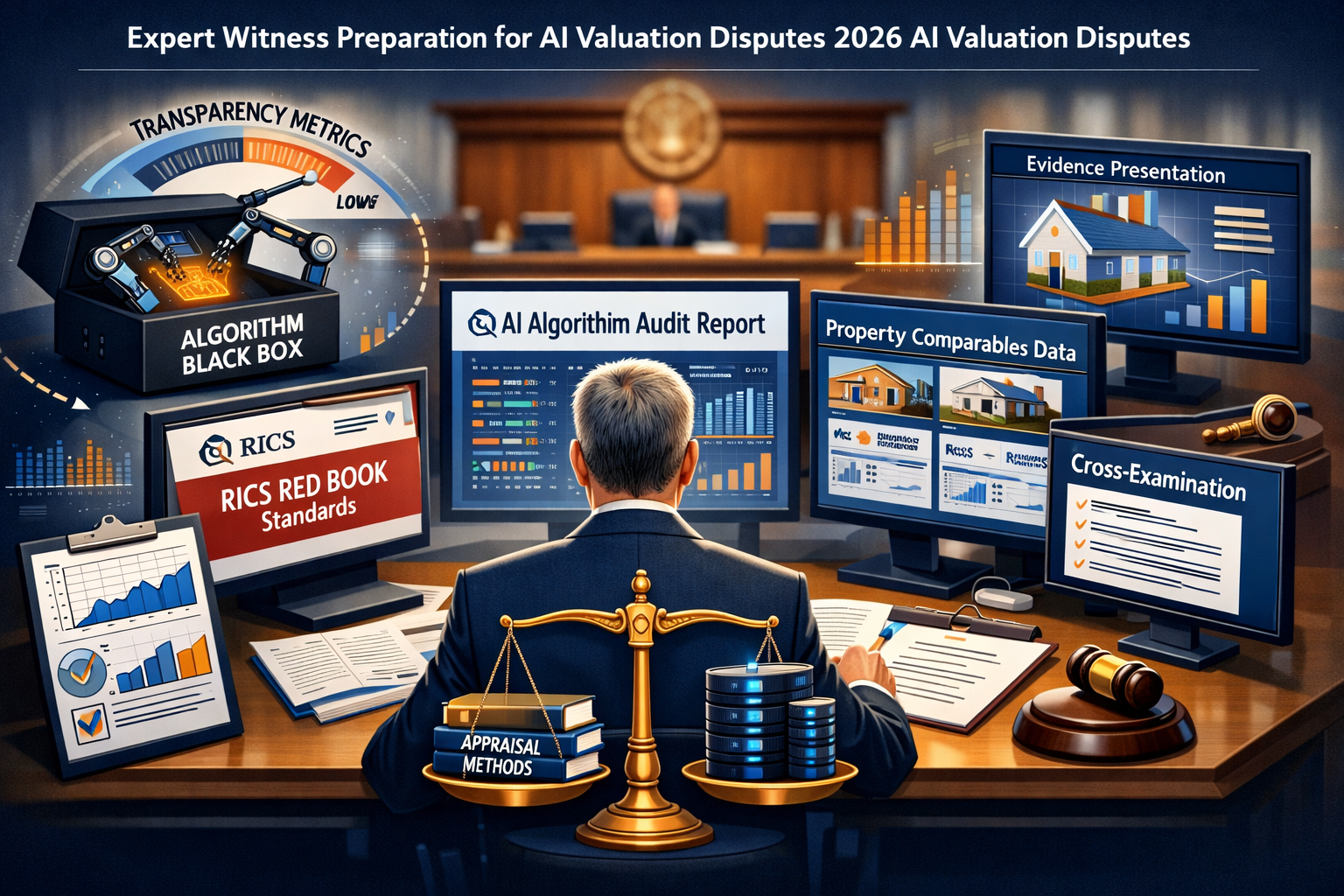
One of the most powerful challenges to AI-assisted valuations involves algorithmic opacity. Many proprietary valuation systems function as "black boxes" where the decision-making process remains hidden. Your testimony should address:
Key Questions to Raise:
- What specific data points did the algorithm use?
- How were different factors weighted in reaching the valuation?
- What comparable properties did the system select and why?
- How does the algorithm handle unique property characteristics?
- What is the system's error rate for similar properties?
- Has the algorithm been validated for this specific property type and location?
"The fundamental problem with many AI-assisted valuations is not that they use technology, but that they lack the transparency necessary for meaningful professional review. A valuation that cannot be explained cannot be properly challenged or verified."
This transparency argument resonates strongly with courts, which traditionally require expert opinions to be based on explainable methodologies and sound reasoning.
Presenting Evidence of Algorithmic Limitations
Concrete evidence of AI system failures strengthens your testimony significantly. Document and present:
- Comparable selection errors – instances where the algorithm chose inappropriate comparables
- Data quality issues – outdated information, incorrect property characteristics, or missing data
- Contextual blindness – failure to account for local market conditions, planning permissions, or property improvements
- Systematic biases – patterns of over- or under-valuation in specific property categories
- Confidence interval problems – unrealistically narrow uncertainty ranges suggesting false precision
When challenging AI valuations for specific property types like shared ownership properties or insurance reinstatement valuations, emphasize the specialized knowledge required that general-purpose algorithms typically lack.
Collaboration with Technical Experts
In complex cases involving sophisticated AI systems, consider partnering with data scientists or computer science experts who can:
- Conduct detailed algorithm audits
- Identify technical flaws in the AI system's architecture
- Provide expert testimony on machine learning limitations
- Validate your technical critiques of the algorithmic approach
This collaboration strengthens your credibility while ensuring your technical challenges rest on solid foundations. However, maintain clear boundaries—you remain the valuation expert while technical specialists address algorithmic questions.
Strategic Positioning of Your Testimony
Frame your testimony to emphasize complementarity rather than competition between human expertise and AI tools:
✅ "AI valuation tools can provide useful preliminary estimates when properly applied"
✅ "Algorithms excel at processing large datasets but struggle with unique property characteristics"
✅ "Professional judgment remains essential for interpreting data and applying market knowledge"
✅ "The most reliable valuations combine technological efficiency with human expertise"
✅ "Transparency and explainability are fundamental to trustworthy valuation, whether human or algorithmic"
This balanced approach positions you as a thoughtful professional rather than a technophobe defending obsolete methods.
Best Practices for Defending Traditional RICS Methodologies 📋
As AI-assisted valuations gain prominence, expert witnesses must articulate why traditional RICS methodologies remain the gold standard for property assessment. This requires both defending established practices and demonstrating their superiority in capturing valuation complexity.
Emphasizing Professional Standards and Accountability
RICS Red Book standards provide a framework that algorithmic systems cannot replicate. Key advantages include:
- Professional accountability – surveyors are personally responsible for their valuations
- Ethical obligations – adherence to professional conduct standards
- Continuing education requirements – ensuring current market knowledge
- Peer review mechanisms – quality assurance through professional oversight
- Disciplinary procedures – consequences for substandard work
These accountability structures do not exist for algorithmic systems. When preparing testimony regarding RICS valuations, emphasize that professional standards protect clients and ensure quality in ways that automated systems cannot.
Demonstrating the Value of Site Inspections
Physical property inspection remains irreplaceable in comprehensive valuation. Your testimony should highlight:
🏠 Condition assessment – identifying maintenance issues, structural concerns, or quality of construction
🏠 Property-specific features – unique characteristics that add or detract from value
🏠 Location factors – neighborhood quality, views, noise, accessibility
🏠 Planning potential – development opportunities or restrictions
🏠 Market positioning – how the property compares to local competition
AI systems relying on database information and automated image analysis cannot replicate the insights gained from experienced surveyors conducting thorough site inspections.
Highlighting Market Knowledge and Context
Local market expertise distinguishes professional valuations from algorithmic estimates. Emphasize your understanding of:
- Current market sentiment and buyer behavior
- Emerging neighborhood trends affecting values
- Impact of recent planning decisions or infrastructure projects
- Seasonal variations in local market activity
- Unique characteristics of the local buyer pool
This contextual knowledge, developed through years of professional practice, enables surveyors to make nuanced judgments that algorithms struggle to replicate.
Addressing Unique Property Challenges
Certain property types present particular challenges for AI systems. When dealing with specialized valuations, emphasize the limitations of algorithmic approaches:
Properties with Limited Comparables
- Historic buildings with unique features
- Properties with unusual layouts or configurations
- Specialized commercial or industrial properties
- Properties in emerging or changing markets
Properties Requiring Specialized Knowledge
- Listed buildings with heritage considerations
- Properties with complex legal interests
- Properties affected by environmental issues
- Properties with development potential
Properties with Recent Modifications
- Significant renovations or extensions
- Quality improvements not reflected in databases
- Planning permissions granted but not yet implemented
- Recent market-affecting changes to the property or area
In these situations, professional judgment based on comprehensive analysis provides reliability that automated systems cannot match.
Documenting Your Methodology Thoroughly
Comprehensive documentation of your valuation process strengthens your testimony and demonstrates professional rigor. Your expert report should include:
- Clear methodology statement – explaining your approach and why it's appropriate
- Detailed comparable analysis – with photographs, descriptions, and adjustment justifications
- Market research summary – supporting your conclusions with market evidence
- Site inspection notes – documenting observations and their valuation impact
- Assumption and limitation statements – being transparent about constraints
- Alternative scenario analysis – showing how different assumptions affect value
- Professional standards compliance – demonstrating adherence to RICS requirements
This level of documentation contrasts sharply with the often-opaque outputs of AI valuation systems.
Emerging Legal and Regulatory Considerations for 2026 ⚖️
The legal landscape surrounding AI-assisted valuations continues evolving rapidly throughout 2026. Expert witnesses must stay informed about emerging regulations, court precedents, and professional guidance affecting algorithmic valuation challenges.
Disclosure Requirements for AI-Assisted Valuations
Transparency obligations are increasing as courts and regulators recognize the need for algorithmic accountability. Key developments include:
- Requirements to disclose when AI systems contributed to valuations
- Obligations to provide algorithm specifications and confidence intervals
- Standards for explaining how algorithms reached their conclusions
- Documentation requirements for training data and validation testing
Expert witnesses should leverage these disclosure requirements to obtain information necessary for challenging AI-assisted down-valuations effectively.
Data Protection and Algorithm Auditing Rights
Data governance regulations increasingly grant rights to challenge algorithmic decisions. This includes:
- Rights to explanation of automated decisions affecting individuals
- Access to information about data sources used in valuations
- Ability to challenge data accuracy and completeness
- Requirements for human review of significant algorithmic decisions
Understanding these rights enables expert witnesses to request documentation that supports thorough algorithm audits.
Professional Liability Considerations
Liability questions surrounding AI-assisted valuations remain unsettled. Key issues include:
- Who bears responsibility when AI valuations prove inaccurate?
- What duty of care applies to professionals using AI tools?
- How should professional indemnity insurance address algorithmic errors?
- What disclosure obligations exist when using AI-assisted methods?
Expert witnesses should address these liability considerations when evaluating the reliability of AI-assisted valuations presented in disputes.
Court Acceptance Standards for AI Evidence
Judicial attitudes toward algorithmic evidence vary, but general principles are emerging:
✓ Transparency requirement – algorithms must be explainable to be admissible
✓ Validation evidence – systems must demonstrate accuracy for the specific application
✓ Expert interpretation – algorithmic outputs typically require expert explanation
✓ Challenge rights – opposing parties must have meaningful opportunity to challenge methodology
✓ Human accountability – someone must take responsibility for algorithmic conclusions
Understanding these standards helps expert witnesses frame their testimony to address judicial concerns about AI-assisted valuations.
Practical Preparation Checklist for Expert Witnesses 📝
Systematic preparation ensures expert witnesses can effectively handle AI-related valuation disputes. This comprehensive checklist covers essential preparation steps:
Pre-Engagement Phase
- Verify independence – confirm no conflicts of interest exist
- Assess technical complexity – determine if data science collaboration needed
- Review engagement terms – ensure scope covers algorithm analysis
- Obtain preliminary information – request AI valuation documentation early
- Establish timeline – allow adequate time for thorough analysis
Case Analysis Phase
- Conduct comprehensive site inspection – document all observations thoroughly
- Perform traditional valuation – using RICS-compliant methodology
- Obtain AI system documentation – algorithm specifications, training data, validation results
- Analyze AI valuation inputs – verify data accuracy and completeness
- Identify algorithmic weaknesses – document limitations and potential biases
- Research comparable transactions – verify algorithm's comparable selection
- Investigate market context – assess factors AI may have missed
- Calculate valuation variance – quantify differences and identify causes
Report Preparation Phase
- Structure report clearly – organize for non-technical audience
- Document methodology – explain approach in detail
- Present findings systematically – build logical argument
- Include visual aids – charts, photographs, comparison tables
- Address algorithm specifically – critique AI valuation methodology
- Provide alternative valuation – demonstrate proper approach
- State conclusions clearly – summarize key findings
- Declare assumptions and limitations – maintain transparency
Testimony Preparation Phase
- Prepare for cross-examination – anticipate challenges to your testimony
- Practice explaining technical concepts – develop clear analogies and examples
- Review all documentation – ensure familiarity with every detail
- Prepare visual presentations – create court-ready exhibits
- Conduct mock testimony – practice with colleagues or legal team
- Update on recent developments – review latest case law and guidance
- Coordinate with legal counsel – align testimony with case strategy
- Prepare for algorithm-specific questions – develop responses to technical challenges
Post-Testimony Phase
- Document lessons learned – note effective strategies and challenges
- Update preparation protocols – incorporate new insights
- Maintain professional development – continue education on AI developments
- Build technical network – develop relationships with data science experts
- Monitor case outcomes – track how courts handle similar disputes
Conclusion: Mastering Expert Witness Preparation for AI Valuation Disputes 🎯
The intersection of artificial intelligence and property valuation creates unprecedented challenges for expert witnesses in 2026. As AI-assisted down-valuations become increasingly common, the ability to effectively challenge algorithmic outputs while defending traditional RICS methodologies has become an essential professional competency.
Success in this evolving landscape requires expert witnesses to develop dual expertise: maintaining deep knowledge of established valuation principles while acquiring sufficient technical understanding to audit and challenge AI systems. The most effective expert witnesses in 2026 combine traditional surveying excellence with the ability to identify algorithmic limitations, data quality issues, and systematic biases that undermine the reliability of automated valuations.
Key success factors include:
🔑 Comprehensive preparation – thorough documentation, detailed analysis, and systematic methodology
🔑 Technical competency – sufficient understanding of AI systems to challenge them credibly
🔑 Clear communication – ability to explain complex concepts to non-technical audiences
🔑 Professional credibility – maintaining RICS standards and demonstrating independence
🔑 Strategic positioning – framing testimony to emphasize complementarity of human expertise and technology
The disputes arising from AI-assisted valuations represent both a challenge and an opportunity for the surveying profession. By demonstrating the irreplaceable value of professional judgment, local market knowledge, and comprehensive site inspection, expert witnesses can ensure that technology enhances rather than replaces human expertise in property valuation.
Next Steps for Expert Witnesses
Immediate actions to strengthen your capability in handling AI-related valuation disputes:
- Invest in technical education – complete training on AI valuation systems and their limitations
- Build your network – establish relationships with data scientists who can support complex cases
- Document your expertise – create a portfolio demonstrating experience with algorithm challenges
- Update your methodologies – incorporate algorithm auditing into your standard preparation process
- Stay informed – monitor legal developments, regulatory changes, and court decisions affecting AI valuations
- Enhance your reporting – develop templates that systematically address algorithmic valuation challenges
- Practice testimony skills – conduct mock cross-examinations on technical matters
- Engage with professional bodies – participate in RICS initiatives addressing AI in valuation
For expert witness services that combine traditional RICS expertise with modern technical competency, professional surveyors continue to provide the rigorous analysis and credible testimony that courts require. Whether you need support with expert witness preparation or comprehensive property valuations, experienced professionals remain essential for navigating the complex intersection of technology and property assessment.
The future of valuation disputes will increasingly involve algorithmic challenges, but the fundamental principles of expert testimony remain unchanged: thorough preparation, professional integrity, clear communication, and credible analysis. Expert witnesses who master these principles while adapting to technological change will continue to provide invaluable service in resolving property valuation disputes throughout 2026 and beyond.