Social landlords face a staggering compliance challenge in 2026: with Awaab's Law now extending its reach beyond damp and mould to encompass electrical hazards and fire safety risks, expert witnesses must navigate an increasingly complex evidence landscape where a single flawed inspection report can determine whether a landlord meets statutory deadlines or faces regulatory penalties. The stakes have never been higher for both tenants seeking safe housing and property professionals tasked with documenting hazards to courtroom standards.
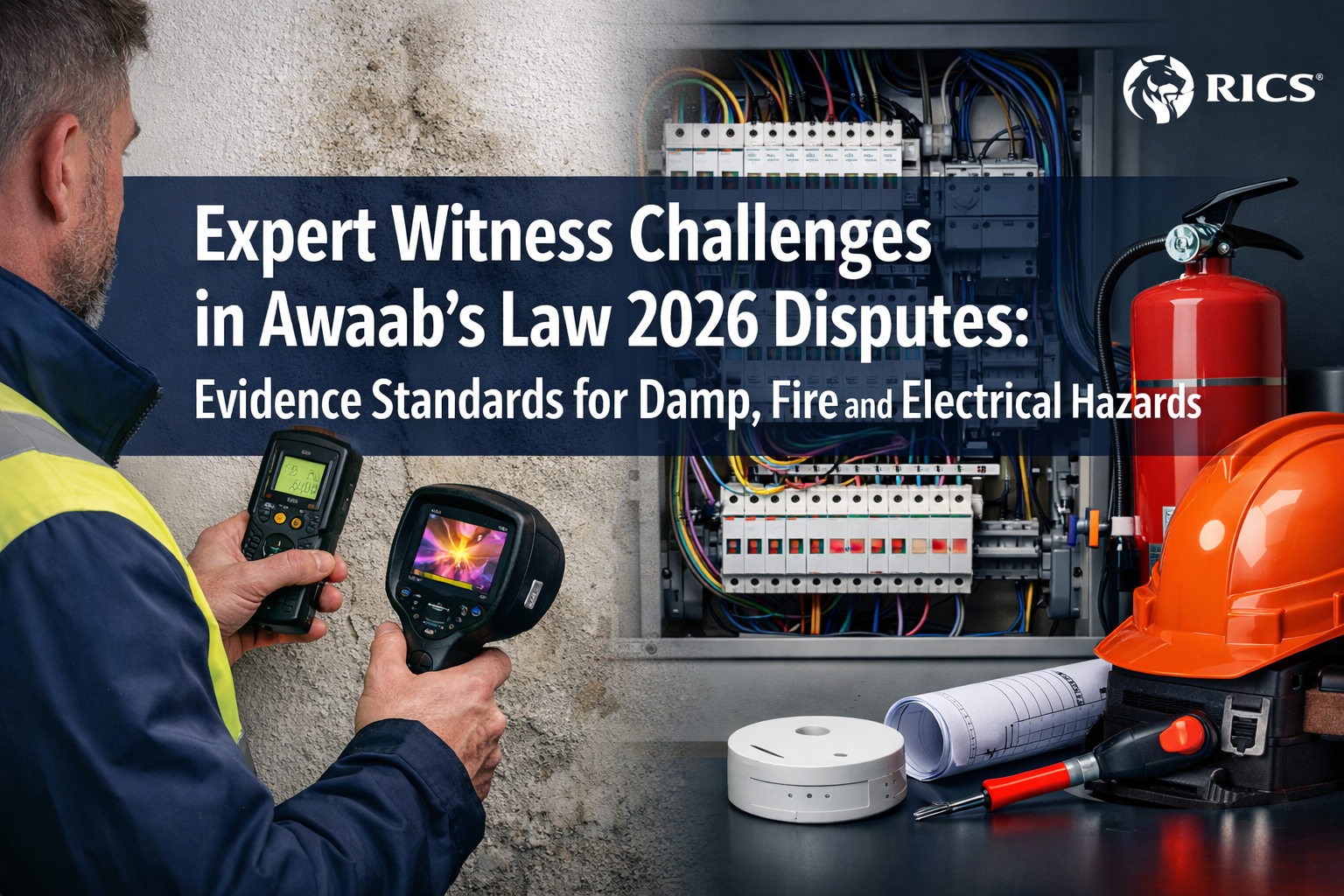
Expert Witness Challenges in Awaab's Law 2026 Disputes: Evidence Standards for Damp, Fire and Electrical Hazards represents a critical intersection of housing law, technical surveying expertise, and regulatory compliance. As the legislation continues to evolve throughout 2026, understanding the evidentiary requirements for different hazard categories becomes essential for chartered surveyors, housing associations, and legal professionals navigating tribunal proceedings.
Key Takeaways
- Strict Timeline Compliance: Social landlords must complete hazard investigations within fixed deadlines and begin remediation within 5 working days, making expert witness documentation speed and accuracy critical [5]
- Multi-Hazard Evidence Standards: Expert witnesses must now apply distinct technical assessment methodologies for damp, electrical, and fire hazards under unified Awaab's Law framework
- RICS-Backed Reporting: Tribunal cases increasingly require expert reports that demonstrate competency through RICS certification and adherence to professional standards
- Documentation Consistency: Inconsistencies between inspection records and witness testimony can undermine landlord defenses, making systematic evidence collection paramount [5]
- Private Sector Extension Pending: Anticipated regulations for private rental sector in 2026 will expand expert witness demand across broader housing market [5]
Understanding Awaab's Law 2026: The Legislative Framework
Awaab's Law emerged from the tragic death of two-year-old Awaab Ishak in 2020, whose death was directly attributed to prolonged exposure to damp and mould in social housing. The legislation, which came into force for social housing providers, establishes mandatory investigation and remediation timelines for identified hazards.
Core Requirements for Social Landlords
The law imposes several critical obligations on housing providers:
- Investigation completion within specified timeframes after hazard notification
- Written summary production of investigation findings provided to tenants within 3 working days [5]
- Remediation commencement within 5 working days of investigation completion (or as soon as possible, with work starting within 12 weeks maximum) [5]
- Competent investigator deployment with appropriate skills and experience [2]
For chartered surveyors and expert witnesses, these requirements create a demanding operational environment. The specific defect report must not only identify hazards accurately but also document them in ways that satisfy both regulatory compliance and potential tribunal scrutiny.
Extension to Additional Hazard Categories 📋
While Awaab's Law initially focused on damp and mould, the 2026 regulatory landscape has expanded to encompass:
- Electrical safety hazards (faulty wiring, inadequate earthing, overloaded circuits)
- Fire safety risks (inadequate detection systems, blocked escape routes, combustible materials)
- Traditional damp and mould issues (condensation, rising damp, penetrating damp)
This expansion significantly increases the complexity of Expert Witness Challenges in Awaab's Law 2026 Disputes: Evidence Standards for Damp, Fire and Electrical Hazards, as each hazard type requires distinct assessment methodologies and technical expertise.
The Expert Witness Role in Awaab's Law Disputes
Expert witnesses serve as the critical bridge between technical property assessment and legal proceedings. In Awaab's Law disputes, their responsibilities extend far beyond basic property inspection.
Core Responsibilities of Expert Witnesses
Expert witnesses in housing disrepair claims prepare detailed witness reports that analyze multiple dimensions of property condition [1]:
- Property condition assessment using standardized methodologies
- Disrepair severity classification with reference to regulatory thresholds
- Potential health impact evaluation considering tenant vulnerabilities
- Remediation requirement specification with cost and timeline estimates
- Causation analysis distinguishing landlord responsibility from tenant actions
The quality of these assessments directly influences tribunal outcomes. As noted in professional guidance, expert witnesses must consider family vulnerabilities when evaluating health impacts—a child with respiratory conditions faces greater risk from damp exposure than healthy adults [1].
Competency Standards and Professional Qualifications
One of the conceptual challenges in Awaab's Law implementation involves determining investigator competency. Current regulations require investigations by individuals with skills and experience "in the reasonable opinion of the lessor" [2], creating potential disputes over whether an investigator possesses adequate expertise.
Best practice standards for expert witnesses include:
- ✅ RICS certification (Royal Institution of Chartered Surveyors)
- ✅ Specialist qualifications in relevant hazard categories (e.g., electrical safety, damp surveying)
- ✅ Professional indemnity insurance covering expert witness work
- ✅ CPD documentation demonstrating current knowledge
- ✅ Previous tribunal experience with accepted testimony
Chartered surveyors conducting RICS building surveys bring established methodologies that satisfy tribunal evidence standards, but must adapt these approaches to Awaab's Law's specific requirements.
Documentation and Record-Keeping Requirements
Poor records create significant evidentiary challenges for landlords attempting to demonstrate compliance [5]. Expert witnesses must maintain:
| Documentation Type | Purpose | Retention Period |
|---|---|---|
| Initial inspection notes | Establish baseline hazard identification | Minimum 6 years |
| Photographic evidence | Visual documentation with timestamps | Minimum 6 years |
| Moisture readings | Quantitative damp assessment | Minimum 6 years |
| Electrical test certificates | Safety compliance verification | Minimum 6 years |
| Fire safety checklists | Regulatory compliance evidence | Minimum 6 years |
| Follow-up inspection records | Demonstrate remediation effectiveness | Minimum 6 years |
Inconsistencies between inspection documentation and witness testimony can undermine landlord defenses in tribunal proceedings [5]. Courts may prioritize witness testimony when supported by training records, making systematic documentation practices essential.
Evidence Standards for Damp Hazards
Damp remains the most common hazard category under Awaab's Law, but effective expert witness testimony requires distinguishing between different damp types and applying appropriate assessment methodologies.
Types of Damp and Assessment Techniques
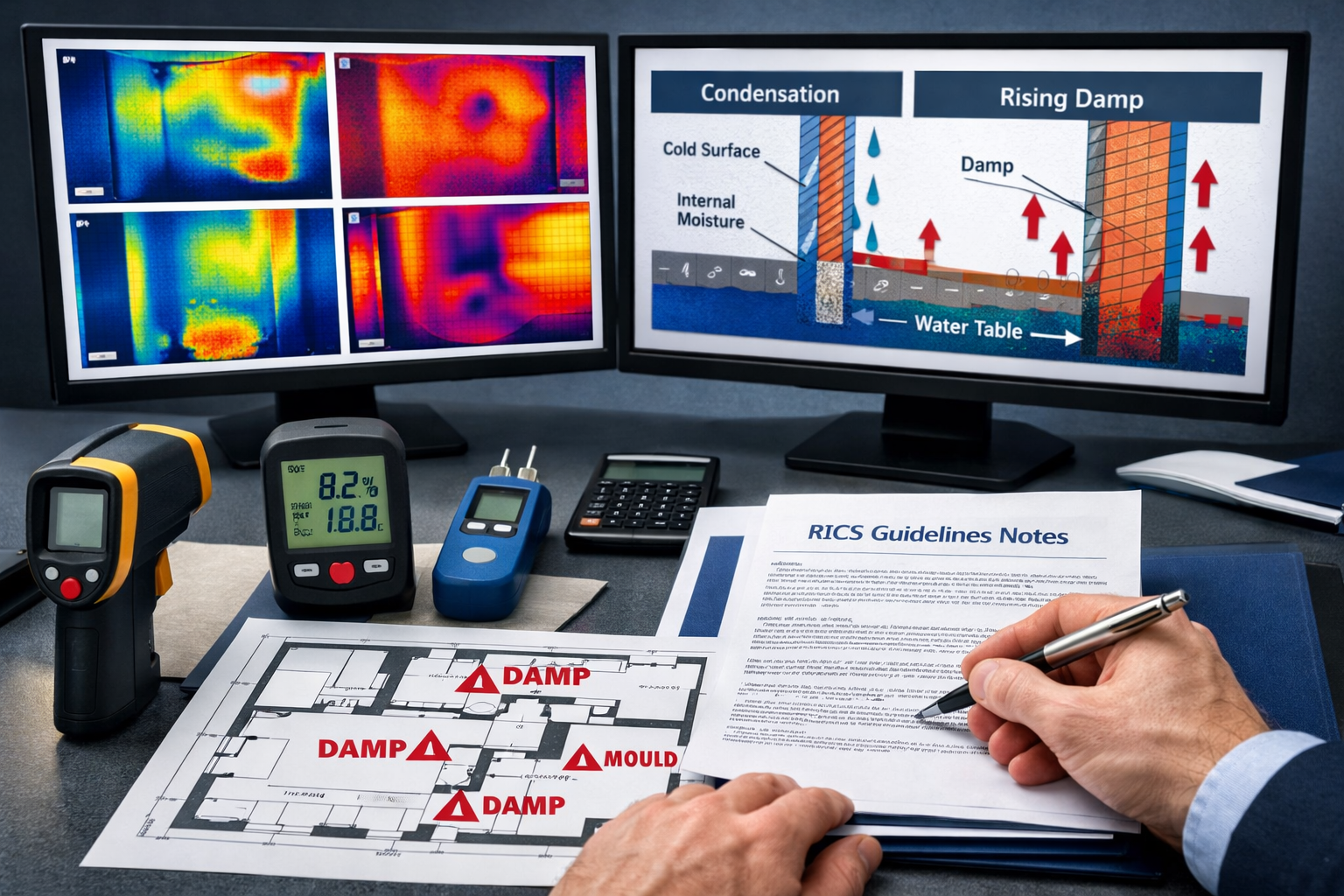
Condensation damp results from inadequate ventilation and heating, causing moisture accumulation on cold surfaces. Expert witnesses assess this through:
- Relative humidity measurements using calibrated hygrometers
- Surface temperature readings with infrared thermometers
- Ventilation adequacy evaluation
- Heating system performance assessment
Rising damp occurs when moisture from ground level travels upward through porous building materials. Assessment requires:
- Moisture meter readings at multiple wall heights
- Salt contamination analysis
- Damp-proof course inspection
- External ground level evaluation
Penetrating damp results from external water ingress through building defects. Expert evaluation includes:
- External envelope inspection (roof, walls, windows)
- Internal staining pattern analysis
- Weather correlation assessment
- Building defect identification
Quantification and Severity Classification
Expert witnesses must quantify damp severity using objective metrics that satisfy tribunal evidence standards:
Moisture Content Thresholds:
- 0-15%: Dry condition (acceptable)
- 15-20%: Elevated moisture (monitoring required)
- 20-25%: High moisture (remediation recommended)
- 25%+: Severe moisture (urgent remediation required)
Mould Growth Classification:
- Category 1: Surface mould affecting <1m² (localized treatment)
- Category 2: Surface mould affecting 1-10m² (professional remediation)
- Category 3: Extensive mould >10m² or penetrating substrates (comprehensive remediation with health assessment)
The RICS Home Survey methodology provides established frameworks for documenting these conditions, though Awaab's Law cases require additional health impact analysis.
Health Impact Assessment
Expert witnesses must connect damp conditions to potential health consequences, particularly for vulnerable occupants. Evidence should reference:
- Respiratory condition exacerbation (asthma, COPD, bronchitis)
- Allergic reactions to mould spores
- Immune system impacts particularly affecting children and elderly
- Mental health effects from living in substandard conditions
"Expert witnesses must consider family vulnerabilities when evaluating health impacts—a child with respiratory conditions faces greater risk from damp exposure than healthy adults." [1]
This analysis requires reviewing tenant medical records (with consent) and consulting relevant medical literature on damp-related health impacts.
Evidence Standards for Electrical Hazards
The extension of Awaab's Law principles to electrical hazards in 2026 creates new challenges for expert witnesses, as electrical safety assessment requires specialized technical knowledge beyond traditional surveying expertise.
Electrical Safety Assessment Methodologies
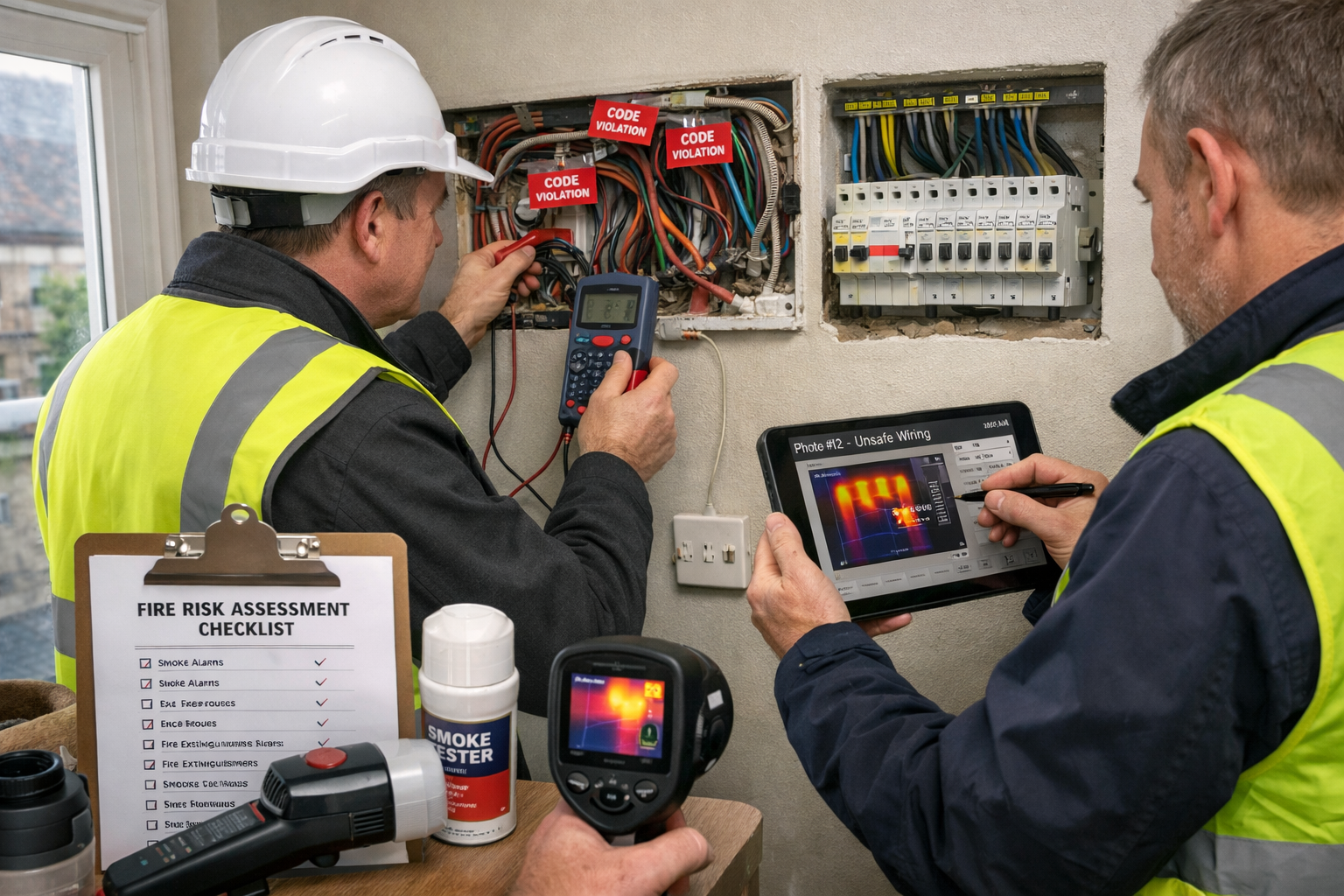
Expert witnesses evaluating electrical hazards must conduct or review Electrical Installation Condition Reports (EICR) prepared by qualified electricians. Key assessment areas include:
Consumer Unit Evaluation:
- Adequate circuit protection devices
- RCD (Residual Current Device) functionality
- Appropriate circuit breaker ratings
- Evidence of overloading or overheating
Wiring Condition Assessment:
- Cable insulation integrity
- Appropriate cable sizing for load
- Secure cable routing and support
- Absence of exposed live conductors
Earthing and Bonding Verification:
- Main earthing conductor adequacy
- Supplementary bonding in high-risk areas
- Earth continuity testing results
- Equipotential bonding compliance
Hazard Classification and Risk Ratings
Electrical defects receive coded classifications in EICR reports that expert witnesses must interpret for tribunal proceedings:
C1 – Danger Present: Immediate risk requiring urgent remediation (examples: exposed live parts, inadequate earthing)
C2 – Potentially Dangerous: Urgent remediation recommended (examples: lack of RCD protection, inadequate bonding)
C3 – Improvement Recommended: Does not meet current standards but not immediately dangerous
FI – Further Investigation Required: Limitation prevents full assessment
For Awaab's Law compliance, C1 and C2 classifications typically trigger mandatory remediation timelines. Expert witnesses must clearly explain the risk implications of each classification in terms accessible to tribunal members without electrical expertise.
Documentation Requirements for Electrical Evidence
Electrical hazard evidence requires particularly rigorous documentation standards:
- ✅ EICR certificates from NICEIC or NAPIT registered electricians
- ✅ Test result schedules showing circuit measurements
- ✅ Photographic evidence of defects with clear labeling
- ✅ Previous inspection history demonstrating defect progression
- ✅ Manufacturer specifications for installed equipment
- ✅ Regulatory standards references (BS 7671 wiring regulations)
Expert witnesses should cross-reference findings with structural engineering assessments when electrical defects relate to building fabric deterioration.
Evidence Standards for Fire Safety Hazards
Fire safety assessment under Awaab's Law requires expert witnesses to evaluate both active fire protection systems and passive fire safety measures, applying principles from the Regulatory Reform (Fire Safety) Order 2005.
Fire Risk Assessment Framework
Expert witnesses must conduct or review Fire Risk Assessments (FRA) that systematically evaluate:
Fire Hazard Identification:
- Ignition sources (electrical equipment, heating systems, cooking appliances)
- Combustible materials (furnishings, stored items, building materials)
- Oxygen sources (ventilation systems, oxygen therapy equipment)
People at Risk Evaluation:
- Occupant numbers and characteristics
- Vulnerable individuals (children, elderly, disabled)
- Sleeping occupants (residential properties present higher risk)
Fire Safety Measures Assessment:
- Detection systems (smoke alarms, heat detectors)
- Escape routes (adequate width, clear of obstructions, emergency lighting)
- Fire doors (self-closing mechanisms, intumescent strips, smoke seals)
- Fire extinguishers (appropriate type, accessible, maintained)
Quantifying Fire Safety Deficiencies
Expert witnesses must translate qualitative fire safety observations into evidence that demonstrates non-compliance severity:
Detection System Deficiencies:
- Missing smoke alarms in circulation spaces or habitable rooms
- Non-functional alarms (battery failure, end-of-life units)
- Inadequate alarm audibility between floors
- Absence of interconnected alarm systems in multi-story properties
Escape Route Deficiencies:
- Blocked or obstructed escape routes
- Inadequate escape route width (<750mm for single direction)
- Missing or inadequate emergency lighting
- Windows with restrictive opening mechanisms preventing emergency egress
Fire Door Deficiencies:
- Missing or damaged intumescent strips
- Non-functional self-closing mechanisms
- Gaps exceeding 3mm around door frames
- Missing or damaged smoke seals
Regulatory Standards and Compliance Benchmarks
Fire safety evidence must reference applicable regulatory standards:
- Smoke and Carbon Monoxide Alarm Regulations 2015 (minimum alarm requirements)
- Housing Health and Safety Rating System (HHSRS) (fire hazard scoring)
- Building Regulations Approved Document B (fire safety design standards)
- BS 5839 (fire detection and alarm systems standards)
Expert witnesses preparing evidence for tribunal proceedings should obtain relevant property certification documentation demonstrating compliance or non-compliance with these standards.
Key Expert Witness Challenges in Awaab's Law 2026 Disputes
Challenge 1: Meeting Compressed Investigation Timelines ⏰
Resource constraints create significant operational challenges for housing associations and their expert witnesses. Limited inspection staff face high case volumes when meeting investigation and remediation deadlines, particularly during peak periods or complex cases requiring specialist assessments [4].
Practical implications:
- Expert witnesses may face pressure to complete assessments faster than thorough investigation allows
- Complex multi-hazard cases (damp + electrical + fire) require coordination between multiple specialists
- Emergency callouts during peak demand periods strain available expertise
Mitigation strategies:
- Maintain panel of pre-qualified expert witnesses across specialisms
- Implement triage systems prioritizing highest-risk cases
- Use remote inspection technologies where appropriate for initial assessments
Challenge 2: Establishing Investigator Competency Standards
The regulatory requirement for investigators with skills and experience "in the reasonable opinion of the lessor" creates conceptual challenges in determining investigator competency [2]. This subjective standard can become a point of dispute in tribunal proceedings.
Tribunal considerations:
- What qualifications demonstrate adequate competency for each hazard type?
- Does general surveying expertise suffice, or are specialist certifications required?
- How recent must professional development be to demonstrate current knowledge?
Best practice approach:
- Engage RICS-certified chartered surveyors with relevant specialist accreditations
- Maintain CPD records demonstrating current knowledge in relevant hazard areas
- Document investigator selection rationale for potential tribunal scrutiny
Challenge 3: Documentation Consistency and Evidentiary Reliability
Poor records evidencing inspections or follow-up procedures make it difficult for landlords to demonstrate compliance [5]. Inconsistencies between inspection notes and witness testimony can undermine landlord defenses, though courts may prioritize witness testimony when supported by training records [5].
Common documentation failures:
- ❌ Handwritten notes without timestamps or signatures
- ❌ Photographs without date/time metadata or location identification
- ❌ Incomplete measurement records (missing units, reference points, or equipment calibration data)
- ❌ Contradictory statements between initial and follow-up inspections
- ❌ Missing chain of custody for evidence samples (e.g., mould samples)
Documentation best practices:
- Use standardized inspection templates with mandatory fields
- Implement digital inspection tools with automatic timestamps and GPS tagging
- Maintain contemporaneous notes during inspections
- Photograph measurement equipment displays showing readings
- Create inspection videos providing continuous documentation
Challenge 4: Multi-Hazard Assessment Complexity
Expert Witness Challenges in Awaab's Law 2026 Disputes: Evidence Standards for Damp, Fire and Electrical Hazards become particularly acute when multiple hazard types coexist in a single property. Damp conditions may compromise electrical safety, while remediation work might temporarily affect fire safety measures.
Interaction examples:
- Penetrating damp damaging electrical installations
- Mould remediation requiring temporary removal of fire doors
- Electrical heating inadequacy contributing to condensation damp
- Fire safety improvement work exposing previously hidden damp
Expert witnesses must analyze these interactions and advise on remediation sequencing that addresses all hazards while maintaining safety throughout the works.
Challenge 5: Anticipating Private Sector Extension
With anticipated regulations for the private rental sector expected at some point in 2026 [5], expert witnesses must prepare for significantly expanded caseload and potentially different evidentiary standards for private landlords versus social housing providers.
Preparation considerations:
- Private landlords typically have fewer in-house technical resources
- Smaller-scale landlords may challenge investigation costs
- Different regulatory enforcement mechanisms may apply
- Tribunal case volumes will likely increase substantially
Case Study Applications: Defect Quantification Techniques
Case Study 1: Complex Damp Assessment in Victorian Terrace
Property characteristics: Three-bedroom Victorian terrace, social housing, family with young children including child with asthma
Reported hazard: Persistent black mould in bedrooms and bathroom
Expert witness investigation:
- Moisture meter readings identified elevated readings (22-28%) in external wall sections
- Thermal imaging revealed cold bridging at wall-floor junctions
- Salt analysis confirmed rising damp component
- Ventilation assessment showed inadequate background ventilation
- Heating system evaluation revealed undersized radiators
Multi-causal finding: The expert witness identified three contributing factors:
- Rising damp (absent/failed damp-proof course)
- Condensation damp (inadequate ventilation and heating)
- Penetrating damp (defective external rendering)
Evidence presentation: The expert prepared a comprehensive report with:
- Annotated floor plans showing moisture reading locations
- Thermal imaging overlays highlighting cold spots
- Comparative analysis of moisture levels in affected vs. unaffected rooms
- Remediation specification addressing all three damp sources
- Health impact assessment referencing child's asthma exacerbation
Tribunal outcome: The systematic quantification and multi-causal analysis demonstrated landlord responsibility across multiple defects, supporting the tenant's claim and establishing clear remediation requirements.
Case Study 2: Electrical Hazard Assessment in Converted Flat
Property characteristics: Second-floor flat in converted Edwardian house, social housing, elderly tenant
Reported hazard: Frequent circuit breaker trips, burning smell from consumer unit
Expert witness investigation:
- EICR conducted by NICEIC-registered electrician revealed multiple C1 and C2 defects
- Consumer unit assessment identified obsolete fuse board without RCD protection
- Circuit testing revealed overloaded ring main (excessive connected load)
- Visual inspection identified DIY electrical work without certification
- Thermal imaging showed significant heat generation in consumer unit
Critical findings:
- C1 defects: Exposed live conductors in kitchen, inadequate main earthing
- C2 defects: No RCD protection on socket circuits, overloaded circuits, inadequate bonding
Evidence presentation: The expert witness report included:
- Complete EICR with test result schedules
- Photographs of specific defects with clear labeling
- Thermal imaging showing overheating components
- Risk assessment explaining immediate danger to elderly occupant
- Regulatory standards references (BS 7671) highlighting non-compliance
Tribunal outcome: The C1 classification evidence demonstrated immediate danger, supporting urgent remediation requirement and interim accommodation provision during electrical upgrade works.
Case Study 3: Fire Safety Deficiencies in Purpose-Built Block
Property characteristics: Ground-floor flat in 1960s purpose-built block, social housing, family with mobility-impaired adult
Reported hazard: Non-functional smoke alarms, blocked communal escape route
Expert witness investigation:
- Fire Risk Assessment identified multiple fire safety deficiencies
- Smoke alarm testing revealed end-of-life units (>10 years old) with failed batteries
- Communal area inspection documented stored items obstructing escape route
- Fire door inspection identified missing intumescent strips and non-functional closers
- Emergency lighting testing revealed multiple failed units
Severity assessment:
- Critical deficiencies: Non-functional smoke detection, obstructed escape route
- Significant deficiencies: Compromised fire doors, failed emergency lighting
- Vulnerability factor: Mobility-impaired occupant requiring additional escape time
Evidence presentation: The expert report provided:
- Annotated escape route plans showing obstructions
- Photographic evidence of fire safety deficiencies
- Smoke alarm test documentation showing failure modes
- Fire door gap measurements exceeding 3mm tolerance
- Vulnerability assessment for mobility-impaired occupant
Tribunal outcome: The combination of multiple fire safety deficiencies affecting a vulnerable occupant established clear regulatory breach and urgent remediation requirement.
Practical Guidance for Expert Witnesses
Pre-Inspection Preparation Checklist
Before conducting Awaab's Law investigations, expert witnesses should:
- ✅ Review tenant notification documentation and reported hazard details
- ✅ Obtain previous inspection reports and maintenance records
- ✅ Identify property-specific vulnerabilities (occupant health conditions, building age/type)
- ✅ Prepare appropriate inspection equipment (moisture meters, thermal cameras, electrical testing equipment)
- ✅ Review applicable regulatory standards for reported hazard types
- ✅ Coordinate with specialist consultants if multi-disciplinary assessment required
Inspection Best Practices
During property inspections:
- Document systematically: Use standardized templates ensuring all required information is captured
- Photograph comprehensively: Capture wide shots for context and close-ups for specific defects
- Measure quantitatively: Record objective measurements rather than subjective descriptions
- Note limitations: Document any areas inaccessible for inspection
- Maintain independence: Avoid being influenced by landlord or tenant perspectives
- Communicate clearly: Explain inspection process to occupants and address immediate safety concerns
Report Writing Standards
Expert witness reports for Awaab's Law disputes should include:
Executive Summary:
- Clear statement of hazards identified
- Severity classification for each hazard
- Immediate safety concerns requiring urgent action
Detailed Findings:
- Systematic description of property condition
- Quantitative measurements and test results
- Photographic evidence with clear labeling
- Regulatory standards references
Causation Analysis:
- Identification of defect causes
- Distinction between landlord and tenant responsibility
- Analysis of hazard interactions
Remediation Recommendations:
- Specific remediation measures required
- Estimated costs and timelines
- Sequencing for multi-hazard remediation
- Temporary mitigation measures during works
Health Impact Assessment:
- Potential health consequences of identified hazards
- Vulnerability factors for specific occupants
- Medical evidence references where available
For complex cases requiring multiple specialist assessments, consider coordinating with professionals offering structural surveys or dilapidation surveys to provide comprehensive evidence.
The Future Landscape: Private Sector Extension and Evolving Standards
Anticipated Private Sector Regulations
As of early 2026, clarity on implementation timing for private rental sector regulations remains pending [5]. However, expert witnesses should anticipate:
Likely regulatory framework:
- Similar investigation and remediation timelines as social housing
- Potential variations in competent investigator standards
- Different enforcement mechanisms (local authority vs. Regulator of Social Housing)
- Possible phased implementation based on property size or landlord portfolio
Preparation strategies:
- Develop scalable assessment processes accommodating increased demand
- Create tiered service offerings for different landlord types
- Establish relationships with local authority enforcement teams
- Monitor regulatory consultations and draft guidance
Emerging Technologies in Hazard Assessment
Expert witnesses should embrace technological advances improving evidence quality:
Remote inspection capabilities:
- Video inspection platforms enabling initial assessments without site visits
- Tenant-operated inspection tools with expert guidance
- AI-assisted image analysis identifying potential hazards
Advanced diagnostic equipment:
- Multi-sensor moisture mapping systems
- Drone-based external envelope inspection
- Portable electrical testing equipment with cloud data storage
- Continuous environmental monitoring devices
Digital evidence management:
- Blockchain-verified timestamps for evidence integrity
- Cloud-based inspection platforms with automatic backup
- Integrated report generation with embedded multimedia evidence
These technologies can help address resource constraints [4] while maintaining evidence quality standards.
Professional Development Priorities
Expert witnesses should prioritize continuing professional development in:
- Multi-hazard assessment integration (damp + electrical + fire combined evaluations)
- Health impact assessment (understanding medical evidence and vulnerability factors)
- Tribunal procedures and evidence presentation (effective communication of technical findings)
- Regulatory compliance updates (tracking Awaab's Law extensions and amendments)
- Technology adoption (leveraging new inspection and documentation tools)
Maintaining RICS certification and relevant specialist accreditations remains essential for credibility in tribunal proceedings.
Conclusion
Expert Witness Challenges in Awaab's Law 2026 Disputes: Evidence Standards for Damp, Fire and Electrical Hazards represent a complex and evolving area of housing law and technical practice. The extension of Awaab's Law principles beyond damp and mould to encompass electrical and fire safety hazards has significantly expanded the scope and complexity of expert witness work in housing disrepair cases.
Key success factors for expert witnesses include:
🎯 Technical competency across multiple hazard categories, supported by RICS certification and specialist qualifications
🎯 Systematic documentation practices ensuring evidence consistency and reliability for tribunal scrutiny
🎯 Quantitative assessment methodologies providing objective measurements rather than subjective opinions
🎯 Multi-disciplinary coordination when cases require electrical, fire safety, and surveying expertise
🎯 Health impact analysis connecting property conditions to occupant vulnerabilities
🎯 Regulatory knowledge staying current with evolving standards and enforcement approaches
The compressed investigation timelines mandated by Awaab's Law [5] create operational pressures, but also emphasize the critical importance of expert witnesses who can deliver high-quality, defensible evidence efficiently. As the legislation extends to the private rental sector later in 2026, demand for qualified expert witnesses will increase substantially, making professional preparation and capacity building essential.
Actionable Next Steps
For expert witnesses:
- Review and update professional qualifications ensuring coverage of all Awaab's Law hazard categories
- Implement standardized documentation systems with digital evidence management
- Develop relationships with specialist consultants for multi-disciplinary assessments
- Monitor regulatory developments regarding private sector extension
- Invest in advanced diagnostic equipment improving evidence quality
For social landlords:
- Establish panels of pre-qualified expert witnesses across required specialisms
- Implement systematic inspection documentation protocols
- Conduct compliance audits of existing investigation procedures
- Develop emergency response procedures for C1 electrical hazards and immediate fire safety risks
- Prepare for increased tribunal activity as enforcement intensifies
For legal professionals:
- Understand technical assessment methodologies for different hazard types
- Develop expertise in challenging or supporting expert witness evidence
- Build relationships with qualified expert witnesses for case referrals
- Monitor case law development establishing evidentiary precedents
- Prepare for private sector extension increasing case volumes
The tragic circumstances that led to Awaab's Law underscore the life-or-death importance of effective hazard identification and remediation in residential properties. Expert witnesses serve as the critical link between technical property assessment and legal enforcement, making their role—and the quality of evidence they provide—essential to protecting tenant safety and ensuring regulatory compliance.
By embracing rigorous evidence standards, maintaining professional competency, and adapting to evolving regulatory requirements, expert witnesses can effectively navigate the challenges of Awaab's Law 2026 disputes while contributing to the broader goal of safe, healthy housing for all tenants.
For comprehensive property assessments supporting Awaab's Law compliance, consider engaging chartered surveyors with RICS certification who can provide the technical expertise and documentation standards required for tribunal proceedings.
References
[1] Awaabs Law Housing Disrepair Claims – https://www.expertcourtreports.co.uk/blog/awaabs-law-housing-disrepair-claims/
[2] Awaabs Law Oddities And Observations – https://thelegalposition.co.uk/2026/01/27/awaabs-law-oddities-and-observations/
[4] Awaabs Law – https://www.apizee.com/awaabs-law.php
[5] The Implications Of Awaabs Law – https://www.footanstey.com/our-insights/articles-news/the-implications-of-awaabs-law/