The East Anglia property market faces unprecedented challenges in early 2026, with building surveyors navigating some of the most severe downward price pressures seen in recent years. East Anglia Building Surveys in Lagging Markets: RICS Tactics for -26% Price Pressure in February 2026 represents a critical turning point for property professionals operating in this region, where market dynamics have shifted dramatically from the optimism of late 2025 to renewed caution and declining buyer confidence.
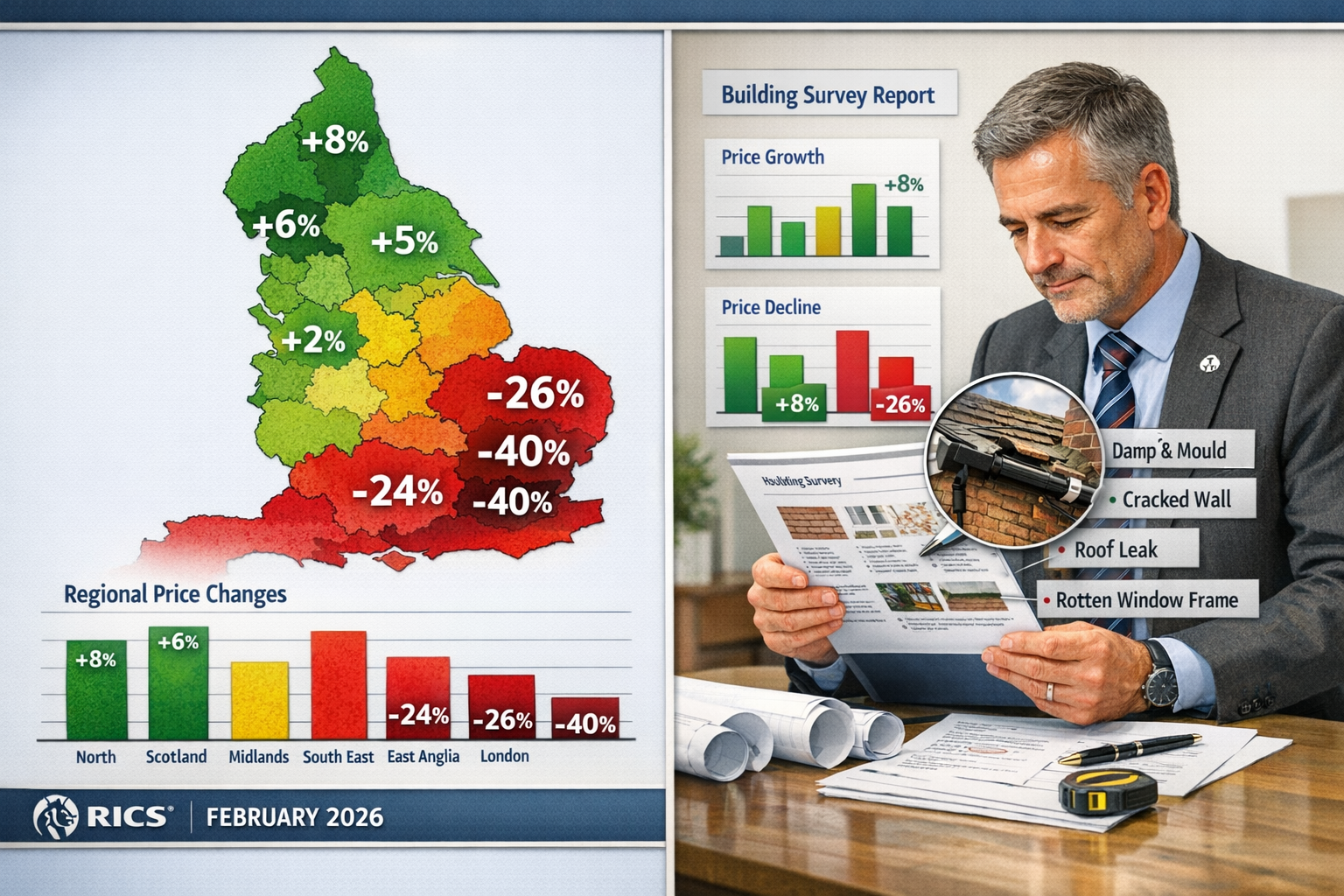
According to the latest RICS Residential Market Survey for February 2026, East Anglia ranks among the regions experiencing the greatest downward pressure on house prices, with a concerning -26% net balance[1][2]. This places the region in a troubling category alongside London (-40%) and the South East (-24%), indicating concentrated weakness across southern and eastern England while northern regions continue to demonstrate resilience[1].
For RICS chartered building surveyors operating in East Anglia, these market conditions demand strategic adaptation. The combination of falling buyer enquiries, subdued transaction activity, and deteriorating price expectations creates a complex environment where survey recommendations, defect prioritization, and valuation accuracy carry heightened importance. Property buyers in declining markets require more rigorous due diligence, while vendors need realistic valuations that reflect current market realities rather than historical peak values.
Key Takeaways
- 🏘️ East Anglia faces -26% downward price pressure in February 2026, ranking among the worst-performing UK regions alongside London and the South East
- 📉 Buyer demand collapsed to -26% nationally, with new enquiries declining sharply from January's -15% as interest rate concerns resurface
- 🔍 Building surveyors must prioritize defect identification and provide conservative valuations to protect clients in falling markets
- 📊 Regional divergence intensifies, with northern areas showing price growth while southern and eastern regions experience significant downward pressure
- ⏰ Near-term outlook weakened substantially to -18% for price expectations, though twelve-month forecasts remain cautiously positive at +33%
Understanding East Anglia Building Surveys in Lagging Markets: February 2026 Market Context
The Scale of Regional Decline
The February 2026 RICS data reveals a stark picture for East Anglia's property market. The -26% net balance for price pressure indicates that significantly more surveyors are reporting falling prices than rising ones across the region[1]. This represents one of the most negative readings for any English region and signals genuine distress in local housing markets.
This regional weakness occurs within a broader national context where buyer demand has deteriorated sharply. New buyer enquiries fell to -26% nationally in February 2026, marking a significant decline from January's -15% reading[1][2]. This renewed weakness follows a more positive start to the year, suggesting that macroeconomic concerns—particularly around interest rate trajectories—have reasserted themselves in buyer psychology.
The agreed sales balance also weakened to -12% in February, down from -9% in January[1][2]. While less negative than much of 2025, this reading confirms that transaction activity remains subdued. For East Anglia specifically, this means fewer completed sales, longer marketing periods, and increased pressure on vendors to accept lower offers.
North-South Market Divergence
Perhaps the most striking feature of the February 2026 market is the pronounced regional divergence between northern and southern areas. While East Anglia, London, and the South East experience substantial downward pressure, regions including Northern Ireland, Scotland, and the North West of England continue to report rising prices[1][2].
This divergence reflects fundamental differences in market dynamics:
| Region Category | Price Trend | Key Factors |
|---|---|---|
| Northern Regions | Rising (+) | Affordability, economic growth, first-time buyer activity |
| East Anglia | Falling (-26%) | Affordability constraints, economic uncertainty, reduced demand |
| London | Falling (-40%) | Severe affordability crisis, economic headwinds, outmigration |
| South East | Falling (-24%) | High prices, commuter market weakness, reduced London spillover |
For building surveyors conducting RICS building surveys in East Anglia, this regional context matters enormously. Clients need to understand that local market weakness is not necessarily indicative of broader UK trends, but rather reflects specific regional challenges around affordability and demand dynamics.
Forward-Looking Sentiment Deteriorates
The near-term outlook has deteriorated substantially. Short-term price expectations weakened sharply to -18% in February from -6% in January[1][2], indicating that surveyors anticipate continued downward pressure over the coming three months. This represents the most pessimistic near-term outlook since late 2025 and suggests the market correction may have further to run.
However, twelve-month price expectations remain positive at +33%, though notably softer than January's +43% reading[1][2]. This suggests that while professionals anticipate near-term challenges, they expect market conditions to stabilize and potentially improve over the medium term. For East Anglia, this means surveyors must balance immediate market realities with longer-term value considerations.
RICS Tactics for Building Surveys in East Anglia's Challenging Market
Defect Prioritization in Falling Markets
When conducting building surveys in markets experiencing -26% price pressure, defect identification and prioritization become critically important. Buyers in declining markets are understandably risk-averse and need comprehensive information about property condition to make informed decisions.
RICS chartered surveyors should adopt the following tactical approaches:
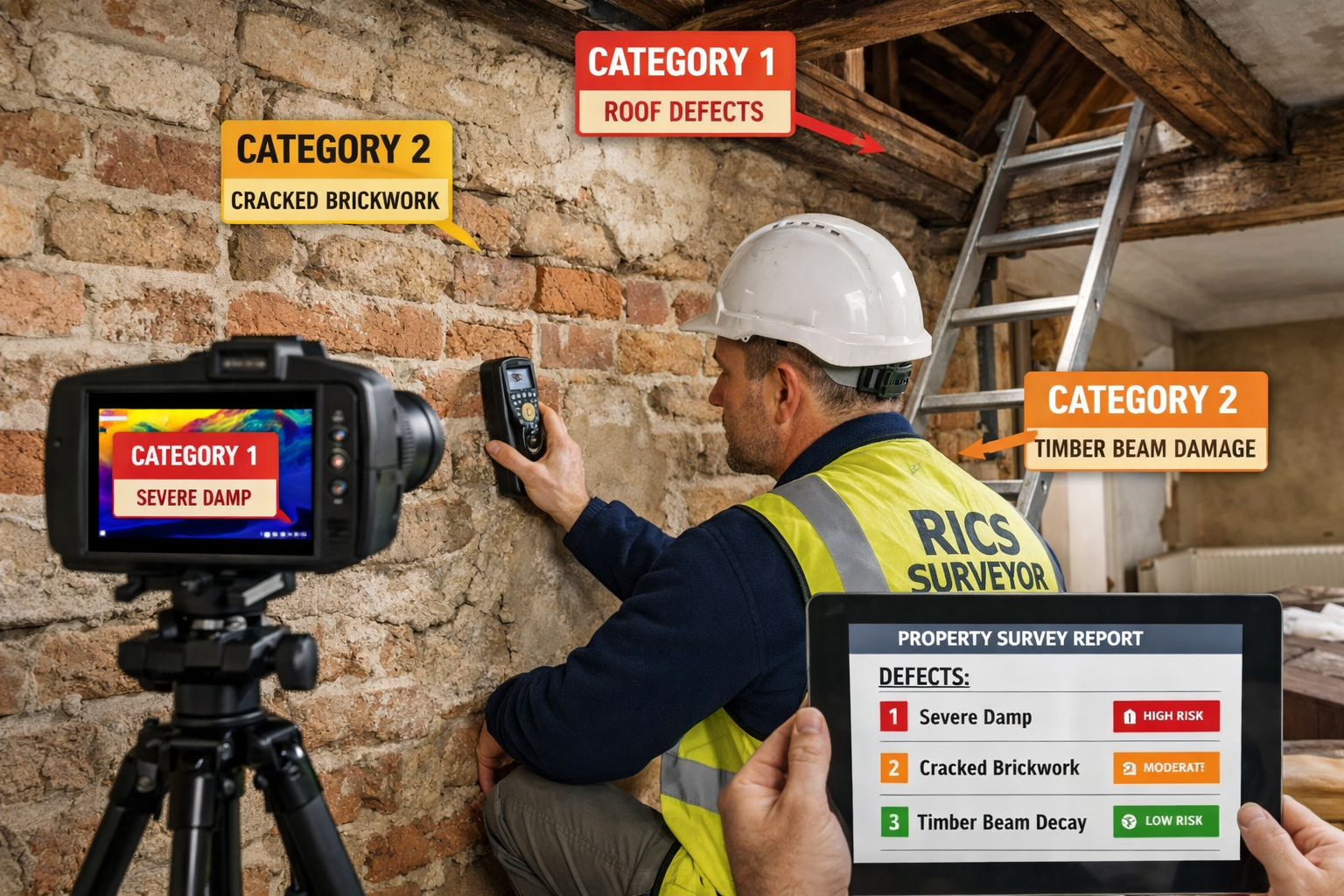
🔴 Category 1 Defects (Urgent):
- Structural issues requiring immediate attention
- Active water ingress and damp penetration
- Roof failures and significant weather-tightness problems
- Dangerous electrical or gas installations
- Subsidence or settlement concerns
In falling markets, Category 1 defects carry amplified significance. Buyers may struggle to secure mortgage approval if serious defects are identified, and vendors may face substantial price reductions. Surveyors conducting RICS specific defect surveys must provide clear, unambiguous guidance on urgent issues.
🟡 Category 2 Defects (Significant):
- Aging building services requiring replacement within 5 years
- Moderate damp issues requiring investigation
- Roof coverings nearing end of serviceable life
- Drainage concerns
- Window and door replacements needed
Category 2 defects become negotiation focal points in declining markets. Buyers will use these findings to justify offer reductions, and surveyors must provide realistic cost estimates for remedial works. When comparing different types of survey, buyers should understand that comprehensive Level 3 building surveys provide the most detailed defect analysis.
🟢 Category 3 Defects (Minor):
- Cosmetic issues and routine maintenance
- Minor decorative repairs
- Garden and boundary features
- Non-urgent improvements
While Category 3 defects are less critical, their cumulative impact on buyer perception should not be underestimated in challenging markets. A property with numerous minor issues may appear poorly maintained, affecting perceived value even if no serious problems exist.
Conservative Valuation Approaches
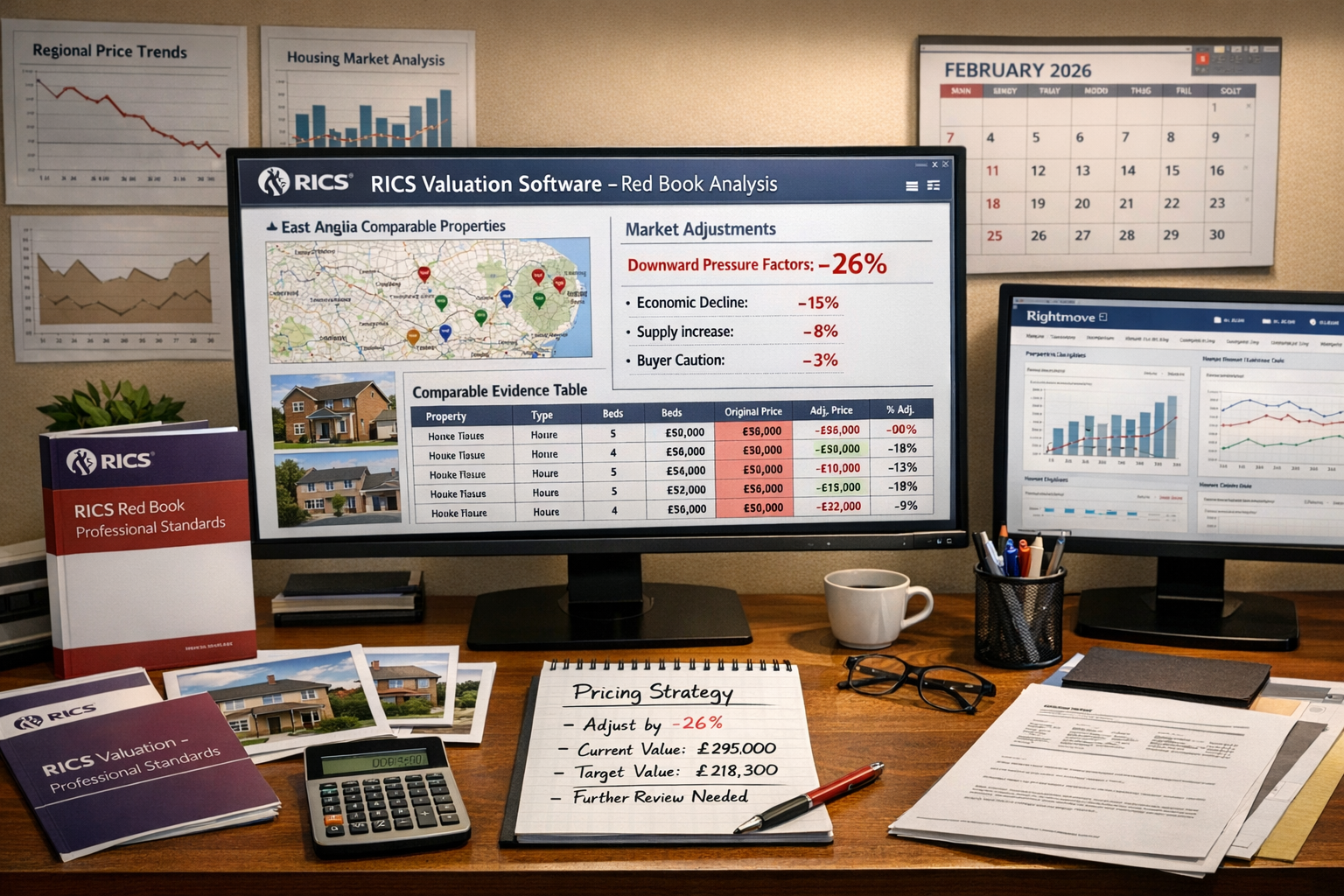
East Anglia Building Surveys in Lagging Markets: RICS Tactics for -26% Price Pressure in February 2026 must include robust valuation methodologies that reflect current market realities. The RICS Red Book provides the professional framework, but practical application requires regional market awareness.
Comparable Evidence Selection:
Surveyors must prioritize recent comparable sales (within 3 months) over older transactions that may reflect pre-correction pricing. In East Anglia's current market, comparables from late 2025 may overstate current values by 10-15% or more. When conducting RICS valuations, evidence selection becomes paramount.
Market Adjustment Factors:
Apply downward adjustments for:
- Extended marketing periods (properties on market >90 days)
- Vendor motivation (forced sales, chain breaks)
- Property condition relative to comparables
- Location-specific demand factors
- Current market sentiment (-26% pressure factor)
Avoiding Optimism Bias:
In falling markets, there's natural pressure from vendors and estate agents to maintain higher valuations. RICS professionals must resist this pressure and provide honest, evidence-based assessments. A chartered building surveyor has professional obligations to accuracy over client satisfaction.
Enhanced Due Diligence for Buyers
Buyers purchasing in East Anglia during this period of market weakness should commission comprehensive surveys rather than basic mortgage valuations. The risks of overpaying or acquiring properties with hidden defects are amplified when prices are falling.
Recommended survey approach:
- Full Level 3 Building Survey for properties built before 1990, properties of unusual construction, or those showing visible defect indicators
- Specialist investigations where initial surveys identify concerns (damp surveys, structural engineers, drainage surveys)
- Market valuation review to ensure purchase price reflects current market conditions rather than asking price
- Legal due diligence on local development plans, flood risk, and environmental factors
The cost of comprehensive surveys represents a small percentage of purchase price but can prevent costly mistakes. Understanding which survey you need depends on property type, age, and condition.
Vendor Strategy and Realistic Pricing
For vendors in East Anglia, the -26% price pressure reading demands realistic pricing strategies from the outset. Properties that enter the market overpriced will languish, accumulating stigma and ultimately achieving lower prices than correctly priced properties.
RICS surveyors advising vendors should recommend:
Initial Pricing Strategy:
- Price 5-10% below recent comparable sales to generate immediate interest
- Avoid "testing the market" with optimistic pricing
- Consider current market velocity and buyer sentiment
- Factor in likely survey findings and negotiation scope
Pre-Sale Surveys:
Vendors should consider commissioning their own building surveys before marketing. This allows them to:
- Address significant defects before viewings
- Price property accurately accounting for condition
- Reduce negotiation scope after buyer surveys
- Demonstrate transparency to serious buyers
Timing Considerations:
With near-term price expectations at -18%[1], vendors who can delay sales until market conditions stabilize may benefit. However, those requiring immediate sales must accept current market realities rather than hoping for near-term recovery.
Strategic Considerations for RICS Professionals in East Anglia
Adapting Service Offerings to Market Conditions
The challenging market conditions in East Anglia create both challenges and opportunities for RICS chartered surveyors. Demand for comprehensive building surveys may increase as buyers become more risk-averse, while valuation work may shift from purchase valuations to refinancing and portfolio reviews.
Service diversification opportunities:
Distressed Property Assessments:
As market pressure intensifies, some properties will enter distressed sale situations. Surveyors can offer specialized services for:
- Probate valuations
- Divorce settlements
- Forced sale scenarios
- Portfolio liquidations
Rental Market Services:
With landlord instructions at -27% in February 2026[1], the rental market faces severe supply constraints. Surveyors can provide:
- Rental valuations for portfolio landlords
- Schedule of condition reporting for tenancy agreements
- Investment property assessments
- Regulatory compliance surveys
Commercial Property Opportunities:
While residential markets struggle, commercial property may offer alternative revenue streams. Commercial building surveys and commercial valuations may prove more stable during residential market corrections.
Professional Development and Market Knowledge
Surveyors operating in challenging markets must maintain current market knowledge and technical competence. The RICS professional framework requires ongoing CPD (Continuing Professional Development), but market conditions demand additional focus areas:
Essential knowledge areas:
- Regional market data interpretation
- Economic indicators affecting property markets
- Interest rate impacts on affordability
- Building pathology in older East Anglia housing stock
- Modern Methods of Construction (MMC) assessment
- Energy efficiency and EPC implications
- Flood risk and climate change factors
Data sources for market intelligence:
- Monthly RICS Residential Market Surveys
- Land Registry price paid data
- Local authority planning data
- Economic forecasts from major banks
- Regional property market reports
Client Communication in Uncertain Markets
Perhaps the most critical skill for surveyors in the current environment is clear, honest communication with clients. Both buyers and vendors need realistic assessments rather than optimistic reassurance.
Effective communication principles:
📊 Data-Driven Advice:
Support recommendations with objective market data, comparable evidence, and regional statistics. Reference the -26% price pressure reading and explain its implications for individual transactions.
⚠️ Risk Transparency:
Clearly articulate risks associated with purchasing or selling in falling markets. Buyers need to understand potential for further price declines, while vendors must appreciate the costs of delayed sales.
🎯 Actionable Recommendations:
Provide specific, implementable advice rather than general observations. If a property has significant defects, provide cost estimates for remediation and explain impact on value and marketability.
📞 Accessibility:
Make yourself available for follow-up questions and clarifications. Complex survey reports may require explanation, particularly for first-time buyers unfamiliar with building terminology.
Regulatory Compliance and Professional Standards
Operating in challenging markets increases scrutiny of professional conduct. Surveyors must ensure strict compliance with:
RICS Standards:
- Red Book valuation standards for all formal valuations
- Home Survey Standard for residential surveys
- Professional indemnity insurance requirements
- Conflicts of interest management
- Client money handling procedures
Legal and Regulatory Requirements:
- Consumer Protection from Unfair Trading Regulations
- Estate Agents Act compliance (if providing agency services)
- Money Laundering Regulations
- Data Protection Act (GDPR)
- Health and Safety at Work Act
Complaints and professional negligence claims often increase during market downturns as clients experience losses. Meticulous documentation, conservative assumptions, and clear communication provide the best protection against professional liability.
Technology and Efficiency in Survey Delivery
Challenging market conditions create pressure on fees and margins. Surveyors must balance comprehensive service delivery with operational efficiency. Technology offers solutions:
Digital Survey Tools:
- Tablet-based survey software for on-site data capture
- Digital photography and annotation tools
- Moisture meters and thermal imaging cameras
- Laser measuring devices
- Drone surveys for roof and chimney inspection
Report Generation:
- Template-based reporting with customization
- Photographic evidence integration
- Automated comparable evidence searches
- Digital delivery and client portals
Practice Management:
- CRM systems for client relationship management
- Automated appointment scheduling
- Digital payment processing
- Cloud-based file storage and backup
Efficiency improvements allow surveyors to maintain service quality while managing fee pressure in competitive markets.
Long-Term Outlook and Market Recovery Prospects
While the near-term outlook for East Anglia remains challenging, the twelve-month price expectations of +33% nationally[1][2] suggest professional surveyors anticipate market stabilization and recovery over the medium term. Several factors support this cautiously optimistic longer-term view:
Potential Recovery Drivers:
💰 Interest Rate Trajectory:
If the Bank of England begins cutting interest rates in mid-to-late 2026, mortgage affordability will improve, potentially stimulating demand. However, the February survey data suggests uncertainty around rate cuts has contributed to current weakness[1].
🏗️ Supply Constraints:
New vendor instructions remained flat at just +2% in February[1], indicating ongoing supply constraints. If demand stabilizes while supply remains limited, price pressure may ease.
📈 Economic Growth:
UK economic performance and employment levels will significantly influence housing market recovery. Improved economic confidence typically translates to increased buyer activity.
🌍 Geopolitical Stability:
The survey notes that macroeconomic and geopolitical uncertainty has contributed to weakened sentiment[1]. Resolution of international tensions could improve buyer confidence.
Regional Recovery Timing:
East Anglia's recovery may lag behind northern regions due to:
- Higher absolute price levels affecting affordability
- Greater exposure to London economic performance
- Demographic factors (aging population, outmigration)
- Limited employment growth compared to northern cities
Surveyors should counsel clients that while recovery is anticipated, timing remains uncertain and regional variations will persist.
Conclusion: Navigating East Anglia's Property Market Challenges
East Anglia Building Surveys in Lagging Markets: RICS Tactics for -26% Price Pressure in February 2026 requires RICS chartered surveyors to adapt their approaches, enhance their technical capabilities, and provide clear, honest guidance to clients navigating one of the most challenging regional property markets in recent years.
The -26% downward price pressure facing East Anglia[1] places the region among the worst-performing in the UK, creating genuine difficulties for buyers, vendors, and property professionals alike. However, these challenges also create opportunities for surveyors who can provide valuable expertise when it's needed most.
Key strategic imperatives for RICS professionals:
✅ Prioritize comprehensive defect identification in all building surveys, recognizing that buyers in falling markets need detailed information to make informed decisions
✅ Apply conservative valuation methodologies that reflect current market realities rather than historical peak values, using recent comparable evidence and appropriate market adjustments
✅ Communicate clearly and honestly with clients about market conditions, risks, and realistic expectations for both purchase and sale transactions
✅ Maintain strict professional standards and regulatory compliance, recognizing that challenging markets increase scrutiny and potential liability
✅ Diversify service offerings to capture opportunities in rental markets, commercial property, and specialized assessment areas
✅ Invest in technology and efficiency to maintain service quality while managing competitive fee pressure
✅ Stay informed about market developments through regular review of RICS data, economic indicators, and regional market intelligence
Actionable Next Steps
For Property Buyers:
Commission comprehensive Level 3 building surveys rather than basic valuations, particularly for older properties or those showing defect indicators. Use survey findings to negotiate realistic prices that reflect both property condition and current market dynamics. Consider survey pricing as an investment in informed decision-making rather than an avoidable cost.
For Property Vendors:
Obtain realistic market valuations from RICS professionals before setting asking prices. Consider pre-sale surveys to identify and address significant defects. Accept that current market conditions require competitive pricing and realistic expectations about marketing periods and achievable prices.
For RICS Surveyors:
Review and update your technical knowledge of East Anglia's housing stock, common defect patterns, and current market conditions. Enhance your communication skills to effectively explain complex market dynamics to clients. Consider service diversification to capture opportunities beyond traditional purchase surveys. Ensure your professional indemnity insurance provides adequate cover for the current market environment.
The challenges facing East Anglia's property market in early 2026 are substantial, but they are not insurmountable. RICS chartered surveyors who adapt their practices, maintain professional standards, and provide valuable expertise will not only survive this challenging period but emerge stronger when market conditions improve. The twelve-month outlook of +33%[1] suggests that recovery, while not imminent, remains on the horizon for those with patience and professional resilience.
For professional survey services and expert guidance navigating challenging market conditions, contact our RICS chartered surveyors who provide comprehensive building surveys, valuations, and property advice across East Anglia and throughout the UK.
References
[1] RICS Residential Market Survey February 2026 – https://www.retaileconomics.co.uk/retail-insights-trends/rics-residential-market-survey-february-2026?slug=retail-economic-news
[2] UK Residential Market Survey February 2026 – https://www.rics.org/content/dam/ricsglobal/documents/market-surveys/uk-residential-market-survey/UK-Residential-Market-Survey_February-2026.pdf