Do You Need a Survey on a New Build? The Essential Guide for 2026

Picture this: you’ve just signed the contract on a brand-new home, complete with pristine walls, modern fixtures, and that unmistakable smell of fresh paint. Everything looks perfect—but beneath that flawless surface, could there be hidden defects that might cost you thousands? Many homebuyers assume that new construction comes with an automatic guarantee of quality, but the reality is far more complex. Understanding whether do you need a survey on a new build is a critical decision that could protect your investment and save you from costly surprises down the road.
Key Takeaways
- New builds are not immune to defects: Studies show that up to 98% of new homes have some form of construction issue, ranging from minor cosmetic problems to serious structural concerns
- NHBC warranties don’t replace professional surveys: While builder warranties provide some protection, they have significant limitations and don’t cover all potential issues
- Different survey types serve different purposes: Understanding the distinction between snagging surveys, RICS Building Surveys, and specialist inspections is essential
- Lender requirements vary: Some mortgage providers may require surveys on new builds, particularly for non-standard construction or properties purchased before completion
- Early detection saves money: Identifying defects before completion or during the warranty period ensures repairs are the builder’s responsibility, not yours
Understanding New Build Construction in 2026
The landscape of new home construction has evolved significantly, with modern building standards and regulations designed to ensure quality and safety. However, the reality on construction sites doesn’t always match the ideal.
What Qualifies as a New Build?
A new build property typically refers to a home that has never been lived in and was recently constructed. This includes:
- Newly constructed homes built by developers or construction companies
- Properties purchased off-plan before construction is complete
- Self-build projects where homeowners manage their own construction
- Converted commercial buildings transformed into residential properties
- Homes less than two years old that have never been occupied
The definition matters because it affects warranty coverage, building regulations compliance, and whether certain protections apply to your purchase.
Current Building Standards and Regulations
In 2026, new builds must comply with stringent building regulations covering structural integrity, fire safety, energy efficiency, and accessibility. The latest updates to land survey standards have introduced enhanced requirements for construction phase documentation [1].
Key regulatory frameworks include:
- Building Regulations (England and Wales)
- NHBC Standards for new home construction
- Energy Performance Certificate (EPC) requirements
- Fire safety regulations post-Grenfell
- Updated ALTA/NSPS standards for land surveys [2]
Despite these regulations, compliance doesn’t guarantee perfection. Building control inspections typically occur at specific stages but don’t catch every defect or quality issue.
Do You Need a Survey on a New Build? Breaking Down the Myths
The question of whether do you need a survey on a new build generates considerable debate among property professionals, buyers, and lenders. Let’s examine the common misconceptions and realities.
Myth 1: “New Builds Don’t Need Surveys Because Everything is New”
This is perhaps the most dangerous assumption buyers make. New doesn’t automatically mean perfect. Construction defects can occur at any stage of the building process due to:
- ⚠️ Rushed construction timelines to meet sales deadlines
- ⚠️ Subcontractor quality variations across different trades
- ⚠️ Material defects that aren’t immediately visible
- ⚠️ Design flaws in the architectural plans
- ⚠️ Poor site supervision during critical construction phases
Research consistently shows that new builds frequently have defects. A comprehensive survey can identify issues ranging from minor cosmetic problems to serious structural concerns before you complete the purchase.
Myth 2: “The NHBC Warranty Covers Everything”
The National House Building Council (NHBC) warranty is standard for most new builds in the UK, providing a 10-year protection period. However, this warranty has significant limitations:
| Coverage Period | What’s Covered | What’s NOT Covered |
|---|---|---|
| Year 1-2 | Builder’s warranty for defects | Minor cosmetic issues, shrinkage cracks |
| Year 3-10 | Major structural defects only | Non-structural problems, appliances |
| Throughout | Resolution of disputes | Issues not reported promptly |
The warranty requires you to identify and report defects within specific timeframes. Without a professional survey, you might miss critical issues during the warranty period, leaving you financially responsible for repairs.
Myth 3: “Lenders Don’t Require Surveys on New Builds”
While mortgage lenders typically conduct basic valuations on new builds, these are not surveys. A mortgage valuation simply confirms the property is worth the loan amount—it doesn’t assess construction quality or identify defects.
Some lenders may require more detailed surveys when:
- The property uses non-standard construction methods
- The purchase is made before practical completion
- The development is particularly large or complex
- Previous issues have been identified with the developer
Understanding which survey you need depends on your specific circumstances and the property type.
Types of Surveys for New Build Properties
When considering do you need a survey on a new build, it’s essential to understand the different types available and their specific purposes.
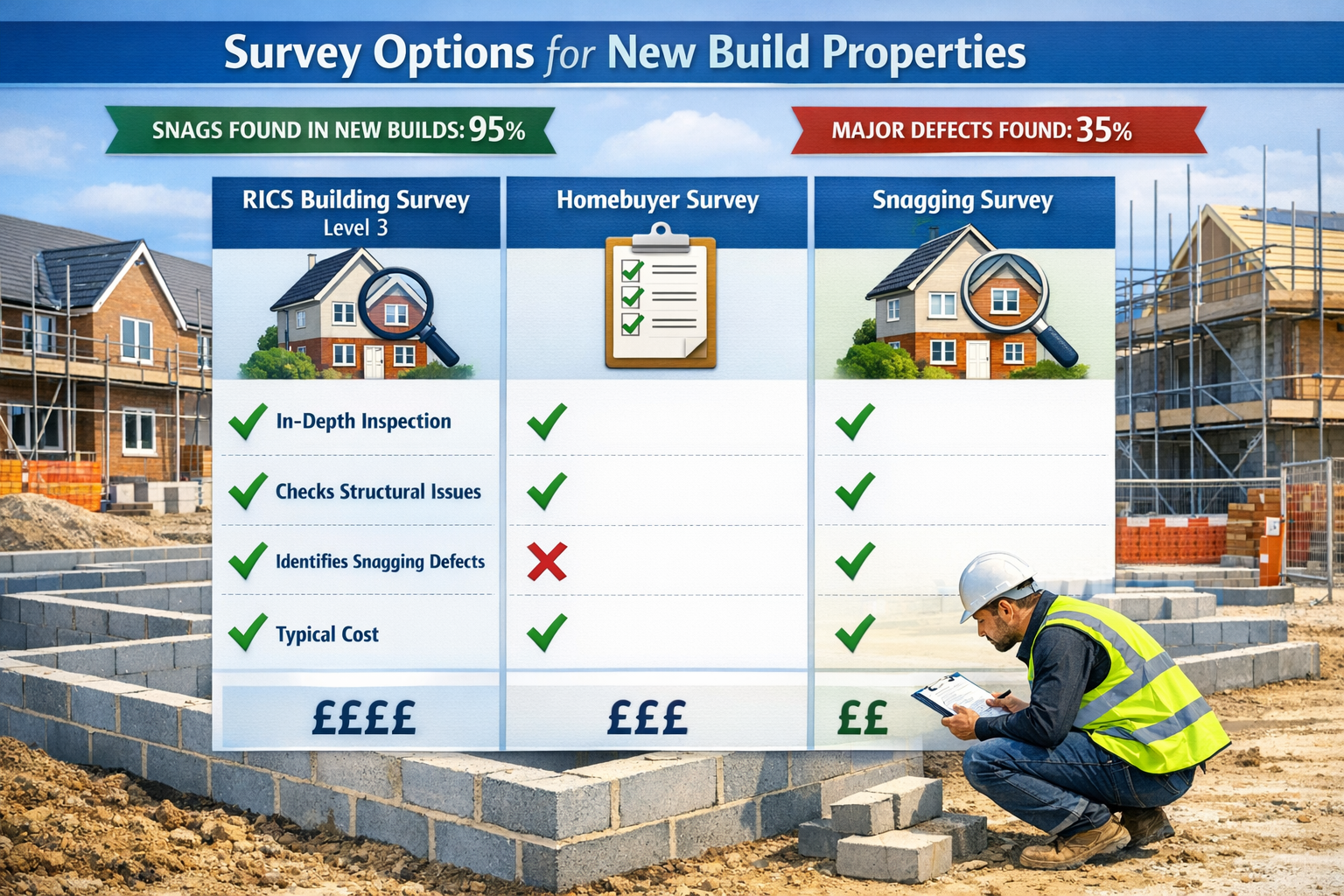
Snagging Surveys
A snagging survey is specifically designed for new build properties and focuses on identifying cosmetic and minor defects that should be corrected before completion.
What snagging surveys cover:
- ✅ Paint and decorating issues
- ✅ Poorly fitted fixtures and fittings
- ✅ Incomplete work or finishing touches
- ✅ Minor alignment problems with doors and windows
- ✅ Cosmetic damage to surfaces
- ✅ Plumbing and electrical finishing issues
Cost: £300-£800 depending on property size
Best for: Identifying issues that builders should rectify before you move in
RICS Building Surveys (Level 3)
A comprehensive RICS Building Survey Level 3 provides the most detailed assessment of a property’s condition, including structural elements and hidden defects.
What Level 3 surveys cover:
- 🔍 Structural integrity assessment
- 🔍 Detailed examination of all accessible areas
- 🔍 Identification of major and minor defects
- 🔍 Advice on repairs and ongoing maintenance
- 🔍 Technical information for legal advisers
- 🔍 Assessment of building materials and construction methods
Cost: £800-£1,500+ depending on property size and complexity
Best for: High-value new builds, complex construction, or when you want comprehensive peace of mind
Working with an RICS Chartered Building Surveyor ensures you receive professional, independent advice backed by industry standards and professional indemnity insurance.
RICS HomeBuyer Reports
The RICS HomeBuyer Survey sits between a basic valuation and a full building survey, offering a balanced approach for many new build purchases.
What HomeBuyer surveys cover:
- 📋 Condition ratings for key elements
- 📋 Identification of urgent defects
- 📋 Advice on necessary repairs
- 📋 Valuation (if requested)
- 📋 Legal issues affecting the property
- 📋 Risks and potential problems
Cost: £400-£900 depending on property value
Best for: Standard new builds where you want more than a valuation but don’t need exhaustive detail
Specialist Surveys
Depending on your new build’s characteristics, you might need additional specialist surveys:
- Drainage surveys using CCTV to inspect underground pipes
- Roof surveys for complex roofing systems
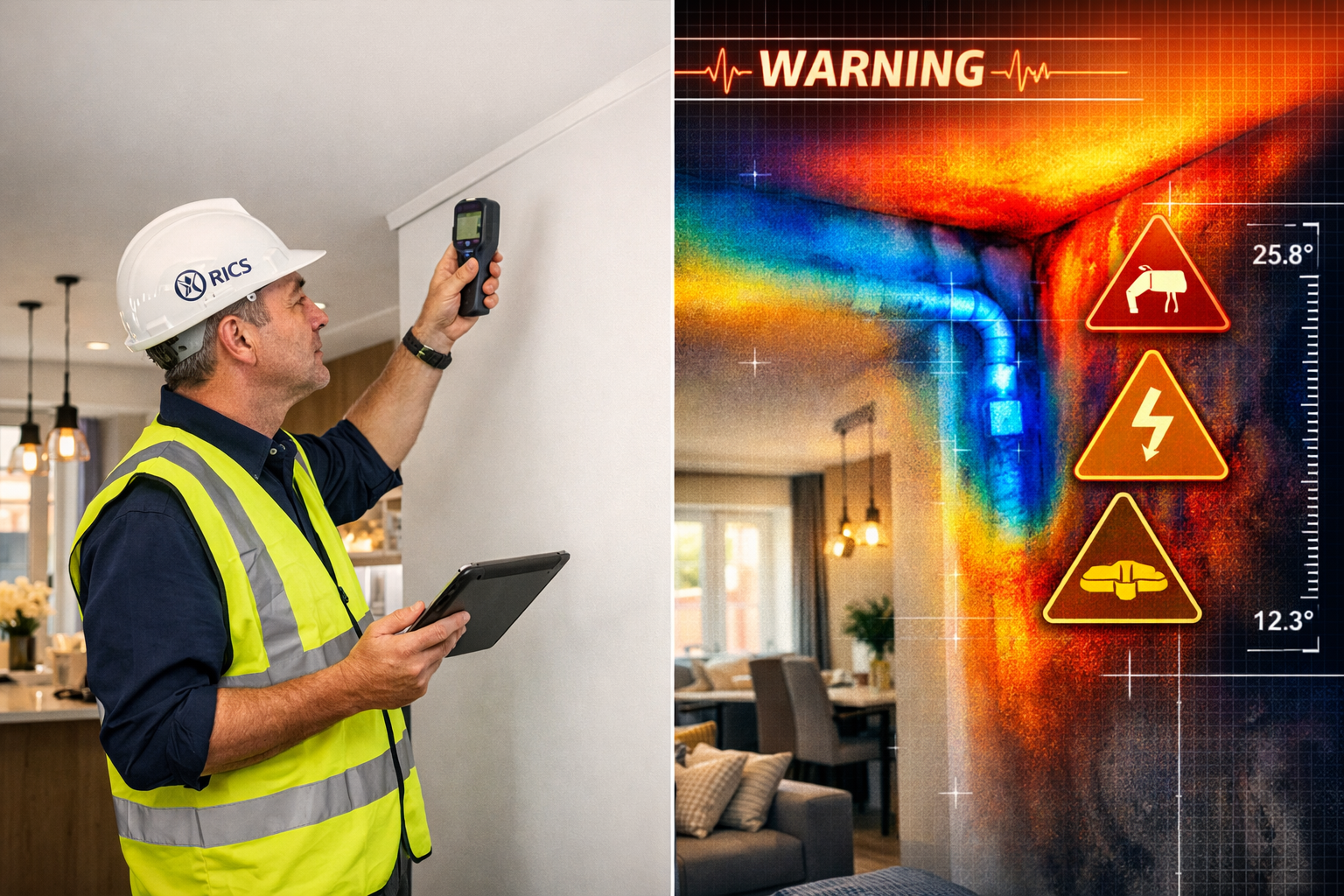
- Thermal imaging surveys to detect insulation problems or moisture ingress
- Structural engineering reports for specific concerns
- Environmental surveys for contaminated land or flooding risks
When Do You Absolutely Need a Survey on a New Build?
While surveys are advisable for all new build purchases, certain circumstances make them absolutely essential.
🚨 Critical Scenarios Requiring Professional Surveys
1. Purchasing Before Practical Completion
When buying off-plan or before the property is finished, a survey at practical completion is crucial. This timing allows you to:
- Identify defects while the builder is still on-site
- Ensure all agreed specifications have been met
- Document issues before taking legal ownership
- Negotiate remedial works or price reductions
2. Non-Standard Construction Methods
Properties built using modern methods of construction (MMC) or non-standard materials require specialist assessment. This includes:
- Timber frame construction
- Steel frame buildings
- Modular or prefabricated homes
- Innovative insulation systems
- Experimental building techniques
3. Self-Build or Custom Build Projects
If you’ve managed your own construction project, an independent survey provides:
- Verification that work meets building regulations
- Identification of issues with subcontractor work
- Documentation for warranty purposes
- Peace of mind before final payments
4. Developer History Concerns
Research your developer’s track record. If they have a history of defects, complaints, or financial difficulties, a comprehensive survey is essential protection.
5. Complex Site Conditions
Properties built on challenging sites require extra scrutiny:
- Sloping or unstable ground
- Previously contaminated land
- Flood risk areas
- Former industrial sites
- Areas with mining history
The Financial Case: Survey Costs vs. Potential Savings
Many buyers question whether the cost of a survey justifies the expense, particularly when purchasing what appears to be a perfect new home.
Survey Investment Analysis
Consider this scenario: A £500 snagging survey identifies £15,000 worth of defects that the builder must rectify. Without the survey, these issues might not become apparent until after the warranty period expires, leaving you responsible for the costs.
Common new build defects and typical repair costs:
| Defect Type | Typical Repair Cost | Detection Method |
|---|---|---|
| Inadequate insulation | £3,000-£8,000 | Thermal imaging survey |
| Drainage problems | £2,000-£10,000 | CCTV drainage survey |
| Structural movement | £5,000-£25,000+ | Building survey |
| Damp and moisture | £1,500-£6,000 | Moisture meter testing |
| Electrical issues | £800-£3,500 | Electrical inspection |
| Roofing defects | £2,500-£15,000 | Roof survey |
Return on Investment
A comprehensive survey package costing £1,200-£1,800 can easily save you:
- £10,000-£50,000 in repair costs over the first decade
- Negotiating power to reduce the purchase price
- Warranty protection by identifying issues during the coverage period
- Future sale value by ensuring quality construction
- Legal protection if disputes arise with the builder
The updated 2026 ALTA/NSPS standards emphasize the importance of detailed property surveys for protecting both buyers and lenders [3].
How to Choose the Right Survey for Your New Build
Selecting the appropriate survey type depends on multiple factors related to your property, budget, and risk tolerance.
Decision Framework
Step 1: Assess Your Property Type
- Standard brick-and-block construction → HomeBuyer Survey or Snagging Survey
- Non-standard construction → Full Building Survey (Level 3)
- High-value property (£500,000+) → Full Building Survey (Level 3)
- Complex design or site → Full Building Survey plus specialist surveys
Step 2: Evaluate Your Risk Tolerance
- Low risk tolerance → Comprehensive Building Survey
- Moderate risk tolerance → HomeBuyer Survey plus snagging
- Budget-conscious but prudent → Snagging survey minimum
Step 3: Consider Timing
- Pre-completion → Snagging survey essential
- Just completed → Full survey recommended
- Within warranty period → Specialist surveys for specific concerns
Step 4: Check Lender Requirements
Confirm whether your mortgage provider requires any specific survey type. Some lenders mandate surveys for certain property types or purchase scenarios.
Selecting a Qualified Surveyor
The quality of your survey depends entirely on the surveyor’s expertise and qualifications. When choosing a professional:
✔️ Verify RICS membership – Ensure they’re a chartered surveyor with relevant qualifications
✔️ Check specialization – Look for experience with new build properties specifically
✔️ Review insurance coverage – Confirm they carry professional indemnity insurance
✔️ Request sample reports – Understand what you’ll receive before committing
✔️ Compare quotations – Get quotes from multiple surveyors, but don’t choose solely on price
✔️ Read reviews – Check independent reviews and testimonials
Working with qualified professionals ensures you receive reliable, actionable advice that protects your investment.
The Survey Process: What to Expect
Understanding the survey process helps you prepare and ensures you get maximum value from the inspection.
Before the Survey
1. Schedule Strategically
Book your survey for the optimal time:
- Before exchange of contracts (ideal)
- After practical completion but before final payment
- Early in the NHBC warranty period if already purchased
2. Prepare Access
Ensure the surveyor can access:
- All rooms and spaces
- Loft and roof space
- Garage and outbuildings
- External areas and boundaries
- Service meters and controls
3. Gather Documentation
Provide your surveyor with:
- Building plans and specifications
- Planning permissions
- Building control certificates
- NHBC warranty documents
- Any previous survey reports
During the Survey
A thorough new build survey typically takes 2-4 hours, depending on property size and complexity. The surveyor will:
- 🔎 Examine all accessible areas systematically
- 🔎 Use specialist equipment (moisture meters, thermal cameras, etc.)
- 🔎 Take detailed photographs and notes
- 🔎 Test doors, windows, and fittings
- 🔎 Inspect external drainage and grounds
- 🔎 Assess roof condition (where accessible)
You’re generally welcome to attend, though not required. Attending allows you to ask questions and understand issues firsthand.
After the Survey
1. Review the Report Carefully
Your survey report will typically categorize issues by severity:
- Condition Rating 1 (Green) – No repair needed
- Condition Rating 2 (Amber) – Repairs or replacements needed
- Condition Rating 3 (Red) – Urgent defects requiring immediate attention
2. Prioritize Actions
Create an action plan based on findings:
- Urgent safety issues → Immediate attention required
- Warranty-covered defects → Report to builder promptly
- Negotiable items → Use in price discussions
- Future maintenance → Plan and budget accordingly
3. Negotiate Effectively
Use survey findings to:
- Request the builder remedies defects before completion
- Negotiate a price reduction for identified issues
- Arrange retention of funds until repairs are completed
- Walk away if problems are too severe
Legal and Warranty Considerations
Understanding the legal framework surrounding new build surveys helps you protect your rights and maximize available protections.
NHBC Warranty Coverage
The NHBC Buildmark warranty provides three distinct levels of protection:
Years 1-2: Builder’s Warranty
- The builder must resolve defects reported during this period
- Covers workmanship and material defects
- Includes items like faulty plumbing, electrical issues, and poor finishes
- Excludes normal wear and tear
Years 3-10: NHBC Insurance
- Covers major structural defects only
- Requires you to pay the first £1,000 of any claim
- Protects against serious issues affecting structural stability
Throughout: Deposit Protection
- Protects your deposit if the builder becomes insolvent before completion
Reporting Defects Effectively
To maintain warranty protection:
- Document everything – Photograph and describe all defects clearly
- Report promptly – Don’t delay reporting issues you discover
- Keep records – Maintain copies of all correspondence
- Follow procedures – Adhere to the warranty’s reporting requirements
- Get professional evidence – Survey reports strengthen your case
Alternative Dispute Resolution
If disputes arise with your builder:
- Contact NHBC’s resolution service
- Use the developer’s formal complaints procedure
- Consider mediation before legal action
- Consult a specialist property solicitor
- Document all communication carefully
The updated 2026 standards for property surveys provide enhanced frameworks for resolving construction disputes [5].
Regional Variations and Specific Considerations
Survey requirements and practices can vary depending on location and local regulations.
Geographic Considerations
Different regions face unique construction challenges:
Flood-prone areas – Require drainage surveys and flood risk assessments
Coastal locations – Need assessment for salt damage and erosion risks
Urban developments – May face ground contamination from previous industrial use
Rural properties – Often require septic tank and private water supply surveys
Areas with mining history – Need specialist ground stability assessments
Lender and Insurance Requirements
Survey requirements vary by:
- Mortgage provider – Some lenders mandate specific survey types
- Property value – Higher-value properties typically require comprehensive surveys
- Construction type – Non-standard builds almost always need detailed assessment
- Insurance providers – May require surveys for buildings insurance
Survey costs also vary regionally, with London and the South East typically commanding higher fees than other areas [4].
Making Your Decision: A Practical Checklist
Use this comprehensive checklist to determine whether do you need a survey on a new build and which type suits your circumstances.
✅ Survey Decision Checklist
Property Factors:
- Property value exceeds £300,000
- Non-standard construction methods used
- Complex architectural design
- Property built on challenging site conditions
- Developer has questionable track record
- Property purchased off-plan or pre-completion
Financial Factors:
- Significant investment requiring protection
- Limited budget for post-purchase repairs
- Seeking negotiating leverage on price
- Want to avoid unexpected costs
Risk Factors:
- First-time buyer unfamiliar with construction
- Property for rental investment
- Planning to renovate or extend soon
- Concerned about specific issues (damp, structure, etc.)
Timing Factors:
- Still within negotiation period
- Approaching end of warranty period
- Before final payment to builder
- Prior to exchange of contracts
If you checked 3+ boxes, a professional survey is strongly recommended.
If you checked 5+ boxes, a comprehensive Building Survey (Level 3) is advisable.
Common New Build Defects Found in Surveys
Understanding typical issues helps you appreciate the value of professional surveys and know what to watch for.
Top 10 New Build Defects
1. Inadequate Insulation and Air Leakage
Thermal imaging often reveals gaps in insulation, particularly around windows, doors, and loft spaces. This affects energy efficiency and heating costs.
2. Drainage and Plumbing Issues
Incorrectly installed drainage systems can cause:
- Slow-draining sinks and toilets
- Foul odors from poor venting
- Future blockages from construction debris
- Potential flooding during heavy rain
3. Electrical Installation Problems
Common electrical issues include:
- Insufficient socket outlets
- Incorrectly wired circuits
- Missing earth bonding
- Poor labeling of consumer units
4. Window and Door Defects
Poorly fitted windows and doors lead to:
- Drafts and heat loss
- Water penetration
- Difficulty opening and closing
- Condensation and mold growth
5. Structural Movement and Cracking
While some settlement is normal, excessive cracking may indicate:
- Inadequate foundations
- Poor ground preparation
- Structural design flaws
- Subsidence risks
6. Roofing Issues
Roof defects can be expensive to repair:
- Missing or damaged tiles
- Inadequate weatherproofing
- Poor flashing around chimneys
- Insufficient ventilation causing condensation
7. Damp and Moisture Problems
Moisture issues include:
- Rising damp from missing damp-proof courses
- Penetrating damp from poor external sealing
- Condensation from inadequate ventilation
- Leaking pipes or radiators
8. Poor Quality Finishes
Cosmetic issues that affect appearance and value:
- Uneven plastering
- Paint defects and poor coverage
- Poorly fitted kitchen and bathroom units
- Damaged flooring or tiling
9. Heating System Deficiencies
Central heating problems include:
- Incorrectly sized boilers
- Poorly balanced radiators
- Noisy or inefficient systems
- Missing thermostatic controls
10. External Works Issues
Often overlooked external problems:
- Inadequate drainage around the property
- Poor quality driveways and paths
- Incomplete landscaping
- Boundary disputes
A professional survey identifies these issues before they become your financial responsibility.
Expert Recommendations and Best Practices
Industry professionals consistently recommend specific approaches when purchasing new build properties.
Surveyor Insights
“The assumption that new builds don’t need surveys is one of the costliest mistakes buyers make. We regularly find significant defects in properties that look perfect on the surface. A £1,000 survey can save £50,000 in repairs.” – Senior RICS Chartered Surveyor
Timing Recommendations
Optimal survey timing:
- Pre-exchange survey – Provides maximum negotiating power
- Practical completion survey – Identifies issues before final payment
- Year 1 warranty survey – Catches defects before builder’s warranty expires
- Year 2 warranty survey – Final check before extended warranty period
Budget Allocation
Financial experts recommend allocating:
- 1-2% of purchase price for comprehensive surveys
- Additional 1-2% as contingency for identified defects
- 0.5-1% annually for ongoing maintenance
This approach protects your investment and prevents financial surprises.
Future-Proofing Your Purchase
Beyond the initial survey, consider:
- Obtaining all building certificates and keeping them safely
- Photographing the property at regular intervals
- Maintaining detailed records of all works and communications
- Scheduling periodic inspections throughout the warranty period
- Building a maintenance fund for future repairs
The evolving landscape of land surveying in 2026 emphasizes comprehensive documentation and ongoing property assessment [9].
Conclusion: Protecting Your New Build Investment
The question do you need a survey on a new build has a clear answer: while not legally required in most cases, a professional survey is one of the smartest investments you can make when purchasing a new property. The assumption that new construction equals perfect construction is simply false—industry data consistently shows that the vast majority of new builds have some form of defect, ranging from minor cosmetic issues to serious structural problems.
A comprehensive survey provides multiple layers of protection: identifying defects while they’re still the builder’s responsibility, giving you negotiating leverage on price, ensuring your NHBC warranty is properly utilized, and preventing unexpected repair costs that could total tens of thousands of pounds. The relatively modest cost of a professional survey—typically £500-£1,500 depending on property size and survey type—pales in comparison to the potential savings and peace of mind it delivers.
Your Action Plan
Immediate Steps:
- Determine your survey needs using the decision checklist provided
- Research qualified RICS chartered surveyors in your area with new build experience
- Request quotations from at least three surveyors, comparing scope and cost
- Schedule your survey at the optimal time in your purchase process
- Review your NHBC warranty to understand coverage and reporting requirements
Before Completion:
- Attend the survey if possible to understand findings firsthand
- Review the report thoroughly and highlight priority issues
- Negotiate with the builder for remedial works or price adjustments
- Ensure all agreed works are completed before final payment
- Document everything for future reference and warranty claims
After Purchase:
- Conduct regular inspections throughout the warranty period
- Report any new defects promptly to maintain warranty protection
- Keep comprehensive records of all maintenance and repairs
- Consider follow-up surveys at years 1 and 2 of ownership
- Build relationships with qualified tradespeople for ongoing maintenance
The property market in 2026 continues to evolve, with enhanced survey standards and greater consumer protection [6][7]. By investing in a professional survey, you’re not just buying a house—you’re securing a home that’s structurally sound, properly constructed, and protected against costly future problems.
Don’t let the pristine appearance of a new build lull you into a false sense of security. Make the informed decision to protect your investment with a comprehensive professional survey. Your future self—and your bank account—will thank you.
For expert guidance on comparing different types of surveys or to discuss your specific new build survey needs, consult with qualified professionals who can provide tailored advice for your circumstances.
References
[1] Understanding The 2026 Alta Nsps Land Survey Standards Whats New And Why It Matters – https://millmanland.com/company-news/understanding-the-2026-alta-nsps-land-survey-standards-whats-new-and-why-it-matters/
[2] New 2026 Minimum Standard Detail 3684174 – https://www.jdsupra.com/legalnews/new-2026-minimum-standard-detail-3684174/
[3] 20251125 Key Updates To The 2026 Altansps Land Title Survey Standards – https://www.alta.org/news-and-publications/news/20251125-Key-Updates-to-the-2026-ALTANSPS-Land-Title-Survey-Standards
[4] Blog Land Survey Costs 2026 – https://www.thelandgeek.com/blog-land-survey-costs-2026/
[5] 2026 Alta Nsps Land Title Survey Standards – https://www.partneresi.com/resources/references/standards-regulations/2026-alta-nsps-land-title-survey-standards/
[6] Alta Standards Updated – https://cretelligent.com/alta-standards-updated/
[7] What The 2026 Altansps Updates Mean For Cre Professionals – https://www.globest.com/2025/12/22/what-the-2026-altansps-updates-mean-for-cre-professionals/
[9] Future Land Surveying 2026 – https://haller-blanchard.com/future-land-surveying-2026/
SEO Meta Title and Description
Meta Title: Do You Need a Survey on a New Build? 2026 Expert Guide
Meta Description: Discover whether you need a survey on a new build property. Expert advice on survey types, costs, and protecting your investment in 2026.
{“@context”:”https://schema.org”,”@type”:”Article”,”headline”:”do you need a survey on a new build”,”description”:”Discover whether you need a survey on a new build property. Expert advice on survey types, costs, and protecting your investment in 2026.”,”image”:”https://zsxkvszxbhpwnvzxdydv.supabase.co/storage/v1/object/public/generated-images/kie/f016c3cf-c0f2-447d-b8d0-6e369d4536cf/slot-0-1769817565925.png”,”datePublished”:”2026-01-30T23:55:55.69167+00:00″,”dateModified”:”2026-01-31T00:00:14.751Z”,”author”:{“@type”:”Organization”,”name”:”Manchester Surveyors”},”publisher”:{“@type”:”Organization”,”name”:”Manchester Surveyors”}}