Dilapidation Survey: The Essential Guide to Protecting Your Property in 2026
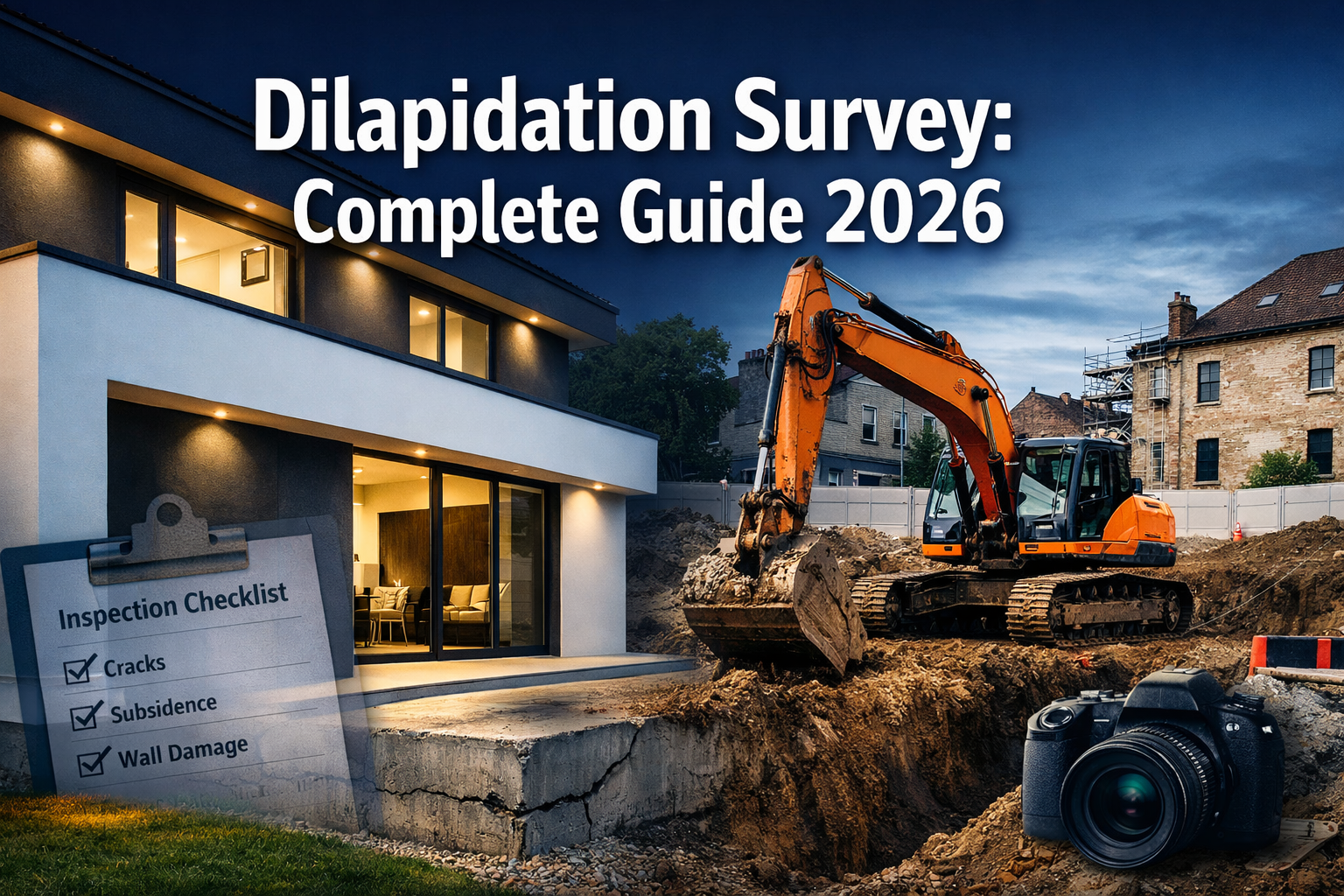
Imagine returning home after months of construction next door, only to discover new cracks snaking across your walls, doors that no longer close properly, and mysterious water damage that wasn’t there before. Without proof of your property’s condition before the work began, you’re left fighting an uphill battle to prove the construction caused the damage. This nightmare scenario is precisely why a dilapidation survey has become an essential protective measure for property owners, developers, and contractors alike in 2026.
A dilapidation survey serves as a comprehensive photographic and written record of a property’s condition at a specific point in time, typically conducted before nearby construction, demolition, or excavation work begins. This detailed documentation creates an irrefutable baseline that protects all parties involved by clearly establishing what damage existed before construction activities commenced.
Key Takeaways
- 📋 A dilapidation survey documents the existing condition of a property before nearby construction work begins, creating a legal baseline for identifying future damage claims
- 🏗️ Property owners, developers, contractors, and councils all benefit from the protection and clarity these surveys provide in construction projects
- 📸 Comprehensive photographic evidence, detailed descriptions, and measurements form the core components of an effective dilapidation report
- ⚖️ Courts recognize dilapidation surveys as credible evidence in legal disputes regarding construction-related property damage
- 💰 The cost of a survey is minimal compared to potential legal fees and repair costs from undocumented damage claims
What Is a Dilapidation Survey?
A dilapidation survey is a detailed inspection and documentation process that records the current structural and cosmetic condition of a property or multiple properties. The primary purpose is to establish a factual record of pre-existing defects, damage, and overall condition before construction activities that could potentially cause damage or disturbance[1].
Key stakeholders who rely on dilapidation surveys include property owners, builders, contractors, property developers, local councils, and strata bodies[1]. Each party uses this documentation to protect their interests and establish clear accountability for any damage that occurs during construction work.
The Core Purpose of a Dilapidation Survey
The fundamental objective of conducting a dilapidation survey is to create an undisputable record that can differentiate between:
- Pre-existing damage, wear, and structural issues
- New damage caused by construction, excavation, or demolition activities
- Natural deterioration versus construction-related deterioration
This distinction becomes critically important when disputes arise about who bears responsibility for repairs and associated costs[4].
When Is a Dilapidation Survey Required?
Several scenarios typically trigger the need for a dilapidation survey:
🏗️ Major construction projects adjacent to existing properties
⛏️ Excavation work that may affect neighboring foundations
🏚️ Demolition activities near occupied buildings
🚧 Infrastructure development including road works and utility installations
🏢 Commercial lease terminations where tenant obligations must be assessed
In many jurisdictions, local councils mandate dilapidation surveys for specific types of construction projects, particularly those involving deep excavation or work near heritage properties[1]. Understanding the schedule of dilapidations requirements in your area is essential for compliance.
Types of Dilapidation Surveys
Not all dilapidation surveys serve the same purpose. Understanding the different types helps property owners and developers select the appropriate survey for their specific needs.
Pre-Construction Dilapidation Surveys
This is the most common type, conducted before any construction work begins. A qualified surveyor inspects neighboring properties and creates a comprehensive baseline report documenting:
- Existing cracks, settlement, and structural defects
- Cosmetic damage to walls, ceilings, and floors
- Condition of windows, doors, and fixtures
- External features including driveways, fences, and landscaping
- Photographic evidence with date stamps
The pre-construction survey serves as the reference point for all future comparisons[3].
Interim Dilapidation Surveys
During lengthy construction projects, interim surveys may be conducted at key milestones to monitor any progressive damage. These surveys help identify issues early, allowing for:
✅ Immediate remediation before damage worsens
✅ Adjustment of construction methods if causing problems
✅ Updated documentation for insurance purposes
✅ Ongoing protection for all parties involved
Post-Construction Dilapidation Surveys
After construction completion, a post-construction survey compares the property’s current condition against the original baseline report. This comparison clearly identifies:
- New damage attributable to construction activities
- The extent and severity of any damage
- Recommended repair methods and estimated costs
- Liability determination for repair expenses
Lease Dilapidation Surveys
In commercial property contexts, lease dilapidation surveys assess a tenant’s obligations to return a property to an agreed-upon condition at lease end. A dilapidations surveyor examines the property against lease covenants to determine what repairs, reinstatement, or redecoration the tenant must complete[7].
What Does a Dilapidation Survey Include?
A comprehensive dilapidation survey contains multiple elements that work together to create an accurate, defensible record of property condition.
Photographic Documentation
High-quality photographs form the visual backbone of any dilapidation report. Professional surveyors capture:
- Wide-angle shots showing entire rooms and elevations
- Close-up images of specific defects and damage
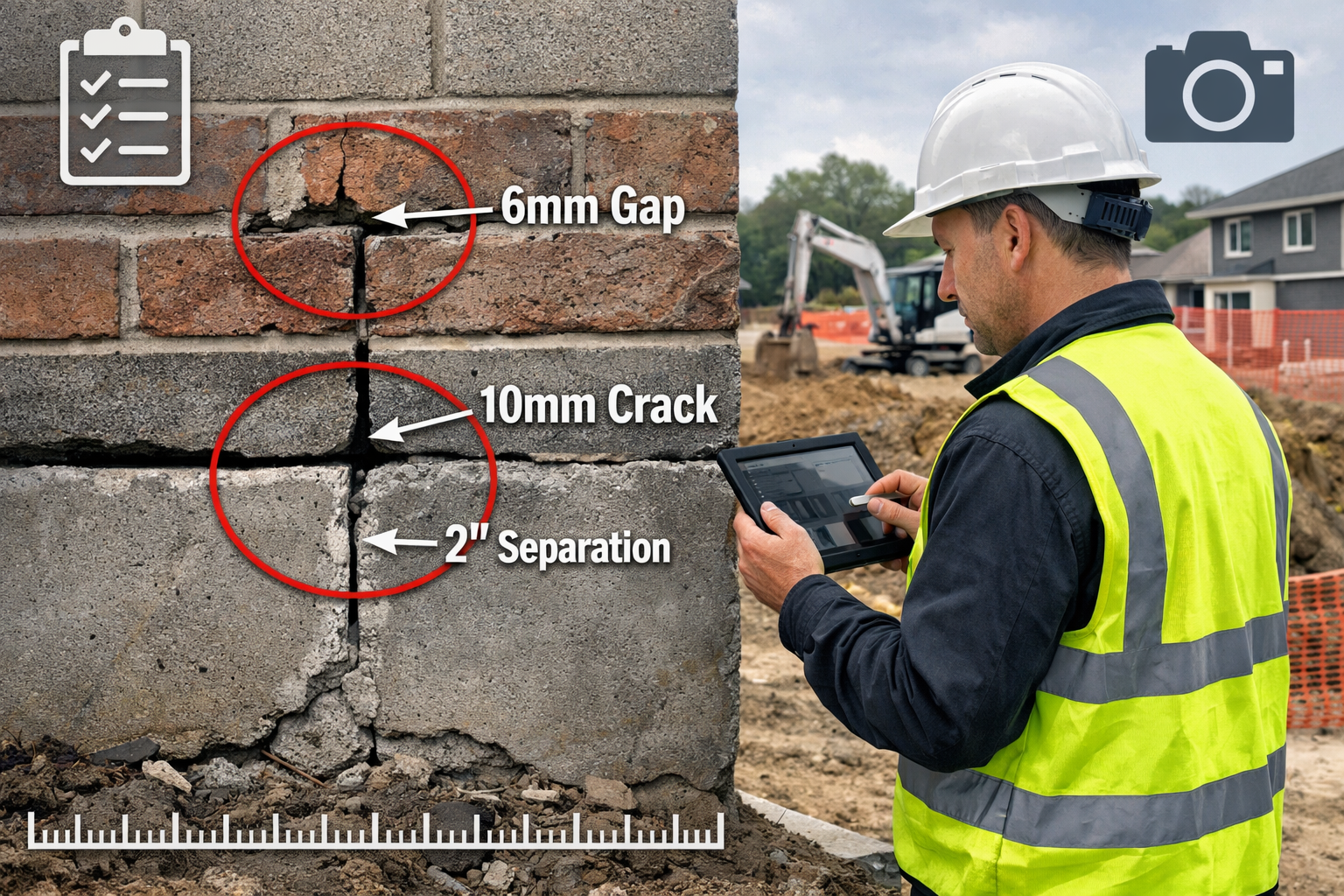
- Detailed photos of cracks with measurement references
- External features including boundaries and landscaping
- Date and time-stamped images for authenticity
The photographic record should be extensive enough that anyone reviewing the report years later can understand the property’s exact condition[1].
Written Descriptions and Measurements
Alongside photographs, detailed written descriptions provide context and specificity:
| Component | Details Recorded |
|---|---|
| Structural elements | Cracks, settlement, subsidence indicators, foundation condition |
| Internal finishes | Wall damage, ceiling condition, floor defects, paintwork quality |
| External features | Brickwork, render, roofing, gutters, drainage |
| Fixtures and fittings | Windows, doors, built-in units, mechanical systems |
| Measurements | Crack widths, settlement amounts, level variations |
Professional surveyors use precise terminology and measurement tools to ensure accuracy and consistency.
Site Plans and Diagrams
Visual diagrams and annotated floor plans help locate specific defects within the property. These may include:
- Numbered reference points corresponding to photographs
- Marked locations of cracks and damage
- Boundary surveys showing property limits
- Relationship diagrams showing proximity to construction sites
Risk Assessment
Many modern dilapidation surveys include a risk assessment section that evaluates:
- The likelihood of construction activities causing damage
- Vulnerable areas requiring monitoring
- Recommended protective measures
- Suggested frequency for interim inspections
This proactive approach helps prevent damage rather than simply documenting it after the fact[1].
Inspection Notes and Methodology
Transparent documentation of the inspection process includes:
- Date and time of inspection
- Weather conditions (relevant for moisture-related issues)
- Access limitations or areas not inspected
- Survey methodology and equipment used
- Qualifications of the surveyor conducting the inspection
The Dilapidation Survey Process
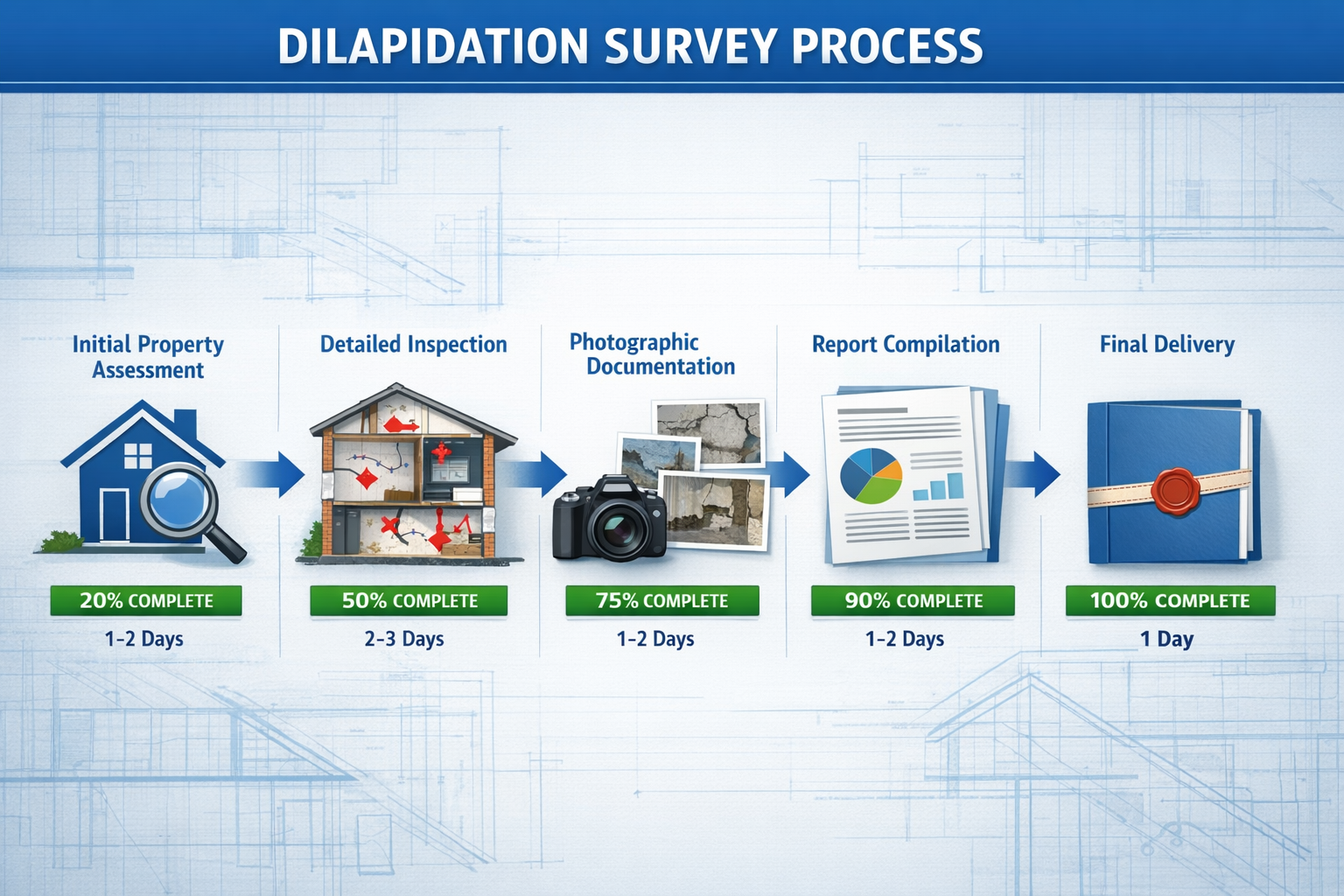
Understanding the step-by-step process helps property owners and developers prepare effectively for a dilapidation survey.
Step 1: Engagement and Scope Definition
The process begins when a property owner, developer, or contractor engages a qualified surveyor. During this initial phase:
- Define the scope: Identify which properties require surveying
- Establish objectives: Clarify whether this is pre-construction, interim, or post-construction
- Set timelines: Schedule inspections before construction commences
- Agree on deliverables: Confirm report format and detail level
Step 2: Property Inspection
The surveyor conducts a thorough on-site inspection, systematically examining:
- All accessible areas of the property
- Both internal and external features
- Structural elements and cosmetic finishes
- Surrounding land and boundaries
Professional surveyors often use specialized equipment including laser levels, crack width gauges, moisture meters, and high-resolution cameras to ensure accuracy.
Step 3: Documentation and Analysis
Following the inspection, the surveyor compiles all collected data into a structured format:
- Organizing photographs with clear labeling
- Writing detailed descriptions of findings
- Creating diagrams and annotated plans
- Analyzing the significance of identified defects
- Assessing potential vulnerabilities to construction activities
Step 4: Report Preparation
The final dilapidation report is prepared as a professional document that includes all elements discussed previously. Quality reports are:
📄 Comprehensive yet clearly organized
📄 Objective and factual in tone
📄 Legally defensible with proper authentication
📄 Accessible to non-technical readers
Step 5: Report Delivery and Distribution
Once completed, the report is delivered to the commissioning party and typically shared with:
- Property owners whose properties were surveyed
- Construction companies and contractors
- Project managers and developers
- Insurance companies if applicable
- Legal representatives when disputes are anticipated
Proper distribution ensures all stakeholders have access to the baseline documentation before work begins.
Why Dilapidation Surveys Are Important
The value of a dilapidation survey extends far beyond simple documentation. These surveys provide critical benefits to multiple parties involved in construction projects.
Protection for Property Owners
For property owners near construction sites, a dilapidation survey offers:
🛡️ Legal protection: Documented evidence if damage claims become necessary
🛡️ Peace of mind: Knowing their property condition is officially recorded
🛡️ Negotiating power: Credible basis for compensation discussions
🛡️ Insurance support: Documentation that supports insurance claims
Without this baseline documentation, property owners face significant challenges proving that damage resulted from construction activities rather than pre-existing conditions[4].
Risk Management for Developers and Contractors
Construction companies and developers benefit equally from dilapidation surveys:
✅ Liability limitation: Clear evidence of what damage they’re not responsible for
✅ Dispute prevention: Reduced likelihood of unfounded damage claims
✅ Cost control: Avoiding compensation for pre-existing damage
✅ Professional reputation: Demonstrating responsible construction practices
A comprehensive pre-construction survey protects developers from costly disputes and helps maintain positive relationships with neighboring property owners[4].
Legal and Regulatory Compliance
In many jurisdictions, dilapidation surveys are legally required for certain types of construction work. Local councils and planning authorities may mandate surveys for:
- Excavations exceeding specific depths
- Demolition of structures above certain sizes
- Work affecting heritage-listed properties
- Projects in densely populated areas
Failure to comply with these requirements can result in stop-work orders, fines, or legal complications. Professional chartered surveyors in London and other major cities are familiar with local regulatory requirements.
Evidence in Legal Proceedings
When disputes escalate to legal proceedings, dilapidation surveys serve as credible evidence in court. Judges and arbitrators recognize professionally conducted surveys as reliable documentation of property conditions[1].
The survey’s value in legal contexts depends on:
- The surveyor’s qualifications and professional standing
- The thoroughness and objectivity of the documentation
- Proper authentication and date verification
- Consistency with industry standards and best practices
Who Should Conduct a Dilapidation Survey?
The credibility and legal defensibility of a dilapidation survey depend heavily on who conducts it and their professional qualifications.
Qualified Building Surveyors
Chartered building surveyors with relevant experience and professional accreditation should conduct dilapidation surveys. Key qualifications include:
- Membership in professional bodies (such as RICS – Royal Institution of Chartered Surveyors)
- Specific training in dilapidation assessment
- Experience with construction-related damage evaluation
- Professional indemnity insurance
- Understanding of local building regulations and standards
Independence and Objectivity
The surveyor must be independent from both the construction company and property owners to ensure objectivity. This independence is crucial for the report’s credibility in potential disputes.
Engaging a surveyor who works for the construction company conducting the work creates an obvious conflict of interest that could undermine the report’s validity in legal proceedings.
Specialist Expertise
Different types of properties and construction projects may require specialized knowledge:
- Heritage properties: Understanding of traditional construction methods and materials
- Commercial buildings: Knowledge of complex building systems and lease obligations
- Residential properties: Familiarity with common domestic construction issues
- Industrial sites: Experience with heavy construction and specialized structures
Selecting a surveyor with relevant experience ensures the survey addresses property-specific vulnerabilities. For specialized needs, consider surveyors who also offer structural surveys or subsidence surveys.
Common Issues Identified in Dilapidation Surveys
Understanding what surveyors typically find helps property owners know what to expect and what to monitor during construction.
Structural Defects
The most significant issues documented in dilapidation surveys include:
🔍 Cracks in walls: Both internal and external, with measurements of width and length
🔍 Settlement indicators: Uneven floors, sloping ceilings, gaps between elements
🔍 Foundation issues: Visible foundation cracks or displacement
🔍 Subsidence signs: Progressive cracking patterns, door and window misalignment
These structural concerns are particularly important to document, as construction vibrations and excavation can exacerbate existing problems or create new ones.
Cosmetic Damage
While less serious than structural issues, cosmetic damage still requires documentation:
- Paint cracks and deterioration
- Plaster damage and loose finishes
- Staining and discoloration
- Damaged flooring and carpets
- Fixture and fitting condition
Cosmetic damage can worsen during construction due to vibrations, dust, and general disturbance.
External Features
Dilapidation surveys extend beyond the building itself to include:
- Driveways and paving: Existing cracks, settlement, surface condition
- Boundary walls and fences: Structural integrity, alignment, damage
- Landscaping: Tree health, garden features, retaining walls
- Drainage systems: Functionality, visible defects, potential vulnerabilities
External features are particularly vulnerable to damage from heavy construction vehicles and excavation activities.
Building Services and Systems
Modern dilapidation surveys also assess:
- Plumbing systems and visible pipework
- Electrical installations and fixtures
- Heating and ventilation systems
- Drainage and waste systems
Construction vibrations can affect pipe joints, electrical connections, and mechanical systems, making pre-construction documentation essential.
Dilapidation Surveys vs. Other Property Surveys
Property owners sometimes confuse dilapidation surveys with other types of property assessments. Understanding the differences helps ensure you commission the right survey for your needs.
Dilapidation Survey vs. Building Survey
A building survey (also called a structural survey) is a comprehensive assessment of a property’s condition, typically conducted when purchasing a property. It focuses on:
- Identifying defects and repair needs
- Assessing the property’s overall condition
- Providing advice on maintenance and repairs
- Informing purchase decisions
In contrast, a dilapidation survey specifically documents condition at a point in time to establish a baseline before construction work, focusing on creating evidence rather than providing repair advice.
Dilapidation Survey vs. Homebuyer Report
A homebuyer survey is a standardized assessment used during property transactions. It provides:
- Condition ratings for key elements
- Identification of urgent defects
- Valuation assessment
- General advice for buyers
Dilapidation surveys are more detailed in documentation but less advisory in nature, serving a fundamentally different purpose.
Dilapidation Survey vs. Specific Defect Report
A specific defect report investigates a particular problem in detail, such as dampness or structural movement. While both may document similar issues, the specific defect report provides detailed analysis and remediation recommendations, whereas a dilapidation survey simply records existing conditions without extensive analysis.
Cost Considerations for Dilapidation Surveys
Understanding the investment required for a dilapidation survey helps property owners and developers budget appropriately.
Factors Affecting Survey Costs
Several variables influence the cost of a dilapidation survey:
| Factor | Impact on Cost |
|---|---|
| Property size | Larger properties require more time and documentation |
| Property type | Complex commercial buildings cost more than simple residential properties |
| Number of properties | Surveying multiple neighboring properties increases costs |
| Access challenges | Difficult access or restricted inspection times add complexity |
| Report detail level | More comprehensive reports with extensive photography cost more |
| Surveyor qualifications | Highly experienced chartered surveyors command higher fees |
| Geographic location | Costs vary by region, with chartered surveyors in Surrey or other areas having different rate structures |
Typical Cost Ranges in 2026
While costs vary significantly based on the factors above, general ranges include:
- Small residential property: £300-£600
- Medium residential property: £600-£1,200
- Large residential property: £1,200-£2,500
- Commercial property: £1,500-£5,000+
- Multiple properties: Negotiated rates based on quantity
These figures represent typical market rates in 2026 and should be confirmed with individual surveyors.
Return on Investment
The cost of a dilapidation survey is minimal compared to potential losses from undocumented damage claims:
💰 Legal fees for disputed claims: £5,000-£50,000+
💰 Repair costs for significant structural damage: £10,000-£100,000+
💰 Lost property value from unresolved damage: Potentially substantial
💰 Time and stress of protracted disputes: Immeasurable
A £1,000 investment in a comprehensive dilapidation survey provides protection worth many times that amount[4].
Best Practices for Property Owners
Property owners can maximize the value and effectiveness of dilapidation surveys by following these best practices.
Timing Is Critical
Commission your dilapidation survey as early as possible before construction begins. Ideally:
- Schedule the survey before any site preparation work
- Complete the survey before construction equipment arrives
- Ensure the report is finalized and distributed before work commences
- Allow time for any access negotiations with neighbors
Early timing ensures the baseline truly reflects pre-construction conditions.
Provide Complete Access
Ensure the surveyor can access all areas of your property:
✓ Clear access to all rooms and spaces
✓ Remove obstacles blocking walls and features
✓ Provide keys or access codes as needed
✓ Arrange for any tenants or occupants to be informed
✓ Ensure adequate lighting for photography
Comprehensive access enables thorough documentation.
Communicate with Developers
Proactive communication with the construction company or developer helps:
- Establish mutual understanding about the survey’s purpose
- Coordinate timing and logistics
- Share the completed report to set clear expectations
- Demonstrate your commitment to fair and documented processes
This collaborative approach often prevents disputes before they arise.
Keep Your Copy Secure
Store your dilapidation report securely and maintain:
- Multiple copies (physical and digital)
- Backup storage in separate locations
- Easy retrieval systems for quick reference
- Organized filing with other property documents
You may need to reference this report months or years after construction, so secure storage is essential.
Monitor During Construction
Even with a baseline survey, remain vigilant during construction:
- Conduct regular visual inspections of your property
- Photograph any new damage immediately
- Document dates when you first notice changes
- Report concerns promptly to the construction company
- Consider interim surveys if significant issues emerge
Ongoing monitoring complements your baseline documentation.
The Future of Dilapidation Surveys in 2026
The dilapidation survey industry continues to evolve with technological advances and changing construction practices.
Technology Integration
Modern dilapidation surveys increasingly incorporate:
🔧 Drone photography: Aerial documentation of roofs and elevated features
🔧 3D scanning: Detailed spatial documentation and measurements
🔧 Digital reporting platforms: Interactive reports with embedded media
🔧 Cloud storage: Secure, accessible documentation storage
🔧 Time-lapse monitoring: Automated photographic monitoring during construction
These technologies enhance accuracy, accessibility, and defensibility of dilapidation documentation. Similar technological advances are seen in drone surveys and roof surveys.
Regulatory Developments
As construction activity intensifies in urban areas, regulatory requirements for dilapidation surveys continue to expand:
- More jurisdictions mandating surveys for specific project types
- Stricter standards for surveyor qualifications
- Enhanced requirements for report content and format
- Greater integration with building consent processes
Staying informed about local requirements ensures compliance and protection.
Increased Awareness
Property owners are becoming more aware of their rights and the importance of documentation:
- Greater demand for pre-construction surveys
- More proactive engagement with construction companies
- Better understanding of legal protections available
- Increased willingness to invest in protective measures
This awareness benefits all parties by promoting transparency and accountability.
Conclusion
A dilapidation survey represents far more than simple documentation—it’s a critical protective measure that safeguards property owners, developers, and contractors from costly disputes and legal complications. By creating an irrefutable baseline of property conditions before construction work begins, these surveys provide clarity, accountability, and peace of mind for all stakeholders involved.
Whether you’re a homeowner facing nearby construction, a developer planning a major project, or a contractor seeking to manage liability risks, investing in a professional dilapidation survey is a wise decision that pays dividends through dispute prevention and clear evidence if issues arise.
Take Action Now
If construction work is planned near your property or you’re planning a development project:
- Engage a qualified surveyor immediately: Don’t wait until work begins—early documentation is essential
- Research local requirements: Understand whether surveys are legally mandated in your jurisdiction
- Budget appropriately: Factor survey costs into your project planning or property protection expenses
- Communicate with all parties: Ensure neighbors, contractors, and developers understand the survey’s purpose
- Store documentation securely: Maintain accessible copies of your dilapidation report for future reference
For professional dilapidation survey services, consider engaging experienced chartered surveyors who understand both the technical requirements and legal implications of these critical documents. The small investment today could save you from substantial costs and stress tomorrow.
Remember: prevention through documentation is always more cost-effective than litigation after damage occurs. A comprehensive dilapidation survey is your first line of defense in protecting your property investment.
References
[1] Guide To Dilapidation Reporting Importance And Process – https://jimsbuildinginspections.com.au/blog/guide-to-dilapidation-reporting-importance-and-process/
[2] Watch – https://www.youtube.com/watch?v=1vxAWNvp5JM
[3] Surveys – https://www.dilapsolutions.com/services/surveys/
[4] 5 Reasons Why Dilapidation Surveys Are Important – https://www.giromax.co.uk/blog/5-reasons-why-dilapidation-surveys-are-important/
[5] Dilapidations Conference – https://www.rics.org/training-events/conferences/dilapidations-conference
[6] Dilapidations For Surveyors – https://goreport.com/dilapidations-for-surveyors/
[7] Commercial Tenants What Is A Dilapidations Survey When Is One Required – https://fourthwallbc.com/blog/commercial-tenants-what-is-a-dilapidations-survey-when-is-one-required/
SEO Meta Title and Description
Meta Title: Dilapidation Survey Guide 2026: Protect Your Property
Meta Description: Complete guide to dilapidation surveys in 2026. Learn what they are, when required, costs, and how they protect property owners from construction damage disputes.
{“@context”:”https://schema.org”,”@type”:”Article”,”headline”:”dilapidation survey”,”description”:”Complete guide to dilapidation surveys in 2026. Learn what they are, when required, costs, and how they protect property owners from construction damage dispute”,”image”:”https://zsxkvszxbhpwnvzxdydv.supabase.co/storage/v1/object/public/generated-images/kie/9aab36c8-1248-4437-b19f-3b5c5c349b52/slot-0-1769817552403.png”,”datePublished”:”2026-01-30T23:55:55.206168+00:00″,”dateModified”:”2026-01-31T00:00:17.235Z”,”author”:{“@type”:”Organization”,”name”:”Manchester Surveyors”},”publisher”:{“@type”:”Organization”,”name”:”Manchester Surveyors”}}