Understanding the Difference Between Level 2 and Level 3 Survey: A Complete Guide

When purchasing a property, choosing the right survey can save thousands of pounds and prevent costly surprises down the road. 🏠 The difference between level 2 and level 3 survey options represents one of the most critical decisions homebuyers face, yet many remain uncertain about which assessment best suits their needs.
Property surveys serve as your professional eyes and ears, uncovering potential issues that could impact both safety and finances. Understanding the distinction between these survey levels ensures informed decision-making and appropriate protection for your investment.
Key Takeaways
• Level 2 surveys provide essential property condition assessments suitable for conventional homes in reasonable condition
• Level 3 surveys offer comprehensive structural analysis ideal for older, unusual, or extensively altered properties
• Cost differences typically range from £400-800 for Level 2 to £800-1,500+ for Level 3 surveys
• Survey choice depends on property age, condition, construction type, and personal risk tolerance
• Professional guidance from qualified surveyors helps determine the most appropriate survey level for specific circumstances
What Are Property Survey Levels?
Property surveys in the UK follow standardized levels established by the Royal Institution of Chartered Surveyors (RICS). These classifications ensure consistent service delivery and help consumers understand exactly what each survey type provides.
Survey levels represent increasing depths of investigation and reporting detail:
- Level 1: Basic condition report (traffic light system)
- Level 2: Homebuyer Report with moderate detail
- Level 3: Building Survey with comprehensive analysis
Each level serves different property types and buyer requirements, with costs and timeframes scaling accordingly. Professional surveyors recommend specific levels based on property characteristics and individual circumstances.
The Evolution of Survey Standards
RICS updated survey standards in 2020 to improve clarity and consumer understanding. These changes standardized terminology and enhanced reporting quality across the industry, making it easier for buyers to compare services and understand deliverables.
Level 2 Survey: The Homebuyer Report Explained
The Level 2 survey, officially known as the Homebuyer Report, represents the most popular choice for property purchases in the UK. This intermediate assessment balances thoroughness with cost-effectiveness, making it suitable for most conventional properties.
What Does a Level 2 Survey Include?
A comprehensive Level 2 survey covers these essential areas:
Structural Elements
- External walls and foundations (visible areas)
- Roof structure and covering assessment
- Windows, doors, and external joinery
- Internal walls and ceiling condition
Building Services
- Heating system overview
- Electrical installation safety
- Plumbing and water systems
- Drainage accessibility check
Additional Features
- Garage and outbuilding condition
- Garden boundaries and paths
- Accessibility and safety concerns
- Energy efficiency observations
Level 2 Survey Limitations
Understanding what Level 2 surveys don’t include helps set appropriate expectations:
❌ No access to concealed areas (behind furniture, under floors)
❌ Limited structural calculations or engineering analysis
❌ No specialist testing (electrical, gas, or drainage)
❌ Minimal roof space inspection (basic visual only)
❌ No detailed repair cost estimates
Ideal Properties for Level 2 Surveys
Level 2 surveys work best for:
- Modern properties (built after 1960)
- Conventional construction methods and materials
- Good overall condition with minor maintenance needs
- Standard layouts without significant alterations
- Straightforward access for visual inspection
The assessment process typically takes 2-4 hours on-site, with reports delivered within 5-10 working days.
Level 3 Survey: The Building Survey Deep Dive
The Level 3 survey, or Building Survey, provides the most comprehensive property assessment available. This detailed investigation suits complex properties requiring thorough structural analysis and extensive reporting.
Comprehensive Level 3 Survey Coverage
Level 3 surveys deliver exhaustive property evaluation:
Detailed Structural Analysis
- Complete foundation and subsidence assessment
- Comprehensive roof structure examination
- Load-bearing wall and beam evaluation
- Floor structure and stability analysis
In-Depth Building Services Review
- Full heating system inspection and efficiency
- Electrical installation condition and safety
- Plumbing system capacity and condition
- Drainage system functionality assessment
Specialized Investigations
- Roof space and basement access
- Cavity wall and insulation inspection
- Damp and timber condition analysis
- Building regulation compliance review
Advanced Reporting Features
Level 3 surveys provide detailed documentation including:
📋 Comprehensive condition descriptions for every building element
📋 Detailed repair recommendations with priority rankings
📋 Approximate cost estimates for identified works
📋 Technical explanations of construction methods and materials
📋 Future maintenance planning and lifecycle guidance
When Level 3 Surveys Are Essential
Consider Level 3 surveys for properties with:
- Pre-1960 construction or historical significance
- Unusual building materials (timber frame, thatched roof, etc.)
- Significant alterations or extensions
- Known structural concerns or previous damage
- Commercial or mixed-use applications
- High value or unique architectural features
The valuation process often accompanies Level 3 surveys for insurance or legal purposes.
Key Differences Between Level 2 and Level 3 Survey

Understanding the difference between level 2 and level 3 survey options helps buyers make informed decisions based on property characteristics and personal requirements.
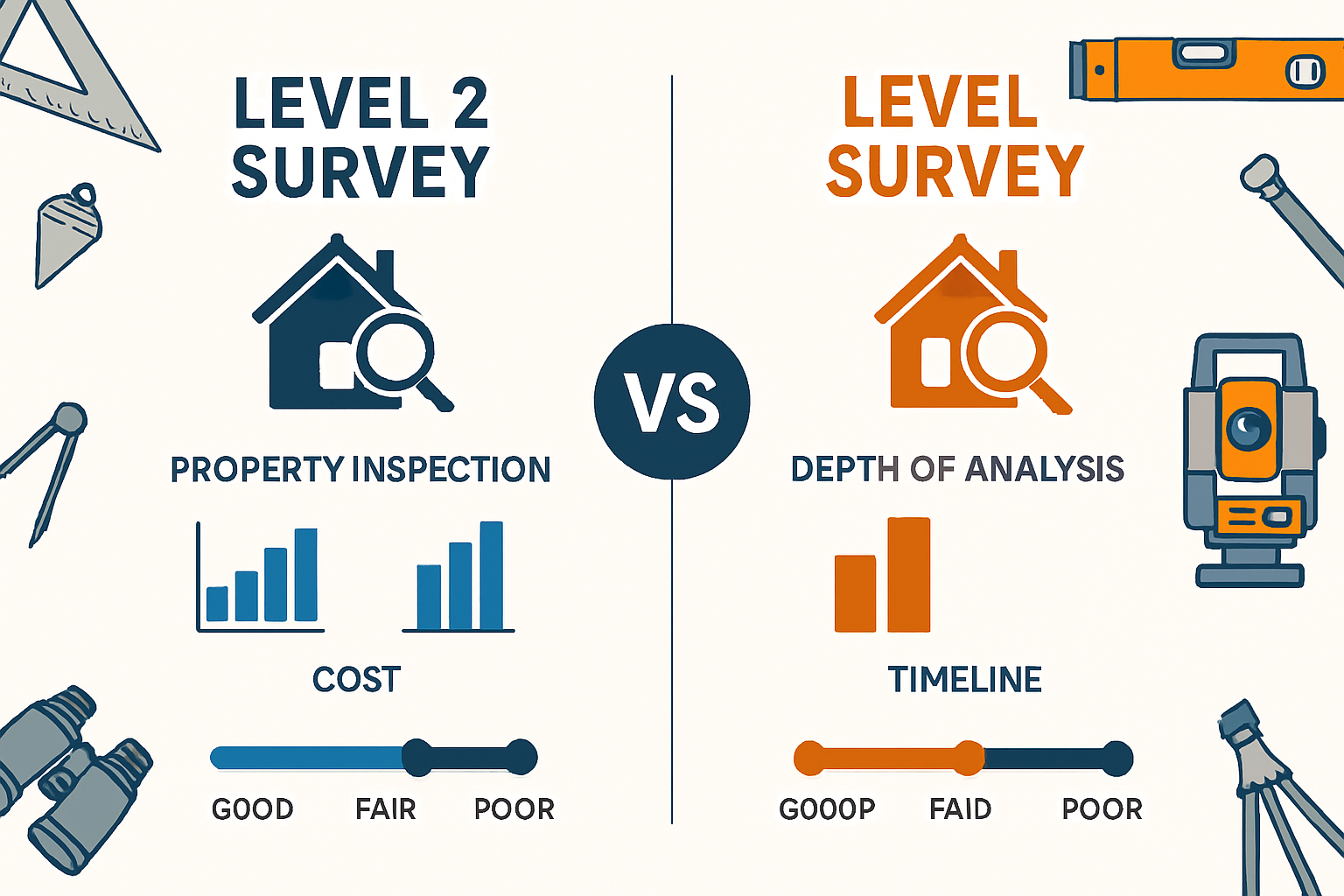
Comparison Table: Level 2 vs Level 3
| Aspect | Level 2 Survey | Level 3 Survey |
|---|---|---|
| Inspection Depth | Visual assessment of accessible areas | Comprehensive investigation including concealed spaces |
| Report Length | 15-20 pages typically | 30-50+ pages with detailed analysis |
| Time Required | 2-4 hours on-site | 4-8 hours on-site |
| Cost Range | £400-800 average | £800-1,500+ average |
| Structural Analysis | Basic condition overview | Detailed structural assessment |
| Repair Guidance | General recommendations | Specific repair priorities with cost estimates |
| Property Suitability | Modern, conventional homes | Older, complex, or altered properties |
Detailed Analysis Differences
Inspection Methodology
- Level 2 surveys rely primarily on visual inspection from ground level and readily accessible areas
- Level 3 surveys include ladder access to roofs, basement investigations, and specialized equipment usage
Reporting Depth
- Level 2 reports provide condition summaries with basic recommendations
- Level 3 reports offer technical analysis, detailed explanations, and comprehensive maintenance planning
Professional Expertise
- Both require qualified surveyors, but Level 3 surveys often involve specialists for complex issues
- Level 3 surveyors typically have additional training in historical construction and specialized materials
Cost-Benefit Analysis
The difference between level 2 and level 3 survey costs reflects the additional time, expertise, and liability involved:
Level 2 Survey Value
- Suitable for 80% of property purchases
- Identifies major issues requiring immediate attention
- Provides negotiation leverage with sellers
- Offers peace of mind for standard properties
Level 3 Survey Value
- Essential for complex or older properties
- Prevents costly surprises after purchase
- Supports insurance and warranty applications
- Enables accurate renovation planning and budgeting
Making the Right Choice: Level 2 vs Level 3 Survey Decision Factors
Selecting between survey levels requires careful consideration of multiple factors affecting both immediate needs and long-term property ownership goals.
Property Age and Construction
Properties Built After 1980
- Level 2 surveys typically sufficient
- Modern construction methods and materials
- Building regulation compliance likely
- Standard layouts and conventional systems
Properties Built 1960-1980
- Consider property condition and maintenance history
- Level 2 adequate for well-maintained properties
- Level 3 recommended if structural concerns exist
Properties Built Before 1960
- Level 3 surveys generally recommended
- Traditional construction methods require specialist knowledge
- Higher likelihood of structural issues or alterations
- Potential for hazardous materials (asbestos, lead paint)
Property Condition Indicators
Good Condition Signs (Level 2 suitable)
✅ Recent maintenance and decoration
✅ Modern windows and doors
✅ Updated heating and electrical systems
✅ No visible structural movement
✅ Well-maintained roof and guttering
Concerning Condition Signs (Level 3 recommended)
⚠️ Visible cracks in walls or ceilings
⚠️ Damp patches or musty odors
⚠️ Sagging rooflines or missing tiles
⚠️ Outdated electrical or plumbing systems
⚠️ Evidence of previous structural work
Financial Considerations
Budget Planning
- Survey costs represent 0.1-0.3% of property value
- Potential savings from identifying issues far exceed survey costs
- Consider survey level as insurance against unknown problems
Risk Tolerance Assessment
- Conservative buyers may prefer Level 3 regardless of property condition
- First-time buyers benefit from comprehensive Level 3 guidance
- Investment properties require thorough due diligence
Professional surveyors and valuers provide personalized recommendations based on specific property characteristics and buyer circumstances.
Geographic and Environmental Factors
Location-Specific Considerations
- Properties in areas with known subsidence issues
- Coastal locations with salt air exposure
- Industrial areas with potential contamination
- Conservation areas with planning restrictions
Environmental Impact Assessment
- Flood risk and drainage concerns
- Ground stability and geological factors
- Nearby development or infrastructure projects
- Environmental protection designations
Professional Survey Services and Next Steps
Choosing qualified professionals ensures accurate assessment and reliable reporting for property purchase decisions.
Selecting Qualified Surveyors
Essential Qualifications
- RICS (Royal Institution of Chartered Surveyors) membership
- Professional indemnity insurance coverage
- Local market knowledge and experience
- Positive client reviews and recommendations
Service Comparison Factors
- Report turnaround times
- Additional services offered (valuations, specialist reports)
- Communication style and accessibility
- Fee transparency and value proposition
Manchester Surveyors provides comprehensive survey services with RICS-qualified professionals experienced in both Level 2 and Level 3 assessments.
Booking Your Survey
Preparation Steps
- Property research – Gather available documentation and history
- Access arrangements – Coordinate with sellers and estate agents
- Survey scheduling – Allow sufficient time before exchange of contracts
- Question preparation – List specific concerns for surveyor attention
Timeline Considerations
- Book surveys immediately after offer acceptance
- Allow 1-2 weeks for scheduling and completion
- Factor report review time into purchase timeline
- Coordinate with mortgage valuation appointments
Understanding Survey Reports
Report Review Process
- Read executive summary first for key findings
- Review condition ratings and priority recommendations
- Understand cost estimates and urgency levels
- Identify negotiation points with sellers
Follow-Up Actions
- Obtain specialist reports for significant issues
- Request repair cost quotations from qualified contractors
- Negotiate purchase price adjustments if appropriate
- Plan post-purchase maintenance and improvement priorities
For complex properties requiring detailed analysis, consider additional valuation services to support purchase negotiations and insurance requirements.
Conclusion
Understanding the difference between level 2 and level 3 survey options empowers property buyers to make informed decisions protecting their investment and ensuring peace of mind. Level 2 surveys provide excellent value for modern, conventional properties in good condition, while Level 3 surveys offer essential comprehensive analysis for older, complex, or concerning properties.
The choice between survey levels ultimately depends on property characteristics, personal risk tolerance, and financial circumstances. However, the cost of any professional survey pales in comparison to potential expenses from undiscovered structural issues or maintenance problems.
Take Action Today:
- Assess your property using the criteria outlined in this guide
- Contact qualified surveyors to discuss your specific requirements
- Book your survey promptly after offer acceptance to avoid purchase delays
- Review reports thoroughly and seek clarification on any concerns
- Plan follow-up actions based on survey findings and recommendations
Professional guidance from experienced chartered surveyors ensures you select the most appropriate survey level for your circumstances, providing the foundation for confident property purchase decisions in 2025 and beyond.