The UK property market in 2026 presents a unique challenge for homebuyers. With house prices forecast to grow between 2-5% this year, the pressure to secure a new-build property has intensified. Yet beneath the fresh paint and modern fixtures, latent defects can lurk—hidden problems that won't reveal themselves for months or even years. Understanding Building Survey Standards for New Builds in 2026: Spotting Latent Defects Amid 2-5% Price Growth Forecasts has never been more critical for protecting your investment.
Recent updates to RICS Home Survey Standards, effective February 2026, alongside new NHBC Standards and enhanced Building Regulations, have fundamentally changed how professionals assess new properties. These changes reflect a shift from simple tick-box compliance to performance-led, evidence-based design approaches that demand rigorous validation and testing.[5]
For buyers navigating this evolving landscape, commissioning a comprehensive RICS Building Survey represents the gold standard in property assessment—especially when modest price growth means every purchasing decision carries significant financial weight.
Key Takeaways
- 🏗️ New RICS standards effective February 2026 introduce enhanced technology integration, including AI-assisted defect detection and mandatory drone inspections for certain property types
- 📋 NHBC Standards updates (January 2026) impose stricter requirements on wall/roof detailing, underlays, and structural garage floors for all homes with foundations started after January 1, 2026
- 🔍 Level 3 Building Surveys provide the most comprehensive assessment for new-builds, uncovering latent defects that basic valuations and homebuyer reports often miss
- 💷 2-5% price growth forecasts for 2026 increase the financial stakes of purchasing decisions, making thorough pre-purchase surveys essential risk management
- ⚖️ Performance-led building standards now require evidence-based validation of thermal performance, airtightness, and moisture control—creating new opportunities for defects when standards aren't met
Understanding Building Survey Standards for New Builds in 2026
The Evolution of Survey Standards
The landscape of property surveying has transformed dramatically in early 2026. The Royal Institution of Chartered Surveyors (RICS) implemented comprehensive updates to their Home Survey Standard in February, fundamentally changing how surveyors approach new-build assessments.[1]
These updates introduce several critical elements:
Enhanced Technology Integration 🤖
- AI-assisted defect identification systems
- Mandatory thermal imaging for thermal performance verification
- Drone surveys for roof and elevation inspections
- Digital documentation and photographic evidence requirements
Additional Risk Dwelling Guidance
The new standards specifically address properties with higher risk profiles, including those with:
- Non-standard construction methods
- Complex retrofit installations
- Innovative building materials
- Higher Risk Building (HRB) classifications (residential buildings over 18 metres or 7 storeys)
Optional Valuation Services
Surveyors can now provide valuation services across all survey levels, offering buyers a more comprehensive assessment that combines structural integrity evaluation with market value analysis.[1]
NHBC Standards Implementation
From January 1, 2026, the National House Building Council (NHBC) introduced updated technical standards affecting all registered homes whose foundations began on or after this date.[2] These changes specifically target areas where defects commonly emerge:
| Chapter | Update Focus | Impact on Defect Detection |
|---|---|---|
| 6.11 | Wall and roof abutment detailing | Improved weatherproofing and thermal bridging prevention |
| 7.2 | Underlays zonal classification | Enhanced moisture management and condensation control |
| 10.1 | Garage floor structural requirements | Strengthened structural integrity standards |
These updates reflect lessons learned from previous construction defects and represent the industry's response to recurring quality issues in new-build properties.
National Design Guidance Framework
Published on January 21, 2026, the government's new National Design Guidance establishes comprehensive benchmarks for new developments.[3] This guidance emphasizes:
- Climate resilience and adaptation measures
- Nature recovery provisions (swift bricks, hedgehog highways, green roofs)
- Design quality standards for lasting neighbourhoods
- Liveability metrics including adequate space standards
- Public space requirements and accessibility
For surveyors conducting Building Surveys, these standards provide clear benchmarks against which to assess whether new-build properties meet contemporary expectations.
The Critical Role of Level 3 Building Surveys for New Properties
Why New Builds Need Comprehensive Surveys
Many buyers assume new-build properties don't require extensive surveys—a potentially costly misconception. While NHBC warranties provide some protection, they don't cover all defects, and claiming on warranties can be complex and time-consuming.
A comprehensive Level 3 Building Survey offers several advantages:
Latent Defect Detection 🔍
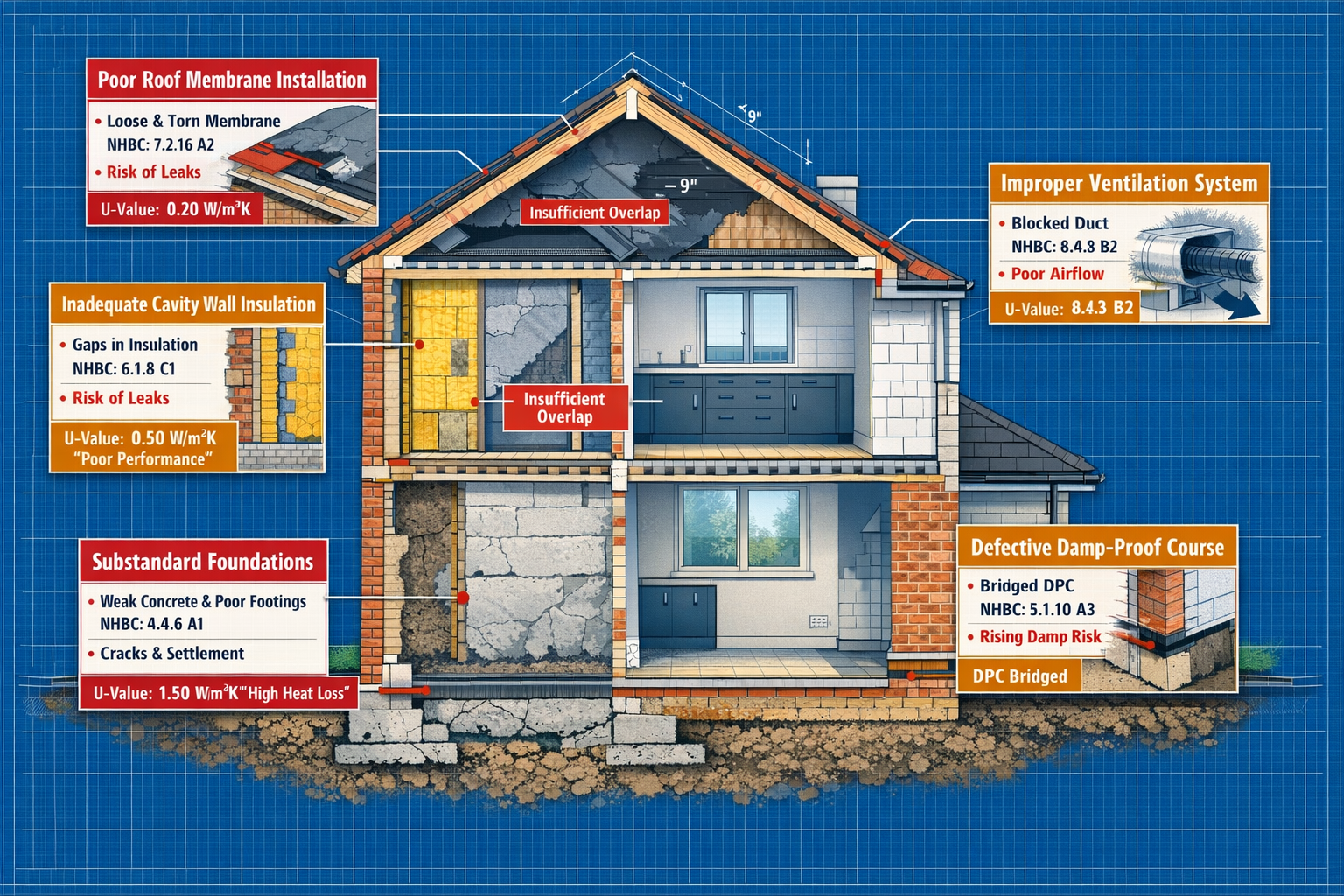
Latent defects are flaws that aren't immediately apparent during construction or initial occupation. Common examples include:
- Poor thermal performance due to inadequate insulation installation
- Moisture ingress from defective damp-proof courses or membranes
- Structural movement from inadequate foundation design
- Ventilation deficiencies leading to condensation and mould
- Defective materials that will deteriorate prematurely
"The shift to performance-led building standards means design teams must now demonstrate thermal performance, airtightness, moisture control, and fire safety through modelling, testing, and validation in real-world conditions."[5]
This evidence-based approach creates opportunities for defects when contractors fail to meet these stringent requirements—defects that only expert surveyors can identify.
RICS Level 3 Survey Protocols
When engaging a RICS Chartered Building Surveyor, buyers receive a systematic assessment following rigorous protocols:
Pre-Inspection Research
- Review of planning permissions and building control approvals
- Analysis of Building Safety Regulator Gateway approvals (for HRBs)
- Examination of NHBC registration and compliance documentation
- Assessment of design specifications against actual construction
On-Site Investigation
Professional surveyors now employ advanced diagnostic tools:
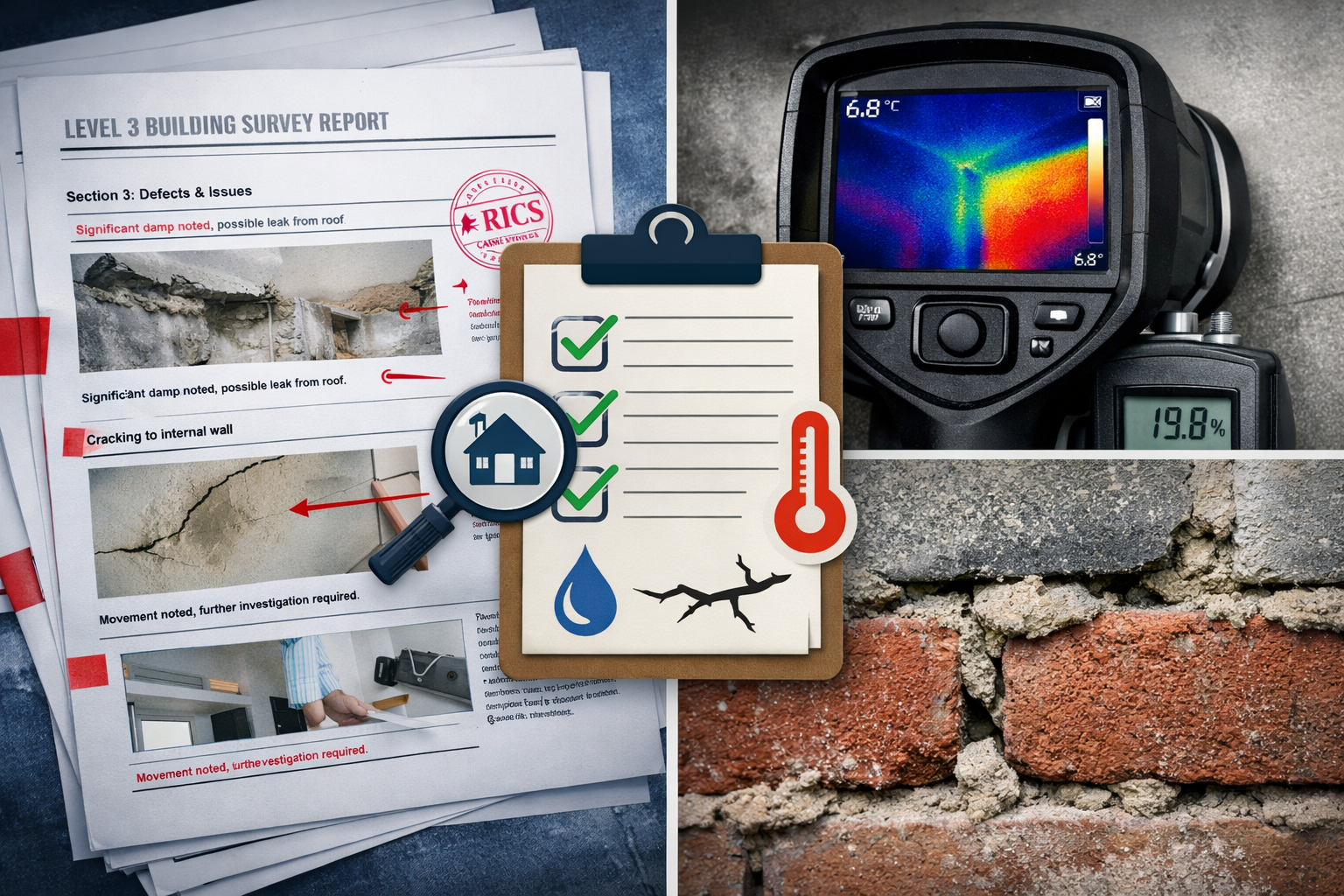
- Thermal imaging cameras to identify cold bridging and insulation defects
- Moisture meters to detect hidden dampness
- Borescopes for cavity wall inspections
- Drone technology for comprehensive roof surveys
- Air tightness testing equipment to verify performance claims
Comprehensive Reporting
The resulting report provides:
- Detailed defect descriptions with photographic evidence
- Severity ratings (Category 1, 2, or 3 defects)
- Repair cost estimates
- Prioritized remediation recommendations
- Implications for NHBC warranty claims
Enhanced Part L Compliance Verification
The 2026 Building Regulations introduce stringent thermal performance requirements. Replacement windows must achieve U-values of approximately 1.4 W/m²K or better, with similar standards for doors.[4]
Surveyors now verify these specifications using:
- SAP (Standard Assessment Procedure) calculations that assess the integrated performance of windows, walls, roofs, and other building elements
- Thermal imaging to identify performance gaps
- Documentation review to confirm installed products match approved specifications
For buyers, this verification is crucial. Properties that fail to meet Part L standards will:
- Have higher energy costs
- Potentially fail future EPC assessments
- Face expensive retrofit requirements
- Have reduced resale value
Building Survey Standards for New Builds in 2026: Navigating Warranties and NHBC Claims
Understanding NHBC Buildmark Coverage
The NHBC Buildmark warranty provides a 10-year protection period structured in distinct phases:
Years 1-2: Builder's Warranty
During this initial period, the builder remains responsible for putting right defects reported to them. Common issues include:
- Plumbing and heating system defects
- Kitchen and bathroom fitting problems
- Door and window operation issues
- Cosmetic finish defects
- Minor structural concerns
Years 3-10: NHBC Structural Coverage
After the builder's warranty expires, NHBC covers major structural defects, including:
- Foundation failures
- Load-bearing wall defects
- Roof structure problems
- Subsidence issues
- Major waterproofing failures
However, NHBC coverage has significant exclusions:
❌ Normal wear and tear
❌ Damage from lack of maintenance
❌ Defects in non-structural elements after year 2
❌ Issues caused by alterations or additions
❌ Problems reported after the coverage period
Leveraging Survey Reports for Claims
A professional building survey report becomes invaluable evidence when pursuing NHBC claims or negotiating with builders. The report provides:
Documented Evidence
- Timestamped photographic records
- Technical measurements and readings
- Expert professional opinions
- Comparison with building standards and regulations
Claim Strengthening
When defects are identified early through a comprehensive survey:
- Pre-purchase leverage: Negotiate price reductions or remediation before completion
- Early documentation: Establish defect timelines for warranty purposes
- Expert testimony: RICS surveyors can provide professional witness statements
- Cost validation: Independent repair cost estimates support claim valuations
Snagging Reports vs. Building Surveys
Many buyers confuse snagging reports with comprehensive building surveys. Understanding the distinction is essential:
Snagging Reports ✓
- Focus on cosmetic defects and finishing issues
- Identify incomplete work
- Note minor faults for builder rectification
- Typically conducted before or shortly after completion
- Lower cost (£300-£600)
Level 3 Building Surveys ✓✓✓
- Comprehensive structural assessment
- Identify latent defects and hidden problems
- Evaluate compliance with building regulations
- Assess long-term durability and performance
- Higher cost (£800-£1,500+) but comprehensive protection
For new-build properties, commissioning both services provides optimal protection: a snagging report addresses immediate cosmetic issues, while a building survey uncovers serious structural and performance defects.
Price Growth Forecasts and Their Impact on Survey Investment
The 2026 Market Context
Property price forecasts for 2026 predict modest growth between 2-5% across most UK regions. This moderate appreciation creates specific dynamics affecting survey decisions:
Investment Protection
With average UK house prices exceeding £290,000, even modest growth represents significant value. A 3% increase on a £350,000 new-build equals £10,500 in equity gain—making the £1,000-£1,500 investment in a comprehensive survey a prudent risk management strategy.
Competitive Market Pressures
Modest growth often indicates balanced supply and demand. Buyers have more negotiating power than in rapidly appreciating markets, creating opportunities to:
- Request builder remediation before completion
- Negotiate price reductions for identified defects
- Secure enhanced warranty provisions
- Walk away from problematic properties without fear of missing out
Long-Term Value Considerations
Properties with undiscovered defects face:
- Higher maintenance costs over ownership period
- Reduced resale values when defects emerge
- Potential negative equity if remediation costs exceed price appreciation
- Failed mortgage valuations during remortgage attempts
Cost-Benefit Analysis of Comprehensive Surveys
Consider this comparison:
| Scenario | Survey Cost | Defects Found | Outcome | Net Benefit |
|---|---|---|---|---|
| No Survey | £0 | Unknown | £15,000 remediation costs discovered after purchase | -£15,000 |
| Basic Valuation | £300 | Minor issues only | £12,000 in hidden defects emerge within 2 years | -£11,700 |
| Level 3 Survey | £1,200 | £18,000 in defects identified | £15,000 price reduction negotiated | +£13,800 |
The mathematics clearly favor comprehensive surveying, particularly when modest price growth means buyers aren't competing in bidding wars and have genuine negotiating leverage.
Regional Considerations
Survey investment decisions should account for regional variations. For properties in areas like Hampshire, Oxfordshire, or Buckinghamshire, where new-build developments are expanding rapidly, comprehensive surveys become even more critical due to:
- Higher property values amplifying defect costs
- Varying local authority building control standards
- Different soil conditions affecting foundation performance
- Regional climate factors influencing moisture and thermal performance
Quality Assurance and the Future Homes Standard
Enhanced Documentation Requirements
The Future Homes Standard raises expectations around quality assurance documentation and handover evidence.[7] Buyers should expect—and surveyors should verify—comprehensive documentation including:
Installation Certificates 📄
- Electrical installation certificates (Part P compliance)
- Gas safety certificates
- Heating system commissioning records
- Ventilation system performance testing
- Water supply and drainage testing
Performance Testing Evidence
- Air tightness test results
- Thermal imaging surveys
- Sound insulation testing (for party walls)
- Energy Performance Certificate (EPC) calculations
- SAP assessment worksheets
Materials Compliance Documentation
- CE/UKCA marking certificates for construction products
- Fire safety documentation for materials
- Manufacturer warranties for key components
- Building control completion certificates
- Building Safety Regulator approvals (for HRBs)
Professional surveyors verify this documentation exists and matches the actual installation, identifying discrepancies that indicate potential defects or non-compliance.
The Building Safety Levy Impact
From October 1, 2026, the new Building Safety Levy applies to residential developments, expected to raise approximately £3.4 billion over 10+ years.[6] While the government proposes exemptions for medium developments (10-49 homes), this levy reflects the increased focus on building safety and quality.
For buyers, this regulatory environment creates both challenges and opportunities:
Increased Costs 💷
Developers may pass levy costs to purchasers through higher prices, making comprehensive surveys even more important to ensure value for money.
Enhanced Standards
The levy funds building safety improvements, potentially raising overall construction quality—but only if properly enforced and monitored.
Accountability Mechanisms
The Building Safety Regulator's Gateway process for Higher Risk Buildings creates additional oversight, with Gateway 2 approvals required before construction and Gateway 3 before occupation.[4]
Surveyors can verify Gateway compliance and identify where developers have cut corners or failed to meet approved specifications.
Specialist Survey Considerations for New Builds
When to Commission Additional Assessments
Beyond standard Level 3 Building Surveys, certain new-build scenarios warrant specialist investigations:
Structural Engineering Reports
Commission structural surveys when:
- Properties show early signs of movement or cracking
- Foundations are on challenging ground conditions
- Innovative structural systems are employed
- Significant alterations or extensions are planned
Drainage and Ground Investigations
Consider specialist assessments for:
- Properties on previously developed (brownfield) sites
- Areas with known contamination risks
- Locations with high water tables
- Sites requiring ground water sampling
Roof Surveys
Dedicated roof surveys become essential when:
- Complex roof geometries increase leak risk
- Green or brown roofs are installed (per new design guidance)
- Solar panel installations require structural verification
- Drone inspections reveal potential defects
Subsidence Risk Assessment
Properties in areas with clay soils, mining history, or tree proximity may require subsidence surveys to:
- Establish baseline movement measurements
- Identify early warning signs
- Verify foundation adequacy
- Support insurance applications
Technology-Enhanced Survey Methodologies
The 2026 RICS standards embrace technological innovation, enabling surveyors to provide more comprehensive assessments:
Thermal Imaging Applications 🌡️
Modern thermal cameras identify:
- Missing or inadequate insulation
- Air leakage points
- Cold bridging at junctions
- Heating system inefficiencies
- Hidden moisture ingress
Drone Survey Capabilities
Drone surveys provide:
- Complete roof coverage without scaffolding
- High-resolution imagery of elevations
- 3D modeling for dimensional verification
- Safe inspection of dangerous or inaccessible areas
AI-Assisted Defect Recognition
Emerging AI tools help surveyors:
- Identify patterns indicating systematic defects
- Compare installations against approved specifications
- Detect subtle anomalies in thermal or visual imagery
- Generate more comprehensive defect databases
These technologies don't replace professional judgment—they enhance it, enabling more thorough assessments within reasonable timeframes and costs.
Practical Steps for Buyers in 2026
Pre-Purchase Survey Strategy
Buyers considering new-build properties should follow this strategic approach:
1. Early Engagement ⏰
Contact a RICS Chartered Building Surveyor as soon as you identify a property of interest, ideally before making an offer.
2. Comprehensive Briefing
Provide your surveyor with:
- Developer's marketing materials and specifications
- Planning and building control documentation
- NHBC registration details
- Any concerns or specific areas of interest
3. Timing Coordination
Schedule surveys at optimal times:
- After practical completion but before legal completion
- When weather conditions allow thorough external assessment
- With sufficient time to negotiate remediation before exchange
4. Documentation Review
Request and verify:
- Building control completion certificates
- NHBC Buildmark warranty documents
- Energy Performance Certificate
- All installation and commissioning certificates
- Gateway approvals (for HRBs)
5. Post-Survey Negotiation
Use survey findings to:
- Request builder remediation of identified defects
- Negotiate price reductions for issues the builder won't address
- Secure enhanced warranty provisions
- Make informed decisions about proceeding with purchase
Understanding Survey Pricing
Survey pricing varies based on several factors:
Property Value and Size
- Properties under £300,000: £800-£1,200
- Properties £300,000-£500,000: £1,200-£1,800
- Properties over £500,000: £1,800-£2,500+
Additional Factors Affecting Cost
- Property location and accessibility
- Complexity of construction
- Additional specialist investigations required
- Technology requirements (drone surveys, extensive thermal imaging)
- Urgency and scheduling constraints
While cost is a consideration, the cheapest survey rarely provides the best value. Prioritize:
✓ RICS chartered status
✓ Relevant experience with new-build properties
✓ Professional indemnity insurance
✓ Comprehensive reporting standards
✓ Technology-enhanced methodologies
Regional Surveyor Selection
Choosing surveyors with local expertise provides significant advantages. Professionals familiar with regional construction practices, local building control standards, and area-specific challenges deliver more insightful assessments.
For properties in major urban areas, consider surveyors with specific regional experience:
- London regions: North London, East London, South East London
- Home Counties: Berkshire, Hampshire, Buckinghamshire
- Specific localities: Surveyors in areas like St Albans, Richmond, or Weybridge understand local development patterns

Conclusion: Protecting Your Investment in 2026's New-Build Market
The convergence of updated RICS Home Survey Standards, enhanced NHBC requirements, and new Building Regulations creates a fundamentally transformed landscape for new-build property assessment in 2026. While these changes raise construction standards, they also create new opportunities for defects when builders fail to meet increasingly stringent performance requirements.
With property prices forecast to grow 2-5% this year, the financial stakes of purchasing decisions have never been higher. A comprehensive Level 3 Building Survey represents not merely a cost, but a strategic investment that:
Protects Financial Investment 💰
Identifying £15,000-£30,000 in latent defects before purchase prevents devastating post-completion discoveries and preserves equity growth.
Provides Negotiating Leverage
Professional survey reports create evidence-based negotiating positions, enabling price reductions or builder remediation that far exceed survey costs.
Ensures Regulatory Compliance
Verification of Part L thermal performance, Building Safety Regulator approvals, and NHBC standards compliance protects against future regulatory issues and resale complications.
Supports Warranty Claims
Documented evidence from professional surveys strengthens NHBC claims and builder warranty negotiations, maximizing protection during the critical 10-year coverage period.
Actionable Next Steps
For buyers navigating the 2026 new-build market:
- Engage RICS professionals early in your property search process
- Commission comprehensive Level 3 Building Surveys rather than relying on basic valuations
- Verify all documentation including NHBC registration, building control approvals, and performance testing
- Leverage survey findings in purchase negotiations to secure remediation or price adjustments
- Consider specialist assessments for properties with complex construction or challenging site conditions
- Understand warranty coverage and document defects promptly to preserve claim rights
The modest price growth forecast for 2026 creates a buyer-favorable market where thorough due diligence pays dividends. By understanding Building Survey Standards for New Builds in 2026 and investing in professional assessments, buyers can spot latent defects before they become costly problems—protecting both their financial investment and their peace of mind.
The new-build property market offers exciting opportunities for modern, energy-efficient homes. With proper professional guidance and comprehensive surveys, buyers can confidently navigate this market, secure quality properties, and avoid the latent defects that too often plague new construction.
References
[1] Home Survey Standards – https://www.rics.org/profession-standards/rics-standards-and-guidance/sector-standards/building-surveying-standards/home-surveys/home-survey-standards
[2] Nhbc Standards – https://www.nhbc.co.uk/technical/nhbc-standards
[3] New Design Guidance To Raise The Bar For New Build Developments – https://www.gov.uk/government/news/new-design-guidance-to-raise-the-bar-for-new-build-developments
[4] 2026 Building Regulations What The Construction Landscape With Arcura Means For You – https://www.arcura.co.uk/2026-building-regulations-what-the-construction-landscape-with-arcura-means-for-you/
[5] Building For 2026 And Beyond How Uk Design Standards Are Evolving – https://westernbuildingconsultants.com/2026/01/13/building-for-2026-and-beyond-how-uk-design-standards-are-evolving/
[6] January 2026 Welcome To Our New Building Safety Newsletter – https://assets.publishing.service.gov.uk/media/696f638c5b6060ca6736a085/January_2026_-_Welcome_to_our_new_Building_Safety_Newsletter.pdf
[7] Future Homes Standard 2025 What 2026 Means For Housebuilders On Qa Documentation Handover – https://www.planradar.com/gb/future-homes-standard-2025-what-2026-means-for-housebuilders-on-qa-documentation-handover/