The housing market in 2026 is witnessing an unprecedented surge in co-living and multi-generational home developments, driven by affordability pressures and changing lifestyle preferences. As these innovative housing models gain traction, Building Survey Protocols for Co-Living Developments: Assessing Multi-Occupancy Standards in 2026 Recovery have become critical for ensuring safety, compliance, and long-term viability. Property professionals must now navigate complex regulatory frameworks while addressing unique defect risks inherent to shared living spaces.

The shift toward multi-occupancy housing requires surveyors to adapt traditional assessment methodologies to accommodate shared facilities, increased occupancy loads, and evolving tenant expectations. This comprehensive guide explores the essential protocols, compliance requirements, and risk mitigation strategies that define professional building surveys in the co-living sector during 2026's market recovery.
Key Takeaways
- RICS standards now require enhanced protocols for co-living developments, including specific assessments for shared facilities, fire safety systems, and multi-occupancy structural loads
- Defect identification in co-living spaces demands specialized inspection techniques for high-traffic communal areas, shared utilities, and inter-unit sound insulation
- EPC compliance has become more stringent for multi-occupancy developments in 2026, with minimum rating requirements affecting rental viability
- Survey protocols must address both individual unit conditions and collective building systems to ensure comprehensive risk assessment
- Professional surveyors play a crucial role in validating co-living developments meet enhanced safety standards amid rising tenant demand
Understanding Co-Living Development Survey Requirements
Co-living developments represent a distinct property category that combines elements of traditional residential housing with commercial-grade facilities management. These properties typically feature private bedrooms alongside shared communal spaces including kitchens, living areas, bathrooms, and recreational facilities. The unique configuration demands specialized survey approaches that go beyond standard RICS Building Surveys Level 3 methodologies.
Regulatory Framework for Multi-Occupancy Standards
The regulatory landscape governing co-living developments in 2026 has evolved significantly to address safety concerns and quality standards. Building Survey Protocols for Co-Living Developments: Assessing Multi-Occupancy Standards in 2026 Recovery must align with multiple regulatory frameworks:
Key Regulatory Considerations:
- 🏛️ Building Regulations Approved Document B (Fire Safety) – Enhanced requirements for means of escape and fire compartmentation in multi-occupancy settings
- 📋 Houses in Multiple Occupation (HMO) Licensing – Mandatory licensing for properties with five or more unrelated occupants
- ⚡ Electrical Safety Standards – Five-year inspection cycles for rental properties with additional scrutiny for shared electrical systems
- 🔥 Fire Safety Act 2021 – Extended responsibilities for building owners regarding external wall systems and fire risk assessments
- 💨 Ventilation and Indoor Air Quality – Minimum standards for mechanical ventilation in habitable rooms and communal areas
According to recent guidance, multi-family housing developments require comprehensive survey protocols that address both individual dwelling units and shared building systems [2]. Professional surveyors must evaluate compliance across all regulatory domains to provide accurate risk assessments.
RICS Standards for Co-Living Assessments
The Royal Institution of Chartered Surveyors (RICS) has established specific guidance for surveying multi-occupancy developments. RICS Chartered Building Surveyors must apply enhanced due diligence when assessing co-living properties, incorporating:
| Assessment Area | Standard Survey | Co-Living Enhancement |
|---|---|---|
| Structural Integrity | Load-bearing elements | Increased occupancy load calculations |
| Fire Safety | Basic compliance check | Comprehensive fire risk assessment |
| Sound Insulation | Party wall assessment | Inter-unit and floor-to-floor acoustics |
| Utilities Capacity | Standard provision | Peak demand analysis for shared systems |
| Communal Facilities | Not applicable | Wear patterns and maintenance protocols |
The emphasis on Building Survey Protocols for Co-Living Developments: Assessing Multi-Occupancy Standards in 2026 Recovery reflects the industry's recognition that traditional survey approaches may overlook critical defects specific to shared living environments [5].
Essential Components of Building Survey Protocols for Co-Living Developments
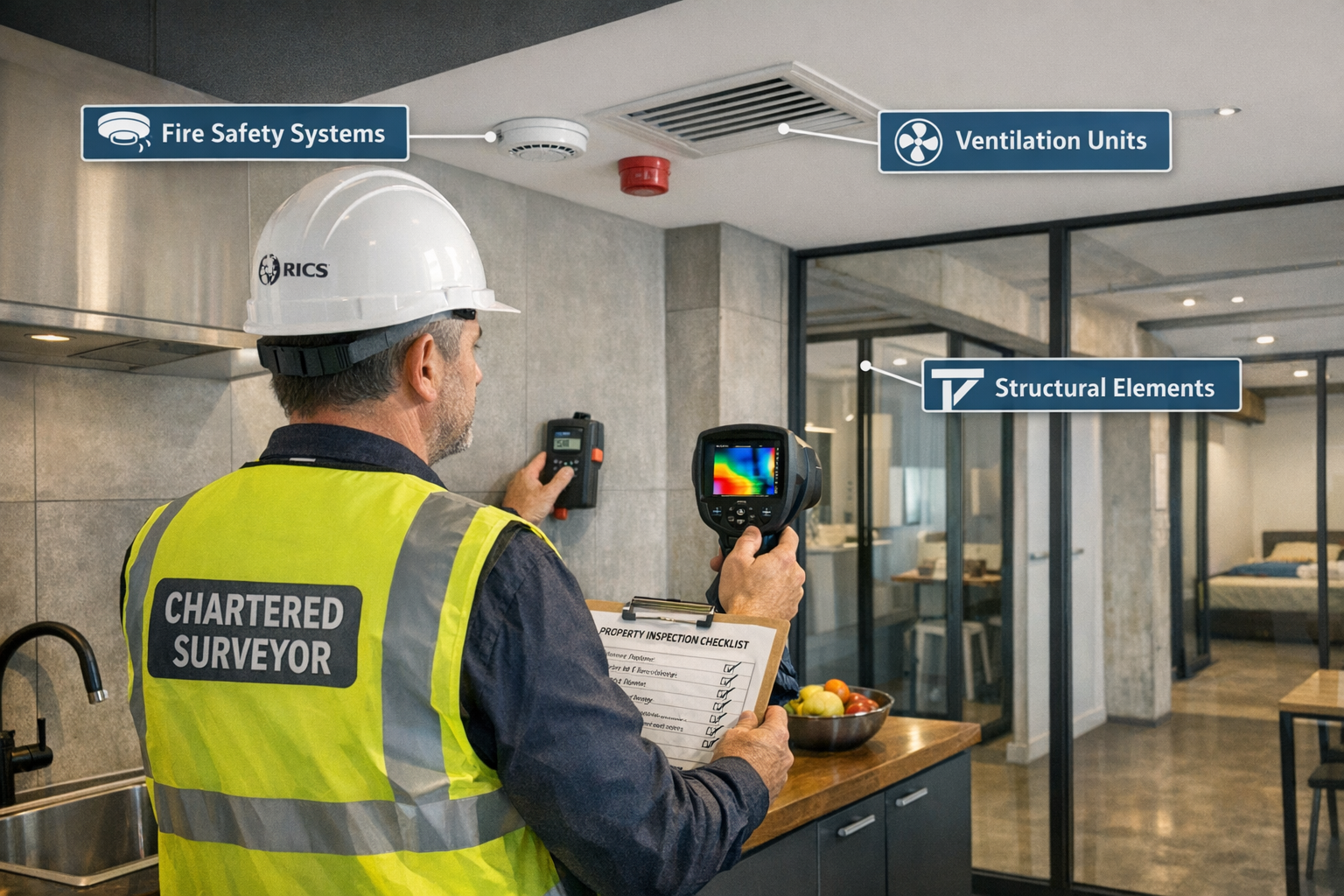
Comprehensive building surveys for co-living developments require systematic evaluation of both individual units and collective building systems. Professional surveyors must employ specialized techniques to identify defects that could compromise safety, functionality, or tenant satisfaction.
Structural Assessment and Occupancy Load Analysis
Co-living developments often accommodate higher occupancy densities than traditional residential properties, placing increased stress on structural elements. Survey protocols must verify that the building's structural capacity aligns with actual occupancy levels.
Critical Structural Considerations:
- Floor loading capacity – Verification that floor structures can support furniture, equipment, and occupant loads in communal areas
- Foundation adequacy – Assessment of settlement patterns and foundation performance under increased building loads
- Lateral stability – Evaluation of wall ties, bracing systems, and structural connections
- Roof structure integrity – Inspection for deflection, timber decay, or inadequate support in roof spaces
Structural surveys should include calculations confirming that the building's design accommodates current usage patterns. Many older buildings converted to co-living arrangements were not originally designed for multi-occupancy loads, creating potential liability issues.
Fire Safety and Means of Escape Evaluation
Fire safety represents the most critical aspect of Building Survey Protocols for Co-Living Developments: Assessing Multi-Occupancy Standards in 2026 Recovery. Surveyors must conduct thorough assessments of:
- Fire compartmentation – Integrity of fire-resistant walls, floors, and cavity barriers
- Means of escape – Adequacy of escape routes, travel distances, and emergency lighting
- Fire detection systems – Proper installation and interconnection of smoke alarms and heat detectors
- Fire door specifications – Correct fire rating, self-closing mechanisms, and intumescent seals
- External wall systems – Combustibility testing and compliance with post-Grenfell regulations
The survey should document any deviations from current fire safety standards and recommend remedial actions. Professional specific defect reports may be necessary for detailed fire safety assessments.
Mechanical and Electrical Systems Capacity
Shared living arrangements place substantial demands on building services. Survey protocols must evaluate whether existing mechanical and electrical systems can support peak usage scenarios:
M&E Assessment Checklist:
✅ Electrical capacity – Distribution board ratings, circuit protection, and load calculations
✅ Hot water provision – Boiler capacity, storage volume, and recovery rates for multiple simultaneous users
✅ Heating systems – Radiator sizing, zone controls, and thermal efficiency
✅ Ventilation adequacy – Extract fan capacities in kitchens and bathrooms
✅ Plumbing infrastructure – Water pressure, drainage capacity, and pipework condition
✅ Emergency systems – Emergency lighting, fire alarm panels, and backup power
Inadequate building services represent a common defect in converted co-living properties, often resulting in tenant complaints and operational inefficiencies.
Sound Insulation and Acoustic Performance
Noise transmission between units and from communal areas represents a frequent source of tenant dissatisfaction. Building Survey Protocols for Co-Living Developments: Assessing Multi-Occupancy Standards in 2026 Recovery should include acoustic assessments addressing:
- Inter-unit sound insulation (airborne and impact noise)
- Floor-to-ceiling acoustic separation
- Sound transmission through service penetrations
- Acoustic treatment in communal areas
- External noise ingress from urban environments
Professional monitoring surveys can quantify acoustic performance against Building Regulations Approved Document E standards, identifying areas requiring remedial treatment.
Identifying Common Defects in Multi-Occupancy Developments
Co-living properties exhibit distinctive defect patterns resulting from intensive use, shared facilities, and often, inadequate conversion from original residential or commercial purposes. Surveyors must be alert to both obvious and latent defects that could compromise building performance or tenant safety.
High-Traffic Area Deterioration
Communal spaces experience significantly greater wear than private residential areas. Common defects include:
- Floor finishes – Accelerated wear, delamination, and damage to carpets, vinyl, or timber flooring
- Door hardware – Failed closers, damaged locks, and worn hinges on frequently used doors
- Wall surfaces – Impact damage, scuff marks, and paint deterioration in corridors and shared rooms
- Sanitary fittings – Premature failure of taps, shower valves, and WC mechanisms
These defects, while often cosmetic, can indicate inadequate specification of materials for multi-occupancy use. Commercial building surveys methodologies may be more appropriate than residential approaches for assessing communal areas.
Moisture and Condensation Issues
Increased occupancy generates higher moisture levels, particularly in kitchens and bathrooms. Survey protocols must identify:
- Condensation patterns on windows, walls, and cold surfaces
- Mould growth in bathrooms, kitchens, and poorly ventilated areas
- Rising damp in ground-floor units
- Penetrating damp from defective external envelopes
- Plumbing leaks affecting multiple units
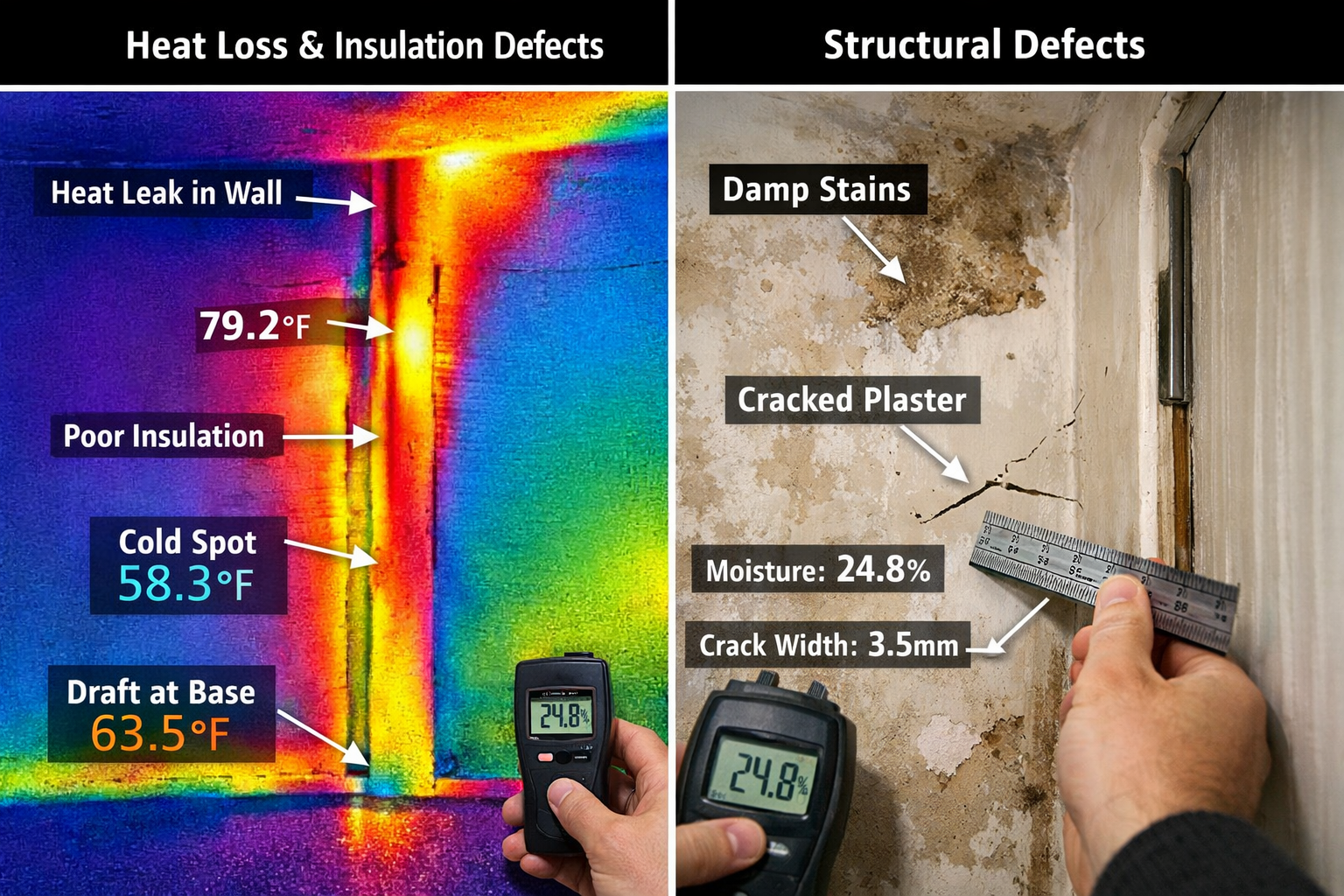
Thermal imaging equipment can reveal hidden moisture accumulation and insulation defects. The survey report should distinguish between design-related condensation issues and maintenance failures requiring immediate attention.
Inadequate Fire Protection Systems
Many co-living conversions suffer from incomplete or non-compliant fire safety measures:
| Defect Type | Risk Level | Common Occurrence |
|---|---|---|
| Missing fire doors | Critical | Bedroom and kitchen entrances |
| Inadequate compartmentation | Critical | Penetrations through fire-rated walls |
| Non-compliant escape routes | Critical | Insufficient width or obstructed paths |
| Absent or disconnected alarms | High | Individual units lacking interconnection |
| Combustible materials | High | External cladding and internal linings |
These defects require immediate remediation and should be clearly highlighted in survey reports with recommendations for specialist fire safety consultants where necessary.
Structural Movement and Settlement
Building Survey Protocols for Co-Living Developments: Assessing Multi-Occupancy Standards in 2026 Recovery must assess whether structural movement indicates ongoing problems:
- Cracking patterns in walls and ceilings
- Door and window binding or misalignment
- Floor level variations and deflection
- External wall bulging or leaning
- Foundation settlement indicators
Structural engineering input may be required to determine whether movement is historic and stable or represents progressive deterioration requiring intervention.
EPC Compliance and Energy Performance in Co-Living Developments
Energy Performance Certificate (EPC) compliance has become increasingly critical for co-living developments in 2026. The Minimum Energy Efficiency Standards (MEES) now require rental properties to achieve at least an EPC rating of E, with proposals to increase this to C by 2028 for new tenancies.
EPC Requirements for Multi-Occupancy Properties
Co-living developments face unique challenges in achieving satisfactory EPC ratings due to:
- Shared facilities requiring continuous heating and lighting
- Higher ventilation rates necessary for multiple occupants
- Older building stock converted to multi-occupancy use
- Complex heating systems serving multiple zones
- Limited scope for renewable energy installations in urban locations
Building Survey Protocols for Co-Living Developments: Assessing Multi-Occupancy Standards in 2026 Recovery should include preliminary energy assessments identifying potential improvements to achieve compliance.
Energy Efficiency Improvements for Co-Living Spaces
Surveyors should recommend practical measures to enhance energy performance:
Cost-Effective Improvements:
💡 LED lighting throughout communal areas with occupancy sensors
🌡️ Smart heating controls with zone-specific thermostats
🪟 Secondary glazing or window film for single-glazed units
🧱 Cavity wall insulation where applicable
🚪 Draught-proofing of external doors and windows
☀️ Solar thermal panels for hot water provision
Higher-Investment Measures:
- Replacement windows with high-performance double glazing
- External wall insulation systems
- Air source heat pumps replacing gas boilers
- Photovoltaic solar panels
- Mechanical ventilation with heat recovery (MVHR)
The survey should provide realistic cost estimates for improvements, enabling property owners to prioritize investments that deliver both regulatory compliance and operational savings.
Thermal Performance Assessment
Beyond basic EPC ratings, comprehensive surveys should evaluate actual thermal performance through:
- Thermal imaging surveys identifying heat loss pathways
- Air tightness testing measuring uncontrolled ventilation
- U-value calculations for walls, roofs, and floors
- Heating system efficiency assessments
Poor thermal performance not only affects EPC ratings but also increases operational costs and reduces tenant comfort. Stock condition surveys can establish baseline performance metrics for portfolio-wide improvement programs.
Implementing Comprehensive Survey Protocols in 2026
The successful implementation of Building Survey Protocols for Co-Living Developments: Assessing Multi-Occupancy Standards in 2026 Recovery requires systematic approaches, appropriate technology, and clear reporting frameworks.
Pre-Survey Preparation and Documentation Review
Effective surveys begin with thorough preparation:
- Review existing documentation – Building plans, previous survey reports, EPC certificates, fire risk assessments, and HMO licenses
- Identify regulatory requirements – Applicable building regulations, local authority standards, and licensing conditions
- Understand occupancy patterns – Current and intended occupancy levels, shared facility arrangements, and management structures
- Prepare inspection checklists – Tailored protocols addressing co-living-specific issues
- Coordinate access – Arrangements for inspecting occupied units and communal areas
Technology-Enhanced Inspection Techniques
Modern survey protocols leverage technology to improve accuracy and documentation:
- Thermal imaging cameras – Detecting insulation defects, moisture, and heat loss
- Moisture meters – Quantifying dampness in walls, floors, and ceilings
- Borescopes – Inspecting concealed spaces and cavities
- Laser measuring devices – Accurate dimensional surveys
- Digital photography – Comprehensive visual documentation
- Tablet-based reporting – Real-time data capture and report generation
These tools enable surveyors to identify defects that might otherwise remain hidden, providing clients with comprehensive risk assessments.
Reporting Standards and Recommendations
Survey reports for co-living developments should follow clear structures:
Essential Report Components:
📋 Executive Summary – Key findings, critical defects, and priority recommendations
🏗️ Building Description – Construction type, age, configuration, and occupancy details
🔍 Detailed Findings – Room-by-room assessments with photographic evidence
⚠️ Defect Analysis – Categorization by severity (critical, significant, minor)
💰 Cost Estimates – Approximate remediation costs for identified defects
📊 EPC Assessment – Current rating and improvement recommendations
🔥 Fire Safety Review – Compliance status and required upgrades
✅ Compliance Checklist – Regulatory requirements and current status
Reports should clearly distinguish between urgent safety issues requiring immediate action and maintenance items that can be addressed through planned programs.
Specialist Referrals and Follow-Up Surveys
Complex defects may require specialist input beyond the general building surveyor's scope:
- Structural engineers for significant movement or structural alterations
- Fire safety consultants for comprehensive fire risk assessments
- Electrical contractors for detailed electrical installation condition reports
- Damp specialists for invasive investigations of moisture problems
- Acoustic consultants for sound insulation testing and remediation design
Building Survey Protocols for Co-Living Developments: Assessing Multi-Occupancy Standards in 2026 Recovery should include clear referral pathways to ensure comprehensive risk assessment. Dilapidation surveys may also be necessary for leasehold properties to establish baseline conditions.
Risk Management and Quality Assurance
Professional surveyors conducting co-living development assessments must implement robust quality assurance processes to ensure comprehensive, accurate reporting that protects both clients and occupants.
Professional Indemnity and Liability Considerations
The higher risk profile of multi-occupancy developments demands appropriate professional indemnity insurance coverage. Surveyors should:
- Maintain adequate PI insurance limits reflecting project values
- Document inspection limitations and areas not accessed
- Clearly state assumptions and caveats in reports
- Recommend further investigations where appropriate
- Maintain detailed inspection records and photographic evidence
Failure to identify critical defects in co-living developments can result in significant liability exposure, particularly regarding fire safety and structural adequacy.
Continuing Professional Development
The evolving regulatory landscape requires surveyors to maintain current knowledge through:
- RICS continuing professional development (CPD) programs
- Fire safety training and certification
- Building Regulations updates and guidance
- Co-living sector-specific seminars and workshops
- Technology training for inspection equipment
Professional competence in Building Survey Protocols for Co-Living Developments: Assessing Multi-Occupancy Standards in 2026 Recovery ensures surveyors can identify emerging defect patterns and apply current best practices.
Quality Control Procedures
Survey firms should implement internal quality assurance processes:
✓ Peer review of reports before issue
✓ Standardized checklists ensuring comprehensive coverage
✓ Template reports maintaining consistent quality and format
✓ Client feedback mechanisms for continuous improvement
✓ Regular calibration of inspection equipment
✓ File audits verifying documentation standards
These measures help maintain professional standards and reduce the risk of overlooked defects or inadequate reporting.
Future Trends in Co-Living Survey Protocols
The co-living sector continues to evolve, with emerging trends likely to influence Building Survey Protocols for Co-Living Developments: Assessing Multi-Occupancy Standards in 2026 Recovery:
Smart Building Technology Integration
Modern co-living developments increasingly incorporate smart building systems including:
- IoT sensors monitoring environmental conditions
- Smart locks and access control systems
- Energy management platforms
- Predictive maintenance systems
- Occupancy monitoring and space optimization
Surveyors must develop competencies in assessing these systems' installation, functionality, and integration with traditional building elements.
Sustainability and Net-Zero Targets
Government commitments to net-zero carbon by 2050 will drive increasingly stringent energy performance requirements. Survey protocols must evolve to assess:
- Embodied carbon in building materials
- Renewable energy generation capacity
- Electric vehicle charging infrastructure
- Water efficiency measures
- Circular economy principles in building design
These considerations will become integral to comprehensive building assessments rather than optional enhancements.
Wellness and Indoor Environmental Quality
Post-pandemic awareness of indoor environmental quality has elevated expectations for:
- Air quality monitoring and purification systems
- Natural lighting and circadian rhythm considerations
- Biophilic design elements
- Acoustic comfort standards
- Thermal comfort and individual control
Survey protocols may need to incorporate wellness metrics alongside traditional building performance assessments.
Conclusion
Building Survey Protocols for Co-Living Developments: Assessing Multi-Occupancy Standards in 2026 Recovery represent a critical evolution in professional surveying practice. As co-living arrangements gain popularity amid housing affordability challenges, the role of RICS chartered surveyors in ensuring safety, compliance, and quality becomes increasingly vital.
The comprehensive protocols outlined in this guide address the unique challenges of multi-occupancy developments, from structural adequacy and fire safety to EPC compliance and acoustic performance. Professional surveyors must adopt enhanced inspection methodologies, leverage modern technology, and maintain current knowledge of evolving regulations to provide clients with accurate risk assessments.
Actionable Next Steps
For property developers, investors, and managers considering co-living developments:
- Engage qualified professionals – Commission RICS Level 3 Building Surveys from experienced surveyors familiar with multi-occupancy standards
- Address defects proactively – Prioritize critical safety issues, particularly fire protection and structural adequacy
- Plan energy improvements – Develop strategies to achieve and exceed minimum EPC requirements
- Implement maintenance programs – Establish protocols for high-traffic communal areas to prevent accelerated deterioration
- Stay informed – Monitor regulatory developments affecting co-living standards and compliance requirements
- Consider specialist input – Engage fire safety consultants, structural engineers, and other specialists for complex issues
- Document comprehensively – Maintain detailed records of surveys, improvements, and ongoing maintenance
The 2026 recovery period presents significant opportunities in the co-living sector, but success depends on rigorous assessment of building conditions and proactive management of identified defects. Professional building surveys provide the foundation for informed investment decisions and safe, compliant multi-occupancy developments.
By implementing the protocols and best practices outlined in this guide, stakeholders can navigate the complexities of co-living development assessments with confidence, ensuring properties meet current standards while positioning for future regulatory requirements. The investment in comprehensive survey protocols ultimately protects both property values and occupant wellbeing in this dynamic and growing housing sector.
References
[1] New 2026 Alta Nsps Survey Standards What Developers And Counsel Should Know – https://hallrender.com/2026/02/23/new-2026-alta-nsps-survey-standards-what-developers-and-counsel-should-know/
[2] 2026 Mhdc Survey Guidelines – https://mhdc.com/media/v45fcfmo/2026-mhdc-survey-guidelines.pdf
[3] Building Survey Protocols For Uk Construction Recovery Rics Checklists From Q4 2025 Monitor Into 2026 – https://nottinghillsurveyors.com/blog/building-survey-protocols-for-uk-construction-recovery-rics-checklists-from-q4-2025-monitor-into-2026
[4] 2026 Section 3.1 Underwriting Guidelines Final – https://www.rihousing.com/wp-content/uploads/2026-Section-3.1-Underwriting-Guidelines_Final.pdf
[5] Building Surveys For Co Living And Multi Generational Homes Assessing Compliance In 2026 Tenant Demand Surge – https://nottinghillsurveyors.com/blog/building-surveys-for-co-living-and-multi-generational-homes-assessing-compliance-in-2026-tenant-demand-surge