Agreed Surveyor Party Wall: Your Complete Guide to Shared Surveyor Appointments in 2025
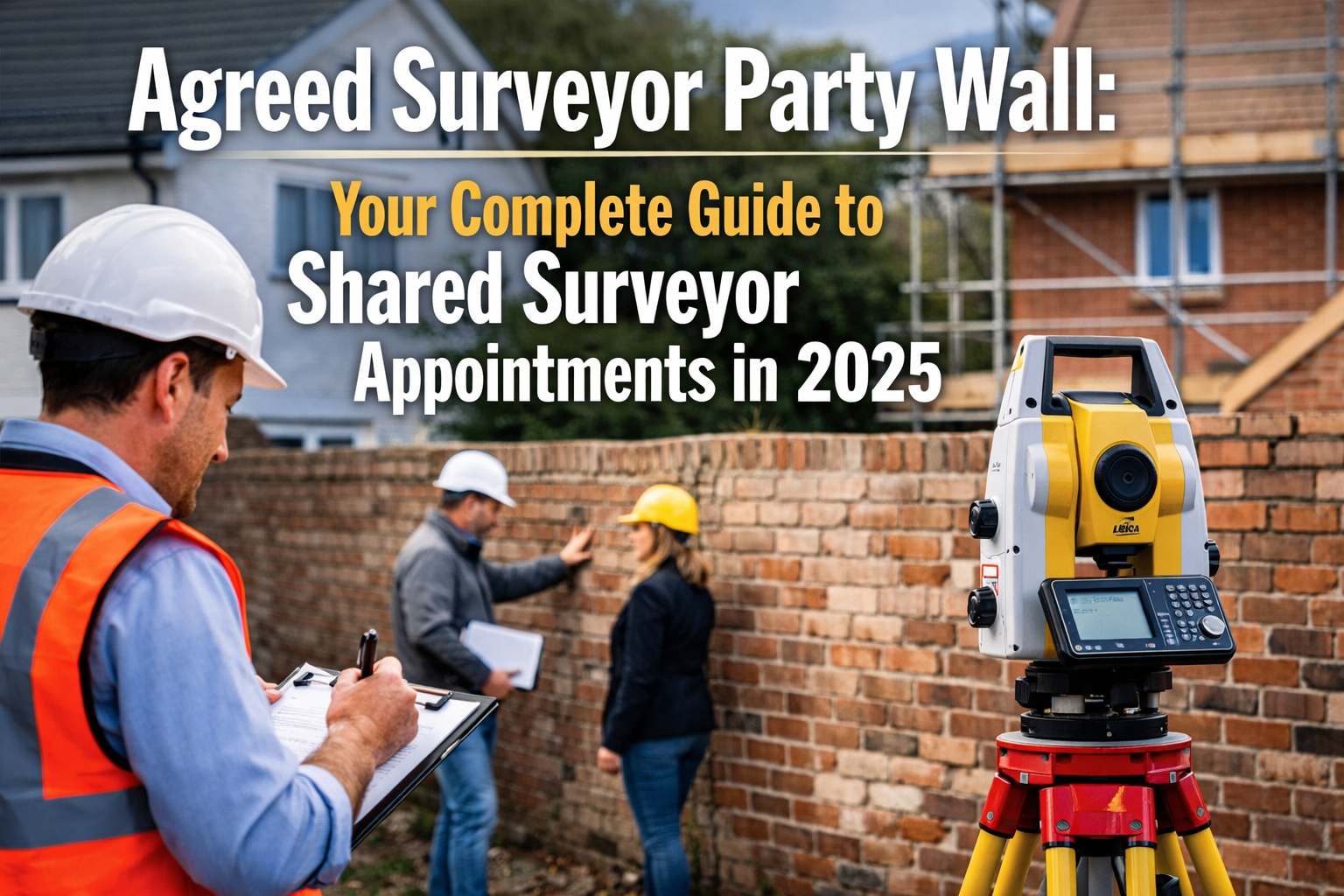
When neighbours embark on building work that affects a shared wall, fence, or boundary, the Party Wall Act 1996 comes into play—and with it, crucial decisions about surveyors. One of the most misunderstood yet potentially cost-effective options is appointing an agreed surveyor party wall arrangement, where both property owners select the same professional to oversee the entire process. This single decision can save thousands of pounds and streamline what might otherwise become a contentious, drawn-out dispute. 🏘️
Understanding how an agreed surveyor party wall appointment works is essential for any property owner facing construction that impacts shared structures. Whether you’re planning an extension, loft conversion, or basement excavation, the surveyor route you choose will significantly impact costs, timelines, and neighbourly relations.
Key Takeaways
- An agreed surveyor party wall arrangement involves both property owners appointing the same surveyor to act impartially for both parties, typically reducing overall costs by 40-60% compared to separate appointments
- The agreed surveyor must remain completely impartial and serve both parties equally, producing a single Party Wall Award that protects everyone’s interests
- This approach works best when relationships are amicable and both parties trust the same professional to handle the process fairly
- Either party can withdraw consent for an agreed surveyor at any time and appoint their own surveyor instead, providing an important safeguard
- Cost savings are substantial but must be balanced against the potential need for independent representation in complex or contentious situations
What Is an Agreed Surveyor Party Wall Arrangement?
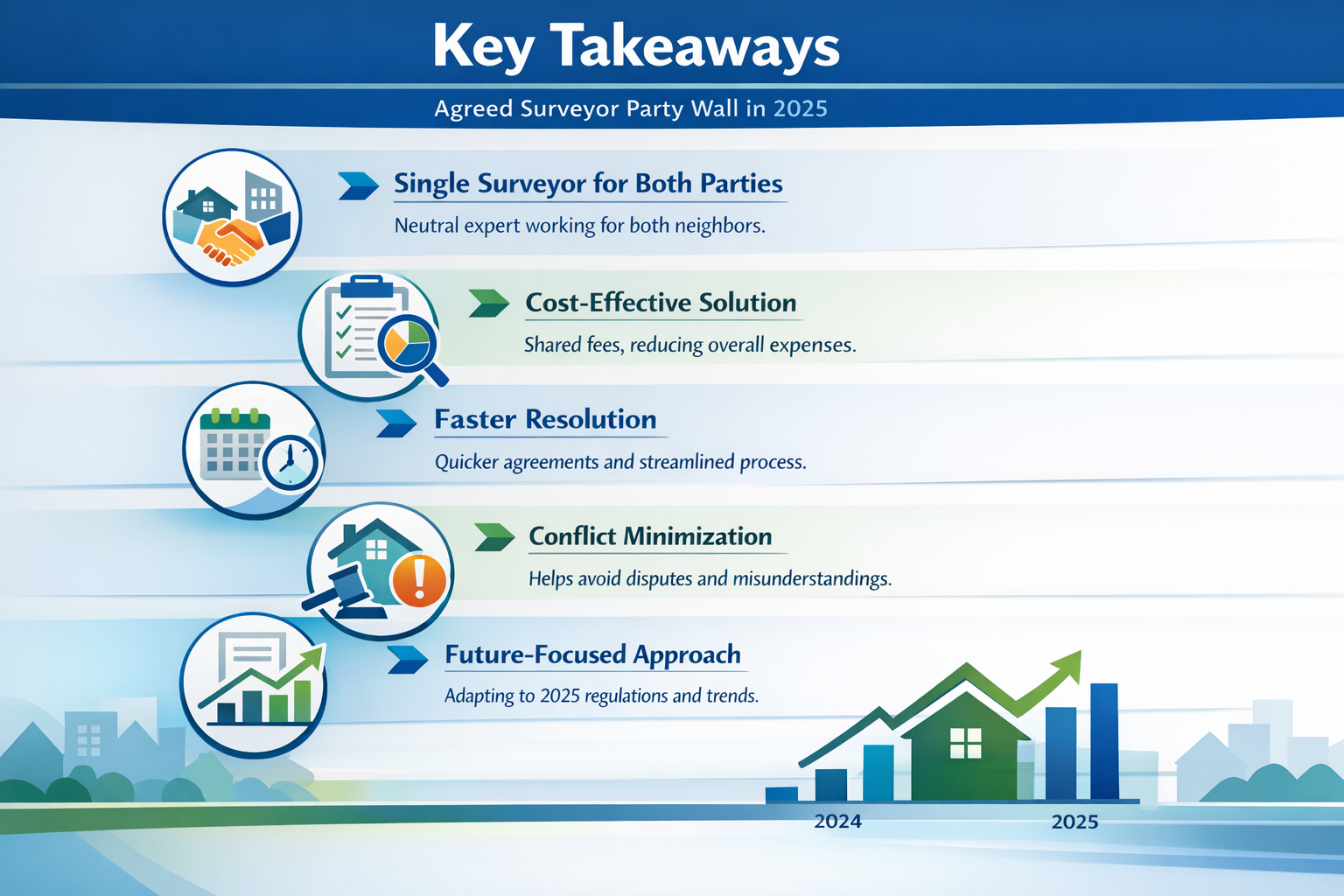
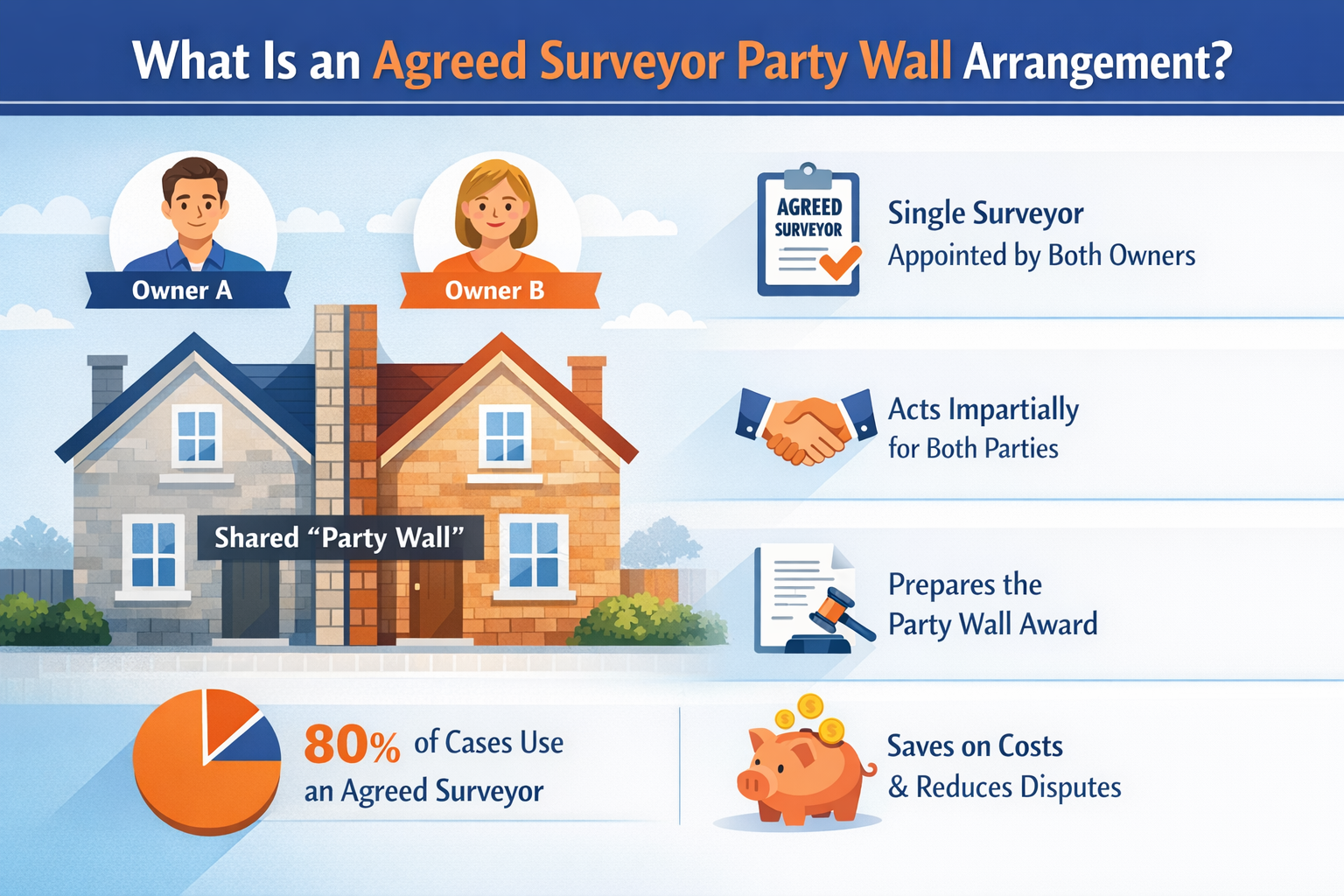
An agreed surveyor party wall appointment represents one of three possible routes under the Party Wall Act 1996 for resolving matters related to building work affecting shared boundaries. In this scenario, both the building owner (the person undertaking the work) and the adjoining owner (the neighbour) mutually agree to appoint the same surveyor to act on behalf of both parties.
The Legal Framework
The Party Wall Act 1996 provides the statutory framework governing building work that affects party walls, boundary walls, and excavations near neighbouring properties. When a building owner serves a party wall notice, the adjoining owner has three options:
- Consent to the works (no surveyor needed)
- Dissent and appoint their own surveyor (two surveyors work together)
- Dissent but agree to share a surveyor with the building owner (agreed surveyor route)
The agreed surveyor party wall option falls under Section 10(1)(a) of the Act, which states that parties may “concur in the appointment of one surveyor” to act for both of them. This single professional then assumes responsibility for producing the Party Wall Award—the legal document that sets out how the work will proceed, what protections are required, and how any damage will be addressed.
How It Differs from Other Surveyor Appointments
Understanding the alternatives helps clarify when an agreed surveyor party wall arrangement makes sense:
| Appointment Type | Number of Surveyors | Cost Responsibility | Best For |
|---|---|---|---|
| Agreed Surveyor | 1 surveyor for both parties | Shared or building owner pays | Amicable relationships, straightforward work |
| Separate Surveyors | 2 surveyors (one per party) | Building owner typically pays both | Complex work, existing disputes, independent advice needed |
| Third Surveyor | 3 surveyors total | Building owner pays all | Deadlock situations, significant disagreements |
The agreed surveyor party wall route offers the most streamlined and cost-effective solution, but it requires mutual trust and cooperation between neighbours. Professional chartered surveyors can help determine which approach best suits your specific circumstances.
The Role and Responsibilities of an Agreed Surveyor
When appointed under an agreed surveyor party wall arrangement, the surveyor assumes a unique position that demands absolute impartiality and professional integrity. Unlike surveyors appointed by individual parties who may advocate for their client’s interests, an agreed surveyor must balance the needs and rights of both property owners equally.
Duties Under the Party Wall Act
An agreed surveyor’s primary responsibilities include:
- Inspecting the party wall and adjacent properties before work commences
- Preparing a comprehensive Party Wall Award that details the proposed work, protective measures, and conditions
- Ensuring compliance with the Party Wall Act 1996 throughout the process
- Documenting the condition of both properties through schedules of condition (photographic and written records)
- Resolving disputes that arise during the work impartially
- Inspecting completed work to verify compliance with the Award
- Assessing any damage and determining appropriate compensation
The Impartiality Requirement ⚖️
The cornerstone of an agreed surveyor party wall appointment is complete impartiality. The surveyor cannot favour one party over another and must:
- Communicate equally with both property owners
- Consider both parties’ concerns with equal weight
- Make decisions based solely on the Party Wall Act and building best practices
- Disclose any potential conflicts of interest immediately
- Maintain professional independence from both parties
This impartiality requirement means the agreed surveyor cannot act as an advocate for either side. If either party feels they need someone to specifically represent their interests, they should consider appointing their own surveyor instead.
Professional Qualifications and Standards
An agreed surveyor should possess:
- RICS accreditation (Royal Institution of Chartered Surveyors) or equivalent professional qualification
- Specialist knowledge of the Party Wall Act 1996
- Experience with party wall matters and construction processes
- Professional indemnity insurance to protect all parties
- Local knowledge of building regulations and typical construction methods
Working with qualified professionals ensures that the Party Wall Award will be legally sound and practically enforceable. The agreed surveyor must maintain the same professional standards regardless of who pays their fees.
Advantages of Choosing an Agreed Surveyor Party Wall Option
The agreed surveyor party wall route offers several compelling benefits that make it the preferred choice for many property owners undertaking building work. Understanding these advantages helps inform the decision about which surveyor appointment method best suits your situation.
Significant Cost Savings 💰
The most immediate and tangible benefit is reduced expense. When both parties appoint separate surveyors, the building owner typically bears the cost of both professionals—their own surveyor and the adjoining owner’s surveyor. This can easily amount to £1,500-£3,000 or more, depending on the complexity of the work.
With an agreed surveyor party wall arrangement:
- Only one set of surveyor fees applies
- Typical savings range from 40-60% compared to dual appointments
- Inspection costs are halved (one surveyor, one visit)
- Administrative costs are reduced
- Award preparation involves one professional rather than two coordinating
Example Cost Comparison:
- Separate surveyors: £1,200 (building owner’s) + £1,200 (adjoining owner’s) = £2,400 total
- Agreed surveyor: £1,000-£1,400 total
- Savings: £1,000-£1,400
These savings become even more significant for larger projects involving multiple adjoining properties. Understanding valuation costs helps property owners budget appropriately for party wall procedures.
Faster Resolution and Simplified Process ⏱️
An agreed surveyor party wall arrangement typically accelerates the entire process:
- Single point of contact for all communications
- No coordination delays between multiple surveyors
- Quicker Award preparation without negotiation between professionals
- Streamlined inspections with one schedule
- Faster dispute resolution with immediate decision-making authority
Where separate surveyors might require several rounds of correspondence to agree on Award terms, an agreed surveyor can draft and issue the Award more efficiently. This means building work can commence sooner, reducing holding costs and project delays.
Reduced Complexity and Administration
Managing one professional relationship is inherently simpler than coordinating between multiple parties:
- Fewer emails, calls, and meetings to schedule
- Single set of documentation to review
- One invoice to process
- Clearer accountability
- Less potential for miscommunication
Maintains Neighbourly Relations 🤝
Perhaps less quantifiable but equally important, the agreed surveyor party wall approach can help preserve good relationships between neighbours. By demonstrating trust and cooperation from the outset, both parties signal their commitment to a fair, reasonable process. This collaborative tone often carries through the entire construction period.
When Agreed Surveyor Works Best
This approach is particularly effective when:
- Both parties have an amicable relationship
- The proposed work is relatively straightforward (standard extensions, loft conversions)
- No pre-existing disputes exist about boundaries or previous damage
- Both parties trust the same professional to act fairly
- Cost efficiency is a priority for all involved
- The building owner wants to demonstrate good faith to their neighbour
Expert chartered surveyors can assess whether your specific circumstances suit the agreed surveyor route or whether separate representation would be more appropriate.
Potential Disadvantages and Considerations
While an agreed surveyor party wall arrangement offers numerous benefits, property owners should also understand the potential drawbacks and situations where this approach may not be ideal. Making an informed decision requires weighing both advantages and limitations.
Perceived Lack of Independent Representation
The primary concern many adjoining owners have about an agreed surveyor party wall appointment is the question: “Will this surveyor truly represent my interests?”
Even though the agreed surveyor is legally bound to act impartially, some adjoining owners feel more comfortable with their own independent professional who:
- Advocates specifically for their concerns
- Provides confidential advice without sharing with the building owner
- Reviews the other party’s surveyor’s recommendations critically
- Offers a second opinion on technical matters
This concern is particularly acute when:
- The proposed work is extensive or complex
- The adjoining owner has limited construction knowledge
- Trust between neighbours is limited
- The property has unique vulnerabilities (historic building, previous structural issues)
- Significant financial interests are at stake
No Confidential Advice Channel
With separate surveyors, the adjoining owner can discuss concerns, strategies, and questions privately with their professional. An agreed surveyor party wall arrangement eliminates this confidential channel—anything communicated to the surveyor may be shared with both parties in the interest of transparency.
This limitation means adjoining owners cannot:
- Seek private guidance on whether to accept certain conditions
- Discuss concerns about the building owner’s reliability
- Obtain confidential opinions on fair compensation levels
- Strategize about negotiating positions
Right to Withdraw Consent ⚠️
Importantly, either party can withdraw their consent to the agreed surveyor arrangement at any time and appoint their own surveyor instead. While this provides a crucial safeguard, it can also create complications:
- Additional costs if the process must restart with separate surveyors
- Project delays while new appointments are made
- Potential relationship strain if one party feels the agreed surveyor isn’t serving them fairly
- Wasted fees for work already completed by the agreed surveyor
Situations Where Separate Surveyors Are Advisable
Property owners should seriously consider appointing separate surveyors rather than an agreed surveyor party wall professional when:
- Pre-existing disputes exist between neighbours
- Complex structural work is proposed (major underpinning, significant excavations)
- High-value properties where even minor damage could be costly
- Commercial properties are involved with business interruption concerns
- Listed buildings or properties in conservation areas require specialist knowledge
- Previous damage claims or construction issues create distrust
- Language or communication barriers make independent advocacy important
- The adjoining owner lacks construction expertise and needs education about their rights
Balancing Cost Against Peace of Mind
The decision often comes down to balancing the substantial cost savings of an agreed surveyor against the peace of mind that independent representation provides. For many straightforward domestic projects between cooperative neighbours, the agreed surveyor route offers excellent value. For more complex or contentious situations, the additional expense of separate surveyors may be worthwhile.
Professional party wall surveyors can provide honest assessments of whether your specific circumstances warrant independent representation or whether an agreed surveyor would serve both parties effectively.
The Agreed Surveyor Party Wall Appointment Process
Understanding the step-by-step process for appointing and working with an agreed surveyor party wall professional helps both building owners and adjoining owners navigate the Party Wall Act requirements efficiently and correctly.
Step 1: Serving the Party Wall Notice 📋
The process begins when the building owner serves a formal party wall notice to the adjoining owner(s). This notice must:
- Be served at least two months before work commences (for party wall matters)
- Be served at least one month before work starts (for excavation within 3-6 metres)
- Describe the proposed work in sufficient detail
- Include plans and drawings where appropriate
- Be delivered in writing (hand delivery, recorded delivery, or sometimes email if previously agreed)
The notice triggers a 14-day response period during which the adjoining owner must respond.
Step 2: Adjoining Owner’s Response Options
Upon receiving the notice, the adjoining owner has three choices:
- Consent in writing to the proposed work (no surveyor needed, work can proceed)
- Dissent or fail to respond within 14 days (triggers the surveyor appointment process)
- Request additional information before deciding
If the adjoining owner dissents or doesn’t respond, the matter moves to surveyor appointment—even if they have no objection to the work itself. This is a common misunderstanding: dissent doesn’t mean disagreement, it simply means formal procedures will be followed.
Step 3: Proposing an Agreed Surveyor
Either party can suggest appointing an agreed surveyor party wall professional. Typically:
- The building owner proposes a surveyor they’ve already consulted
- They provide the surveyor’s credentials, experience, and fee estimate
- The adjoining owner reviews the proposal
- Both parties must formally consent in writing to the agreed surveyor appointment
Important: The adjoining owner is under no obligation to accept the proposed agreed surveyor. They have every right to appoint their own surveyor instead, with fees typically paid by the building owner.
Step 4: Formal Appointment
Once both parties agree, the agreed surveyor party wall appointment is formalized through:
- Written confirmation from both parties accepting the appointment
- Engagement letters sent by the surveyor to both parties
- Fee agreement clarifying who pays (usually the building owner, but can be split)
- Scope of work outlining what the surveyor will do
The surveyor should confirm in writing that they:
- Accept the appointment to act for both parties
- Will remain impartial throughout
- Have no conflicts of interest
- Carry appropriate professional indemnity insurance
Step 5: Initial Inspections and Schedule of Condition
The agreed surveyor will then:
- Inspect both properties (the building owner’s and adjoining owner’s)
- Photograph all relevant areas that might be affected by the work
- Document existing defects (cracks, settlement, dampness, etc.)
- Prepare a Schedule of Condition—a detailed record of the property’s state before work begins
This schedule is crucial evidence if disputes arise later about whether damage was caused by the building work. Both parties should review and approve the schedule.
Step 6: Drafting the Party Wall Award
The agreed surveyor prepares the Party Wall Award, which is the legal document governing the work. It typically includes:
- Description of the proposed work with reference to plans
- Time and manner of executing the work
- Access requirements for inspections
- Working hours and restrictions
- Protective measures required (shoring, scaffolding, protective barriers)
- Insurance requirements
- Dispute resolution procedures
- Schedule of Condition as an appendix
The Award must be served on both parties, who then have 14 days to appeal to the Third Surveyor if they disagree with any aspect.
Step 7: Work Proceeds Under the Award
Once the Award is issued and any appeals resolved:
- Building work can commence in accordance with the Award terms
- The agreed surveyor monitors compliance through site visits
- Both parties can contact the surveyor with concerns or questions
- The surveyor resolves disputes that arise during construction
Step 8: Final Inspection and Completion
After work finishes, the agreed surveyor:
- Conducts a final inspection of both properties
- Compares the current condition to the Schedule of Condition
- Identifies any damage caused by the building work
- Determines appropriate remediation or compensation
- Issues a completion certificate or final report
Timeline Overview
| Stage | Typical Duration |
|---|---|
| Party wall notice period | 2 months (party walls) or 1 month (excavations) |
| Adjoining owner response | 14 days |
| Surveyor appointment negotiation | 1-2 weeks |
| Initial inspections and schedule | 1-2 weeks |
| Award preparation | 2-4 weeks |
| Appeal period | 14 days |
| Total before work starts | 3-5 months typically |
Understanding these timelines helps property owners plan construction projects realistically and avoid delays.
Costs and Fees for Agreed Surveyor Party Wall Services
Understanding the financial implications of an agreed surveyor party wall appointment helps both building owners and adjoining owners budget appropriately and make informed decisions about which surveyor route to pursue.
Typical Fee Structures
Agreed surveyor party wall fees generally fall into one of three structures:
- Fixed Fee – A single agreed price for the entire service, regardless of time spent
- Hourly Rate – Charges based on time spent (£150-£300+ per hour depending on location and complexity)
- Staged Fees – Different fees for different stages (initial inspection, Award preparation, monitoring, final inspection)
Most surveyors prefer fixed fees for straightforward party wall matters, as this provides cost certainty for all parties and reduces administrative burden.
Average Costs in 2025 💷
For an agreed surveyor party wall appointment on typical domestic work:
| Project Type | Agreed Surveyor Fee | Separate Surveyors (Combined) | Savings |
|---|---|---|---|
| Single-storey extension | £800-£1,200 | £1,600-£2,400 | £800-£1,200 |
| Two-storey extension | £1,000-£1,500 | £2,000-£3,000 | £1,000-£1,500 |
| Loft conversion | £900-£1,300 | £1,800-£2,600 | £900-£1,300 |
| Basement excavation | £1,500-£2,500 | £3,000-£5,000 | £1,500-£2,500 |
| Simple wall works | £600-£900 | £1,200-£1,800 | £600-£900 |
These figures represent typical ranges and can vary significantly based on:
- Location (London and Southeast typically 30-50% higher)
- Property complexity (listed buildings, unusual construction)
- Number of adjoining owners (multiple neighbours increase costs)
- Surveyor experience and reputation
- Extent of required inspections
What’s Included in the Fee?
A comprehensive agreed surveyor party wall service should include:
✅ Initial consultation and advice on the Party Wall Act
✅ Review of party wall notices for compliance
✅ Initial inspections of both properties
✅ Photographic schedule of condition with detailed written descriptions
✅ Party Wall Award preparation and serving
✅ Reasonable site monitoring during construction (typically 2-3 visits)
✅ Dispute resolution if issues arise during work
✅ Final inspection and condition assessment
✅ Completion documentation
Additional costs may apply for:
- Excessive site visits beyond reasonable monitoring
- Complex disputes requiring extensive time
- Expert reports on structural matters
- Third surveyor selection if an appeal is made
- Legal proceedings if the Award is challenged in court
Who Pays the Agreed Surveyor?
Under the Party Wall Act, the building owner typically pays all reasonable surveyor fees, including:
- Their own surveyor’s fees (if separate surveyors appointed)
- The adjoining owner’s surveyor’s fees
- The agreed surveyor’s fees (if that route is chosen)
- The Third Surveyor’s fees (if appointed)
However, with an agreed surveyor party wall arrangement, the parties can agree to:
- Building owner pays all fees (most common)
- Split fees equally between both parties
- Each party pays their portion of the agreed surveyor’s time
The fee arrangement should be clearly documented in the surveyor’s engagement letter to avoid disputes later.
Hidden Costs to Consider
Beyond surveyor fees, property owners should budget for:
- Structural engineer reports (£500-£1,500) if complex work is proposed
- Additional insurance or increased premiums
- Remediation costs if damage occurs despite precautions
- Project delays if party wall procedures aren’t started early enough
- Legal fees if disputes escalate beyond the Award process
Getting Value for Money
To ensure you receive good value from an agreed surveyor party wall appointment:
- Request detailed fee proposals from multiple surveyors
- Check qualifications (RICS membership, party wall specialization)
- Ask for references from previous clients
- Clarify what’s included and what costs extra
- Understand the payment schedule (upfront, staged, on completion)
- Review engagement letters carefully before signing
Professional surveyors should provide transparent, competitive pricing with clear explanations of their services and value proposition.
Are Agreed Surveyor Fees Negotiable?
While some flexibility exists, remember that professional surveyor fees reflect:
- Years of training and experience
- Professional indemnity insurance costs
- Regulatory compliance requirements
- The legal responsibility they assume
Choosing a surveyor solely based on the lowest fee can be a false economy if they lack experience, provide inadequate documentation, or fail to protect your interests properly. The Party Wall Award is a legal document that may be scrutinized for years if disputes arise—quality matters.
How to Choose the Right Agreed Surveyor for Party Wall Matters
Selecting an appropriate agreed surveyor party wall professional is one of the most important decisions in the party wall process. The right surveyor ensures compliance with the Act, protects both parties’ interests, and facilitates smooth construction progress.
Essential Qualifications and Credentials 🎓
Look for surveyors with:
RICS Membership (Royal Institution of Chartered Surveyors)
- The gold standard for surveying professionals in the UK
- Indicates rigorous training and ongoing professional development
- Subject to strict professional conduct standards
- Maintains professional indemnity insurance
Party Wall Specialist Accreditation
- Membership of the Faculty of Party Wall Surveyors (FPWS)
- Pyramus & Thisbe Club membership (party wall specialists)
- Demonstrated experience specifically with Party Wall Act matters
Local Knowledge
- Familiarity with local building practices and typical construction methods
- Understanding of local authority requirements
- Experience with similar property types in your area
Relevant Experience
- Track record with projects similar to yours
- Experience acting as agreed surveyor (not just representing individual parties)
- Demonstrated impartiality in previous appointments
Questions to Ask Potential Agreed Surveyors
Before appointing an agreed surveyor party wall professional, ask:
- “How many party wall matters have you handled as an agreed surveyor?”
- Seek someone with substantial agreed surveyor experience, not just party wall work generally
- “What is your fee structure and what’s included?”
- Request detailed breakdown of costs and services
- “How do you ensure impartiality between both parties?”
- Look for clear protocols and communication processes
- “What is your typical timeline for preparing the Award?”
- Understand how this might impact your construction schedule
- “Do you have professional indemnity insurance, and what level?”
- Minimum £1 million coverage, preferably higher for valuable properties
- “Can you provide references from previous agreed surveyor appointments?”
- Speak with both building owners and adjoining owners from past cases
- “How will you handle site monitoring during construction?”
- Clarify visit frequency and availability for concerns
- “What happens if one party becomes dissatisfied with your appointment?”
- Understand the withdrawal process and implications
Red Flags to Avoid 🚩
Be cautious of surveyors who:
- Lack specific party wall experience or RICS accreditation
- Cannot provide clear fee estimates or are vague about costs
- Have obvious connections to one party that might compromise impartiality
- Rush the process or downplay the importance of thorough inspections
- Don’t communicate clearly or are difficult to contact
- Lack professional indemnity insurance or adequate coverage
- Make guarantees about outcomes or Award terms before proper assessment
Verifying Credentials
Take time to:
- Check RICS membership through the RICS website (public register)
- Verify professional memberships (FPWS, Pyramus & Thisbe Club)
- Review online presence and testimonials
- Request proof of insurance before formal appointment
- Conduct reference checks with previous clients
The Importance of Chemistry and Communication
Beyond qualifications, consider:
- Communication style – Do they explain complex matters clearly?
- Responsiveness – How quickly do they reply to inquiries?
- Professionalism – Do they conduct themselves appropriately?
- Approachability – Will both parties feel comfortable raising concerns?
An agreed surveyor party wall professional must communicate effectively with both parties, often with different levels of construction knowledge and varying concerns. Experienced chartered surveyors understand the importance of clear, jargon-free communication that keeps all parties informed.
Getting Recommendations
Good sources for surveyor recommendations include:
- Local architects who regularly work with party wall surveyors
- Building contractors experienced with party wall procedures
- Solicitors specializing in property law
- Neighbours who have recently undergone similar work
- Professional body directories (RICS, FPWS)
- Online reviews (with appropriate skepticism)
Making the Final Decision
Once you’ve identified potential candidates:
- Request written proposals from 2-3 surveyors
- Compare qualifications, experience, and fees
- Consider communication and professionalism demonstrated during initial contact
- Discuss your choice with the other party if you’re the building owner
- Ensure mutual agreement before proceeding with formal appointment
Remember that the adjoining owner must consent to the agreed surveyor. If the building owner proposes someone the adjoining owner doesn’t trust or feel comfortable with, the adjoining owner has every right to appoint their own surveyor instead.
Common Scenarios and Case Studies
Examining real-world examples helps illustrate when an agreed surveyor party wall appointment works well and when separate surveyors might be more appropriate. These scenarios reflect typical situations property owners encounter.
Scenario 1: Straightforward Rear Extension with Cooperative Neighbours ✅
Situation:
Sarah plans a single-storey rear extension on her semi-detached house. She has a good relationship with her neighbour, Tom, and the work is relatively standard.
Approach:
Sarah serves the party wall notice and suggests an agreed surveyor party wall appointment. She provides Tom with information about a qualified surveyor she’s consulted. Tom reviews the surveyor’s credentials and agrees to the joint appointment.
Outcome:
The agreed surveyor inspects both properties, prepares a comprehensive Schedule of Condition, and issues the Party Wall Award within three weeks. Total cost: £950, split equally between Sarah and Tom at Sarah’s suggestion (though legally she could have paid all). Work proceeds smoothly, the surveyor conducts two monitoring visits, and no damage occurs. Final inspection confirms both properties remain in good condition.
Why it worked:
- Amicable relationship between neighbours
- Standard, low-risk construction work
- Both parties trusted the same professional
- Significant cost savings (approximately £1,000 compared to separate surveyors)
Scenario 2: Complex Basement Excavation Requiring Separate Surveyors ⚠️
Situation:
James plans extensive basement excavation under his Victorian terrace, going 3 metres below the neighbouring property’s foundations. His neighbour, Margaret, is concerned about potential subsidence and damage to her property.
Approach:
James serves the party wall notice and suggests an agreed surveyor. However, Margaret feels uncomfortable with this arrangement given the complexity and risk involved. She politely declines and appoints her own surveyor.
Outcome:
The two surveyors work together to produce a comprehensive Party Wall Award with extensive protective measures, including underpinning requirements, vibration monitoring, and detailed inspection protocols. Margaret’s surveyor ensures her concerns are specifically addressed and provides her with confidential advice throughout. Total cost: £4,200 (both surveyors paid by James).
Why separate surveyors were appropriate:
- High-risk, complex construction work
- Significant potential for damage
- Adjoining owner needed independent representation and confidential advice
- Technical complexity required specialist scrutiny from both perspectives
- Peace of mind for Margaret justified the additional expense
Scenario 3: Agreed Surveyor Appointment That Was Withdrawn
Situation:
David begins a loft conversion and proposes an agreed surveyor party wall appointment to his neighbour, Emma. She initially agrees, and the surveyor begins the process.
Approach:
During the initial inspection, Emma asks the agreed surveyor several questions about her rights and potential compensation. The surveyor, maintaining impartiality, explains that he cannot provide advice that favours one party over another. Emma feels uncomfortable without confidential guidance and exercises her right to withdraw consent and appoint her own surveyor.
Outcome:
Emma appoints her own surveyor, who coordinates with David’s surveyor (the originally proposed agreed surveyor now acting solely for David). The process continues with two surveyors. Emma’s surveyor provides her with the independent advice she needs, though the total cost increases to £2,600 compared to the estimated £1,200 for the agreed surveyor route.
Lessons learned:
- Adjoining owners should understand what “agreed surveyor” means before consenting
- The right to withdraw consent provides important protection
- Some people need independent representation regardless of cost
- Clear communication about the agreed surveyor’s role prevents misunderstandings
Scenario 4: Multiple Adjoining Owners and Agreed Surveyor Efficiency
Situation:
Rachel plans a two-storey side extension on her terraced house, affecting party walls with neighbours on both sides. She faces serving notices to two adjoining owners.
Approach:
Rachel proposes the same agreed surveyor party wall professional to both neighbours. Both agree, creating a single surveyor acting for all three parties.
Outcome:
The agreed surveyor conducts inspections of all three properties, prepares one comprehensive Party Wall Award covering both party walls, and monitors the work efficiently. Total cost: £1,600—significantly less than the £4,000+ that would have resulted from each neighbour appointing their own surveyor (potentially four surveyors total including Rachel’s).
Why it worked:
- Substantial cost savings multiplied across multiple parties
- Simplified coordination with one professional
- Standard construction work with cooperative neighbours
- Single Award covering all matters avoided duplication
Key Takeaways from These Scenarios
Agreed surveyor party wall appointments work best when:
- Relationships between neighbours are positive
- Construction work is relatively standard and low-risk
- Both parties understand and accept the impartiality requirement
- Cost efficiency is important to all involved
- Trust in the proposed surveyor exists from both sides
Separate surveyors are more appropriate when:
- Complex or high-risk construction is planned
- Pre-existing disputes or concerns exist
- The adjoining owner needs confidential advice
- Significant property values or financial interests are at stake
- Either party feels uncomfortable with shared representation
Understanding these dynamics helps property owners make informed decisions about which surveyor route best serves their specific circumstances. Professional party wall surveyors can provide honest assessments of whether an agreed surveyor arrangement suits your particular situation.
Legal Rights and Dispute Resolution
Understanding the legal framework surrounding agreed surveyor party wall appointments empowers both building owners and adjoining owners to protect their interests and resolve disputes effectively when they arise.
Statutory Rights Under the Party Wall Act 1996
The Party Wall Act provides specific rights and protections for all parties:
Building Owner Rights:
- Right to undertake necessary work affecting party walls
- Right to propose an agreed surveyor
- Right to appoint their own surveyor if agreement cannot be reached
- Right to reasonable access to neighbouring property for inspections and work
Adjoining Owner Rights:
- Right to appoint their own surveyor (separate from the building owner’s)
- Right to agree or refuse an agreed surveyor appointment
- Right to withdraw consent from an agreed surveyor at any time
- Right to appeal the Party Wall Award to the Third Surveyor
- Right to compensation for damage caused by the work
- Right to detailed Schedule of Condition before work commences
The Right to Withdraw Consent 🔄
One of the most important safeguards in an agreed surveyor party wall arrangement is the absolute right of either party to withdraw their consent to the agreed surveyor appointment at any time.
This means:
- No explanation required – Either party can withdraw consent without justifying their decision
- Immediate effect – Once withdrawn, the agreed surveyor ceases to act for that party
- Separate surveyor appointment – The withdrawing party then appoints their own surveyor
- Process continues – The party wall matter proceeds with two surveyors instead of one
Practical implications:
When consent is withdrawn, the originally agreed surveyor typically continues acting for the party who initially proposed them (usually the building owner), while the withdrawing party appoints a new surveyor. The two surveyors then work together to complete or revise the Party Wall Award.
Any work already completed by the agreed surveyor (inspections, preliminary assessments) may need to be repeated or verified by the newly appointed surveyor, potentially adding time and cost.
Appealing the Party Wall Award
If either party disagrees with any aspect of the Party Wall Award issued by an agreed surveyor party wall professional, they have the right to appeal within 14 days of receiving the Award.
The Appeal Process:
- Written notice of appeal must be served within 14 days
- Third Surveyor selection – If the parties cannot agree on a Third Surveyor, either party can request appointment by the local authority
- Third Surveyor review – This independent professional reviews the disputed aspects
- Third Surveyor determination – Their decision is final and binding (subject only to appeal to the County Court on points of law)
Grounds for appeal might include:
- Unreasonable conditions in the Award
- Inadequate protective measures
- Excessive or insufficient working hours restrictions
- Disagreement about access requirements
- Disputes about the Schedule of Condition
- Concerns about the surveyor’s impartiality
The Third Surveyor’s fees are typically paid by the building owner, though the Third Surveyor has discretion to allocate costs differently if one party has acted unreasonably.
Resolving Disputes During Construction
Even with a comprehensive Party Wall Award, disputes may arise during construction:
Common issues include:
- Work exceeding the scope described in the Award
- Damage to the adjoining property
- Excessive noise, dust, or disruption
- Contractor access problems
- Deviation from agreed working hours
- Structural concerns emerging during work
Resolution process:
- Contact the agreed surveyor immediately – They have authority to resolve disputes
- Site inspection – The surveyor investigates the issue
- Determination – The surveyor makes a binding decision on how to proceed
- Compliance – Both parties must follow the surveyor’s determination
- Appeal option – If either party disagrees, they can appeal to the Third Surveyor
The agreed surveyor’s ability to make immediate, binding decisions during construction is one advantage of this approach—there’s no delay while two separate surveyors consult and agree.
When Disputes Escalate Beyond the Award Process
In rare cases, party wall disputes may escalate to formal legal proceedings:
County Court appeals – Parties can appeal Third Surveyor determinations to the County Court, but only on points of law, not factual disagreements about construction matters.
Injunction applications – If work proceeds without proper party wall procedures or in violation of the Award, the adjoining owner may seek a court injunction to stop the work.
Damages claims – If the building work causes damage, the adjoining owner may pursue compensation through the courts if the agreed surveyor’s determination is unsatisfactory.
Costs implications – Legal proceedings are expensive and time-consuming. The Party Wall Act procedures, including the agreed surveyor and Third Surveyor mechanisms, are specifically designed to resolve matters without court involvement.
Protecting Your Legal Position
To safeguard your legal rights in an agreed surveyor party wall arrangement:
✅ Document everything – Keep copies of all notices, correspondence, and agreements
✅ Review the Award carefully – Don’t sign or accept without understanding all terms
✅ Raise concerns promptly – Don’t wait until after work is complete
✅ Understand your appeal rights – Know the 14-day deadline for appeals
✅ Maintain photographic evidence – Document your property’s condition throughout
✅ Seek legal advice if uncertain – Property solicitors can review Awards and advise on rights
✅ Don’t obstruct reasonable work – Unjustified obstruction may result in cost liability
Professional surveyors with party wall expertise understand these legal frameworks and can guide property owners through the process while protecting their rights.
The Role of Professional Standards
Agreed surveyor party wall professionals are bound by:
- RICS professional conduct standards – Ethical requirements and competency standards
- Party Wall Act statutory duties – Legal obligations under the Act
- Common law duties of care – Professional negligence standards
- Professional indemnity insurance – Financial protection if errors occur
These multiple layers of accountability provide important protections for both parties relying on the agreed surveyor’s impartiality and competence.
Conclusion: Making the Right Choice for Your Party Wall Matter
Navigating the complexities of party wall procedures requires careful consideration of multiple factors, with the choice between an agreed surveyor party wall appointment and separate surveyors being one of the most consequential decisions property owners face. As we’ve explored throughout this comprehensive guide, there is no universally “right” answer—the optimal approach depends on your specific circumstances, relationship with your neighbour, the complexity of the proposed work, and your priorities regarding cost, independence, and peace of mind.
Recap of Key Considerations 📝
An agreed surveyor party wall arrangement offers:
- Substantial cost savings (typically 40-60% compared to separate surveyors)
- Streamlined processes with faster Award preparation and simpler administration
- Single point of contact reducing coordination complexity
- Efficient resolution of issues during construction
- Demonstration of good faith between neighbours
However, it requires:
- Mutual trust in the same professional
- Acceptance of shared representation without confidential advice channels
- Relatively straightforward work where independent scrutiny is less critical
- Amicable relationships between parties
- Understanding that either party can withdraw consent at any time
Actionable Next Steps for Building Owners
If you’re planning construction work that requires party wall procedures:
- Start early – Begin the party wall process at least 3-4 months before your planned construction start date to accommodate notice periods and Award preparation
- Identify qualified surveyors – Research RICS-accredited party wall specialists with proven experience as agreed surveyors
- Consult with your neighbour – Have an open conversation about the proposed work and the surveyor appointment options before serving formal notices
- Serve proper notices – Ensure your party wall notices comply with all statutory requirements to avoid delays
- Present the agreed surveyor option – If appropriate for your circumstances, propose a qualified agreed surveyor with full transparency about fees and process
- Respect your neighbour’s decision – If they prefer to appoint their own surveyor, accept this gracefully and budget accordingly
- Budget realistically – Include party wall costs in your overall project budget, whether for agreed or separate surveyors
- Maintain good communication – Keep your neighbour informed throughout the process to preserve relationships
Actionable Next Steps for Adjoining Owners
If you’ve received a party wall notice from your neighbour:
- Don’t ignore it – Failing to respond within 14 days is treated as dissent and triggers the surveyor appointment process
- Understand your options – You can consent to the work, agree to an agreed surveyor, or appoint your own surveyor
- Review the proposed surveyor carefully – If an agreed surveyor is suggested, check their qualifications, experience, and impartiality
- Consider the work complexity – Assess whether the proposed construction warrants independent representation
- Ask questions – Seek clarification about anything you don’t understand before agreeing to an agreed surveyor
- Know you can withdraw – Remember that you can withdraw consent to an agreed surveyor at any time if you become uncomfortable
- Document everything – Keep records of all correspondence and take photographs of your property’s current condition
- Seek advice if uncertain – Consult with a property solicitor or independent surveyor if you’re unsure about the best approach
The Importance of Professional Guidance
Whether you choose an agreed surveyor party wall arrangement or separate surveyors, working with qualified, experienced professionals is essential. The Party Wall Award is a legally binding document that will govern how construction proceeds and how any disputes are resolved. Cutting corners on professional fees often proves to be a false economy when problems arise later.
Experienced chartered surveyors bring invaluable expertise to party wall matters, ensuring compliance with statutory requirements, protecting both parties’ interests, and facilitating smooth construction progress. Their professional judgment, technical knowledge, and understanding of the legal framework provide essential safeguards for what can otherwise become contentious and costly disputes.
Final Thoughts 💭
The agreed surveyor party wall option represents an elegant solution when circumstances align—cooperative neighbours, straightforward construction work, mutual trust, and shared interest in cost efficiency. In these situations, it delivers excellent value, streamlined processes, and outcomes that serve both parties well while preserving neighbourly relations.
However, it’s not appropriate for every situation. Complex construction, pre-existing disputes, significant property values, or simply the need for confidential independent advice may make separate surveyors the wiser choice despite the additional expense. There’s no shame in prioritizing peace of mind and independent representation when substantial interests are at stake.
The key is making an informed decision based on your specific circumstances rather than defaulting to either approach without proper consideration. By understanding the advantages, limitations, legal framework, and practical implications of agreed surveyor party wall appointments, you can choose the path that best protects your interests while facilitating necessary construction work.
Remember that party wall procedures exist to protect both building owners’ rights to improve their properties and adjoining owners’ rights to safeguard their properties from damage. When approached with professionalism, transparency, and mutual respect, the process—whether using an agreed surveyor or separate surveyors—can achieve these dual objectives effectively.
As you move forward with your party wall matter, prioritize clear communication, professional guidance, and respect for both your rights and your neighbour’s. The decisions you make now will impact not only the immediate construction project but potentially your relationship with your neighbour for years to come. Choose wisely, act professionally, and don’t hesitate to seek expert advice when needed.