Over 250,000 UK properties were listed on short-term rental platforms in 2026 — yet the majority of mortgage lenders, local authorities, and even some vendors remain unclear about what that use actually means for market value. Valuing Properties With Short‑Term Let or Airbnb Use: What UK Surveyors Should Ask, Check and Report has never been more urgent as a professional discipline, precisely because the regulatory ground keeps shifting beneath everyone's feet.
From the abolition of Furnished Holiday Lettings (FHL) tax relief in April 2025 to tightening planning controls across Scotland, Wales, and Greater London, surveyors who fail to interrogate short-let history risk producing valuations that are materially misleading — to lenders, buyers, and their own professional indemnity insurers.

Key Takeaways 📋
- Planning compliance is non-negotiable: Short-term lets face different rules in England, Scotland, and Wales — and a breach can render a property unmortgageable.
- FHL tax advantages ended in April 2025, fundamentally changing the investment case for many short-let properties.
- Lenders treat short-let properties as higher risk — surveyors must flag mortgage consent issues clearly in their reports.
- EPC Band E is the current minimum for short-term let properties; surveyors should verify compliance and note exemptions.
- Market value and investment value can diverge sharply for Airbnb properties — income-based assumptions must be stress-tested against regulatory risk.
Why Short‑Term Let Use Complicates Property Valuation
Standard residential valuation relies on comparable sales evidence — a relatively stable dataset. Short-term let properties disrupt this model in three ways: their income is volatile and platform-dependent, their legal status varies by jurisdiction, and their physical condition often reflects intensive transient use rather than owner-occupation [6].
The Income Volatility Problem
Airbnb and similar platforms generate revenue that can look impressive on a trailing 12-month basis but collapse rapidly when:
- A platform changes its algorithm or fee structure
- A local authority imposes a night-cap
- A property loses its Superhost status
- Seasonal demand shifts
Surveyors should never accept headline income figures at face value. Gross booking revenue is not net operating income. Platform fees (typically 3–5% for hosts), cleaning costs, management fees (often 15–25% of revenue), maintenance, and insurance all erode returns significantly [6].
Intensive Use and Physical Condition
A property hosting 200+ guest nights per year experiences wear and tear far beyond that of a typical owner-occupied home. Surveyors carrying out a RICS building survey on a short-let property should pay particular attention to:
- Flooring and soft furnishings: accelerated degradation
- Kitchen and bathroom fixtures: high-frequency use damage
- Locks, entry systems, and doors: wear from repeated guest access
- Boilers and heating systems: continuous operation patterns
- Structural elements: any unauthorised alterations made to accommodate guests (e.g., added en-suites, partition walls)
💡 Pull Quote: "A property's physical condition often tells the story of its letting history better than any booking spreadsheet."
Planning, Licensing and Regulatory Compliance: The Core Due Diligence Questions
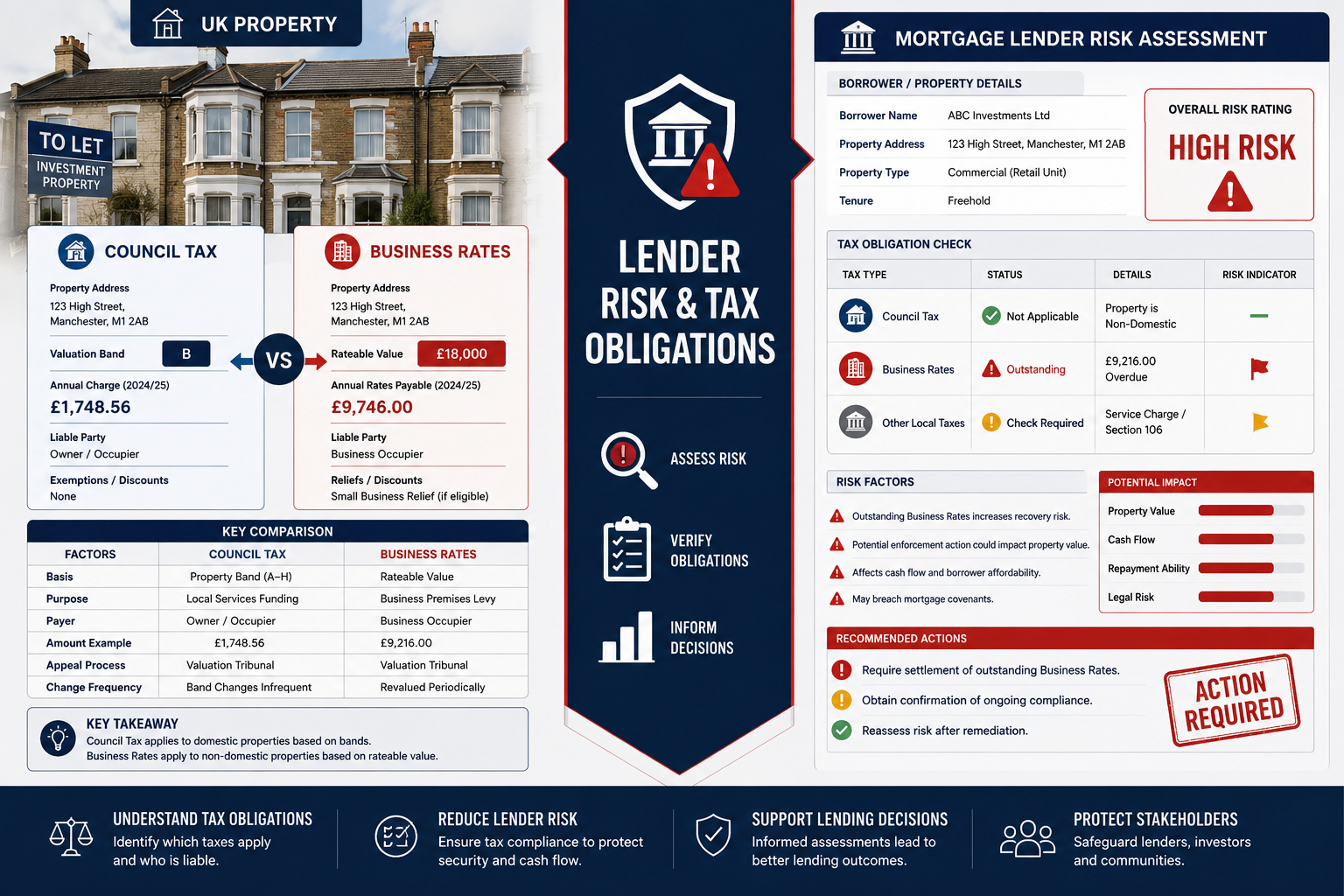
This is where valuing properties with short‑term let or Airbnb use becomes genuinely complex — and where surveyors face the greatest professional risk if they fail to report adequately.
England: The 90-Night Rule in Greater London
In Greater London, the Deregulation Act 2015 permits short-term letting for up to 90 nights per calendar year without planning permission. Exceeding this threshold without consent constitutes a material change of use, potentially attracting enforcement action and fines [3]. Surveyors must:
- Ask the vendor/agent whether the property has been let for more than 90 nights in any calendar year
- Request evidence (platform booking records, council correspondence)
- Note any enforcement history in the valuation report
Outside London, the position is less codified. Local planning authorities have varying approaches, and surveyors should check whether a Certificate of Lawful Use has been obtained.
Scotland: Mandatory Licensing
Scotland introduced a mandatory short-term let licensing scheme that requires hosts to hold a licence before accepting bookings in most council areas [3]. For surveyors, this creates a specific due diligence requirement:
| Question | Why It Matters |
|---|---|
| Does the property hold a current STL licence? | Without one, the property cannot legally operate as a short-let |
| Has the licence ever been refused or revoked? | Indicates regulatory or safety issues |
| Are there conditions attached to the licence? | May restrict use, capacity, or operating hours |
| Is the licence transferable on sale? | Most are not — buyer must reapply |
Wales: New Use Classes (C5 and C6)
Wales has introduced dedicated use classes for short-term lets — C5 (short-term holiday lets) and C6 (dwellings used for short-term holiday lets) — requiring hosts to check local council requirements before operating [3]. A property currently operating as a C6 use may require planning permission to revert to standard residential C3 use, which has direct implications for market value and lender appetite.
EPC Compliance
As of March 2026, short-term let properties in the UK must hold a valid EPC with a minimum rating of Band E [1]. Critically, they are currently exempt from the 2030 requirement to achieve Band C — a distinction that matters when advising clients on future capital expenditure. Surveyors should:
- Confirm a valid EPC is in place
- Note the rating and any recommendations
- Flag properties at Band F or G as non-compliant for short-let use
Mortgage Risk, Tax Changes and Investment Assumptions
Understanding the financial landscape is essential for surveyors producing valuations for lenders or investment purposes. The regulatory and tax environment changed materially in 2025 and 2026.
The End of FHL Tax Advantages
From April 2025, the Furnished Holiday Lettings regime was abolished. Properties that previously benefited from:
- Mortgage interest relief at the full rate
- Capital allowances on furniture and equipment
- Business Asset Disposal Relief (formerly Entrepreneurs' Relief) on sale
…now fall under standard buy-to-let rules [2]. This is not a minor adjustment. For many investors who purchased specifically on the strength of FHL tax benefits, the investment case has fundamentally changed. Surveyors preparing valuation reports for investment purposes must reflect this in their assumptions and commentary.
Mortgage Consent: A Critical Lender Risk Flag
Standard residential mortgages and most buy-to-let mortgages prohibit short-term letting without explicit lender consent [4]. When a surveyor identifies evidence of Airbnb or holiday-let use, the report must clearly flag:
- Whether the current mortgage product permits short-term letting
- Whether the lender has been notified
- The risk of mortgage breach if use continues
This is particularly important for RICS Red Book valuations prepared for secured lending purposes. A lender relying on a valuation that ignores unauthorised short-let use has grounds for a professional negligence claim.
Business Rates vs. Council Tax
Depending on the level of short-let activity, a property may be liable for business rates rather than council tax [5]. In England, properties available to let for more than 140 days per year and actually let for more than 70 days may be assessed for business rates. Surveyors should:
- Ask whether the property is currently rated for council tax or business rates
- Note the implications for the buyer's ongoing costs
- Flag any arrears or disputes with the local authority
Insurance Gaps ⚠️
Standard landlord insurance typically does not cover short-term lets [8]. A property operating as a holiday let without specialist insurance represents a significant uninsured risk. While insurance is not strictly a valuation matter, surveyors should note in their reports when evidence suggests inadequate cover — particularly where physical damage is observed that may indicate uninsured incidents.
What Surveyors Should Report: A Practical Framework
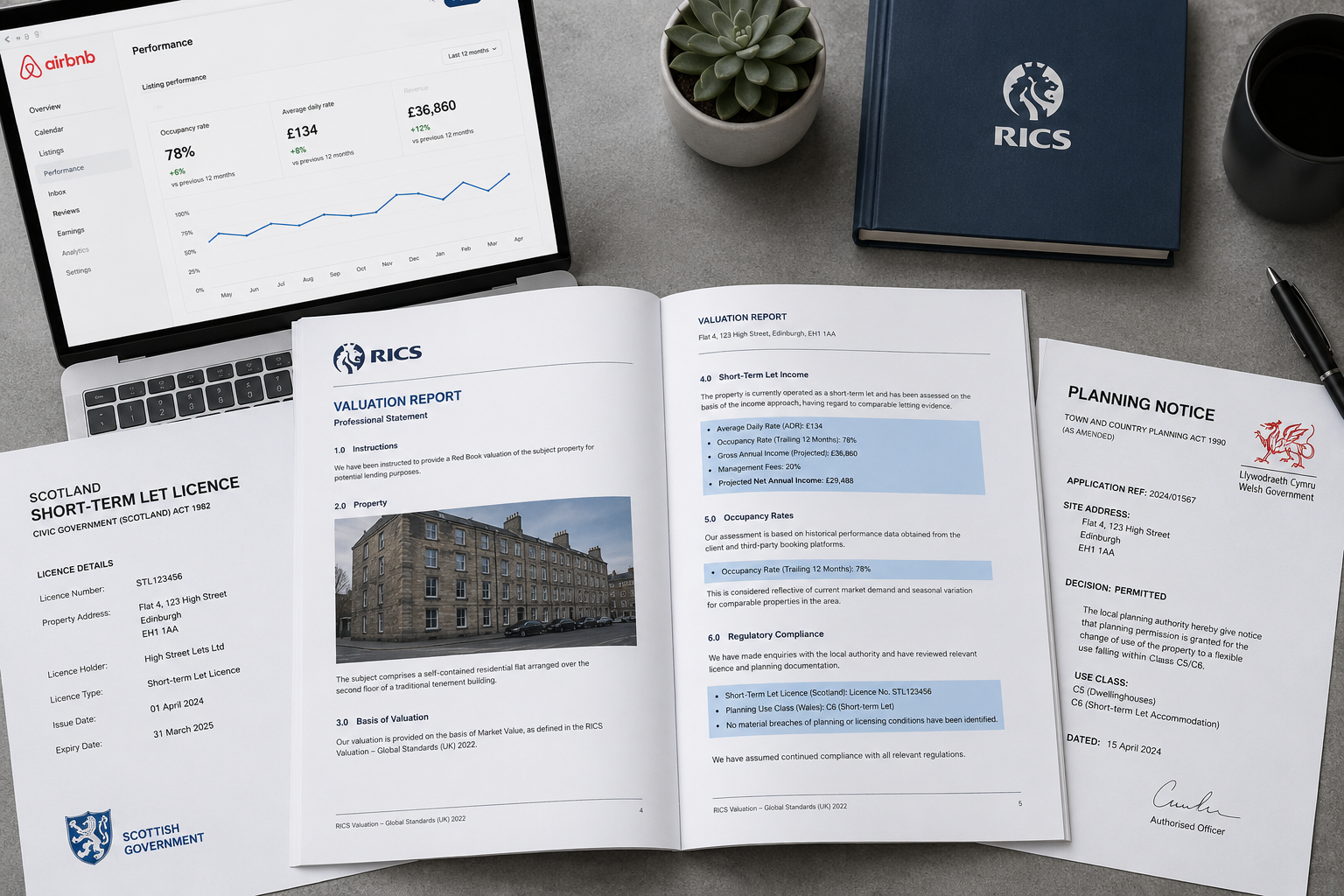
Pulling together the threads above, here is a structured framework for valuing properties with short‑term let or Airbnb use — covering what to ask, what to check, and what to include in the final report.
Pre-Inspection Questions (Ask the Vendor or Agent)
✅ How many nights per year has the property been let on short-term platforms?
✅ Which platforms are used (Airbnb, Vrbo, Booking.com, direct)?
✅ Is there a current STL licence (Scotland) or planning permission for the use?
✅ Has the property ever been subject to enforcement action?
✅ What mortgage product is in place, and does it permit short-term letting?
✅ Is the property rated for council tax or business rates?
✅ Is specialist short-let insurance in place?
✅ What is the current EPC rating?
On-Site Inspection Checklist
Surveyors should treat a short-let property as a higher-intensity use case. The RICS specific defect survey approach is particularly useful for identifying wear patterns inconsistent with stated use. Key inspection points:
- Entry systems: Smart locks, key boxes, or coded entries suggest active short-let use
- Guest information folders or welcome packs: Visible evidence of letting activity
- Multiple bed configurations: Rooms set up to maximise guest capacity
- Commercial-grade appliances: May indicate business use
- Condition of communal areas (for flats): Short-let use often generates neighbour complaints and lease disputes
For leasehold properties specifically, surveyors should review the lease for clauses prohibiting short-term letting — a common restriction in apartment blocks. This connects directly to freehold and leasehold considerations that affect both value and saleability.
Valuation Methodology: Which Approach to Use?
| Valuation Basis | When Appropriate | Key Caveats |
|---|---|---|
| Comparable sales (vacant possession) | Most residential purchases | Ignores income; appropriate where buyer intends owner-occupation |
| Investment/income approach | Lender or investor instructions | Must stress-test income against regulatory risk and FHL changes |
| Existing use value | Where short-let use is established and lawful | Requires evidence of sustainable income and planning compliance |
For most residential mortgage valuations, Market Value on a vacant possession basis remains the appropriate basis — but the report must note the short-let history and any associated risks. Where a lender is specifically funding a holiday-let business, an income approach may be warranted, and surveyors should consider whether a commercial property valuation framework is more appropriate.
What the Report Must Include
A robust report on a short-let property should address:
- Evidence of short-let use observed during inspection
- Planning and licensing compliance — confirmed or flagged as unverified
- EPC rating and compliance with current Band E minimum
- Mortgage consent status — noted as a lender risk where relevant
- Tax status — council tax vs. business rates
- Physical condition — with specific reference to wear consistent with intensive use
- Valuation basis and assumptions — clearly stated, with any income assumptions stress-tested
- Caveats and assumptions — particularly where planning compliance cannot be confirmed
Surveyors should also consider whether a schedule of condition is appropriate to document the property's state at the point of transaction — useful for both buyers and lenders.
The Fragmented Regulatory Landscape: Why Surveyors Cannot Assume Uniformity
The UK does not have a single, unified registration scheme for short-term lets [9]. This means surveyors cannot apply a one-size-fits-all approach. The table below summarises the key jurisdictional differences as of 2026:
| Jurisdiction | Key Requirement | Surveyor Action |
|---|---|---|
| Greater London | 90-night annual cap without planning permission | Verify nights let; check for enforcement history |
| Rest of England | No national cap; local authority discretion | Check for Certificate of Lawful Use; review local enforcement policy |
| Scotland | Mandatory STL licence required | Confirm licence in place and transferability |
| Wales | C5/C6 use classes apply | Confirm use class; check planning consent for change of use |
One- and two-bedroom apartments in high-demand urban and coastal locations are typically the most active short-let properties [7], making this issue particularly relevant in cities like Manchester, Edinburgh, and coastal resort towns. Surveyors in these markets should treat short-let due diligence as a standard part of every residential instruction.
Conclusion: Actionable Steps for UK Surveyors in 2026
The convergence of tighter planning controls, the abolition of FHL tax relief, mandatory licensing in Scotland, and new use classes in Wales means that valuing properties with short‑term let or Airbnb use now demands a structured, jurisdiction-aware approach that goes well beyond standard residential practice.
Actionable next steps for surveyors:
- Update your pre-inspection questionnaire to include all short-let specific questions listed above — make it standard practice, not an afterthought.
- Review your report templates to ensure they include dedicated sections for planning compliance, EPC status, and mortgage consent risk.
- Stay current with local authority enforcement policies — particularly in Greater London, Scotland, and Wales where rules are most active.
- Engage with lender-specific requirements: different lenders have different risk appetites for short-let properties; confirm instructions carefully before accepting the valuation basis.
- Consider professional development: RICS guidance on short-term lets continues to evolve — surveyors should ensure their CPD reflects the changing landscape.
- Flag, don't ignore: when in doubt, a clear caveat in the report is always preferable to a silent assumption. Professional indemnity claims in this area are rising.
Short-term letting is not going away. The platforms are embedded, the demand is real, and many properties are genuinely well-suited to this use. The surveyor's role is not to discourage it — but to ensure that every valuation reflects the full picture: the opportunity, the compliance position, and the risk.
References
[1] Airbnb Short Term Let Epc Rules – https://www.epcguide.co.uk/blog/airbnb-short-term-let-epc-rules?utm_source=openai
[2] Short Term Let Guide – https://letsentry.co.uk/short-term-let-guide?utm_source=openai
[3] Short Term Lets Planning Permission – https://www.houst.com/blog/short-term-lets-planning-permission?utm_source=openai
[4] Holiday Let Mortgage – https://knoxmortgages.co.uk/holiday-let-mortgage/?utm_source=openai
[5] Short Term Lets Business Rates Vs Council Tax – https://propertyinvestmentcontact.co.uk/short-term-lets-business-rates-vs-council-tax?utm_source=openai
[6] Valuing Short Term Rentals A Real Estate Practitioners Guide – https://appraisalbuzz.com/valuing-short-term-rentals-a-real-estate-practitioners-guide/?utm_source=openai
[7] Choosing The Right Property Type For Airbnb Uk – https://www.stayful.co.uk/airbnb-management-blog-serviced-accommodation-stayful/choosing-the-right-property-type-for-airbnb-uk?utm_source=openai
[8] What Are Short Term Lets – https://homelet.co.uk/landlord-insurance/tips/what-are-short-term-lets?utm_source=openai
[9] Uk Registrationwhitepaper 2021 – https://news.airbnb.com/wp-content/uploads/sites/4/2021/06/UK_RegistrationWhitepaper_2021.pdf?utm_source=openai