
Nearly one-third of all property transactions in the UK collapse before completion, costing buyers and sellers an estimated £270 million annually in wasted fees and emotional distress. This staggering failure rate has prompted the UK Government to propose fundamental reforms to the homebuying process, with Building Greater Transaction Certainty with Upfront Surveys: 2026 Homebuying Reform Protocols emerging as a cornerstone of the transformation. These proposed changes aim to shift building surveys from their traditional position late in the transaction to the very beginning, creating a more transparent and reliable property market.
The proposed mandatory upfront condition assessments represent a paradigm shift in how properties are bought and sold across the UK. By requiring comprehensive surveys before properties even reach the market, the reforms seek to eliminate the uncertainty that has plagued transactions for decades. While the government has not yet announced a definitive implementation timeline, the surveying industry is preparing for significant changes that could reshape professional workflows and buyer expectations throughout 2026 and beyond.
Key Takeaways
- Mandatory upfront surveys proposed: Government reforms would require comprehensive condition assessments before properties are marketed, fundamentally changing the transaction sequence
- 24-month implementation window needed: RICS advocates for a minimum two-year preparation period to build industry capacity and develop standardized protocols [1]
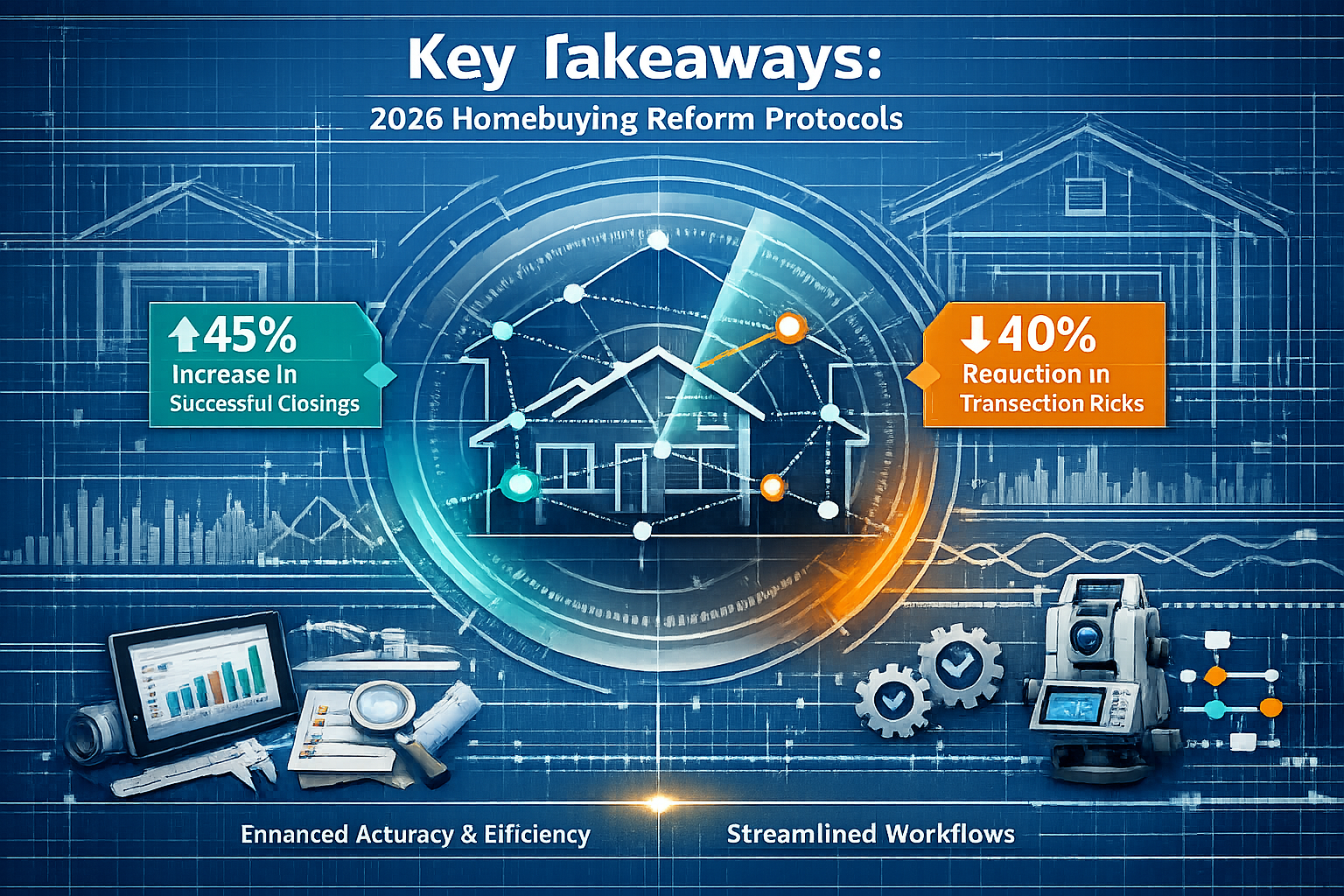
- Reduced transaction failures expected: Early-stage surveys aim to decrease the 30% fall-through rate by providing buyers with critical information upfront
- Digital integration required: Surveys must align with standardized digital property pack formats and common data standards for seamless professional collaboration [4]
- Level 3 surveys become standard: Comprehensive RICS Building Surveys Level 3 assessments will likely become the baseline for upfront condition reporting
Understanding the Proposed Homebuying Reform Framework
The UK Government's consultation on homebuying and selling reforms closed at the end of December 2025, marking a critical milestone in the journey toward a more transparent property market [1]. While no definitive implementation date has been established, the proposals signal the most significant overhaul of residential property transactions in decades.
Core Elements of Building Greater Transaction Certainty with Upfront Surveys
The reform framework centers on several interconnected components designed to reduce transaction failures and improve buyer confidence:
Mandatory Upfront Condition Assessments 📋
The most transformative element involves placing building surveys at the very beginning of the home buying process through mandatory upfront condition assessments [2]. This represents a complete reversal of current practice, where surveys typically occur after an offer has been accepted and significant costs have already been incurred.
Under the proposed system, sellers would commission comprehensive property surveys before listing their homes. These assessments would be made available to all prospective buyers, eliminating the need for multiple surveys on the same property and providing transparent information about structural condition, defects, and potential repair costs.
Enhanced Material Information Disclosure 📝
Government consultations have focused extensively on proposals around improving material information disclosure in property listings [1]. This includes requirements for sellers to provide detailed information about:
- Planning permissions and building regulation compliance
- Alterations and extensions undertaken
- Guarantees and warranties for previous work
- Known defects or ongoing disputes
- Lease terms and service charge histories (for leasehold properties)
Standardized Digital Property Packs 💻
The reforms emphasize digital integration, with surveys expected to conform to standardized digital property pack formats and common data standards for sharing between professionals [4]. This technological component aims to streamline information flow between surveyors, estate agents, solicitors, and mortgage lenders.
Timeline Considerations and Industry Capacity
The Royal Institution of Chartered Surveyors has emphasized that a minimum 24-month implementation window is essential to allow capacity building, standard development, and guidance creation for the surveying industry [1]. This extended preparation period reflects the significant adjustments required across the sector.
Key Implementation Challenges:
| Challenge | Description | Mitigation Strategy |
|---|---|---|
| Surveyor Capacity | Insufficient qualified professionals to handle upfront demand surge | Accelerated training programs and recruitment initiatives |
| Standardization | Lack of uniform reporting formats across firms | Development of mandatory templates and protocols |
| Cost Allocation | Uncertainty about who bears upfront survey costs | Clear regulatory guidance on seller responsibilities |
| Quality Assurance | Ensuring consistent standards across all assessments | Enhanced oversight and accreditation requirements |
RICS has offered to conduct further research to help government better understand industry capacity and resourcing needs for implementation [1]. This collaborative approach recognizes that successful reform depends on realistic assessment of the surveying sector's ability to scale operations.
How Building Greater Transaction Certainty with Upfront Surveys Transforms Surveyor Workflows
The shift to mandatory upfront assessments will fundamentally reshape how chartered surveyors conduct their work, requiring new protocols, enhanced digital capabilities, and revised client relationships.
The New Survey Commissioning Model
Seller-Commissioned Assessments 🏠
Unlike the traditional buyer-commissioned model, upfront surveys place the commissioning responsibility on sellers. This creates several important implications:
- Earlier engagement: Surveyors will work with properties before they reach the market, requiring coordination with estate agents during the pre-listing phase
- Neutral positioning: Surveys must serve the interests of all potential buyers, not just a single client, demanding enhanced objectivity
- Longer validity periods: Reports may need to remain current for extended marketing periods, potentially requiring update mechanisms
Enhanced Scope Requirements 🔍
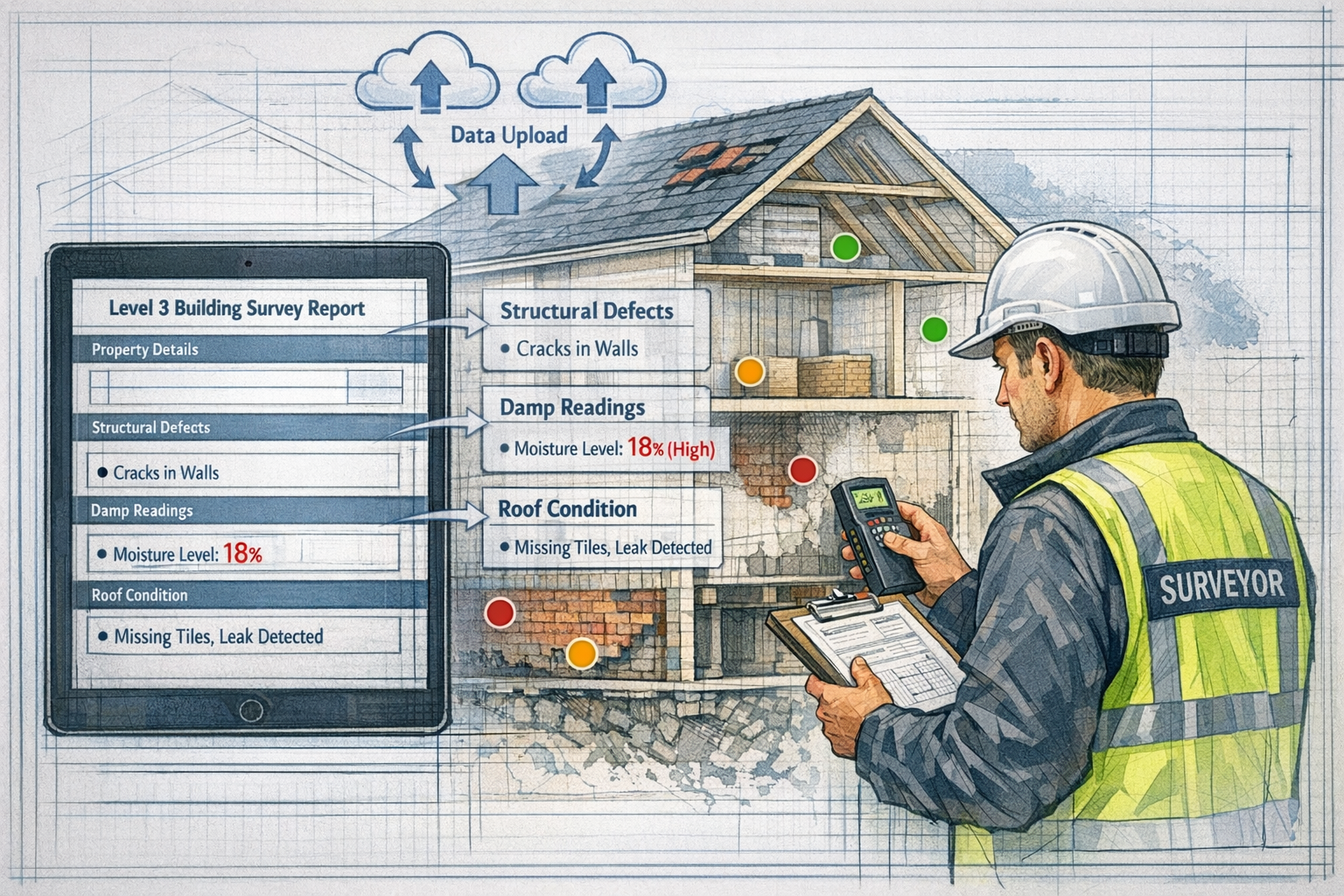
The proposed reforms suggest that comprehensive Level 3 building surveys will become the standard for upfront assessments, rather than the more basic Level 2 HomeBuyer Reports currently common in the market. This elevation in scope reflects the critical role these surveys will play in transaction certainty.
A comprehensive upfront survey should include:
- Structural integrity assessment: Detailed evaluation of foundations, walls, roofs, and load-bearing elements
- Defect identification and categorization: Clear classification of issues by urgency and estimated repair costs
- Building services evaluation: Assessment of heating, electrical, plumbing, and drainage systems
- Environmental considerations: Identification of damp, condensation, timber decay, and insect infestation
- Legal compliance review: Verification of building regulation compliance for visible alterations
For properties with specific concerns, additional specialist investigations such as damp surveys or roof surveys may supplement the primary assessment.
Digital Integration and Standardized Reporting
Common Data Standards 📊
Surveys under the 2026 protocols must integrate with standardized digital property pack formats [4]. This requires surveyors to adopt:
- Structured data fields: Information must be captured in standardized formats that can be automatically processed by conveyancing systems
- Traffic light rating systems: Clear visual indicators (green/amber/red) for property condition elements
- Cost estimation frameworks: Standardized approaches to repair cost estimation that align with industry benchmarks
- Photograph and diagram requirements: Minimum documentation standards for visual evidence
Interoperability Requirements 🔗
The digital property pack must facilitate seamless information sharing between multiple stakeholders. Surveyors will need systems that allow:
- Secure cloud-based storage and access control
- Version control and update tracking
- Integration with conveyancing case management platforms
- Compatibility with mortgage lender assessment tools
Quality Assurance and Professional Standards
Enhanced Certification Requirements ✅
To ensure consistency and reliability, upfront surveys will likely require enhanced certification and quality assurance mechanisms:
- Mandatory professional indemnity insurance: Higher coverage limits to reflect the surveys' critical role in multiple transactions
- Peer review protocols: Random sampling and review of reports by senior professionals
- Continuing professional development: Specialized training in upfront assessment methodologies
- Accreditation schemes: Potential government or RICS-administered certification for upfront survey providers
Liability Considerations ⚖️
The shift from single-buyer to multiple-potential-buyer audiences creates complex liability questions. Surveyors will need clear guidance on:
- The extent of duty of care owed to subsequent viewers and purchasers
- Time limitations on report validity and update requirements
- Responsibilities when property conditions change during marketing
- Disclosure obligations if defects are discovered after initial assessment
Understanding which survey you need becomes even more critical in this reformed environment, as the upfront assessment must satisfy multiple stakeholders with varying risk tolerances.
Reducing Transaction Fall-Through Risks Through Early-Stage Assessments
The primary objective of Building Greater Transaction Certainty with Upfront Surveys: 2026 Homebuying Reform Protocols is to dramatically reduce the approximately 30% transaction failure rate that has plagued the UK property market for years.
The Current Transaction Failure Problem
Common Causes of Property Deal Collapse ⚠️
Research consistently identifies several key factors that cause transactions to fail:
- Unexpected survey findings: Buyers discover significant defects only after committing to purchase, leading to renegotiation or withdrawal
- Financing difficulties: Mortgage lenders reduce valuations based on condition issues, leaving buyers unable to secure sufficient funding
- Chain complications: Multiple linked transactions create fragility, where one failure cascades through the chain
- Buyer remorse: Extended timelines allow buyers to reconsider decisions or find alternative properties
- Legal complications: Title issues, planning violations, or boundary disputes emerge during conveyancing
The Cost of Uncertainty 💷
Transaction failures impose substantial costs on all parties:
- Wasted survey fees: Buyers lose £400-£1,500 on surveys for properties they ultimately don't purchase
- Legal costs: Solicitors' fees for aborted transactions range from £500-£2,000
- Opportunity costs: Sellers lose months of marketing time and may miss favorable market conditions
- Emotional toll: The stress and disappointment of failed transactions affects wellbeing and future market confidence
How Upfront Surveys Address Fall-Through Risks
Information Asymmetry Elimination 📚
The fundamental advantage of mandatory upfront surveys is the elimination of information asymmetry between sellers and buyers. When comprehensive condition information is available before offers are made, several benefits emerge:
Informed Offer Pricing 💰
Buyers can factor repair costs and defects into their initial offers, reducing the likelihood of post-survey renegotiation. This creates more realistic pricing from the outset:
- Transparent condition disclosure: All parties understand the property's true state before emotional or financial commitment
- Competitive market pricing: Properties with known issues are priced appropriately, attracting buyers who accept the condition
- Reduced negotiation friction: Fewer surprises mean fewer reasons for price disputes during the transaction
Enhanced Mortgage Certainty 🏦
Lenders can review upfront survey information alongside valuation instructions, providing more accurate lending decisions earlier in the process. This reduces the risk of late-stage financing failures when lenders discover condition issues that affect security value.
Buyer Confidence and Commitment 🤝
When buyers make offers with full knowledge of property condition, their commitment is more robust:
- Reduced buyer remorse: Decisions are based on complete information rather than assumptions
- Faster transaction timelines: Elimination of the survey contingency period shortens overall completion time
- Stronger negotiating positions: Both parties negotiate from positions of equal information
Comparative Transaction Models
Traditional Model vs. Reformed Model:
| Stage | Traditional Process | Reformed Upfront Survey Process |
|---|---|---|
| Pre-Marketing | No survey required | Comprehensive Level 3 survey commissioned by seller |
| Property Listing | Limited condition disclosure | Full survey report available to all viewers |
| Offer Stage | Offers made with limited information | Informed offers reflecting known condition |
| Post-Offer | Buyer commissions survey (2-3 weeks) | Survey already complete |
| Renegotiation | Common after survey findings | Rare, as condition already priced |
| Mortgage Valuation | May contradict buyer's survey | Aligns with existing survey information |
| Completion Timeline | 12-16 weeks typical | 8-12 weeks anticipated |
| Fall-Through Rate | ~30% | Projected 15-20% (industry estimates) |
Addressing Remaining Transaction Risks
While upfront surveys significantly reduce uncertainty, they cannot eliminate all transaction failure risks:
Chain Dependencies 🔗
Property chains remain vulnerable even with perfect condition information. The reforms may need complementary measures such as:
- Reservation agreements with financial penalties for withdrawal
- Chain insurance products to protect against cascade failures
- Increased use of bridging finance to break chain dependencies
Buyer Financing Changes 📉
Changes in buyer circumstances (job loss, relationship breakdown, mortgage rate changes) can still cause transactions to fail regardless of property condition certainty.
Legal Title Issues 📄
Upfront surveys address physical condition but not legal complications that may emerge during conveyancing, such as restrictive covenants, boundary disputes, or planning violations.
For comprehensive protection, buyers may still require specialized assessments beyond the standard upfront survey, including structural surveys for properties with significant defects or specific defect surveys for targeted investigations.
Industry Perspectives and Implementation Challenges
The surveying profession has responded to the proposed reforms with cautious optimism, recognizing both the potential benefits and the substantial challenges that implementation will entail.
RICS Position and Advocacy
The Royal Institution of Chartered Surveyors has actively engaged with government consultations, providing detailed feedback on the practical implications of mandatory upfront surveys [1]. Key elements of the RICS position include:
Support for Reform Objectives ✅
RICS endorses the goal of increased transaction certainty and reduced fall-through rates, acknowledging that the current system creates inefficiencies and costs for all parties.
Implementation Timeline Concerns ⏰
The institution has strongly emphasized that a minimum 24-month implementation window is essential [1]. This extended period is necessary for:
- Developing standardized survey templates and reporting protocols
- Creating training programs for existing surveyors
- Recruiting and qualifying additional professionals to meet demand
- Establishing quality assurance frameworks
- Building digital infrastructure for property pack integration
Capacity Building Requirements 📈
RICS has offered to conduct further research to help government better understand industry capacity and resourcing needs [1]. Current estimates suggest the surveying profession would need to expand by 20-30% to handle the initial surge in upfront assessment demand.
Practical Implementation Challenges
Cost Allocation and Affordability 💷
One of the most contentious aspects of the reforms concerns who bears the cost of upfront surveys:
Seller-Funded Model Implications:
- Upfront cost burden on sellers (£600-£1,500 per property)
- Potential deterrent to listing properties, particularly for lower-value homes
- Questions about cost recovery through sale price
- Impact on elderly or financially constrained sellers
Alternative Funding Models:
- Shared cost arrangements between seller and eventual buyer
- Estate agent-funded surveys as part of marketing packages
- Government subsidies or tax incentives for compliance
- Insurance-backed survey schemes
Standardization Across Diverse Property Types 🏘️
The UK housing stock is extraordinarily diverse, ranging from medieval cottages to modern apartments. Creating standardized survey protocols that work across this spectrum presents significant challenges:
- Period properties: Require specialist knowledge of traditional construction methods
- Non-standard construction: Properties built with unconventional materials need specialized assessment approaches
- Flats and apartments: Present unique challenges around shared structures and communal areas
- Commercial conversions: Require understanding of both commercial and residential building standards
When comparing different types of survey, the diversity of property types becomes particularly apparent, suggesting that a one-size-fits-all approach may be insufficient.
Survey Validity and Update Requirements 🔄
Properties may remain on the market for extended periods, raising questions about survey validity:
- Time-limited accuracy: Structural conditions can change, particularly with seasonal variations affecting damp and drainage
- Update protocols: Clear guidance needed on when surveys must be refreshed
- Change disclosure: Mechanisms for reporting condition changes during marketing period
- Buyer verification rights: Whether buyers can commission confirmatory surveys before completion
Regional and Market Segment Considerations
Geographic Variations 🗺️
Property markets vary significantly across the UK, with different challenges in different regions:
- London and Southeast: High property values may make upfront survey costs proportionally more acceptable
- Northern regions: Lower property values may make fixed survey costs more burdensome
- Rural areas: Limited surveyor availability may create access challenges
- Scotland: Already has a different system (Home Reports) that provides relevant implementation lessons
Market Segment Impacts 🏘️
Different property segments will experience reforms differently:
| Market Segment | Primary Impact | Adaptation Strategy |
|---|---|---|
| First-time buyers | Reduced wasted survey costs, improved confidence | Educational resources about reading upfront surveys |
| Buy-to-let investors | Faster transaction timelines, better due diligence | Integration with investment analysis tools |
| Downsizers | Upfront cost burden, but faster sales | Cost recovery through pricing strategies |
| New builds | Less impact, as warranties already provide certainty | Integration with NHBC documentation |
| Probate sales | Additional burden on executors | Estate-funded survey arrangements |
Understanding survey pricing becomes particularly important as the market adjusts to the new cost allocation model.
Parallel Developments: 2026 ALTA/NSPS Standards and Global Survey Evolution
While the UK develops its homebuying reform protocols, parallel developments in survey standards internationally provide valuable context and potential lessons for implementation.
2026 ALTA/NSPS Standards Update
The American Land Title Association and National Society of Professional Surveyors released updated Minimum Standard Detail Requirements for Land Title Surveys, effective February 23, 2026 [3]. While these standards apply to commercial land title surveys rather than residential building surveys, they demonstrate the ongoing evolution of surveying standards globally.
Key Updates in ALTA/NSPS 2026 Standards:
Enhanced Easement Reporting 📋
The new standards clarify that easements may terminate through various legal mechanisms beyond recorded termination instruments, improving alignment with practical title research realities [3]. This recognition of legal complexity provides a useful parallel for UK reforms, which must also address the intersection of physical condition and legal status.
Expanded Certification Flexibility 🔖
Surveyors may now expressly certify surveys to lenders' successors and assigns, including syndicated loan and secondary market structures [3]. This addresses modern commercial financing practices and suggests that UK upfront surveys should similarly consider certification to multiple potential stakeholders.
Standardized Disclosure Framework 📊
A new optional Table A item allows surveyors to provide structured summaries of significant observed conditions, including potential encroachments across boundary lines [3]. This structured disclosure approach aligns well with the UK's proposed digital property pack requirements.
Process Implications ⚙️
The ALTA/NSPS updates create potential modest cost and timing impacts, as surveyors may now need to obtain adjoining property deeds themselves rather than relying on title insurers [3]. This illustrates how standardization efforts can have unintended operational consequences—a lesson relevant to UK reform implementation.
Lessons from International Homebuying Systems
Scottish Home Report System 🏴
Scotland implemented mandatory seller's surveys (Home Reports) in 2008, providing a valuable case study:
Successes:
- Reduced wasted survey costs for buyers
- Improved transparency in property condition disclosure
- Faster transaction timelines in some segments
Challenges:
- Initial surveyor capacity constraints
- Quality variation across providers
- Concerns about cost burden on sellers in lower-value markets
- Questions about survey thoroughness compared to buyer-commissioned assessments
European Approaches 🇪🇺
Various European countries employ different models:
- France: Mandatory diagnostics for asbestos, lead, energy performance, and termites
- Germany: Buyer-commissioned surveys remain standard, but detailed property information packages required
- Netherlands: Extensive disclosure requirements but surveys remain optional
These international examples demonstrate that multiple approaches can improve transaction certainty, with each adapted to local market conditions and legal frameworks.
Preparing for the Transition: Guidance for Stakeholders
As the industry awaits definitive implementation timelines, various stakeholders can take proactive steps to prepare for the reformed system.
For Property Sellers 🏡
Proactive Survey Commissioning
Even before mandatory requirements take effect, forward-thinking sellers can gain competitive advantages by commissioning upfront surveys:
- Marketing differentiation: Properties with available surveys stand out in listings
- Faster sales: Informed buyers can proceed more quickly
- Price justification: Surveys demonstrating good condition support asking prices
- Reduced fall-throughs: Transparency reduces post-offer surprises
Sellers should engage RICS chartered building surveyors to ensure professional standards and comprehensive assessments.
Pre-Sale Property Improvement
Upfront surveys may incentivize sellers to address defects before marketing:
- Strategic repairs: Fixing identified issues to improve survey ratings
- Documentation gathering: Assembling guarantees, warranties, and compliance certificates
- Preventive maintenance: Addressing minor issues before they become major defects
For Homebuyers 🏠
Survey Literacy Development
Buyers will need enhanced ability to interpret and act on upfront survey information:
- Understanding severity ratings: Learning to distinguish between cosmetic issues and structural concerns
- Cost estimation skills: Evaluating whether repair costs are acceptable within budget
- Question formulation: Knowing what additional information to request from surveyors
- Verification rights: Understanding when additional surveys may still be advisable
Strategic Offer Development
With full condition information available, buyers can develop more sophisticated offer strategies:
- Condition-adjusted pricing: Factoring repair costs into initial offers
- Contingency planning: Building realistic renovation timelines and budgets
- Negotiation preparation: Identifying which issues warrant price discussion
For Surveyors and Survey Firms 📐
Capacity Building Initiatives
Survey firms should begin capacity expansion now:
- Recruitment programs: Attracting and training new surveyors
- Technology investment: Implementing digital reporting systems compatible with property pack standards
- Process optimization: Streamlining workflows to handle increased volume
- Quality assurance: Establishing internal review mechanisms to ensure consistency
Service Offering Evolution
Firms may need to develop new service models:
- Seller-focused packages: Marketing services directly to sellers and estate agents
- Update and refresh services: Offering survey updates for properties with extended marketing periods
- Specialist assessments: Developing expertise in particular property types or defect categories
- Buyer verification services: Providing supplementary inspections for buyers seeking additional assurance
Firms should review their full range of survey services to identify which offerings align best with the reformed system.
For Estate Agents and Conveyancers 🤝
Process Integration
Property professionals must adapt workflows to incorporate upfront surveys:
- Listing protocols: Ensuring surveys are commissioned before marketing
- Information management: Organizing and presenting survey information to potential buyers
- Timeline adjustments: Revising transaction timelines to reflect eliminated survey contingency period
- Client education: Explaining the reformed system to sellers and buyers
Digital Infrastructure
Investment in technology platforms that can handle digital property packs will be essential:
- Document management systems: Secure storage and controlled access to survey reports
- Integration capabilities: Connecting with surveyor and conveyancer systems
- Version control: Tracking survey updates and amendments
- Compliance tracking: Ensuring all required information is collected and distributed
Future Outlook: Beyond 2026 Implementation
While immediate attention focuses on the proposed mandatory upfront surveys, the longer-term evolution of the homebuying system will likely extend beyond initial reforms.
Emerging Technologies and Innovation 🚀
Digital Inspection Tools
Technology advances will continue reshaping survey practices:
- Drone surveys: Aerial inspection of roofs and chimneys without scaffolding
- Thermal imaging: Enhanced detection of insulation deficiencies and moisture ingress
- 3D scanning: Creating detailed property models for remote inspection and analysis
- AI-assisted analysis: Automated defect detection and severity classification
Blockchain and Smart Contracts 🔐
Distributed ledger technology may eventually support:
- Immutable property histories: Permanent records of surveys, repairs, and modifications
- Automated compliance verification: Smart contracts that verify information completeness before transaction progression
- Transparent ownership chains: Clear records of property transfers and associated documentation
Market Evolution and Behavioral Changes 📊
Pricing Transparency
As condition information becomes universally available, property pricing may become more efficient:
- Condition-adjusted valuation models: More sophisticated pricing that accurately reflects property state
- Reduced information premiums: Properties no longer command premiums simply due to information asymmetry
- Market segmentation: Clearer differentiation between premium, standard, and renovation-opportunity properties
Transaction Speed Acceleration ⚡
With surveys completed upfront, the UK may move closer to international norms:
- Reduced completion timelines: Potential reduction from 12-16 weeks to 8-10 weeks
- Increased market liquidity: Faster transactions may encourage more frequent moves
- Chain reduction: Shorter timelines may reduce chain length and complexity
Regulatory Evolution 📜
Ongoing Refinement
Initial implementation will likely be followed by iterative improvements:
- Standards updates: Regular revision of survey protocols based on practical experience
- Scope adjustments: Refinement of what must be included in upfront assessments
- Quality monitoring: Government or RICS oversight of survey quality and consistency
- Dispute resolution: Development of mechanisms for handling survey-related disagreements
Potential Expansion
Success with residential upfront surveys could lead to broader applications:
- Commercial property: Extension of mandatory surveys to commercial transactions
- Rental properties: Upfront condition assessments for rental listings
- New build properties: Enhanced survey requirements for newly constructed homes
Conclusion: Embracing the Path to Greater Transaction Certainty
Building Greater Transaction Certainty with Upfront Surveys: 2026 Homebuying Reform Protocols represents the most significant transformation of the UK property market in generations. By shifting comprehensive condition assessments to the beginning of the transaction process, these reforms promise to reduce the costly and emotionally draining fall-through rate that has plagued homebuyers and sellers for decades.
The proposed mandatory upfront surveys will fundamentally reshape surveyor workflows, requiring enhanced digital capabilities, standardized reporting protocols, and significantly expanded industry capacity. While the government has not yet announced a definitive implementation timeline, RICS's advocacy for a minimum 24-month preparation period reflects the substantial adjustments required across the profession [1].
For all stakeholders—sellers, buyers, surveyors, estate agents, and conveyancers—the transition will require adaptation, investment, and education. However, the potential benefits are substantial: more informed decision-making, faster transactions, reduced wasted costs, and a more transparent, efficient property market.
Actionable Next Steps 🎯
For Sellers:
- Consider commissioning voluntary upfront surveys to gain competitive advantage
- Begin gathering property documentation (warranties, guarantees, compliance certificates)
- Address known defects before marketing to improve survey outcomes
For Buyers:
- Develop survey literacy skills to effectively interpret upfront condition reports
- Understand that upfront surveys don't eliminate the value of specialist assessments for significant concerns
- Factor condition information into initial offers rather than planning post-survey renegotiation
For Surveyors:
- Invest in digital reporting systems compatible with emerging property pack standards
- Begin capacity building through recruitment and training initiatives
- Develop standardized protocols for upfront assessments across different property types
For Property Professionals:
- Integrate upfront survey workflows into listing and transaction management processes
- Invest in technology infrastructure for digital property pack management
- Educate clients about the reformed system and its implications
The journey toward greater transaction certainty continues, with 2026 representing a pivotal year for the UK property market. By embracing these reforms and preparing proactively, the industry can deliver a homebuying experience that is faster, more transparent, and more reliable for all participants.
For professional guidance on navigating the evolving survey landscape, consider getting a quote from experienced chartered surveyors who understand both current best practices and emerging reform requirements.
References
[1] Home Buying And Selling Reform Hub – https://www.rics.org/news-insights/current-topics-campaigns/home-buying-and-selling-reform-hub
[2] Homebuying Reform Impacts On Building Surveys Preparing For Mandatory Upfront Condition Assessments In 2026 – https://nottinghillsurveyors.com/blog/homebuying-reform-impacts-on-building-surveys-preparing-for-mandatory-upfront-condition-assessments-in-2026
[3] 2026 Alta Nsps Survey Standards Update Key Takeaways For Commercial Real Estate – https://www.taftlaw.com/news-events/law-bulletins/2026-alta-nsps-survey-standards-update-key-takeaways-for-commercial-real-estate/
[4] Homebuying Process Reforms 2026 How Mandatory Upfront Surveys Will Transform Building Surveyor Workloads – https://nottinghillsurveyors.com/blog/homebuying-process-reforms-2026-how-mandatory-upfront-surveys-will-transform-building-surveyor-workloads