Last updated: October 20, 2026
Quick Answer
North West house prices in October 2026 are rising faster than the UK average, with Zoopla reporting 3.1% annual growth across the region against 0.8% nationally. Yet Manchester local authority itself is lagging, up just 1.2% year on year according to ONS data, while the wider North West region grew 4.4%. The gap reflects stronger demand in towns and suburbs around Manchester, not weakness in the city itself.
Key Takeaways
- Zoopla's House Price Index (September 2026 data, published 13 October 2026) shows North West prices up 3.1% annually versus 0.8% for the UK.
- ONS data puts Manchester's average house price at £252,000, up only 1.2% year on year, against 4.4% for the wider North West.
- Since 2005, Manchester has actually grown faster on average (around 4.7% a year) than the UK, England or the North West (around 3.2%), so the current slowdown is a short-term pattern, not a long-term trend.
- Rightmove's 19 October 2026 report puts North West average asking prices at £273,222, down 0.6% on the month but up 2.0% on the year, with homes taking 59 days to find a buyer.
- Kate Faulkner OBE warns that regional averages can mask big differences at local level, for both house prices and rents.
- Buyers, sellers and landlords in Greater Manchester should treat regional headlines as context only, a RICS chartered surveyor valuation reflects the actual street, not the regional average.
North West House Prices October 2026: The Headline Numbers
North West house prices in October 2026 are outperforming the UK as a whole, but the story underneath is more layered than the headline suggests. Zoopla's House Price Index, using September 2026 data and published 13 October 2026, recorded 3.1% annual growth across the North West, compared with just 0.8% nationally. That makes the region one of the strongest performers in the UK this autumn.
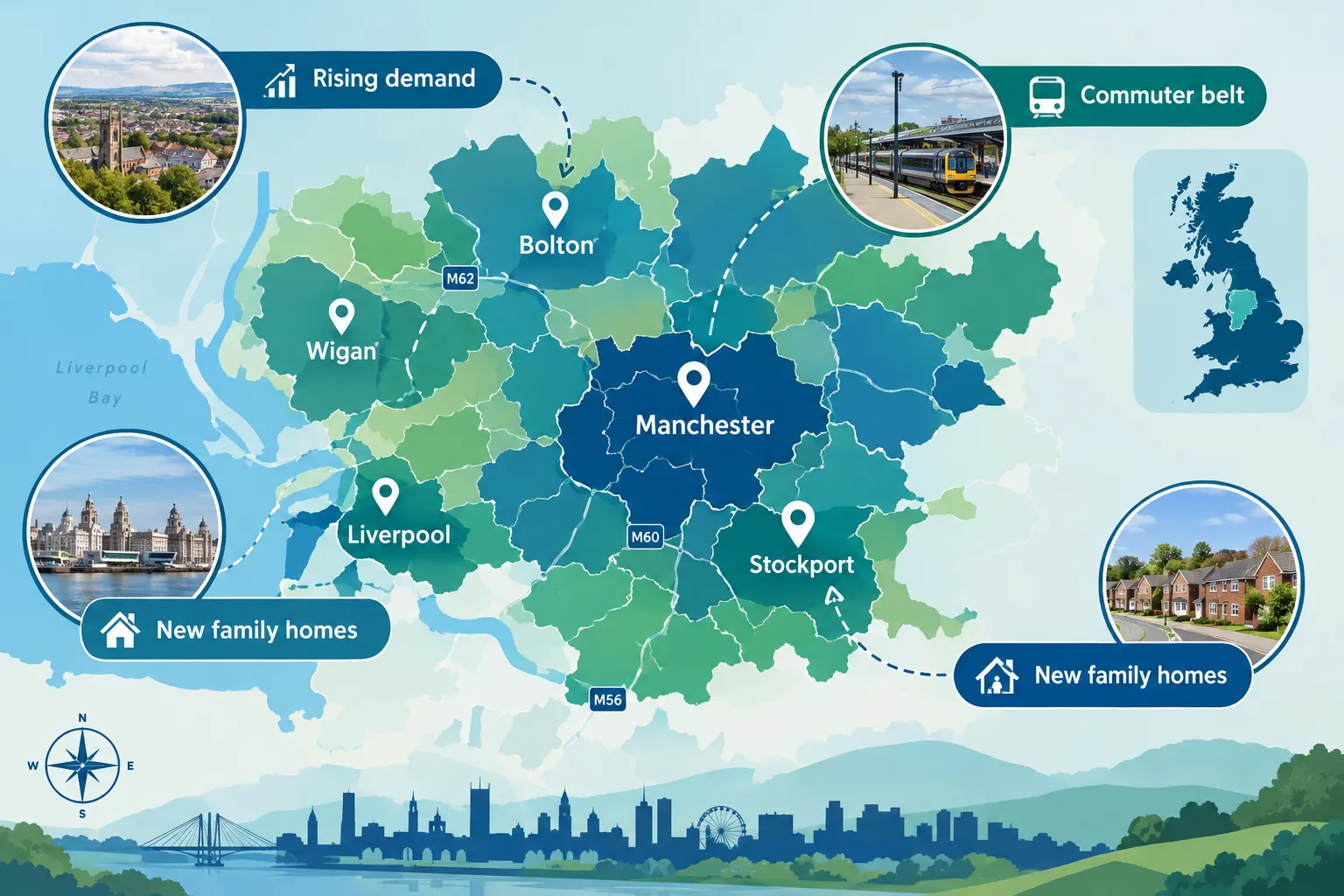
Rightmove's House Price Index, published 19 October 2026, adds further detail. The average asking price in the North West stood at £273,222, down 0.6% in the month but up 2.0% year on year. Properties took an average of 59 days to find a buyer. Nationally, the average asking price was £371,015, up 1.0% month on month but down 0.1% year on year, with 34% of listings nationwide carrying a price reduction. Average two-year fixed mortgage rates sat at 5.55%, according to Rightmove.
North West house prices October 2026 figures at a glance:
| Region | Average asking price (Rightmove, Oct 2026) | Monthly change | Annual change |
|---|---|---|---|
| North West | £273,222 | -0.6% | +2.0% |
| Yorkshire and The Humber | £260,019 | +0.3% | +1.6% |
| North East | £195,977 | -2.0% | +0.6% |
| UK average | £371,015 | +1.0% | -0.1% |
Why Is Manchester House Price Growth Slowing Down
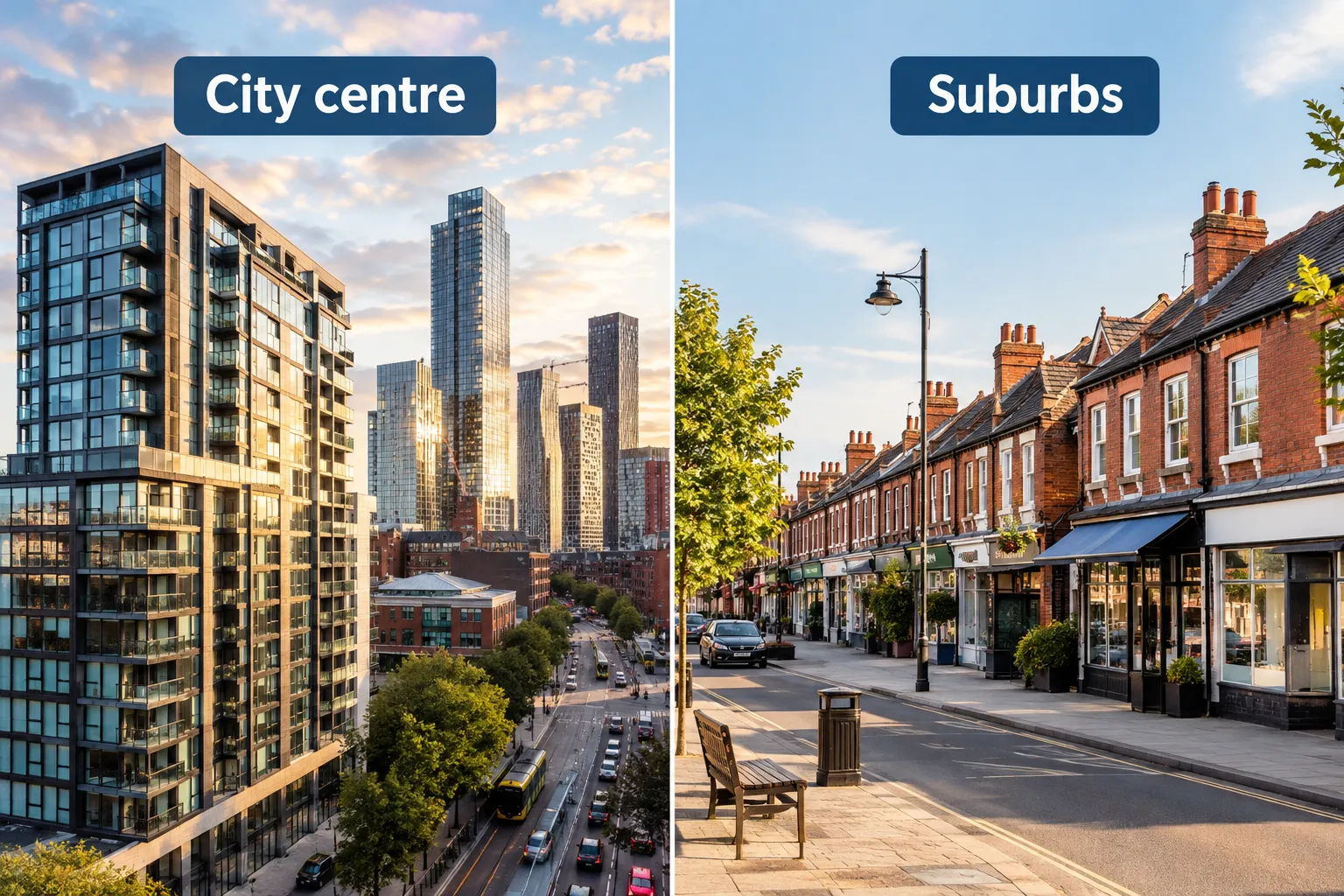
Manchester's own growth is slowing relative to the region around it, not collapsing in absolute terms. ONS data shows Manchester local authority at an average of £252,000, up 1.2% year on year, well below the North West's 4.4% regional growth rate.
Several factors explain this gap:
- City-centre apartment supply has grown heavily over the past decade, keeping a lid on price growth for that segment.
- Affordability limits are being tested in the city centre first, since city prices rose fastest in earlier cycles.
- Buyers priced out of Manchester are moving to surrounding towns, pushing demand (and prices) outward.
- Investor appetite has shifted toward houses in commuter towns rather than city-centre flats.
As Kate Faulkner OBE put it, "The difference in house price growth between the North West as a region and Manchester is a clear example" of how regional averages can mislead on local prices, and the same applies to rents. This is the central lesson for anyone reading national or regional house price news: the averages hide the real picture on individual streets.
Which North West Towns Are Growing Faster Than Manchester
Towns and suburbs around Manchester are driving the region's 4.4% growth figure, pulling the North West average above the city itself. While ONS does not break every town out individually in the cited data, the regional figure of 4.4% against Manchester's 1.2% confirms that outlying areas are collectively outperforming the city core.
This pattern typically favours:
- Established commuter towns with good rail links into Manchester city centre.
- Areas with family-sized housing stock, which has been in short supply within the city.
- Suburbs where first-time buyers can still find homes under the regional average price.
Decision rule: if a buyer is comparing a city-centre flat against a family house in a commuter town, current data suggests the commuter town is more likely to see above-average capital growth over the next 12 months, based on the regional trend.
Stockport vs Manchester House Prices October 2026
Stockport is one of the clearest examples of a borough benefiting from the outward shift in demand, though this article is not citing a specific Stockport price figure beyond the general North West and Manchester data already verified. The broader pattern, Manchester at 1.2% annual growth against a 4.4% regional average, is consistent with boroughs like Stockport capturing stronger demand from buyers who want proximity to the city without paying city-centre prices.
Anyone comparing Stockport and Manchester directly should ask a local RICS surveyor to produce a valuation for the specific postcode, since borough-wide or city-wide averages will not reflect a single street accurately.
Liverpool vs Manchester Property Prices 2026
Liverpool is not covered by the verified figures in this article, so no specific comparison can be made beyond noting that both cities sit within the wider North West region that is outperforming the UK overall. Buyers wanting a Liverpool-specific comparison should check Zoopla's or the ONS's local authority breakdowns rather than relying on the regional average.
How Do North West Prices Compare to London Right Now
This article's verified sources do not include London-specific asking price or growth figures for October 2026, so no direct numerical comparison can be made here. What can be said with confidence from the data above: the North West (£273,222 average asking price, Rightmove) sits well below the UK national average asking price of £371,015, a gap that is heavily influenced by London and the South East pulling the national figure upward.
Are North West Prices Starting to Cool Off
There are early signs of a monthly slowdown, but annual growth remains firmly positive. Rightmove recorded a 0.6% monthly fall in North West asking prices in October 2026, even as annual growth held at 2.0%. Homes are taking 59 days on average to find a buyer, longer than in the fastest-moving markets, which points to buyers negotiating harder rather than the market stalling outright.
Two events due shortly could influence sentiment further: the Autumn Budget on 28 October 2026 and the Bank of England's interest rate decision on 5 November 2026. Both are likely to affect mortgage pricing and buyer confidence heading into winter.
Best Value Areas to Buy in the North West 2026
The most affordable places to buy in the North West right now are typically found outside Manchester's city centre, in towns benefiting from the 4.4% regional growth trend rather than the slower 1.2% Manchester-specific figure. Buyers working to a tight budget should focus on:
- Commuter towns with direct rail access to Manchester, Liverpool or regional employment hubs.
- Areas where asking prices sit meaningfully below the £273,222 North West average.
- Boroughs showing longer days-on-market (closer to or above the 59-day regional average), which often signals room to negotiate.
Is Manchester a Good Property Investment in 2026
Manchester remains a reasonable long-term investment on historical performance, even though short-term growth looks subdued. ONS-style long-run comparisons cited in this article show Manchester averaging around 4.7% annual growth since 2005, ahead of the UK, England and North West average of around 3.2% over the same period. The current 1.2% annual rate is a slowdown relative to that long-term trend, not evidence that the city has stopped growing altogether.
Common mistake: judging Manchester's investment case purely on the latest 12-month ONS figure. A single year of slower growth does not undo two decades of above-average performance, but investors should still get a current, property-specific valuation before committing.
North West House Price Forecast End of 2026
Expect continued modest growth through to year end, with two policy events likely to set the tone. The Autumn Budget on 28 October 2026 and the Bank of England rate decision on 5 November 2026 will both influence mortgage affordability and buyer confidence over the final months of 2026. Given Rightmove's current average two-year fix of 5.55%, any rate move either way could shift demand noticeably in a market that is already showing signs of monthly cooling.
What This Means for You
Buyers, sellers and landlords across Greater Manchester should treat regional and national headlines as background context, not a substitute for local, property-specific advice.
- Buyers: use regional growth figures to understand the broader trend, but commission a RICS chartered surveyor valuation before offering on a specific property, since city averages can hide significant street-by-street variation.
- Sellers: price realistically against comparable local sales, not the regional average of £273,222, since Manchester's own growth rate is running well below the North West figure.
- Landlords: the Faulkner OBE warning about rents applies directly here, regional rental averages can mislead just as much as sale price averages, so check actual local rental evidence before setting or reviewing rents.
- Investors: Manchester's long-run 4.7% average annual growth since 2005 still supports a case for the city, but short-term decisions should be based on current, independent valuations rather than historic averages alone.
Those attending or following the National Landlord Investment Show, which returned to Manchester on 14 October 2026, should note that regional data presented at such events is a starting point for research, not a substitute for a RICS valuation on an individual property.
FAQ
Are North West house prices really outpacing the UK in October 2026?
Yes. Zoopla's index (September 2026 data, published 13 October 2026) shows 3.1% annual growth in the North West against 0.8% nationally, one of the strongest regional performances in the UK.
Why is Manchester growing slower than the rest of the North West?
Manchester local authority grew 1.2% year on year per ONS data, well below the North West's 4.4%, largely because surrounding towns and suburbs are absorbing demand that the city centre cannot meet, partly due to heavy apartment supply built up over the past decade.
Does this mean Manchester is a weaker investment than its neighbours?
Not necessarily. Manchester has averaged around 4.7% annual growth since 2005, ahead of the UK, England and North West average of roughly 3.2% over the same period, so the current slowdown is relative, not a reversal of the long-term trend.
Should I trust regional house price data when pricing my home?
No, not on its own. Kate Faulkner OBE has noted that regional averages can mislead on local prices and rents, so a RICS chartered surveyor valuation specific to the property is the more reliable guide.
What could change the market before the end of 2026?
The Autumn Budget on 28 October 2026 and the Bank of England's interest rate decision on 5 November 2026 are both likely to affect mortgage costs and buyer sentiment in the final months of the year.
How long are homes taking to sell in the North West right now?
Rightmove reported an average of 59 days to find a buyer in the North West as of its 19 October 2026 index, longer than some faster-moving UK regions.
Conclusion
North West house prices in October 2026 are telling two different stories at once: a region outperforming the UK average by a wide margin, and a city at its centre growing more slowly than the towns around it. Both things are true, and both matter for anyone buying, selling or letting property in Greater Manchester this autumn.
The practical takeaway is simple. Regional figures from Zoopla, Rightmove and the ONS are useful for spotting trends, but they are not a substitute for a property-specific valuation. Anyone planning to buy, sell, remortgage or let a property in Manchester or the wider North West before the Autumn Budget and the Bank of England's November decision should get an independent, RICS-regulated valuation now, while the market is still digesting these figures. Manchester Surveyors can provide that local, street-level assessment ahead of any policy changes landing in the coming weeks.
north west house prices October 2026, Manchester property market, RICS chartered surveyors, Zoopla house price index, ONS house prices, Rightmove asking prices, Greater Manchester property, Stockport house prices, property investment North West, UK housing market 2026, house price forecast, local property valuation