From 2026, approximately 4.6 million privately rented homes across England will face mandatory compliance with Awaab's Law extensions, fundamentally changing how landlords must respond to excess cold hazards.[1] This legislative expansion transforms building surveys from optional due diligence exercises into essential compliance tools, with strict 14-day investigation and 7-day repair timelines that carry significant enforcement penalties.
The shift represents the most substantial change to private rental obligations in over a decade. Named after two-year-old Awaab Ishak, who died from prolonged mould exposure in social housing, the law now extends beyond damp and mould to encompass excess cold hazards—including inadequate insulation, broken heating systems, and poor ventilation.[1] For landlords and property professionals, understanding Building Surveys for Excess Cold Hazards Under Awaab's Law 2026 Extensions: Protocols for Private Rentals is no longer optional; it's a legal imperative.
Key Takeaways
✅ Private landlords must investigate excess cold reports within 14 days and begin repairs within 7 days of identification under 2026 extensions[1]
✅ RICS Level 3 building surveys provide the most comprehensive assessment of insulation failures, heating inefficiencies, and thermal performance required for compliance
✅ Excess cold hazards include inadequate insulation, broken heating systems, poor ventilation, and building fabric defects that compromise thermal efficiency[1]
✅ Non-compliance carries enforcement action, fines, and compensation claims under the Housing Act 2004 framework[1]
✅ Professional building surveys must extend beyond visual inspection to include thermal imaging, moisture assessment, and ventilation analysis[5]
Understanding Awaab's Law 2026 Extensions for Private Rentals
Legislative Framework and Scope
The Renters' Rights Act 2025 formalizes Awaab's Law obligations for private landlords, building on the foundation established for social housing providers.[7] While social housing has operated under these requirements since earlier implementation phases, the 2026 extension brings approximately 4.6 million private rental properties into scope—representing a massive expansion of regulatory oversight.[1]
Excess cold is now explicitly classified as a significant health hazard alongside damp and mould. This classification stems from robust evidence compiled by Public Health England and NHS research demonstrating clear links between cold, damp homes and:
- Respiratory illnesses including asthma and bronchitis
- Cardiovascular strain and increased heart attack risk
- Elevated winter mortality rates, particularly among vulnerable populations
- Mental health deterioration and reduced quality of life[1]
The legislation imposes two critical timelines that fundamentally alter landlord response protocols:
| Requirement | Timeline | Scope |
|---|---|---|
| Investigation of reported hazard | 14 days | Must identify cause, extent, and remediation needs |
| Repair commencement | 7 days | Following identification of serious excess cold issue |
| Enforcement consequences | Immediate | Fines, compensation claims, and Housing Act 2004 action[1] |
What Constitutes an Excess Cold Hazard?
Excess cold hazards encompass a broader range of building defects than many landlords initially recognize. The definition extends well beyond simply having a broken boiler to include:
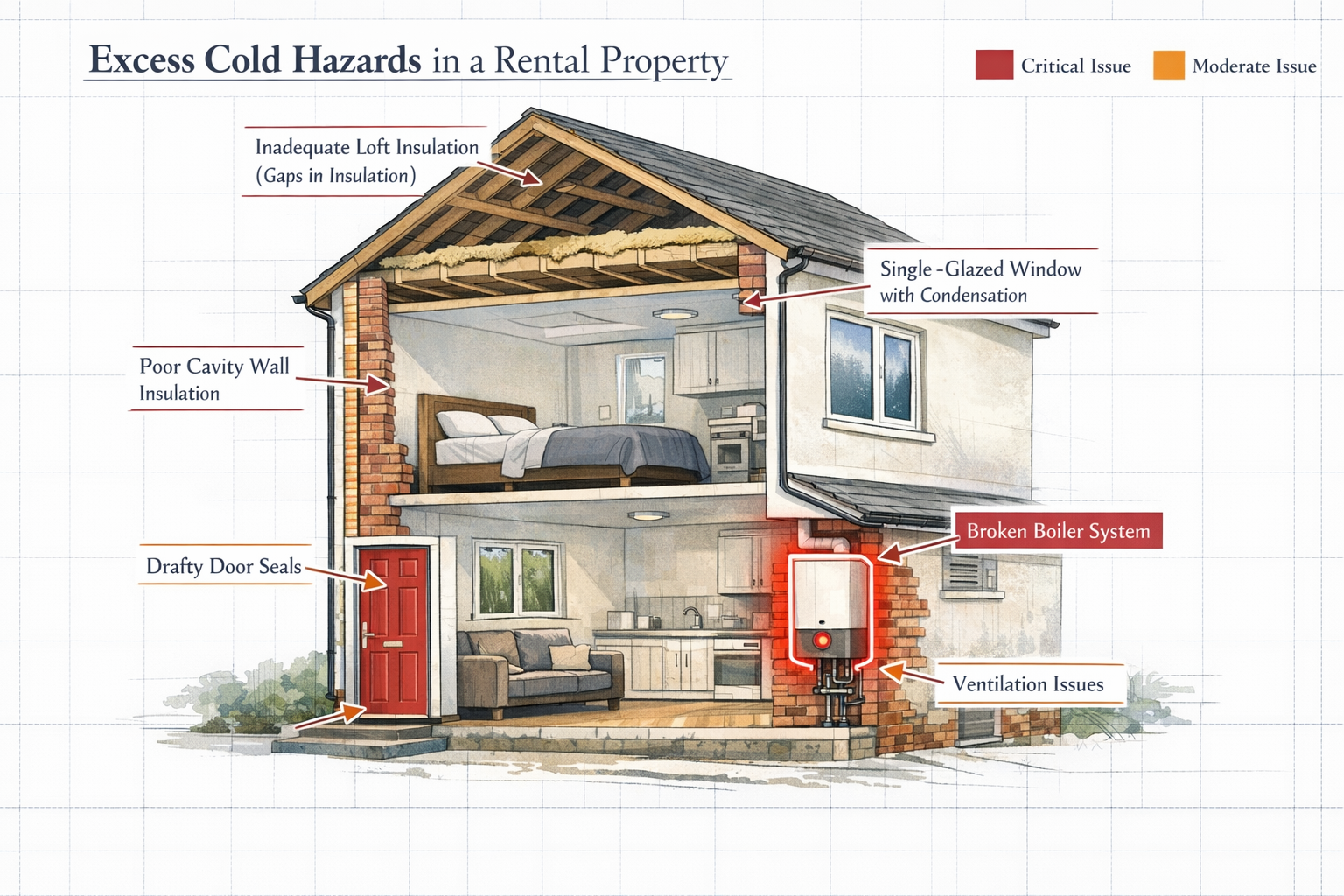
🔹 Inadequate insulation in lofts, walls, or floors creating thermal bridging and heat loss
🔹 Defective heating systems including broken boilers, radiators, or controls preventing adequate temperature maintenance
🔹 Poor ventilation that creates condensation, dampness, and cold spots while attempting to retain heat
🔹 Building fabric failures such as single glazing, drafty windows and doors, or structural defects compromising thermal performance
🔹 Insufficient heating capacity where systems cannot maintain recommended temperatures (typically 18-21°C in living areas)[1]
Critically, investigation standards have been elevated significantly. Landlords cannot rely on cursory visual inspections. Instead, investigations must identify moisture sources, assess ventilation adequacy, evaluate insulation performance, and understand how building fabric and occupancy patterns contribute to thermal deficiencies.[5]
This is where professional building surveys become indispensable compliance tools rather than discretionary assessments.
Building Surveys for Excess Cold Hazards Under Awaab's Law 2026 Extensions: RICS-Compliant Assessment Protocols
Why Level 3 Building Surveys Are Essential for Compliance
Among the various survey types available, RICS Building Surveys (Level 3) provide the most comprehensive assessment framework for identifying excess cold hazards. Unlike basic mortgage valuations or Level 2 Homebuyer surveys, Level 3 surveys offer:
Detailed fabric analysis examining insulation performance, thermal bridging, and building envelope integrity
Comprehensive mechanical systems assessment evaluating heating system capacity, efficiency, and condition
Moisture and ventilation evaluation identifying condensation risks, damp penetration, and ventilation inadequacies
Thermal performance analysis using specialist equipment to measure heat loss and identify cold spots
Remediation recommendations with prioritized actions and cost estimates for compliance
For landlords facing the 14-day investigation requirement, having a recent Level 3 survey provides a defensible evidence base demonstrating proactive compliance efforts. More importantly, it identifies potential excess cold hazards before tenants report them, allowing landlords to address issues on their own timeline rather than under enforcement pressure.
RICS-Compliant Inspection Checklist for Excess Cold Hazards
Professional surveyors conducting Building Surveys for Excess Cold Hazards Under Awaab's Law 2026 Extensions: Protocols for Private Rentals should incorporate the following systematic assessment protocols:
1. Thermal Envelope Assessment
✔️ Loft insulation: Measure depth, coverage, and condition (minimum 270mm recommended)
✔️ Cavity wall insulation: Verify presence through borescope inspection or thermal imaging
✔️ Solid wall insulation: Assess internal or external insulation systems where applicable
✔️ Floor insulation: Evaluate ground floor thermal performance, particularly suspended timber floors
✔️ Thermal bridging: Identify cold bridges at junctions, lintels, and structural elements
✔️ Glazing performance: Document single/double/triple glazing, condition, and seal integrity
2. Heating System Evaluation
✔️ Boiler capacity and efficiency: Verify adequate output for property size and occupancy
✔️ Radiator sizing and distribution: Assess coverage and BTU output for each room
✔️ Controls and thermostats: Test programmable controls, thermostatic radiator valves, and zone controls
✔️ System maintenance: Review service history and identify overdue maintenance
✔️ Alternative heating: Document supplementary heating sources and their adequacy
3. Ventilation and Moisture Management
✔️ Background ventilation: Verify trickle vents, airbricks, and passive ventilation adequacy
✔️ Mechanical ventilation: Test extractor fans in kitchens, bathrooms, and utility areas
✔️ Condensation risk: Identify cold spots, thermal bridges, and areas prone to surface condensation
✔️ Moisture ingress: Assess for penetrating damp, rising damp, or plumbing leaks
✔️ Ventilation balance: Evaluate whether ventilation strategy balances thermal retention with moisture control
4. Building Fabric Defects
✔️ Drafts and air leakage: Identify gaps around windows, doors, service penetrations, and loft hatches
✔️ Structural defects: Document cracks, settlement, or damage compromising thermal performance
✔️ Roof condition: Assess roof covering, sarking, and potential for heat loss through roof structure
✔️ External walls: Evaluate pointing, render, and cladding condition affecting thermal performance
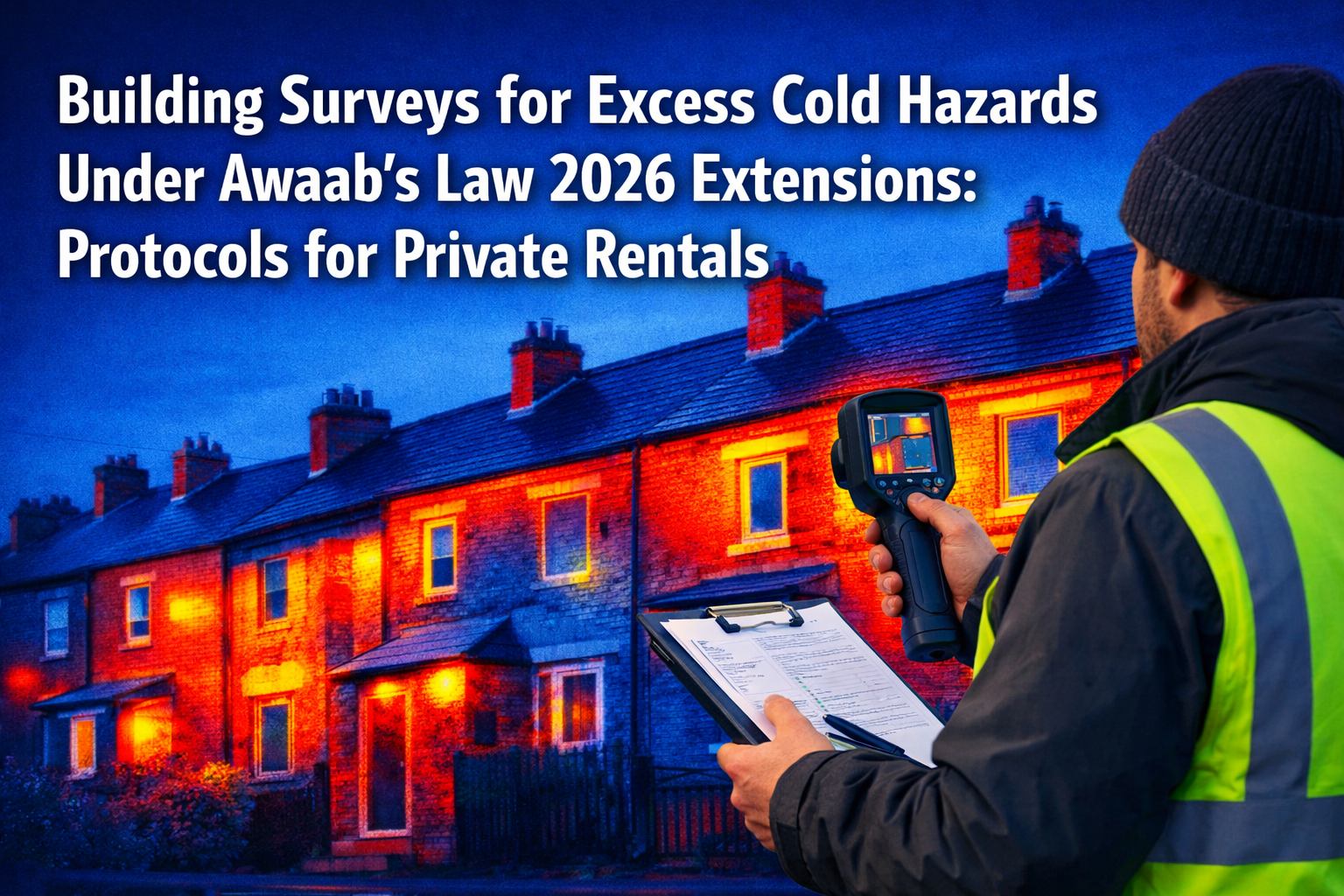
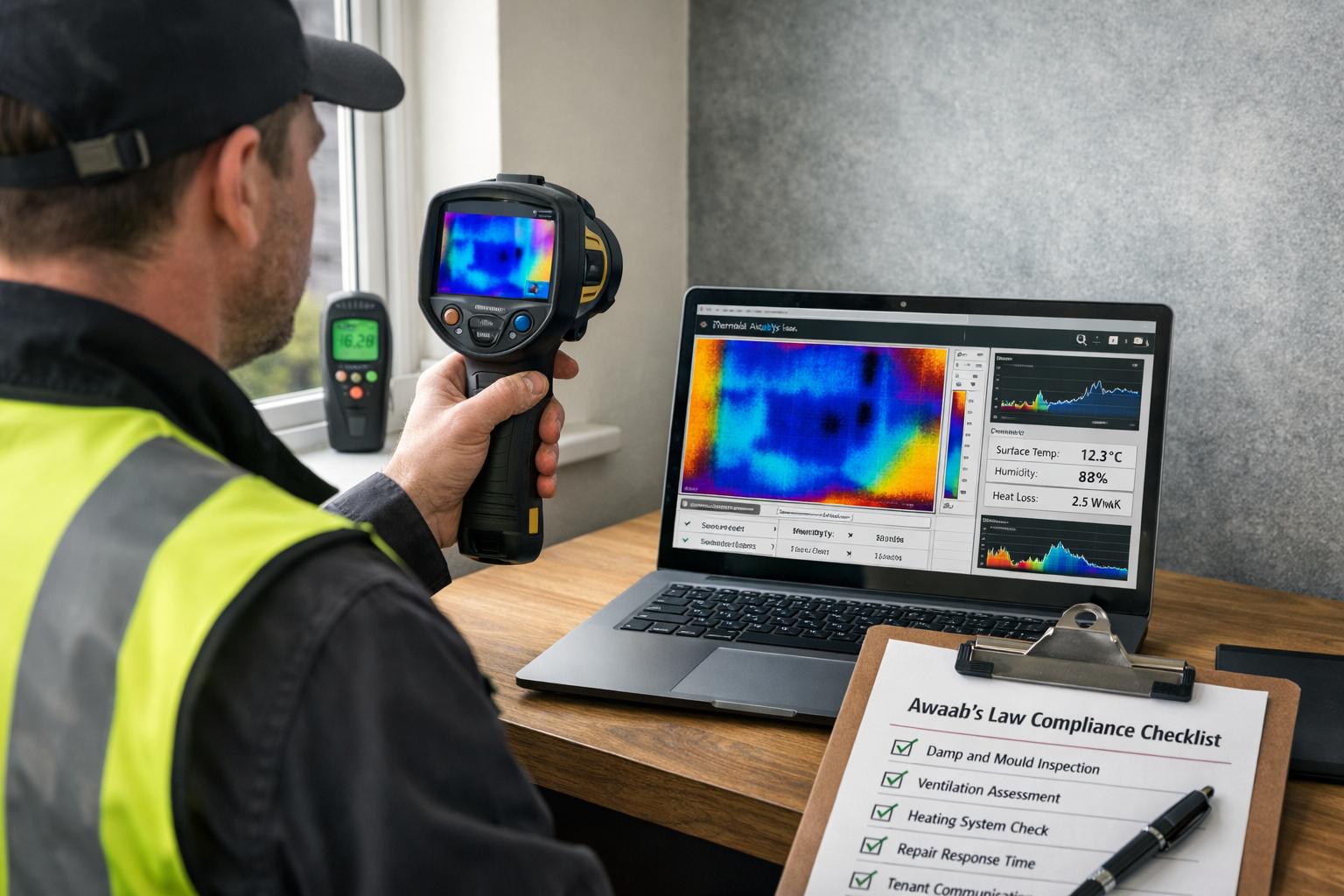
Professional surveyors increasingly utilize thermal imaging cameras as standard equipment for these assessments. Thermal imaging reveals hidden insulation gaps, thermal bridging, and air leakage patterns invisible to visual inspection—providing objective evidence of excess cold hazards that satisfies regulatory investigation requirements.[5]
For comprehensive property assessments, landlords may also benefit from specialist drainage surveys to identify moisture ingress risks and structural surveys where building fabric defects compromise thermal performance.
Documentation Requirements for Regulatory Compliance
Building Surveys for Excess Cold Hazards Under Awaab's Law 2026 Extensions: Protocols for Private Rentals must produce documentation that satisfies both professional standards and regulatory requirements. Essential documentation includes:
📋 Photographic evidence with date stamps showing current condition of heating systems, insulation, and building fabric
📋 Thermal imaging reports with temperature differentials and heat loss visualization
📋 Moisture readings using calibrated moisture meters at multiple locations
📋 Heating system specifications including boiler output, radiator sizing calculations, and efficiency ratings
📋 Prioritized remediation schedule categorizing defects by severity and compliance urgency
📋 Cost estimates for recommended remedial works to facilitate landlord planning
This documentation serves multiple purposes: demonstrating compliance with investigation timelines, providing evidence for insurance claims or disputes, and creating an audit trail for regulatory inspections. For landlords managing multiple properties, stock condition surveys offer a portfolio-wide approach to identifying compliance risks across entire rental portfolios.
Implementing Compliance Protocols: Practical Steps for Private Landlords
Proactive Assessment Strategies
Waiting for tenant complaints triggers the 14-day investigation clock and places landlords in a reactive, high-pressure position. Smart landlords are adopting proactive assessment strategies that identify and remediate excess cold hazards before they become compliance issues.
Annual building surveys provide systematic documentation of property condition, creating a defensible record of proactive maintenance. For rental properties, scheduling surveys during void periods allows comprehensive assessment without tenant disruption and facilitates remedial works before new tenancies begin.
Pre-winter inspections specifically targeting heating systems and thermal performance ensure properties enter the high-risk winter period in compliance. These focused assessments should occur in September or October, allowing time for repairs before cold weather arrives.
Tenant education programs help occupants understand proper heating use, ventilation practices, and early reporting of defects. Many excess cold issues stem from occupant behavior (such as blocking vents or setting thermostats too low), making tenant engagement a valuable compliance strategy.
The 14-Day Investigation Protocol
When tenants report potential excess cold hazards, landlords must initiate a structured investigation protocol within 14 days.[1] This investigation must extend beyond cursory visual inspection to systematically identify causes and required remediation.
Day 1-3: Initial assessment and documentation
- Acknowledge tenant report in writing
- Schedule property access with tenant
- Conduct initial visual inspection
- Document reported symptoms (cold spots, condensation, heating inadequacy)
- Photograph affected areas with date stamps
Day 4-10: Technical investigation
- Commission professional building survey if expertise lacking
- Conduct thermal imaging assessment
- Test heating system operation and output
- Measure insulation performance
- Assess ventilation adequacy
- Identify moisture sources
- Review service history and previous maintenance
Day 11-14: Diagnosis and action plan
- Compile investigation findings
- Identify root causes of excess cold hazard
- Develop prioritized remediation plan
- Obtain quotes for required works
- Communicate findings and action plan to tenant in writing
- Document investigation process for regulatory compliance
Engaging qualified professionals early in this process is critical. RICS-qualified surveyors bring technical expertise and professional indemnity insurance that protects landlords from liability while ensuring investigation quality satisfies regulatory standards.
The 7-Day Repair Commencement Requirement
Following identification of a serious excess cold issue, landlords must begin repairs within 7 days.[1] This requirement focuses on commencement rather than completion, recognizing that complex remedial works may require extended timelines.
Qualifying for the 7-day requirement:
- The investigation must identify a serious excess cold hazard (not minor or borderline issues)
- The hazard must pose significant health risks to occupants
- Remediation must be technically feasible within reasonable timescales
Acceptable commencement actions include:
- Engaging contractors and issuing work orders
- Ordering materials and equipment for remedial works
- Beginning emergency temporary measures (such as providing supplementary heating)
- Commencing preparatory works (such as scaffolding erection for external wall insulation)
Documentation is crucial: Landlords must retain evidence of commencement including contractor agreements, purchase orders, site photographs, and communication records. This documentation protects against enforcement action if completion extends beyond initial timelines due to legitimate delays (such as material supply issues or weather constraints).
For complex remedial projects involving multiple trades, engaging commercial property surveying or project management services ensures coordinated execution and regulatory compliance throughout the remediation process.
Common Excess Cold Remediation Strategies
Based on building survey findings, landlords typically implement one or more of the following remediation strategies:
🔧 Insulation upgrades:
- Loft insulation to minimum 270mm depth
- Cavity wall insulation injection
- Internal or external solid wall insulation
- Floor insulation for suspended timber or solid floors
- Secondary glazing or double glazing replacement
🔧 Heating system improvements:
- Boiler replacement with high-efficiency condensing models
- Radiator upgrades or additional radiators for undersized systems
- Smart thermostats and zone controls for improved efficiency
- System balancing and optimization
- Annual servicing contracts for preventive maintenance
🔧 Ventilation optimization:
- Mechanical ventilation with heat recovery (MVHR) systems
- Upgraded extractor fans with humidity sensors
- Trickle vent installation in window frames
- Positive input ventilation (PIV) systems
- Balanced ventilation strategies preventing excessive heat loss
🔧 Draft proofing and air sealing:
- Window and door seal replacement
- Service penetration sealing
- Loft hatch insulation and sealing
- Letterbox and keyhole covers
- Airbrick regulation (not blocking)
Cost considerations vary significantly based on property age, construction type, and defect severity. Typical remediation costs range from £500-£2,000 for minor works (such as draft proofing and radiator upgrades) to £5,000-£15,000 for major interventions (such as external wall insulation or complete heating system replacement).
However, these costs must be weighed against enforcement penalties, compensation claims, and potential rental income loss from non-compliance. For landlords uncertain about survey pricing and remediation costs, obtaining professional quotes early in the investigation phase facilitates informed decision-making.
Risk Management and Enforcement Landscape
Consequences of Non-Compliance
Failure to comply with Awaab's Law investigation and repair timelines carries significant consequences under the Housing Act 2004 enforcement framework.[1] Local authorities possess extensive powers to address non-compliant landlords:
⚠️ Improvement notices requiring specific remedial works within defined timescales
⚠️ Prohibition orders preventing property occupation until hazards are remediated
⚠️ Civil penalties up to £30,000 for serious or repeated breaches
⚠️ Rent repayment orders requiring landlords to refund rent to affected tenants
⚠️ Criminal prosecution for the most serious cases, carrying unlimited fines
⚠️ Banning orders preventing serious offenders from letting property or engaging in property management
Beyond regulatory enforcement, non-compliant landlords face civil claims from tenants for:
- Compensation for health impacts caused by excess cold hazards
- Damages for breach of statutory duty
- Rent reductions for diminished property enjoyment
- Legal costs associated with enforcement action
The reputational damage from enforcement action can also impact landlords' ability to secure insurance, financing, and future tenancies—creating long-term business consequences beyond immediate penalties.
Insurance and Liability Considerations
Standard landlord insurance policies typically exclude claims arising from deliberate non-compliance with statutory obligations. However, policies may cover:
✅ Professional fees for building surveys and expert assessments during investigation
✅ Emergency repairs for sudden heating system failures
✅ Legal defense costs for disputes arising from compliance efforts (not willful breaches)
✅ Alternative accommodation costs for tenants during major remedial works
Landlords should review policy terms with insurers to understand coverage scope and ensure adequate protection. Some insurers now offer enhanced policies specifically addressing Awaab's Law compliance risks, including coverage for investigation costs and tenant relocation expenses.
Engaging professional surveyors and maintaining comprehensive documentation creates a defensible position demonstrating reasonable efforts to comply—potentially mitigating penalties even if technical breaches occur due to circumstances beyond landlord control.
Portfolio-Wide Risk Assessment
Landlords managing multiple properties face multiplicative compliance risks. A portfolio-wide approach to excess cold hazard assessment offers several advantages:
📊 Systematic risk identification across entire property holdings
📊 Prioritized remediation scheduling focusing resources on highest-risk properties
📊 Economies of scale for bulk procurement of surveys, materials, and contractor services
📊 Standardized documentation facilitating efficient regulatory responses
📊 Predictable capital expenditure for planned maintenance and compliance upgrades
Stock condition surveys provide the foundation for portfolio-wide compliance strategies, creating comprehensive inventories of building condition, thermal performance, and remediation requirements across multiple properties.
For larger portfolios, engaging specialist property management consultants or project management services ensures coordinated compliance efforts and optimizes resource allocation across competing priorities.
Conclusion
Building Surveys for Excess Cold Hazards Under Awaab's Law 2026 Extensions: Protocols for Private Rentals represents a fundamental shift in landlord obligations, transforming thermal performance from a quality consideration into a strict regulatory requirement. With approximately 4.6 million private rental properties entering scope and mandatory 14-day investigation timelines, landlords cannot afford reactive approaches to excess cold hazards.
Professional building surveys—particularly comprehensive RICS Level 3 assessments—provide the technical foundation for compliance, identifying insulation failures, heating inadequacies, and ventilation deficiencies before they trigger enforcement action. The investment in proactive assessment and remediation is substantially lower than the costs of non-compliance, which include significant fines, compensation claims, and reputational damage.
Actionable Next Steps
✅ Schedule professional building surveys for all rental properties before the 2026 implementation deadline
✅ Prioritize properties with older heating systems, poor insulation, or previous tenant complaints about cold conditions
✅ Develop remediation plans with costed, prioritized actions addressing identified excess cold hazards
✅ Establish tenant communication protocols for prompt reporting and investigation of thermal performance issues
✅ Create documentation systems capturing investigation processes, remedial works, and compliance evidence
✅ Review insurance coverage to ensure adequate protection for compliance-related risks and professional fees
✅ Engage qualified professionals including RICS-chartered surveyors, heating engineers, and insulation specialists
The 2026 extensions to Awaab's Law create both challenges and opportunities for private landlords. Those who embrace proactive compliance through professional building surveys and systematic remediation will differentiate their properties in an increasingly regulated market, while those who delay face mounting regulatory and financial risks.
For landlords seeking to understand their compliance position, requesting a professional survey quote represents the essential first step toward Awaab's Law compliance and long-term portfolio protection.
References
[1] Awaabs Law What Private Landlords Need To Know Before 2026 – https://objectivehealth.co.uk/news/awaabs-law-what-private-landlords-need-to-know-before-2026
[2] Awaabs Law Comes Into Force What Does It Mean For Construction – https://www.trowers.com/insights/2025/november/awaabs-law-comes-into-force-what-does-it-mean-for-construction
[3] Awaabs Law Phase 2 Is Coming What Social Landlords Need To Know About Additional Hazard Compliance In 2026 – https://www.mobysoft.com/resources/blogs/awaabs-law-phase-2-is-coming-what-social-landlords-need-to-know-about-additional-hazard-compliance-in-2026/
[4] Awaabs Law Policy Web Version 10 – https://www.southernhousing.org.uk/media/cxvlllnp/awaabs-law-policy-web-version-10.pdf
[5] Awaabs Law Private Landlords 2026 – https://www.idealresponse.co.uk/blog/awaabs-law-private-landlords-2026/
[6] Awaab S Law Is Coming To Private Landlords Is Your Property Ready – https://www.eborpropertyco.co.uk/post/awaab-s-law-is-coming-to-private-landlords-is-your-property-ready
[7] Social Housing – https://theindependentlandlord.com/resources/property-investors-glossary/social-housing/
[8] Awaabs Law Technical Compliance Hvac Ventilation – https://www.arm-environments.com/resources/awaabs-law-technical-compliance-hvac-ventilation