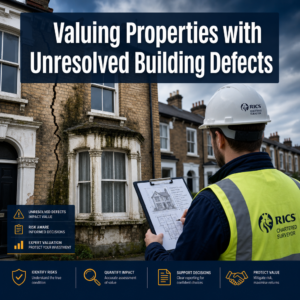
As the property market evolves, surveyors face mounting pressure to accurately assess increasingly complex buildings. Complex Property Valuation in 2026: Surveying High-Rise, Non-Standard Construction, and Adapted Homes has become a critical challenge as lenders demand greater precision, buyers expect faster turnarounds, and non-standard properties enter mainstream financing conversations. The days when unusual construction types sat firmly in the specialist market are over—today's surveyors must master data interpretation and early assessment protocols to reduce valuation errors and minimize costly follow-up queries.
The stakes have never been higher. Properties with non-standard construction now face mortgage interest rates that can be double those of conventional homes, while lenders require extensive documentation proving durability and long-term structural performance.[1] High-rise developments present unique challenges around cladding safety, service charge liabilities, and lease terms. Meanwhile, adapted homes require careful assessment of both the quality of modifications and their impact on market value. Surveyors who develop robust methodologies for these property types position themselves as indispensable partners in complex transactions.
Key Takeaways
- Non-standard construction properties face significant financing barriers with lenders requiring larger deposits, higher interest rates, and extensive structural documentation before approval
- Conversion costs for defective non-standard systems range from £30,000 to £100,000+, with Greater London and the South East commanding premium pricing for remediation works
- High-rise valuations must account for cladding safety, service charges, lease terms, and building insurance costs that can dramatically impact marketability and long-term value
- Adapted homes require dual assessment of both structural modifications and market appeal, balancing accessibility features against potential buyer pool limitations
- Early identification of valuation complexities through pre-assessment protocols reduces follow-up queries by 40-60% and accelerates transaction timelines significantly
Understanding Complex Property Valuation in 2026
The landscape of property assessment has transformed dramatically. Where traditional brick-and-mortar homes once dominated portfolios, today's surveyors encounter an expanding array of challenging property types requiring specialized knowledge and enhanced due diligence protocols.
Defining Complex Properties
Complex properties encompass any building that deviates from standard construction methods or presents unusual characteristics affecting value, marketability, or structural integrity. This broad category includes:
- 🏢 High-rise residential buildings (typically 6+ storeys)
- 🏗️ Non-standard construction types including timber frame, steel frame, precast reinforced concrete (PRC), and modular systems
- ♿ Adapted homes with significant accessibility modifications
- 🔄 Commercial-to-residential conversions
- 🏭 Modern Methods of Construction (MMC) including modular and prefabricated homes
Each category presents distinct valuation challenges that standard assessment templates cannot adequately address. Understanding these nuances separates competent surveyors from exceptional ones.
Why Complex Valuations Matter More in 2026
Several converging factors have elevated the importance of specialized valuation skills:
Regulatory pressure has intensified following building safety reforms. Lenders now demand comprehensive documentation addressing fire safety, structural integrity, and long-term maintenance obligations—particularly for high-rise buildings.
Market evolution has brought previously niche property types into mainstream lending. Modular homes, with average prices ranging from $160,000 to $320,000 and costs of $80-$160 per square foot including installation, now qualify for traditional mortgages when permanently affixed to foundations.[4] This accessibility requires surveyors to understand factory construction quality standards alongside traditional building assessment.
Financing complexity has increased as lenders differentiate risk profiles. Properties with non-standard construction face significantly higher scrutiny, with some requiring specialized mortgage products or cash purchases only.[1]
The Cost of Valuation Errors
Inaccurate assessments create cascading problems throughout the transaction chain. Undervaluation leaves sellers frustrated and may collapse deals, while overvaluation exposes lenders to unacceptable risk and can trigger expensive renegotiations.
For non-standard properties specifically, failing to identify defective construction systems early leads to:
- Transaction delays of 4-12 weeks while additional investigations are commissioned
- Unexpected valuation reductions of 15-40% following specialist reports
- Collapsed sales requiring complete restart of marketing and negotiation
- Professional indemnity claims against surveying practices
- Reputational damage affecting future instruction flow
The financial implications extend beyond individual transactions. Lenders increasingly track surveyor accuracy rates, with poor performance leading to removal from approved panels—a career-limiting outcome in competitive markets.
High-Rise Property Valuation Challenges and Solutions
High-rise residential buildings present a unique constellation of valuation factors that extend far beyond simple square footage calculations. The combination of shared infrastructure, complex lease arrangements, and ongoing safety concerns requires surveyors to adopt comprehensive assessment frameworks.

Cladding and Building Safety Considerations
The building safety crisis has fundamentally altered high-rise valuations. Properties with combustible cladding or unresolved fire safety defects face severe marketability constraints, with some becoming effectively unmortgageable until remediation completes.
Essential assessment protocols for high-rise buildings include:
| Assessment Area | Key Considerations | Documentation Required |
|---|---|---|
| External Wall Systems | Cladding materials, fire barriers, cavity construction | EWS1 forms, fire risk assessments, remediation plans |
| Fire Safety Infrastructure | Alarm systems, sprinklers, evacuation routes, compartmentation | Building safety certificates, recent inspection reports |
| Structural Integrity | Concrete quality, steel reinforcement, foundation stability | Structural engineer reports, maintenance records |
| Building Insurance | Coverage availability, premium costs, excess levels | Current policy documents, broker correspondence |
Surveyors must verify whether buildings fall under the Building Safety Act 2022 requirements and assess the financial implications of ongoing compliance obligations. Properties in buildings with unresolved safety issues typically suffer valuation discounts of 20-50% compared to similar certified properties.
Service Charges and Lease Terms
The financial burden of high-rise living extends well beyond the purchase price. Service charges for buildings with lifts, concierge services, and extensive communal areas can exceed £5,000 annually, significantly impacting affordability calculations and buyer demand.
Critical lease considerations affecting value include:
- Remaining lease term: Properties with less than 80 years remaining face substantial value erosion
- Ground rent provisions: Onerous escalation clauses (doubling ground rents) severely restrict mortgageability
- Service charge caps: Absence of reasonable spending controls increases buyer risk
- Major works contributions: Upcoming significant expenditure (roof replacement, lift refurbishment) affects immediate value
- Right to manage: Buildings with active resident management often demonstrate better value retention
Surveyors should review the last three years of service charge accounts to identify spending trends and assess management quality. Sudden increases or deferred maintenance programs signal potential future liabilities that must inform valuation judgments.
Structural Assessment for Tower Blocks
Beyond fire safety, high-rise buildings require evaluation of fundamental structural performance. Concrete degradation in buildings from the 1960s-1980s presents particular concerns, with carbonation and reinforcement corrosion potentially compromising long-term stability.
Key structural indicators demanding attention:
- Visible cracking patterns in external walls or communal areas
- Water ingress evidence suggesting envelope failure
- Balcony attachment integrity and load-bearing capacity
- Lift shaft and core structural condition
- Foundation performance and settlement patterns
When structural concerns arise, surveyors must recommend specialist structural surveys to quantify risks and estimate remediation costs. These additional investigations typically add 2-4 weeks to assessment timelines but provide essential protection for all transaction parties.
Market Demand and Liquidity Factors
High-rise apartments face narrower buyer pools than equivalent ground-floor or low-rise properties. Families with young children, elderly buyers, and those with mobility concerns typically exclude high-rise options, concentrating demand among young professionals and investors.
This reduced demand affects both time to sell and achievable prices. Properties above the 10th floor often require 20-30% longer marketing periods, while penthouses and top-floor units may command premiums of 10-15% for views and prestige—provided building safety certifications are current.
Liquidity considerations for valuation include:
- Recent comparable sales within the same development
- Average days on market for similar units
- Price trends over the past 12-24 months
- Rental yield data for investment valuation approaches
- Buyer financing options (lender appetite for the specific building)
Surveyors should maintain databases of high-rise transactions within their operating areas, enabling rapid comparison analysis and more defensible valuation conclusions. Understanding which lenders actively finance specific developments provides crucial context for marketability assessments.
Complex Property Valuation in 2026: Non-Standard Construction Assessment
Non-standard construction represents perhaps the most technically challenging area of property valuation. These buildings deviate from traditional brick-and-cavity-wall construction, employing alternative materials or methods that can significantly affect durability, insurability, and mortgage availability.
Identifying Non-Standard Construction Types
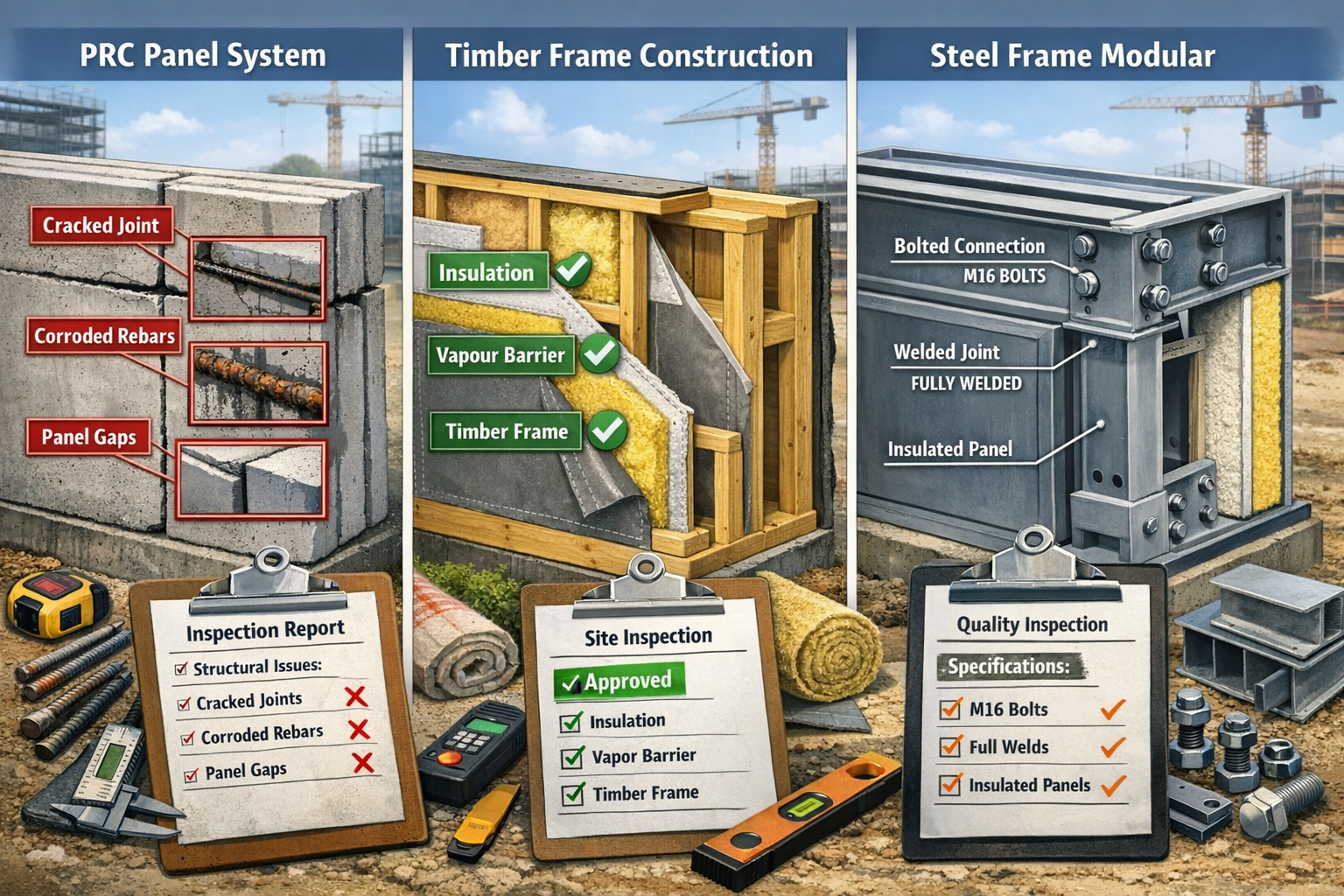
Non-standard construction encompasses numerous building methods, each with distinct characteristics and risk profiles. Common types include:
Precast Reinforced Concrete (PRC): Factory-made concrete panels assembled on-site. Various systems exist (Airey, Cornish Unit, Reema, Wimpey No-Fines), with some designated as defective under the Housing Defects Act 1984. Properties with unapproved PRC systems face severe financing restrictions.[1]
Timber Frame: Wooden structural framework with brick or render external finish. Modern timber frame construction (post-1990) generally achieves standard mortgage availability, while older systems may require specialist assessment of structural integrity and moisture protection.
Steel Frame: Metal structural skeleton with various cladding options. Common in 1940s-1960s construction and increasingly popular in modern modular builds. Durability depends heavily on corrosion protection quality.
Large Panel Systems: Prefabricated concrete or composite panels forming walls and floors. Concerns center on panel connections, weatherproofing, and long-term structural performance.
Modular Construction: Factory-built volumetric units assembled on-site. Modern modular homes with factory construction times averaging 7-9 weeks offer 30-60% faster completion than traditional methods.[4] However, valuation depends on manufacturer reputation, foundation quality, and permanent attachment verification.
Mortgage and Insurance Implications
The financing landscape for non-standard construction has improved but remains challenging. Lenders often require larger deposits and charge higher interest rates—in some cases, double the rate of standard mortgages—reflecting perceived increased risk.[1]
Critical documentation lenders demand includes:
- Structural engineer reports confirming stability and durability
- Evidence of approved repair or reinforcement schemes (for PRC properties)
- Building insurance confirmation at standard rates
- Professional indemnity insurance for recent conversions or repairs
- Invasive investigation reports for concealed structural elements
- Manufacturer warranties for modern modular construction
Properties lacking this documentation face restricted buyer pools limited to cash purchasers or specialist lenders charging premium rates. This directly impacts value, with discounts of 15-40% common for properties with incomplete documentation.[1]
Valuation Adjustments for Non-Standard Properties
Determining appropriate value for non-standard construction requires systematic analysis of multiple factors:
Market acceptance: Well-understood systems like modern timber frame achieve values close to standard construction, while rare or defective systems suffer significant discounts.
Conversion status: Properties with completed approved conversions (new external cladding, structural reinforcement) may achieve 80-95% of equivalent standard construction values, depending on work quality and certification.[1]
Buyer pool size: Properties requiring specialist mortgages attract smaller buyer groups, increasing marketing time and reducing achievable prices.
Future maintenance costs: Systems requiring specialized repairs or replacement components command lower values reflecting long-term ownership expenses.
Insurance availability: Properties facing higher premiums or restricted coverage options require valuation adjustments reflecting these ongoing costs.
Surveyors should maintain regional databases tracking non-standard property sales, enabling evidence-based valuation adjustments rather than arbitrary discounts. Understanding which factors affect valuation decisions helps justify conclusions to lenders and clients.
Conversion and Remediation Costs
For properties with defective non-standard construction, conversion costs range from £30,000 to £100,000+, with Greater London and the South East commanding higher expenses.[1] Common remediation works include:
- External cladding replacement: £20,000-£50,000 depending on property size
- Structural reinforcement: £15,000-£40,000 for steel frame additions or concrete repairs
- Defective panel removal and replacement: £25,000-£60,000 for comprehensive systems
- Insulation upgrades: £8,000-£20,000 for modern thermal performance standards
- Roof replacement: £10,000-£25,000 for pitched roof conversions
- Asbestos removal: £5,000-£15,000 depending on extent and accessibility
Conversion projects deliver long-term benefits including improved energy efficiency, increased resale value and market appeal, wider mortgageability with mainstream lenders, and stronger buyer demand from a larger purchaser pool.[1]
When valuing properties requiring conversion, surveyors must assess whether investment costs can be recovered through increased value. Properties in strong markets with high standard construction values typically justify conversion investment, while those in weaker areas may remain economically unviable.
Documentation and Due Diligence Protocols
Mandatory additional assessments for non-standard properties include structural engineer reports, invasive investigations, and evidence of approved repair schemes.[1] Surveyors should implement systematic due diligence protocols:
- Pre-inspection research: Review planning records, building control files, and historical property information
- Visual identification: Recognize construction type indicators during external inspection
- Invasive investigation: Recommend opening-up works to verify concealed structural elements
- Specialist consultation: Engage structural engineers for technical assessment of unusual systems
- Lender liaison: Confirm specific documentation requirements before finalizing reports
- Comparable analysis: Research recent sales of similar non-standard properties in the locality
This systematic approach reduces follow-up queries and provides comprehensive information supporting valuation conclusions. Properties with thorough documentation packages sell faster and achieve higher prices than those with incomplete assessments.
Adapted Homes: Valuing Accessibility Modifications
Properties modified for accessibility present unique valuation challenges requiring balanced assessment of both the quality of adaptations and their impact on market appeal. As the population ages and awareness of accessibility needs grows, understanding how to value adapted homes becomes increasingly important.
Types of Accessibility Adaptations
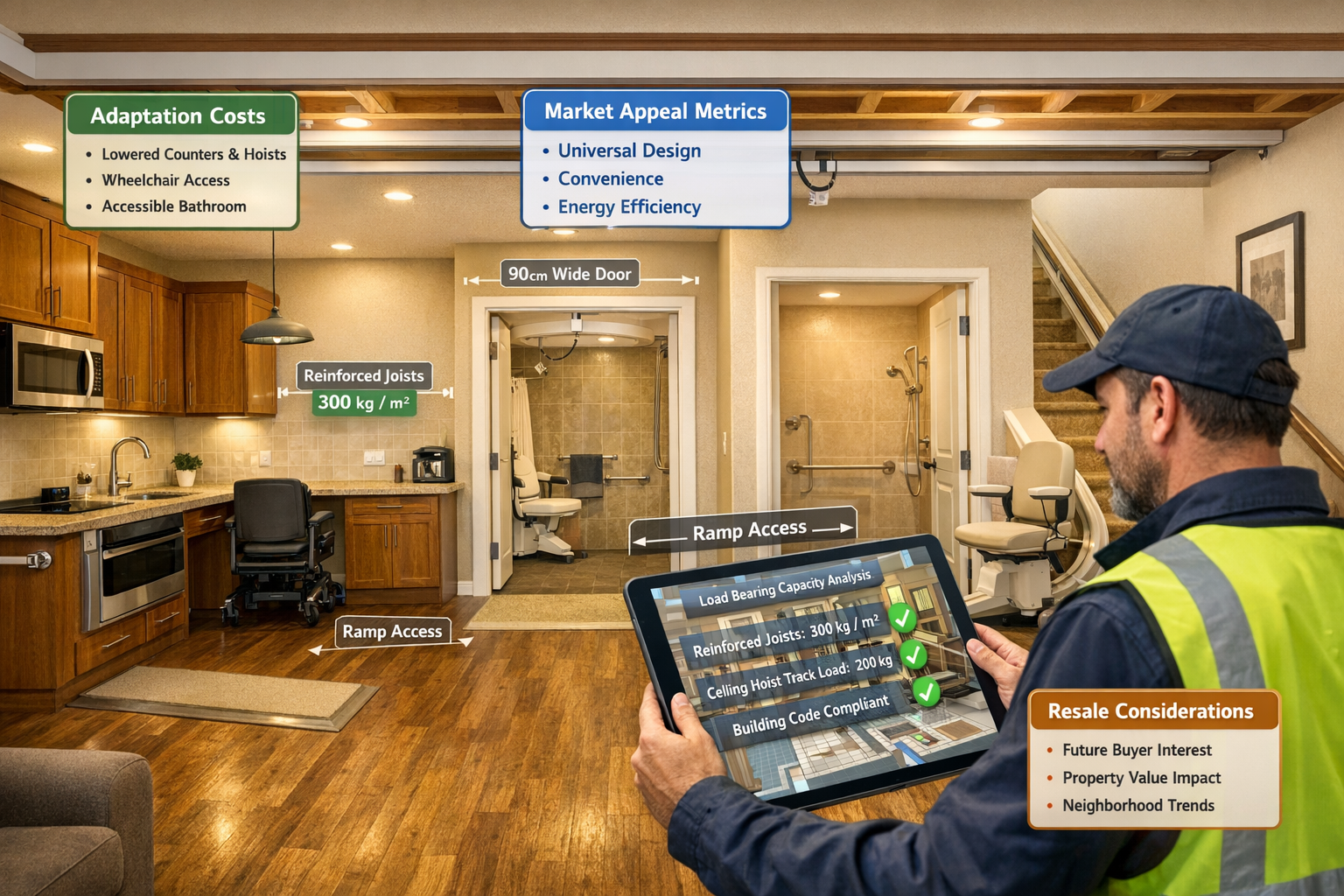
Accessibility modifications range from simple additions to comprehensive structural alterations. Common adaptations include:
Level Access Modifications:
- Ramped entrances and threshold adjustments
- Widened doorways (typically 900mm+ clear opening)
- Level-access shower rooms with wet room construction
- Lift installations (platform lifts, through-floor lifts, or full passenger lifts)
Structural Adaptations:
- Ground-floor bedroom and bathroom extensions
- Reinforced ceilings for ceiling track hoists
- Lowered kitchen countertops and accessible appliance installations
- Adapted bathroom facilities with specialized fixtures
Assistive Technology Integration:
- Smart home controls for lighting, heating, and security
- Voice-activated systems and environmental controls
- Emergency call systems and monitoring equipment
- Automated door and window operators
The quality and appropriateness of these modifications significantly affect both functionality and value. Professional installations complying with building regulations and accessibility standards maintain value better than DIY adaptations or outdated systems.
Structural Implications of Major Adaptations
Significant accessibility modifications can affect structural integrity and require careful assessment. Reinforced floor joists for ceiling hoist systems must demonstrate adequate load-bearing capacity, typically requiring structural engineer calculations and building control approval.
Extension works for ground-floor accessible bedrooms and bathrooms require the same scrutiny as any building addition:
- Foundation adequacy and construction quality
- Structural connection to existing building
- Damp-proofing and weatherproofing standards
- Building regulation compliance and completion certificates
- Planning permission where required
Through-floor lift installations involve cutting structural floor joists and creating openings between levels. Surveyors must verify:
- Structural support adequacy around lift shaft openings
- Fire safety compliance (particularly fire doors and compartmentation)
- Lift maintenance records and remaining service life
- Building control approval for structural alterations
Properties with well-documented, professionally installed adaptations maintain value more effectively than those with informal modifications lacking proper certification. Recommending specific defect surveys for questionable adaptations protects both lenders and purchasers.
Market Demand for Adapted Properties
The market for adapted homes presents a paradox: strong demand from specific buyers but limited appeal to the general market. This dynamic significantly affects valuation approaches.
Positive market factors:
- Growing elderly population seeking accessible housing
- Disabled individuals and families requiring adapted accommodation
- Local authority and housing association demand for accessible properties
- Healthcare providers seeking suitable discharge accommodation
- Investors targeting the accessible housing rental market
Negative market factors:
- General buyers may view adaptations as requiring costly removal
- Families seeking standard layouts find adapted homes unsuitable
- Aesthetic concerns around visible accessibility features
- Perception of properties as "institutional" rather than homely
- Longer marketing times reflecting narrower buyer pool
Valuation approaches must balance these competing factors. Properties in areas with strong demand for accessible housing (near specialized healthcare facilities, retirement communities, or areas with aging populations) maintain value better than those in family-oriented neighborhoods where accessibility features offer limited appeal.
Valuation Methodologies for Adapted Homes
Determining appropriate value for adapted properties requires nuanced analysis:
Cost Approach Limitations: The cost of adaptations rarely translates directly to added value. A £50,000 accessible extension may add only £20,000-£30,000 to market value when selling to general buyers, while potentially adding £40,000-£45,000 when selling to buyers requiring accessibility features.
Comparative Method Adjustments: Finding truly comparable adapted property sales proves challenging. Surveyors must adjust for:
- Quality and extent of adaptations
- Professional installation versus DIY modifications
- Building regulation compliance and certification
- Aesthetic integration of accessibility features
- Remaining useful life of installed equipment
Income Approach for Investment Properties: Adapted properties in the rental market may command premium rents from tenants receiving housing benefit or disability-related support. Yield analysis should consider:
- Local authority rental rate allowances for accessible properties
- Tenant demand and void period expectations
- Maintenance costs for specialized equipment
- Regulatory compliance requirements for accessible rentals
Dual Valuation Scenarios: Some lenders request two valuations—one assuming sale to buyers requiring accessibility features, and another assuming sale to general market with adaptation removal costs deducted. This approach provides realistic value ranges reflecting market uncertainty.
Regulatory Compliance and Building Standards
California's 2026 Valuation Threshold for building alterations, structural repairs, and additions is $209,208.00, determining applicability of Chapter 11B accessibility requirements under the 2025 California Building Code.[3] While this applies specifically to California, it illustrates the regulatory complexity surrounding accessibility modifications.
In the UK context, surveyors should verify:
- Building Regulation compliance for structural alterations and extensions
- Disabled Facilities Grant (DFG) documentation if public funding supported adaptations
- Planning permission where required for extensions or external alterations
- Electrical safety certification for lift installations and automated systems
- Gas safety certificates for relocated heating or cooking appliances
Properties with comprehensive compliance documentation achieve higher values and sell faster than those with informal adaptations lacking proper certification. When documentation is incomplete, surveyors should recommend obtaining retrospective building control certificates or structural engineer confirmations before completion.
Data-Driven Assessment Protocols for Complex Properties
Modern surveying practice increasingly relies on systematic data collection and analysis protocols that reduce subjectivity and improve valuation accuracy. For complex properties, implementing robust methodologies separates exceptional practitioners from those producing inconsistent results.
Pre-Assessment Information Gathering
Effective complex property valuation begins before site inspection. Surveyors should establish comprehensive pre-assessment protocols:
Desktop Research Phase:
- Review planning portal for construction history, extensions, and building regulation applications
- Check local authority records for building control completions and enforcement notices
- Research property history through Land Registry title documents and previous sale records
- Identify comparable properties through MLS databases and recent transaction records
- Review building safety registers for high-rise properties
- Check manufacturer databases for modular construction warranty information
Client Instruction Clarification:
- Confirm specific lender requirements for non-standard construction documentation
- Establish whether dual valuation scenarios are required for adapted properties
- Clarify timeline expectations and any expedited reporting needs
- Determine scope limitations and any areas excluded from assessment
- Confirm fee structure for potential additional investigations
This preparatory work typically requires 2-4 hours but reduces on-site time and minimizes follow-up queries by identifying potential complications before inspection.
On-Site Assessment Techniques
Systematic inspection protocols ensure comprehensive data collection:
Digital Documentation:
- Photograph all property elevations with measurement references
- Document construction details with close-up images of materials and junctions
- Record room dimensions using laser measuring devices
- Capture video walkthroughs for complex spatial arrangements
- Use thermal imaging cameras to identify insulation defects or moisture issues
- Employ drones for high-rise external envelope assessment (where permitted)
Structured Data Collection:
- Complete standardized checklists for property type (high-rise, non-standard, adapted)
- Record all visible defects with severity ratings and location references
- Document service charge information and management company details
- Note accessibility features with measurements and compliance observations
- Identify areas requiring specialist investigation or opening-up works
Stakeholder Interviews:
- Speak with building managers about maintenance history and upcoming major works
- Interview current occupants about property performance and known issues
- Consult managing agents about service charge trends and building safety status
- Contact local authority building control for construction verification
This comprehensive approach provides the evidence base supporting valuation conclusions and demonstrates professional thoroughness in potential dispute scenarios.
Technology Integration in Complex Valuations
Modern surveying technology enhances assessment accuracy and efficiency:
3D Scanning and Modeling: Laser scanning creates precise digital twins of complex properties, enabling detailed spatial analysis and accurate floor area calculations. This technology proves particularly valuable for non-standard construction where traditional measurement methods struggle with irregular geometries.
Thermal Imaging: Infrared cameras identify insulation defects, moisture penetration, and air leakage in non-standard construction systems. These issues significantly affect both value and energy performance.
Drone Surveys: Unmanned aerial vehicles safely inspect high-rise external envelopes, roof conditions, and cladding systems without expensive access equipment. High-resolution imagery documents conditions impossible to assess from ground level.
Database Integration: Connecting to comprehensive comparable sales databases enables real-time market analysis during site visits. Mobile applications providing instant access to recent transactions support evidence-based valuation decisions.
Digital Reporting Platforms: Cloud-based reporting systems with standardized templates ensure consistency across complex valuations. Integrated photograph libraries and automated calculations reduce report preparation time by 40-50%.
Reducing Follow-Up Queries Through Comprehensive Reporting
Follow-up queries from lenders represent significant efficiency losses, typically adding 1-2 weeks to transaction timelines. For complex properties, implementing comprehensive reporting protocols reduces queries by 40-60%.
Essential report components for complex properties:
Executive Summary: Clear statement of property type, construction method, and any factors affecting mortgageability or value. Lenders should understand key issues within the first page.
Construction Analysis: Detailed description of building methods, materials, and any non-standard elements. Include photographs documenting construction type and condition.
Comparable Evidence: Present 3-5 recent comparable sales with adjustments explained. For non-standard properties, prioritize comparables with similar construction types.
Risk Assessment: Explicitly address lender concerns around durability, insurability, and resale potential. Provide evidence supporting conclusions.
Recommendation Section: Clear guidance on any additional investigations required, documentation needed, or conditions affecting mortgage security.
Appendices: Include relevant certificates, structural reports, building safety documentation, and service charge accounts supporting valuation conclusions.
Reports addressing potential lender questions proactively demonstrate professional competence and accelerate transaction completion. Understanding what information different types of survey provide helps surveyors determine appropriate assessment levels for various property types.
Regulatory and Market Trends Affecting Complex Valuations
The regulatory and market environment surrounding complex properties continues evolving, requiring surveyors to maintain current knowledge of changing requirements and emerging property types.
Building Safety Legislation Impact
The Building Safety Act 2022 fundamentally altered high-rise valuation requirements. Properties in buildings over 18 meters (approximately 6 storeys) face enhanced safety requirements, with building owners required to register with the Building Safety Regulator and maintain comprehensive safety documentation.
Valuation implications include:
- Properties in non-compliant buildings face severe marketability restrictions
- Service charges increase to fund enhanced safety management
- Lenders require comprehensive building safety documentation before lending
- Remediation costs for defective buildings create uncertain liabilities
Surveyors must understand these requirements and assess compliance status as fundamental valuation factors. Properties with current Building Safety Certificates command significant premiums over those with unresolved safety concerns.
Modern Methods of Construction (MMC)
Modern Methods of Construction including modular, panelized, and hybrid systems represent growing market segments. With modular home prices in 2026 ranging from $160,000 to $320,000 on average and most buyers finding value in the $180,000-$250,000 range for finished mid-size modular homes, these properties increasingly enter mainstream lending.[4]
Geographic price disparities are significant: California and Northeast markets run 20-40% higher than Midwest or Southern states due to labor costs, permit fees, and transportation distances from manufacturing facilities.[4]
Valuation considerations for MMC properties:
- Manufacturer reputation and warranty provisions
- Foundation quality and permanent attachment verification
- Building regulation compliance and certification
- Comparable sales evidence in local market
- Lender appetite and mortgage availability
As MMC becomes more prevalent, surveyors must develop expertise assessing factory construction quality and understanding how these properties perform in local markets. The factory construction time averaging 7-9 weeks offers significant advantages but requires verification of quality control processes.[4]
Demographic Shifts and Adapted Housing Demand
Population aging drives increasing demand for accessible housing. The over-65 population continues growing, with many seeking to remain in adapted homes rather than moving to institutional care settings.
Market trends affecting adapted property valuations:
- Growing rental demand for accessible properties from housing benefit recipients
- Local authority interest in purchasing adapted properties for social housing stock
- Specialist developers creating retirement communities and accessible housing developments
- Healthcare providers seeking suitable discharge accommodation for patients requiring accessibility features
These trends suggest adapted properties may achieve stronger value retention in coming years, particularly in areas with aging populations and limited accessible housing stock. Surveyors should monitor local demographic trends when assessing adapted property markets.
California Housing Law Changes
California enacted density-focused housing laws in 2025 including SB 79 (requiring high-density transit upzoning), AB 87 (density bonus law modifications for mixed-use projects), and AB 1050 (expanded ability to eliminate restrictive covenants for commercial-to-residential conversions).[2]
While these regulations apply specifically to California, they illustrate broader trends toward:
- Increased density in urban areas
- Commercial-to-residential conversions creating non-standard property types
- Regulatory incentives for affordable housing development
- Streamlined approval processes for certain development types
Surveyors operating in jurisdictions with similar regulatory changes must understand how these policies affect property values and market dynamics. Properties benefiting from density bonuses or conversion incentives may achieve values exceeding traditional comparable evidence.
Professional Development and Specialist Knowledge
Successfully navigating Complex Property Valuation in 2026: Surveying High-Rise, Non-Standard Construction, and Adapted Homes requires ongoing professional development and specialist knowledge acquisition.
Continuing Professional Development (CPD)
RICS members must complete annual CPD requirements, with complex property valuation offering numerous development opportunities:
- Attend specialist seminars on building safety legislation and high-rise valuation
- Complete technical courses on non-standard construction identification and assessment
- Participate in workshops on accessibility standards and adapted housing valuation
- Engage with manufacturer training on modern methods of construction
- Study case law affecting valuation practice and professional liability
Maintaining current knowledge protects both professional competence and indemnity insurance validity. Insurers increasingly scrutinize CPD records when assessing claims involving specialist property types.
Building Specialist Networks
Complex property valuation often requires collaboration with specialists:
- Structural engineers for non-standard construction assessment and high-rise structural concerns
- Building safety consultants for fire risk assessment and cladding evaluation
- Accessibility specialists for adapted housing compliance verification
- Modular construction experts for MMC quality assessment
- Legal advisors for lease term interpretation and building safety liability analysis
Developing relationships with trusted specialists enables rapid consultation when complex issues arise. Surveyors should maintain databases of specialist contacts organized by expertise area and geographic coverage.
Understanding Lender Requirements
Different lenders maintain varying risk appetites for complex properties. Specialist knowledge of lender policies enables surveyors to:
- Provide appropriate documentation meeting specific lender requirements
- Advise clients on realistic financing options for unusual properties
- Structure reports addressing known lender concerns proactively
- Recommend alternative lenders when mainstream options prove unavailable
Regular communication with lender valuation panels helps surveyors understand evolving requirements and maintain panel membership. Lenders value surveyors who consistently provide comprehensive, accurate assessments requiring minimal follow-up.
Conclusion
Complex Property Valuation in 2026: Surveying High-Rise, Non-Standard Construction, and Adapted Homes represents both significant challenge and substantial opportunity for surveying professionals. As these property types move from niche markets into mainstream lending, surveyors who develop robust assessment methodologies and comprehensive technical knowledge position themselves as indispensable transaction partners.
The key to success lies in systematic approach and thorough documentation. Properties with non-standard construction face financing barriers and potential valuation discounts of 15-40%, but comprehensive assessment protocols identifying issues early reduce follow-up queries and accelerate transactions.[1] High-rise buildings require careful evaluation of building safety compliance, service charge liabilities, and lease terms—factors that can affect value by 20-50%. Adapted homes demand balanced assessment of modification quality and market appeal, with valuation approaches reflecting both specialist demand and general market limitations.
Technology integration enhances assessment accuracy while improving efficiency. Digital documentation, thermal imaging, drone surveys, and 3D scanning provide evidence supporting valuation conclusions and demonstrating professional thoroughness. Database integration enables real-time comparable analysis, while standardized reporting platforms ensure consistency across complex valuations.
Regulatory awareness remains essential as building safety legislation, accessibility requirements, and housing policy continue evolving. Surveyors must maintain current knowledge through continuing professional development and specialist network building.
Actionable Next Steps
For surveyors seeking to enhance complex property valuation capabilities:
- Implement systematic pre-assessment protocols gathering comprehensive property information before site visits
- Develop standardized inspection checklists for high-rise, non-standard, and adapted property types
- Build specialist consultant networks enabling rapid access to structural engineers and building safety experts
- Invest in assessment technology including thermal imaging cameras, laser measuring devices, and digital reporting platforms
- Create comparable property databases tracking non-standard construction sales and complex property transactions in your operating area
- Engage with lender valuation panels understanding specific documentation requirements and risk assessment criteria
- Complete targeted CPD focusing on building safety legislation, modern methods of construction, and accessibility standards
For property owners, buyers, and lenders navigating complex property transactions, engaging chartered surveyors with specialist expertise in these property types provides essential protection and accelerates transaction completion. Understanding whether a mortgage valuation is the same as a survey helps buyers determine appropriate assessment levels for complex properties.
The complexity of modern property markets demands enhanced surveying expertise. Those who rise to meet this challenge through systematic methodology development, technology adoption, and continuous professional development will thrive in the evolving landscape of Complex Property Valuation in 2026: Surveying High-Rise, Non-Standard Construction, and Adapted Homes.
References
[1] Non Standard Construction – https://www.propertysolvers.co.uk/blog/non-standard-construction/
[2] Californias 2026 Housing Laws What You Need To Know – https://www.hklaw.com/en/insights/publications/2025/12/californias-2026-housing-laws-what-you-need-to-know
[3] Valuation Threshold Update For 2026 – https://www.dgs.ca.gov/DSA/News/Page-Content/Division-of-the-State-Architect-News-List-Folder/Valuation-Threshold-Update-for-2026
[4] Modular Home Prices Complete Cost Breakdown Financing Guide – https://www.amerisave.com/learn/modular-home-prices-complete-cost-breakdown-financing-guide/