
The UK housing market has entered a new phase of growth in 2026, with buyer enquiries surging across major regions and new build developments accelerating to meet demand. Yet beneath the excitement of purchasing a brand-new property lies a critical reality: even newly constructed homes can harbour significant defects that may not become apparent until years after completion. As the market improves and construction timelines compress, understanding Building Survey Checklists for New Build Defects in Improving Markets: RICS Guidance Post-2026 Housing Uptick has become essential for protecting what is likely your largest financial investment.
Recent industry data shows a marked increase in new build completions throughout 2026, driven by government housing targets and improved lending conditions. However, this acceleration has coincided with growing concerns about construction quality, Future Homes Standard compliance, and warranty coverage gaps. Professional building surveys conducted by RICS-qualified surveyors provide the critical safeguard that buyers need when navigating this complex landscape.
Key Takeaways
- RICS three-tier survey framework offers progressively detailed inspection levels, with Level 3 surveys providing the most comprehensive assessment for new builds with potential defects
- Two-year defect reporting window requires homebuyers to identify and report construction issues within 24 months of completion, making early professional inspection crucial
- Future Homes Standard compliance introduces new inspection requirements for energy efficiency, heat pump installations, and sustainable building materials in 2026 developments
- Most new build defects are cosmetic but can indicate serious structural problems, requiring expert evaluation to distinguish between minor snags and major concerns
- Pre-completion snagging inspections protect buyers by identifying issues before legal completion, when developers are most motivated to rectify problems
Understanding RICS Survey Levels for New Build Properties
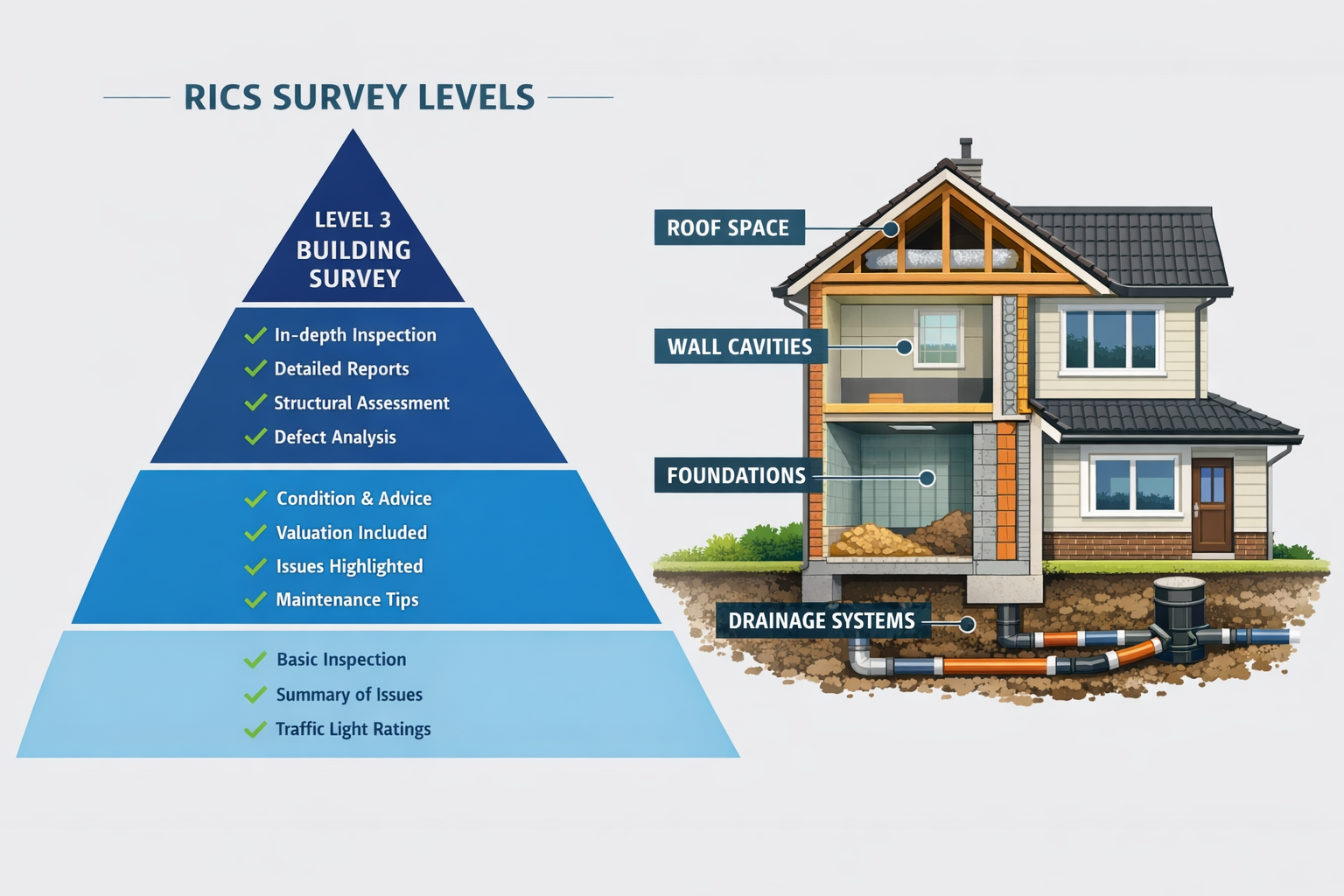
The Royal Institution of Chartered Surveyors (RICS) operates a comprehensive three-tier survey framework designed to provide property buyers with varying levels of inspection detail.[1] Understanding these survey types is fundamental to Building Survey Checklists for New Build Defects in Improving Markets: RICS Guidance Post-2026 Housing Uptick, as each level serves different purposes and property conditions.
Level 1: Condition Report
The Level 1 Condition Report represents the most basic survey tier, typically recommended for newer properties in good condition.[4] This survey provides a straightforward assessment of the property's condition using a simple traffic light rating system:
- 🟢 Green – No repair currently needed
- 🟡 Amber – Defects requiring future attention
- 🔴 Red – Urgent defects requiring immediate action
For new builds, Level 1 surveys offer a cost-effective overview but may not identify subtle construction defects or compliance issues with emerging standards. The surveyor does not move furniture, lift floor coverings, or conduct invasive investigations during this inspection type.
Level 2: Homebuyer Report
The RICS Homebuyer Report (Level 2) provides more detailed analysis than Level 1, including market valuation and insurance reinstatement costs. This mid-tier survey examines:
- Visible defects in accessible areas
- Services including heating, drainage, and utilities
- Grounds and boundaries surrounding the property
- Market value assessment for mortgage purposes
Level 2 surveys represent the most popular choice for conventional property purchases, but for new builds in the current improving market, they may still miss critical construction defects hidden behind finishes or within building cavities.
Level 3: Building Survey (Full Structural Survey)
The RICS Building Survey (Level 3) delivers the most comprehensive property inspection available, making it increasingly relevant for Building Survey Checklists for New Build Defects in Improving Markets: RICS Guidance Post-2026 Housing Uptick.[5] This thorough examination includes:
- Detailed analysis of construction materials and building methods
- Roof space inspection with insulation checks and structural timber examination
- Accessible underfloor areas where present
- Comprehensive grounds inspection including drainage, boundaries, and outbuildings
- Defect identification with remedial options and cost implications
- Future maintenance guidance and repair priorities
For new build properties, Level 3 surveys prove invaluable when:
✅ The property represents a significant investment
✅ You plan extensive renovations or alterations
✅ The development is in its early phases with limited completion history
✅ Future Homes Standard compliance verification is required
✅ The property incorporates innovative construction methods or materials
Essential Building Survey Checklists for New Build Defects in Improving Markets: RICS Guidance Post-2026 Housing Uptick
Creating comprehensive inspection protocols for new build properties requires systematic attention to both traditional construction elements and emerging building standards. The following checklists reflect current RICS guidance adapted for the post-2026 housing market uptick.
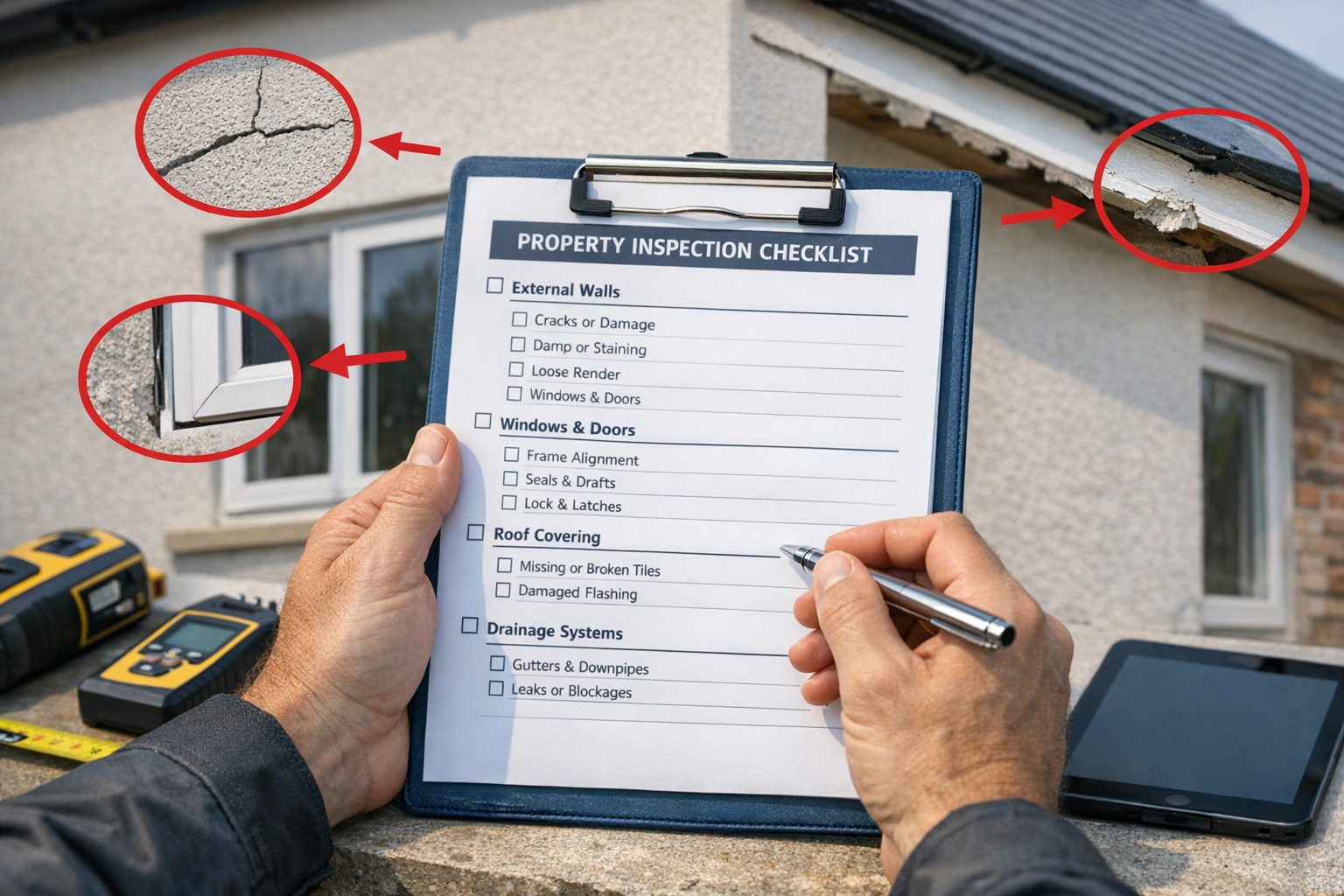
External Envelope Checklist
The external envelope represents the property's first line of defence against weather and environmental factors. Thorough external inspection should encompass:
| Component | Key Inspection Points | Common Defects |
|---|---|---|
| Roof Covering | Tile alignment, ridge integrity, valley construction, flashing details | Slipped tiles, inadequate ventilation, poor valley construction |
| Chimneys & Stacks | Pointing condition, flaunching, DPC installation, capping | Missing cowls, defective pointing, water ingress points |
| Rainwater Goods | Gutter falls, downpipe fixings, joint integrity, outlet connections | Inadequate capacity, poor falls, disconnected downpipes |
| External Walls | Render finish, brick bonding, movement joints, DPC visibility | Cracking, hollow render, bridged DPC, thermal bridging |
| Windows & Doors | Frame installation, weather sealing, glazing units, hardware operation | Poor sealing, condensation in units, misalignment |
When conducting specific defect surveys on new builds, particular attention should focus on interface details where different materials meet, as these represent common failure points in accelerated construction programmes.
Internal Elements Checklist
Internal inspection for new build defects requires methodical room-by-room assessment:
Structural Elements:
- Floor level variations and bounce
- Wall plumb and alignment
- Ceiling cracks and sagging
- Staircase stability and balustrade fixing
- Load-bearing wall identification
Finishes and Fixtures:
- Plasterwork quality and cracking patterns
- Door and window operation
- Kitchen and bathroom installations
- Built-in joinery and storage
- Flooring installation and transitions
Services Integration:
- Heating system installation and commissioning
- Electrical installation certification
- Plumbing connections and waste systems
- Ventilation provision and operation
- Smart home technology integration
"Most new build defects are cosmetic in nature, such as scratched windows, paint splatters, or carpet snagging, though some can indicate serious underlying structural issues."[2]
This observation underscores the importance of professional interpretation when conducting Building Survey Checklists for New Build Defects in Improving Markets: RICS Guidance Post-2026 Housing Uptick. What appears minor may signal more significant problems.
Future Homes Standard Compliance Checklist
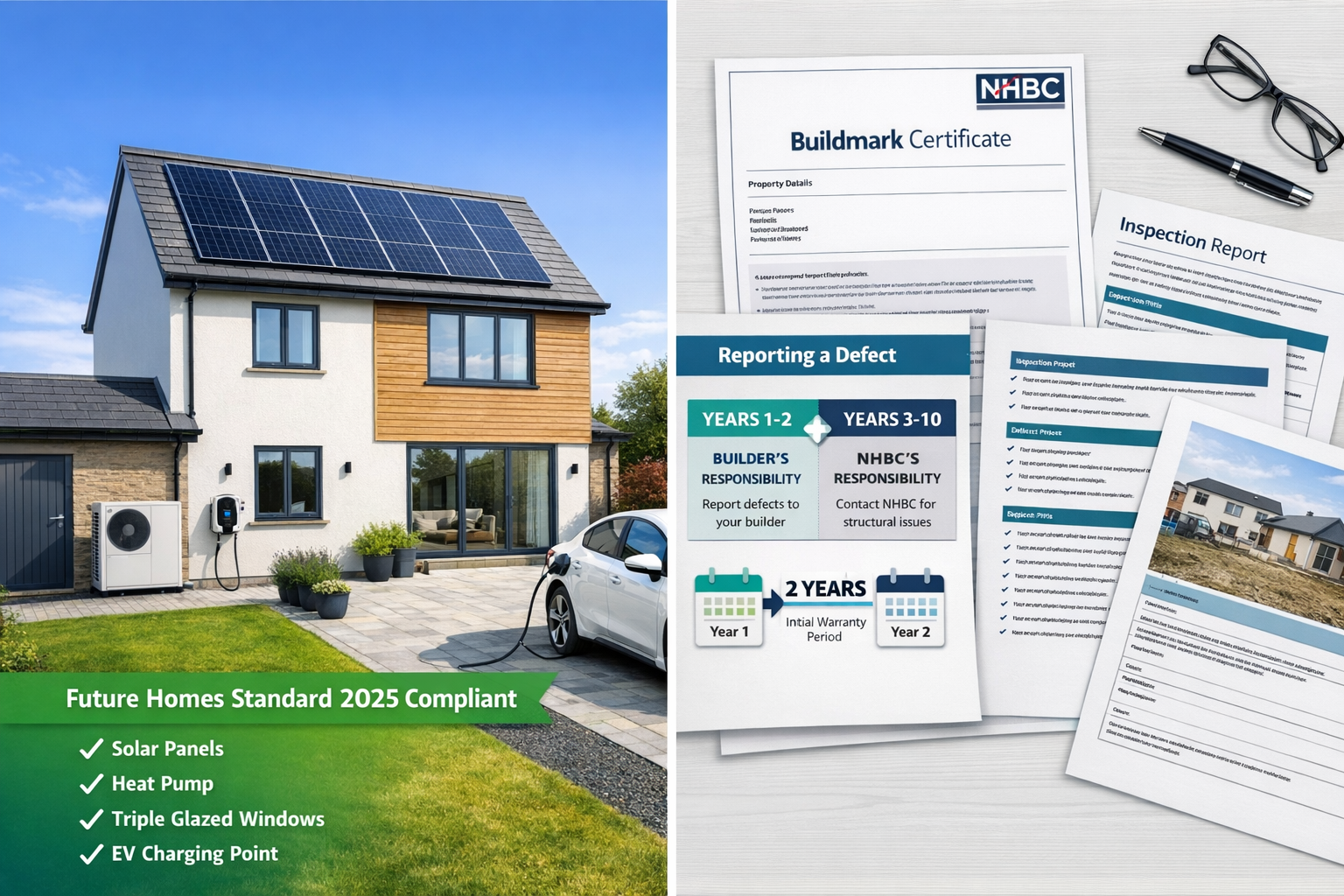
The Future Homes Standard, implemented progressively from 2025, introduces new requirements for energy efficiency and carbon reduction in new builds. A comprehensive RICS building survey should now verify:
Energy Efficiency Elements:
- 🔋 Heat pump installation and commissioning documentation
- 🌡️ Enhanced insulation standards (walls, roof, floors)
- 🪟 High-performance glazing (triple-glazed specifications)
- 🔌 EV charging point provision and electrical capacity
- ☀️ Solar panel installation where applicable
- 📊 Energy Performance Certificate (EPC) rating verification
Ventilation and Air Quality:
- Mechanical ventilation with heat recovery (MVHR) systems
- Air tightness testing results
- Continuous ventilation provision
- Humidity control measures
Documentation Requirements:
- As-built drawings and specifications
- Building Control completion certificates
- Energy assessment calculations
- Warranty documentation (NHBC, LABC, Premier Guarantee)
- Manufacturer guarantees for key components
The improving housing market of 2026 has seen developers rushing to complete projects, sometimes compromising on proper commissioning and documentation. Verification of Future Homes Standard compliance has become a critical component of professional surveys.
Pre-Completion Snagging and Post-Completion Defect Protocols
Understanding the timeline for defect identification and rectification is crucial for Building Survey Checklists for New Build Defects in Improving Markets: RICS Guidance Post-2026 Housing Uptick. The process divides into distinct phases, each with specific protocols and buyer protections.
Pre-Completion Snagging Inspections
For developers registered with the New Homes Quality Code, buyers can access pre-completion snagging inspections.[2] These inspections occur before legal completion and offer significant advantages:
Timing Benefits:
- Developer motivation to rectify issues is highest
- No need to vacate property for repairs
- Issues resolved before furniture and belongings arrive
- Leverage in negotiation before final payment
Snagging Inspection Focus Areas:
A professional snagging report should systematically document:
-
Cosmetic Defects:
- Paint and decorating quality
- Flooring installation and finish
- Joinery fitting and alignment
- Tiling work and grouting
- Hardware installation and operation
-
Functional Issues:
- Door and window operation
- Heating system functionality
- Plumbing and drainage operation
- Electrical installations and testing
- Appliance installation and commissioning
-
Structural Concerns:
- Cracking patterns in walls or ceilings
- Floor level variations
- Roof space conditions
- Drainage and external works
- Boundary treatments
The Two-Year Defect Reporting Window
Critical timing requirement: Homebuyers typically have two years from completion to report new build defects to their builder.[2] This window represents a crucial protection period, after which only major structural issues remain covered under extended warranty provisions (typically 10 years for structural defects).
Year One Priorities:
- Conduct comprehensive professional survey within first three months
- Document all identified defects with photographs and descriptions
- Submit formal defect notification to developer
- Monitor developer response and rectification quality
- Keep detailed records of all communications
Year Two Actions:
- Conduct follow-up inspection before two-year anniversary
- Identify any defects that have emerged during occupancy
- Submit final defect notification before deadline expires
- Verify all previous issues have been properly rectified
- Obtain written confirmation of completed works
Warranty Coverage and Limitations
New build properties typically come with structural warranty coverage from providers such as:
- NHBC (National House Building Council) – Most common provider
- LABC Warranty – Local Authority Building Control scheme
- Premier Guarantee – Independent warranty provider
- Checkmate – Specialist new build insurance
Typical Coverage Structure:
- Years 1-2: Builder's defect liability period (all defects)
- Years 3-10: Structural defects only (major issues)
Understanding warranty limitations is essential for Building Survey Checklists for New Build Defects in Improving Markets: RICS Guidance Post-2026 Housing Uptick, as not all defects qualify for coverage. Professional chartered surveyors can help determine which issues fall within warranty scope and which require alternative resolution.
Regional Market Considerations: Post-2026 Housing Uptick Impact
The 2026 housing market recovery has not occurred uniformly across the UK. Regional variations in construction activity, developer practices, and regulatory enforcement create distinct challenges for new build inspection protocols.
North West England Market Dynamics
Recent data indicates surging buyer enquiries in North West England throughout early 2026, with new build developments accelerating to meet demand.[1] This regional uptick has created specific considerations:
Construction Pace Concerns:
- Compressed build timelines to capitalize on market conditions
- Increased subcontractor usage with variable quality control
- Potential shortcuts in finishing and commissioning
- Documentation gaps in rushed completions
Regional Building Characteristics:
- Traditional brick and block construction predominates
- Cavity wall insulation standards vary by developer
- Ground conditions require careful foundation inspection
- Drainage systems face challenges from regional rainfall patterns
For properties in Manchester and surrounding areas, engaging local chartered surveyors with regional expertise proves invaluable for identifying area-specific defect patterns.
South East and London Market Patterns
The South East, including London and Home Counties, has experienced different market dynamics:
High-Density Development Issues:
- Apartment and townhouse construction predominates
- Shared services and facilities increase complexity
- Fire safety compliance remains heightened priority
- Acoustic performance between units requires verification
Premium Market Expectations:
- Higher specification materials and finishes
- Smart home technology integration
- Sustainable building certifications (BREEAM, Passivhaus)
- Enhanced warranty provisions
Buyers in areas such as Surrey, Essex, and Sussex should ensure their survey protocols address these regional characteristics.
Common New Build Defects: Identification and Implications
Understanding prevalent defect patterns helps prioritize inspection efforts when implementing Building Survey Checklists for New Build Defects in Improving Markets: RICS Guidance Post-2026 Housing Uptick.
Structural and Building Envelope Defects
Foundation and Ground-Related Issues:
- Inadequate ground preparation and compaction
- Settlement cracking in walls and floors
- Drainage problems causing ground movement
- Bridged or damaged damp-proof courses
These issues may not manifest immediately but can develop within the two-year defect reporting window. Professional surveyors use structural survey techniques to identify early warning signs.
Thermal Performance Failures:
- Cold bridging at junctions and interfaces
- Inadequate insulation installation
- Air leakage exceeding design specifications
- Condensation and mould growth patterns
With Future Homes Standard requirements, thermal performance defects carry increased significance in 2026 developments.
Services and Systems Defects
Heating and Hot Water Systems:
- Improperly commissioned heat pumps
- Undersized systems for property volume
- Inadequate hot water storage capacity
- Control system programming errors
Electrical Installation Issues:
- Insufficient socket provision
- EV charging point installation defects
- Smart home system integration failures
- Incomplete certification documentation
Plumbing and Drainage:
- Leaking joints and connections
- Inadequate pipe insulation
- Poor drainage falls and blockages
- Water pressure insufficiency
Finishing and Cosmetic Defects
While often dismissed as minor, finishing defects can indicate underlying problems:
- Cracking patterns may reveal structural movement
- Uneven floors could indicate foundation issues
- Persistent condensation suggests ventilation inadequacy
- Paint defects might conceal poor substrate preparation
Selecting and Briefing Your RICS Surveyor
Maximizing the value of Building Survey Checklists for New Build Defects in Improving Markets: RICS Guidance Post-2026 Housing Uptick requires careful surveyor selection and comprehensive briefing.
Qualification and Experience Verification
Ensure your surveyor possesses:
✅ RICS Membership (MRICS or FRICS designation)
✅ New build experience specifically
✅ Regional knowledge of your property location
✅ Future Homes Standard familiarity
✅ Professional indemnity insurance coverage
RICS-certified experts bring standardized inspection protocols and professional accountability to the assessment process.
Comprehensive Briefing Information
Provide your surveyor with:
- Property details: Address, developer name, completion date
- Construction type: Traditional build, timber frame, modular, etc.
- Specification documents: If available from developer
- Specific concerns: Any issues you've already identified
- Future plans: Intended alterations or extensions
- Warranty information: Provider and policy number
Survey Scope Discussion
Clarify the survey scope to ensure it addresses:
- Inspection access: Will roof spaces, underfloor areas be accessible?
- Services testing: What level of systems testing will occur?
- Specialist investigations: Are additional tests recommended (drainage, electrical)?
- Report format: Detailed narrative or summary with priorities?
- Follow-up support: Will surveyor assist with developer negotiations?
Acting on Survey Findings: Negotiation and Remediation
Survey results inform critical decisions in the purchase process and post-completion defect management.
Pre-Purchase Negotiation Strategies
When surveys identify significant defects before completion:
Price Reduction Options:
- Calculate remediation costs from survey recommendations
- Request price reduction reflecting repair expenses
- Consider professional quantity surveyor input for major works
Retention Arrangements:
- Negotiate retention of funds until defects rectified
- Use solicitor-held escrow accounts
- Define clear rectification timelines and quality standards
Developer Rectification:
- Provide survey report to developer
- Request written rectification programme
- Specify re-inspection requirements
- Document all agreements in legal completion documents
Post-Completion Defect Management
For defects identified after purchase:
- Document thoroughly: Photographs, descriptions, dates of discovery
- Notify promptly: Written notification to developer within defect period
- Set reasonable deadlines: Typically 30 days for response, 90 days for rectification
- Monitor quality: Inspect completed repairs before sign-off
- Escalate if necessary: Warranty provider, ombudsman schemes, legal action
Professional surveyors can provide expert witness reports if disputes escalate to formal proceedings.
Conclusion: Protecting Your Investment in the 2026 Market
The improving housing market of 2026 presents exciting opportunities for homebuyers, but the acceleration in new build construction demands heightened vigilance regarding property quality and compliance. Building Survey Checklists for New Build Defects in Improving Markets: RICS Guidance Post-2026 Housing Uptick provides the framework for protecting what is likely your largest financial investment.
Key actions for new build purchasers:
🏠 Commission professional RICS surveys appropriate to your property type and risk tolerance, with Level 3 surveys offering comprehensive protection for significant investments
📋 Conduct pre-completion snagging inspections whenever possible to identify and rectify issues before legal completion
⏰ Understand and utilize the two-year defect reporting window, with systematic inspections at regular intervals
🔍 Verify Future Homes Standard compliance through documentation review and physical inspection of energy efficiency measures
📄 Maintain comprehensive records of all defects, communications, and rectification works
💼 Engage qualified professionals with specific new build experience and regional market knowledge
The surge in construction activity throughout 2026 has inevitably created variability in build quality, with some developers maintaining rigorous standards while others prioritize speed over quality. Professional building surveys provide the independent assessment necessary to distinguish between well-constructed properties and those with significant defects requiring attention.
By implementing systematic inspection protocols, understanding warranty provisions, and acting decisively on identified defects, buyers can confidently navigate the new build market and secure properties that deliver long-term value and performance.
For comprehensive property assessment services tailored to new build properties in the current market, consider consulting with experienced RICS surveyors who understand both traditional construction principles and emerging building standards. Your investment deserves professional protection.
References
[1] Rics January 2026 Survey Insights Building Survey Protocols For Surging Buyer Enquiries In North West England – https://nottinghillsurveyors.com/blog/rics-january-2026-survey-insights-building-survey-protocols-for-surging-buyer-enquiries-in-north-west-england
[2] Need Snagging List New Build Home – https://hoa.org.uk/advice/guides-for-homeowners/i-am-buying/need-snagging-list-new-build-home/
[3] Vendor Liaison Checklist – https://www.rics.org/profession-standards/rics-standards-and-guidance/sector-standards/building-surveying-standards/home-surveys/vendor-liaison-checklist
[4] House Survey Checklist – https://www.comparemymove.com/guides/surveying/house-survey-checklist
[5] Scope Of Inspection Home Survey Level Three – https://www.rics.org/profession-standards/rics-standards-and-guidance/sector-standards/building-surveying-standards/home-surveys/scope-of-inspection-home-survey-level-three