As the UK property market enters a period of stabilisation in 2026, a new battleground has emerged: valuation disputes between buyers and sellers navigating recovering markets amid falling mortgage rates. Expert Witness Roles in 2026 UK House Price Dispute Tribunals: Protocols for Stabilising Market Valuations have become increasingly critical as RICS surveys indicate price stabilisation, yet disagreements over property worth continue to escalate. These disputes require qualified professionals who can provide authoritative, impartial evidence to tribunals tasked with resolving conflicts that could otherwise derail transactions worth hundreds of thousands of pounds.
The convergence of market recovery, reduced lending costs, and heightened buyer expectations has created a perfect storm for valuation disagreements. Expert witnesses now serve as the crucial bridge between conflicting parties, applying rigorous RICS protocols to establish fair market values that satisfy both legal standards and economic reality.
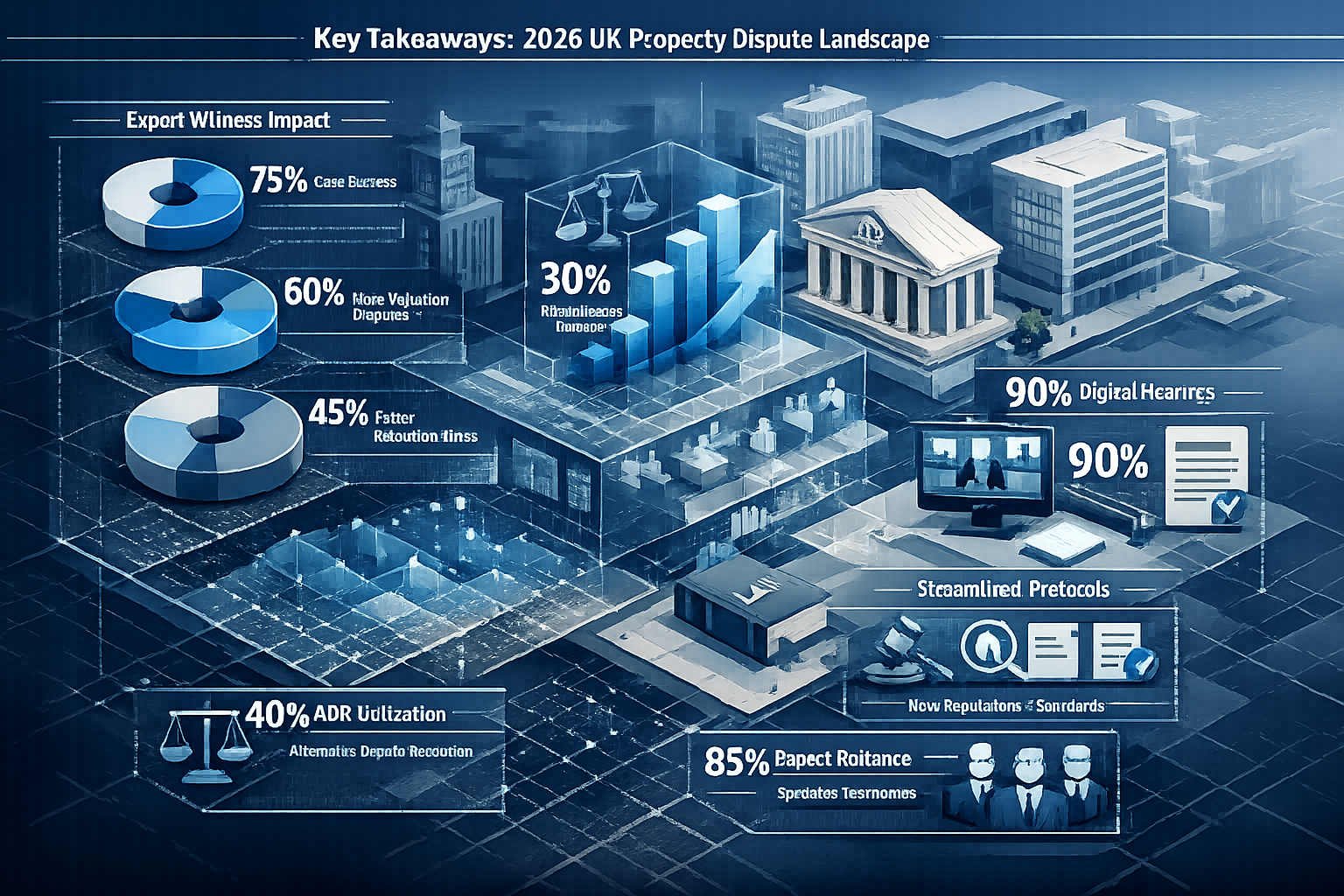
Key Takeaways
- 📊 Market stabilisation in 2026 has increased valuation disputes as buyers and sellers disagree on fair pricing during recovery periods
- ⚖️ Expert witnesses must follow strict RICS protocols and tribunal guidelines when presenting evidence in house price disputes
- 🎯 Proper evidence preparation including comparable sales analysis, market trend documentation, and independent verification is essential for credible testimony
- 💼 Tribunal procedures require expert witnesses to maintain impartiality and provide objective opinions based on verifiable data
- 📈 Case studies from recovering markets demonstrate how professional expert witness testimony resolves conflicts and stabilises transactions
Understanding Expert Witness Responsibilities in Property Valuation Disputes
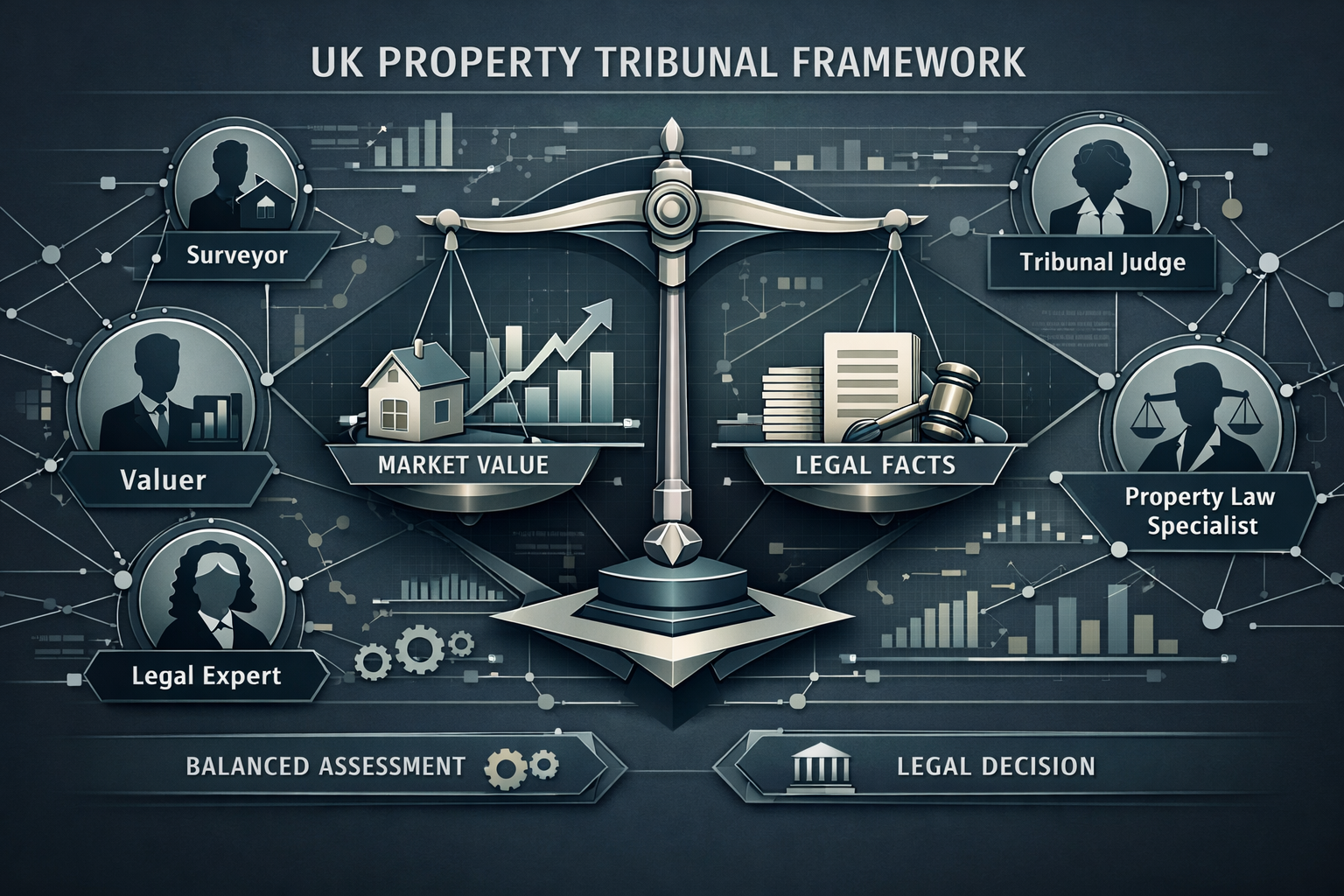
The Legal Framework Governing Expert Witnesses
Expert witnesses in UK property tribunals operate under strict legal and professional frameworks designed to ensure impartiality and reliability. According to the judiciary's guidance on expert evidence, these professionals have an overriding duty to the tribunal rather than to the party instructing them [1]. This fundamental principle distinguishes expert witnesses from advocates and requires them to provide objective, unbiased opinions regardless of who pays their fees.
RICS-chartered surveyors serving as expert witnesses must adhere to both their professional standards and tribunal requirements. The Royal Institution of Chartered Surveyors mandates that members maintain independence, provide truthful evidence, and base all opinions on verifiable data and accepted valuation methodologies. This dual accountability ensures that expert testimony meets both legal and professional standards.
The role extends beyond simple property appraisal. Expert witnesses must:
- Prepare comprehensive reports that explain valuation methodologies clearly
- Withstand cross-examination while maintaining professional composure
- Acknowledge limitations in their knowledge or available data
- Update opinions if new evidence emerges before or during proceedings
- Communicate complex concepts in accessible language for tribunal members
For professionals seeking to understand the broader context of property valuation, our guide on factors of valuation provides essential background on the elements that influence property worth.
Why Valuation Disputes Have Increased in 2026
The current market environment has created unprecedented conditions for disagreement. As mortgage rates decline from their 2023-2024 peaks, buyer confidence has returned, but price expectations haven't fully aligned with seller valuations established during the previous high-rate period. This temporal disconnect creates fertile ground for disputes.
Key factors driving increased disputes include:
| Factor | Impact on Disputes |
|---|---|
| Market Stabilisation | Buyers question valuations based on declining prices |
| Falling Mortgage Rates | Increased purchasing power creates pricing pressure |
| Regional Divergence | Significant variations between local markets cause confusion |
| Help to Buy Schemes | Government valuations may differ from market appraisals |
| Shared Ownership | Complex valuation formulas lead to disagreements |
According to recent analysis of regional property disputes, northern markets have experienced particular volatility, with expert witnesses playing crucial roles in establishing fair valuations amid divergent price trends [3]. This regional variation means that expert witnesses must possess detailed local market knowledge alongside broader economic understanding.
The rise in disputes also reflects increased buyer sophistication. Modern purchasers often obtain multiple valuations, research comparable sales independently, and challenge professional appraisals with their own evidence. This democratisation of property information, while generally positive, has increased the frequency of formal disputes requiring expert witness intervention.
RICS Protocols for Expert Witness Roles in 2026 UK House Price Dispute Tribunals
Evidence Preparation Standards and Documentation Requirements
Expert Witness Roles in 2026 UK House Price Dispute Tribunals: Protocols for Stabilising Market Valuations demand meticulous evidence preparation that meets both RICS professional standards and tribunal procedural requirements. The foundation of credible expert testimony rests on comprehensive, verifiable documentation that can withstand rigorous scrutiny.
The evidence preparation process typically includes:
1. Comparable Sales Analysis 📋
Expert witnesses must identify and analyze recent sales of similar properties within the relevant market area. This requires accessing Land Registry data, local market intelligence, and transaction details that reflect current market conditions. The analysis should account for:
- Property characteristics (size, condition, location)
- Transaction dates and market conditions at sale
- Adjustments for differences between comparables and subject property
- Statistical validity of the comparable sample
2. Market Trend Documentation 📈
Establishing the trajectory of local property values requires systematic collection of price index data, sales volume statistics, and economic indicators affecting the market. Expert witnesses should reference authoritative sources including RICS residential market surveys, Land Registry price indices, and regional economic reports.
3. Physical Inspection Records 🏠
Where possible, expert witnesses should conduct independent property inspections, documenting condition, features, and any factors affecting value. Detailed inspection notes, photographs, and measurements provide tangible evidence supporting valuation conclusions. Our comprehensive guide to what Manchester surveyors look for in a property inspection outlines the thorough approach required.
4. Methodology Transparency 🔍
Expert reports must clearly explain the valuation approach employed, whether comparative method, income approach, or other recognized methodology. This transparency allows tribunals to assess the reliability and appropriateness of the valuation technique.
Maintaining Impartiality and Professional Independence
The cornerstone of effective expert witness testimony is demonstrable independence from the instructing party. Impartiality isn't merely a professional obligation—it's the foundation of credibility before tribunals.
"The expert witness has an overriding duty to help the tribunal on matters within their expertise. This duty overrides any obligation to the person from whom they have received instructions or by whom they are paid." [1]
Practical steps to maintain and demonstrate independence include:
✅ Declining instructions where conflicts of interest exist
✅ Documenting all communications with instructing parties
✅ Resisting pressure to modify opinions to favor one party
✅ Acknowledging uncertainty when evidence is ambiguous
✅ Updating opinions if new evidence contradicts initial conclusions
Expert witnesses must also navigate the delicate balance between being helpful to tribunals and maintaining professional boundaries. This means answering questions directly, admitting knowledge limitations, and avoiding advocacy for either party's position.
For specialists working on specific valuation types, understanding the nuances of different assessment contexts is crucial. Whether conducting valuations for probate or shared ownership valuations, the principles of independence and thoroughness remain constant.
Access to Documentation and Transparency Initiatives
A significant development for 2026 is the expansion of public access to expert evidence and tribunal documentation. The Expert Witness Institute has announced that a pilot program launching January 1st, 2026, will provide enhanced access to public domain documents related to expert witness testimony [2]. This transparency initiative aims to improve consistency and quality across expert evidence while allowing practitioners to learn from previous cases.
Benefits of increased transparency include:
- 🎯 Better understanding of tribunal expectations
- 📚 Access to precedent valuations in similar disputes
- 🔄 Improved consistency in valuation methodologies
- 💡 Learning opportunities from successful and unsuccessful expert reports
Expert witnesses should embrace this transparency as an opportunity to refine their practice and align their evidence preparation with established best practices demonstrated in successful tribunal cases.
Case Studies: Expert Witness Roles in 2026 UK House Price Dispute Tribunals in Practice

Buyer-Seller Conflict in a Stabilising Market
Case Background:
A buyer agreed to purchase a three-bedroom semi-detached property in Manchester for £325,000 in early 2025. By the time of completion in March 2026, local market data showed a 4% price decline, and the buyer's mortgage lender commissioned a valuation that came in at £310,000. The buyer sought to renegotiate the purchase price, while the seller insisted on the original agreement, leading to a tribunal dispute.
Expert Witness Intervention:
A RICS-chartered surveyor was appointed to provide independent expert evidence. The expert's approach included:
- Comprehensive market analysis examining 18 comparable sales within a one-mile radius over the preceding six months
- Adjustment calculations accounting for property-specific features, condition differences, and transaction timing
- Market trend evaluation using RICS survey data and Land Registry statistics
- Independent physical inspection documenting property condition and features
Outcome:
The expert witness concluded that the fair market value as of the intended completion date was £315,000, representing a modest 3% decline from the original agreement. The tribunal accepted this valuation, and parties agreed to split the difference, completing at £320,000. This compromise, facilitated by credible expert evidence, preserved the transaction while acknowledging legitimate market movement.
Key Lessons:
- Timing matters significantly in volatile markets
- Comprehensive comparable analysis provides defensible conclusions
- Independent expertise can bridge seemingly irreconcilable positions
Help to Buy Valuation Dispute
Case Background:
A first-time buyer using the Help to Buy scheme received a government-commissioned valuation of £280,000 for a new-build property, while the developer's valuation came in at £305,000. The £25,000 discrepancy created a funding gap that threatened the transaction.
Expert Witness Role:
An independent expert was engaged to reconcile the conflicting valuations. The investigation revealed:
- The government valuer had applied comparables from the resale market without adequate adjustment for new-build premiums
- The developer's valuation relied heavily on asking prices rather than completed sales
- Both valuations failed to adequately consider recent market stabilisation
Resolution:
The expert witness prepared a detailed report applying recognized new-build valuation methodologies, ultimately concluding a fair value of £292,000. The tribunal accepted this middle-ground valuation, and the developer agreed to reduce the price to facilitate the sale.
For professionals handling similar cases, understanding Help to Buy valuations requires specialized knowledge of government scheme requirements alongside market valuation principles.
Shared Ownership Staircasing Dispute
Case Background:
A shared ownership leaseholder sought to purchase an additional 25% equity stake in their property. The housing association's valuation came in at £240,000 (total property value), while the leaseholder's independent valuation suggested £215,000, creating a £6,250 difference in the cost of the additional equity.
Expert Evidence:
The appointed expert witness examined:
- Lease terms affecting valuation methodology
- Comparable sales of both shared ownership and full-ownership properties
- Market conditions in the specific development
- Statutory requirements for shared ownership valuations
Tribunal Decision:
The expert's comprehensive analysis, which included detailed examination of RICS shared ownership valuation protocols, established a fair value of £228,000. The tribunal adopted this valuation, demonstrating how expert evidence can resolve technical disputes involving complex ownership structures.
Preparing for Tribunal Proceedings: Practical Guidance
Pre-Hearing Preparation Checklist
Success in tribunal proceedings requires methodical preparation well before the hearing date. Expert witnesses should follow a systematic approach:
📋 Documentation Assembly (4-6 weeks before hearing):
- Compile all valuation reports and supporting data
- Organize comparable sales evidence with source documentation
- Prepare market analysis charts and graphs
- Gather professional credentials and qualification certificates
- Review all correspondence with instructing parties
📊 Evidence Verification (3-4 weeks before):
- Cross-check all factual assertions against source documents
- Verify mathematical calculations and adjustments
- Confirm comparable sales details with Land Registry
- Update market data if significant changes have occurred
- Identify potential weaknesses in the evidence
📝 Report Finalization (2-3 weeks before):
- Ensure compliance with tribunal directions
- Include clear executive summary
- Explain methodology in accessible language
- Acknowledge any limitations or uncertainties
- Provide clear, defensible conclusions
🎯 Hearing Preparation (1 week before):
- Review opposing expert's report thoroughly
- Identify areas of agreement and disagreement
- Prepare responses to likely cross-examination questions
- Organize documents for easy reference during testimony
- Conduct mock cross-examination with colleagues
For experts handling specialized valuations such as capital gains tax assessments, additional preparation may be required to explain tax-specific valuation principles to tribunal members.
Effective Cross-Examination Techniques and Responses
Cross-examination represents the most challenging aspect of expert witness testimony. Opposing counsel will attempt to undermine credibility, expose weaknesses, and challenge conclusions. Preparation and composure are essential.
Effective response strategies include:
1. Listen Carefully to Questions 👂
Don't anticipate questions or interrupt. Ensure you understand what's being asked before responding. If unclear, request clarification rather than guessing at the question's intent.
2. Answer Directly and Concisely 💬
Avoid lengthy explanations unless specifically requested. Direct answers demonstrate confidence and prevent creating additional targets for cross-examination.
3. Acknowledge Limitations Honestly ✋
Admitting uncertainty on specific points enhances credibility on matters where you express confidence. Never speculate beyond your expertise.
4. Maintain Professional Composure 😌
Remain calm and courteous regardless of questioning style. Defensive or emotional responses undermine professional credibility.
5. Refer to Documentation 📄
Support answers with specific references to your report, comparable sales data, or other evidence. This demonstrates thoroughness and accuracy.
6. Distinguish Facts from Opinions ⚖️
Clearly identify which statements represent verifiable facts versus professional judgment based on expertise.
Common Pitfalls to Avoid
Even experienced expert witnesses can fall into traps that undermine their effectiveness. Awareness of common mistakes helps prevent them:
❌ Advocacy for the instructing party – Remember your duty is to the tribunal, not the party paying your fee
❌ Overconfidence in uncertain matters – Expressing absolute certainty where evidence is ambiguous damages credibility
❌ Inadequate comparable analysis – Relying on insufficient or poorly-adjusted comparables weakens valuation conclusions
❌ Failure to update opinions – Not revising conclusions when new evidence emerges suggests bias or inflexibility
❌ Poor communication – Using excessive jargon or failing to explain technical concepts clearly frustrates tribunals
❌ Incomplete documentation – Missing source documents or inadequate record-keeping creates vulnerability during cross-examination
❌ Ignoring opposing expert's valid points – Dismissing all contrary evidence appears defensive and undermines impartiality
The Future of Expert Witness Roles in UK Property Tribunals
Technology and Data Analytics in Valuation Evidence
The integration of advanced technology and data analytics is transforming how expert witnesses prepare and present evidence in 2026. Automated valuation models (AVMs), machine learning algorithms, and big data analytics now complement traditional valuation methods, providing expert witnesses with powerful tools for market analysis.
Key technological developments include:
🖥️ Predictive Analytics – Sophisticated algorithms can identify market trends and predict price movements with increasing accuracy, providing expert witnesses with data-driven insights to support their conclusions.
📱 Digital Evidence Presentation – Tribunals increasingly accept digital presentations, allowing expert witnesses to present interactive data visualizations, comparable sales maps, and dynamic market analysis during testimony.
🔍 Blockchain Property Records – Emerging blockchain-based property registries promise enhanced transparency and verification of transaction data, strengthening the evidential foundation for expert opinions.
📊 Real-Time Market Data – Access to continuously updated market intelligence allows expert witnesses to provide current, relevant analysis rather than relying on historical data that may not reflect rapid market changes.
However, technology complements rather than replaces professional judgment. Expert witnesses must interpret data, apply local market knowledge, and exercise professional skepticism regarding automated outputs. The human element—understanding nuances, context, and exceptional circumstances—remains irreplaceable.
Regulatory Developments and Professional Standards
The regulatory landscape governing expert witness roles continues to evolve. RICS regularly updates its valuation standards and expert witness guidance to reflect emerging best practices and address identified weaknesses in professional conduct.
Anticipated developments for 2026-2027 include:
- Enhanced continuing professional development requirements specifically for expert witnesses
- Standardized expert witness accreditation programs to ensure consistent quality
- Stricter enforcement of impartiality requirements with sanctions for advocacy
- Expanded transparency requirements for fee arrangements and potential conflicts
These developments aim to strengthen public confidence in expert evidence while maintaining the flexibility required for professional judgment in complex cases.
Building a Sustainable Expert Witness Practice
For surveyors considering or developing expert witness roles, building a sustainable practice requires strategic planning and continuous professional development.
Essential elements include:
Professional Reputation 🌟
Credibility is everything in expert witness work. Consistently delivering high-quality, impartial evidence builds reputation over time. Each tribunal appearance represents an opportunity to demonstrate expertise and professionalism.
Specialized Knowledge 📚
Developing expertise in specific property types or dispute categories creates competitive advantage. Whether specializing in commercial property valuation or residential disputes, depth of knowledge enhances credibility.
Network Development 🤝
Building relationships with solicitors, barristers, and other legal professionals generates instructions. Professional networking, speaking engagements, and published articles raise profile within the legal community.
Continuous Learning 📖
Staying current with market developments, regulatory changes, and tribunal precedents is essential. Regular training, case law review, and participation in professional forums maintain expertise.
Quality Management ✅
Implementing robust quality control processes ensures consistent excellence in report preparation, evidence gathering, and testimony delivery.
Conclusion
Expert Witness Roles in 2026 UK House Price Dispute Tribunals: Protocols for Stabilising Market Valuations have become increasingly vital as the property market navigates recovery amid falling mortgage rates and stabilising prices. The convergence of market conditions, heightened buyer sophistication, and complex ownership structures has created unprecedented demand for qualified professionals who can provide authoritative, impartial evidence to resolve valuation disputes.
Success in this specialized field requires mastering multiple competencies: technical valuation expertise, comprehensive knowledge of RICS protocols, effective communication skills, and unwavering commitment to impartiality. Expert witnesses must prepare meticulous evidence, withstand rigorous cross-examination, and maintain professional independence regardless of commercial pressures.
The case studies examined demonstrate how skilled expert witnesses bridge seemingly irreconcilable positions, providing tribunals with objective analysis that facilitates fair resolutions. Whether addressing buyer-seller conflicts in stabilising markets, Help to Buy valuation discrepancies, or shared ownership staircasing disputes, expert evidence serves as the foundation for equitable outcomes.
Actionable Next Steps
For property professionals seeking to develop or enhance their expert witness capabilities:
- Pursue specialized training in expert witness procedures and tribunal protocols through RICS or the Expert Witness Institute
- Develop systematic evidence preparation processes that ensure comprehensive, verifiable documentation
- Build local market expertise through continuous monitoring of transactions, trends, and economic indicators
- Practice cross-examination techniques through mock hearings and peer review
- Stay current with regulatory developments, transparency initiatives, and technological advances affecting valuation evidence
- Maintain professional networks with legal professionals who instruct expert witnesses
- Commit to impartiality as the non-negotiable foundation of expert witness credibility
For property buyers, sellers, and owners facing valuation disputes, engaging a qualified RICS-chartered surveyor with expert witness experience ensures access to credible, tribunal-ready evidence that can resolve conflicts efficiently and fairly.
The evolving landscape of property tribunals, enhanced transparency through public access initiatives, and technological advances in valuation analytics all point toward an increasingly sophisticated and professional expert witness environment. Those who embrace these developments while maintaining unwavering commitment to independence and quality will thrive in this essential role within the UK property dispute resolution system.
Whether you require expert valuation services for tribunal proceedings or seek to understand the complexities of property assessment, consulting with experienced chartered surveyors ensures access to the expertise and professionalism that successful dispute resolution demands.
References
[1] Expert Evidence – https://www.judiciary.uk/guidance-and-resources/expert-evidence/
[2] Access To Public Domain Documents Pilot Will Launch On The 1st January 2026 – https://www.ewi.org.uk/News/access-to-public-domain-documents-pilot-will-launch-on-the-1st-january-2026
[3] Expert Witness Roles In 2026 Northern Property Disputes Building Cases Amid Regional Price Divergence – https://nottinghillsurveyors.com/blog/expert-witness-roles-in-2026-northern-property-disputes-building-cases-amid-regional-price-divergence
SEO Meta Title: Expert Witness Roles in UK House Price Tribunals 2026
SEO Meta Description: Comprehensive guide to expert witness protocols for UK property valuation disputes in 2026. RICS standards, evidence preparation, and case studies.