The construction and development landscape has reached a critical inflection point in 2026. As regulatory frameworks introduced in 2024-2025 become fully operationalized, organizations can no longer treat sustainability as a parallel exercise to core business operations[1]. Environmental impact forecasting in surveys has emerged as an essential discipline, combining advanced ecological data capture methods with predictive modeling to help developers, surveyors, and property professionals navigate the stringent regulatory requirements that now define the industry. Environmental Impact Forecasting in Surveys: Tools for 2026 Regulatory Compliance and Sustainable Development represents not just a compliance necessity, but a strategic advantage for organizations committed to sustainable growth.
The stakes have never been higher. Regulators now wield greater enforcement powers, including fines linked directly to company turnover, while scrutiny extends beyond operational emissions to encompass marketing claims, product labeling, and supply chain impacts[1]. For surveyors and property professionals, this means that traditional building surveys must now incorporate comprehensive environmental impact assessments that can withstand regulatory scrutiny and inform strategic decision-making.
Key Takeaways
🌍 Regulatory Integration is Complete: Sustainability data must now be integrated into financial and strategic reporting as a core requirement, with 2026 marking the full operationalization of frameworks introduced in previous years[1].
📊 Data Governance is Critical: Material compliance weaknesses exist in organizations lacking formal data governance frameworks for sustainability, including defined ownership models, lineage tracking, and validation controls[2].
⚖️ California Standards Impact Global Operations: SB 253 and SB 261 greenhouse gas emissions and climate risk disclosure mandates are affecting US-based multinationals worldwide, with the first compliance deadline of August 10, 2026 approaching[5].
🔍 Enhanced Measurement Accuracy Required: The transition from PAS 2060 to ISO 14068 has elevated expectations around carbon measurement accuracy, reduction prioritization, and offset integrity[1].
💼 Supply Chain Ripple Effects: CSRD requirements impact companies globally through supply chain effects, with suppliers now required to provide carbon and governance data with the same rigor as financial statements[4].
Understanding Environmental Impact Forecasting in Modern Survey Practice
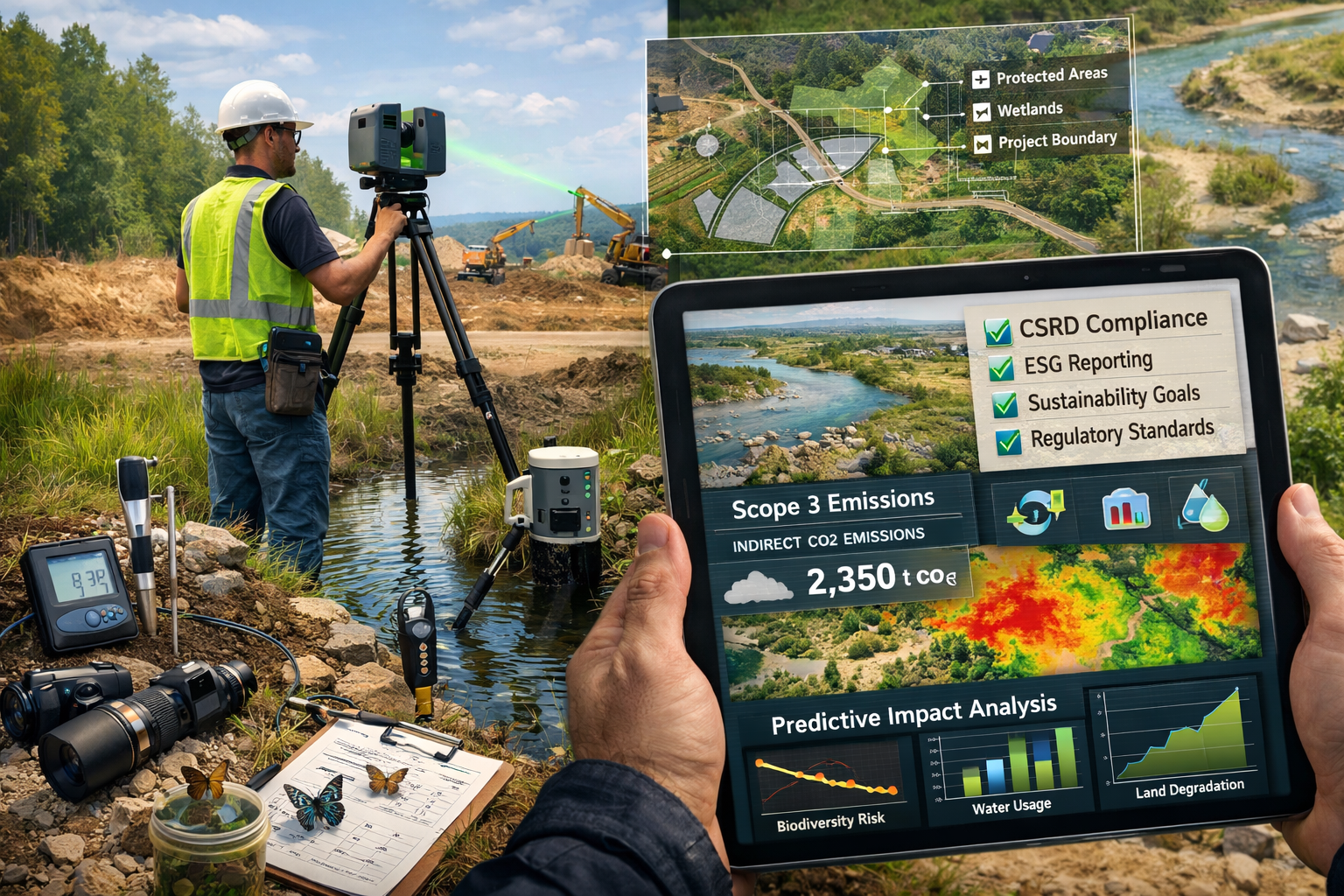
Environmental Impact Forecasting in Surveys: Tools for 2026 Regulatory Compliance and Sustainable Development encompasses a comprehensive methodology that extends far beyond traditional property assessment. This discipline integrates ecological data capture, predictive modeling, regulatory compliance verification, and strategic sustainability planning into a unified framework that serves both immediate compliance needs and long-term development objectives.
What Environmental Impact Forecasting Entails
Environmental impact forecasting in the surveying context involves systematically identifying, measuring, and predicting the ecological consequences of development projects before, during, and after construction. This process includes:
- Baseline Environmental Assessment: Establishing current environmental conditions including air quality, water resources, soil composition, biodiversity, and existing pollution levels
- Predictive Impact Modeling: Using advanced software and methodologies to forecast how proposed developments will affect environmental parameters
- Regulatory Compliance Mapping: Aligning project specifications with applicable environmental regulations and reporting requirements
- Mitigation Strategy Development: Identifying interventions to minimize negative environmental impacts
- Ongoing Monitoring Frameworks: Establishing systems for continuous environmental performance tracking
The integration of these elements into standard survey practice represents a fundamental evolution in how property professionals approach their work. Traditional concerns about structural integrity, property boundaries, and building defects now exist alongside equally important considerations about carbon footprint, water discharge compliance, biodiversity impact, and climate resilience.
The Regulatory Landscape Driving Change
The regulatory environment in 2026 is characterized by unprecedented complexity and enforcement rigor. Several key frameworks are reshaping how environmental impact forecasting must be conducted:
EU Corporate Sustainability Reporting Directive (CSRD): Wave 2 implementation is now in full swing, with companies resuming compliance preparations using streamlined double materiality assessments and simplified European Sustainability Reporting Standards (ESRS)[5]. Even organizations without direct European operations face CSRD impacts through supply chain requirements.
California Climate Disclosure Mandates: Senate Bills 253 and 261 have survived legal challenges and are expected to see intensified enforcement as the August 10, 2026 compliance deadline approaches[5]. These standards require comprehensive greenhouse gas emissions reporting and climate risk disclosures that affect property development and management decisions.
EPA Enhanced Transparency Tools: The Environmental Protection Agency's ECHO (Enforcement and Compliance History Online) platform and Water Quality Indicators tool now provide unprecedented visibility into water quality records, pollutant levels, and compliance histories across regions and watersheds[3]. This transparency creates both accountability and competitive pressure for environmental performance.
ISO 14068 Carbon Neutrality Standards: The 2025 transition from PAS 2060 to ISO 14068 has raised the bar for carbon measurement accuracy, reduction prioritization, and offset integrity[1]. Organizations can no longer treat offsets as shortcuts; they must demonstrate meaningful emissions reductions before utilizing offsets as a final step.
For surveyors conducting commercial building surveys or dilapidation assessments, these regulatory frameworks create new obligations to assess and document environmental performance alongside traditional structural and condition assessments.
Key Tools and Technologies for Environmental Impact Forecasting in Surveys: Tools for 2026 Regulatory Compliance and Sustainable Development
The practical implementation of Environmental Impact Forecasting in Surveys: Tools for 2026 Regulatory Compliance and Sustainable Development requires a sophisticated toolkit that combines traditional surveying equipment with cutting-edge environmental monitoring and data analysis technologies.
Digital Environmental Monitoring Systems
Modern environmental impact forecasting relies heavily on digital monitoring systems that provide real-time data collection and analysis:
IoT Environmental Sensors: Networked sensors deployed across development sites continuously monitor:
- Air quality parameters (particulate matter, NOx, SOx, VOCs)
- Water quality indicators (pH, dissolved oxygen, turbidity, specific pollutants)
- Soil contamination levels
- Noise pollution
- Vibration from construction activities
- Temperature and humidity variations
These sensors feed data into centralized platforms that enable surveyors to establish baseline conditions, track changes during development, and verify compliance with environmental standards.
Drone-Based Assessment Technology: Unmanned aerial vehicles equipped with specialized sensors enable:
- Thermal imaging for energy efficiency assessment
- Multispectral imaging for vegetation health and biodiversity monitoring
- LiDAR scanning for topographical analysis and erosion risk assessment
- High-resolution photography for site documentation and change detection
Drone technology significantly reduces the time and cost associated with comprehensive site assessments while improving data accuracy and safety.
Geographic Information Systems (GIS): Advanced GIS platforms integrate multiple data layers to create comprehensive environmental impact visualizations:
- Overlay of development plans with sensitive ecological areas
- Watershed mapping and water flow modeling
- Carbon footprint heat mapping
- Proximity analysis to protected habitats or pollution sources
- Historical environmental data integration
GIS capabilities are particularly valuable when conducting subsidence surveys or assessing sites with complex environmental histories.
Predictive Modeling and Analytics Platforms
Carbon Accounting Software: Specialized platforms calculate and forecast carbon emissions across all scopes:
- Scope 1: Direct emissions from owned or controlled sources
- Scope 2: Indirect emissions from purchased energy
- Scope 3: All other indirect emissions in the value chain
Despite ongoing data governance challenges, Scope 3 emissions data remains essential for comprehensive environmental impact forecasting, though it continues to be vulnerable to inconsistencies and gaps[2]. Leading platforms now incorporate supply chain data integration, emissions factor databases, and scenario modeling capabilities.
Water Discharge Compliance Tools: With water discharge and NPDES (National Pollutant Discharge Elimination System) permit compliance remaining a federal and state enforcement priority[3], specialized tools help surveyors:
- Model stormwater runoff patterns
- Predict pollutant loading
- Design compliant discharge systems
- Track permit requirements and renewal deadlines
- Generate required reporting documentation
Building Performance Simulation Software: Advanced building information modeling (BIM) integrated with environmental performance simulation enables:
- Energy consumption forecasting
- Daylighting and thermal comfort analysis
- Material lifecycle impact assessment
- Water usage prediction
- Waste generation estimation
These tools allow surveyors to evaluate environmental performance before construction begins, enabling design modifications that improve sustainability outcomes.
Data Governance and Compliance Management Systems
The critical importance of data governance in 2026 cannot be overstated. Regulatory scrutiny has shifted from reported outcomes to the integrity of underlying data processes[2]. Effective data governance frameworks must include:
| Component | Purpose | Implementation Requirements |
|---|---|---|
| Ownership Models | Define clear responsibility for data quality and accuracy | Assign data stewards for each environmental metric category |
| Lineage Tracking | Document data sources and transformation processes | Implement audit trails showing data origin through final reporting |
| Validation Controls | Ensure data accuracy and consistency | Establish automated validation rules and exception reporting |
| Versioning Systems | Maintain historical data integrity | Create immutable records with timestamp and change documentation |
| Access Controls | Protect data security and confidentiality | Implement role-based permissions and encryption |
Organizations that have implemented formal data governance frameworks tailored to sustainability reporting demonstrate significantly higher compliance readiness and regulatory confidence[2].
Integrated Compliance Management Platforms: Comprehensive systems that consolidate multiple regulatory requirements:
- Centralized repository for all environmental permits and licenses
- Automated deadline tracking and notification systems
- Compliance status dashboards with real-time updates
- Document management with version control
- Audit trail generation for regulatory inspections
These platforms are particularly valuable for organizations managing multiple properties or development projects simultaneously, ensuring consistent environmental standards across portfolios.
Emerging Technologies Shaping the Future
Artificial Intelligence and Machine Learning: AI-powered tools are transforming environmental impact forecasting by:
- Identifying patterns in complex environmental datasets
- Predicting future environmental conditions based on historical trends
- Optimizing building systems for minimal environmental impact
- Detecting anomalies that may indicate compliance issues
- Automating routine data analysis and reporting tasks
Blockchain for Environmental Data Integrity: Distributed ledger technology offers potential solutions to data governance challenges by:
- Creating tamper-proof records of environmental performance
- Enabling transparent supply chain emissions tracking
- Facilitating verified carbon credit transactions
- Supporting regulatory audits with immutable evidence trails
Digital Twin Technology: Virtual replicas of physical assets enable:
- Real-time monitoring of environmental performance
- Scenario testing for proposed modifications
- Predictive maintenance to optimize energy efficiency
- Long-term environmental impact forecasting
For surveyors conducting schedule of condition reporting or roof surveys, these emerging technologies provide unprecedented capabilities for comprehensive environmental assessment and long-term performance prediction.
Implementing Environmental Impact Forecasting in Surveys: Tools for 2026 Regulatory Compliance and Sustainable Development
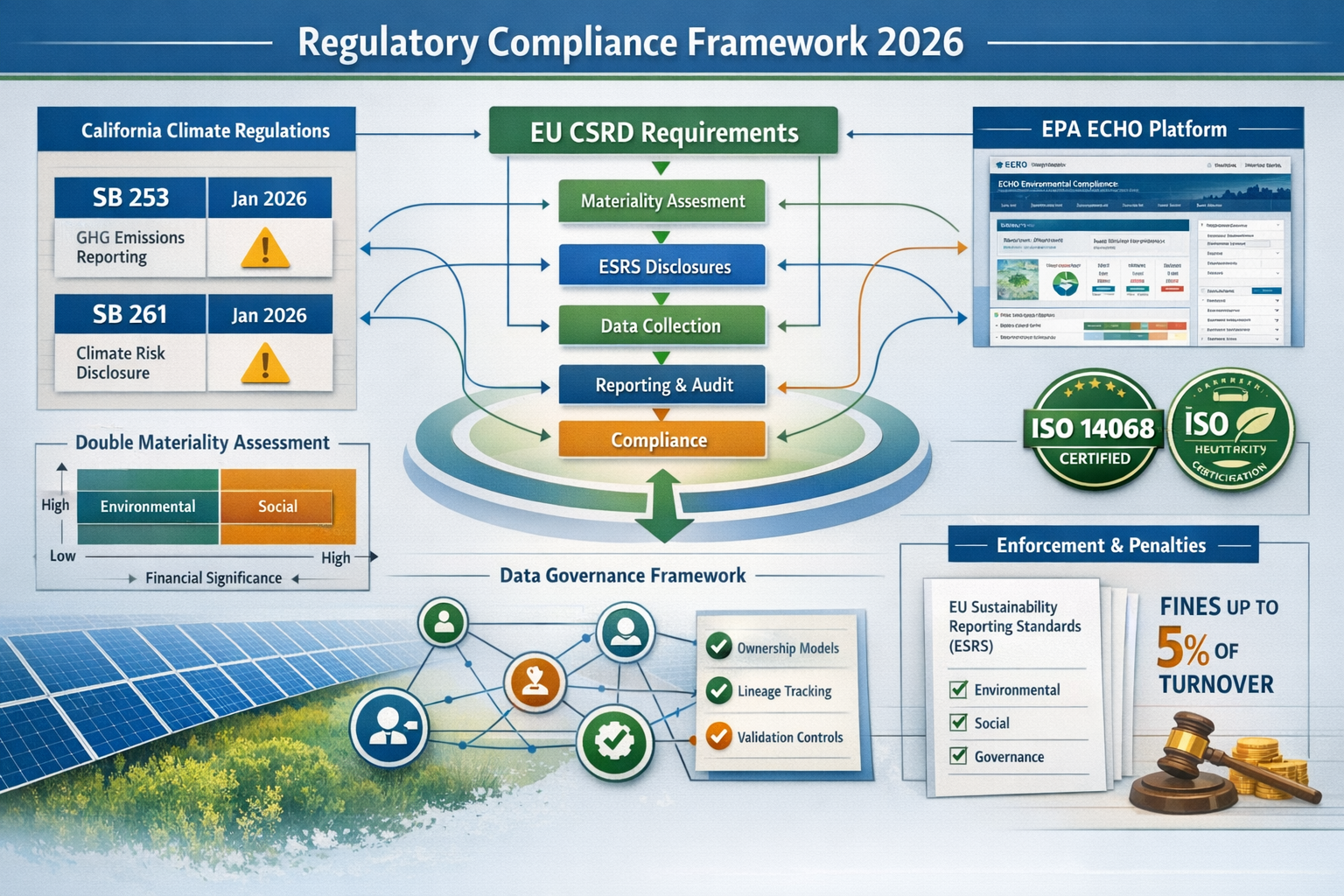
Successfully implementing Environmental Impact Forecasting in Surveys: Tools for 2026 Regulatory Compliance and Sustainable Development requires a structured approach that integrates new methodologies into existing survey workflows while building organizational capabilities for ongoing compliance.
Developing a Comprehensive Implementation Strategy
Phase 1: Assessment and Planning
Organizations must begin by evaluating their current environmental impact forecasting capabilities against 2026 regulatory requirements:
✅ Regulatory Gap Analysis: Identify which regulations apply to your operations (CSRD, California mandates, EPA requirements, ISO standards) and document current compliance status
✅ Capability Assessment: Evaluate existing tools, technologies, data systems, and personnel expertise against requirements
✅ Resource Planning: Determine budget, technology investments, training needs, and timeline for full implementation
✅ Stakeholder Engagement: Involve key stakeholders including survey teams, project managers, clients, and regulatory specialists in planning
Research indicates that 66% of companies have increased resources dedicated to sustainability reporting over the past year, driven by regulatory requirements and competitive pressures[4]. This trend reflects the recognition that environmental impact forecasting is no longer optional but essential to business operations.
Phase 2: Technology Integration
Implementing the technological infrastructure for environmental impact forecasting involves:
System Selection: Choose platforms and tools that:
- Integrate with existing survey and project management systems
- Support required regulatory reporting formats
- Provide scalability for organizational growth
- Offer robust data governance capabilities
- Include user-friendly interfaces to encourage adoption
Data Architecture Development: Design systems that:
- Consolidate environmental data from multiple sources
- Enable automated data validation and quality checks
- Support both real-time monitoring and historical analysis
- Facilitate secure data sharing with clients and regulators
- Maintain audit trails for compliance verification
Integration with Survey Workflows: Embed environmental impact forecasting into standard procedures:
- Update survey pricing structures to reflect environmental assessment components
- Modify survey report templates to include environmental impact sections
- Train surveyors on environmental monitoring equipment operation
- Establish protocols for environmental data collection during site visits
Phase 3: Building Data Governance Frameworks
Given that few organizations have implemented formal data governance frameworks tailored to sustainability[2], this represents a critical implementation priority:
Establish Clear Ownership: Assign specific individuals or teams responsibility for:
- Environmental data collection and validation
- Regulatory compliance monitoring
- Report generation and submission
- Continuous improvement of data processes
Implement Quality Controls: Develop systematic approaches to ensure data accuracy:
- Automated validation rules that flag anomalies
- Regular calibration of monitoring equipment
- Cross-verification of data from multiple sources
- Periodic internal audits of data processes
Create Documentation Standards: Establish consistent approaches to:
- Data collection methodologies
- Calculation procedures for environmental metrics
- Assumptions used in predictive modeling
- Changes to baseline conditions or measurement approaches
Phase 4: Training and Capability Development
The success of environmental impact forecasting implementation depends on building organizational expertise:
Technical Training: Ensure survey teams understand:
- Operation of environmental monitoring equipment
- Data collection protocols and quality standards
- Regulatory requirements and reporting obligations
- Software platforms and analytical tools
Regulatory Knowledge: Keep teams current on:
- Evolving regulatory requirements and deadlines
- Best practices in environmental impact assessment
- Industry standards and certification programs
- Enforcement trends and compliance risks
Client Communication: Develop capabilities to:
- Explain environmental impact forecasting value to clients
- Translate technical environmental data into actionable insights
- Recommend sustainability improvements based on findings
- Demonstrate return on investment for environmental initiatives
Practical Application in Different Survey Types
Environmental impact forecasting applies across the full spectrum of survey activities, though implementation varies by survey type:
Building Surveys and Condition Assessments
When conducting comprehensive RICS building surveys, environmental impact forecasting adds value by:
- Assessing energy efficiency and identifying improvement opportunities
- Evaluating water consumption and recommending conservation measures
- Identifying materials with high embodied carbon for replacement planning
- Assessing climate resilience and adaptation needs
- Documenting baseline environmental performance for future comparison
Commercial Property Assessments
For commercial building surveys, environmental considerations are increasingly central to property value and tenant appeal:
- Benchmarking environmental performance against industry standards
- Forecasting operating costs under carbon pricing scenarios
- Assessing compliance with green building certifications (LEED, BREEAM)
- Evaluating climate risk exposure (flooding, heat stress, extreme weather)
- Identifying opportunities for renewable energy integration
Development Site Assessments
Pre-development surveys must now include comprehensive environmental impact forecasting:
- Baseline environmental condition documentation
- Biodiversity assessment and habitat mapping
- Soil and groundwater contamination evaluation
- Stormwater management and water quality impact prediction
- Construction phase environmental impact mitigation planning
Specialized Assessments
Even specialized surveys benefit from environmental integration:
- Subsidence surveys should consider climate change impacts on soil moisture and groundwater
- Roof surveys can evaluate solar panel installation potential and green roof feasibility
- Dilapidation surveys should assess environmental compliance obligations in lease agreements
Overcoming Common Implementation Challenges
Organizations implementing environmental impact forecasting frequently encounter several challenges:
Challenge 1: Data Availability and Quality
Problem: Historical environmental data may be incomplete, inconsistent, or unavailable, particularly for Scope 3 emissions which remain vulnerable to gaps and unverifiable claims[2].
Solutions:
- Establish baseline measurements even if historical data is limited
- Use industry benchmarks and modeling to estimate missing data
- Implement robust data collection systems for future accuracy
- Document data limitations transparently in reports
- Prioritize improvement of data governance frameworks
Challenge 2: Technology Integration Complexity
Problem: Integrating multiple environmental monitoring systems, analytical platforms, and compliance tools with existing survey workflows can be technically challenging.
Solutions:
- Adopt platforms with strong API capabilities for system integration
- Implement phased technology rollouts rather than simultaneous deployment
- Engage technology vendors for implementation support
- Designate internal champions to drive adoption and troubleshoot issues
- Maintain legacy systems during transition periods to ensure continuity
Challenge 3: Cost and Resource Constraints
Problem: Environmental impact forecasting requires investments in technology, training, and personnel that may strain budgets.
Solutions:
- Demonstrate return on investment through reduced compliance risk
- Highlight competitive advantages in winning sustainability-focused clients
- Explore government grants and incentives for environmental initiatives
- Implement scalable solutions that grow with organizational needs
- Consider partnerships with environmental specialists for complex assessments
Challenge 4: Regulatory Complexity and Change
Problem: The regulatory landscape continues to evolve, with new requirements, enforcement approaches, and standards emerging regularly.
Solutions:
- Subscribe to regulatory monitoring services that track relevant changes
- Participate in industry associations that provide compliance guidance
- Build relationships with regulatory agencies for clarification and support
- Implement flexible systems that can adapt to new requirements
- Maintain conservative compliance approaches that exceed minimum standards
"By 2026, regulatory scrutiny is shifting from reported outcomes to the integrity of underlying data processes." – Forrester Research[2]
This shift underscores the importance of investing in robust data governance and quality assurance systems rather than focusing solely on reporting outputs.
Strategic Benefits Beyond Compliance
While regulatory compliance drives much of the adoption of Environmental Impact Forecasting in Surveys: Tools for 2026 Regulatory Compliance and Sustainable Development, organizations that embrace these practices realize significant strategic benefits:
Competitive Differentiation
In an increasingly sustainability-conscious market, comprehensive environmental impact forecasting capabilities differentiate forward-thinking surveying firms from competitors:
- Client Attraction: Organizations seeking development approvals, financing, or tenant attraction increasingly require detailed environmental assessments
- Premium Pricing: Specialized environmental expertise commands higher fees than traditional surveys
- Market Leadership: Early adopters establish reputations as sustainability leaders in their markets
- Partnership Opportunities: Environmental capabilities open doors to collaborations with architects, engineers, and developers on complex projects
Risk Mitigation
Environmental impact forecasting identifies and mitigates multiple risk categories:
Regulatory Risk: Proactive compliance reduces exposure to:
- Enforcement actions and penalties
- Project delays due to permit issues
- Reputational damage from violations
- Legal liability for environmental harm
With regulators now wielding enforcement powers including fines linked to turnover[1], the financial consequences of non-compliance can be severe.
Financial Risk: Environmental assessment informs:
- Accurate project cost estimation including environmental mitigation
- Property valuation adjustments for environmental liabilities
- Insurance requirements and premiums
- Long-term operating cost projections under carbon pricing
Operational Risk: Environmental monitoring enables:
- Early detection of environmental incidents
- Proactive maintenance to prevent pollution
- Optimization of resource consumption
- Contingency planning for environmental emergencies
Climate Risk: Forward-looking environmental assessment evaluates:
- Physical risks from extreme weather, flooding, heat stress
- Transition risks from policy changes and market shifts
- Liability risks from contribution to climate change
- Adaptation requirements for long-term asset resilience
Enhanced Decision-Making
Environmental impact forecasting provides data-driven insights that improve strategic decisions:
Development Planning: Environmental data informs:
- Site selection based on environmental suitability
- Design optimization for minimal environmental impact
- Material selection prioritizing low embodied carbon
- Phasing strategies that minimize ecological disruption
Investment Decisions: Environmental performance metrics influence:
- Property acquisition and disposition decisions
- Capital allocation for environmental improvements
- Portfolio management and asset strategy
- ESG investment criteria satisfaction
Operational Optimization: Ongoing environmental monitoring enables:
- Energy and water consumption reduction
- Waste minimization and circular economy practices
- Supply chain optimization for lower emissions
- Continuous improvement in environmental performance
Stakeholder Value Creation
Comprehensive environmental impact forecasting creates value for multiple stakeholders:
For Clients: Detailed environmental assessments provide:
- Confidence in regulatory compliance
- Evidence for sustainability reporting requirements
- Competitive advantages in property marketing
- Risk mitigation and cost savings opportunities
For Investors: Environmental data supports:
- ESG investment criteria evaluation
- Long-term asset value assessment
- Climate risk disclosure requirements
- Sustainable finance eligibility
For Communities: Environmental forecasting demonstrates:
- Commitment to minimizing local environmental impacts
- Transparency about development effects
- Responsiveness to community environmental concerns
- Contribution to broader sustainability goals
For Regulators: Comprehensive environmental documentation facilitates:
- Efficient permit review and approval processes
- Confidence in compliance commitments
- Reduced need for intensive oversight
- Collaboration on environmental protection goals
Future Outlook and Emerging Trends
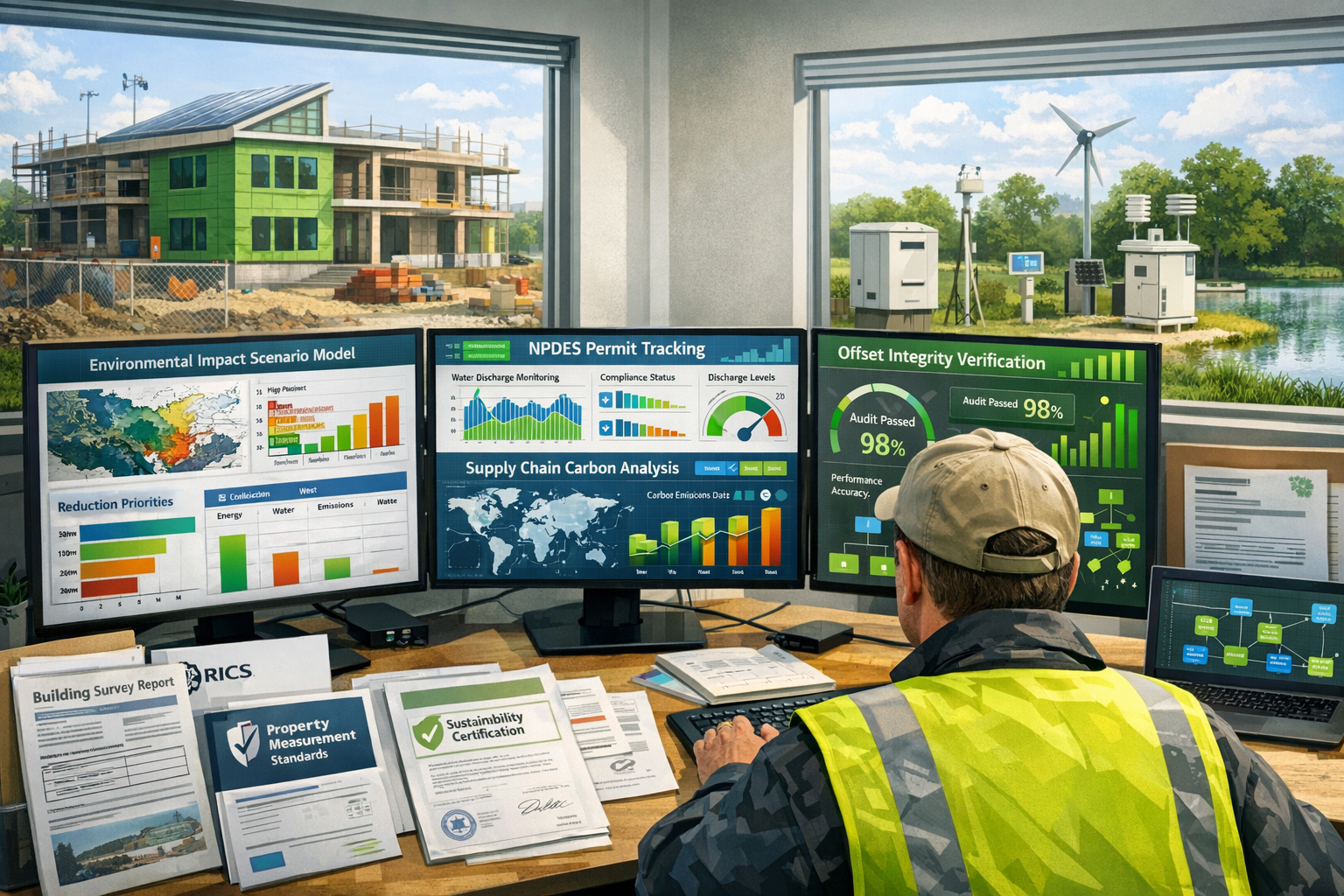
The field of Environmental Impact Forecasting in Surveys: Tools for 2026 Regulatory Compliance and Sustainable Development continues to evolve rapidly. Several trends will shape the discipline in coming years:
Increasing Regulatory Stringency
The trajectory toward more comprehensive and stringent environmental regulation shows no signs of slowing:
- Expanded Scope: Regulations will increasingly address previously unregulated environmental impacts including biodiversity loss, circular economy requirements, and nature-based solutions
- Enhanced Enforcement: Regulatory agencies are deploying more sophisticated monitoring technologies and enforcement approaches[3]
- Global Harmonization: International coordination on environmental standards will reduce regulatory fragmentation while raising baseline requirements
- Supply Chain Accountability: Regulations will increasingly hold organizations accountable for environmental impacts throughout their value chains[4]
Technology Advancement
Technological innovation will continue to transform environmental impact forecasting capabilities:
- AI-Powered Prediction: Machine learning models will provide increasingly accurate environmental impact forecasts based on vast datasets
- Real-Time Monitoring: IoT sensor networks will enable continuous environmental performance tracking with immediate alerts for anomalies
- Automated Compliance: Software platforms will automatically generate regulatory reports and flag compliance issues
- Integrated Platforms: Comprehensive systems will consolidate environmental, social, and governance data for unified sustainability management
Market-Driven Sustainability
Beyond regulatory requirements, market forces are driving environmental performance:
- Investor Pressure: ESG investment criteria increasingly influence capital allocation decisions
- Tenant Demand: Commercial and residential tenants prioritize environmentally sustainable properties
- Consumer Expectations: End users increasingly factor environmental performance into purchasing and usage decisions
- Competitive Dynamics: Sustainability leadership becomes a competitive differentiator across industries
Evolving Professional Standards
Professional organizations are updating standards to reflect environmental imperatives:
- Enhanced Competency Requirements: Professional certifications increasingly require environmental assessment expertise
- Updated Ethical Standards: Professional codes of conduct emphasize environmental responsibility
- Specialized Credentials: New certifications focused specifically on environmental impact assessment are emerging
- Continuing Education: Ongoing professional development requirements increasingly include environmental topics
Organizations that anticipate and prepare for these trends will maintain competitive advantages and regulatory compliance as the landscape continues to evolve.
Conclusion: Taking Action on Environmental Impact Forecasting
Environmental Impact Forecasting in Surveys: Tools for 2026 Regulatory Compliance and Sustainable Development represents a fundamental transformation in how property professionals approach their work. The full operationalization of sustainability regulations in 2026 means that environmental considerations are no longer optional add-ons but core components of competent professional practice[1].
The regulatory environment is clear: organizations must integrate sustainability data into financial and strategic reporting as a fundamental requirement. With enhanced enforcement powers, increased scrutiny of environmental claims, and sophisticated monitoring tools deployed by regulators[1][3], the consequences of inadequate environmental impact forecasting extend far beyond compliance violations to encompass financial penalties, reputational damage, and competitive disadvantage.
Yet the opportunity is equally clear. Organizations that embrace comprehensive environmental impact forecasting realize competitive differentiation, enhanced decision-making, risk mitigation, and stakeholder value creation that extend far beyond regulatory compliance. The transition from PAS 2060 to ISO 14068 reflects rising expectations that environmental data must inform real strategic and investment decisions[1], creating demand for sophisticated environmental assessment capabilities.
Actionable Next Steps
Organizations seeking to implement or enhance environmental impact forecasting should take these concrete actions:
Immediate Actions (Next 30 Days):
- Conduct a regulatory gap analysis to identify applicable environmental requirements and current compliance status
- Assess existing environmental data collection and governance capabilities
- Engage stakeholders including survey teams, project managers, and clients to build awareness and support
- Research technology platforms and tools that support environmental impact forecasting
- Review and update survey methodologies to incorporate environmental assessment components
Short-Term Actions (Next 90 Days):
- Develop an implementation roadmap with specific milestones, responsibilities, and resource requirements
- Invest in priority technology platforms and monitoring equipment
- Establish data governance frameworks including ownership models, validation controls, and documentation standards
- Initiate training programs to build environmental assessment capabilities
- Pilot environmental impact forecasting on selected projects to refine approaches
Medium-Term Actions (Next 6-12 Months):
- Scale environmental impact forecasting across all relevant survey types and projects
- Build relationships with environmental specialists for complex assessments
- Develop client communication materials highlighting environmental assessment capabilities
- Participate in industry associations and continuing education to stay current on evolving requirements
- Establish continuous improvement processes to enhance environmental assessment quality and efficiency
Long-Term Strategic Priorities:
- Position environmental impact forecasting as a core competitive differentiator
- Develop specialized expertise in emerging areas such as biodiversity assessment and circular economy
- Invest in advanced technologies including AI-powered prediction and digital twin capabilities
- Build partnerships with developers, architects, and engineers for integrated sustainable development
- Contribute to industry standards development and best practice advancement
The integration of environmental impact forecasting into survey practice represents both a challenge and an opportunity. Organizations that approach this transformation strategically—investing in appropriate technologies, building robust data governance frameworks, developing organizational capabilities, and embracing sustainability as a core value—will thrive in the evolving regulatory and market landscape of 2026 and beyond.
The tools, technologies, and methodologies for effective Environmental Impact Forecasting in Surveys: Tools for 2026 Regulatory Compliance and Sustainable Development are available and proven. The regulatory imperative is clear. The market opportunity is substantial. The time for action is now.
References
[1] Major Sustainability Predictions And Outlook For 2026 – https://www.tunley-environmental.com/en/insights/major-sustainability-predictions-and-outlook-for-2026
[2] Predictions 2026 Environmental Sustainability – https://www.forrester.com/blogs/predictions-2026-environmental-sustainability/
[3] Environmental Compliance Trends Companies Should Watch For In 2026 – https://www.valicor.com/blog/environmental-compliance-trends-companies-should-watch-for-in-2026
[4] Regulatory Compliance In 2026 – https://blog.softexpert.com/en/regulatory-compliance-in-2026/
[5] 26 Predictions For 26 For Sustainability Legal And Compliance Professionals – https://www.ropesgray.com/en/insights/viewpoints/102lzoz/26-predictions-for-26-for-sustainability-legal-and-compliance-professionals